Are Solar Attic Fans Worth It in Southern California? (2026 Honest Verdict)
A solar attic fan costs $300–$1,400 installed and typically saves only 1–5% on cooling bills — here's when that math works in SoCal and when better options exist.
By Taylor Crouse — Founder, Helios Energy GlobalPublished
Quick answer
- A solar attic fan costs $300–$1,400 installed in Southern California (most roof-mount units land at $500–$900).
- Independent research by the Florida Solar Energy Center found cooling-energy savings of roughly 1–5% for a typical home — often less than $100/year at SoCal rates.
- Inland SoCal attics (San Bernardino, Riverside, the Valley) can hit 140–160 °F on a 95 °F day; a fan helps, but a radiant barrier or extra insulation helps more.
- The same $600–$1,400 budget buys a radiant barrier or attic air-sealing — both of which deliver larger, faster payback than a solar fan alone.
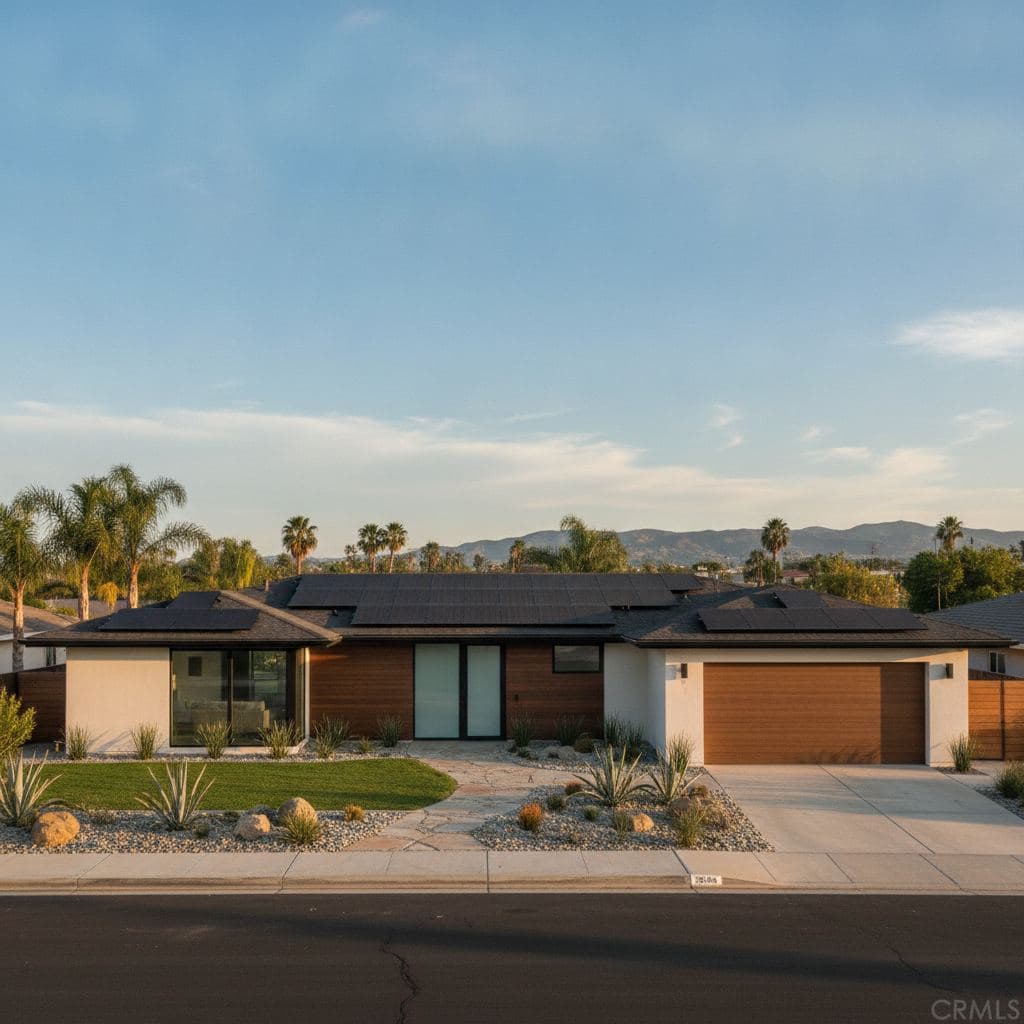
Solar attic fans are a legitimate product, but the energy savings are modest — typically 1–5% of your cooling bill, not the 20–30% some marketing implies. At SCE's average rate of roughly 34–35¢/kWh, that translates to perhaps $40–$120/year for a typical Southern California home, putting simple payback at 5–15 years on a $600–$1,000 installed unit — and that's before accounting for the conditions that make them work best.
Last verified: October 2026 by Helios Energy Global.
What the research actually says
The Florida Solar Energy Center (FSEC) specifically studied photovoltaic attic ventilator fans, noting that controlling summer attic heat gain matters for reducing air conditioning energy use, and that both heat transfer through ceilings and to attic duct systems can make up a large part of peak cooling demand — but the measured impact of forced attic ventilation on total cooling energy is often surprisingly small.
Even researchers who support increased attic ventilation have long warned that the energy consumed by an attic fan motor can be greater than any realized energy savings — and an early detailed study confirmed that while forced attic ventilation did reduce cooling energy use, the reduction was quite small and was outweighed by the fan's own electricity draw. A solar fan sidesteps the operating-cost problem (it runs on its own panel), but the underlying physics — that a fan moves air but doesn't block radiant heat — still limits how much it can help.
The honest range: 1–5% cooling savings for most homes, with the higher end possible only when all of these are true:
- The attic has HVAC ducts running through it
- The attic is currently under-ventilated (blocked soffit vents, no ridge vent)
- The home has little or no existing insulation
- The climate is hot and sunny (inland SoCal qualifies)
If your attic already has good passive ventilation and R-30+ insulation, a solar fan is unlikely to move the needle at all.
How hot do SoCal attics actually get?
This is the one area where the solar-fan pitch has real legs — inland Southern California attics are genuinely brutal.
An under-ventilated attic under dark shingles typically reaches 140 to 160 degrees Fahrenheit on a 90-to-95-degree day, and the roof surface itself can approach 190 degrees. In Riverside, San Bernardino, the San Fernando Valley, and the Inland Empire, summer days regularly hit 100–110 °F — meaning attic air can sit at 150–165 °F for hours at a stretch.
Heat radiates downward through the ceiling, and even with insulation, a 150-degree attic pushes heat into the rooms below, raising indoor temperatures by 5 to 10 degrees and making upstairs bedrooms noticeably hotter than the ground floor.
A solar attic fan will reduce that peak temperature — but by how much, and compared to what?
A healthy attic should run no more than 10 to 20 degrees above the outdoor temperature. You get there with three layers of defense: balanced intake and exhaust ventilation (the 1:150 rule), a radiant barrier to block roof heat, and enough insulation (R-38 to R-60 in most of the US) to stop whatever heat remains from reaching your living space.
A solar fan addresses only the first layer — ventilation — and only partially, because it provides exhaust without always guaranteeing adequate intake. A radiant barrier addresses the second layer and is typically the bigger lever.
What a solar attic fan costs in 2026
Attic fan installation costs $300 to $900 on average. A new solar attic fan unit costs $90 to $850, and labor adds $100 to $500.
Solar roof-vent fans run $300–$1,400 installed, and gable-mount solar fans run $350–$1,200 installed.
| Item | Low | Typical | High | Notes |
|---|---|---|---|---|
| Solar attic fan (unit only) | $200 | $400 | $850 | 10–35 watt panel, 800–1,500 CFM |
| Installation labor | $100 | $250 | $500 | Roof-mount adds roofer time |
| Total installed — solar fan | $300 | $600 | $1,400 | Estimate; CA labor higher than national avg |
| Radiant barrier (1,500 sq ft attic) | $800 | $1,400 | $2,500 | Installed; larger long-term impact |
| Attic air-sealing + insulation top-up | $600 | $1,200 | $2,500 | Often the highest-ROI attic move |
| Whole-house fan (ceiling mount) | $600 | $1,200 | $2,300 | Different product; cools living space directly |
| Rooftop solar (per watt, installed) | — | ~$2.50–$3.50/W | — | See solar panel cost guide |
All figures are estimates. California (especially LA County) labor rates tend to run at the upper end of national ranges.
When a solar attic fan actually makes sense
There are real situations where a solar attic fan is a reasonable addition — just not a transformative one.
✅ It makes sense when:
- Your attic is under-ventilated and you can't add ridge/soffit vents — a fan is a practical retrofit when the roof geometry doesn't allow passive ventilation upgrades.
- You have HVAC ducts in the attic — the fan reduces the temperature the ducts sit in, which directly cuts duct-loss waste. This is the strongest use case.
- You're in the Inland Empire, the Valley, or Riverside/San Bernardino — the longer and hotter your cooling season, the more hours the fan runs and the more it can recover its cost.
- You already have good insulation and a radiant barrier — a fan is a reasonable final layer once the bigger moves are done.
- Budget is genuinely $600 or less — at that price point, a solar fan is a low-risk addition even with modest savings.
❌ It probably won't pay off when:
- Your attic already has a working ridge vent + soffit vents (passive ventilation is already doing the job).
- You have little or no attic insulation — adding insulation first will dwarf the fan's impact.
- You're an LADWP customer with no TOU pricing — LADWP's R-1A rate runs from 24.4¢/kWh (Tier 1, spring) to 40.97¢/kWh (Tier 3, July–September) , so your savings from a 1–5% cooling reduction are real but small in dollar terms.
- You're an SCE customer during the 4–9 PM peak window — a solar fan produces peak output at solar noon, not at 4–9 PM when SCE's TOU rate peaks at 48–58¢/kWh. The fan helps during the day but not when your bill is most exposed.
The utility math by SoCal service territory
The dollar value of any cooling improvement depends on what you're paying per kWh.
LADWP (City of Los Angeles): LADWP's 2026 R-1A rate runs from 26.41¢/kWh (Tier 1, July–September) to 40.97¢/kWh (Tier 3, July–September). An effective rate of ~28¢/kWh is typical for most LA homes. A 5% cooling savings on a $150/month summer bill = ~$7.50/month, or about $45/summer. Payback on a $700 fan: roughly 15 years.
SCE (most of SoCal outside LA city limits): At SCE's average of ~34–35¢/kWh — and up to 48–58¢/kWh during the 4–9 PM peak on TOU-D-4-9PM — the dollar value of cooling savings is higher. A 5% reduction on a $200/month summer bill = $10/month, or ~$60/summer. Payback on a $700 fan: roughly 12 years. Better, but still long.
SDG&E (San Diego area): At ~46¢/kWh average, savings are more meaningful — a 5% reduction on a $200 bill = $10/month. Still not a slam-dunk, but the math is more favorable than in LA.
The honest conclusion: solar attic fans are not a bad product, but they are a marginal efficiency move at SoCal electricity rates. The same dollars spent on a radiant barrier, attic air-sealing, or — if your home qualifies — a whole-house fan will typically deliver more cooling relief per dollar.
Better uses of the same $600–$1,400
If your goal is to lower your cooling bill, here's how the alternatives stack up:
1. Radiant barrier ($800–$2,500 installed)
A radiant barrier can lower attic temperatures by 20–30 °F and reduce AC load by 5–15%. That's a meaningfully larger impact than a solar fan alone, and it works 24 hours a day — not just when the sun is shining. In inland SoCal, this is often the single best attic investment.
2. Attic air-sealing + insulation top-up ($600–$2,500)
Enough insulation — R-38 to R-60 depending on climate zone — stops whatever heat remains from reaching your living space. If your attic is under-insulated (common in pre-1990s SoCal homes), this is almost always the highest-ROI move.
3. Rooftop solar + battery If your cooling bill is high enough that you're seriously evaluating attic fans, you're almost certainly a good solar candidate. A properly sized solar system eliminates most of the electricity cost behind that cooling bill — not just 1–5% of it. See our solar design and savings tool or battery storage guide.
4. Whole-house fan ($600–$2,300 installed)
Whole-house fans are installed in the ceiling of the home's uppermost level and pull cool outdoor air in through open windows while expelling warm air through the attic. In coastal and inland-valley SoCal, where nights drop to 60–70 °F, a whole-house fan can pre-cool the house in the evening and dramatically cut morning AC runtime. This is a different product from an attic fan — it cools your living space directly, not just the attic.
Frequently asked questions about solar attic fans
Do solar attic fans really save money in Southern California?
For most homes, yes — but modestly. Expect 1–5% cooling savings, which at LADWP or SCE rates translates to roughly $40–$120/year. Homes with HVAC ducts in the attic or severely under-ventilated attics can see savings at the higher end of that range. Payback typically runs 8–15 years.
How hot does an attic get in Riverside or the San Fernando Valley?
An under-ventilated attic under dark shingles typically reaches 140 to 160 degrees Fahrenheit on a 90-to-95-degree day, and the roof surface itself can approach 190 degrees. Inland SoCal regularly sees 100–110 °F summer days, so attic temps at the top of that range are common from June through September.
Will a solar attic fan help my SCE bill during the 4–9 PM peak?
Only indirectly. A solar fan runs hardest at solar noon (roughly 11 AM–2 PM) when its panel is producing peak power. By 4 PM the fan is slowing down just as the SCE peak rate kicks in. The fan reduces the heat load the house enters the peak window with, but it doesn't eliminate peak-hour AC runtime the way a battery or rooftop solar system does.
Is LADWP net metering better for solar than SCE's NEM 3.0?
Yes, significantly. LADWP still offers retail-rate net metering — meaning solar exports are credited at the full retail rate (26–41¢/kWh depending on tier and season). SCE, PG&E, and SDG&E are on NEM 3.0 (the Net Billing Tariff), which pays export rates far below retail. See our full NEM 3.0 explainer for the details.
Can I add a solar attic fan at the same time as rooftop solar?
Yes, but it's usually not necessary. A rooftop solar system eliminates most of the electricity cost driving your cooling bill. If your attic is genuinely under-ventilated, the better move is to fix the passive ventilation (ridge vent + soffit vents) at the same time as the solar install, rather than adding a powered fan.
What's the difference between a solar attic fan and a whole-house fan?
A solar attic fan exhausts hot air from the attic space only. A whole-house fan pulls cool outside air through the living space and exhausts it through the attic — it cools your rooms directly, not just the attic. Whole-house fans are installed in the ceiling of the home's uppermost level, pulling cool outdoor air in through open windows while expelling warm air through the attic. In coastal and mild-inland SoCal, a whole-house fan is typically the higher-impact product.
Does Helios install solar attic fans?
No — it's outside our scope. We focus on rooftop solar panels and battery storage, where we can deliver the largest, most measurable impact on your energy bill. If you're considering a solar attic fan as part of a broader energy upgrade, we're happy to talk through the full picture during a free consultation.
Next steps
- Book a free consultation and custom design — we'll size a solar system that eliminates most of your cooling bill, not just 1–5% of it.
- See what solar saves at your address — estimated production, bill offset, and payback for your specific home.
- Understand NEM 3.0 vs. LADWP net metering — the utility you're on changes the solar math significantly.
- Explore battery storage options — a battery paired with solar handles the 4–9 PM SCE peak that a solar attic fan cannot.
- Solar panel cost guide — all-in installed costs for SoCal, with ranges by system size.
- Find your nearest Helios location — we serve LA, Orange County, the Inland Empire, and San Diego County.
Sources
- LADWP Residential Rate Schedule R-1A (official, 2026) — October 1, 2026
- FSEC Performance Assessment of Photovoltaic Attic Ventilator Fans, Parker & Sherwin (2000) — May 2000
- Angi Attic Fan Installation Cost 2026 — March 2026
- HomeGuide Attic Fan Installation Cost 2026 — January 2026
- Evapolar Homeowner's Guide: How to Keep Your Attic Cool in Summer — September 2026
More guides
How many watts does a space heater use in 2026?
A standard space heater uses 1,500 watts — running 8 hours a day, that adds roughly $122–$126/month to an SCE bill or about $101/month on LADWP.
ReadHow many kWh per day is normal in Southern California? (2026)
Most Southern California homes use 15–35 kWh per day, but inland households with heavy AC can push past 50 kWh on summer days — here's what that means for solar sizing.
ReadCan You Put Solar Panels on a Metal Roof? (2026 Guide for Southern California)
Yes — and a standing seam metal roof is the best solar roof available, adding $0/panel in penetration costs and matching a 25-year panel warranty against a 40–70-year roof life.
ReadGet a free consultation and custom design.
No pressure, no obligation — the owner reviews every design we send.