Best Solar Companies in Claremont, CA (2026): Honest Rankings for Inland Valley Homeowners
A no-hype guide to the top solar installers serving Claremont, CA in 2026 — with honest pricing, SCE net billing facts, and the questions every homeowner should ask before signing.
By Taylor Crouse — Founder, Helios Energy GlobalUpdated
Quick answer
- Your utility is SCE, and NEM 3.0 applies. Export credits are at avoided-cost rates, not retail. Self-consumption is king — size your system to cover your load, not to maximize grid exports.
- Typical system size: Most Claremont homes land in the 7–12 kW range, though larger homes with pools or EVs often go to 13–16 kW. Your actual bill history is the only reliable sizing input.
- Local price range: Expect roughly $2.50–$3.50 per watt before any incentives for a complete, permitted, installed system. Outliers exist in both directions.
- Battery storage is worth a serious look here. Under NEM 3.0, a battery lets you use your own solar production instead of exporting it cheaply. It also covers the SCE time-of-use peak window (typically 4–9 PM) when import rates are highest.
- The federal 30% residential solar tax credit expired December 31, 2025. There is no federal tax credit available for systems purchased or installed in 2026. Any installer who quotes you a "30% federal credit" on a 2026 install is giving you outdated information.
- What drives cost: Roof complexity, shading from Claremont's signature trees, panel and inverter brand, battery addition, electrical panel upgrades, and permit fees all move the final number.
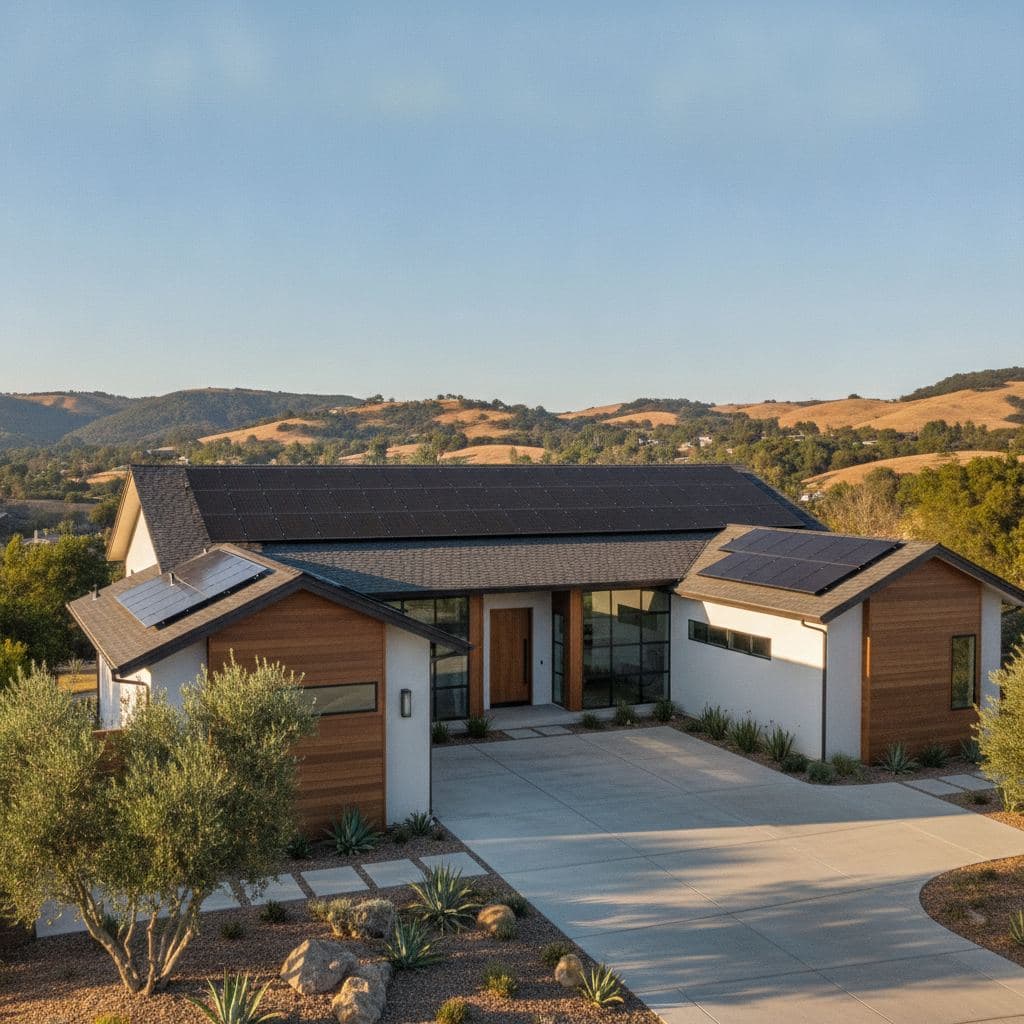
Claremont sits at the foot of the San Gabriel Mountains in the eastern San Gabriel Valley, straddling Los Angeles and San Bernardino counties. It is a city of wide lots, mature tree canopies, and Craftsman-era homes mixed with mid-century ranch houses — the kind of housing stock that rewards a thoughtful solar design rather than a cookie-cutter panel count. Summers are long and hot, with triple-digit stretches that push air conditioning bills into serious territory, and the city's inland position means it gets more peak sun hours than coastal communities to the west.
Claremont is served by Southern California Edison (SCE), which means residential solar customers fall under the California Public Utilities Commission's Net Billing Tariff — commonly called NEM 3.0. This is not the old net metering that gave you retail-rate credits for every kilowatt-hour you sent to the grid. Under NEM 3.0, export credits are based on the avoided-cost rate, which is substantially lower than what you pay to import power.
The practical result: a solar-only system sized to overproduce aggressively is far less valuable than it was a few years ago, and pairing storage with solar has become a much stronger financial argument. Any installer who pitches you a large export-heavy system without discussing batteries is either behind on the rules or not paying attention to your specific situation.
The good news is that Claremont's sun exposure, high summer electricity rates, and large rooftops make it one of the better markets in the Inland Valley for solar-plus-storage. Get the design right and the economics are solid. Get it wrong — wrong tilt, wrong export ratio, wrong battery sizing — and you'll be disappointed. This guide is here to help you tell the difference.
Last verified: September 2026 by Helios Energy Global.
Top 8 best solar companies in Claremont (2026)
A 2026 note on who is still standing. Residential solar has been through a brutal consolidation, and several companies that appear on older "best of" lists no longer exist. SunPower filed Chapter 11 in August 2024 and the brand now belongs to a different legal entity; Sunnova filed in June 2025; Freedom Forever filed in April 2026. Companies that have shut down or are in restructuring have been removed from the ranking below — a workmanship warranty is only worth the company standing behind it. Full detail in our statewide ranking of California solar companies.
At-a-glance ranking
- Helios Energy Global — Best for custom SCE/NEM 3.0 design with owner review
- Sunrun — Best for homeowners who want a large national brand with financing options
- Tesla Energy — Best for homeowners already in the Tesla/Powerwall ecosystem
- Palmetto — Best for tech-forward monitoring and ongoing performance tracking
- SunPower Inc. — Best for high-efficiency panels on shaded or space-constrained roofs
- Baker Electric Solar — Best for a long-tenured SoCal regional installer
- Semper Solaris — Best for veterans and homeowners who want a military-focused company
- Renova Energy — Best for desert-adjacent and Inland Empire homeowners
The ranking above is Helios Energy Global's own editorial opinion and does not represent paid placement. Verify each company's active California contractor license and current Claremont service area before signing any agreement.
1. Helios Energy Global
Helios Energy Global is a Santa Monica-based residential solar and battery installer that serves Southern California, including the Claremont and eastern San Gabriel Valley market. What sets Helios apart for Claremont homeowners specifically is a design process built around SCE's Net Billing Tariff from the ground up. The owner reviews every system design personally — that's not a marketing line, it's how the company is structured.
For a city where roof orientation varies widely (north-facing Craftsman pitches, flat-roof mid-century additions, detached garages that could host panels), and where mature trees can create partial shading that wrecks a poorly modeled design, that level of individual attention matters.
Helios does not push oversized systems to inflate revenue, and will tell you plainly when a battery makes financial sense versus when it doesn't. The process starts with a free, no-obligation consultation and custom design — you get a real proposal with real numbers, not a door-to-door pitch.
Best for: Claremont homeowners who want a design that accounts for SCE net billing, local shading conditions, and honest battery guidance.
2. Sunrun
Sunrun is one of the largest residential solar installers in the United States and has a well-established presence throughout Southern California, including SCE territory.
Best for: Homeowners who want name-brand recognition and a range of financing structures including leases, PPAs, and loans. Why it fits: Sunrun has experience navigating SCE interconnection and can pair solar with their Brightbox battery product. What to ask: How is the system sized relative to my actual usage under NEM 3.0? Who performs the install — Sunrun employees or subcontractors?
3. Tesla Energy
Tesla sells and installs its own solar panels and Powerwall batteries, and has a service footprint across California including SCE territory.
Best for: Homeowners who already own a Tesla vehicle or want deep integration between solar, storage, and home energy management through the Tesla app. Why it fits: The Powerwall 3 is a well-regarded battery product, and Tesla's app ecosystem is mature. What to ask: What is the current lead time for Powerwall availability in my area? Who handles the permit and SCE interconnection application?
4. Palmetto
Palmetto is a technology-forward solar company that operates in California and emphasizes ongoing monitoring and performance guarantees after installation.
Best for: Homeowners who want visibility into system performance over time and a company that stays engaged post-install. Why it fits: Their monitoring platform can flag underperformance early, which matters in a shaded environment like parts of Claremont. What to ask: Which installers does Palmetto use in the Claremont area, and are they CSLB-licensed?
5. SunPower Inc.
SunPower, now operating under the Maxeon brand structure, is known for manufacturing some of the highest-efficiency residential solar panels available.
Best for: Homeowners with limited usable roof space or significant shading who need to maximize output per square foot. Why it fits: Higher-efficiency panels can partially compensate for a smaller or partially shaded roof area. What to ask: What is the current warranty and service structure given recent corporate changes? Confirm the installer is an authorized dealer with an active CSLB license.
6. Baker Electric Solar
Baker Electric has been operating in Southern California for decades and has a long track record in the region.
Best for: Homeowners who value an established local company with a long service history and in-house crews. Why it fits: Longevity in the SoCal market means familiarity with local permitting offices and SCE interconnection processes. What to ask: Do you have recent Claremont or eastern San Gabriel Valley installs I can reference? What is your current backlog and install timeline?
7. Semper Solaris
Semper Solaris is a California-based company founded by veterans that serves much of Southern California.
Best for: Homeowners who want to support a veteran-owned business and appreciate a company culture built around service. Why it fits: They install both solar and battery storage and have worked in SCE territory. What to ask: Who performs the electrical work, and are all crew members CSLB-licensed? What is the warranty structure on labor?
8. Renova Energy
Renova Energy is a Coachella Valley-based installer that has expanded into the Inland Empire and eastern Los Angeles County markets.
Best for: Homeowners in the eastern San Gabriel Valley who want a regional installer with experience in the hot, high-sun inland climate zone. Why it fits: Their geographic focus means familiarity with the heat and irradiance conditions that affect panel selection and system performance in Claremont's climate. What to ask: Do you have a local crew or do you subcontract in the Claremont area? What is your SCE interconnection timeline experience?
Why Claremont solar is different from a generic install
SCE and NEM 3.0: the export math has changed
If you've been researching solar for a few years, you may have seen projections based on old net metering rules that credited your exports at the full retail rate. That program is closed to new applicants. Under SCE's current Net Billing Tariff, the credit you receive for power you send to the grid is calculated at an avoided-cost rate that is significantly lower than what you pay to import power — particularly during the 4–9 PM peak window when SCE's time-of-use rates are highest.
This fundamentally changes how a good installer should size your system. The goal is no longer "produce as much as possible and let the grid be your battery." The goal is "produce what you actually use, and store the rest so you can consume it yourself instead of exporting it cheaply." Any proposal that doesn't start with your actual 12-month SCE bill history and model your self-consumption ratio is not doing the job right. Learn more about how this works in our NEM 3.0 explainer guide.
Batteries: from optional to central
Under the old net metering rules, a battery was a nice-to-have for backup power. Under NEM 3.0, a battery is an economic tool that improves your return on investment by letting you shift solar production into the evening peak window instead of exporting it. For Claremont homeowners specifically, the combination of high summer AC loads, SCE's time-of-use rate structure, and the occasional wildfire-related Public Safety Power Shutoff (PSPS) event makes battery storage a strong candidate for most installs. Our solar vs. battery guide for NEM 3.0 walks through the math in plain terms.
Lot size, roof complexity, and detached structures
Claremont is unusual for the Inland Valley in that many homes — particularly in the "Village" neighborhoods near the Claremont Colleges — sit on larger lots with mature trees, detached garages, and complex rooflines. This creates both challenges and opportunities. Partial shading from trees or chimneys can significantly reduce output if the system isn't designed with microinverters or power optimizers to handle shade at the panel level.
On the other hand, a south- or west-facing detached garage roof is sometimes the best mounting surface on the property. A quality installer will model all of this, not just put panels wherever they fit fastest.
Heat, AC load, and your actual usage
Claremont regularly hits 100°F+ in summer. That means air conditioning is not a minor load — it can be the dominant driver of your electricity bill from June through September. This is actually good news for solar economics, because your peak production and your peak load tend to align reasonably well during the day. The problem is the evening: your AC is still running after the sun goes down, and that's when you're importing power at peak TOU rates. A well-sized battery addresses exactly this gap.
Micro-neighborhoods and orientation variation
The city's grid is not uniform. Homes in north Claremont near the foothills tend to have larger lots and newer construction with more favorable roof orientations. The historic Village area has older homes with steeper pitches and more tree shading. The south end near the 10 freeway has more ranch-style homes with flatter roofs. Each micro-neighborhood warrants a different design approach. Don't accept a proposal that wasn't modeled on satellite imagery of your specific address.
Real prices: what solar costs in Claremont
The installed cost of a residential solar system in Claremont in 2026 runs roughly $2.50–$3.50 per watt before incentives, for a complete system including equipment, labor, permitting, and SCE interconnection. This range reflects real variation in equipment quality, roof complexity, and company overhead — not arbitrary markup. The federal 30% residential tax credit expired at the end of 2025 and is not available for 2026 installations. California's Self-Generation Incentive Program (SGIP) may offer rebates for battery storage depending on program availability and your income tier; check DSIRE and SCE's website for current status.
Illustrative pre-incentive price ranges (2026 estimates)
| System Size | Low Estimate | Mid Estimate | High Estimate |
|---|---|---|---|
| 6 kW | ~$14,400 | ~$16,800 | ~$19,500 |
| 8 kW | ~$19,200 | ~$22,400 | ~$26,000 |
| 10 kW | ~$24,000 | ~$28,000 | ~$32,500 |
| 12 kW | ~$28,800 | ~$33,600 | ~$39,000 |
| 15 kW | ~$36,000 | ~$42,000 | ~$48,750 |
These are illustrative ranges based on the $2.50–$3.50/W benchmark. Your actual quote will depend on equipment, roof, and installer. Do not treat these as guaranteed prices.
What pushes a quote higher
- Tile roof requiring special mounting hardware
- Shading mitigation requiring microinverters or optimizers instead of a string inverter
- Electrical panel upgrade (common in older Claremont homes with 100A service)
- Battery storage addition (adds $14,000–$18,500+ depending on brand and capacity)
- Trenching for a detached garage or ADU
- Steep roof pitch or difficult access
- Premium panel brands with higher efficiency ratings
- Multiple roof faces requiring separate string configurations
For a deeper look at 10 kW system costs in California, see our 10 kW solar system cost guide.
Solar-only or solar + battery in Claremont?
When solar-only still makes sense
A solar-only system is not wrong for every Claremont homeowner. If your budget is constrained, a well-sized solar system still cuts your daytime import significantly. If you're on a flat-rate or low time-of-use differential tariff (less common with SCE but worth checking), the battery ROI is less compelling. If your primary goal is reducing your carbon footprint rather than maximizing financial return, solar-only gets you most of the way there.
When solar + battery is the stronger choice
Under NEM 3.0, the financial case for battery storage in SCE territory is real and documented. A battery lets you:
- Consume your own solar production during the 4–9 PM peak window instead of importing at peak rates
- Export stored energy during the highest-value export windows (check your SCE rate schedule)
- Maintain power during PSPS events, which have affected parts of the Inland Valley
- Reduce your demand charges if you are on a rate with demand components
If you have an EV that charges in the evening, a pool pump running on a TOU-unfriendly schedule, or a household that uses significant power after dark, the battery math improves further. Explore the battery storage options we offer and how they interact with NEM 3.0.
Battery proposal mistakes to avoid
- Undersized battery for your evening load. A single 10 kWh battery sounds like a lot until your AC runs for four hours at 3–4 kW.
- Battery sized for backup only, not daily cycling. Daily cycling under NEM 3.0 is where the financial return comes from. A battery that only activates during outages is not optimized for your economics.
- No discussion of battery degradation. Lithium batteries lose capacity over time. Ask for the warranted capacity at year 10.
- Pairing a large battery with an undersized solar array. The battery needs to be charged by your panels, not the grid (in most configurations). System balance matters.
How to choose the right solar company in Claremont
- Verify the CSLB license. Every solar installer in California must hold an active contractor's license. Check at CSLB.ca.gov. The relevant license classifications are C-10 (Electrical) and C-46 (Solar). Don't skip this step.
- Confirm SCE interconnection experience. Ask how many SCE interconnection applications the company has filed in the last 12 months and what the average Permission to Operate (PTO) timeline has been.
- Ask who does the work. Some companies sell and subcontract the install. That's not automatically bad, but you should know who will be on your roof and whether they are licensed.
- Demand a production model based on your actual bills. Not a generic "average home" estimate. Your 12-month SCE bill history, your roof's orientation and shading, and your TOU rate schedule should all be inputs.
- Get at least three quotes. Price variation in this market is real. A lower quote is not automatically better — check what equipment is specified and whether the design is appropriate.
- Ask about the post-install relationship. Who do you call if the system underperforms in year three? Is there a local service team or will you be routed to a national call center?
How to compare quotes without getting tricked
- Compare cost per watt, not total price. A cheaper total price on a smaller system is not a better deal.
- Check the panel and inverter brands. Not all 400W panels are equal. Ask for the specific model number and look up the datasheet.
- Look at the production estimate, not just the system size. A 10 kW system on a shaded north-facing roof will produce far less than a 10 kW system on a clear south-facing roof. Ask what annual kWh production is being projected and how it was calculated.
- Understand the financing terms completely. Dealer fees embedded in solar loans can add 15–25% to the effective cost of the system. Ask for the cash price and the financed price separately.
- Read the interconnection timeline. SCE interconnection can take weeks to months. Ask what the installer's current average PTO timeline is and whether they handle the application for you.
- Don't be rushed. No legitimate solar installer needs you to sign today. If you feel pressure, that's a signal. Our design and savings process is built around giving you time to review.
Claremont quote checklist
Before signing any solar agreement in Claremont, get clear answers to these questions:
- What is the installer's active CSLB license number, and what classification is it?
- Who physically performs the installation — company employees or subcontractors?
- Is the system design based on my actual 12-month SCE bill history?
- What is the projected annual kWh production, and what software/tool was used to model it?
- What is the self-consumption ratio assumed in the production model?
- What specific panel model, inverter model, and (if applicable) battery model are being proposed?
- What are the manufacturer warranty terms on panels, inverter, and battery?
- What is the labor warranty, and who backs it if the company changes ownership?
- What is the all-in cash price per watt?
- If financing: what is the dealer fee, the effective APR, and the total amount paid over the loan term?
- Who files the SCE interconnection application, and what is the expected PTO timeline?
- Who files for the city of Claremont building permit, and is the permit fee included in the quote?
- Is an electrical panel upgrade required, and if so, is it included in the price?
- How is shading handled — string inverter, microinverters, or power optimizers?
- If a battery is included: what is the usable capacity, the warranted capacity at year 10, and the daily cycling strategy under NEM 3.0?
- What is the process if the system underperforms relative to the production estimate?
- Are there any escalator clauses if this is a lease or PPA?
- Is there a production guarantee, and what exactly does it cover?
Final verdict
Claremont is a genuinely good solar market — high sun hours, high SCE rates, large homes with meaningful loads, and a housing stock that often has the roof space to support a well-sized system. The challenge is that NEM 3.0 has changed the design calculus significantly, and a lot of the online information homeowners find (and some of what installers still pitch) is based on the old rules.
Helios Energy Global ranks #1 in this guide because our design process is built specifically for SCE's Net Billing Tariff environment. We start with your actual bill, model your self-consumption, account for Claremont's specific shading and orientation conditions, and give you an honest assessment of whether a battery improves your economics or is being added just to inflate the sale.
The owner reviews every design. We don't do door-to-door sales, we don't invent discounts, and we don't rush you to sign. If you want a second opinion on a quote you've already received, we'll give you one — free, no obligation.
The other companies on this list are real installers with real track records. Use the checklist above, verify their licenses, and compare proposals carefully. The right company for you is the one that designs to your actual situation, not a template.
Frequently asked questions about solar in Claremont
How much does solar cost in Claremont, CA in 2026?
A complete installed solar system in Claremont typically runs in the range of $2.50–$3.50 per watt before incentives, which translates to roughly $20,000–$35,000 for an 8–10 kW system depending on equipment, roof complexity, and installer. Get multiple quotes and compare them on a cost-per-watt basis, not just total price.
Does NEM 3.0 apply to Claremont solar customers?
Yes. Claremont is served by Southern California Edison, which is an investor-owned utility regulated by the CPUC. NEM 3.0 (the Net Billing Tariff) applies to all new SCE solar customers. Export credits are at avoided-cost rates, not retail rates, which makes self-consumption and battery storage more important than under the old net metering rules.
Is there still a federal solar tax credit in 2026?
No. The 30% federal residential solar tax credit expired on December 31, 2025. There is no federal income tax credit available for residential solar systems purchased or installed in 2026. Any installer who quotes you a "30% federal credit" on a new 2026 install is providing inaccurate information.
Do I need a battery with solar in Claremont?
You don't need one, but under NEM 3.0 a battery makes a stronger financial case than it did under the old net metering rules. A battery lets you use your own solar production during the SCE evening peak window (4–9 PM) instead of exporting it at low avoided-cost rates and re-importing it at high TOU rates. Claremont's hot summers and high AC loads make the evening peak gap particularly significant. See our batteries page for more detail.
How long does it take to get Permission to Operate (PTO) from SCE?
SCE interconnection timelines vary. After installation and city inspection, the PTO application review by SCE can take anywhere from a few weeks to several months depending on grid capacity in your area and current application volume. Ask your installer for their recent average PTO timeline for SCE customers specifically.
How do I check if a solar contractor is licensed in California?
Visit CSLB.ca.gov and use the license lookup tool. Enter the company name or license number. Confirm the license is active, check the classification (C-10 Electrical and/or C-46 Solar), and verify there are no disciplinary actions on record. This takes about two minutes and is one of the most important steps you can take before signing.
What size solar system do I need for my Claremont home?
System sizing should be based on your actual 12-month SCE electricity usage in kilowatt-hours, your roof's orientation and available area, and your self-consumption goals under NEM 3.0. Most Claremont homes land in the 7–12 kW range, but homes with pools, EVs, or large square footage often need more. Don't accept a system size that wasn't derived from your actual bill history. Use our solar design and savings tool to get a personalized estimate.
Is solar worth it in Claremont given NEM 3.0?
For most Claremont homeowners, yes — but the economics are different from what they were before 2023. With NEM 3.0, a well-designed solar-plus-storage system that maximizes self-consumption and covers the SCE evening peak can still deliver meaningful bill reduction and a reasonable payback period. The key is a design built around your actual usage, not a generic template. Explore our solar overview for a realistic picture of what to expect.
Next steps
- Book a free consultation and custom design — no pressure, no obligation
- See how our design and savings process works
- Learn how NEM 3.0 affects your SCE solar economics
- Understand solar vs. battery under NEM 3.0
- Explore battery storage options for Claremont homes
- Get a full overview of residential solar in Southern California
- See what a 10 kW system costs in California
More guides
Does Removing Solar Panels Void the Warranty? (2026 Guide)
A professional detach-and-reset keeps your 25-year panel product warranty intact — but a roofer-led removal can void your installer's workmanship warranty the same day it happens.
ReadWhat are the best solar panels in 2026?
An honest tier list of 2026's top solar panels—REC, Qcells, Panasonic, Silfab, Canadian Solar, and Tesla—ranked by efficiency, degradation, warranty, and installed cost per watt.
ReadHow much do solar panels cost in Los Angeles in 2026?
A typical 6–9 kW solar system in Los Angeles costs $15,000–$31,500 installed before any incentives, with payback timelines that vary significantly depending on whether you're an LADWP or SCE customer.
ReadGet a free consultation and custom design.
No pressure, no obligation — the owner reviews every design we send.