SDG&E Power Outage or PSPS in 2026? How to Check, How Long It Lasts, and How to Keep the Lights On
SDG&E PSPS events have historically averaged around 25 hours of de-energization — here's how to tell a shutoff from an unplanned outage, which communities were affected in October 2026, and how a home battery keeps your lights on when solar alone cannot.
By Taylor Crouse — Founder, Helios Energy GlobalPublished
Quick answer
- Two different events: An unplanned outage shows on sdge.com/outages; a Public Safety Power Shutoff (PSPS) shows on sdge.com/ready — check both pages, because they are updated separately.
- Typical duration: SDG&E PSPS events are planned around a 24-hour de-energization window; the average actual customer outage duration in the November 2021 event was about 25 hours. Longer multi-day events are possible when wind windows stack.
- October 2–4, 2026: SDG&E initiated PSPS affecting communities across North, East, and South County — up to ~35,000 customers were under consideration at peak; Descanso was the first community de-energized.
- Solar alone goes dark in a grid outage. A home battery (installed from ~$14,000–$18,500) is what keeps your circuits live — during both unplanned outages and PSPS events.
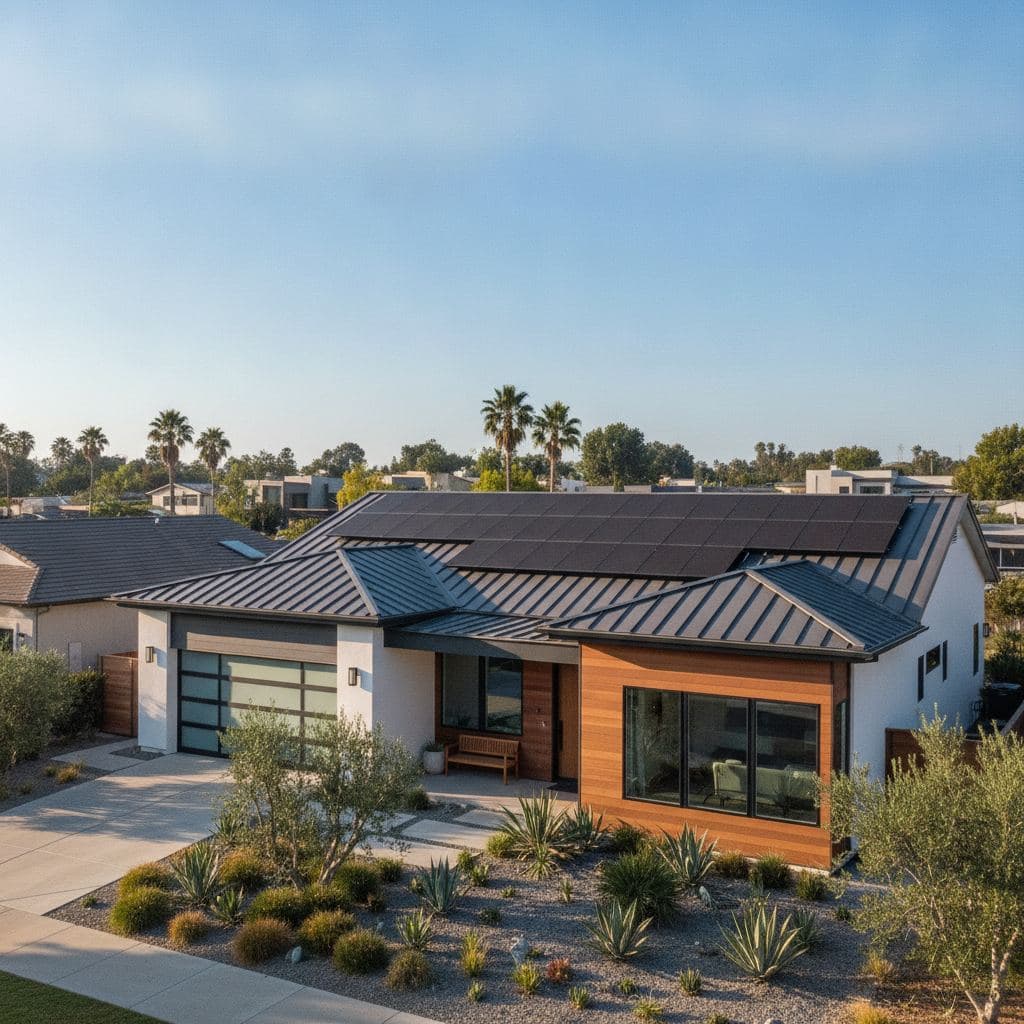
SDG&E averages roughly 46¢/kWh — the highest residential rate of California's three major investor-owned utilities — which means every hour of outage carries real financial and safety stakes. The fastest way to tell whether you are facing a PSPS or an unplanned fault is to open two URLs: sdge.com/outages for the live outage map and sdge.com/ready for the PSPS event page, which are maintained separately and updated on different schedules.
Last verified: October 2026 by Helios Energy Global.
Outage vs. PSPS: the key difference
Not every SDG&E outage is a Public Safety Power Shutoff. High winds and other weather conditions have the potential to lead to unplanned outages throughout the region, which are separate from a PSPS. The distinction matters because the restoration timeline and what you can do about it are completely different.
Unplanned outage — caused by equipment failure, a car hitting a pole, a tree on a line, or wind damage. Customers experiencing an unplanned outage can check SDG&E's Outage Map for information about the outage and estimated restoration times. The map is at sdge.com/outages and shows circuit-level status and estimated restoration windows.
Public Safety Power Shutoff (PSPS) — a deliberate, pre-planned de-energization to reduce wildfire ignition risk. SDG&E makes PSPS decisions based on wildfire risk conditions, not energy demand or high temperatures alone.
If there is a PSPS event, check sdge.com/wildfire-safety/public-safety-power-shutoffs for a map of areas that may be affected. The companion page sdge.com/ready lists impacted communities, Community Resource Center locations, and timing estimates during an active event.
A quick rule of thumb: if your neighbor's power is on and yours is not, it is likely an unplanned fault. If a wide swath of your community is dark and SDG&E sent you a warning notification the day before, it is almost certainly a PSPS.
| Unplanned Outage | Public Safety Power Shutoff (PSPS) | |
|---|---|---|
| Where to check | sdge.com/outages | sdge.com/ready |
| Advance notice | None (happens instantly) | 48–72 hrs to government; 24–48 hrs to customers |
| Typical cause | Equipment fault, wind damage, vehicle accident | Extreme fire-weather forecast (wind, low humidity, dry fuels) |
| Who decides | Field crews respond as damage occurs | SDG&E Emergency Operations Center, in consultation with meteorologists |
| Estimated duration | Hours (varies widely) | Planned around 24 hrs; can extend if wind persists |
| Restoration trigger | Fault repaired and circuit re-energized | Conditions improve → aerial/ground patrol → re-energization |
| Community Resource Centers | Not typically opened | Opened at sdge.com/ready |
What happened October 2–4, 2026
Due to extreme heat and Santa Ana winds, SDG&E initiated Public Safety Power Shutoffs in certain communities to help reduce wildfire risk and protect public safety. An up-to-date list of impacted communities can be found at sdge.com/ready.
According to SDG&E's website, only customers in Descanso were affected by the first round of shutoffs.
In total, about 35,000 customers across many inland communities could have had their power shut off.
Power was later restored after conditions improved and SDG&E determined it was safe to re-energize the equipment.
The event also illustrated how an unplanned outage can occur simultaneously with a PSPS. Customers in parts of Ramona experienced an unexpected power outage affecting circuits 235 and 237. This outage was not related to a Public Safety Power Shutoff. The two events ran in parallel — underscoring why you need to check both SDG&E pages, not just one.
For the most current and authoritative list of communities that were de-energized and customer counts, SDG&E's post-event report will be filed with the CPUC within 10 days of the event's close; those reports are posted at sdge.com/wildfire-safety/psps-more-info.
How SDG&E notifies customers
Two days ahead, SDG&E starts notifying customers who could be affected by a possible PSPS, including critical facilities and medical baseline customers, as well as state, county, and city government agencies.
The notification sequence runs in stages:
72–48 hours out: Government agencies, public safety partners, critical facilities, and Access and Functional Needs (AFN) support organizations receive priority notice.
48–24 hours out: Customers in the area receive a PSPS Alert by phone, text, or email. SDG&E may need to shut off power for safety within the next 24–48 hours.
12 hours out: SDG&E sends a warning that it will likely need to shut off power within the next 12 hours to reduce the risk of wildfire.
Day of shutoff: SDG&E notifies affected communities, and government and public safety agencies, that power has been shut off.
For the latest information, including an outage map with up-to-date timing estimates, Community Resource Center locations, and available support services, visit sdge.com/ready, use the Alerts by SDG&E app, or call 800-411-7343.
Pro tip: Verify your contact information is current in SDG&E's My Energy Center portal. If SDG&E has an old phone number or email, you will not receive advance warnings — and those 24–48 hours of notice are the window in which a home battery makes the most difference.
How long does a PSPS last?
Duration varies with the weather event. SDG&E plans its risk models around a baseline assumption: the forecasted outage duration for all customers anticipated to be impacted by the potential event — for recent events, a 24-hour de-energization duration was assumed.
Real-world outcomes have tracked close to that planning assumption. The CPUC briefing on SDG&E's November 2021 PSPS event showed an average PSPS duration of 25 hours, 13 minutes for that event. The longest individual circuit in that same event ran 42 hours.
Once weather conditions are safe, SDG&E field crews and aerial resources will inspect overhead power lines to make sure there are no damages from high winds and that they are safe to restore and operate.
If hazardous conditions continue or significant repairs are required, outages may last longer.
The practical planning range for San Diego County households is 12–48 hours for a single weather event, with multi-day exposures possible when back-to-back wind events overlap. That window is exactly what a home battery is sized to cover.
The High Fire Threat District
PSPS events are concentrated in SDG&E's High Fire Threat District (HFTD) — the inland and foothill communities where fire risk from utility infrastructure is highest. Per SDG&E's 2026–2028 Wildfire Mitigation Plan, there are 3,364 miles of overhead lines in the HFTD, with 47% underground infrastructure already in place.
The SDG&E service territory is divided into three zones according to level of fire risk. Areas of elevated risk are referred to as High Fire Threat District Tier 2. Inland areas with the highest risk are referred to as HFTD Tier 3.
Communities that appear repeatedly in PSPS events — Descanso, Julian, Ramona, Pine Valley, Fallbrook, Poway, Valley Center, Warner Springs, Pauma Valley — sit in Tier 2 or Tier 3. If your address is in the HFTD, you are statistically more likely to experience a PSPS than a typical SDG&E customer. See our High Fire Threat District map guide to look up your specific address tier.
SDG&E programs for PSPS-affected customers
SDG&E lists several programs on its PSPS support pages today:
Medical Baseline Program
If you have a condition that requires electricity for medical equipment, you may be eligible for the Medical Baseline Program. Eligible customers may receive additional energy at a lower cost, additional notifications if needed, and support related to backup power options. Apply at sdge.com/medicalbaseline. Important caveat from SDG&E's own application materials: SDG&E will attempt to notify the patient in advance of a state-directed power outage. However, if the patient requires life support equipment, he/she should make arrangements for a backup power supply in case of an outage.
Backup Power Programs
Rebates, grants, and free batteries or solar equipment may be available for qualified customers in high fire-risk areas. Availability and eligibility change; check sdge.com/ready for current program details. Note that California's SGIP residential battery rebate program is currently waitlisted in 2026 — confirm directly with SDG&E or a licensed installer before counting on it.
Community Resource Centers (CRCs)
Community Resource Centers are available for customers impacted by a PSPS. These Centers are equipped with resources such as water, snacks, air conditioning, Wi-Fi, phone and medical device charging, and are open to the public. The most current list of impacted communities as well as CRC locations and hours can be found at sdge.com/ready.
211 San Diego Partnership
To offer enhanced support during a PSPS, SDG&E has partnered with 211 San Diego. Dial 2-1-1 to reach social services, transportation assistance, and other community resources during an active event.
Solar alone goes dark. A battery keeps you on.
This is the single most important thing San Diego homeowners get wrong about solar: a grid-tied solar system shuts off automatically the moment SDG&E de-energizes your line — whether it is an unplanned outage or a PSPS. This is a required safety feature, not a malfunction. It prevents your panels from back-feeding electricity onto lines that crews may be working on.
See our full explanation in Do solar panels work during a power outage?
A home battery paired with solar changes the equation entirely:
| Scenario | Solar only | Solar + battery |
|---|---|---|
| Grid outage (daytime) | Off — anti-islanding shuts system down | On — battery holds the circuit; solar recharges it |
| Grid outage (nighttime) | Off — no generation, no storage | On — battery supplies stored energy |
| PSPS (multi-day) | Off throughout | On — solar recharges battery each day; extends runtime |
| SDG&E rate at ~46¢/kWh | Bill savings only | Bill savings + backup power |
What does a battery cost installed in San Diego?
All prices below are installed, all-in estimates for 2026. There is no federal residential solar tax credit available for a 2026 purchase — that credit expired December 31, 2025.
| Component | Installed cost estimate (2026) |
|---|---|
| Tesla Powerwall 3 (1 unit) | $14,500–$18,500 |
| Tesla Powerwall 3 (2 units) | $24,000–$30,000 |
| Tesla Powerwall 3 Expansion unit | $8,000–$11,500 |
| Enphase IQ Battery 10C | $13,000–$15,500 |
| FranklinWH aPower 2 with aGate | $16,000–$21,000 |
| Main panel upgrade (if needed) | $3,000–$5,000 |
Estimates only. Your exact cost depends on home electrical configuration, roof type, and whether a panel upgrade is required.
A single battery typically covers essential loads — refrigerator, lights, phone charging, medical equipment, a few outlets — for 24–48 hours. Two units or a higher-capacity system can cover more circuits or extend runtime through a multi-day PSPS. SDG&E's average rate of ~46¢/kWh is the highest in Southern California, which means the economic case for storage is stronger here than almost anywhere else in the state.
For a deeper comparison of batteries versus a generator for backup power, see our guide on generator vs. battery backup in California.
What about NEM 3.0 and PSPS?
SDG&E is an investor-owned utility, so it operates under NEM 3.0 (the CPUC's Net Billing Tariff). Under NEM 3.0, solar-only export credits are significantly lower than retail rates — which makes pairing a battery with solar more financially attractive than ever, since you can store daytime generation and use it during SDG&E's 4–9 PM peak (when rates run ~48–58¢/kWh on SCE's comparable TOU plans, and similarly high on SDG&E's TOU schedules). The PSPS resilience benefit stacks on top of those daily bill savings. See our NEM 3.0 explained guide for the full picture.
Frequently asked questions about SDG&E power outages and PSPS
How do I know if my SDG&E outage is a PSPS or a regular outage?
Check two separate pages: sdge.com/outages for the live outage map (unplanned faults) and sdge.com/ready for active PSPS events. If your address appears on the PSPS page and SDG&E sent you an advance notification, it is a shutoff. If you lost power without warning and your address is not on the PSPS page, it is most likely an unplanned fault.
How much advance notice does SDG&E give before a PSPS?
SDG&E starts notifying customers who could be affected by a possible PSPS about two days ahead, including critical facilities and medical baseline customers. A 12-hour warning text or call typically follows closer to the shutoff window. Weather forecasts can change quickly, so monitor your phone and email for updates.
Which San Diego communities are most at risk for PSPS events?
Communities in SDG&E's High Fire Threat District Tier 2 and Tier 3 are most frequently included in PSPS considerations. The SDG&E service territory is divided into three zones by fire risk level — Tier 2 areas are elevated risk and Tier 3 inland areas carry the highest risk. Communities like Descanso, Julian, Ramona, Fallbrook, Poway, Valley Center, and Warner Springs have appeared in multiple PSPS events. Use our High Fire Threat District map to check your specific address.
Can I use my solar panels during a PSPS?
Not without a battery. A grid-tied solar system automatically shuts off when SDG&E de-energizes the line — this is a required safety feature. A battery with a transfer switch or gateway isolates your home from the grid and lets your solar panels continue generating and charging the battery throughout the shutoff. Read the full explanation at Do solar panels work during a power outage?
Is there any SDG&E program that helps with backup power for medical equipment?
If you have a condition that requires electricity for medical equipment, you may be eligible for the Medical Baseline Program, which provides additional notifications and support related to backup power options. However, SDG&E's own application materials are clear: patients who rely on life support equipment should arrange their own backup power supply. A home battery is the most reliable solution for continuous, automatic coverage.
How long should I plan for a PSPS to last in San Diego?
Plan for at least 24 hours as a baseline — that is the planning assumption SDG&E uses in its CPUC post-event reports. Historical events have averaged around 25 hours, with individual circuits running up to 42 hours. Multi-day exposures are possible when back-to-back wind events overlap. Size your battery backup for at least 24–48 hours of essential loads to be safe.
Does SDG&E open help centers during a PSPS?
Yes. Community Resource Centers are available for customers impacted by a PSPS. These locations are open to the public and equipped with water, snacks, air conditioning, Wi-Fi, and phone and medical device charging. Locations and hours are available at sdge.com/ready.
Next steps
- Book a free consultation and custom design — Helios gives you one all-in written price with every battery model named; no pressure, no obligation.
- See which battery works best for SDG&E customers — Powerwall 3, Enphase IQ, and FranklinWH compared for San Diego homes.
- Tesla Powerwall 3 in San Diego — pricing, specs, and what to expect from installation in SDG&E territory.
- Is your address in the High Fire Threat District? — Look up your Tier 2 or Tier 3 status before your next PSPS season.
- How to prepare for a PSPS power shutoff — a practical checklist for San Diego households.
- NEM 3.0 explained — how SDG&E's net billing tariff changes the math on solar-plus-storage.
- See our solar and battery options — all systems, all brands, Southern California pricing.
Sources
- SDG&E Public Safety Power Shutoffs page (sdge.com) — October 8, 2026
- SDG&E PSPS More Info / Customer Programs page (sdge.com) — July 1, 2026
- SDG&E PSPS 24-48 hr Customer Email Template (sdge.com/m2e) — October 2, 2026
- SDG&E PSPS 12-hr Customer Text Template (sdge.com/m3e) — October 2, 2026
- CPUC SDG&E PSPS Post-Event Report Jan 20–24 2025 — February 24, 2025
- SDG&E Wildfire Mitigation Plan 2026–2028 Presentation — January 1, 2026
More guides
Best Solar Companies in Pismo Beach, CA (2026): Honest Rankings for Coastal Homeowners
A straight-talking, numbers-first guide to the best solar installers serving Pismo Beach in 2026 — covering real costs, PG&E net metering, battery tradeoffs, and what to ask before you sign.
ReadThe 10 Best Solar Companies in Palm Desert, CA (2026): Desert Heat, HOA Rules, and the SCE/IID Split
Palm Desert runs six peak sun hours a day and SCE rates averaging 34–35¢/kWh — strong solar math, complicated by golf-community HOAs, SolarAPP+ instant permits, and a critical utility boundary at Washington Street. This guide ranks the 10 best solar installers serving Palm Desert in 2026 with straight numbers and no hype.
ReadBest Solar Companies in San Diego, CA (2026): Honest Rankings for SDG&E Homeowners
SDG&E charges the highest residential rates of any major U.S. utility — nearly 46¢/kWh — making San Diego one of the strongest solar markets in the country. Here's how to find an installer who actually understands NEM 3.0 and your specific neighborhood.
ReadGet a free consultation and custom design.
No pressure, no obligation — the owner reviews every design we send.