How to prepare for a PSPS power shutoff in 2026
A 2-day PSPS outage requires roughly 20–40 kWh of backup power for a typical Southern California home — here's exactly how to prepare.
By Taylor Crouse — Founder, Helios Energy GlobalPublished
Quick answer
- A typical Southern California home uses 20–40 kWh over 48 hours of outage — that's the energy target your backup plan must hit.
- A single home battery (roughly 10–13 kWh usable) covers essential loads for 12–24 hours; two batteries or solar + one battery can cover a full 2-day PSPS.
- SCE enrolls Medical Baseline customers in advance PSPS notification — sign up at sce.com at least 2 business days before fire season.
- Whole-home generators run on propane or natural gas and can run indefinitely but cost $8,000–$18,000 installed and require fuel management; batteries require zero fuel and no exhaust.
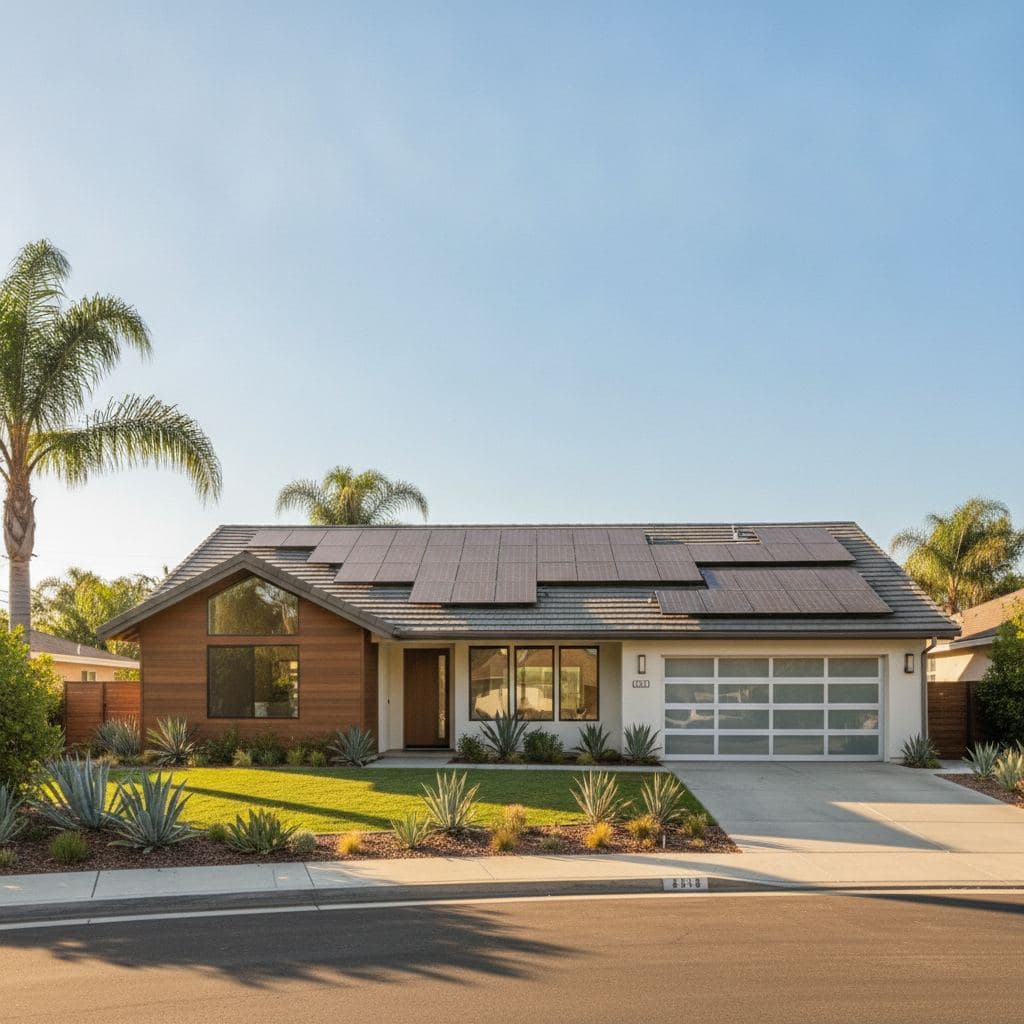
A typical Southern California home draws 1–2 kW continuously for refrigeration, lighting, phone charging, and a fan — meaning a 48-hour PSPS event demands roughly 48–96 kWh if you run everything, or 20–40 kWh if you cut to essentials. Knowing that number is the starting point for every decision that follows: how many batteries you need, whether a generator makes sense, and what manual steps to take regardless.
Last verified: September 2026 by Helios Energy Global.
What a 2-day PSPS actually demands from your home
Most people underestimate how much energy "just the basics" requires. Here are the real numbers for a Southern California home running essential loads only during a 48-hour shutoff:
| Load | Typical wattage | 48-hour consumption (est.) |
|---|---|---|
| Refrigerator/freezer | 100–200 W average | 5–10 kWh |
| Lighting (LED, 6 fixtures) | 60–90 W | 3–4 kWh |
| Phone/laptop charging | 60–120 W | 3–6 kWh |
| Ceiling fans (2) | 60–120 W | 3–6 kWh |
| Medical device (e.g., CPAP) | 30–60 W | 1–3 kWh |
| Wi-Fi router + modem | 15–20 W | 1 kWh |
| Essential-loads total (estimate) | ~325–590 W avg | ~16–30 kWh |
| Add: EV charging (Level 1, overnight) | 1,400 W | +14 kWh |
| Add: window A/C (one room) | 500–1,000 W | +24–48 kWh |
| Full-comfort total (estimate) | ~54–92 kWh |
All figures are estimates based on EIA residential consumption data and typical appliance ratings. Your actual usage will vary.
The practical takeaway: one home battery at 10–13 kWh usable capacity covers essential loads for roughly 18–30 hours. For a full 48-hour event with essentials only, you need either two batteries, or one battery recharged daily by a solar array. If you want to run air conditioning, you're looking at a larger system or a generator as a supplement.
SCE vs. LADWP: your utility determines your risk and your alerts
Not all Southern California utilities run PSPS events the same way — and this matters for how you prepare.
Southern California Edison (SCE) is an investor-owned utility regulated by the CPUC. SCE operates the largest PSPS program in Southern California and covers high-fire-threat districts across the San Gabriel Mountains, Inland Empire foothills, and parts of Orange County. SCE sends notifications 72 hours, 24 hours, and 1 hour before a planned shutoff via text, email, and automated call — but only if you're enrolled.
LADWP is a municipal utility that serves the City of Los Angeles. LADWP has its own separate wildfire safety program and is not subject to CPUC PSPS rules. Historically, LADWP's PSPS events have been less frequent and shorter in duration than SCE's, but that can change as fire risk grows. LADWP customers should register at ladwp.com for outage alerts.
Other Southern California munis — Pasadena PWP, Burbank, Glendale, Anaheim APU, Riverside RPU — each have independent programs. Check your utility's website directly.
Action item: Regardless of your utility, go register your phone number and email for outage alerts today, not the week of a red-flag warning.
The SCE Medical Baseline program: enroll before fire season
If anyone in your household depends on electrically powered medical equipment — oxygen concentrators, home dialysis, infusion pumps, CPAP/BiPAP, or electronic monitoring — SCE's Medical Baseline program does two things:
- Lowers your monthly rate by qualifying you for a higher allocation of lower-cost baseline electricity.
- Flags your address for priority PSPS notification, which means SCE attempts direct outreach before and during a shutoff.
Medical Baseline does not guarantee your power stays on — it means SCE knows you need extra lead time. Enrollment requires a physician's signature. Allow at least two business days for processing, and enroll well before October, when PSPS season peaks. Find the form at sce.com.
LADWP has a comparable Life Support Equipment program — same idea, different form.
Battery vs. generator: the honest comparison
Both options work. Neither is perfect. Here's the straight comparison for a Southern California homeowner:
Home battery (e.g., paired with solar)
- Cost: ~$14,000–$18,500 installed per battery unit (2026 estimates)
- Usable capacity: 10–13 kWh per unit
- Recharge: automatic via solar panels during the day; no fuel required
- Runtime on essentials: ~18–30 hours per battery; indefinite with solar recharging
- Noise/exhaust: none — fully silent, indoor-safe
- Incentives: SGIP residential battery incentive is waitlisted as of mid-2026; check dsireusa.org for updates. Note: the 30% federal residential solar tax credit expired December 31, 2025 and does not apply to 2026 purchases.
- Best for: homeowners who want seamless, automatic backup with no fuel logistics
Standby generator (natural gas or propane)
- Cost: ~$8,000–$18,000 installed for a whole-home standby unit
- Runtime: indefinite on natural gas; limited by propane tank size
- Noise/exhaust: significant — requires outdoor placement, 5-foot clearance from openings, and local permit
- Fuel risk: natural gas lines sometimes shut off during the same wildfires that trigger PSPS; propane requires advance delivery
- Best for: homes with very high energy loads (pool pump, large A/C, EV) or no roof space for solar
Portable generator (gas)
- Cost: $500–$2,500
- Runtime: limited by gas can; requires manual refueling
- Risk: carbon monoxide — must never be used indoors or in a garage
- Best for: short-term emergency backup only; not a long-term PSPS strategy
For most SCE-territory homeowners in Santa Monica and the broader LA basin, solar + battery is the cleanest, lowest-maintenance solution for PSPS events of 1–3 days. A generator may make sense as a supplement for longer outages or very high loads. Learn more on our batteries page.
The PSPS preparation checklist
Work through this list before fire season (ideally by September):
Register and enroll
- Register for utility alerts (SCE or LADWP) with your current mobile number and email
- Enroll in Medical Baseline (SCE) or Life Support Equipment program (LADWP) if applicable
- Save your utility's outage map URL as a bookmark — cell networks get congested during events
Power and energy
- Assess your backup capacity — do you have a battery, generator, or nothing? Use the table above to size the gap
- Test your backup system — if you have a battery or generator, do a manual test run before October
- Charge batteries to 100% when a PSPS watch is issued, not after
- Charge all phones, laptops, and power banks at the first notification
- Pre-cool your home to 68–70°F in the hours before shutoff if heat is forecast
Food and water
- Keep refrigerator at 35–38°F and freezer at 0°F — a full freezer stays safe for ~48 hours if unopened; fridge for ~4 hours without power
- Stock 1 gallon of water per person per day for at least 3 days
- Keep a manual can opener — obvious, but forgotten
Medical and safety
- Maintain a 2-week supply of medications that require refrigeration (insulin, etc.) — ask your pharmacist about cooling options
- Know your community's cooling center locations — SCE and county emergency services publish these before major events
- Keep flashlights and a battery-powered or hand-crank radio accessible
Vehicle
- Keep your gas tank above half during red-flag season — gas stations lose power too
- If you have an EV, charge to at least 80% when a watch is issued; if you have vehicle-to-home (V2H) capability, verify it's configured
Frequently asked questions about PSPS preparation
How much notice does SCE give before a PSPS?
SCE targets 72 hours of advance notice when weather forecasts allow it, with follow-up notifications at 24 hours and again roughly 1 hour before shutoff. In rapidly developing fire weather, notice can be shorter. Enrolling in SCE's alert system is the only way to receive all three notifications.
Does solar keep working during a PSPS outage?
No — not without a battery. Standard grid-tied solar systems automatically shut off during an outage for safety reasons (to protect utility workers). Only a solar system paired with a battery, or a solar system with an island-mode inverter, will continue producing and using power during a shutoff. See our solar vs. battery under NEM 3.0 guide for more detail.
Is SGIP still available for batteries in 2026?
The California Self-Generation Incentive Program (SGIP) residential budget is waitlisted as of mid-2026. New applicants can join the waitlist, but there is no guarantee of funding or timeline. Check the CPUC's SGIP portal for current status before making a purchase decision based on this incentive.
How long does a typical PSPS last in Southern California?
Based on CPUC utility reporting, most SCE PSPS events have lasted 12–72 hours, with the majority resolving within 48 hours. However, large-scale events during severe Santa Ana wind conditions have extended beyond 3 days in some circuits. Designing your backup for 48 hours covers the large majority of historical events.
Can I use a portable generator inside my garage during a PSPS?
Absolutely not. Carbon monoxide from a portable generator can reach lethal concentrations in a garage within minutes, even with the door open. Portable generators must be operated at least 20 feet from any door, window, or vent, outdoors only. This is a leading cause of PSPS-related deaths.
Does LADWP do PSPS shutoffs too?
Yes, LADWP has the authority to conduct PSPS events in high-fire-threat areas within its service territory. LADWP is a municipal utility and is not subject to CPUC PSPS rules, so its notification timelines and enrollment processes differ from SCE's. Register at ladwp.com for LADWP outage alerts.
Will my area be affected by a PSPS?
SCE publishes a High Fire Threat District (HFTD) map showing Tier 2 and Tier 3 risk zones — circuits in those zones are candidates for PSPS. Broadly, foothills and mountain-adjacent communities (Pasadena foothills, San Gabriel Valley, Inland Empire, parts of Ventura County) face higher PSPS frequency than coastal areas like Santa Monica. Check sce.com for your specific circuit's history.
Next steps
- Book a free consultation and custom design — we'll size a solar + battery system to cover your specific PSPS load requirements
- See battery storage options and pricing — current installed cost ranges and how to compare capacity
- Estimate your solar savings — understand how solar recharges your battery during a multi-day outage
- Read our NEM 3.0 explainer — understand how your utility tariff affects the value of solar + storage
- Solar panel cost guide for Southern California — 2026 price ranges and what drives the difference
- View our service locations — see which Southern California communities we serve
Sources
- SCE PSPS information and alerts
- LADWP Public Safety Power Shutoff
- CPUC PSPS rules and utility reporting
- California Energy Commission – backup power guidance
- FEMA – emergency supply list
- EIA – residential electricity consumption data
- NREL – behind-the-meter battery storage
- DSIRE – California incentive programs
More guides
What are the best solar panels in 2026?
An honest tier list of 2026's top solar panels—REC, Qcells, Panasonic, Silfab, Canadian Solar, and Tesla—ranked by efficiency, degradation, warranty, and installed cost per watt.
ReadBest Solar Companies in La Crescenta-Montrose, CA (2026): Honest Rankings for Foothill Homeowners
La Crescenta-Montrose sits in the Crescenta Valley foothills under LADWP service — not SCE, not NEM 3.0. This guide ranks the 10 best solar installers for 2026 and explains exactly what that means for your payback.
ReadHow Much Does a Roof Replacement with Solar Panels Cost in 2026?
A combined roof-replacement-plus-new-solar project in Southern California typically runs $30,000–$65,000 depending on roofing material and system size — less than doing both projects separately. If you already have solar, Helios's detach-and-reset adds $250–$350 per panel.
ReadGet a free consultation and custom design.
No pressure, no obligation — the owner reviews every design we send.