Do solar panels work during a power outage in 2026?
Standard grid-tied solar shuts off within 2 seconds of a grid outage — but adding a battery keeps 5–15 kWh of backup power running in your home.
By Taylor Crouse — Founder, Helios Energy GlobalUpdated
Quick answer
- A standard grid-tied solar system shuts off within 2 seconds of a grid outage — you get zero power from panels alone. > - Adding a home battery (typically 5–15 kWh usable per unit) creates an "island" that keeps essential circuits running. > - Southern California Edison (SCE) PSPS events have lasted 12–72+ hours in recent years — long enough to drain a single battery without solar recharging it.
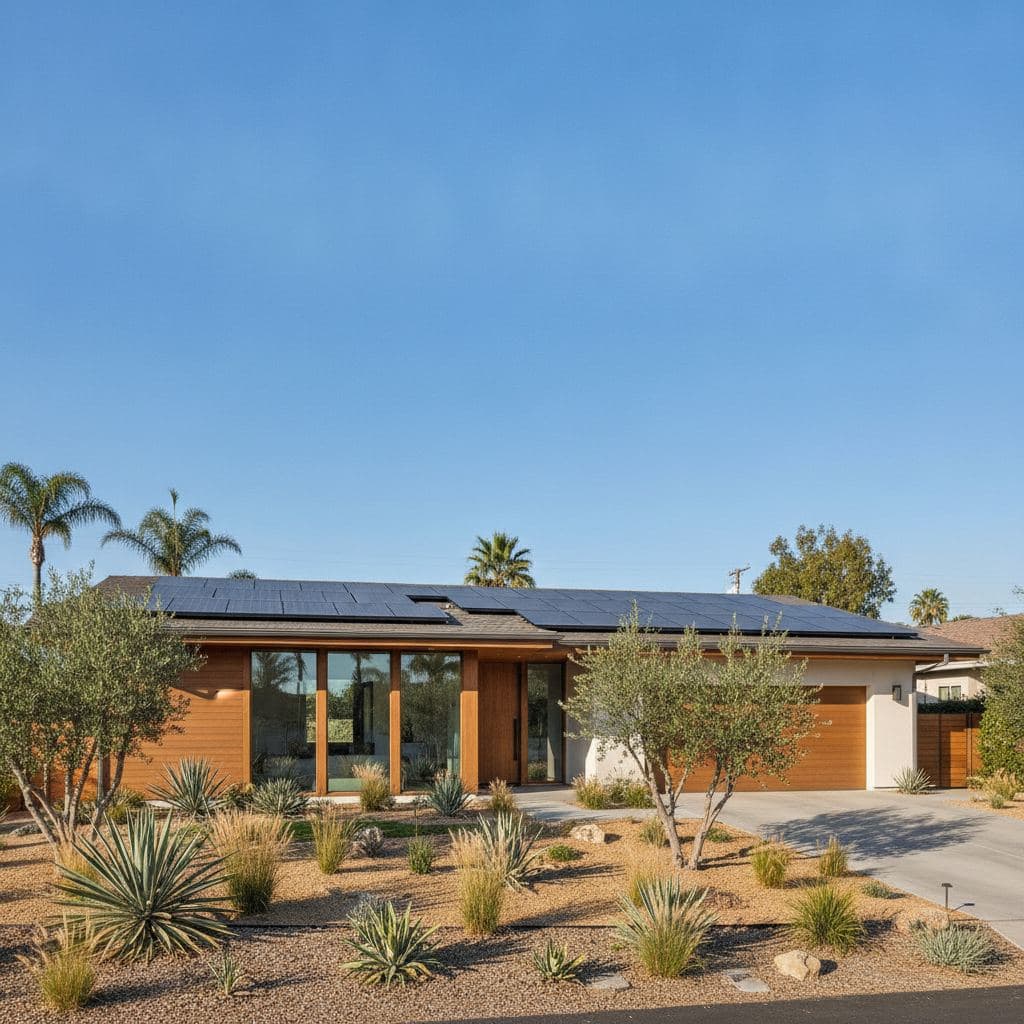
- A solar + battery system can recharge from panels during the day, extending backup to days, not hours, depending on your load and sun hours.
A grid-tied solar system — which describes the vast majority of residential installs in Southern California — produces zero usable electricity the moment the grid goes down. The inverter is legally required to disconnect within 2 seconds under IEEE 1547 anti-islanding rules, protecting utility line workers from backfed power. The one exception: a system paired with a battery and a transfer switch (or a hybrid inverter) that can "island" your home from the grid and keep running.
Last verified: September 2026 by Helios Energy Global.
Why grid-tied solar shuts off — and why that's actually a rule, not a flaw
When the grid goes dark, utility crews go out to find and fix the problem. If your inverter kept pushing power onto the downed line, a worker could be electrocuted. That's why every UL-listed grid-tied inverter sold in the U.S. is required to detect a grid outage and shut itself off — a behavior called anti-islanding protection.
This isn't a brand-specific quirk. It applies equally to systems on SCE, LADWP, SDG&E, and every other utility in California. Your panels may be generating full power at noon on a sunny day, and you'll still have no electricity in your house if the grid is down and you have no battery.
The good news: this problem is 100% solvable with the right equipment.
The solution: battery backup with islanding capability
A home battery system — paired with a hybrid inverter or an automatic transfer switch — lets your solar + storage system disconnect from the grid safely and form its own mini-grid just for your home. This is called islanding mode.
Here's how it works during an outage:
- Grid goes down → transfer switch opens within milliseconds, isolating your home circuits.
- Battery powers your loads — lights, refrigerator, Wi-Fi, medical equipment, whatever is on your backed-up panel.
- Panels recharge the battery during daylight hours, extending your backup from hours to days.
- Grid comes back → system reconnects automatically and returns to normal operation.
Without the solar recharging, a single battery at 10 kWh usable capacity might last 8–16 hours depending on how much you're running. With solar recharging, a well-sized system can sustain a home through a multi-day PSPS event — the exact scenario SCE customers in foothill and wildfire-risk areas face every fire season.
The Southern California context: PSPS events change the math
Public Safety Power Shutoffs (PSPS) are SCE's tool for reducing wildfire ignition risk during high-wind, low-humidity conditions. In recent years, SCE PSPS events have ranged from 12 hours to well over 72 hours for some communities in areas like the San Gabriel Valley foothills, Malibu, and the Santa Ana wind corridor.
A single 10 kWh battery, without solar recharging, won't carry you through a 48-hour shutoff if you're running a refrigerator, a few lights, and phone charging — that load profile can easily draw 500–800 watts, burning through 12–19 kWh in a 24-hour period.
The solar-recharging loop is what makes multi-day backup viable. A 6–8 kW solar array in Southern California produces roughly 24–32 kWh on a clear summer day (based on approximately 5–5.5 peak sun hours). Even on a hazy day, you might harvest 12–18 kWh — enough to replenish a battery and still run daytime loads.
LADWP customers: LADWP's service territory is largely urban and has fewer PSPS-style shutoffs, but standard outages from equipment failure, accidents, and storms still apply. The same anti-islanding rule applies to LADWP-interconnected systems. Battery backup works identically regardless of your utility.
Key numbers at a glance
| Factor | Typical range / figure | Notes |
|---|---|---|
| Inverter anti-islanding shutoff time | < 2 seconds | Required by IEEE 1547; applies to all utilities |
| Usable battery capacity per unit | 5–15 kWh | Varies by product; most residential units ~10–13 kWh |
| Installed cost per battery unit | ~$14,000–$18,500 | Estimate; includes hardware + labor |
| SCE average residential rate (2026) | ~34–35¢/kWh | TOU peak 4–9 PM; per utility filings |
| LADWP average residential rate (2026) | ~28¢/kWh | Retail-rate net metering still available |
| SoCal peak sun hours | ~5–5.5 hrs/day | Clear summer day; varies by location and shading |
| Solar array daily production (6 kW) | ~30–33 kWh (est.) | Clear summer day, south-facing, minimal shading |
| Typical PSPS duration (SCE) | 12–72+ hours | Based on recent SCE PSPS event records |
| SGIP battery incentive status (2026) | Waitlisted | Residential budget exhausted; join waitlist |
What equipment actually enables backup power?
Not all solar equipment supports islanding. Here's what you need:
Option 1 — Hybrid / storage-ready inverter Inverters like those used with major battery systems have a built-in transfer switch and islanding mode. This is the cleanest solution and what most new installs use. Your whole backup panel (or specific circuits) stays live during an outage.
Option 2 — AC-coupled battery added to an existing system If you already have a standard string inverter, certain batteries can be AC-coupled to it. The battery's built-in inverter handles islanding. This works but has some efficiency losses and compatibility constraints — ask your installer to confirm compatibility with your existing equipment.
Option 3 — Generator + solar (hybrid approach) Some homeowners pair a battery with a gas or propane generator for very long outages. The generator charges the battery; solar recharges it during the day. This adds cost and complexity but maximizes resilience for multi-day events.
What doesn't work: A standard string inverter (the kind installed in most pre-2020 systems) with no battery. Even if you add a battery to the wrong inverter type, you may not get backup capability. Always verify islanding mode is enabled and tested before you need it.
NEM 3.0 and battery backup: a connected story for SCE customers
If you're on SCE (an investor-owned utility), you're on NEM 3.0 — the Net Billing Tariff that went into effect in 2023. Under NEM 3.0, solar export rates are much lower than retail rates, which means the financial case for a battery is already stronger than it was under NEM 2.0. You earn more by storing your solar and using it during the 4–9 PM peak window than by exporting it.
The backup power benefit is on top of that financial benefit. A battery under NEM 3.0 pays you back in two ways: bill savings during normal operation and power security during outages. Learn more about how NEM 3.0 changes the solar math →
LADWP customers are not on NEM 3.0. LADWP still offers retail-rate net metering, so the financial urgency to add a battery is somewhat lower — but the backup value during outages is identical.
How much backup power do you actually need?
A useful way to think about it: what are your non-negotiables during an outage?
- Refrigerator + freezer: ~100–200W running, ~400–600W startup surge
- Wi-Fi router + a few LED lights: ~50–100W
- Phone and laptop charging: ~50–100W
- Medical equipment (CPAP, oxygen concentrator): varies widely — check the device label
- Central AC: 2,000–5,000W — typically requires a large battery bank or generator
- Electric vehicle charging: 1,440–7,200W — usually deprioritized during outages
A modest backup load (fridge, lights, Wi-Fi, devices) might draw 400–600W continuously, or roughly 10–14 kWh per 24 hours. One battery gets you through a day. Two batteries plus solar recharging gets you through a multi-day PSPS event comfortably.
Explore battery options and sizing →
Frequently asked questions about solar and power outages
Will my solar panels charge my battery during a grid outage?
Yes — if your system is properly configured with a hybrid inverter or AC-coupled battery that supports islanding mode. The panels charge the battery during daylight hours, and the battery powers your home around the clock. Without that configuration, panels shut off along with the inverter.
How long will a home battery last during an outage?
It depends on your load. A 10–13 kWh battery running modest loads (fridge, lights, Wi-Fi, devices) typically lasts 12–24 hours without solar recharging. With a solar array recharging it daily, you can sustain backup power for multiple days through a PSPS or extended outage.
Does LADWP have PSPS events like SCE?
LADWP's territory is primarily urban and has not implemented PSPS-style shutoffs on the same scale as SCE. However, standard outages from equipment failure, accidents, and storms still occur, and the same anti-islanding rule applies — your grid-tied solar shuts off unless you have a battery with islanding capability.
Can I add a battery to my existing solar system for backup?
Often yes, but compatibility matters. Some older string inverters can be AC-coupled with a storage-ready battery. Others may require an inverter upgrade. The only way to know for sure is to have an installer review your existing equipment. See our battery add-on options →
Is the SGIP battery rebate available in 2026?
The California Self-Generation Incentive Program (SGIP) residential budget is waitlisted as of 2026. You can join the waitlist, and funding does open periodically, but there is no guarantee of timing or amount. We'll flag any changes for clients in our pipeline.
Do I need a whole-home backup or just critical circuits?
Most homeowners start with critical circuit backup — a sub-panel covering the refrigerator, a few lights, Wi-Fi, and outlets for devices. Whole-home backup (including central AC) requires significantly more battery capacity and a larger solar array, and costs more. We size systems based on your actual priorities. Get a custom design →
Does a power outage affect my NEM 3.0 billing?
No. NEM 3.0 billing is based on your net energy over a 12-month true-up period. An outage simply means you're not exporting or importing during that time. Your battery discharges to cover your loads, and when the grid returns, normal billing resumes. Read our NEM 3.0 guide →
Next steps
- Book a free consultation and custom design — we'll size a solar + battery system around your actual outage risk and load profile.
- Explore home battery options and pricing →
- See how solar + battery works under NEM 3.0 →
- Understand your solar panel options →
- Review solar installation costs for Southern California →
- Check our Southern California service locations →
More guides
How long does solar installation take in California in 2026?
From signed contract to Permission to Operate, most Southern California solar installs take 6–16 weeks depending on your utility and city permit office.
ReadBest Solar Companies in Malibu, CA (2026): Honest Rankings for Coastal Homeowners
Malibu's coastal sun, high SCE rates, and NEM 3.0 rules make solar a strong investment — if you pick the right installer. Here are the 10 best solar companies serving Malibu in 2026, plus a plain-English guide to what it actually costs.
ReadThe 10 Best Solar Companies in Mission Viejo, CA (2026): Tile Roofs, HOAs, and NEM 3.0 Done Right
Mission Viejo's master-planned tile roofs, HOA review process, and SCE's NEM 3.0 billing rules make installer selection more consequential than most Orange County cities. Here's an honest, numbers-first look at who's doing it right in 2026.
ReadGet a free consultation and custom design.
No pressure, no obligation — the owner reviews every design we send.