Generator vs battery backup in California: which is right for you in 2026?
A whole-home generator runs $8,000–$20,000 installed; a home battery runs $14,000–$18,500 — but only the battery earns you money every single day on SCE or LADWP.
By Taylor Crouse — Founder, Helios Energy GlobalUpdated
Quick answer
- Whole-home standby generators run $8,000–$20,000 installed (natural gas or propane); home batteries run $14,000–$18,500 installed per unit. > - Batteries are silent, permit-friendlier in fire zones, and earn daily TOU value by discharging during SCE's 4–9 PM peak (~34–35¢/kWh) or LADWP's on-peak window. > - Generators win on raw runtime — they run as long as fuel flows; a single battery holds roughly 10–13 kWh usable, enough for 8–24 hours of essential loads.
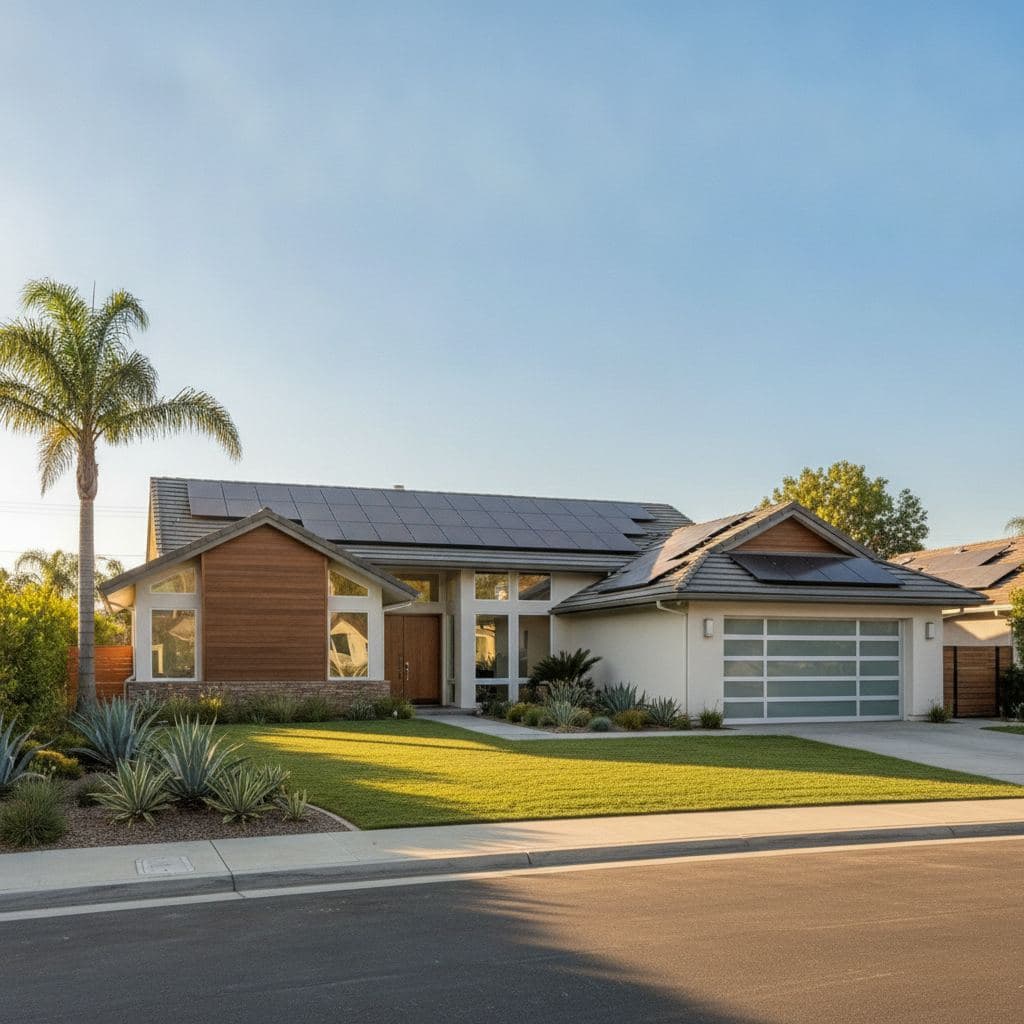
- In California's High or Very High Fire Hazard Severity Zones, many jurisdictions restrict or prohibit outdoor generator use during Red Flag conditions — batteries have no such restriction.
A home battery costs roughly $14,000–$18,500 installed and a standby generator runs $8,000–$20,000, so the price overlap is real — but the two products solve different problems. For most Southern California homeowners who face both wildfire-season outages and daily TOU electricity bills, a battery paired with solar is the stronger long-term investment; a generator is the right call when multi-day outages with no solar recharge are the primary risk.
Last verified: September 2026 by Helios Energy Global.
The core trade-off in one sentence
A generator is a fuel-burning engine you run when the grid fails; a battery is a silent energy reservoir you charge from solar (or cheap off-peak grid power) and discharge whenever it's most valuable — including every single evening during peak rates, whether the grid is up or down.
Head-to-head comparison table
| Factor | Standby Generator | Home Battery |
|---|---|---|
| Installed cost (estimate) | $8,000–$20,000 | $14,000–$18,500 per unit |
| Fuel source | Natural gas, propane, or gasoline | Solar PV or grid electricity |
| Ongoing fuel cost | $5–$15/hr running (gas prices vary) | ~$0 if solar-charged |
| Noise level | 65–75 dB (lawn-mower range) | Silent |
| Runtime | Unlimited while fuel flows | ~8–24 hrs per charge (essential loads) |
| Daily TOU bill value | None (backup only) | Saves ~34–35¢/kWh on SCE peak; ~28¢/kWh on LADWP |
| Permit complexity | Electrical + gas/mechanical permit; HOA approval often needed | Electrical permit; simpler process in most SoCal jurisdictions |
| Fire-zone suitability | Restricted or prohibited during Red Flag events in many CA jurisdictions | No restriction; no exhaust, no spark risk |
| Maintenance | Annual service, oil changes, load testing | Minimal; software updates |
| Pairs with solar | Rarely (requires special transfer equipment) | Yes — designed to work together |
| Federal tax credit (2026) | None (credit expired 12/31/2025) | None (credit expired 12/31/2025) |
| SGIP incentive | Not eligible | Waitlisted in 2026 |
All cost figures are estimates for Southern California installations as of mid-2026. Your quote will depend on equipment size, panel upgrades, and site conditions.
Why fire zones tilt the math toward batteries
California's Office of the State Fire Marshal designates High and Very High Fire Hazard Severity Zones across much of Los Angeles, Ventura, and San Bernardino counties. During Red Flag Warning conditions — the exact moments when grid outages are most likely — portable and standby generators pose ignition risks from exhaust sparks and heat. Several SoCal jurisdictions have enacted local ordinances restricting outdoor combustion equipment during these events.
A home battery has no exhaust, no spark, and no combustible fuel stored on site. It charges silently from your solar panels during the day and discharges through the night. In a multi-day fire-weather event where the utility proactively de-energizes your circuit (a PSPS — Public Safety Power Shutoff), your battery recharges each morning from the sun and runs your essentials each night, indefinitely, without a fuel delivery.
That's a fundamentally different resilience profile than a generator, which requires a fuel supply chain that may be disrupted during a regional emergency.
The daily economics that generators can't match
Here's what most generator salespeople don't emphasize: a generator earns you zero dollars on a normal day. It sits in your yard, depreciating, waiting for an outage that may come once or twice a year.
A battery, by contrast, works every single day.
On SCE (Southern California Edison), the standard TOU-D rate peaks at roughly 34–35¢/kWh between 4–9 PM. A battery charged by solar during the day and discharged during that window avoids buying expensive peak power — or, under NEM 3.0 (the CPUC Net Billing Tariff that applies to SCE customers), it exports at a higher value during peak hours than at other times. Over a year, that daily cycling adds up to meaningful bill reduction.
On LADWP, the math is different. LADWP is a municipal utility — it is not on NEM 3.0. LADWP still offers retail-rate net metering, meaning solar exports are credited at roughly the full retail rate (~28¢/kWh average). Batteries are less urgently needed for export optimization on LADWP, but they still provide backup value and can reduce demand charges for customers on applicable rate tiers.
Other Southern California municipal utilities — Pasadena Water and Power, Burbank Water and Power, Glendale Water and Power, Anaheim Public Utilities, and Riverside Public Utilities — each run their own net metering programs, none of which are NEM 3.0. If you're served by one of these utilities, your solar-plus-battery economics will differ from SCE customers. We can run the numbers specific to your utility at your free consultation.
For a deeper dive on how NEM 3.0 changes the battery calculus for SCE customers, see our NEM 3.0 explained guide.
When a generator is actually the better answer
Batteries are the right call for most SoCal homeowners, but not all. A generator earns its place when:
- You have no solar and no plans to add it. A battery without solar can only discharge once before it needs grid power to recharge — useless in a multi-day outage. A generator keeps running.
- Your critical loads are very large. A well pump, a large HVAC system, and a medical device running simultaneously can exceed what a single battery can sustain. Generators can be sized to run a whole home continuously.
- You're in a rural area with very long outages — think 5–7 days — and roof conditions or shading make solar impractical.
- Upfront cash is the primary constraint. A portable generator can be had for $800–$2,500, far below any battery system.
If you're not sure which category you're in, our free design and savings estimate will map your actual load profile.
What about pairing both?
Some homeowners install solar + battery as the primary system and keep a small portable generator as a last-resort backup for extended cloudy-weather outages. This hybrid approach gives you the daily economics of a battery and the unlimited runtime insurance of a generator, without the full cost of a whole-home standby unit. It's a reasonable strategy for customers in areas with long fire-season power shutoffs and occasional marine-layer stretches in winter.
Incentives in 2026: the honest picture
Federal tax credit: The 30% residential solar and battery tax credit expired December 31, 2025. There is no federal credit for a 2026 purchase of either a battery or a solar system. Anyone telling you otherwise is misinformed or misleading you.
SGIP (Self-Generation Incentive Program): California's main battery rebate program. As of mid-2026, the residential SGIP budget is waitlisted — not funded for new applicants. We'll add your project to the waitlist and notify you if funding reopens, but we won't build it into your payback estimate.
Utility rebates: Check your specific utility's current programs. Amounts and availability change frequently; we verify these at the time of your custom design.
Generators: Not eligible for SGIP or any current California residential energy incentive.
See DSIRE for a current list of California incentive programs.
Frequently asked questions about generator vs battery backup in California
How long will a home battery last during a power outage?
A typical home battery holds 10–13 kWh usable. Running essential loads — refrigerator, lights, phone charging, a few outlets — that's roughly 8–24 hours. If you have solar panels recharging the battery each day, you can extend that indefinitely through a multi-day outage. Without solar, a single battery is a one-shot bridge until grid power returns.
Is a generator or battery better for a PSPS (Public Safety Power Shutoff) in Southern California?
For PSPS events, a solar + battery system is generally superior. PSPS events are triggered by fire weather, which is exactly when generator use may be restricted by local ordinance and when fuel supply can be disrupted. Solar recharges your battery each morning, giving you a renewable cycle through a multi-day shutoff. Learn more about how batteries perform in fire-weather outages.
Do I need a permit for a home battery in California?
Yes — a home battery requires an electrical permit in every California jurisdiction. The process is generally straightforward and your installer handles it. Generators require both an electrical permit and a gas or mechanical permit, and many HOAs in Southern California restrict or prohibit standby generators. Check with your local building department and HOA before purchasing either.
Does NEM 3.0 affect whether I should get a battery?
Yes, significantly — if you're an SCE customer. Under NEM 3.0 (the CPUC Net Billing Tariff), solar-only systems export at low avoided-cost rates during most hours. A battery lets you store that solar and use or export it during the 4–9 PM peak when rates and export values are highest. LADWP customers are not on NEM 3.0 and still receive retail-rate net metering, so the battery calculus is different. Our NEM 3.0 vs battery guide breaks this down by utility.
What's the lifespan of a home battery vs a generator?
Most home batteries are warranted for 10 years and retain roughly 70–80% of capacity at end of warranty. Real-world lifespans of 12–15 years are common. A well-maintained standby generator lasts 15–20 years but requires annual servicing, oil changes, and periodic load testing — ongoing costs a battery doesn't have.
Can I add a battery to an existing solar system?
Usually yes. If your solar system was installed in the last several years with a compatible inverter, a battery can often be added without replacing the inverter. Older string-inverter systems may require an AC-coupled battery or a partial equipment upgrade. A site assessment will confirm compatibility for your specific setup.
How much does a home battery cost in Southern California in 2026?
Installed home battery costs in Southern California run approximately $14,000–$18,500 per unit, depending on battery brand, capacity, electrical panel condition, and local permitting fees. Some homes need two units for whole-home backup — two Tesla Powerwall 3 units, for example, run about $24,000–$30,000 installed. Get a custom design and cost estimate for your specific home.
Next steps
- Whole home battery backup: cost and how many batteries — the two-battery math and the installed prices
- Book a free consultation and custom design — we'll model your actual loads, utility rate, and solar production to show you exactly what backup capacity you need and what it'll cost.
- Explore home battery options and specs
- See how solar pairs with battery storage
- Get a solar + battery cost estimate for your home
- Understand NEM 3.0 and how it affects your battery ROI
- Compare solar vs battery strategy under NEM 3.0
- Check if your roof type works for solar
- Find your nearest Helios Energy Global location
More guides
Best Solar Companies in Chino Hills, CA (2026): Honest Ratings for Homeowners
A straight-talking, numbers-first guide to the best solar installers serving Chino Hills in 2026 — covering SCE net billing, battery strategy, and what local roofs actually cost to go solar.
ReadBest Solar Companies in Oxnard, CA (2026): Honest Coastal Picks for SCE Homeowners
Oxnard runs on SCE power and sits under a real coastal marine layer — two facts that change which solar company and which system design actually make sense. This guide ranks the best installers for 2026 and explains exactly what to ask before you sign.
ReadHow do I lower my electric bill in California? (2026 guide)
California homeowners can cut their electric bill by 20–60% through rate-plan switching, load-shifting, and solar+battery — here's exactly how, with SCE and LADWP numbers.
ReadGet a free consultation and custom design.
No pressure, no obligation — the owner reviews every design we send.