Buying a House With Solar in California (2026): What Happens to the NEM Agreement?
Good news first: the seller's net metering agreement transfers with the home — the AB 942 provision that would have ended it at sale was defeated. Here's the due-diligence checklist that actually matters: owned vs. leased, the PTO date, system health, and roof condition.
Published
Quick answer
- The NEM agreement transfers with the home — the AB 942 provision that would have ended it at sale was removed in July 2025 before the bill passed. > - Legacy NEM protection runs 20 years from the system's permission-to-operate date, so a house with years left on NEM 2.0 carries real value.
- Rough tariff guide: interconnected before mid-2016 is NEM 1.0, mid-2016 to April 2023 is NEM 2.0, after that is NEM 3.0 net billing. > - Panels last 25+ years but inverters run 10–15 years — budget for inverter replacement on older systems.
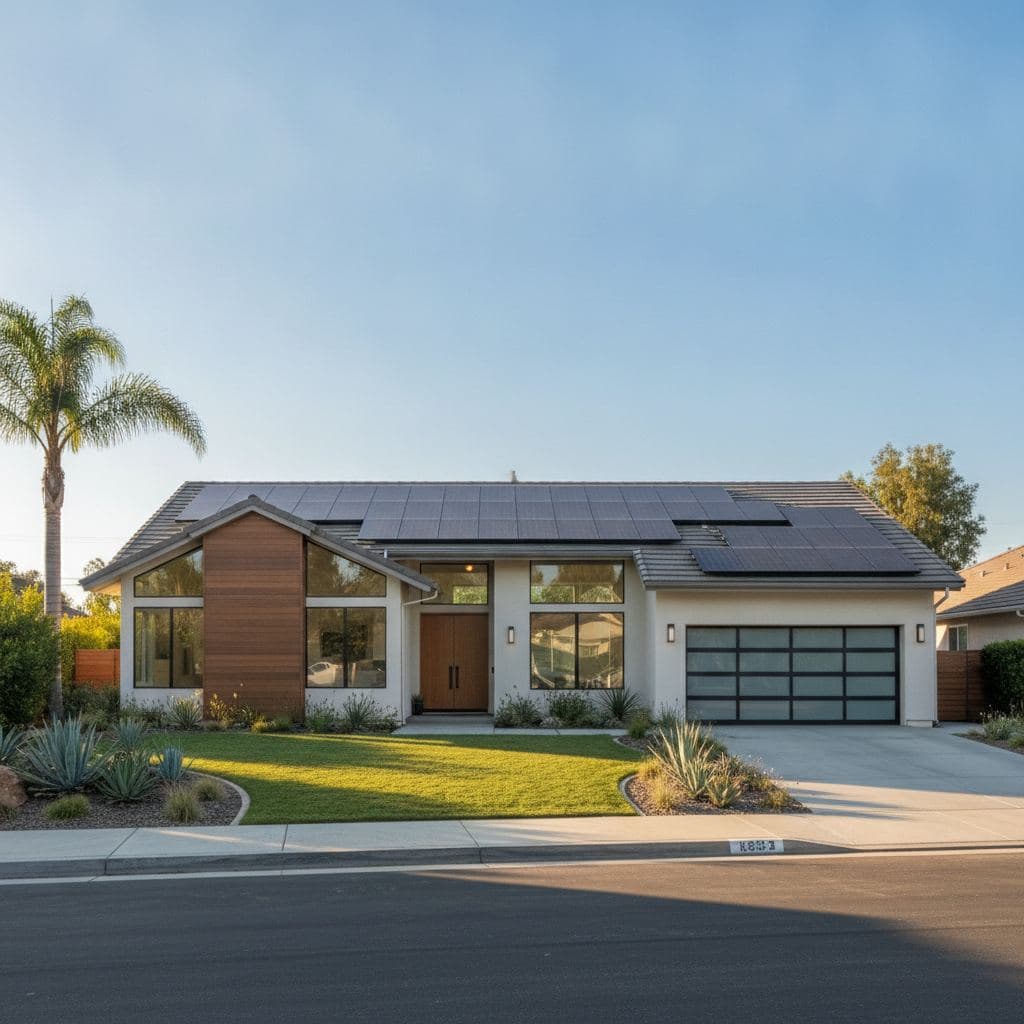
A house with solar on the roof is either a genuine asset or someone else's 25-year contract you're about to inherit — and from the listing photos, you can't tell which. In Southern California, where a meaningful share of single-family homes now carry panels, knowing how to read a solar home is becoming a basic home-buying skill.
Let's start with the question that generated a year of anxiety, because the answer is better than most buyers expect.
Last verified: July 2026 by Helios Energy Global.
The NEM agreement transfers with the home
In 2025, a California bill (AB 942) proposed ending a home's net metering agreement the moment the property sold — which would have stripped real value from every solar home listing in the state. That provision was removed before the bill became law: the Senate Energy Committee voted to preserve net metering agreements through property transfers, and net metering survived intact.
Practically, that means if the seller is on NEM 1.0 or NEM 2.0 — the older tariffs that credit exported solar at or near full retail rates — you inherit that tariff for whatever remains of its legacy term (20 years from the system's original permission-to-operate date). A house with eight years left on NEM 2.0 has meaningfully better electricity economics than the identical house next door with a brand-new system on today's net billing rules. That's worth real money, and almost no listing agent prices it explicitly.
The flip side: a "solar home" whose legacy term is nearly spent, or whose system went in after April 2023, runs on NEM 3.0 economics — still valuable, but only if the system was designed for it (think batteries and self-consumption, explained here).
The first question: owned, leased, or PPA?
Everything else flows from this. Owned systems (cash or paid-off loan) simply convey with the house — the clean case. Loan-financed systems need the payoff handled in escrow, and watch for a UCC-1 fixture filing on the title that must be released. Leases and PPAs are the case that kills deals: you don't buy the system, you apply to assume the contract — credit check, the remaining term (often 10–20 years), the monthly payment, and any annual escalator become yours.
Get the full lease document early, read the escalator and the end-of-term terms, and price the house accordingly. Sellers sometimes prepay or buy out the lease to close; that's a negotiation point, not a favor.
The due-diligence checklist
Beyond ownership, five things determine whether the roof is an asset. The PTO date and tariff: ask for the interconnection/PTO letter — it tells you which NEM version and how many legacy years remain. Production history: a year of monitoring data (or utility bills) versus the system's rated output; a 10-year-old system producing well is a good sign, a dark monitoring app is a diagnostic flag. Inverter age: panels last 25+ years, inverters more like 10–15 — on an older system, budget for replacement.
The roof underneath: if the roof needs replacing in five years, price in a panel remove-and-reinstall; ask when the roof was last done relative to the install. Warranty transfer: panel and inverter warranties generally transfer, but some workmanship warranties require notification or die with the original owner — and if the original installer has gone out of business (common), know who will service it.
One more that's pure Southern California: know the utility. The same house has different solar economics under LADWP (its own program, better export credits) than under SCE (NEM 3.0 for new systems). Utility rules by provider are here, and it changes what the system is worth to you.
After you close
Three quick wins in the first month: get the monitoring app transferred to your account and actually look at it; confirm the utility switched the NEM account to your name without resetting the tariff (it should transfer — make them say so in writing); and if the home is on NEM 3.0 or the legacy term is short, run the battery math — a retrofit often converts a mediocre inherited system into a good one.
If you want a professional once-over of an inherited system — production check, inverter health, remaining-warranty inventory — that's a service call, not a sales call.
Frequently asked questions
Does net metering transfer to the new owner when a California home sells?
Yes — the NEM agreement stays with the property for the remainder of its legacy term. The 2025 proposal to end agreements at sale (AB 942's original form) was amended out before passage. Confirm the account transfer with the utility during escrow and get the tariff continuation in writing.
How do I find out which NEM version a house is on?
Ask the seller for the permission-to-operate (PTO) letter or interconnection agreement — it dates the system and fixes the tariff. Rough guide: interconnected before mid-2016 is NEM 1.0, mid-2016 to April 2023 is NEM 2.0, after that is NEM 3.0 net billing.
Should I avoid houses with leased solar?
Not automatically — but treat the lease as a liability you're assuming, not an amenity. Read the remaining term, payment, escalator, and buyout schedule before you write an offer, and negotiate the price or a seller buyout accordingly.
The house's solar installer went out of business. Is the system worthless?
No. Equipment warranties (panels, inverters) are with the manufacturers and survive the installer. You lose the workmanship warranty, which is why a post-purchase solar panel inspection is worth it — independent service companies can maintain and repair orphaned systems.
Sources
- Solar Power World: California Senate committee keeps solar net metering intact (sale provision removed)
- EnergySage: California amends AB 942, preserving net metering
- Energy Toolbase: guide to grandfathering protections for solar customers
- SCE: Net Energy Metering overview
- CSLB license check (verify any installer or service company)
More guides
What direction should solar panels face in California in 2026?
South-facing panels produce roughly 10-20% more annual energy than west-facing, but west-facing arrays can cut more off your bill under NEM 3.0 and SCE's 4-9 PM peak rates.
ReadHow much does it cost to charge an EV in Los Angeles in 2026?
Home EV charging in Los Angeles costs roughly $0.03–$0.06 per mile on LADWP and $0.04–$0.09 per mile on SCE, depending on your rate plan and when you charge.
ReadBest Solar Companies in Rancho Cucamonga, CA (2026): An Honest Inland Empire Guide
Rancho Cucamonga sits in one of Southern California's sunniest corridors, but SCE's NEM 3.0 rules change the math on every new solar install. Here's who to call, what to pay, and what to watch out for.
ReadGet a free consultation and custom design.
No pressure, no obligation — the owner reviews every design we send.