Tesla Powerwall 2 vs Powerwall 3 in 2026: Keep It, Add One, or Upgrade?
Powerwall 2 and Powerwall 3 share the same 13.5 kWh usable capacity, but PW3 doubles continuous output to 11.5 kW and adds an integrated solar inverter — here's what that means for Southern California owners deciding whether to keep, add, or upgrade.
By Taylor Crouse — Founder, Helios Energy GlobalUpdated
Quick answer
- Both Powerwall 2 and Powerwall 3 store 13.5 kWh usable — identical on paper, but PW3 delivers 11.5 kW continuous vs PW2's 5 kW continuous.
- Powerwall 2 is discontinued for new sales but remains fully warranted through its original 10-year term from your install date.
- For most working PW2 owners, upgrading is not necessary — adding a PW3 alongside your existing unit is often the better path if you need more capacity.
- A Powerwall 3 installed in Southern California runs $14,500–$18,500 in 2026 (full breakdown: Powerwall 3 cost); the federal 30% tax credit expired December 31, 2025 and is not available for new purchases.
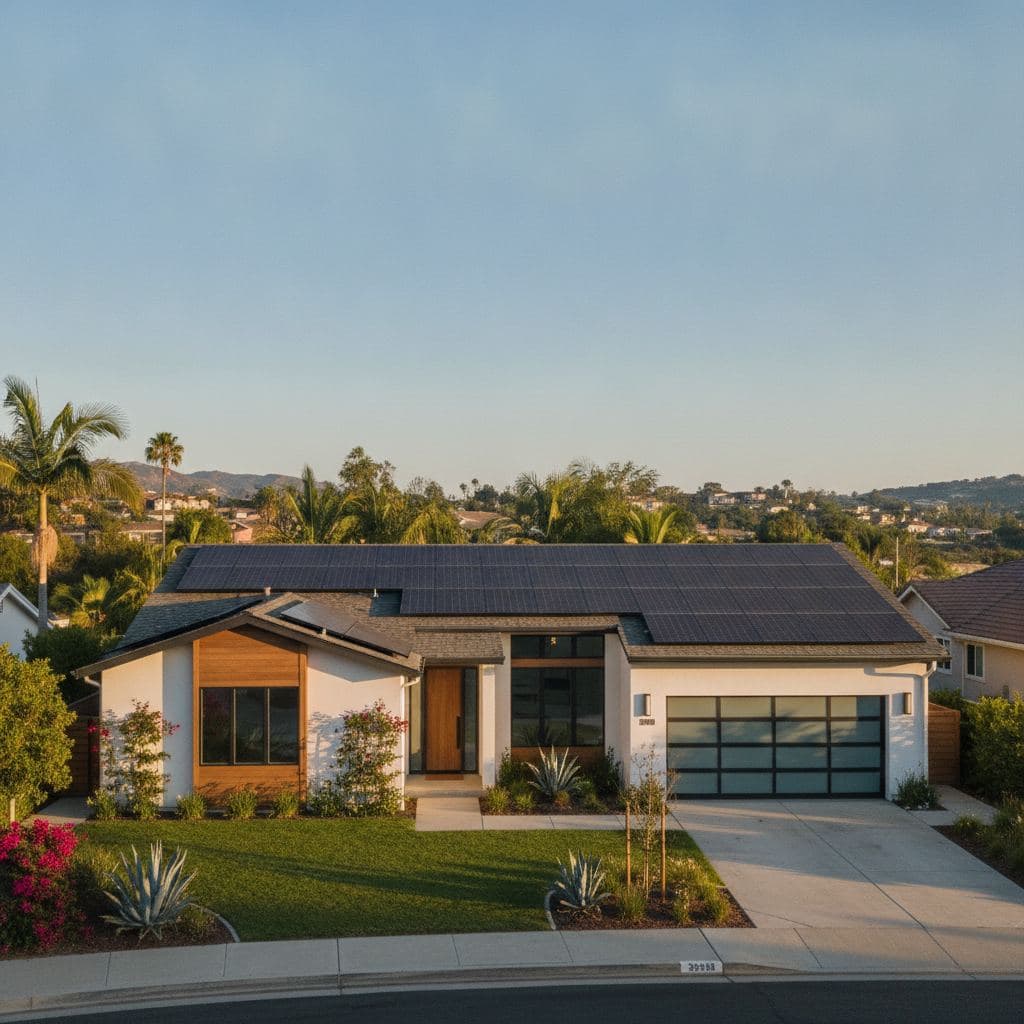
Both Powerwall 2 and Powerwall 3 store 13.5 kWh usable energy, but the PW3's 11.5 kW continuous power output is more than double the PW2's 5 kW, which matters most if you run high-draw appliances — EV chargers, central AC, electric ranges — during an outage or SCE's 4–9 PM peak window. For a Powerwall 2 owner whose unit is healthy and under warranty, the honest answer is: keep it, and consider adding rather than replacing.
Last verified: September 2026 by Helios Energy Global.
What actually changed between Powerwall 2 and Powerwall 3
The storage capacity headline is unchanged — 13.5 kWh usable in both generations. Tesla's engineering effort in the PW3 went almost entirely into power delivery and system integration, not into adding more kilowatt-hours.
The three real differences:
- Continuous power: 5 kW (PW2) → 11.5 kW (PW3). This is the number that determines whether your battery can run a 240V Level 2 EV charger, a large central AC compressor, or a whole-home electric range simultaneously during an outage. PW2 can struggle with that combination; PW3 handles it comfortably.
- Solar inverter: absent (PW2) → integrated (PW3). Powerwall 2 is AC-coupled — it sits downstream of a separate solar inverter. Powerwall 3 has a built-in DC-coupled solar inverter rated up to 11.5 kW. This matters for new installations but is largely irrelevant to an existing PW2 owner who already has a working inverter.
- Form factor and installation footprint. PW3 is a single, taller unit that replaces the PW2 + Gateway + separate inverter stack for new builds. Retrofitting it alongside an existing PW2 system is a different design exercise — more on that below.
| Spec | Powerwall 2 | Powerwall 3 | Notes |
|---|---|---|---|
| Usable capacity | 13.5 kWh | 13.5 kWh | Identical |
| Continuous power | 5.0 kW | 11.5 kW | PW3 = 2.3× more |
| Peak power (10 sec) | 7.0 kW | 22.0 kW | Startup surge headroom |
| Solar inverter | No (AC-coupled) | Yes (DC-coupled, up to 11.5 kW) | PW2 needs separate inverter |
| On-sale for new installs | No (discontinued) | Yes | PW2 still warranted |
| Warranty | 10 yr from install date | 10 yr from install date | Runs from your date |
| Approx. installed cost (CA, 2026) | N/A (not sold new) | ~$14,500–$18,500 | See /powerwall-3-cost |
| SGIP eligible (IOU customers) | Yes, if waitlisted | Yes, if waitlisted | Waitlisted in 2026 |
Is your Powerwall 2 still supported?
Yes. Tesla's warranty runs 10 years from your system's install date, not from the date PW2 was discontinued for new sales. If your unit was installed in 2021, your warranty runs through 2031. Tesla continues to push firmware updates to PW2 units and the app remains functional.
What "discontinued" actually means: Tesla no longer sells or installs new Powerwall 2 units. It does not mean your existing unit is being abandoned. Think of it the way a carmaker handles a previous model year — parts, service, and warranty obligations remain in place.
Practical support checklist for PW2 owners:
- Warranty claim? File through the Tesla app or Tesla Energy support — the process is the same as it was at install.
- App and monitoring? Fully functional on current iOS and Android.
- Firmware updates? Tesla continues to deliver them over the air.
- Replacement units? If Tesla replaces a failed PW2 under warranty, they may substitute a PW3 depending on parts availability — confirm this with Tesla directly if it comes up.
Should you upgrade from Powerwall 2 to Powerwall 3?
For most owners: no, not unless your PW2 is failing or your energy needs have grown significantly. Here's the honest math.
Replacing a working PW2 with a PW3 means paying roughly $14,500–$18,500 installed (see owner-reviewed pricing at /powerwall-3-cost) to gain the same 13.5 kWh of storage but with more power output. You'd be paying for kilowatts, not kilowatt-hours. That trade-off makes sense in specific situations:
Upgrade makes sense if:
- Your PW2 is out of warranty and showing degraded capacity (the app will show this under "energy remaining").
- You've added an EV and need 11.5 kW continuous to charge at Level 2 speeds during an outage without tripping the battery's output limits.
- You're replacing your solar inverter anyway and want to consolidate to PW3's integrated DC system — though this is a new-installation scenario more than an upgrade.
Upgrade probably doesn't make sense if:
- Your PW2 is healthy and under warranty.
- Your primary goal is more storage, not more power — adding capacity is the better answer (see below).
- You're on LADWP with retail-rate net metering: your payback math is already favorable without adding upgrade cost.
- You're on SCE NEM 3.0 and optimizing for peak shifting — a working PW2 can already do this; the 4–9 PM peak window doesn't require 11.5 kW of output.
Adding a Powerwall 3 alongside your existing Powerwall 2
This is the option most PW2 owners with growing energy needs should explore first. Tesla supports adding PW3 units to existing PW2 sites via Gateway compatibility, but the design rules are site-specific — panel capacity, existing Gateway version, conduit routing, and utility interconnection limits all factor in.
We verify compatibility at a no-obligation site assessment before any proposal. We will not quote an add-on configuration we haven't confirmed will work at your specific address.
Why add rather than replace:
- You keep the 13.5 kWh you already own and paid for.
- Total storage becomes 27 kWh (one PW2 + one PW3), which meaningfully extends backup duration — relevant in LADWP territory where outages from aging infrastructure can run 12–24 hours, and in SCE territory during red-flag fire weather.
- You avoid the labor and permitting cost of decommissioning a working unit.
For the full guide on adding storage to an existing solar-plus-battery system, see /guides/add-powerwall-to-existing-solar-california.
The California utility angle: NEM 3.0, LADWP, and SGIP
Your utility determines how much your battery — PW2 or PW3 — actually earns back.
SCE customers (NEM 3.0 / Net Billing Tariff): Export rates for solar are now time-weighted and much lower than retail (~34–35¢/kWh average, but exports credited at a fraction of that during the day). The strategy is to store solar during the day and self-consume or export during the 4–9 PM peak window when export credits are highest. A working PW2 executes this strategy just as well as a PW3 — the limiting factor is storage size, not power output. If you need more kilowatt-hours to cover the full peak window, adding capacity beats upgrading. See our NEM 3.0 explainer and the solar vs. battery NEM 3.0 guide.
LADWP customers: LADWP is a municipal utility — it is not on NEM 3.0. LADWP still offers retail-rate net metering at an average of roughly 28¢/kWh, which means solar exports are credited at the full retail rate. Battery economics here are driven by backup value and time-of-use optimization rather than the aggressive self-consumption imperative of NEM 3.0. A healthy PW2 remains a solid performer on LADWP.
Other Southern California munis (Pasadena PWP, Burbank, Glendale, Anaheim APU, Riverside RPU): Each runs its own net metering program, not NEM 3.0. Terms vary — we localize the analysis at your free consultation.
SGIP (Self-Generation Incentive Program): Residential SGIP budgets are waitlisted in 2026 — not closed, but not accepting new applications with immediate funding. If you're adding a PW3 and are an SCE, PG&E, or SDG&E customer, getting on the waitlist now is still worth doing. SGIP does not apply to LADWP or other municipal utility customers. We'll walk through your eligibility at assessment.
Frequently asked questions about Powerwall 2 vs Powerwall 3
Is the Powerwall 2 still worth keeping in 2026?
Yes, for the vast majority of owners. A working, warranted PW2 stores 13.5 kWh and handles the peak-shifting strategy required under NEM 3.0 or LADWP net metering. There's no technical reason to replace a healthy unit — the upgrade cost doesn't recover through incremental savings unless your power needs have changed significantly.
Can I add a Powerwall 3 to my existing Powerwall 2 system?
Tesla supports mixed-generation configurations via Gateway compatibility, but the specific design depends on your existing Gateway version, panel capacity, and utility interconnection. We confirm compatibility at a site assessment before proposing anything — don't assume it works without verification. See /guides/add-powerwall-to-existing-solar-california for the full process.
Will Tesla still honor my Powerwall 2 warranty?
Yes. The warranty runs 10 years from your install date, not from the date PW2 was discontinued for new sales. Tesla continues firmware updates, app support, and warranty service for all PW2 units within their warranty period.
Does Powerwall 3's integrated inverter help me if I already have solar?
Only if you're replacing your existing solar inverter at the same time. If your current inverter is working, the PW3's built-in inverter is redundant — you'd still use your existing inverter and AC-couple the PW3. The integrated inverter is most valuable in new installations. See /guides/tesla-powerwall-3-review-2026 for a full breakdown.
Is there a federal tax credit for adding a Powerwall 3 in 2026?
No. The 30% federal residential clean energy tax credit expired December 31, 2025. There is no federal incentive for battery storage purchased in 2026. SGIP may apply if you're on an investor-owned utility (SCE, PG&E, SDG&E) and can get on the waitlist.
How does Powerwall 2 vs Powerwall 3 perform differently during an outage?
Both provide 13.5 kWh of backup energy, but PW3's 11.5 kW continuous output means it can power more high-draw loads simultaneously — central AC, EV charger, and kitchen appliances at once. PW2's 5 kW limit may require load-shedding in the same scenario. If outage resilience for a large home is your priority, PW3 (or multiple units) is the stronger choice.
Should I wait for a Powerwall 4?
Tesla hasn't announced a Powerwall 4 as of August 2026. Waiting for unannounced products means paying today's utility rates while deferring savings. If your system is working, keep it. If you're adding capacity, the PW3 is the current product and well-supported. See /solar and /batteries for current system options.
Next steps
- Book a free consultation and custom design — we'll review your PW2 system, confirm PW3 add-on compatibility at your address, and run the numbers for your specific utility.
- See Powerwall 3 pricing and what's included — transparent, owner-reviewed cost ranges for Southern California.
- Read our full Powerwall 3 review for 2026 — specs, real-world performance, and who it's actually for.
- Guide: adding a battery to an existing solar system in California — the permitting, interconnection, and design process explained.
- How NEM 3.0 changes battery strategy for SCE customers — why peak shifting matters and how to size storage for it.
- Explore all battery storage options — Powerwall 3 and alternatives for Southern California homes.
- See our Southern California service locations — Santa Monica, LADWP territory, SCE territory, and surrounding communities.
More guides
Solar Panel Removal and Reinstall: The Full Process and Timeline (2026)
A solar detach-and-reset for a reroof typically takes one day to detach and one to two days to reinstall once the roofer is done. Helios charges $250–$350 per panel — about $5,000–$7,000 for a 20-panel system.
ReadDoes California require solar on new homes? The 2026 mandate explained
Yes — California's Title 24 Energy Code has required solar on most new single-family homes since 2020, with battery backup added for many homes under the 2023 code update.
ReadBest Solar Companies in Redlands, CA (2026): An Honest Guide for San Bernardino Homeowners
A straight-talking, numbers-first guide to the top solar installers serving Redlands, CA in 2026 — covering SCE net billing, real price ranges, battery strategy, and what to ask before you sign.
ReadGet a free consultation and custom design.
No pressure, no obligation — the owner reviews every design we send.