Is Tesla Solar Worth It in California in 2026?
Tesla panels and Powerwall 3 are genuinely competitive—but the direct-install service record is the real wildcard. Here's an honest take from a Tesla Certified Installer.
By Taylor Crouse — Founder, Helios Energy GlobalPublished
Quick answer
- Tesla solar panels in California cost roughly $2.50–$3.50 per watt installed — competitive with the market, not a bargain-bin outlier.
- The Tesla Powerwall 3 stores 13.5 kWh and delivers up to 11.5 kW continuous output with a built-in solar inverter — one of the strongest specs in residential storage.
- The Tesla Solar Roof is discontinued as of August 2026; panels + Powerwall are the only Tesla residential solar products available.
- Tesla's direct-install service record is the biggest risk; a Tesla Certified Installer gives you the same hardware with a local point of contact for service.
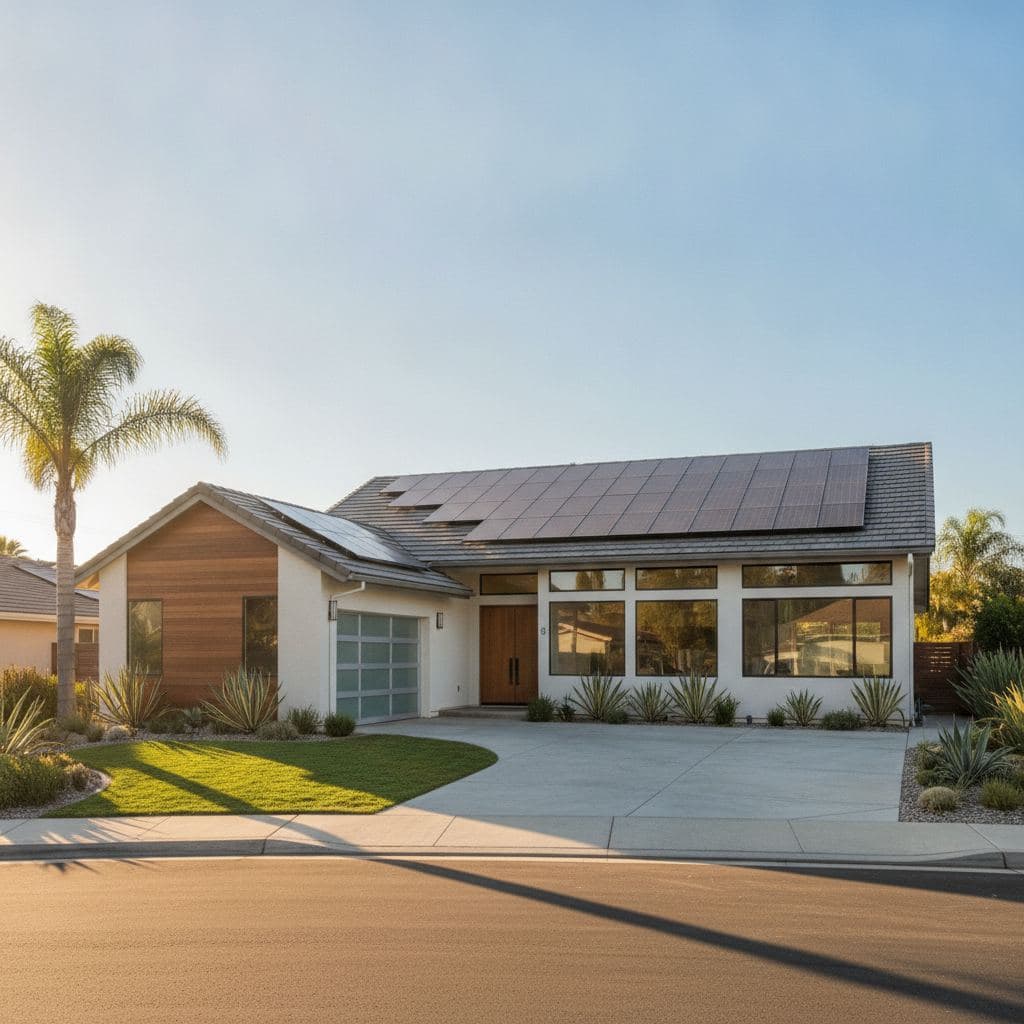
Tesla solar equipment — the panels and the Powerwall 3 — is genuinely worth considering in California in 2026. The hardware is competitive and well-warranted, and the Powerwall 3's integrated inverter is a legitimate engineering advantage. The real question isn't the equipment; it's who installs it and who answers the phone when something goes wrong.
Last verified: October 2026 by Helios Energy Global.
What Tesla solar actually is in 2026
Tesla's residential solar line now consists of two products: conventional rooftop solar panels and the Powerwall 3 battery. Tesla has discontinued the Solar Roof, its solar-tile roofing product, and has told third-party installers that it will no longer supply solar roof tiles going forward — only solar panels.
On August 20, 2026, Tesla told installers the solar roof tiles were no longer available to order, and tesla.com/solarroof now redirects to Tesla's solar panel page.
That simplifies the decision considerably. If you were drawn to the Solar Roof for aesthetic reasons, the product is gone. What remains is a solid panel-plus-battery system — and that system is worth a clear-eyed look.
The panels: good, not exotic
Tesla sources its panels from third-party manufacturers, primarily Hanwha Q CELLS, and rebrands them under the Tesla Solar label.
The panels carry a 25-year product and performance warranty, with guaranteed output of at least 87% of rated capacity at year 25. Efficiency runs in the 19–22% range depending on the model — mainstream-competitive, not class-leading.
The all-black, low-profile aesthetic is a genuine selling point for homeowners in neighborhoods where curb appeal matters. But if you need the highest efficiency per square foot (tight roof, partial shade), premium panels from other manufacturers may outperform on raw output.
The Powerwall 3: the strongest part of the Tesla offer
This is where Tesla's residential product genuinely stands out. Per the official Tesla Powerwall 3 datasheet, the Powerwall 3 supports up to 20 kW DC of solar and provides up to 11.5 kW AC of continuous power per unit.
It stores 13.5 kWh and outputs 11.5 kW continuous / 30 kW peak. Its built-in solar inverter replaces a separate inverter, reducing installed cost by $1,500–$3,000 on new solar installs.
The Powerwall 3 is an all-in-one battery for homeowners who want whole-home backup from a single unit. The built-in inverter simplifies installation but locks you into the Tesla ecosystem. That ecosystem lock-in is worth weighing: if you ever want to add a non-Tesla inverter or switch monitoring platforms, you'll face friction.
Homes that want true whole-home backup, including AC, generally need at least two Powerwall units , since central air conditioning draws enough continuous power to consume a single unit's 13.5 kWh storage quickly.
The Southern California rate context: why storage math differs by utility
Where you live in Southern California changes the financial case for both solar and battery storage significantly.
| Utility | Avg. retail rate | Net metering type | Peak rate (4–9 PM) | Battery value |
|---|---|---|---|---|
| SCE | ~34–35¢/kWh | NEM 3.0 (Net Billing Tariff) | ~48–59¢/kWh (TOU-D-4-9PM / TOU-D-PRIME) | High — battery arbitrage essential |
| LADWP | ~28¢/kWh (eff. 26–31¢) | Retail-rate net metering | No time-of-use default | Moderate — solar-only still pencils |
| SDG&E | ~46¢/kWh | NEM 3.0 | High peak rates | Very high |
| PG&E | ~40–41¢/kWh | NEM 3.0 | High peak rates | High |
Rates are estimates for planning purposes; confirm current tariffs with your utility before purchase.
If you're on SCE (most of coastal and inland SoCal outside LA city limits): Peak hours are 4–9 PM on TOU-D-4-9PM and TOU-D-PRIME plans. Summer weekday peak rates range from 58 to 74 cents per kWh — up to twice the off-peak rate. Under NEM 3.0, midday solar exports earn only around 5–8¢/kWh, so a battery that stores that midday production and dispatches it during the 4–9 PM peak is no longer optional — it's the core of the financial case. The Powerwall 3 was specifically designed for this use pattern.
If you're on LADWP (City of Los Angeles and some adjacent areas): While SCE customers now receive roughly $0.08 per kWh for solar exports under NEM 3.0, LADWP customers still earn credits pegged to the retail rate they would otherwise pay. That single policy difference changes the entire financial case for residential solar installation in the city of Los Angeles.
LADWP still credits solar exports at full retail rates — no NEM 3.0 haircut. For LADWP customers, solar without battery storage still makes strong economic sense, though backup power and bill protection remain valid reasons to add a Powerwall.
Municipal utilities (Pasadena PWP, Burbank, Glendale, Anaheim, Riverside RPU): Like LADWP, these are not subject to NEM 3.0. Each runs its own net metering program. Confirm your specific utility's export credit rate before sizing your system.
Where Tesla's direct-install model falls short
Tesla sells solar two ways: directly through Tesla.com, and through its network of Tesla Certified Installers. The hardware is the same either way. The experience is not.
The most consistent criticism of Tesla's direct channel is post-installation service. A California homeowner said a Tesla solar setup that once covered the household's needs began producing only a fraction of its normal output — and that getting the system repaired turned into a months-long ordeal.
The service timeline started with a request for help in April, included a June appointment, and was then pushed to August. When two technicians eventually arrived in August, the homeowner said they tried to repair the system, but "the problem was still" there.
That pattern shows up repeatedly in 2026 reviews. Multiple California reviewers describe it as nearly impossible to get in touch with Tesla by phone — stuck in an endless loop of recorded messages telling them to go online, with the call hanging up.
Some customers report waiting one to several hours just to speak to any real person, with very difficult service scheduling.
To be fair, not every Tesla customer has this experience. Some customers report a great install crew that was professional, kind, respectful, knowledgeable, and helpful. But the variance is wide — and in Southern California, where summer heat waves can push SCE peak bills above $500/month, a system that underperforms for months while you wait for a service appointment is a real financial problem.
Complex roofs: where Tesla's standardized model struggles most
Tesla's direct-install operation is built for efficiency on straightforward roofs — simple pitches, good southern exposure, no obstructions. Southern California's housing stock is more varied: each tile roof had to be custom-fit, installation was slow and labor-intensive, and the economics only worked for specific situations. Even with conventional panels, tile roofs (Spanish tile, concrete tile), steep pitches, and multi-plane layouts require experienced crews who can work around flashing, underlayment, and rafter spacing that differs from tract-home standard.
A local Tesla Certified Installer — one who does roofing coordination, pulls permits daily in your jurisdiction, and has crews who know SCE and LADWP interconnection timelines — handles this complexity more reliably than a centralized national operation.
When a Tesla Certified Installer beats going direct
You want Tesla equipment but local accountability. A Certified Installer gives you the same panels and Powerwall 3 that Tesla's direct channel offers, with a local crew that knows your city's building department, your utility's interconnection queue, and your neighborhood's roof types. When something goes wrong at year 3, you call a local number — not a national queue.
Your roof is tile, steep, or complex. Tile roofs require removal and reinstallation of panels for any future roofing work. At Helios, solar panel removal and reinstallation runs approximately $250–$350 per panel — roughly $5,000–$7,000 for a 20-panel system, $7,500–$10,500 for 30 panels, with tile and steep roofs at the top of that range. Getting the flashing and waterproofing right the first time matters enormously. A local installer who coordinates with vetted, licensed roofing partners (Helios does not do roofing work directly — we coordinate the job) gives you that accountability.
Your panel upgrade is borderline. The Powerwall 3's built-in inverter is powerful, but if your main electrical panel is older (100A service, older breaker types), you may need a panel upgrade before a battery can be safely installed. A main-panel upgrade, when needed, runs approximately $3,000–$5,000. A local installer assesses this in person before you sign anything.
You're on SCE under NEM 3.0 and need the battery to actually earn its keep. TOU-D-PRIME has the widest spread between peak and off-peak rates, maximizing the value of shifting stored solar energy to expensive evening hours. Getting the battery programmed correctly for your specific rate plan — and having someone local who can reprogram it if SCE changes your tariff — is worth more than the marginal cost difference between going direct and using a Certified Installer.
Key numbers at a glance (2026 estimates)
| System or component | Installed cost estimate (before incentives) | Notes |
|---|---|---|
| Solar panels only, 6 kW | $15,000–$21,000 | ~$2.50–$3.50/W; see solar panel cost guide |
| Solar panels only, 8 kW | $20,000–$28,000 | Same per-watt range |
| Solar panels only, 10 kW | $25,000–$35,000 | Same per-watt range |
| Tesla Powerwall 3 (1 unit) | $14,500–$18,500 installed | 13.5 kWh / 11.5 kW continuous |
| Tesla Powerwall 3 (2 units) | $24,000–$30,000 installed | 27 kWh total |
| Powerwall 3 Expansion unit | $8,000–$11,500 installed | Adds 13.5 kWh per unit |
| Main panel upgrade (if needed) | $3,000–$5,000 | Not always required |
| Federal solar tax credit | $0 | Expired December 31, 2025 |
| SGIP battery rebate (CA) | Waitlisted in 2026 | Residential budget exhausted |
All figures are estimates for planning. Helios provides one all-in written price with equipment named by model — get the gross price and cost per watt in writing from any installer you're comparing.
Note on the federal tax credit: The 30% residential solar Investment Tax Credit expired on December 31, 2025. There is no federal credit for a system installed in 2026. Any quote, website, or salesperson implying otherwise is using outdated information. California's SGIP residential battery incentive budget is waitlisted in 2026 — do not count on it in your payback math unless you have a confirmed reservation.
The honest verdict: is Tesla solar worth it in California?
The equipment: yes, it's competitive. The panels are genuinely good, the warranty is strong, and the price per watt is usually below the national average — which matters more than ever now that there is no federal credit to soften the cost. The Powerwall 3 is the best all-around single-unit home battery for most Southern California homes, particularly for SCE customers who need to arbitrage the 4–9 PM peak.
Going direct through Tesla.com: proceed with eyes open. The installation experience varies widely, and the service response time for warranty and repair issues is the most consistent concern in 2026 homeowner reviews. If you have a simple roof, a forgiving timeline, and the patience to navigate a centralized support system, the direct channel can work. If you have a complex roof, a tight timeline, or you're in an area with a demanding interconnection process (LADWP's queue, for example), the risk is higher.
Going through a Tesla Certified Installer: the better path for most SoCal homeowners. You get identical equipment — same panels, same Powerwall 3 — with a local crew, a local permit puller, and a local phone number. For SCE customers under NEM 3.0, where the battery's programming and your rate plan selection can swing payback by years, local expertise is not a luxury.
Helios Energy Global is a Tesla Certified Installer based in Santa Monica, serving homeowners across Southern California — SCE territory, LADWP territory, and the municipal utilities in between. We give one all-in written price with the equipment named by model. There are no coupons, no urgency tactics, and no invented rebate numbers in our quotes.
Frequently asked questions about Tesla solar in California
Is Tesla solar cheaper than other installers in California?
Tesla's direct-channel pricing is often at or slightly below the California market average, which runs roughly $2.50–$3.50 per watt installed before incentives. The gap versus a local installer is typically small — and a local installer's ability to catch roof or panel issues before they become multi-month service ordeals can easily outweigh a modest upfront savings.
Does the federal solar tax credit apply to Tesla solar in 2026?
No. The 30% residential solar Investment Tax Credit expired on December 31, 2025. There is no federal credit for any residential solar system — Tesla or otherwise — installed in 2026. Any source citing a 30% ITC for 2026 purchases is out of date.
Is the Tesla Solar Roof still available in California?
No. On August 20, 2026, Tesla told installers the solar roof tiles were no longer available to order, and tesla.com/solarroof now redirects to Tesla's solar panel page.
Existing systems keep their 25-year warranty, which transfers with the home. Tesla still sells conventional solar panels and Powerwall.
Does Tesla solar work with LADWP net metering?
Yes. Tesla panels and the Powerwall 3 are compatible with LADWP's interconnection process. For solar customers, LADWP's biggest difference from SCE is net metering: LADWP credits exported energy at the full retail rate, credits roll over monthly and do not expire, and there is a simplified interconnection path for systems up to 10 kW AC. A local installer familiar with LADWP's specific interconnection paperwork and queue timelines can materially speed up your permission-to-operate date.
How much does a Tesla Powerwall 3 cost installed in Southern California?
At Helios, one Tesla Powerwall 3 installed runs approximately $14,500–$18,500. Two units run approximately $24,000–$30,000. Each Powerwall 3 Expansion unit adds approximately $8,000–$11,500 installed. These are all-in prices with equipment named — no hidden interconnection fees. See our battery storage guide for a full comparison with Enphase and FranklinWH options.
Is the Powerwall 3 worth it for SCE customers under NEM 3.0?
For most SCE customers, yes — especially if you're on TOU-D-4-9PM or TOU-D-PRIME. Peak hours are 4–9 PM, and summer weekday peak rates range from 58 to 74 cents per kWh. Under NEM 3.0, exporting solar at midday earns roughly 5–8¢/kWh. A Powerwall 3 that stores that midday production and dispatches it at 58¢+ per kWh during the evening peak can cut your SCE bill dramatically. The math is less urgent for LADWP customers, who still earn close to full retail for exports.
What if Tesla's service is bad and I have a problem with my system?
If you install through a Tesla Certified Installer like Helios, your first call is to us — not to Tesla's national support queue. We handle warranty coordination, system monitoring, and service dispatch locally. One homeowner noted that filing a complaint with California's contractors licensing board led to faster action: "I did this in California and Tesla became more responsive immediately and I was able to get a resolution." Working with a local Certified Installer reduces the likelihood of reaching that point.
Next steps
- Powerwall 3 cost — the installed price for one unit, what moves it, and what is included
- Book a free consultation and custom design — we'll size your system for your utility (SCE, LADWP, or municipal), your roof, and your real bill.
- Explore battery storage options — Powerwall 3, Enphase IQ Battery 10C, and FranklinWH aPower 2 compared side by side.
- Understand NEM 3.0 and how it affects your solar return — essential reading for SCE, PG&E, and SDG&E customers.
- Solar vs. battery under NEM 3.0 — when to add storage and when panels alone still pencil.
- See what solar costs in California — the full installed cost breakdown with per-watt ranges.
- Find your location — Helios serves Santa Monica, Los Angeles, the South Bay, the San Gabriel Valley, Orange County, and beyond.
Sources
- Electrek — Tesla Discontinues Solar Roof, August 2026 — August 20, 2026
- Tesla Powerwall 3 Datasheet (energylibrary.tesla.com) — January 2025
- EnergySage — SCE Time-of-Use Rates 2026 — September 2026
- SolarReviews — Tesla Energy Customer Reviews 2026 — September 6, 2026
More guides
Do I need HOA approval for solar in California? (2026 guide)
California Civil Code 714 limits HOA conditions to a $1,000 cost cap and 10% output reduction—your HOA cannot ban solar outright.
ReadIs Solar Worth It in California? What Reddit Really Thinks After NEM 3.0 (2026)
From 'California solar, ruined?' to the no-regrets follow-ups two years later — we traced Reddit's NEM 3.0 debate across r/solar and r/bayarea, with links and quotes, and compared it to the math we see on real SoCal roofs.
ReadCan You Finance a New Roof With Your Solar Project in 2026?
Most solar-specific loans can be scoped to include a roof replacement costing $12,000–$16,000, but the structures differ sharply from a HELOC or unsecured loan — and leases keep roof work entirely separate.
ReadGet a free consultation and custom design.
No pressure, no obligation — the owner reviews every design we send.