Glendale Water & Power Solar Rebates and Net Metering: What's Available in 2026
GWP's dedicated solar rebate ended in 2021, but Glendale homeowners keep near-retail net metering — and skip NEM 3.0's steep export-rate cuts entirely.
By Taylor Crouse — Founder, Helios Energy GlobalPublished
Quick answer
- GWP's dedicated solar rebate ended June 30, 2021 and has not been reinstated — there is no per-watt or per-system cash rebate for residential solar in 2026.
- GWP still offers retail-rate net metering (NEM): excess solar earns a bill credit applied to your account, and the state's NEM 3.0 export-rate cuts do not apply to Glendale customers.
- The federal 30% residential solar tax credit expired December 31, 2025 and is not available for a 2026 purchase.
- Solar installed by Helios runs ~$2.50–$3.50 per watt before any remaining incentives; a typical 8 kW system is $20,000–$28,000 gross.
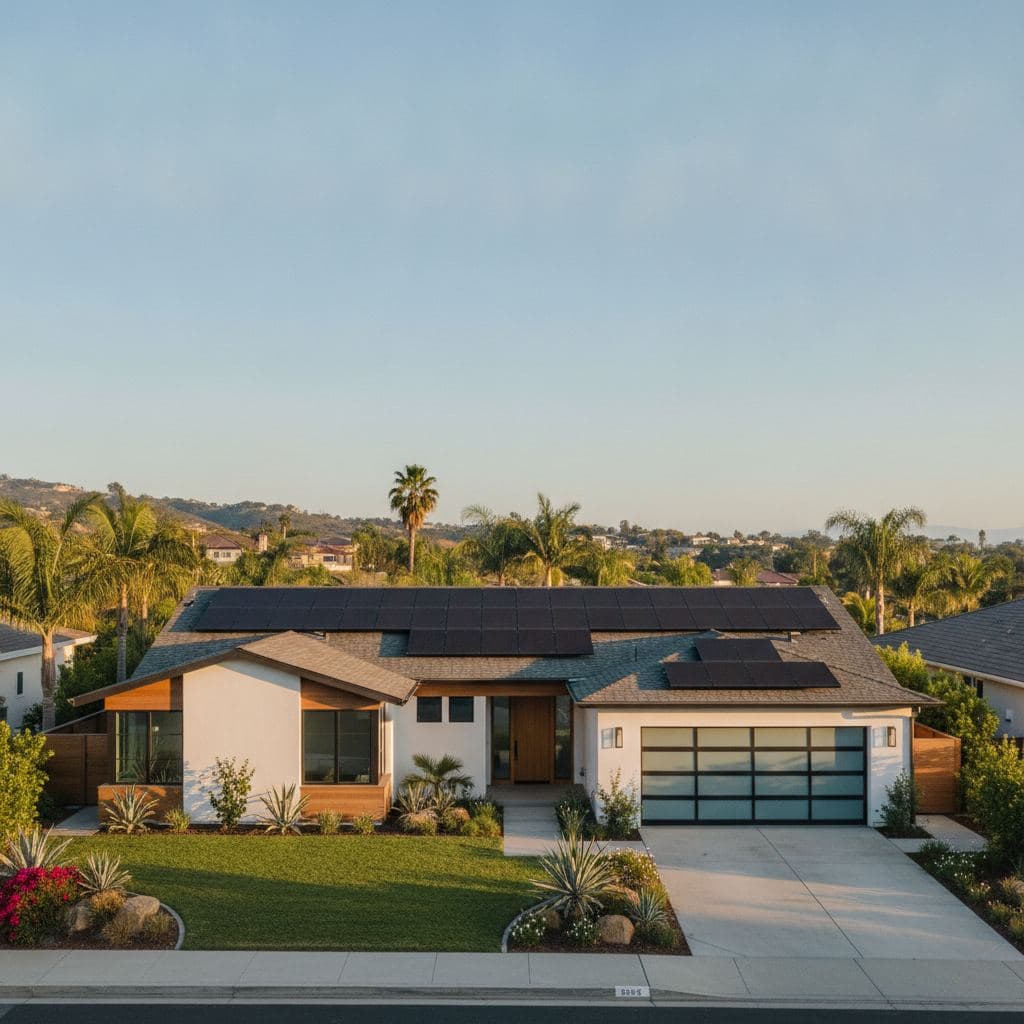
Glendale Water & Power no longer offers a dedicated solar rebate — that program closed on June 30, 2021 — but GWP's net metering program remains open, crediting excess solar generation at close to the retail rate you pay for power. That single fact makes Glendale one of the strongest solar markets in Southern California right now, because the investor-owned utilities (SCE, SDG&E, PG&E) slashed their export rates under NEM 3.0, while GWP, as a municipal utility, was never subject to that CPUC decision.
Last verified: September 2026 by Helios Energy Global.
The incentive picture at a glance
| Incentive | Status in 2026 | Notes |
|---|---|---|
| GWP solar rebate (per-watt or per-system) | Ended June 30, 2021 | Not reinstated as of this writing |
| Federal 30% residential ITC | Expired Dec 31, 2025 | No credit for 2026 installations |
| GWP Net Energy Metering (NEM) | Active — open enrollment | Near-retail bill credit for excess solar |
| SGIP battery storage rebate (state) | Waitlisted | Residential budget exhausted; join waitlist |
| GWP Home Energy & Water Saving Rebates | Active | Appliances, heat pumps, EVSEs — not solar panels |
| California property tax exclusion for solar | Active | Assessed value does not increase for solar addition |
Estimates based on current published program status. Always confirm with GWP and program administrators before signing a contract.
Why the rebate ended — and what replaced it
GWP used to offer incentives for solar systems. Originally the amount was fairly high, but the budget didn't cover demand, so only some people received the incentive through a random lottery. Later the amount was reduced, and on June 30, 2021, the city discontinued all solar incentives.
The funds had been collected through a Public Benefits Charge (PBC) tied to state law. City Council approved lowering that charge after it was discovered GWP had over-collected by $9.2 million, of which $5.8 million had already been used for solar incentives after the original 10-year program period. The remaining surplus was redirected to the broader Home Energy and Water Saving Rebates Program — which covers heat pumps, water heaters, EV chargers, and appliances, but not solar panels.
Although solar-specific incentives are no longer offered, GWP continues to make NEM available to customers who are interested in installing solar photovoltaic systems in their home or business. With NEM, solar customers are eligible to receive a bill credit for any excess generation produced by their solar system, automatically applied to their account when it is needed.
For most Glendale homeowners, that net metering arrangement is worth far more than a one-time rebate ever was.
GWP's net metering: why it matters more than a rebate
Municipal utility = no NEM 3.0
Glendale runs its own electric utility, so the state's NEM 3.0 does not apply. GWP has kept a net energy metering program: solar customers earn a bill credit for excess generation, applied to the account when it is needed.
NEM 3.0 — which the CPUC imposed on SCE, PG&E, and SDG&E customers starting in 2023 — slashed the value of exported solar to roughly wholesale rates during most hours, cutting the payback math for those customers dramatically. GWP set its own rules and kept retail-rate crediting. That's the single biggest solar advantage Glendale homeowners have right now, and it's one most online guides (including a well-circulated 2021 article from a competitor) still get wrong by conflating GWP with the investor-owned utilities.
How GWP's tiered rate structure amplifies solar savings
GWP offers special rate schedules L-1-D (Customer-Owned-Generation-Standard) and L-1-E (Customer-Owned-Generation-Time-of-Use) for customers who own and operate photovoltaic systems. The standard residential rate (L-1-A) is tiered by season:
| Season | Tier 1 (first 10 kWh × billing days) | Higher tiers |
|---|---|---|
| High Season (July–October) | ~$0.307/kWh | Rises with usage |
| Low Season (November–June) | Lower | Lower |
Source: GWP Residential Electric Rates, L-1-A schedule, effective January 2026. Exact per-kWh figures vary; check glendaleca.gov for current tariff.
The tiered structure is a solar homeowner's friend: your panels offset the most expensive kilowatt-hours first. A Glendale household that pushes into the upper tiers during summer is effectively saving at the highest marginal rate — and crediting any surplus back at close to that same rate under NEM.
Compare that to SCE customers, where the average residential rate runs around 34–35¢/kWh and peak TOU pricing hits 48–58¢/kWh from 4–9 PM — but exported solar earns only a fraction of retail under NEM 3.0. Glendale's arrangement is structurally better for solar ROI even without a rebate.
Interconnection rules you need to know
Beginning January 19, 2026, GWP only accepts the current version of the Interconnection Agreement, dated January 1, 2026. Prior versions dated June 25, 2025 or earlier are no longer accepted. Your installer files through GWP's PowerClerk online system.
Key sizing rules:
Systems up to 10 kW CEC-AC are exempt from the 110% historical usage cap, with self-certification of need inside the application. Above that, GWP uses 110% of your past twelve months of usage to establish anticipated annual load.
On a new solar project, paired storage is included as optional storage inside the PowerClerk PV interconnection application, with the battery data sheets attached. A standalone retrofit uses GWP's separate Energy Storage Interconnection Application. Customers meeting GWP's criteria may install up to 30 kWh of PV-paired storage, and a separate storage meter is no longer required.
Practically speaking, most Glendale homes land in the 6–10 kW range and qualify for the simplified self-certification path. Helios handles the PowerClerk filing — you don't need an account or to track the process yourself.
What solar actually costs in Glendale in 2026
No rebate and no federal tax credit changes the installed cost math, but it doesn't change the rate-offset math. Here's how the numbers stack up:
| System size | Gross installed cost (estimate) | Annual production (est.) | Approx. payback at GWP rates |
|---|---|---|---|
| 6 kW | $15,000–$21,000 | ~8,400–9,000 kWh | 8–12 years |
| 8 kW | $20,000–$28,000 | ~11,200–12,000 kWh | 8–13 years |
| 10 kW | $25,000–$35,000 | ~14,000–15,000 kWh | 8–13 years |
| 12 kW | $30,000–$42,000 | ~16,800–18,000 kWh | 9–14 years |
Installed cost range per Helios Energy Global pricing, ~$2.50–$3.50/watt. Production estimates use Glendale's ~5.5–5.8 peak sun hours. Payback is a rough estimate; actual results depend on your rate tier, shading, and system orientation. This is not a guarantee.
The payback range above assumes no rebate and no federal credit — the honest 2026 baseline. If SGIP opens back up for residential storage, or GWP reinstates a solar incentive (which the Glendale Environmental Coalition and others have been pushing for), those numbers improve.
What incentives do exist
California property tax exclusion. A solar system does not increase your assessed property value for tax purposes under California law. That's a real financial benefit, just a quiet one.
SGIP — battery storage only, waitlisted. The California Self-Generation Incentive Program offers rebates for home battery storage, but residential budgets are currently waitlisted in 2026. Ask Helios to put your name on the list at the time of your design — if funding opens, you want to be positioned.
GWP Home Energy & Water Saving Rebates. GWP's Home Energy and Water Saving Rebates Program helps customers save money on energy and water bills by offering rebates on eligible products. Most eligible products must be ENERGY STAR® qualified. This covers heat pump water heaters, HVAC, EV chargers, and similar upgrades — not solar panels — but if you're pairing solar with a heat pump or EV charger, check the current rebate schedule at glendaleca.gov.
Should you add a battery in Glendale?
Because GWP's NEM still credits excess solar at near-retail rates, you don't need a battery to make solar pencil out the way SCE customers under NEM 3.0 do. That said, batteries still make sense in Glendale for:
- Outage resilience. GWP's grid is reliable, but Glendale sits in wildfire-adjacent territory and power shutoffs happen.
- Offsetting your highest-tier usage at night. If your household regularly hits the upper tiers in summer, a battery can shift stored solar into your evening load at the tier rate you'd otherwise pay.
- Future-proofing. GWP is actively drafting a Solar and Energy Storage Plan. GWP is drafting a Solar and Energy Storage Plan and has been hosting community meetings to obtain direct input from residents and business owners. The rules may evolve; a battery keeps you flexible.
Battery pricing from Helios (installed, all-in):
- Tesla Powerwall 3: $14,500–$18,500 for one unit; $24,000–$30,000 for two
- Tesla Powerwall 3 Expansion: $8,000–$11,500 per unit
- Enphase IQ Battery 10C: $13,000–$15,500
- FranklinWH aPower 2 with aGate: $16,000–$21,000
See our battery storage guide for a full comparison of these systems.
What a Helios quote looks like
Helios gives one all-in written price — the equipment is named by model, and the total covers panels, inverter, racking, electrical, permit, and interconnection filing. When you're comparing quotes from any installer, ask for the gross price and the cost per watt in writing so you can compare apples to apples. Our solar cost guide explains exactly what to look for.
We serve Glendale from our Southern California operations. See our locations page for service area details.
Frequently asked questions about GWP solar rebates and net metering
Does Glendale Water & Power still offer a solar rebate in 2026?
No. GWP's residential programs page confirms that although incentives are no longer offered, GWP continues to make NEM available to customers who are interested in installing solar. The solar-specific rebate program ended June 30, 2021 and has not been reinstated as of September 2026.
Is Glendale on NEM 3.0?
No. NEM 3.0 — the Solar Billing Plan — applies to California's investor-owned utilities. Glendale Water & Power is municipal and has kept its own net energy metering program, under which excess generation earns a bill credit applied to your account. This is a significant advantage over SCE, PG&E, and SDG&E customers.
Can I still get the 30% federal solar tax credit?
No. The 30% federal residential solar investment tax credit expired on December 31, 2025 and is not available for systems installed in 2026. There is currently no replacement federal credit for residential solar purchasers.
How does GWP net metering credit my excess solar?
GWP continues to make NEM available to solar customers, who are eligible to receive a bill credit for any excess generation produced by their solar system, with the credit automatically applied to their account when it is needed. Credits roll forward on your bill and are trued up annually. Because GWP credits at close to the retail rate — unlike the investor-owned utilities under NEM 3.0 — oversizing your system slightly to cover future load growth (an EV, heat pump, etc.) still makes financial sense.
What is the sizing limit for a GWP solar system?
All residential and commercial PV systems sized up to 10 kW CEC-AC are exempt from the 110% historical usage cap. Larger systems are sized to 110% of your prior 12 months of usage. Most Glendale single-family homes fit comfortably within the 10 kW exemption window.
Is SGIP available for battery storage in Glendale?
SGIP is a state program administered by the investor-owned utilities and some others — residential budgets are currently waitlisted in 2026, meaning new applications are queued but not funded. Ask your installer to register your project so you're in line if funding is released. Helios can do this at the time of design.
Does adding solar increase my Glendale property taxes?
No. California law excludes solar energy systems from assessed value for property tax purposes, so your tax bill does not go up when you install panels. This benefit applies statewide, including GWP customers.
Next steps
- Powerwall 3 cost — the installed price for one unit, what moves it, and what is included
- Book a free consultation and custom design — Helios will model your GWP bill, size your system, and give you one all-in written price.
- Explore our solar overview for Southern California
- Compare home battery options — Powerwall 3, Enphase IQ, FranklinWH
- Understand your solar installation cost
- Learn how NEM 3.0 affects SCE customers — and why Glendale is different
- Solar vs. battery under NEM 3.0: the full analysis
- See all Southern California service areas
Sources
- GWP Residential Programs & Rebates — Net Energy Metering Program — September 2026
- GWP Net Energy Metering (NEM) Program — Interconnection Guide — January 2026
- GWP Residential Electric Rates — L-1 Rate Schedule — January 2026
- Glendale Environmental Coalition — Glendale Solar Solution (rebate history) — September 2025
- Cali Energy — Solar with Glendale Water & Power (NEM & Interconnection) — August 2026
More guides
Best Solar Companies in Rancho Cucamonga, CA (2026): An Honest Inland Empire Guide
Rancho Cucamonga sits in one of Southern California's sunniest corridors, but SCE's NEM 3.0 rules change the math on every new solar install. Here's who to call, what to pay, and what to watch out for.
ReadWhat direction should solar panels face in California in 2026?
South-facing panels produce roughly 10-20% more annual energy than west-facing, but west-facing arrays can cut more off your bill under NEM 3.0 and SCE's 4-9 PM peak rates.
ReadHow much does it cost to charge an EV in Los Angeles in 2026?
Home EV charging in Los Angeles costs roughly $0.03–$0.06 per mile on LADWP and $0.04–$0.09 per mile on SCE, depending on your rate plan and when you charge.
ReadGet a free consultation and custom design.
No pressure, no obligation — the owner reviews every design we send.