Best Solar Companies in Castaic, CA (2026): A Straight-Talking Guide for SCE Homeowners
Castaic homeowners face a real fire-risk reality, SCE's NEM 3.0 export rules, and strong inland sun — this guide ranks the 10 best solar installers for 2026 and tells you exactly what to ask before signing.
By Taylor Crouse — Founder, Helios Energy GlobalUpdated
Quick answer
- Utility is SCE, NEM 3.0 applies. Southern California Edison customers in Castaic fall under the CPUC's Net Billing Tariff. Export credits are calculated at avoided-cost rates — significantly lower than retail — which changes the math on system sizing and makes battery storage far more valuable than it was under legacy NEM 2.0.
- Sun hours are a genuine asset. Castaic's inland LA County climate delivers roughly 5.8 peak sun hours per day — meaningfully higher than coastal Southern California — which translates to more production per panel and faster payback on a well-designed system.
- Castaic is in a High Fire Threat District. SCE runs Public Safety Power Shutoffs (PSPS) in high-risk zones during red-flag conditions. A battery backup system keeps your critical loads running when the grid goes dark, and for Castaic that's not a hypothetical — it's a recurring seasonal reality.
- Typical system sizes run 7–12 kW. Larger lots, two-story homes, and higher AC loads in the inland valley heat push average system sizes up compared to coastal markets. Roof orientation variety means a good design matters more than a cookie-cutter quote.
- Pre-incentive installed costs range roughly $2.50–$3.50 per watt. For a 10 kW system that's approximately $25,000–$35,000 before any incentives. Get at least three gross-price quotes.
- The 30% federal tax credit expired December 31, 2025. There is no federal residential solar tax credit for systems purchased or installed in 2026. Any installer still advertising "30% federal credit" is either misinformed or misleading you. Verify California-specific incentives at DSIRE.
Castaic is an unincorporated community in northern Los Angeles County, tucked into the hills above the junction of I-5 and Highway 126. It is served by Southern California Edison (SCE) for electricity, placing every new solar installation squarely under the CPUC's NEM 3.0 Net Billing Tariff.
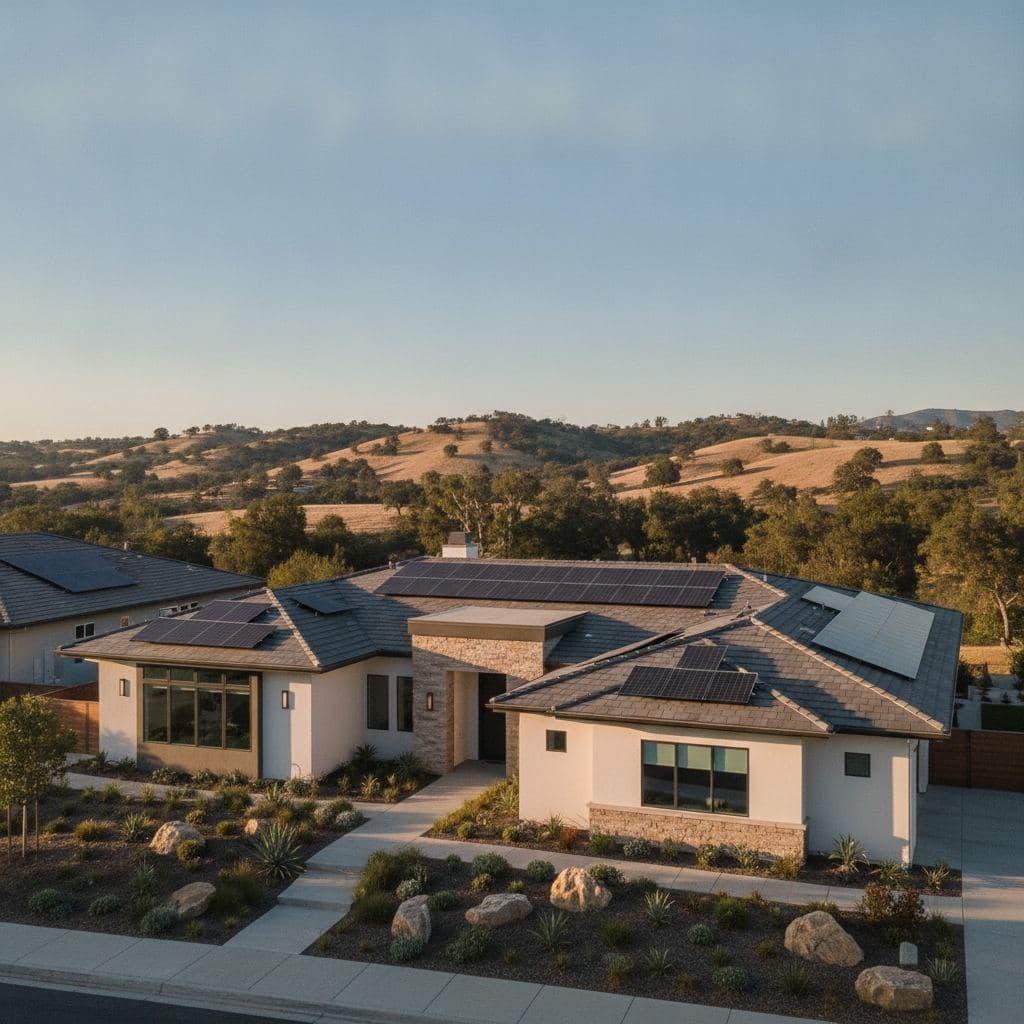
Last verified: September 2026 by Helios Energy Global.
Top 8 best solar companies in Castaic (2026)
A 2026 note on who is still standing. Residential solar has been through a brutal consolidation, and several companies that appear on older "best of" lists no longer exist. SunPower filed Chapter 11 in August 2024 and the brand now belongs to a different legal entity; Sunnova filed in June 2025; Freedom Forever filed in April 2026. Companies that have shut down or are in restructuring have been removed from the ranking below — a workmanship warranty is only worth the company standing behind it. Full detail in our statewide ranking of California solar companies.
At-a-glance ranking
- Helios Energy Global — Best for SCE NEM 3.0 design, PSPS battery planning, and owner-reviewed custom systems
- Sunrun — Best for homeowners who want a large national installer with broad financing options
- Tesla Energy — Best for buyers who want a vertically integrated panel-inverter-Powerwall ecosystem
- Palmetto Solar — Best for tech-forward homeowners who want ongoing monitoring and performance guarantees
- SunPower Inc. — Best for high-efficiency panels on space-constrained roofs
- Momentum Solar — Best for homeowners who prefer a dedicated in-house installation crew
- Baker Electric Solar — Best for San Diego–to–LA corridor homeowners wanting a long-tenured California regional installer
- Semper Solaris — Best for military families and veterans seeking a veteran-owned installer
The ranking above reflects Helios Energy Global's own editorial opinion based on local market knowledge — it is not paid placement. Verify each company's active California contractor license at the CSLB and confirm current service to Castaic before signing any agreement.
#1 — Helios Energy Global
Castaic's fire-zone status and SCE's NEM 3.0 export structure make this a market where generic system designs leave real money on the table. Helios Energy Global is based in Santa Monica and serves the greater Southern California region, with direct experience designing systems for SCE customers navigating NEM 3.0. Every system design at Helios is reviewed by the owner before it goes to a homeowner — not handed off to a junior sales rep with a software template.
For Castaic specifically, that means your battery sizing is modeled against your actual SCE time-of-use rate schedule and your fire-zone PSPS exposure, not just dropped in as an upsell. We don't run high-pressure sales, we don't invent discounts, and we publish honest price ranges. If you want to see what a well-designed system looks like for your specific roof and usage, solar installation in Castaic is where to start.
Best for: SCE homeowners in fire-risk zones who want a custom-designed system with battery backup sized to their actual load, reviewed by a principal before delivery.
#2 — Sunrun
Best for: Homeowners who want name-brand financing flexibility, including lease and PPA options. Why it fits: Sunrun is one of the largest residential solar companies in the U.S. and has active operations across SCE territory. Their Brightbox battery offering pairs with their solar installs. What to ask: How will my export credits be calculated under NEM 3.0 with your proposed system size? Can I see the year-one production estimate and the avoided-cost export rate assumption in writing?
#3 — Tesla Energy
Best for: Buyers who want Tesla Solar Roof or glass panels paired natively with Powerwall batteries. Why it fits: Tesla's vertically integrated product line — panels, inverter, and Powerwall — appeals to homeowners who want a single-vendor ecosystem and a recognizable brand. What to ask: What is the lead time for Powerwall installation in Castaic? Who handles my SCE interconnection application and what is the typical PTO timeline?
#4 — Palmetto Solar
Best for: Homeowners who want ongoing app-based monitoring and a performance protection plan. Why it fits: Palmetto operates as a technology-enabled installer with a focus on system monitoring post-install, which matters in a high-production market like Castaic where you want to catch underperformance early. What to ask: Who physically installs the system in Castaic — Palmetto crew or a subcontractor? What is the response time for a service call if production drops?
#5 — SunPower Inc.
Best for: Homeowners with limited south-facing roof space who need maximum watts per square foot. Why it fits: SunPower's Maxeon cell technology delivers some of the highest efficiency ratings available in residential solar. Note that SunPower as a corporate entity has undergone restructuring — confirm you are working with an authorized Maxeon-certified dealer and verify their CSLB license independently. What to ask: Are you a licensed California contractor independently, not just a SunPower dealer? What warranty is backed by whom — the dealer or Maxeon directly?
#6 — Momentum Solar
Best for: Buyers who prefer an installer that handles sales, design, and installation in-house without heavy subcontracting. Why it fits: Momentum Solar operates across several California markets with in-house crews, which can reduce the coordination gaps that slow down projects. What to ask: Is Castaic within your current active service area, and what is your current permit-to-install timeline for Los Angeles County?
#7 — Baker Electric Solar
Best for: Homeowners who want a California-rooted regional company with decades of electrical contracting history. Why it fits: Baker Electric has been operating in Southern California since the 1930s and its solar division has a track record in the SCE service territory. That longevity matters for warranty follow-through. What to ask: How many NEM 3.0 systems have you designed and installed in northern LA County specifically, and can you share a sample production estimate with the avoided-cost export rate shown?
#8 — Semper Solaris
Best for: Military families and veterans who value working with a veteran-founded California company. Why it fits: Semper Solaris is a California-based installer with a veteran-ownership identity and active operations in the SCE region. They offer both solar and battery products. What to ask: What battery brands do you install, and how do you size storage for a PSPS-prone zone like Castaic?
Why Castaic solar is different from a generic install
SCE and NEM 3.0 — the export credit reality
Under the CPUC's Net Billing Tariff, SCE credits your exported solar at avoided-cost rates rather than retail rates. In practical terms, a kilowatt-hour you send to the grid at noon earns you a fraction of what you pay to pull one back at 7 p.m. That gap is the core reason why battery storage changes the economics so dramatically in Castaic. A system designed purely to maximize export — the old NEM 2.0 playbook — can leave you with a large system that earns disappointing credits.
The smarter design for 2026 is to size the array to cover your consumption with self-consumption as the priority, and add a battery to shift your solar production into the evening peak window rather than exporting it cheaply. See how NEM 3.0 affects your solar design for a deeper breakdown.
Battery backup in a High Fire Threat District
Castaic sits within a designated High Fire Threat District, and SCE has a documented history of PSPS events in northern LA County during red-flag wind and fire conditions. A grid-tied solar system without a battery goes dark the moment SCE cuts power — by design, to protect utility workers. A properly configured battery system keeps your refrigerator, medical equipment, lighting, and Wi-Fi running through a shutoff.
For Castaic homeowners, this is not an optional upgrade — it is a functional necessity that also happens to improve your NEM 3.0 economics. Read more about solar + battery options and how to size for your actual critical loads.
Larger lots, varied roof orientations, and design flexibility
Castaic's housing stock skews toward larger single-family homes built across hilly terrain, which means roof planes face a wide range of orientations — not all of them due south. That's actually a design opportunity: a well-configured system with microinverters or power optimizers can harvest meaningful production from east- and west-facing planes, spreading production across more hours of the day and reducing mid-day export.
A cookie-cutter quote that assumes a single south-facing array may significantly underestimate what your specific roof can produce. Lot size also means some homeowners have detached garages or ADU structures that could host additional panels — worth discussing during your design consultation.
Inland valley heat and air conditioning load
Castaic's inland location means summer temperatures regularly exceed what coastal LA neighborhoods experience. That heat drives air conditioning loads that can be substantial — and those loads tend to peak in the late afternoon, right when NEM 3.0 export rates are low but grid draw rates are high. A battery that captures midday solar and deploys it during the 4–9 p.m. peak period can directly offset your most expensive grid consumption.
Understanding your AC runtime and thermostat behavior is essential to designing a system that actually matches your usage pattern rather than one sized off a generic square-footage formula.
Micro-neighborhood considerations: Castaic Lake area vs. hillside communities
Homes near Castaic Lake and along the lower valley floor tend to have more conventional roof geometry and fewer shading concerns. Hillside and canyon-adjacent properties — particularly those in the higher elevation areas toward the Hasley Canyon corridor — can face shading from terrain, mature trees, or neighboring structures during winter months when the sun angle is lower.
A credible installer will run a shading analysis using actual site data, not just satellite imagery, before committing to a production estimate. If a company gives you a production number without asking about your roof's shading conditions in detail, that's a flag.
Real prices: what solar costs in Castaic
Installed solar system prices in Castaic — including panels, inverter, mounting hardware, electrical work, permit fees, and utility interconnection — typically fall in the range of $2.50–$3.50 per watt before any incentives. Where your quote lands within that range depends on equipment tier, roof complexity, whether you're adding a battery, and the installer's overhead structure.
The 30% federal residential tax credit expired on December 31, 2025. There is no federal credit available for systems installed in 2026. Check DSIRE for current California state and utility-level incentives that may apply to your situation.
Illustrative pre-incentive price ranges by system size
| System Size | Low Estimate | High Estimate | Notes |
|---|---|---|---|
| 6 kW | ~$14,400 | ~$19,500 | Suitable for lower-usage homes |
| 8 kW | ~$19,200 | ~$26,000 | Common for mid-size SCE households |
| 10 kW | ~$24,000 | ~$32,500 | Most common size in Castaic |
| 12 kW | ~$28,800 | ~$39,000 | Larger homes with EV charging |
| 15 kW | ~$36,000 | ~$48,750 | High-usage homes, pool + EV |
These are illustrative estimates based on typical 2026 California market ranges. Your actual quote will vary. Battery storage (e.g. a 10–13.5 kWh unit) typically adds $14,000–$18,500+ to the installed cost before any applicable incentives.
What pushes a Castaic quote higher:
- Steep or complex roof with multiple planes requiring additional labor
- Tile roof that requires specialized removal and reinstallation
- Main panel upgrade needed to support the new system
- Battery storage addition (often necessary for PSPS protection)
- Shading mitigation requiring microinverters or power optimizers instead of a string inverter
- Long conduit runs on a large lot or detached structure installation
- Permit fees and inspection requirements specific to Los Angeles County
Use the estimate your Castaic solar savings calculator to get a ballpark figure based on your address and usage before you talk to any installer.
Solar-only or solar + battery in Castaic?
When solar-only makes sense
If your primary goal is reducing your monthly SCE bill, your home is not in a frequently shutoff area, and your budget is constrained, a solar-only system is still a valid choice. Under NEM 3.0, self-consumption is the key — a system sized to match your daytime usage (rather than maximizing export) can still produce meaningful savings without a battery.
When solar + battery makes sense in Castaic
For most Castaic homeowners in 2026, the answer is solar plus battery, for two compounding reasons. First, PSPS events are a real and recurring risk in this fire zone — a battery keeps your home functional when SCE cuts power. Second, NEM 3.0's low export rates mean that every kilowatt-hour you store and use yourself is worth more than every kilowatt-hour you export. The battery earns its cost through both resilience and rate arbitrage. Compare the solar vs. battery decision under NEM 3.0 for a detailed breakdown of when the math works.
Battery proposal mistakes to avoid
- Undersized storage: A single 10 kWh battery may not cover a full 24-hour PSPS event if you have AC, a refrigerator, and other loads running. Ask your installer to model your critical load consumption explicitly.
- Backup-only configuration: Some installers configure batteries purely for backup without enabling the time-of-use shifting that improves your NEM 3.0 economics daily. Ask whether your battery will be set to charge from solar and discharge during the SCE peak window.
- Ignoring the inverter pairing: Not all batteries work optimally with all inverters. Confirm your battery and inverter are listed as compatible and that the configuration has been tested in SCE interconnection applications.
How to choose the right solar company in Castaic
Verify the CSLB license first. Every solar installer in California must hold an active C-10 (Electrical) or C-46 (Solar) contractor license. Look up the license number at CSLB.ca.gov before you agree to a consultation. If a company can't give you a license number upfront, stop there.
Ask specifically about NEM 3.0 design experience. Not every installer has updated their design approach since NEM 3.0 took effect. Ask how many NEM 3.0 systems they've designed and installed in SCE territory, and ask to see a sample production estimate that shows the avoided-cost export rate assumption explicitly.
Ask about the permit process in LA County. Castaic falls under Los Angeles County jurisdiction for permits. An experienced installer will know the county's plan check process and typical timelines. Vague answers about permitting are a warning sign.
Confirm who physically installs your system. Some companies sell and design but subcontract installation to crews you've never vetted. Know who will be on your roof, and verify that subcontractor's license as well.
Get a written production estimate, not just a savings estimate. A savings estimate depends on assumptions about your future utility rates. A production estimate in kilowatt-hours is more verifiable. Cross-check it against NREL's PVWatts tool using your address and proposed system size.
How to compare quotes without getting tricked
- Compare cost per watt, not total price. A lower total price on a smaller system isn't a better deal. Divide the total installed cost by the system size in watts to get a comparable number.
- Check the production estimate methodology. Ask what tool they used (PVWatts, Aurora, Helioscope) and what weather dataset. A production estimate that seems unusually high deserves scrutiny.
- Read the warranty terms carefully. Panel production warranties (typically 25 years), inverter warranties (10–25 years depending on brand), and workmanship warranties are separate. Confirm who backs each one if the installer goes out of business.
- Understand the financing terms completely. If you're using a solar loan, confirm the interest rate, term, and whether there is a dealer fee built into the system price that inflates the loan principal. Some loans carry dealer fees of 20–30% embedded in the quoted price.
- Don't sign at the first meeting. A reputable installer will give you time to review the proposal, compare it to other quotes, and ask follow-up questions. High-pressure "today only" pricing is a red flag, not a deal.
Castaic quote checklist
Before signing any solar contract in Castaic, get written answers to all of these:
- What is the installer's active California contractor license number, and is it C-10 or C-46?
- How many NEM 3.0 systems have you designed and installed in SCE territory in the past 12 months?
- What is the proposed system size in kilowatts DC and AC, and why did you choose that size for my usage?
- What is the year-one production estimate in kWh, and what tool and weather dataset did you use?
- What avoided-cost export rate did you assume in your savings model, and where does that number come from?
- Who files my SCE interconnection application, and what is the typical PTO (permission to operate) timeline?
- Who pulls the LA County permit, and what is the typical plan check timeline?
- Who physically installs the system — your employees or subcontractors? If subcontractors, can I verify their license?
- What panel brand and model, inverter brand and model, and (if applicable) battery brand and model are you proposing?
- What are the separate warranty terms for panels, inverter, and workmanship?
- If I'm financing: what is the interest rate, loan term, and is there a dealer fee embedded in the price?
- Is my battery configured for both PSPS backup and daily time-of-use shifting, or backup only?
- What happens to my warranty and service if your company is acquired or goes out of business?
- Is there any "today only" pricing, and if so, what changes tomorrow?
Final verdict
Castaic is one of the more demanding solar markets in Southern California — not because the sun isn't there (it absolutely is, at 5.8 peak hours), but because the combination of SCE's NEM 3.0 export structure and a genuine High Fire Threat District designation means that a generic, one-size-fits-all system design will underperform and underprotect.
The right installer for Castaic needs to understand NEM 3.0 export economics well enough to size your system for self-consumption, model your battery against your actual critical loads and PSPS risk, and navigate Los Angeles County's permit process without delays that push your project into the next season.
Helios Energy Global ranks #1 in this guide because we design specifically for SCE's NEM 3.0 rules, we treat battery sizing as a function of your actual fire-zone exposure and load profile — not a checkbox upsell — and every system that leaves our design desk has been reviewed by the owner. We serve Castaic homeowners directly, and we don't run high-pressure sales tactics or invent discounts. What we offer is a free consultation, a custom design, and an honest quote. That's it.
Frequently asked questions about solar in Castaic
Does NEM 3.0 apply to my SCE service in Castaic?
Yes. Castaic is served by Southern California Edison, which is an investor-owned utility regulated by the CPUC. All new solar interconnection applications in SCE territory are processed under the Net Billing Tariff (NEM 3.0), which credits exported solar at avoided-cost rates rather than retail rates. This is a significant change from legacy NEM 2.0 and affects how you should size your system and whether a battery makes financial sense.
How much does solar cost in Castaic in 2026?
Installed solar system costs in Castaic typically run between $2.50 and $3.50 per watt before incentives. For a 10 kW system — a common size for Castaic homes — that's roughly $25,000–$35,000. Adding a battery system typically adds $14,000–$18,500 or more. The 30% federal tax credit expired at the end of 2025 and does not apply to 2026 installations. Check DSIRE for current California-level incentives.
Is solar worth it in Castaic without the federal tax credit?
For most Castaic homeowners, yes — particularly with a battery. SCE's time-of-use rates mean that self-consumed solar is worth full retail value, and Castaic's 5.8 peak sun hours generate meaningful production. The payback period is longer in 2026 without the federal credit, but the combination of avoided retail electricity costs, PSPS protection, and potential rate escalation over a 25-year system life still makes the economics favorable for many households. Run your numbers with a site-specific production estimate rather than a generic calculator.
Do I need a battery for solar in Castaic?
You don't legally need one, but practically speaking, it's strongly advisable. Castaic is in a High Fire Threat District where SCE conducts PSPS events. A grid-tied solar system without a battery shuts down automatically when the grid goes down — you get no power from your panels during an outage. A battery keeps critical loads running. Beyond resilience, a battery also improves your NEM 3.0 economics by letting you store midday solar production and use it during the expensive evening peak window instead of exporting it cheaply.
How long does it take to get permission to operate (PTO) from SCE in Castaic?
SCE interconnection timelines vary, but homeowners in LA County should generally plan for several weeks to a few months from permit submission to PTO. The process involves LA County plan check, inspection, and then SCE's own interconnection review. An experienced installer who regularly files in SCE territory will have the most current timeline expectations. Ask your installer for their average time from permit submission to PTO on recent Castaic or northern LA County projects.
How do I check if a solar installer is licensed in California?
Go to CSLB.ca.gov and use the "Check a License" tool. Enter the company name or license number. Confirm the license is active (not expired or suspended), that it covers the right classification (C-10 Electrical or C-46 Solar), and that the bond and workers' compensation insurance are current. Do this before signing any contract or agreeing to a site visit.
What size solar system do I need for my Castaic home?
System size depends on your annual electricity consumption in kilowatt-hours, your roof's available space and orientation, and how you want to manage exports under NEM 3.0. Most Castaic homes with central AC, a pool, or EV charging land in the 8–12 kW range. A credible installer will pull your SCE usage history (with your permission) and design to your actual consumption rather than a square-footage estimate. Avoid any installer who quotes a system size without reviewing your utility bills.
Which permit office handles solar permits in Castaic?
Castaic is an unincorporated community in Los Angeles County, so solar permits are processed through the Los Angeles County Department of Regional Planning and the County's Building and Safety division — not a city building department. Your installer should be familiar with the county's plan check process. If they're not sure which jurisdiction handles your permit, that's a gap in their local experience worth probing.
Next steps
- Book a free consultation and custom design — no pressure, no obligation
- Solar installation in Castaic — see what a Helios system looks like for your neighborhood
- Estimate your Castaic solar savings — enter your address and get a ballpark before talking to anyone
- Understand NEM 3.0 and what it means for your SCE bill
- Solar vs. battery under NEM 3.0 — when does storage pencil out?
- Browse solar system options — panels, inverters, and configurations explained
- Battery backup for fire-zone homes — sizing, brands, and what to ask
More guides
Where Do Solar Panels Go During a Reroof? Storage, Fees, and Who Is Liable If They Break
During a reroof, solar panels are staged on-site or stored off-site; at Helios, labeled, padded on-site storage is included in the $250–$350 per-panel price and only off-site storage beyond 30 days is quoted separately. Liability for breakage depends on which contractor handled the panels and what your contract says.
ReadWhat is a kilowatt-hour? kW vs kWh explained simply (2026)
A kilowatt-hour (kWh) is the unit on your electric bill — a typical Southern California home uses 550–750 kWh per month, costing 22–35¢ each depending on your utility.
ReadBest Solar Companies in Westlake Village, CA (2026): Honest Rankings for a Unique Market
Westlake Village sits on the SCE/LADWP border with tile roofs, high AC loads, and strong solar potential — here's how to pick the right installer in 2026 without overpaying or getting misled on incentives.
ReadGet a free consultation and custom design.
No pressure, no obligation — the owner reviews every design we send.