How Many Watts Does an Electric Water Heater Use? Tank, Tankless and Heat-Pump Models on SoCal Rates (2026)
A standard electric tank water heater draws about 4,500 watts while heating—costing LADWP customers roughly $14–$16/month, SCE customers $18–$21/month, and SDG&E customers $27–$31/month at 2026 rates.
By Taylor Crouse — Founder, Helios Energy GlobalPublished
Quick answer
- A standard electric tank heater (40–50 gal) draws about 4,500 watts while heating — one element at a time — and runs roughly 2–4 hours a day, using about 10–14 kWh/day.
- A whole-house electric tankless unit draws 18,000–36,000 watts on demand but only while hot water flows.
- A heat-pump water heater (HPWH) draws only about 400–600 watts in heat-pump mode — 3 to 5 times more efficient than a resistance tank, per the ENERGY STAR 2025 HPWH Fact Sheet.
- Monthly running cost at SoCal 2026 rates: roughly $14–$16 on LADWP, $18–$21 on SCE, and $27–$31 on SDG&E for a typical tank heater.
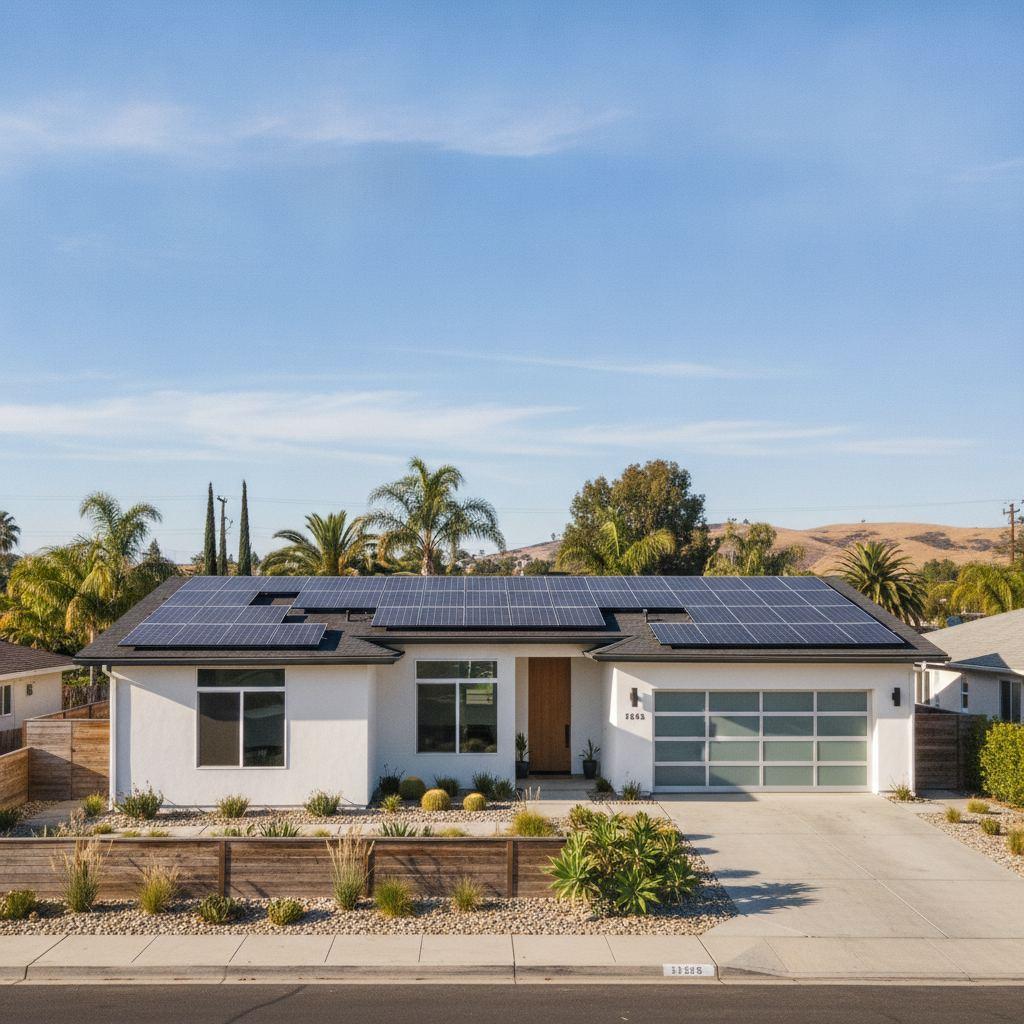
Your water heater is almost certainly the second-largest electricity user in your home, and a standard 50-gallon tank draws 4,500 watts every time its element fires — adding up to roughly 10–14 kWh a day. At SDG&E's 2026 average of about 46¢/kWh, that single appliance can cost more than $30 a month before you run anything else.
Last verified: November 2026 by Helios Energy Global.
The three types: wattage at a glance
Standard 40-gallon and 50-gallon electric tanks use a 4,500 W heating element, and only one of the two elements activates at a time, so the peak draw is 4,500 W regardless of tank size.
The thermostat kicks in when the stored water temperature drops, the element fires, and then the heater shuts off until the next draw or standby loss triggers another cycle.
Electric tankless units use 15,000–36,000 watts when operating but only run when hot water is demanded. Whole-house models sized for a Southern California family typically land in the 18,000–27,000 W range; the upper end (up to 36,000 W) applies to large homes with simultaneous demand.
ENERGY STAR certified heat pump water heaters save energy by transferring heat from the surrounding air to the water in the storage tank — essentially a refrigerator run in reverse — and are up to 3–5 times more efficient than conventional water heaters. In heat-pump mode the compressor draws roughly 400–600 watts; a typical consumer heat pump water heater also has two 4,500-watt backup resistance elements that operate non-simultaneously for high-demand recovery, but those fire only when the heat pump can't keep up.
Watts, kWh per day, and monthly cost by utility — 2026 estimates
The table below uses typical runtime assumptions drawn from DOE test-procedure data (120°F setpoint, ~64 gallons/day household use) and 2026 SoCal rates. All costs are estimates; your actual bill depends on household size, setpoint, and rate tier.
| Type | Peak draw (W) | Typical daily kWh | Monthly kWh | LADWP ~28¢/kWh | SCE ~34¢/kWh | SDG&E ~46¢/kWh |
|---|---|---|---|---|---|---|
| Electric tank (40–50 gal) | 4,500 | 10–14 | 300–430 | ~$84–$120 | ~$102–$146 | ~$138–$198 |
| Electric tankless (whole-house) | 18,000–36,000 | 8–12 | 240–360 | ~$67–$101 | ~$82–$122 | ~$110–$166 |
| Heat-pump water heater | 400–600 (HP mode) | 3–5 | 90–150 | ~$25–$42 | ~$31–$51 | ~$41–$69 |
Note on tankless: Lower monthly kWh versus a tank reflects the elimination of standby losses, not lower peak draw. Tankless units still require a 100–150-amp dedicated circuit.
Note on HPWH: Monthly kWh rises toward the tank range if the backup resistance elements fire frequently (very cold garage, back-to-back showers). In SoCal's mild climate this is rare.
Rate anchors used: LADWP homes paid 27.9¢/kWh on average over the 12 months to August 2026, per EIA data.
The CPUC Public Advocates Office puts SDG&E's residential average at 45.5¢/kWh in June 2026, against 34.4¢ at SCE.
Why the tank number is higher than you expect
A standard 50-gallon electric tank water heater typically uses 12–18 kWh per day, depending on household size and insulation — breaking down to about 4,500 watts during heating cycles that last 2–4 hours, plus 1–2 kWh in standby losses as the unit maintains 120°F.
The standby loss is the silent killer. Even when nobody uses hot water, the tank slowly loses heat through the walls and must reheat. A well-insulated modern tank loses less, but it never loses nothing. That 1–2 kWh/day of standby adds up to 30–60 kWh a month — at SDG&E rates, that's $14–$28 just to keep water warm while you sleep.
Practical range for a SoCal household of 3–4:
- Small household (2 people, efficient habits): ~8–10 kWh/day
- Average household (3–4 people): ~10–14 kWh/day
- Large household (5+ people, older tank): ~14–18 kWh/day
How SoCal utility rates change the math
The same water heater costs dramatically different amounts to run depending on which utility serves your address.
LADWP (City of Los Angeles and most LA neighborhoods)
The typical LADWP residential customer pays an effective 26–31¢/kWh in mid-2026 — still below what SCE customers pay, though the gap has narrowed. LADWP is a municipal utility and does not operate under NEM 3.0; it runs its own net metering program at retail rates. On the R-1B time-of-use plan, peak hours run from 1–5 PM on weekdays only — a narrow window that makes it easy to shift water heating to mornings or evenings.
At ~28¢/kWh, a tank heater running 13 kWh/day costs about $109/month. A heat-pump unit at 4 kWh/day costs about $34/month — a $75/month difference.
SCE (most of the San Gabriel Valley, Inland Empire, Orange County suburbs)
SCE charges 45–61¢ per kWh during the 4–9 PM peak window on TOU-D-PRIME — 61¢ on summer weekdays, 45¢ October through May, per SCE's rate page checked October 7, 2026. If your tank heats during that window, a single 4,500-watt recovery cycle lasting 90 minutes costs about 55¢ at the summer peak — versus about 20¢ during the winter super off-peak.
Summer off-peak is 33–34¢/kWh on SCE's standard plans and 26¢ on PRIME; in winter the mid-day super-off-peak (32¢, or 24¢ on PRIME) is the lowest residential price SCE publishes. Scheduling your water heater to heat between 8 AM and 4 PM in winter (super off-peak) cuts the per-cycle cost nearly in half versus evening peak.
SDG&E (San Diego County)
SDG&E's average residential rate moved between 45.5 and 46.4¢/kWh through 2026, sitting at 45.6¢ as of August 2026 — about 10% higher than a year earlier.
On-peak hours run from 4–9 PM every day at 69¢/kWh in summer; super off-peak rates drop to 37¢/kWh during the 10 AM to 2 PM weekday window.
At SDG&E rates, a tank heater running 13 kWh/day costs roughly $180/month — more than twice what the same heater costs an LADWP customer. A heat-pump water heater cuts that to roughly $55–$70/month — a difference of $110+ every single month.
The solar and battery angle
Timing a tank heater to run on midday solar
If you have solar panels, the cheapest electrons in your house are the ones your panels produce from roughly 10 AM to 3 PM. A standard tank heater with a programmable timer (about $25–$50 at a hardware store) can be set to heat during that window, consuming solar production that would otherwise be exported at NEM 3.0's low export rates on SCE or SDG&E.
On SCE and SDG&E (NEM 3.0 utilities): Export credits under the Net Billing Tariff are typically 5–10¢/kWh — far less than the 33–69¢/kWh you'd pay to import power later. Shifting water heating to midday solar production is one of the highest-return adjustments a solar homeowner can make. See our NEM 3.0 explainer and solar vs. battery strategy under NEM 3.0 for the full picture.
On LADWP: Because LADWP still offers retail-rate net metering, the export math is more forgiving — but shifting to midday still avoids the 1–5 PM peak window on the R-1B plan.
Heat-pump water heaters: the best solar load
ENERGY STAR certified heat pump water heaters use 70% less energy than a standard electric water heater, which could save a household of four approximately $550 per year on its electric bills. At SoCal rates that savings figure is higher — SDG&E customers replacing a tank with a heat-pump unit can realistically save $100–$120/month.
A heat-pump water heater in "heat-pump mode" draws only 400–600 watts, making it an ideal daytime solar load: it runs quietly for several hours, consuming modest, steady power rather than a big spike. Many modern units (Rheem ProTerra, A.O. Smith Voltex, Stiebel Eltron) include a Wi-Fi app or grid-interactive mode that can be programmed to run during solar hours or respond to utility signals.
Can a battery back up a water heater?
It depends on the type:
- Heat-pump water heater (400–600 W): Yes, easily. A single Tesla Powerwall 3 (13.5 kWh usable) can run a heat-pump unit through a full day's hot water needs with capacity to spare. See what size battery to back up a house.
- Standard electric tank (4,500 W): Technically yes, but one heating cycle burns through roughly 4–6 kWh of battery. Most homeowners with backup batteries configure them to power critical loads (refrigerator, lights, outlets, medical equipment) rather than a resistance tank. If backup hot water is a priority, a heat-pump water heater is a far better pairing with a battery.
- Electric tankless (18,000–36,000 W): No. The surge draw exceeds what any residential battery inverter can supply. Tankless units are not battery-backupable in a home setting.
For more on whole-home power budgeting, see what uses the most electricity in a home and how many kWh per month is normal.
Efficiency standards are tightening: what's coming in 2029
In April 2024, the DOE finalized efficiency standards for water heaters; the amended standards for electric storage water heaters in the most common sizes reflect the efficiency level of an entry-level heat pump storage water heater and will more than double the efficiency of electric storage water heaters relative to today.
The updated standards raise minimum efficiency requirements for several categories of residential water heaters manufactured on or after May 6, 2029, and the final rule sets efficiency levels that most common electric storage water heaters are expected to meet using heat pump technology.
In plain English: after 2029, most new electric tank water heaters sold in the U.S. will effectively be heat-pump water heaters. If you're replacing a water heater now, buying a heat-pump unit means you're already ahead of the mandate — and banking the energy savings immediately rather than in three years.
Heat pump water heaters are two to four times more energy-efficient than a conventional electric water heater according to the Department of Energy, and some 120-volt models can replace gas-fired water heaters without requiring extra electrical work or increased panel capacity.
How solar pairs with each water heater type
| Water heater type | Peak draw | Solar-hour self-consumption | Battery backup? | Best SoCal fit |
|---|---|---|---|---|
| Electric tank + timer | 4,500 W | Good (timer to 10 AM–2 PM) | Possible but costly | Budget upgrade for existing tank |
| Electric tankless | 18,000–36,000 W | Poor (too large a spike) | No | Not recommended with solar |
| Heat-pump (hybrid) | 400–600 W (HP mode) | Excellent | Yes (one battery) | Best overall for solar homes |
For a deeper look at how solar output matches your home's loads, see how many watts to run a house.
Frequently asked questions about electric water heater wattage
How many watts does a 50-gallon electric water heater use?
A standard 50-gallon electric tank uses a 4,500 W heating element, and only one of the two elements activates at a time, so the peak draw is 4,500 W.
Some high-recovery models use 5,500 W, and the heater typically totals 2–4 hours of actual runtime per day.
How many kWh does an electric water heater use per month?
A typical electric tank water heater uses about 4,927 kWh per year — roughly 410 kWh per month — while a tankless unit uses about 3,285 kWh/year and a heat pump water heater about 1,095 kWh/year, based on EIA 2026 rate data. Actual consumption varies with household size, setpoint temperature, and tank insulation quality.
What is the difference in running cost between a tank and a heat-pump water heater in San Diego?
At SDG&E's ~46¢/kWh average, a tank heater using ~410 kWh/month costs roughly $189/month to run; a heat-pump unit using ~90–130 kWh/month costs roughly $41–$60/month. The gap — roughly $130/month or $1,560/year — is why heat-pump water heaters pay back their premium cost faster in San Diego than almost anywhere else in the country.
Can I run a tankless electric water heater on solar?
A whole-house electric tankless unit draws 18,000–36,000 watts — far more than a typical residential solar system's inverter output of 5,000–10,000 watts. During the moment of demand, the grid (or a very large battery bank) must supply the difference. For solar homeowners, a heat-pump tank heater is a far better match: its 400–600 W draw is well within what even a modest 5 kW system produces at midday.
Does a heat-pump water heater work well in Southern California?
Yes — SoCal's mild climate is nearly ideal. Heat pump water heaters are much more efficient than electric resistance water heaters and most effective in warm climates with long cooling seasons. The compressor draws heat from the surrounding air; in a garage or utility room that stays above 50°F year-round (as most SoCal garages do), the heat-pump mode runs almost continuously without falling back on resistance elements.
How much does a heat-pump water heater save per year in Los Angeles?
ENERGY STAR estimates that an ENERGY STAR certified heat-pump water heater can save a family of four approximately $600 in annual energy savings and more than $6,300 over the product's lifetime at national average rates. At LADWP's ~28¢/kWh — about 50% above the national average — annual savings for a family of four are closer to $700–$900 versus a resistance tank.
Should I put a timer on my electric water heater to save money on SCE?
Yes, especially if you're on a TOU plan. Scheduling your tank to heat between 8 AM and 4 PM (SCE's winter super off-peak window at 24–32¢/kWh depending on your plan) rather than between 4–9 PM (45–61¢/kWh) can cut water heating costs by 30–50% with no hardware change beyond a $25 timer. If you have solar, aligning the timer with your panels' peak production hours (typically 10 AM–2 PM) captures self-generated electricity at full retail value rather than exporting it at NEM 3.0's low export rate.
Next steps
- Book a free consultation and custom design — we'll model your water heating load alongside your solar and battery options.
- See what else uses the most electricity in your home
- Find out how many kWh per month is normal for a SoCal home
- Learn what size battery can back up your house
- Explore home battery options and pricing
- Read our NEM 3.0 explainer
- Run a full design and savings estimate
Sources
- ENERGY STAR 2025 Heat Pump Water Heater Fact Sheet (energystar.gov, September 2025) — September 2025
- DOE Consumer Water Heaters Standards Page (energy.gov) — March 2025
- DOE Finalizes Water Heater Efficiency Standards Press Release (energy.gov, April 2024) — April 30, 2024
- ratereliefca.com SDG&E Time-of-Use Rates 2026 (citing CPUC Public Advocates Office, June 2026) — September 23, 2026
- kadoa.com LADWP Electricity Rates 2026 (citing EIA Form 861, 12 months to August 2026) — November 2026
More guides
What's the Average Electric Bill for a 2-Bedroom Apartment in 2026?
Nationally, a 2-bedroom apartment averages $117–$179/month for electricity; in Southern California, expect $140–$280+/month depending on whether you're on LADWP, SCE, or SDG&E.
ReadTesla Powerwall 3 Review (2026): What Changed, What's Great, What Isn't
An installer's Powerwall 3 review after two years of putting them on SoCal walls: the integrated inverter is the headline, the MPPT count matters more than people think, and yes — there are honest cons.
ReadBest Solar Companies in Topanga, CA (2026): A Homeowner's Honest Guide
Topanga's canyon homes, rural lots, and LADWP service territory make solar a different calculation than anywhere else in Los Angeles. Here's who to call — and what to ask before you sign.
ReadGet a free consultation and custom design.
No pressure, no obligation — the owner reviews every design we send.