What's the Average Electric Bill for a 2-Bedroom Apartment in 2026?
Nationally, a 2-bedroom apartment averages $117–$179/month for electricity; in Southern California, expect $140–$280+/month depending on whether you're on LADWP, SCE, or SDG&E.
By Taylor Crouse — Founder, Helios Energy GlobalPublished
Quick answer
- Nationally, a 2-bedroom apartment averages $117–$179/month for electricity, using 650–1,000 kWh at the 2026 national average of 17.91¢/kWh.
- In Southern California on SCE, the same apartment runs roughly $170–$250/month at ~34–35¢/kWh — and can spike past $300 in summer peak hours.
- On LADWP, expect $140–$210/month at an effective 26–31¢/kWh (still below SCE, but rising fast).
- On SDG&E (San Diego), a 2-bedroom apartment can easily reach $230–$310/month at ~46¢/kWh — among the highest rates in the continental U.S.
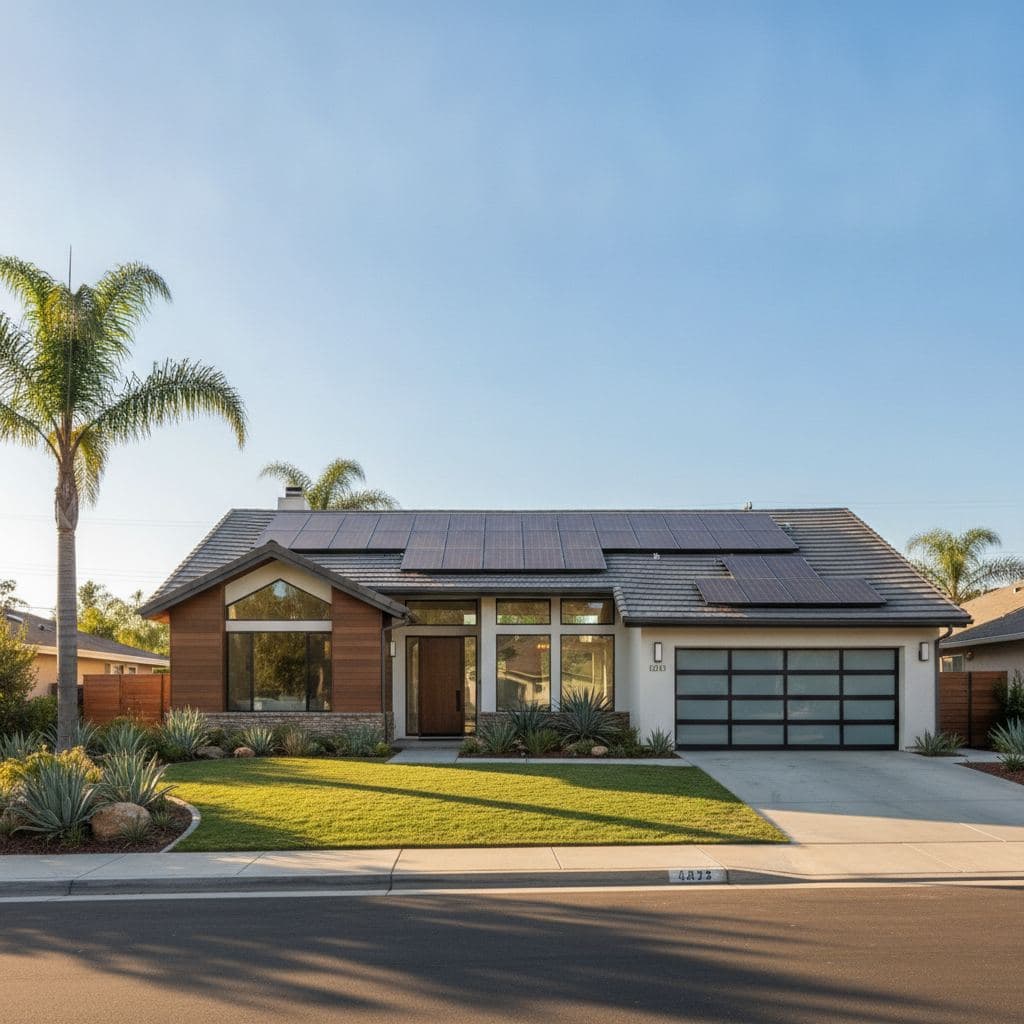
A 2-bedroom apartment in Southern California typically costs $140–$280 per month for electricity in 2026, depending entirely on which utility serves your address. That's roughly double the national average of $117–$179 per month — because California's rates are nearly twice the U.S. average, and in SoCal, where you live (LADWP vs. SCE vs. SDG&E) matters more than almost anything else about your apartment.
Last verified: September 2026 by Helios Energy Global.
The national baseline: what a 2-bedroom "should" cost
A 2-bedroom apartment uses 650–1,000 kWh per month, roughly 20–30% more than a 1-bedroom unit. At the 2026 national average of 17.91 cents per kWh (EIA Electric Power Monthly, as of August 2026), monthly electricity costs land between $117 and $179.
The jump from 1-bedroom to 2-bedroom isn't just about extra square footage. A second bedroom usually means a second occupant — more device charging, more laundry loads, more hot showers (if electric water heater), and potentially another TV or computer running.
The EIA's Residential Energy Consumption Survey shows apartments in multifamily buildings average about 30% less energy than detached homes of similar size. Shared walls, shared roofs, and smaller footprints keep apartment energy use lower than houses. That's why a 2-bedroom apartment bill tends to sit near the national household average rather than above it, even though a house of comparable square footage would cost significantly more.
Why Southern California bills are so much higher
California's statewide residential electricity rate is roughly double the national average. EIA's most recent full-year residential data (2024) puts California's actual average bill at $160.86 a month — 503 kWh at 31.97¢/kWh. Since then the statewide rate has drifted to about 33.25¢ as of mid-2026. Run 503 kWh through today's rate and you land near $167; call the 2026 statewide average about $170 a month.
But that statewide average hides enormous variation by utility. A 2-bedroom apartment on SDG&E pays more than twice what the same apartment pays nationally. Here's the full picture:
| Utility | Effective Rate (2026) | Est. 2BR Bill (700 kWh) | Est. 2BR Bill (900 kWh) | NEM / Net Metering |
|---|---|---|---|---|
| National avg. | 17.91¢/kWh | ~$125 | ~$161 | Varies by state |
| LADWP | ~26–31¢/kWh effective | ~$140–$175 | ~$180–$225 | Retail-rate net metering |
| SCE | ~34–35¢/kWh avg | ~$170–$210 | ~$220–$270 | NEM 3.0 (Net Billing) |
| SDG&E | ~46¢/kWh | ~$225–$265 | ~$290–$340 | NEM 3.0 (Net Billing) |
| LADWP (summer peak) | Up to 41¢/kWh (Tier 3) | Higher if AC-heavy | — | — |
| SCE (4–9 PM peak) | ~48–58¢/kWh on TOU | Higher in summer | — | — |
All bill figures are estimates. Fixed charges, baseline credits, and city taxes (LADWP adds a 10% Electricity Users Tax) are not included. Actual bills vary by usage, rate plan, season, and tier.
LADWP: still lower than SCE, but rising fast
If your 2-bedroom apartment is in Los Angeles proper and served by LADWP, you're in a better position than SCE or SDG&E customers — for now. The typical LADWP residential customer pays roughly $140–$230/month in mid-2026, based on tiered rates that work out to an effective 26–31¢/kWh — still below what SCE customers pay, though the gap has narrowed.
LADWP's standard R-1A rate is tiered: for July–September 2026 you pay about 26.4¢/kWh in Tier 1, 32.3¢ in Tier 2, and 41.0¢ in Tier 3, adjustment factors included.
Your Tier 1 allowance depends on your zone: Zone 1 (cooler LA) gets 350 kWh/month; Zone 2 (hotter, mostly the Valley) gets 500 kWh. A 2-bedroom apartment in the Valley running AC heavily in August can burn through Tier 1 quickly and hit the 32–41¢ range.
Important for renters: Rates rose about 2.1–2.5¢/kWh versus 2025; the old "22 cents" rule of thumb is out of date. If you're budgeting based on a neighbor's old bill or a quick Google, you may be underestimating.
LADWP is a municipal utility and is not on NEM 3.0. LADWP still credits solar exports at full retail rates — no NEM 3.0 haircut. That matters if you're a homeowner — but as a renter, it's useful context when talking to a landlord about adding solar to the building.
SCE: the most common SoCal utility for apartment renters
Most apartments in the San Gabriel Valley, Orange County, the Inland Empire, and the South Bay fall under Southern California Edison. SCE's current average residential rate is 34.5 cents per kWh (33.2 cents per kWh with the Climate Credit applied). Per SCE's own rate advisory, this is the rate in effect as of January 1, 2026.
For a 2-bedroom apartment using 700–900 kWh per month, that puts the monthly electricity bill at roughly $170–$250 before any credits. But the average hides the peak. On SCE's standard TOU-D-4-9PM plan, the summer on-peak price is about 58¢/kWh from 4–9 p.m. If your apartment has electric AC and you're running it during the evening hours, your summer bills can easily exceed $300.
SCE customers in many cities — including Pomona, Torrance, Whittier, and Arcadia — may already be auto-enrolled in Clean Power Alliance (CPA), a Community Choice Aggregator (CCA). CCA is a program that allows cities, counties, and other qualifying governmental entities within the service areas of investor-owned utilities to purchase and/or generate electricity for their residents and businesses. SCE still delivers the power and handles your bill; the CCA supplies the generation, often at a higher renewable percentage. You can opt up, opt down, or opt out — and as a renter, you control this choice independently of your landlord, as long as the account is in your name.
SDG&E: the highest rates in Southern California
If your 2-bedroom apartment is in San Diego, Chula Vista, El Cajon, or most of San Diego County, you're on SDG&E — and paying the most. There's no gentle way to put this: if you live in San Diego, you're paying more per kilowatt-hour than almost anyone else in the continental United States. SDG&E's bundled residential average landed near 45.7¢/kWh in January 2026 — well above SCE's mid-30s average up the coast and roughly triple the national average.
At 46¢/kWh, a 2-bedroom using 700 kWh costs about $230–$265/month before fixed charges. At 900 kWh in summer, you're at $290–$340. San Diego Community Power (SDCP) is the CCA available to many SDG&E customers and San Diego Community Power's default service is priced a few percent below SDG&E's equivalent generation rate, which trims — but doesn't transform — the total bill.
Municipal utilities: LADWP isn't the only one
Not every SoCal city is on LADWP or SCE. Several cities run their own municipal utilities with their own rates and net metering rules — none of them on NEM 3.0:
- Pasadena Water and Power (PWP) — serves Pasadena; runs its own net metering
- Burbank Water and Power — serves Burbank; municipal utility, retail-rate net metering
- Glendale Water & Power — serves Glendale; same structure
- Anaheim Public Utilities (APU) — serves Anaheim; municipal utility
- Riverside Public Utilities (RPU) — serves Riverside; municipal utility
If you're moving into a new apartment and aren't sure who your utility is, look at the address on your lease or ask the landlord before signing. The utility determines your rate, your rate plan options, and — if you ever own a home — what net metering deal you'd get on solar.
What drives your specific 2-bedroom bill
The 650–1,000 kWh range is wide for a reason. Here's what pushes a SoCal apartment toward the top or bottom of that range:
Air conditioning is the single biggest variable. Air conditioning drives 30–50% higher electricity consumption during summer months, as HVAC systems can account for 60–70% of total usage during peak cooling periods. A coastal Santa Monica apartment with ocean breezes may use 500 kWh in July; a 2-bedroom in Riverside with central AC can hit 1,200 kWh.
Electric vs. gas appliances. If your apartment has a gas stove, gas water heater, and gas heat, your electricity usage is lower — sometimes dramatically so. All-electric apartments shift all that load to your electric bill.
Number of occupants. A second person typically adds 20–30% to the electric bill, not 100%. The base load — refrigerator, HVAC, water heater, lighting — runs regardless of occupancy.
Building age and insulation. Older buildings with single-pane windows and minimal insulation lose conditioned air faster, driving up HVAC runtime.
Rate plan. On SCE's TOU plans, shifting laundry and dishwasher use out of the 4–9 PM peak window can meaningfully reduce your bill without changing how much electricity you use.
Renter options for cutting the bill
You don't own the roof, but you have more levers than most renters realize.
CCA green plans (no panel required)
Through Community Choice Aggregation, communities can join together to pool their electricity load in order to purchase clean energy and develop local projects and programs on behalf of their residents and businesses. If your apartment is in SCE or SDG&E territory, check whether your city has a CCA. Clean Power Alliance, for example, serves dozens of cities across LA and Ventura counties and automatically enrolls customers — you can choose your renewable percentage tier. The account just needs to be in your name.
CARE and FERA bill discounts
If your household income qualifies, California's CARE program delivers a significant percentage discount on your monthly electricity bill. The Family Electric Rate Assistance program (FERA) is designed for households that earn too much to qualify for CARE but still need electricity-bill relief. FERA provides an 18% discount on electricity bills for eligible customers of PG&E, SCE, and SDG&E. These programs are available to renters — you don't need to own your home. Apply directly through your utility.
California Climate Credit
Beginning in 2026, eligible residential electric customers of PG&E, SCE, and SDG&E are expected to receive their California Climate Credit during August and September, when summer electricity bills are often highest. The CPUC's 2026 Climate Credit update confirms that customers do not need to apply for the credit. The Climate Credit can reduce a bill during those months, but it should not be viewed as a permanent reduction in utility rates.
Balcony / plug-in solar: what the law says right now
This is the big renter solar story of 2026. California lawmakers passed a bill to formally legalize plug-in, or balcony, solar: small, portable, and relatively inexpensive systems that do not require rewiring or the costly installation fees that often come with rooftop solar.
SB 868 has passed the California Legislature and is awaiting Governor Gavin Newsom's signature. If signed, the law would allow Californians to use plug-in solar systems that meet safety standards without fees or permission from their utility.
Critically for renters: SB 868 explicitly states that landlords cannot prohibit tenants from installing balcony solar. Renters in California will have a legal right to portable solar that most other Americans don't yet have.
SB 868 cleared both chambers August 25–26, 2026. A 1,200 W plug-in system in SoCal yields roughly 1,500–1,900 kWh/yr and could save renters $200–$450/yr — no permit required.
The catch: The state would allow only balcony solar kits that have been certified safe to use by a nationally recognized testing laboratory. UL Solutions began testing plug-in systems this year under its new standard, UL 3700, but no product has yet earned certification. So even after the Governor signs, certified kits may take time to reach the market. Watch this space — we'll update our SB 868 guide as products clear certification.
The landlord conversation
If you're paying a high SCE or SDG&E bill and your building has a south-facing roof, it's worth raising solar with your landlord — especially if utilities are included in rent and the landlord is absorbing the cost. A building-level solar system benefits the landlord through reduced common-area electricity costs and can be structured to benefit tenants too. Frame it as a building upgrade that protects against rate increases, not as an ask for a discount.
Frequently asked questions about 2-bedroom apartment electric bills
What is a normal electric bill for a 2-bedroom apartment in Los Angeles?
On LADWP, a typical 2-bedroom apartment using 600–800 kWh per month runs roughly $140–$210/month in 2026 at an effective 26–31¢/kWh. In hotter neighborhoods like the San Fernando Valley, where AC use is heavier and Tier 2–3 rates kick in, bills can run $230–$300+ in summer. If your apartment is on SCE (not LADWP), expect $170–$250 for the same usage range.
Why is my SCE apartment bill so high compared to my friend's LADWP bill?
SCE's average residential rate is approximately 34–35¢/kWh, while LADWP's effective rate runs 26–31¢/kWh. On 700 kWh of usage, that difference works out to roughly $35–$60 per month — several hundred dollars a year — before any summer peak pricing. SCE is a CPUC-regulated investor-owned utility; LADWP is a municipal utility that sets its own rates through City Hall and still offers retail-rate net metering.
Does a second roommate double my electric bill?
No. A second person typically adds 20–30% to the electric bill, not 100%. The base load — refrigerator, HVAC, water heater, lighting — runs regardless of occupancy. Budget for a 20–30% increase in usage, not a doubling, when adding a roommate to a 2-bedroom.
Can I sign up for a CCA green energy plan as a renter?
Yes, if the account is in your name and you're in SCE or SDG&E territory. CCA is a program that allows cities, counties, and other qualifying governmental entities within the service areas of investor-owned utilities to purchase and/or generate electricity for their residents and businesses. Your IOU (SCE or SDG&E) continues to deliver electricity and handle billing; the CCA supplies the generation. You can opt up to a higher renewable tier, opt down to a lower one, or opt out entirely — all without landlord involvement, as long as the utility account is in your name.
Is balcony solar legal for California renters right now?
SB 868 has passed the California Legislature and is awaiting Governor Gavin Newsom's signature. If signed, the law would allow Californians to use plug-in solar systems that meet safety standards without fees or permission from their utility. As of the date of this page, the bill has not yet been signed into law. Once enacted, SB 868 explicitly states that landlords cannot prohibit tenants from installing balcony solar. Renters in California will have a legal right to portable solar that most other Americans don't yet have. That said, local fire codes, balcony egress rules, and structural load limits still apply — check with your building manager about mounting before you buy.
How much electricity does a 2-bedroom apartment use per month in California?
A 2-bedroom apartment uses 650–1,000 kWh per month — about 20–30% more than a one-bedroom — because of extra square footage, a second occupant, and more appliances. California apartments tend to run toward the lower end of that range on the coast (mild climate, less AC) and toward the higher end inland (Riverside, San Bernardino, the Valley) where summer cooling loads are significant.
What's the cheapest way to lower my apartment electric bill without installing solar?
The highest-impact, zero-cost steps are: (1) shift laundry, dishwasher, and EV charging to off-peak hours (before 4 PM or after 9 PM on SCE/SDG&E TOU plans); (2) apply for CARE or FERA if your income qualifies — the discount applies immediately; (3) check whether your city has a CCA and whether its default tier is cheaper than your current plan; (4) replace any remaining incandescent bulbs with LEDs. LEDs use 75% less energy and last 25 times longer. None of these require landlord permission.
Next steps
- Book a free consultation and custom design — we'll run your actual utility bill against current rate tables and show you what solar would do to it.
- See what the average electric bill in California looks like by city and utility — LADWP, SCE, SDG&E, and the major munis, side by side.
- Understand NEM 3.0 and how it affects solar value in SCE and SDG&E territory — critical context if you own or are planning to buy.
- Compare solar vs. battery strategies under NEM 3.0 — if you're a homeowner in SCE or SDG&E territory, this changes the math significantly.
- Explore home battery options — from the Tesla Powerwall 3 to the Enphase IQ Battery 10C, with installed price ranges.
- Get a design and savings estimate — see modeled production and bill impact for your specific address before you commit to anything.
Sources
- EIA Electric Power Monthly, Table 5.6.B — National Residential Rate, August 2026 — March 26, 2026
- SCE Rate Advisory — January 1, 2026 (CPUC-approved) — January 1, 2026
- SCE Rate Advisory — current (June 1, 2026) — June 1, 2026
- CPUC Consumer Information on CCAs — Frequently Asked Questions — January 1, 2026
- Solar Rights Alliance — SB 868 Plug-In Solar status, August 27, 2026 — August 27, 2026
More guides
Freedom Forever is liquidating. Here's what California homeowners should do now
Freedom Forever filed Chapter 11 on April 15, 2026; the case was converted to Chapter 7 liquidation effective August 7, 2026 and a trustee is winding it down. Your panels still work and manufacturer warranties survive — the workmanship warranty is gone. Here's the practical checklist.
ReadBest Solar Companies in Culver City, CA (2026): An Honest, Numbers-First Guide
Culver City homeowners face a unique solar decision: the city sits at the edge of two utility territories, and the 30% federal tax credit expired at the end of 2025. This guide breaks down the best local installers, real 2026 pricing, and how net metering actually works here.
ReadPacific Palisades Solar Guide (2026): Best Installers for a Community in Rebuild
Pacific Palisades is a community actively rebuilding after the January 2025 fire — and solar is now baked into virtually every new home by Title 24 code. Here's an honest look at the best installers for both rebuild projects and surviving homes, with LADWP net metering and battery reality explained.
ReadGet a free consultation and custom design.
No pressure, no obligation — the owner reviews every design we send.