How many watts does a hot tub use? (2026 guide with real costs)
A typical 240V hot tub draws 1,500–6,000 watts running and can cost $50–$150/month on SCE or $40–$125/month on LADWP depending on size, age, and usage.
By Taylor Crouse — Founder, Helios Energy GlobalUpdated
Quick answer
- A typical 240V hot tub draws 1,500–6,000 watts while running (heater + pump combined), with startup surges up to 7,500 watts on older or larger units.
- Monthly energy use is roughly 150–600 kWh/month, costing $50–$205/month on SCE (~34–35¢/kWh) or $40–$170/month on LADWP (~28¢/kWh) depending on size, age, and how often you use it.
- Offsetting a hot tub typically requires 3–8 additional solar panels (375–400W each) beyond what you'd size for the rest of the home.
- TOU scheduling — heating outside SCE's 4–9 PM peak — can cut your hot tub electricity bill by 20–35% without reducing soak time.
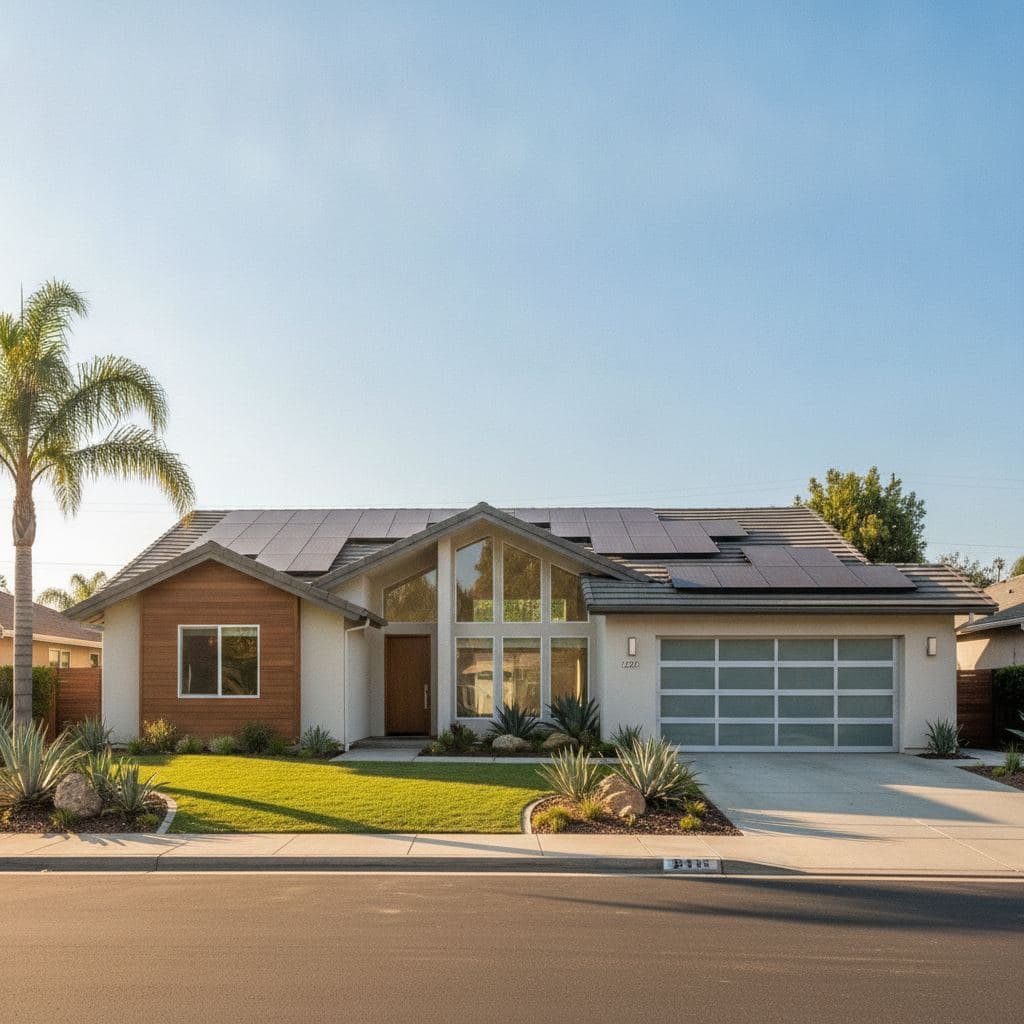
A standard 240V residential hot tub runs its heater and circulation pump simultaneously, pulling anywhere from 1,500 watts on a small, well-insulated newer unit to 6,000 watts on a large or older spa. At SCE's average rate of roughly 34–35¢/kWh, running a mid-size hot tub at normal frequency adds $80–$120 per month to your bill — a meaningful load that's worth planning around when sizing solar.
Last verified: September 2026 by Helios Energy Global.
Why the wattage range is so wide
Hot tubs are not a single appliance — they're a system with two or three independent loads that cycle on and off:
- Heating element: 1,000–6,000W depending on tank size and element rating. This is the dominant load.
- Circulation/jet pump: 200–2,000W depending on horsepower and whether jets are running.
- Blower/air jets (if equipped): 1,000–2,000W, but only while jets are actively used.
- Lighting, controls, ozone generator: 50–150W combined — nearly negligible.
The heater doesn't run constantly. On a warm Southern California day, a well-insulated 400-gallon spa might only need the heater to cycle 2–4 hours out of 24 to hold 102°F. In January in the San Gabriel Valley, that could climb to 6–8 hours. Older tubs with degraded insulation or worn covers can easily double those numbers.
Running watts vs. startup watts: by hot tub type
| Hot Tub Type | Typical Capacity | Heater Watts | Pump Watts | Running Total | Startup Surge |
|---|---|---|---|---|---|
| Small/plug-in (120V) | 2–3 persons | 1,000–1,500W | 300–500W | 1,300–2,000W | 2,000–2,500W |
| Mid-size (240V, newer) | 4–5 persons | 3,000–4,000W | 500–1,000W | 3,500–5,000W | 5,500–6,500W |
| Large (240V, newer) | 6–8 persons | 4,000–6,000W | 1,000–2,000W | 5,000–8,000W | 7,000–9,500W |
| Older/poorly insulated | 4–6 persons | 4,000–6,000W | 750–1,500W | 4,750–7,500W | 7,500–9,000W |
| Swim spa (240V) | Full length | 5,500–11,000W | 1,500–3,000W | 7,000–14,000W | 12,000–18,000W |
All figures are estimates based on manufacturer specifications and EIA appliance data. Actual draw varies by brand, age, insulation, and ambient temperature.
Why startup surge matters: If you're sizing a battery for backup or off-grid use, the startup (inrush) current — not the running wattage — determines the minimum inverter size. A mid-size hot tub with a 6,500W surge needs an inverter rated for at least that peak output, which is why battery sizing for hot tubs is a separate conversation from whole-home backup.
Monthly kWh and dollar cost by utility
The math: daily kWh = running watts × heater-on hours ÷ 1,000. A 4,000W heater running 3 hours/day = 12 kWh/day = ~360 kWh/month.
| Scenario | Est. kWh/Day | kWh/Month | SCE Cost/Month (~34–35¢) | LADWP Cost/Month (~28¢) |
|---|---|---|---|---|
| Small 120V tub, mild weather | 2–4 kWh | 60–120 kWh | $20–$42 | $17–$34 |
| Mid-size 240V, newer, SoCal weather | 6–12 kWh | 180–360 kWh | $61–$126 | $50–$101 |
| Mid-size 240V, older/poor insulation | 10–18 kWh | 300–540 kWh | $102–$189 | $84–$151 |
| Large 240V, heavy use (daily soaks) | 14–22 kWh | 420–660 kWh | $143–$231 | $118–$185 |
| Swim spa, regular use | 20–35 kWh | 600–1,050 kWh | $204–$368 | $168–$294 |
Rates: SCE ~34–35¢/kWh blended average (TOU-D plans); LADWP ~28¢/kWh blended average. Your actual bill depends on your tier, plan, and usage pattern.
LADWP customers have a real advantage here. At roughly 28¢/kWh versus SCE's 34–35¢, the same hot tub costs about 35–40% less to run under LADWP. That said, LADWP's retail-rate net metering (still available as of 2026) also means solar offsets are worth more per kWh than under SCE's NEM 3.0 net billing tariff, where export credits are significantly lower than retail. If you're on SCE and have a hot tub, the financial case for solar paired with a battery — to self-consume rather than export — is stronger than ever. See our NEM 3.0 explainer for the full breakdown.
TOU scheduling: the free money move
SCE's TOU-D plans charge peak rates during 4–9 PM daily. That's also when most people want to soak after work. Shifting your hot tub's heating schedule to run primarily between 9 PM and 4 PM (off-peak) can cut your hot tub electricity cost by 20–35% without any hardware change — just reprogram the spa controller's filter/heat cycles.
Practical scheduling for SCE customers:
- Set the primary heat cycle to run 10 PM – 6 AM (super off-peak on some plans)
- Set a secondary short cycle around noon–2 PM to top off temperature if needed
- Disable "ready mode" continuous heating — most modern spas can hold temperature with 2 scheduled cycles per day
LADWP customers are less exposed to peak pricing on standard residential rates, but if you're on LADWP's TOU option, the same logic applies — check your specific plan's peak window.
How a hot tub factors into solar system sizing
When we run a custom solar design for a home with a hot tub, we add the spa load explicitly — it's not small enough to ignore.
Rule of thumb for solar offset:
- Every 100 kWh/month of hot tub use requires roughly 1 additional kilowatt of solar capacity (based on ~5 peak sun hours/day in Southern California, typical for the LA basin and inland areas).
- A mid-size hot tub using 300 kWh/month needs approximately 3 kW of additional panels — roughly 8 panels at 375W each.
- A large or heavily used tub at 600 kWh/month needs closer to 6 kW extra — another 15–16 panels.
This is additive to whatever you need for the rest of the house. If you're curious how the hot tub fits into your total picture, our whole-home electricity guide walks through how to stack all your loads.
Battery sizing note: Hot tubs are generally not backed up by residential batteries — the startup surge and continuous draw would drain most single-battery systems within hours. The exception is swim spas or high-end installations where customers specifically want outage resilience. For most homeowners, the battery strategy is to store solar during the day and power everything except the hot tub during an outage, letting the spa go into standby. Read more in our battery sizing guide.
Ways to reduce hot tub wattage without sacrificing comfort
Insulation and cover:
- A high-quality insulated cover ($300–$600) can reduce heating hours by 30–50% — often the single highest-ROI upgrade for an older tub.
- Foam insulation inside the cabinet (many older tubs have none) adds another 10–20% efficiency.
Set temperature strategically:
- Dropping from 104°F to 100°F reduces heating load noticeably — water loses heat proportionally to the delta between water temp and ambient air temp.
- In SoCal summers, ambient temps are high enough that the heater barely runs at all in a well-insulated tub.
Upgrade the pump:
- Variable-speed pumps (similar to pool pumps) can cut circulation pump draw by 50–70% versus single-speed models.
- California's Title 20 appliance standards require variable-speed pumps on new pool/spa equipment sales — if your pump is old, an upgrade pays back.
Check for what else is using the most electricity in your home — sometimes the hot tub isn't even the top load, and a holistic look at your usage changes the solar sizing conversation entirely.
Frequently asked questions about hot tub wattage
How many watts does a 240V hot tub use?
A standard 240V residential hot tub draws 3,500–6,000 watts when the heater and pump are running simultaneously. The heater alone is typically 3,000–5,500W; the circulation pump adds another 500–1,500W. Startup surge can hit 7,000–9,000W for a fraction of a second when the heater element first energizes.
How much does it cost to run a hot tub per month in California?
On SCE (serving most of LA County and Orange County outside the city of LA), expect $60–$190/month depending on tub size, age, insulation, and usage. On LADWP (City of Los Angeles), the same tub typically costs $50–$155/month thanks to lower base rates. These figures assume regular use — roughly 3–5 soaks per week with the tub maintained at temperature.
Can I run a hot tub on solar power?
Yes — solar is well-suited to offsetting hot tub electricity costs, especially if you schedule heating cycles during daylight hours. Under SCE's NEM 3.0 net billing tariff, self-consuming solar (using it directly rather than exporting) is far more valuable than exporting, so pairing a hot tub's daytime heating cycle with a solar system makes strong financial sense. See how we'd size it for your home.
Does a hot tub use a lot of electricity compared to other appliances?
A mid-size hot tub at 300 kWh/month ranks among the top 3–5 energy users in most homes — comparable to an electric water heater or central AC in mild weather, and significantly more than a refrigerator (~50 kWh/month) or dishwasher (~30 kWh/month). See the full what uses the most electricity in a home breakdown for context.
Will a home battery run my hot tub during a power outage?
Most single residential batteries (typically 10–16 kWh capacity, installed at $14,000–$18,500) are not well-suited to running a hot tub during an outage. The startup surge alone can exceed some inverter limits, and continuous heating would drain a single battery in 2–4 hours. Most homeowners choose to let the hot tub go into standby during outages and use battery power for lights, refrigerator, and essential circuits instead. Talk to us about what a battery would cover in your home.
Does my SCE or LADWP rate plan affect how much the hot tub costs?
Significantly. LADWP's ~28¢/kWh average is roughly roughly 15–20% lower than SCE's ~34–35¢/kWh, which directly translates to lower hot tub operating costs. On SCE TOU plans, the 4–9 PM peak window can push effective rates to 45–55¢/kWh or higher — making TOU scheduling and solar self-consumption especially valuable for SCE customers with hot tubs.
How do I find out exactly how many watts my hot tub uses?
Check the nameplate label on the equipment panel (usually inside the cabinet access door) — it lists voltage, amperage, and sometimes wattage for each component. Multiply amps × volts for wattage (e.g., 25A × 240V = 6,000W). A plug-in energy monitor won't work on 240V hot tubs, but a whole-home energy monitor (like a Sense or Emporia) can measure the hot tub circuit directly if it's on a dedicated breaker.
Next steps
- Book a free consultation and custom solar design — we'll factor your hot tub load in from the start.
- See your estimated savings with a custom design — inputs include hot tub usage, utility, and TOU plan.
- Explore battery storage options — understand what a battery will and won't back up.
- Read the full what-uses-the-most-electricity guide — see where the hot tub ranks against your other loads.
- How many watts does it take to run a whole house? — build the complete picture before sizing solar.
- Understand NEM 3.0 and how it affects solar value on SCE — critical context for hot tub + solar math.
- Solar panel cost guide for Southern California — current installed price ranges for 2026.
More guides
SolarEdge Inverter Warranty: What It Covers and Who Replaces a Failed Inverter in California (2026)
SolarEdge's limited warranty covers inverter hardware for 12 years and power optimizers for 25 years — but the homeowner is responsible for arranging and paying a licensed contractor to swap a failed unit.
ReadCCA vs SCE: what LA solar owners actually pay in 2026
LA solar owners on Clean Power Alliance pay SCE delivery charges (~34-35¢/kWh blended) plus CPA generation rates that vary by tier, with NEM 3.0 Solar Billing Plan credits split between two agencies.
ReadBest Solar Companies in Hacienda Heights, CA (2026): Honest Rankings for SCE Homeowners
A straight-talking, numbers-first guide to the best solar installers serving Hacienda Heights in 2026 — covering SCE's NEM 3.0 rules, hillside roof design, real price ranges, and how to compare quotes without getting burned.
ReadGet a free consultation and custom design.
No pressure, no obligation — the owner reviews every design we send.