Does Removing Solar Panels Void the Warranty? (2026 Guide)
A professional detach-and-reset keeps your 25-year panel product warranty intact — but a roofer-led removal can void your installer's workmanship warranty the same day it happens.
By Taylor Crouse — Founder, Helios Energy GlobalPublished
Quick answer
- Your 25-year panel product warranty survives a professional removal and reinstall (detach-and-reset) — the defect coverage travels with the panel, not the roof.
- Your installer's workmanship warranty is at serious risk if anyone other than the original installer or a licensed solar contractor (C-46, C-10, or Class B in California) performs the R&R.
- A roofer-led detach — even by a skilled roofer — can void both the workmanship warranty and give the panel manufacturer grounds to deny a future claim if handling damage occurs.
- Getting the reset documented in writing (commissioning report, photos of every attachment point, written sign-off from the contractor) is the single step most homeowners skip and most later regret.
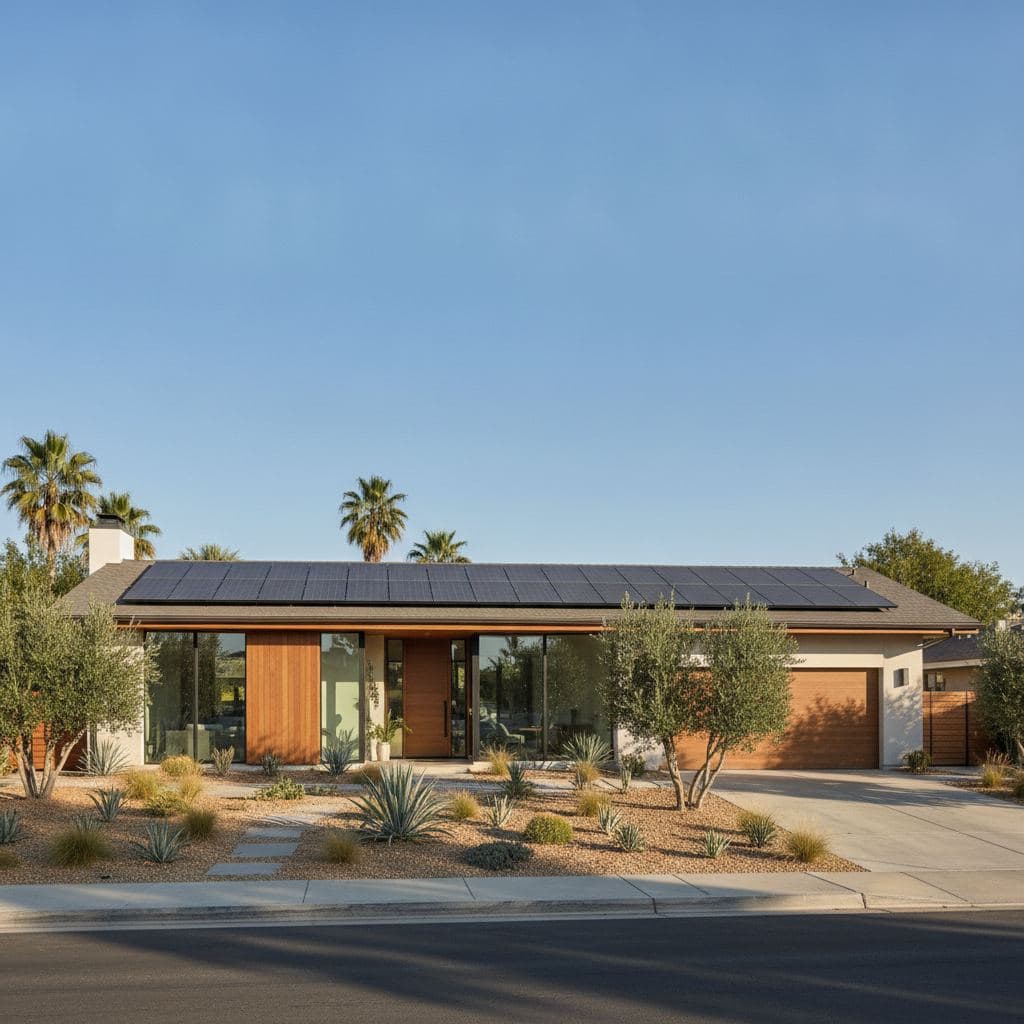
Removing solar panels does not automatically void your warranties — but the answer splits cleanly into two: the panel's 25-year product warranty almost always survives a professional removal and reinstall, while your installer's workmanship warranty can be killed in a single afternoon if the wrong crew touches the racking. The contractor who does the work, and how they document it, is what determines which warranties you keep.
Last verified: September 2026 by Helios Energy Global.
The two warranties that matter — and how R&R affects each differently
Every residential solar system in Southern California carries at least two distinct warranty layers. Understanding which one is at risk — and why — is the whole game.
1. Panel product warranty (manufacturing defects)
Industry standard in 2026 is 25 years of product warranty and 25 to 30 years of performance warranty on premium residential panels. This warranty covers manufacturing defects: delamination, hot spots from bad soldering, cracked backsheets, frame corrosion. The product warranty covers manufacturing defects, and almost every tier-1 panel sold in Southern California today carries 25 years; premium lines go to 40.
The key point: this warranty travels with the panel itself. A panel that has a genuine factory defect is still defective whether it's on your roof, in a truck, or sitting in a warehouse. Professional removal and reinstallation by certified professionals is required to maintain warranties and ensure safe handling of electrical components — but the coverage itself doesn't evaporate the moment the panel comes off the roof. What can void it is physical damage caused by improper handling during removal, or reinstallation that violates manufacturer specifications.
A detail that comes up frequently in warranty claims: most panel manufacturers cover the cost of the defective part, not the labor to remove and reinstall it. So even when your product warranty is fully intact, you're typically paying for the R&R labor yourself — unless you have a premium certified-installer program. Limited exceptions exist through Enphase, Q CELLS, REC, and Silfab certified installer programs that include some labor reimbursement.
2. Installer workmanship warranty (labor quality)
Workmanship warranties from installers run 10 years at market standard, with premium installers offering 25 years. This warranty covers the quality of the original installation: mounting, wiring, roof penetration integrity, and compliance with the permitted design. It is the warranty most at risk during a roof replacement or any other project that requires panel removal.
Your installer's workmanship warranty covers labor quality: proper wiring, mounting, roof penetration integrity, and compliance with the permitted design. Duration varies widely — typically 1 to 10 years.
The workmanship warranty is a promise from a specific company about work they performed. When someone else touches the system, that promise is in jeopardy. Many solar installation warranties include a clause requiring you to notify the original installer before any work is done on the system — including removal for a roof replacement. Failing to notify them, even if the actual removal is done correctly, can be grounds for voiding your workmanship warranty.
What a roofer-led detach actually does to your coverage
This is the scenario that generates the most warranty disputes in Southern California, and it plays out the same way almost every time: a homeowner needs a new roof, the roofing crew offers to "just move the panels out of the way," and the homeowner agrees to save time and money.
Roofers detaching and resetting panels without a solar contractor is the big one in California re-roofs: it can void workmanship coverage and give the panel manufacturer an out if anything was damaged in handling. Have a licensed solar contractor do the detach/reset.
Why? Because roofing contractors — even excellent ones — are not trained or licensed for solar electrical work. Roofing contractors are not trained or licensed to disconnect solar systems. If a roofer removes your panels as a favor, or to speed up the job, and something goes wrong with your system afterward, your solar manufacturer and installer may both deny your warranty claim on the grounds that the system was improperly handled by an unqualified party.
In California specifically, a solar contractor installs, modifies, maintains, and repairs thermal and photovoltaic solar energy systems — that's the legal scope of a CSLB C-46 license. Solar photovoltaic systems of any size can be sold and installed in California by a C-46 Solar Contractor, a C-10 Electrical Contractor, or a Class B General Building Contractor. A roofing contractor holds none of those classifications. If they disconnect your system, they are working outside their license — and your warranty language almost certainly reflects that.
A real case from the legal record illustrates the stakes: one homeowner's original solar company said their warranty was void because they didn't remove the panels — even though the homeowner wanted to use the original company and was overruled by their roofing contractor. Once the wrong crew touches the system, the original installer often has grounds to walk away from future workmanship claims.
The roof warranty angle: new penetrations after R&R
When panels come back down and go back up, the mounting hardware creates (or reuses) penetrations through your roof deck. Who seals those penetrations — and how — determines whether your roof warranty survives the process.
Every solar panel mount creates a penetration in your roof. When panels are removed and reinstalled, those penetrations need to be properly sealed by the roofing contractor before the solar mounts go back in. If this step is skipped or done carelessly, you risk water intrusion — which can damage your roof, your attic, and potentially your solar equipment.
The roof warranty typically remains valid for the original roofing materials but may not cover areas where penetrations were made for solar mounting. Material warranties generally continue covering the roofing materials themselves but may exclude damage directly caused by solar panel installation or mounting systems.
The finger-pointing risk is real. Water damage caused by improper sealing after a solar reinstall is a gray area that both your roofer and your solar installer may try to assign to the other party. The safest approach is to confirm in writing with both your roofing contractor and your solar technician exactly who is responsible for sealing each penetration point, and in what order the work will be sequenced.
Major shingle manufacturers have published guidance on this. GAF — a major shingle maker — has a technical bulletin stating that solar PV panels do not void their limited shingle warranty. However, that same bulletin notes: if there's a problem with the shingles, it's the homeowner's responsibility to remove the solar panels at their own cost so GAF can inspect and repair affected shingles.
Key numbers at a glance
| Item | Typical range / detail | Notes |
|---|---|---|
| Panel product warranty | 25 years (premium: up to 40 years) | Survives professional R&R; voided by physical damage from improper handling |
| Panel performance warranty | 25–30 years (~84–92% of rated output at yr 25) | Travels with the panel; degradation ~0.5%/yr per NREL |
| Installer workmanship warranty | 1–25 years (market standard: ~10 years) | At risk if non-original or unlicensed crew does R&R |
| Inverter warranty | 10–25 years | Separate from panel; also at risk if handling damages equipment |
| R&R cost (Helios, Southern California) | $250–$350 per panel (about $5,000–$7,000 for 20 panels) | Covers storage, new flashing and hardware, reinstall, recommissioning and production check; tile and steep roofs at the top |
| CA license required for R&R | C-46, C-10, or Class B (CSLB) | Roofer license does NOT qualify |
| Notification window (typical) | Before work begins — often 30–45 days | Check your original contract; some require written notice |
| Commissioning report | After reinstall | Restarts the documented production record; critical for future claims |
R&R cost is Helios's $250–$350 per-panel price in Southern California; the roofing is quoted separately. Get the per-panel price and what it includes in writing before scheduling. See our solar panel cost guide for installed system pricing context.
How to protect every warranty layer: the right sequence
Done in the right order, with the right contractors, a detach-and-reset preserves all your warranties. Here is the sequence that works:
1. Pull your original contract before anything else. Locate the workmanship warranty section. Note the term length, any notification requirements, and whether the original installer must perform R&R or whether a "licensed solar contractor" is sufficient. These two clauses read very differently — and the difference determines your options.
2. Notify your original installer in writing.
Many solar installation warranties include a clause requiring you to notify the original installer before any work is done on the system. Send an email. Get a reply. This step alone protects you if a dispute arises later.
3. Hire a licensed solar contractor for the detach.
If you coordinate a professional detach-and-reset with a licensed solar installer and re-commission the system afterward, you do not void your warranties. DIY removal and reinstallation, or having the roofing crew move the panels themselves, can void both the module warranty and your installer's workmanship warranty. In California, verify the C-46, C-10, or Class B license number on the CSLB website before signing anything.
4. Coordinate sequencing between the solar contractor and roofer. The solar contractor removes panels → roofer completes the roof (including sealing old penetrations) → solar contractor re-flashes and reinstalls. Before starting repair work you should put both the solar contractor and the roofer in contact. Get the sequencing confirmed in writing between both crews before either one starts.
5. Demand a commissioning report after reinstall.
Get a commissioning report after re-installation to restart the documented record. This report should include: photos of every attachment point and new flashing, electrical test results (open-circuit voltage, string currents), inverter reconnection confirmation, and monitoring system re-pairing. If your system has microinverters (Enphase), verify each unit is reporting online.
6. Check production data for 2–4 weeks post-reinstall. Compare your post-reinstall output to your historical baseline. A well-executed R&R should return your system to within a few percentage points of pre-removal production. A meaningful drop is a red flag to investigate before the contractor leaves the job.
Tesla, Enphase, and manufacturer-specific rules
Manufacturer rules on third-party R&R vary, and it pays to check your specific documentation.
Tesla allows homeowners to hire a third-party contractor to complete removal and/or reinstallation. Tesla does not require pre-approval of the contractor or scope of work, but does recommend that homeowners review their system's limited warranty before proceeding. However, Tesla is not responsible for any workmanship issues from third-party contractors. Should your contractor damage the system during removal or reinstallation, you are responsible for any repairs needed.
Some manufacturers and finance or lease providers have rules about who can remove and reinstall the system and what documentation is required. If your system is under a lease or PPA, the finance company almost certainly requires pre-approval before any R&R — skipping that step can breach your contract, not just void a warranty.
For a full breakdown of all four warranty layers — product, performance, inverter, and workmanship — see our Solar Panel Warranties Explained guide.
Frequently asked questions about removing solar panels and warranties
Does removing solar panels void the manufacturer's product warranty?
Helios charges $250–$350 per panel for solar panel removal and reinstallation — about $5,000–$7,000 for a 20-panel system — and the work requires certified professionals to maintain warranties and ensure safe handling of electrical components. The product warranty itself is tied to the panel's manufacturing quality, not its location — so a professional R&R keeps it intact. Physical damage caused by improper handling during removal is a different matter and can give the manufacturer grounds to deny a claim.
Will my installer's workmanship warranty survive if I use a different solar company for the R&R?
It depends on the language in your original contract. Some workmanship warranties require the original installer specifically; others require any licensed solar contractor (C-46, C-10, or Class B in California). Read the exact clause. If your contract says "original installer only" and you use a different company, the workmanship warranty likely ends — though the panel product warranty is unaffected.
Can my roofer remove the panels while they replace my roof?
In most cases, letting an unlicensed or unauthorized crew touch your solar system voids both your manufacturer warranty and your workmanship warranty. A roofing contractor does not hold a C-46, C-10, or Class B license for solar work in California. Even if the roofer is careful, the act of an unlicensed party disconnecting and moving the system is grounds for denial of future warranty claims by both the manufacturer and the original installer.
What happens to the roof warranty when panels are reinstalled on a new roof?
The roof warranty typically remains valid for the original roofing materials but may not cover areas where penetrations were made for solar mounting. The roofer seals the old penetrations as part of the new roof; at Helios, the new penetrations created when mounts go back down get new flashing from our crew as part of the per-panel price. Get that scope of work — and who warrants it — in writing from both contractors before the job starts. Some premium shingle warranties (GAF, Owens Corning) explicitly allow solar mounts when installed per their specifications.
Do I need a permit to remove and reinstall solar panels in Southern California?
Most Southern California jurisdictions (Los Angeles County, City of LA, Santa Monica, Long Beach) require a permit for reinstallation because the system is being recommissioned and reconnected to the grid. The permit requirement also applies to SCE and LADWP interconnection — your utility needs to know the system came offline and came back. Your solar contractor should pull this permit; if they offer to skip it, that is a red flag for your warranty and your homeowner's insurance.
Does removing panels affect my NEM billing tariff with SCE or LADWP?
For SCE customers on NEM 3.0 (the Net Billing Tariff): a temporary disconnection for R&R does not reset your tariff — you stay on NEM 3.0 when you reconnect the same system at the same address. If you significantly change system size, check with SCE. LADWP customers remain on LADWP's retail-rate net metering program; the same logic applies. See our NEM 3.0 guide for the full picture, and our guide comparing solar vs. battery under NEM 3.0 if you're considering adding storage during the R&R.
What documentation should I have after the reinstall is complete?
At minimum: a signed commissioning report from the solar contractor, photos of every attachment point and new flashing, electrical test results (string voltages and currents), confirmation that the inverter and monitoring system are online, and a copy of the closed permit from the building department. Document the roof condition before install. Use proper flashing. Keep photos of every attachment point. Store these with your original installation paperwork — they are your evidence if a warranty claim arises five or ten years from now.
Next steps
- Book a free consultation and custom design — if you have a roof replacement coming up, we'll coordinate the R&R sequencing and make sure every warranty layer is protected before work begins.
- Learn how all four solar warranties work — product, performance, inverter, and workmanship explained in plain English.
- Explore battery storage options — many homeowners add a battery during an R&R since the system is already being serviced.
- See our Southern California locations — we serve Santa Monica, the Westside, the South Bay, and communities across Los Angeles and Orange counties.
- Understand your roof type and solar compatibility — tile, composition shingle, flat, and metal roofs each have different R&R considerations.
- Review solar system design and savings modeling — useful if you're considering resizing the array while panels are off the roof.
Sources
- CSLB C-46 Solar Contractor Classification — California Code of Regulations Title 16 — September 2026
- GreenLancer Solar Panel Warranty Guide for Installers 2026 — August 5, 2026
- Helios Energy Global — Solar Panel Warranties Explained (2026) — August 4, 2026
- Southern Energy Management — Solar Panel Removal & Reinstall 2026 — July 7, 2026
- Tesla Energy Support — Removal & Reinstallation — September 2026
More guides
Best Solar Companies in San Bernardino, CA (2026): Honest Rankings for SCE Homeowners
San Bernardino's 5.9 peak sun hours and brutal inland summers make it one of SoCal's strongest solar markets — but NEM 3.0 and older housing stock mean system design matters more than the brand name on the truck. Here's who to trust in 2026.
ReadDo solar panels damage your roof? What 1,000+ installs taught us for 2026
No — properly flashed, rafter-mounted panels don't damage roofs; problems trace to bad sealing, missed rafters, or installing over a roof already near end-of-life.
ReadBest Solar Companies in Chino Hills, CA (2026): Honest Ratings for Homeowners
A straight-talking, numbers-first guide to the best solar installers serving Chino Hills in 2026 — covering SCE net billing, battery strategy, and what local roofs actually cost to go solar.
ReadGet a free consultation and custom design.
No pressure, no obligation — the owner reviews every design we send.