Does Homeowners Insurance Cover Solar Panels in California? Coverage, Premiums and the FAIR Plan (2026)
In California, owned rooftop solar panels are normally covered under dwelling coverage (Coverage A) of a standard homeowners policy — but your coverage limit must be raised to include the full installed cost, typically $15,000–$35,000 or more.
By Taylor Crouse — Founder, Helios Energy GlobalPublished
Quick answer
- Owned rooftop solar is covered under your home's dwelling coverage (Coverage A) on a standard HO-3 policy — no separate solar policy needed, but your coverage limit must be raised by the full installed cost of the system.
- A leased system is typically insured by the leasing company, not your homeowners policy — verify this in your lease agreement.
- The California FAIR Plan covers solar panels for fire and lightning only; theft, equipment breakdown, and water damage are excluded unless you add a Difference in Conditions (DIC) policy.
- New laws signed in September 2026 — including the Disaster Recovery Reform Act (SB 876) — strengthen your claim rights and require insurers to offer at least 50% extended replacement cost coverage.
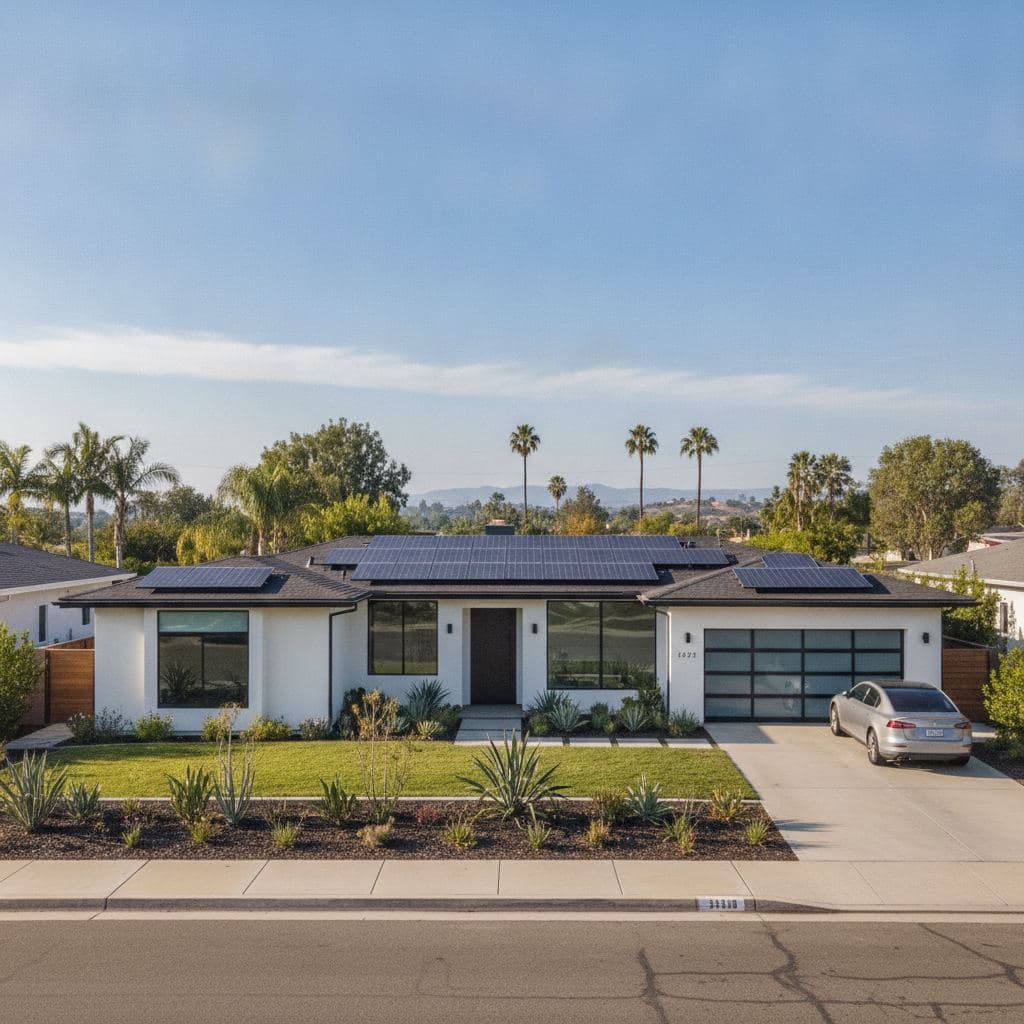
Rooftop solar panels you own are treated as a permanent part of your home's structure, and a standard California homeowners policy covers them under dwelling coverage (Coverage A) for the same perils that protect the rest of your house — fire, wind, hail, vandalism, and falling objects. The critical number: your dwelling coverage limit must be increased by the full installed cost of the system — typically $15,000–$35,000 for panels alone, more if you add a battery — or a claim can be underpaid by exactly that gap. Whether you're covered, and for how much, ultimately comes down to your specific policy wording.
Last verified: October 2026 by Helios Energy Global.
This page is general information, not insurance advice. Talk to a licensed California insurance professional about your specific policy.
What your policy actually covers — and what it doesn't
Rooftop solar panels are classified as a permanent attachment to your dwelling — the same category as a skylight, chimney, or built-in appliance — and are covered under your dwelling coverage (Coverage A) for the same perils as the rest of your house.
According to the Insurance Information Institute, while most standard policies cover solar panels as "permanent attachments," the specifics of how they are covered — and for how much — vary by state and by carrier. That means your policy wording is the deciding document, not a general rule of thumb.
Typical covered perils
Standard homeowners insurance typically covers roof-mounted solar panels under dwelling coverage against perils like fire, theft, vandalism, and storm damage.
Standard policies are designed to cover sudden, accidental damage but do not cover gradual deterioration, normal wear-and-tear, or maintenance issues.
Typically NOT covered under any standard policy:
- Normal wear and panel degradation
- Manufacturing defects (covered by the panel manufacturer's product warranty — see our guide to solar panel warranties)
- Electrical malfunction with no external cause (an equipment breakdown endorsement can fill this gap)
- Flood damage (requires a separate NFIP policy)
- Earthquake (requires a separate rider)
Damage caused by poor maintenance or faulty installation; earthquake damage is also usually excluded unless you have specific coverage.
Ground-mounted systems
Ground-mounted systems are treated differently. Panels mounted on a detached structure, a ground rack in your yard, or a carport typically fall under "other structures" coverage (Coverage B), which is usually set at 10% of your dwelling coverage by default. On a $500,000 dwelling policy, that's a $50,000 cap shared across your detached garage, fence, shed, and solar array combined — which may not be enough for a large ground-mount system.
Owned vs. leased: who insures the panels?
This is one of the most common points of confusion for California solar shoppers.
Panels you own outright (cash purchase or solar loan): Rooftop panels that are permanently attached to your home are typically considered part of the dwelling itself, protected under Dwelling Coverage — the same part of your homeowners insurance that covers the structure of your house — including damage caused by perils like fire, hail, lightning, theft, and vandalism.
Leased panels or a Power Purchase Agreement (PPA): If you lease your solar panel system, the leasing company may insure it.
Leased panels may not be covered by your homeowners policy, and you may be required to insure them through the leasing company. Read your lease carefully — most leases require you to maintain the panels in good condition and carry liability coverage, but the equipment itself is the lessor's responsibility.
What to tell your insurer — and when
Homeowners should notify their insurance provider before or immediately after installation to ensure adequate coverage limits and adjust their policy if necessary.
Many policies require written notice of any material improvement to the dwelling, and solar qualifies. If you do not notify the carrier and a claim happens, they can deny the panel-specific portion of the claim on non-disclosure grounds.
Practical checklist before your panels go live:
Call or email your insurer and tell them the system size (kW), installed cost, and whether a battery is included
Request a dwelling coverage limit increase equal to the full installed cost of the system and battery
Ask specifically whether the policy covers panels for wind and hail — solar energy systems and rooftop panels are largely considered a permanent attachment to your property, similar to a patio or a security system, but some policies may exclude damage to these attachments when caused by a particular threat, such as wind
Get confirmation in writing — a policy endorsement or a letter from your insurer
If you're in a High Fire Threat District, check our HFTD map before your installation date — your zone can affect both your premium and your carrier options
Does adding solar raise your premium?
In most cases, adding solar panels to a California home does raise homeowners insurance — but only slightly. Insurers see solar panels as an added structure attached to your roof, similar to a sunroom or a permanent deck. That added value means added replacement cost, which is what actually moves the premium, not the panels' "green" status.
You may see an increase in your cost for homeowners insurance after installing solar panels on your roof. Your insurer may raise your dwelling coverage or other structures coverage limit to account for the replacement cost of your solar panels.
The California market adds complexity. Several major carriers pulled back from new homeowner policies in 2023–2025 due to wildfire losses. Solar itself is not the problem, but adding a large system to a property that already triggers a wildfire surcharge can push total premium materially higher.
Coverage limits and replacement cost: the number that matters most
The dwelling coverage limit needs to go up. A 9 kW system plus a battery can add $35,000–$45,000 in replacement cost. If your Coverage A dwelling limit does not rise by at least the installed system cost, a total loss claim will be underpaid by that amount.
Use this table as a starting point for estimating how much to add to your dwelling limit. All system cost figures are Helios Energy Global estimates for Southern California in 2026.
| Component | Estimated installed cost (2026) | Coverage type | Notes |
|---|---|---|---|
| 6 kW rooftop solar | $15,000–$21,000 | Coverage A (dwelling) | Add to dwelling limit |
| 8 kW rooftop solar | $20,000–$28,000 | Coverage A (dwelling) | Add to dwelling limit |
| 10 kW rooftop solar | $25,000–$35,000 | Coverage A (dwelling) | Add to dwelling limit |
| 12 kW rooftop solar | $30,000–$42,000 | Coverage A (dwelling) | Add to dwelling limit |
| Tesla Powerwall 3 (1 unit) | $14,500–$18,500 | Coverage A (dwelling) | Confirm with insurer; may need endorsement |
| Two Tesla Powerwall 3 units | $24,000–$30,000 | Coverage A (dwelling) | Confirm with insurer; may need endorsement |
| Enphase IQ Battery 10C | $13,000–$15,500 | Coverage A (dwelling) | Confirm with insurer; may need endorsement |
| FranklinWH aPower 2 + aGate | $16,000–$21,000 | Coverage A (dwelling) | Confirm with insurer; may need endorsement |
| Ground-mounted array | Varies | Coverage B (other structures) | Default cap is 10% of dwelling limit |
| Main panel upgrade (if needed) | $3,000–$5,000 | Coverage A (dwelling) | Add to dwelling limit |
All costs are estimates. Get a written quote from Helios for your specific home.
Replacement cost vs. actual cash value
Ask your insurer whether your policy pays replacement cost (what it costs to buy and install new panels today) or actual cash value (replacement cost minus depreciation). For a 10-year-old panel array, the difference can be tens of thousands of dollars. Replacement cost coverage is strongly preferable.
Batteries: a separate conversation with your insurer
Batteries are a significant portion of total system cost and are frequently treated as a separate covered item. Some insurers require an endorsement specifically for battery systems, particularly because lithium-ion batteries carry a fire and thermal runaway risk profile that standard dwelling underwriters may not have fully priced.
When you add a battery — a Tesla Powerwall 3, Enphase IQ Battery 10C, or FranklinWH aPower 2 — tell your insurer the make, model, installed cost, and location (garage wall, exterior, etc.). Ask explicitly:
- Is the battery covered under my existing dwelling coverage, or do I need an endorsement?
- Does my policy cover equipment breakdown (inverter or battery management system failure not caused by a named peril)?
- Is there a sublimit for battery storage systems?
Equipment breakdown coverage is an affordable add-on that most standard HO-3 policies exclude by default. Equipment malfunction that causes fire or property damage but is not attributable to a manufacturer defect or installation error falls into the equipment breakdown category. Standard homeowners policies exclude this. An equipment breakdown endorsement covers it.
For what happens to your panels during a roof insurance claim — including removal and reinstallation — see our dedicated guide at /guides/solar-panel-removal-insurance-claims.
The California FAIR Plan and solar panels
The California FAIR Plan is the insurer of last resort, available to homeowners who cannot obtain coverage in the voluntary market.
As of June 2026, the FAIR Plan had 696,562 policies in force and $768 billion of exposure, up 157% and 250% since September 2022.
What the FAIR Plan covers for solar homeowners:
The panels attached to your roof are covered for fire under the FAIR Plan's dwelling coverage, assuming your limit is set high enough to include their replacement value.
The FAIR Plan covers fire, lightning, internal explosion, and smoke. It does not cover liability, water damage, or theft.
The gaps that hit solar owners hardest:
If someone steals your microinverters, if your battery system fails due to an electrical malfunction, or if a workmanship defect causes water damage through your roof, the FAIR Plan does not respond.
The standard solution:
The standard solution is pairing a FAIR Plan policy with a Difference in Conditions (DIC) policy from a surplus lines carrier. A DIC policy wraps around the FAIR Plan and provides the coverages the FAIR Plan excludes. If you are on the FAIR Plan and you add solar, you need to explicitly tell your DIC carrier about the panels so they can evaluate whether any endorsements or exclusions apply. Do not assume the DIC policy automatically updates.
FAIR Plan rates in 2026: The California Department of Insurance approved a 29.1% average statewide rate increase on FAIR Plan dwelling policies, effective October 15, 2026 (the original request was 35.8%). The increase is weighted toward the wildfire portion of the premium, so properties in high-risk zones may see increases well above the average. If you are on the FAIR Plan and adding solar, update your dwelling limit before that October 15 effective date to avoid a gap.
New California insurance laws signed in September 2026
California's insurance landscape shifted materially in late September 2026. Governor Gavin Newsom signed nine Department of Insurance-sponsored bills that directly affect how homeowners — including solar homeowners — interact with their insurers after a disaster.
Disaster Recovery Reform Act (SB 876) — signed September 28, 2026, per the California Department of Insurance's press release:
SB 876 is a comprehensive reform package that will help homeowners and renters recover more quickly following disasters by doubling penalties during declared emergencies for violations of insurance claims settlement laws and requiring insurers to pay restitution directly to policyholders when violations occur.
Every residential property insurer in California will have to offer at least 50% extended replacement cost coverage when it writes or renews a policy, and give you an estimate of what it would cost to rebuild your home. For solar homeowners, this matters: if your home burns and panels need replacing, a 50% extended replacement cost buffer gives you a meaningful cushion against underinsurance. SB 876 takes effect January 1, 2027.
Building code upgrades now apply at the time of rebuilding, not when the loss occurred — ensuring safer, up-to-date reconstruction after disasters. That means if California's building code requires a newer inverter type or updated racking by the time you rebuild, your insurer must cover those upgrades.
Non-renewal notice (SB 1301): Newsom also signed Senate Bill 1301, which requires insurers to give policyholders 90 days' notice (up from 75) before their policy is nonrenewed. If the insurer determined the policy was being dropped for a reason the policyholder could fix, such as an outdated roof, it would require the insurer to give 120 days' notice. This gives solar homeowners more time to find alternative coverage before a gap opens.
Key numbers at a glance
| Topic | Key figure | Source / notes |
|---|---|---|
| Standard HO-3 dwelling coverage for rooftop solar | Coverage A — same as the house | Per Insurance Information Institute guidance |
| Ground-mount / detached coverage | Coverage B — typically 10% of dwelling limit | Standard HO-3 default |
| FAIR Plan residential dwelling cap | $3,000,000 | California FAIR Plan (2026) |
| FAIR Plan perils covered | Fire, lightning, internal explosion, smoke | Named-peril policy only |
| FAIR Plan rate increase effective | 29.1% avg statewide, Oct 15, 2026 | CDI-approved rate filing |
| SB 876 extended replacement cost offer | At least 50% above dwelling limit | Effective Jan 1, 2027 |
| Non-renewal notice period (SB 1301) | 90 days (120 if fixable reason) | Effective upon signing, Sept 2026 |
| Typical premium increase for solar (CA) | Modest — driven by added replacement cost | Varies by carrier and system size |
Frequently asked questions about solar panel homeowners insurance in California
Does homeowners insurance automatically cover solar panels in California?
Most homeowners insurance policies in California will cover solar panels under dwelling coverage if they are permanently attached to your home. But "automatically" is the wrong word — you must notify your insurer, and your dwelling coverage limit must be high enough to include the panels' replacement cost. Without that update, a claim can be underpaid by the full value of the system.
What if my panels are on a leased system — am I still covered?
Homeowners should verify coverage details, limits, and deductibles with their insurer; leased panels are insured by the leasing company. Check your lease agreement for the exact terms. In most California solar leases, the leasing company carries property insurance on the equipment, but you remain responsible for the roof structure beneath the panels.
Will adding solar panels make my homeowners insurance more expensive?
Adding solar panels to your home may increase the value of your home, which could result in an increase in your insurance premium. The increase reflects the higher replacement cost of your home, not a penalty for having solar. In Southern California's tight insurance market, the bigger risk is that your existing carrier may not be writing new or expanded policies — work with a licensed broker to confirm your options before installation.
Does the California FAIR Plan cover solar panels?
The FAIR Plan covers your panels for fire and lightning, provided your dwelling limit is set high enough to include their replacement cost. It does not cover theft, equipment breakdown, or liability. For solar homeowners on the FAIR Plan, this creates a specific gap: the panels are covered for fire, but if someone steals your microinverters, if your battery fails due to an electrical malfunction, or if a workmanship defect causes water damage through your roof, the FAIR Plan does not respond. Pair it with a DIC policy and explicitly disclose the solar system to that DIC carrier.
What happens to my insurance if my roof needs to be replaced while I have solar panels?
Panel removal and reinstallation during a roof claim is a real cost — and a common source of disputes. We cover this in detail at /guides/solar-panel-removal-insurance-claims. Short answer: the cost to remove and reinstall panels is not always included in a roofing claim unless you specifically confirm it with your insurer in writing before the work starts. Helios coordinates roofing work through vetted, licensed roofing partners; if you need a roof before or alongside solar, ask us about sequencing.
How much should I raise my dwelling coverage limit when I add solar?
Raise it by the full installed cost of your system — panels, racking, inverters, conduit, and battery if applicable. A 9 kW system plus a battery can add $35,000–$45,000 in replacement cost. If your Coverage A dwelling limit does not rise by at least the installed system cost, a total loss claim will be underpaid by that amount. Use your Helios written quote as the figure to give your insurer — it names every component and its cost.
Do the new 2026 California insurance laws help solar homeowners specifically?
Yes, indirectly but meaningfully. Insurers must now offer extended replacement cost coverage and additional living expenses coverage, and must provide updated replacement cost estimates for new and renewing policies. That estimate process is your opportunity to ensure the insurer accounts for your solar and battery in the rebuild cost. Building code upgrades now apply at the time of rebuilding, not when the loss occurred, ensuring safer, up-to-date reconstruction after disasters — which matters if panel or inverter standards have changed by the time you need to rebuild.
Next steps
- Book a free consultation and custom design — Helios provides one all-in written price with every component named by model, which is exactly what your insurer needs to set your dwelling limit correctly.
- Explore battery storage options — understand the installed cost of a Powerwall 3, Enphase IQ Battery 10C, or FranklinWH aPower 2 before you talk to your insurer.
- See our full solar guide for Southern California — covers NEM 3.0 for SCE customers and retail-rate net metering for LADWP customers.
- Read our NEM 3.0 explainer — if you're on SCE, PG&E, or SDG&E, the net billing tariff changes how a battery affects your economics.
- Check your fire risk zone — your High Fire Threat District designation affects both your insurer's appetite and your FAIR Plan premium.
- Understand solar panel warranties — manufacturer defects are a warranty issue, not an insurance issue; know the difference before a claim.
- Learn about panel removal during roof claims — the owner of this topic in detail; don't skip it if a reroof is on the horizon.
- See our locations page — Helios serves Santa Monica, Los Angeles, and communities throughout Southern California.
Sources
- California Department of Insurance — September 30, 2026 Press Release: Governor signs landmark consumer protection package — September 30, 2026
- California Department of Insurance — September 28, 2026 Press Release: Governor signs Disaster Recovery Reform Act (SB 876) — September 28, 2026
- California FAIR Plan — Key Statistics & Data (FY2026) — July 2026
- Menlo Insurance — California FAIR Plan Rate Increase 2026 — September 2026
- ESI Brokers — New CA Law: 50% Extended Replacement Cost Offer (SB 876) — September 28, 2026
More guides
Best Solar Companies in Lake Elsinore, CA (2026): Honest Rankings for Riverside County Homeowners
Lake Elsinore homeowners get 6.0 peak sun hours and face real wildfire risk — here's how to choose a solar installer who understands both. Our honest 2026 rankings, with pricing, NEM 3.0 guidance, and battery advice.
ReadSolar PTO in California: How Long Permission to Operate Takes and What to Do When It Stalls
Solar PTO from SCE targets 10 business days for a clean application but routinely stretches 4–12 weeks in 2026 — here's what drives the delay and how to get it moving.
ReadSolar Lease vs. PPA vs. Prepaid Lease in California: Which One Actually Saves Money in 2026?
On a 7 kW SCE system in 2026, a prepaid lease typically cuts your effective rate to roughly 20–24¢/kWh from day one — about 30% below a monthly lease or PPA starting rate — because the financier claims the commercial §48E tax credit and passes the savings forward.
ReadGet a free consultation and custom design.
No pressure, no obligation — the owner reviews every design we send.