Home Battery Backup Without Solar in California: When Does It Make Sense in 2026?
A standalone home battery in California costs $14,000–$18,500 installed and makes financial sense for SCE and SDG&E customers with a 30–45¢/kWh peak-to-off-peak spread—or for anyone in a High Fire Threat District facing PSPS outages.
By Taylor Crouse — Founder, Helios Energy GlobalPublished
Quick answer
- Yes — California homeowners can install a battery with no solar panels at all.
- One Tesla Powerwall 3 (13.5 kWh usable) runs $14,500–$18,500 installed at Helios; the Enphase IQ Battery 10C runs $13,000–$15,500.
- The strongest TOU arbitrage case is in SDG&E territory, where the summer peak-to-super-off-peak spread reaches ~32¢/kWh on TOU-DR1; SCE's TOU-D-PRIME spread is roughly 33–35¢/kWh in summer.
- Without solar to recharge it, a standalone battery gives one charge per grid outage—backup hours depend entirely on which loads you keep on.
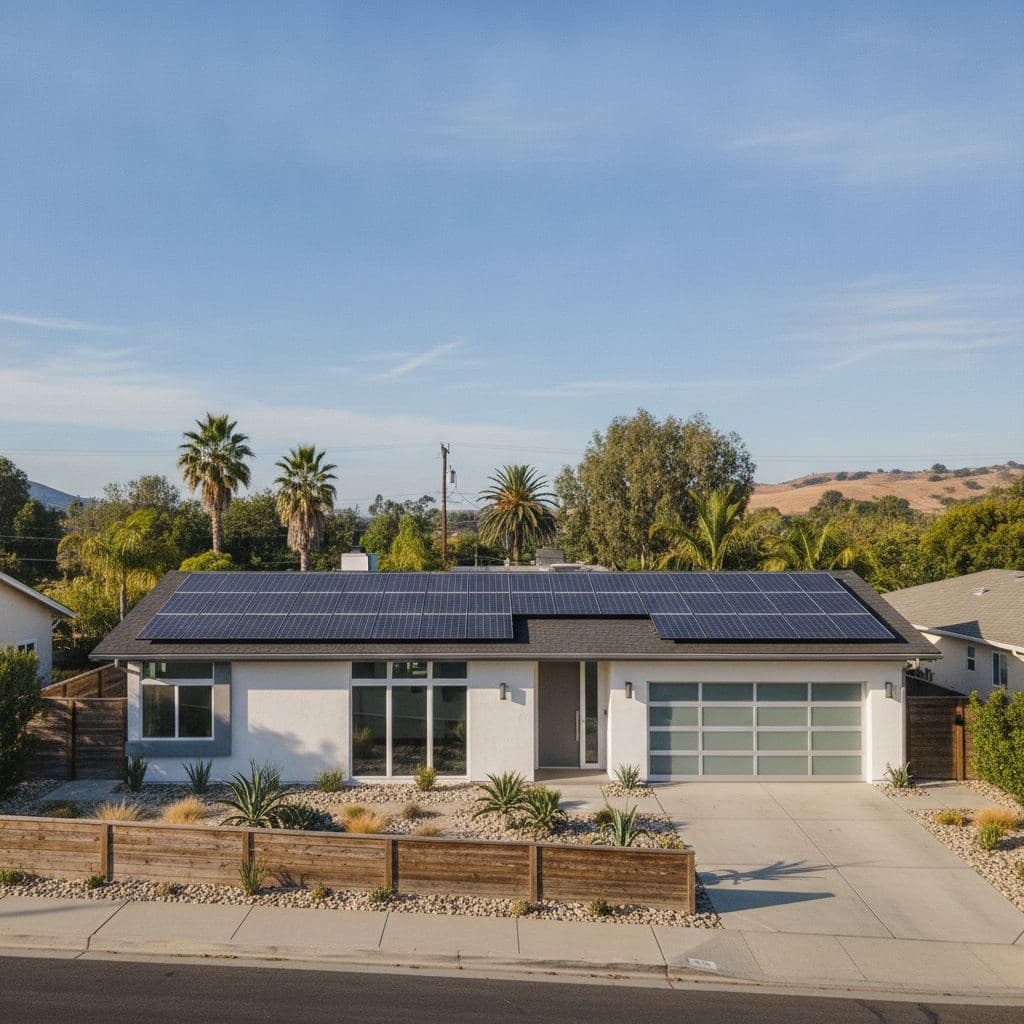
A California home can install a battery storage system with no solar panels, and in 2026 there are two situations where the math is genuinely compelling: you live in a High Fire Threat District and want outage insurance, or you're on an SCE or SDG&E time-of-use rate where the peak-to-off-peak spread exceeds 30¢/kWh and you can charge the battery overnight to avoid the 4–9 PM window. For LADWP customers the calculus is different—the utility uses a tiered-by-usage structure rather than time-of-day pricing, which limits the pure arbitrage opportunity a battery provides.
Last verified: October 2026 by Helios Energy Global.
What a standalone battery actually does
A home battery stores electricity from the grid (or from solar, if you add panels later) and releases it on demand. Without solar, the battery charges from the grid during cheap hours and discharges during expensive ones—or it sits at full charge waiting for an outage.
The Tesla Powerwall 3 offers a usable energy capacity of 13.5 kWh, with a higher continuous power output than previous models, supporting both whole-home and partial-home backup depending on your energy needs and number of units installed. The Enphase IQ Battery 10C carries 10 kWh of usable capacity; the FranklinWH aPower 2 with aGate sits at 13.6 kWh.
The critical limit with no solar: once the battery is empty, it can only refill from the grid. During a PSPS or extended outage, the grid is down—so you get exactly one charge. How long that charge lasts depends on what you keep running.
A rough daily load estimate for essential circuits:
- Refrigerator + freezer: ~3–4 kWh/day
- LED lighting, phone charging, router: ~0.5–1 kWh/day
- CPAP or medical device: ~0.5–1 kWh/day
- Small window AC (4 hrs): ~3 kWh
Total daily draw for a refrigerator, LED lighting, phone charging, and a small window AC unit running 4 hours comes to roughly 7–8 kWh. That means a single 13.5 kWh battery covers roughly 18–24 hours of essential loads—enough for most PSPS events, but not a multi-day siege without solar to recharge it.
The numbers by utility and rate plan
| Utility | Rate plan | Off-peak rate | On-peak rate | Peak window | Spread (summer) | Standalone battery arbitrage? |
|---|---|---|---|---|---|---|
| SCE | TOU-D-PRIME | ~24–26¢/kWh | ~58–59¢/kWh | 4–9 PM weekdays | ~33–35¢/kWh | Strong |
| SCE | TOU-D-4-9PM | ~29–34¢/kWh | ~48–58¢/kWh | 4–9 PM weekdays | ~20–24¢/kWh | Moderate |
| SDG&E | TOU-DR1 | ~37¢/kWh (super off-peak) | ~69¢/kWh | 4–9 PM every day | ~32¢/kWh | Strong |
| LADWP | R-1A (standard) | 26–41¢/kWh by tier | Same rate, no TOU | No peak window | N/A | Weak (outage only) |
| LADWP | R-1B (opt-in TOU) | ~25–27¢/kWh base | ~28–35¢/kWh peak | 1–5 PM weekdays | ~3–8¢/kWh | Weak |
All rates are estimates from published 2026 tariff tables. Actual bills include fixed charges. Consult your bill for your specific tier and zone.
Use case 1: Outage and PSPS backup in high fire-threat areas
PSPS events in California's Tier 2 and Tier 3 High Fire Threat District zones have lasted up to 7 days. SCE, SDG&E, and PG&E all operate planned shutoff programs in wildland-urban interface communities—and Southern California's foothill and canyon neighborhoods (Altadena, Glendora, La Cañada, Malibu, parts of San Diego's backcountry) see this risk every fire season.
The case for generators weakens in California specifically because PSPS events are often triggered by the same Red Flag fire weather conditions that make running a gas generator outdoors dangerous or restricted. A battery system does not care whether the air quality index is 300 or a wildfire is 2 miles away. It runs silently, indoors, and without any fuel logistics.
For backup-only use, the honest math is this:
- One 13.5 kWh battery → covers essential loads for roughly 18–24 hours
- Two batteries (27 kWh) → covers 36–48 hours on essential circuits, or ~18–24 hours if you add central AC
- No solar to recharge → once empty during an outage, you wait for the grid to return
If you're in a PSPS-prone area and want multi-day resilience, the honest answer is that a battery-only system is a meaningful upgrade over nothing, but it works best when paired with solar. See our whole-home backup sizing guide for load calculations and panel counts by home size.
A note for SCE customers: SCE's Marketplace offers portable power stations and generators, with a $200 rebate for qualifying residential portable power stations and up to $800 for qualifying portable generators. That's for portable units only—it does not apply to installed whole-home battery systems.
Use case 2: TOU arbitrage on SCE and SDG&E
This is where a standalone battery can genuinely pencil out for non-PSPS households—but only if your utility has a wide enough peak-to-off-peak spread.
SCE: TOU-D-PRIME
Southern California Edison's peak hours are 4 to 9 p.m. every day on TOU-D-PRIME, and the most expensive hours are summer weekdays, when SCE lists on-peak prices of 58 to 74 cents per kWh.
The cheapest time on TOU-D-PRIME is the off-peak window (midnight–4 p.m., 9 p.m.–midnight), at about 24¢/kWh.
The arbitrage math on SCE TOU-D-PRIME (summer, estimates):
- Charge 13.5 kWh overnight at ~24¢/kWh → cost: ~$3.24
- Discharge 13.5 kWh during 4–9 PM at ~59¢/kWh → value of avoided peak power: ~$7.97
- Gross daily spread: ~$4.73 (before accounting for ~89% round-trip efficiency)
- After efficiency loss: roughly $4.20/day net on summer weekdays
At that rate, you'd accumulate roughly $550–$700 in avoided peak charges over a 5-month summer season—assuming you run the battery at full depth every weekday. Annualized over a 10-year battery life, that's a meaningful offset, but not a payback story on its own. The economics improve significantly if you add solar later (the battery then charges for free from your panels) or if SCE rates continue rising as projected.
SDG&E: TOU-DR1
SDG&E's peak is 4–9 p.m. every day, weekends included. SDG&E says TOU-DR1 is its standard residential schedule. Every price listed is from SDG&E's total rate tables effective August 1, 2026.
The gap between super off-peak (~37¢) and on-peak (~69¢) on SDG&E TOU-DR1 is about 32¢ per kWh. Every kilowatt-hour you shift out of 4–9 p.m. saves roughly a third of a dollar.
The arbitrage math on SDG&E TOU-DR1 (summer, estimates):
- Charge 13.5 kWh during super off-peak (10 AM–2 PM weekdays) at ~37¢/kWh → cost: ~$5.00
- Discharge 13.5 kWh during 4–9 PM at ~69¢/kWh → value of avoided peak power: ~$9.32
- Gross daily spread: ~$4.32 (before round-trip efficiency)
- After ~89% efficiency: roughly $3.85/day net
One important SDG&E detail: the peak window applies every day, including weekends, which is stricter than SCE or PG&E, where the equivalent peak is weekday-only. That means 7 days a week of potential arbitrage—but also 7 days a week of charging cost. The super off-peak window (10 AM–2 PM on weekdays) is the cheapest charge window; on weekends, the base rate (~46¢) is the floor, which compresses the spread.
LADWP: a different structure entirely
LADWP does not use a 4–9 PM peak window on its standard residential rate. LADWP offers two primary residential plans: the standard tiered R-1A (the default) and the opt-in time-of-use R-1B. R-1A is a three-tier plan with no time-of-day pricing.
On the standard R-1A plan, summer rates (July–September 2026) run 26.41¢/kWh in Tier 1, 32.27¢/kWh in Tier 2, and 40.97¢/kWh in Tier 3.
For LADWP customers, a standalone battery's financial case rests almost entirely on outage protection and tier management (using stored energy to avoid spilling into Tier 3), not on a wide time-of-day spread. LADWP keeps full retail-rate net metering—a meaningful difference from SCE's Net Billing Tariff —which is a strong argument for adding solar at the same time if you're in LA, since every kWh your panels produce offsets Tier 2 or Tier 3 charges at retail value.
Can you install a Tesla Powerwall without solar?
Yes. Tesla's Powerwall 3 is fully capable of operating as a grid-tied battery with no solar panels connected. The Powerwall 3 offers 13.5 kWh of usable capacity, 11.5 kW of continuous power, and a 10-year warranty. In a solar-free installation, the unit charges from the grid during off-peak hours (or during the day, if you set a charging schedule) and discharges on demand.
The Powerwall 3's integrated solar inverter—which includes six MPPT inputs for DC solar strings—simply goes unused in a standalone configuration. That's not a problem; it doesn't reduce the battery's performance or warranty. It does mean you're paying for inverter hardware you're not using, which is one reason some solar-free installations favor an AC-coupled battery like the Enphase IQ Battery 10C or the FranklinWH aPower 2, both of which are designed to connect directly to an existing panel without a solar inverter.
Helios installed prices (2026 estimates):
| Battery | Usable kWh | Installed price (estimate) |
|---|---|---|
| Tesla Powerwall 3 (1 unit) | 13.5 kWh | $14,500–$18,500 |
| Tesla Powerwall 3 (2 units) | 27.0 kWh | $24,000–$30,000 |
| Powerwall 3 Expansion (add-on) | 13.5 kWh | $8,000–$11,500 |
| Enphase IQ Battery 10C | 10.0 kWh | $13,000–$15,500 |
| FranklinWH aPower 2 + aGate | 13.6 kWh | $16,000–$21,000 |
Prices are Helios installed estimates as of September 2026. A main-panel upgrade, when needed, adds $3,000–$5,000. See /powerwall-3-cost for Powerwall-specific pricing detail.
For a deeper look at which battery model fits your home, visit our battery comparison page.
What about incentives in 2026?
Federal tax credit: The 30% federal residential clean energy tax credit expired December 31, 2025. There is no federal tax credit for a battery installed in 2026, whether or not it is paired with solar. Do not let any quote assume otherwise.
SGIP: California's Self-Generation Incentive Program has residential budget categories that are currently waitlisted in 2026. We leave SGIP out of this guide because it cannot be counted on for near-term projects.
Utility rebates: Check your utility's current programs. SCE has offered portable power station rebates for PSPS-prone customers; these are for portable units, not installed systems.
Financing: A battery-only project can be financed through home improvement loans, PACE programs, or manufacturer financing. See our financing page for current options.
Honest limits of a battery-only system
Before committing, understand what a standalone battery cannot do:
- One charge per outage. Without solar, the battery cannot refill itself. A 7-day PSPS event will exhaust any single-battery system within 24–48 hours.
- Arbitrage savings are real but not dramatic. At current SCE and SDG&E spreads, a single battery might offset $400–$700/year in peak charges under ideal cycling conditions—not a fast payback on a $14,000–$18,500 investment without solar.
- LADWP customers have limited TOU benefit. The standard R-1A rate is tiered, not time-of-day, so the peak-shaving math doesn't apply the same way.
- No federal tax credit in 2026. The economics that worked in 2024 and 2025 have changed.
The strongest case for a standalone battery in Southern California in 2026 is a homeowner in a High Fire Threat District on SCE or SDG&E territory who wants outage protection today and plans to add solar within 1–3 years. The battery earns its keep on TOU arbitrage in the meantime, then shifts to solar-first charging once panels are on the roof.
Frequently asked questions about home battery backup without solar
Can I install a home battery without solar panels in California?
Yes. There is no legal or utility requirement to have solar panels to install a home battery in California. The battery connects to your main electrical panel and charges from the grid. You can add solar later—most installed batteries are solar-ready.
How long will a 13.5 kWh battery last during a power outage?
It depends on which loads you keep running. Running a refrigerator, lights, router, and phone charging draws roughly 4–5 kWh per day; add a CPAP and the number rises to 5–6 kWh. At that rate, a single 13.5 kWh battery lasts approximately 24–30 hours. Running central AC shortens that significantly—to as little as 4–6 hours. See our whole-home backup sizing guide for a load-by-load breakdown.
Is there a federal tax credit for a battery installed without solar in 2026?
No. The 30% federal residential clean energy tax credit (Section 25D) expired December 31, 2025. A battery installed in 2026—with or without solar—does not qualify for a federal credit. Check with a tax professional for any state-level deductions that may apply.
Does TOU arbitrage actually work for a standalone battery on SCE?
It can work on SCE's TOU-D-PRIME plan, where the summer spread between off-peak (~24¢/kWh) and on-peak (~58–59¢/kWh) is roughly 33–35¢/kWh. Cycling a 13.5 kWh battery every weekday in summer could offset $400–$600 in peak charges annually—a real but modest return. The math improves substantially once solar is added, because the battery then charges for free from your panels instead of from the grid.
Does the same TOU arbitrage work for LADWP customers?
Not in the same way. LADWP's standard rate (R-1A) is tiered by usage, not by time of day. There is no 4–9 PM peak window on R-1A. LADWP's optional TOU plan (R-1B) has a peak period, but the spread between peak and base is only about 3–8¢/kWh—far too narrow to make arbitrage meaningful. For LADWP customers, the primary value of a standalone battery is outage backup.
What is the best battery for a solar-free installation in Southern California?
The right choice depends on your backup load goals and budget. The Enphase IQ Battery 10C ($13,000–$15,500 installed) is a strong fit for essential-loads backup on a tighter budget. The Tesla Powerwall 3 ($14,500–$18,500) delivers more continuous power (up to 11.5 kW) and is the easiest to expand if you add solar later. The FranklinWH aPower 2 with aGate ($16,000–$21,000) offers flexible whole-home transfer switching. Visit /batteries for a side-by-side comparison.
Can I add solar panels to a standalone battery later?
Yes, and most installed batteries are designed for exactly this upgrade path. The Tesla Powerwall 3 has a built-in solar inverter ready to accept DC panels. Enphase and FranklinWH systems are AC-coupled and work with any solar array. When you're ready to add panels, Helios can design a system around your existing battery. See /solar to start that conversation.
Next steps
- Book a free consultation and custom design — Helios will size the right battery for your utility, rate plan, and backup goals at no cost or obligation.
- Compare home battery options — Powerwall 3, Enphase IQ, and FranklinWH side by side.
- Powerwall 3 pricing detail — full installed cost breakdown for one and two units.
- Whole-home backup sizing guide — how many kWh you actually need, by home size and load profile.
- Financing a battery-only project — loan, PACE, and manufacturer financing options explained.
- Understand NEM 3.0 and net billing — if you're considering adding solar later, this is the rate context you need.
Sources
- ratereliefca.com — SCE TOU Rates 2026, checked Sep 23 2026 — September 23, 2026
- ratereliefca.com — SDG&E TOU Rates 2026, checked Sep 23 2026 — September 23, 2026
- electricchoice.com — LADWP R-1A Rate Schedule 2026, updated Sep 14 2026 — September 14, 2026
- SCE June 2026 PSPS Newsletter — High Fire Risk Area Outage Guide — June 3, 2026
- ratereliefca.com — LADWP Rates 2026, checked Sep 23 2026 — September 23, 2026
More guides
Best Solar Companies in Yorba Linda, CA (2026): An Honest Homeowner's Guide
Yorba Linda homeowners face SCE's NEM 3.0 net billing rules and real wildfire risk in the foothills — here's how to pick the right solar installer and avoid costly mistakes in 2026.
ReadSolar Lease Buyout in California: What It Costs and When It Makes Sense (2026)
A California solar lease buyout typically costs $8,000–$35,000, depending on how many years remain on your 20–25-year contract — and the first buyout window usually opens at year 5 or 6.
ReadTesla Powerwall 3 Expansion Pack: capacity, limits, and what it adds (2026)
A Tesla Powerwall 3 Expansion adds 13.5 kWh of storage and zero extra inverter power, with a hard limit of 3 Expansion units per system, all wired to the leader Powerwall 3.
ReadGet a free consultation and custom design.
No pressure, no obligation — the owner reviews every design we send.