Do solar panels increase property taxes in California? The exclusion ends January 1, 2027
California's Active Solar Energy System exclusion means solar adds $0 to your assessed value — but the statute makes the exclusion inoperative on January 1, 2027. Systems that qualify before then stay excluded until the home changes hands.
By Taylor Crouse — Founder, Helios Energy GlobalUpdated
Quick answer
- California's Active Solar Energy System exclusion means solar panels add $0 to your assessed property value under current law.
- The exclusion is not permanent: Revenue & Taxation Code §73 "shall remain in effect only until January 1, 2027." SB 710 (Chapter 328, signed October 3, 2025) made a technical change and kept that date; AB 2389, the 2026 bill to extend it, was held in committee and did not pass.
- A system that qualifies before January 1, 2027 "shall continue to be excluded on and after January 1, 2027, until there is a subsequent change in ownership." When the home sells, the whole property, solar included, is reassessed at the purchase price; there is no separate solar add-on.
- Leased systems are also excluded, because the exclusion applies to the property, not the ownership structure of the panels.
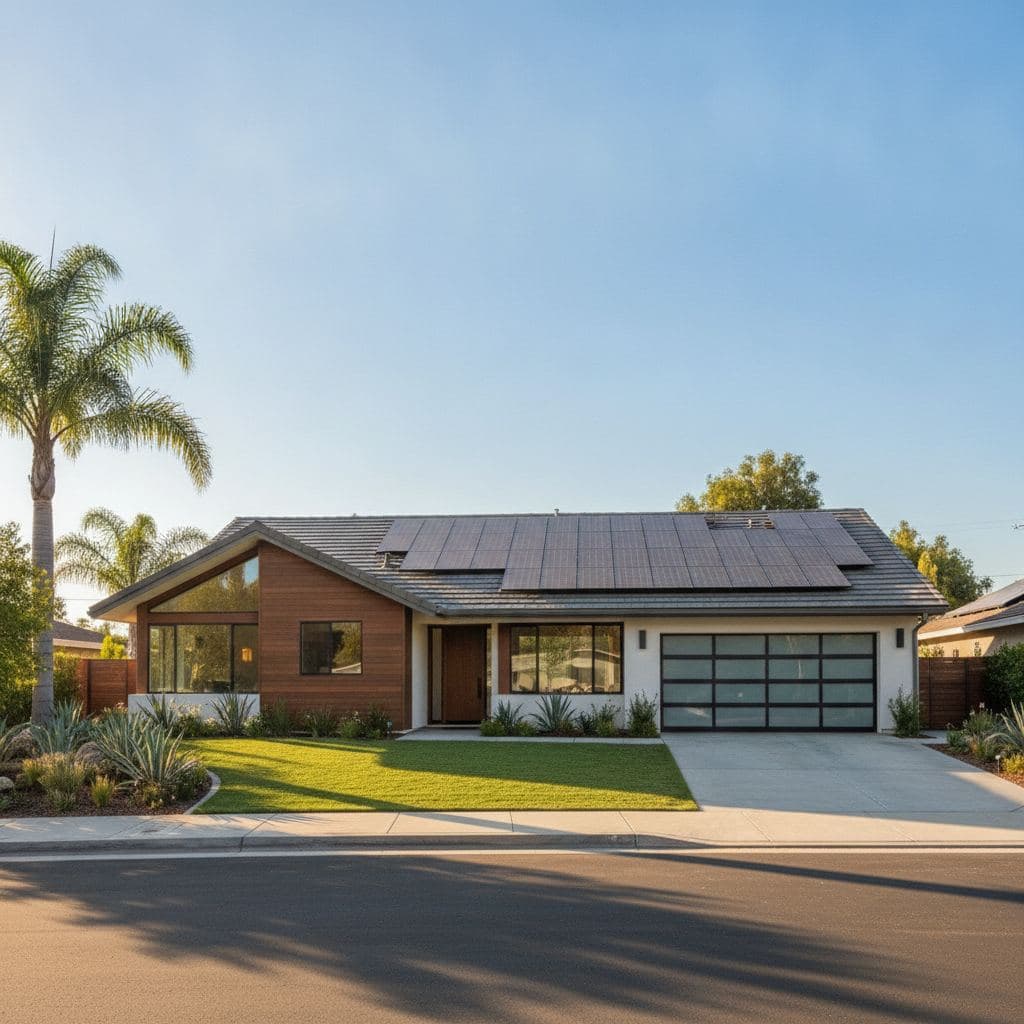
California's Active Solar Energy System (ASES) exclusion, codified in Revenue & Taxation Code §73, means a rooftop solar installation adds $0 to your home's assessed value for property tax purposes. Under current law that protection has an end date: the section becomes inoperative on January 1, 2027. A system that qualifies before that date keeps its exclusion for as long as you own the home; a system completed on or after that date would be assessed like any other improvement unless the legislature acts again.
Last verified: October 8, 2026 by Helios Energy Global, against the chaptered text of SB 710 and the Board of Equalization's Letter To Assessors 2024/031.
How the exclusion actually works
California property tax is based on assessed value, which is normally reassessed when you make a significant improvement to your home. Solar panels clearly improve a home — they can add meaningful market value — but the legislature carved out a specific exception decades ago to encourage adoption.
Under R&TC §73, a qualifying Active Solar Energy System is excluded from the definition of "new construction" for property tax purposes. That means the county assessor does not add the system's value to your assessed base. Your tax bill stays the same the day after installation as it was the day before.
The California Board of Equalization (BOE) administers and publishes guidance on this exclusion. Their published FAQ confirms the exclusion applies to systems installed on existing homes and, separately, to new construction through a parallel provision.
What counts as a qualifying system?
The BOE defines an Active Solar Energy System as equipment that uses solar energy to:
- Heat or cool a structure
- Generate electricity (photovoltaic panels — by far the most common residential use)
- Heat water for use in the structure
- Provide solar process heat
Standard rooftop PV panels with or without battery storage qualify. The battery itself may also qualify if it is charged primarily by the solar system — the BOE guidance covers "storage devices" as part of an integrated solar energy system.
The January 1, 2027 deadline
The ASES exclusion has never been permanent. The legislature has extended it several times since the 1990s, and the current statute carries two sentences that set the rules now:
"Except as provided in paragraph (2), this section shall remain in effect only until January 1, 2027."
Active solar energy systems "that qualify for an exclusion under this section prior to January 1, 2027 … shall continue to be excluded on and after January 1, 2027, until there is a subsequent change in ownership." — Revenue & Taxation Code §73(i), as amended by SB 710 (Chapter 328, Statutes of 2025)
What that means in practice:
- SB 710 did not extend the exclusion. The Legislative Counsel's Digest calls it "a technical change," making January 1, 2027 "the date the exclusion becomes inoperative." Earlier versions of this page said the exclusion ran to 2036; that was wrong, and we have corrected it.
- AB 2389, the 2026 bill titled "active solar energy systems: customer sited: extension," was held under submission in Assembly Appropriations on May 14, 2026 and did not pass. As of October 2026 there is no enacted extension.
- What "qualify before January 1, 2027" means. The Board of Equalization's Letter To Assessors 2024/031 reads the statute as covering "any active solar energy system new construction in process or completed before January 1, 2027." A system completed on any day before January 1, 2027 qualifies. Construction still in progress on that date qualifies only for the work in place as of the January 1, 2026 lien date, so a system that is only partly built at year-end 2026 may not get the full exclusion. If the deadline matters to your timing, read our guide to how long a solar installation takes in California and plan the permit and inspection dates, not just the contract date.
- No new application is required for systems already installed and excluded. Counties apply the exclusion from the building permit; a few ask for a short form.
- After a sale, the exclusion ends and the property is reassessed at its purchase price, which already reflects whatever value the market puts on the solar system. This is the same rule as before; only the end date for new systems has changed.
| Provision | Detail |
|---|---|
| Governing law | California R&TC §73 |
| Latest amendment | SB 710, Chapter 328, Statutes of 2025 (approved October 3, 2025) |
| Exclusion becomes inoperative | January 1, 2027 (systems qualifying before then stay excluded until a change in ownership) |
| Extension bill in 2026 | AB 2389, held in Assembly Appropriations May 14, 2026; not enacted |
| Administering agency | California Board of Equalization (BOE) |
| Property tax rate context | California base rate 1% of assessed value + local bonds/levies (typically 1.1%–1.3% total) |
| Typical system value excluded (estimate) | $15,000–$30,000 installed value |
| Estimated annual tax savings (estimate) | ~$165–$390/yr at 1.1–1.3% effective rate |
| Applies to leased systems? | Yes — exclusion is property-based, not owner-based |
| Applies to new construction? | Yes — separate but parallel provision under R&TC §73 |
Cost estimates based on typical Southern California residential installs at ~$2.50–$3.50/watt installed. Tax savings are illustrative estimates only; your actual rate depends on your county and local bond measures.
What happens when you sell your home?
This is the question we get most often, and the answer is good news for sellers and buyers alike.
The exclusion lasts until the property changes ownership. The statute's words are that an excluded system "shall remain in effect only until there is a subsequent change in ownership," and the Board of Equalization's guidance says a previously excluded system "will remain excluded from property tax until the property changes ownership."
What that looks like at a sale:
- The whole property is reassessed at its purchase price when it changes hands (unless a specific exclusion like a parent-child transfer applies). That purchase price already reflects whatever value the market puts on the solar system.
- The assessor does not add a separate line for the solar equipment on top of the purchase price. The buyer's new base is the sale price, nothing more.
- For the buyer, the exclusion as a separate item is over: the solar is simply part of the home they bought, assessed at what they paid. For the seller, nothing changes before the sale.
Practical takeaway: Selling a solar home does not create a special solar property tax penalty for your buyer. The buyer pays tax on the price they paid, the same as any other home.
Leased systems and third-party-owned panels
If you have a solar lease or power purchase agreement (PPA) — where a company like a third-party financier owns the panels on your roof — the exclusion still applies to your property. The BOE's guidance is clear: the exclusion is attached to the real property, not to the ownership of the equipment.
This matters because:
- You, the homeowner, do not get a property tax increase even though you don't own the panels.
- The leasing company owns personal property (the panels), which is subject to personal property tax assessed to them — not to you.
- When you sell, the lease or PPA transfers to the buyer. The exclusion itself ends at the change in ownership, the same as for an owned system: the buyer's assessed value is the purchase price.
If you're weighing a lease versus an owned (cash or loan) system, property taxes are not a differentiating factor. The bigger differences are savings over time and what happens under NEM 3.0 — which affects SCE, PG&E, and SDG&E customers but not LADWP customers, who remain on retail-rate net metering.
Southern California specifics: does your utility change anything?
The property tax exclusion is a state law — it applies identically whether you're in SCE territory in the San Gabriel Valley, an LADWP customer in Los Angeles, or served by a municipal utility like Pasadena Water & Power, Burbank, Glendale, or Anaheim.
Where your utility does matter is in how much money your solar system saves you on your electric bill — which affects how quickly the system pays back its cost:
- SCE customers pay approximately 34–35¢/kWh on average, with a 4–9 PM peak TOU window. Under NEM 3.0 (the CPUC Net Billing Tariff), export credits are lower than retail, making pairing solar with a battery especially valuable.
- LADWP customers pay approximately 28¢/kWh on average and still receive retail-rate net metering — exports are credited at close to what you'd pay to buy power. This is a meaningfully better export deal than NEM 3.0. See our NEM 3.0 explainer for the full comparison.
The property tax exclusion doesn't care about any of this — but your payback period does. Get a custom design and savings estimate to see the numbers for your specific address and utility.
What about SGIP battery rebates in 2026?
The Self-Generation Incentive Program (SGIP) offers rebates for home batteries in California, but residential SGIP budgets are waitlisted in 2026 — not actively available. We mention this because some homeowners assume a rebate will offset battery costs; right now, you should not count on SGIP money in your near-term budget. Check our batteries page for the latest program status.
Also worth noting: the 30% federal residential solar tax credit expired December 31, 2025. There is no federal income tax credit for a solar system purchased in 2026. Any quote or sales pitch that implies otherwise is outdated or inaccurate.
Frequently asked questions about solar and property taxes in California
Will my county assessor automatically apply the exclusion, or do I have to file something?
In most California counties, the assessor applies the exclusion automatically when a building permit is pulled for a solar installation. Some counties may require you to file a simple form. Check with your county assessor's office after installation — the BOE publishes a county-by-county assessor directory. There is no fee to claim the exclusion.
Does the exclusion apply to a brand-new home being built with solar already installed?
Yes. R&TC §73 covers both retrofits and new construction. A builder who installs solar as part of a new home's construction can exclude the solar system's value from the initial assessed value of the property. This is the "new-construction exclusion" provision of the same statute.
My home went up in value after I installed solar — does that mean my taxes went up because of solar?
Not directly. The exclusion prevents the assessor from adding the solar system's assessed value to your tax base. However, if a county reassessment occurs for another reason (e.g., you pulled a permit for a room addition at the same time), your overall assessed value could increase. Solar itself is excluded; other improvements are not.
I'm an SCE customer — does NEM 3.0 affect the property tax exclusion?
No. NEM 3.0 is a utility billing rule that affects how your solar export credits are calculated. It has no connection to property tax law. The exclusion applies to all qualifying systems regardless of which utility serves your home or which net metering tariff you're on.
What if I add a battery to an existing solar system — is that also excluded?
Generally yes, if the battery is charged primarily by the solar system and is part of an integrated Active Solar Energy System. The BOE's guidance includes storage devices as qualifying equipment. Confirm with your county assessor for your specific installation, as configurations vary.
Does the exclusion cover solar carports or ground-mounted systems, not just rooftop panels?
The exclusion covers Active Solar Energy Systems as defined by the BOE — the physical location (roof vs. ground vs. carport) is not the determining factor; what matters is that the system generates solar electricity or thermal energy for the property. Ground-mounted and carport systems that meet the definition generally qualify, but confirm with your assessor for non-standard configurations.
What happens to my exclusion after January 1, 2027?
Nothing, as long as your system qualified before that date and you keep the home. The statute says systems that qualify "prior to January 1, 2027 … shall continue to be excluded on and after January 1, 2027, until there is a subsequent change in ownership." The exclusion does not retroactively disappear for existing systems.
Will a system installed in 2027 be assessed?
Under the statute as it stands in October 2026, yes: §73 becomes inoperative on January 1, 2027, and a system completed on or after that date would be treated as ordinary new construction and added to the assessed value. The 2026 extension bill, AB 2389, did not pass. The legislature can still act in a future session; this page will be updated if it does. If your project is scheduled near year-end, the Board of Equalization's reading is that completion before January 1, 2027 qualifies, and work still in progress qualifies only for what was in place on the January 1, 2026 lien date, so ask your installer for the realistic completion date and build in time for the city inspection.
Next steps
- Book a free consultation and custom design — we'll show you exactly what a system costs, what it saves, and how the numbers work for your address and utility.
- See solar panel cost ranges for Southern California — current installed pricing with no fluff.
- Understand your savings under NEM 3.0 vs. LADWP net metering — the utility you're on changes the math significantly.
- Learn whether adding a battery makes sense for your home — especially relevant for SCE customers under NEM 3.0.
- Explore our Southern California service locations — we serve Santa Monica, Los Angeles, the San Gabriel Valley, and surrounding communities.
- See our full solar guide — system sizing, equipment, and what to expect from the installation process.
Sources
- California BOE – Active Solar Energy System Exclusion
- California Revenue & Taxation Code §73
- SB 710 (Chapter 328, Statutes of 2025) – chaptered text
- BOE Letter To Assessors 2024/031 – Active Solar Energy System New Construction Exclusion
- AB 2389 (2026) – extension bill, held in Assembly Appropriations
- California BOE – Change in Ownership FAQs
- DSIRE – California Solar Property Tax Exemption
- EIA – California Electricity Prices
- CPUC – Net Billing Tariff (NEM 3.0)
More guides
Best Solar Companies in Camarillo, CA (2026): Honest Rankings for Ventura County Homeowners
A straight-talking, numbers-first guide to the top solar installers serving Camarillo in 2026 — covering SCE net billing, real price ranges, battery logic, and how to compare quotes without getting burned.
ReadBest Solar Companies in Escondido, CA (2026): SDG&E Rates, NEM 3.0, and the Battery Question
Escondido homeowners face some of the highest electricity rates in the country under SDG&E. This guide ranks the 10 best solar installers in Escondido for 2026, explains NEM 3.0 export math, covers SolarAPP+ permitting, and tells you exactly when a battery changes the numbers.
ReadWhat uses the most electricity in a home in 2026?
Air conditioning tops the list, accounting for roughly 25-40% of a typical Southern California home's annual electricity use — here's the full ranked breakdown.
ReadGet a free consultation and custom design.
No pressure, no obligation — the owner reviews every design we send.