Best Solar Companies in Camarillo, CA (2026): Honest Rankings for Ventura County Homeowners
A straight-talking, numbers-first guide to the top solar installers serving Camarillo in 2026 — covering SCE net billing, real price ranges, battery logic, and how to compare quotes without getting burned.
Updated
Quick answer
- NEM 3.0 applies here. SCE is an investor-owned utility regulated by the CPUC, so Camarillo solar customers are subject to the Net Billing Tariff. Export credits are significantly lower than under old NEM 2.0, which makes battery storage far more financially attractive than it used to be.
- Typical system size runs 7–12 kW for a Camarillo single-family home, depending on whether you have EV charging, a pool, or AC that runs more than a few months per year.
- Pre-incentive prices generally fall in the $2.50–$3.50 per watt range for a quality residential installation in this market. Quotes well below that floor warrant extra scrutiny.
- Battery storage is worth a serious look. Under NEM 3.0, self-consuming your solar power is worth far more than exporting it. A battery like the Tesla Powerwall or Enphase IQ Battery lets you shift production into evening hours when SCE's time-of-use rates peak.
- The 30% federal residential solar tax credit expired December 31, 2025. There is no federal income tax credit for a residential solar system installed in 2026. Any installer who quotes you a price "after the federal credit" is using outdated or misleading math. Verify your own tax situation with a CPA.
- What drives cost: roof complexity, electrical panel capacity, shading from mature trees or neighboring structures, permit fees (City of Camarillo), and whether you're adding battery storage all move the final number significantly.
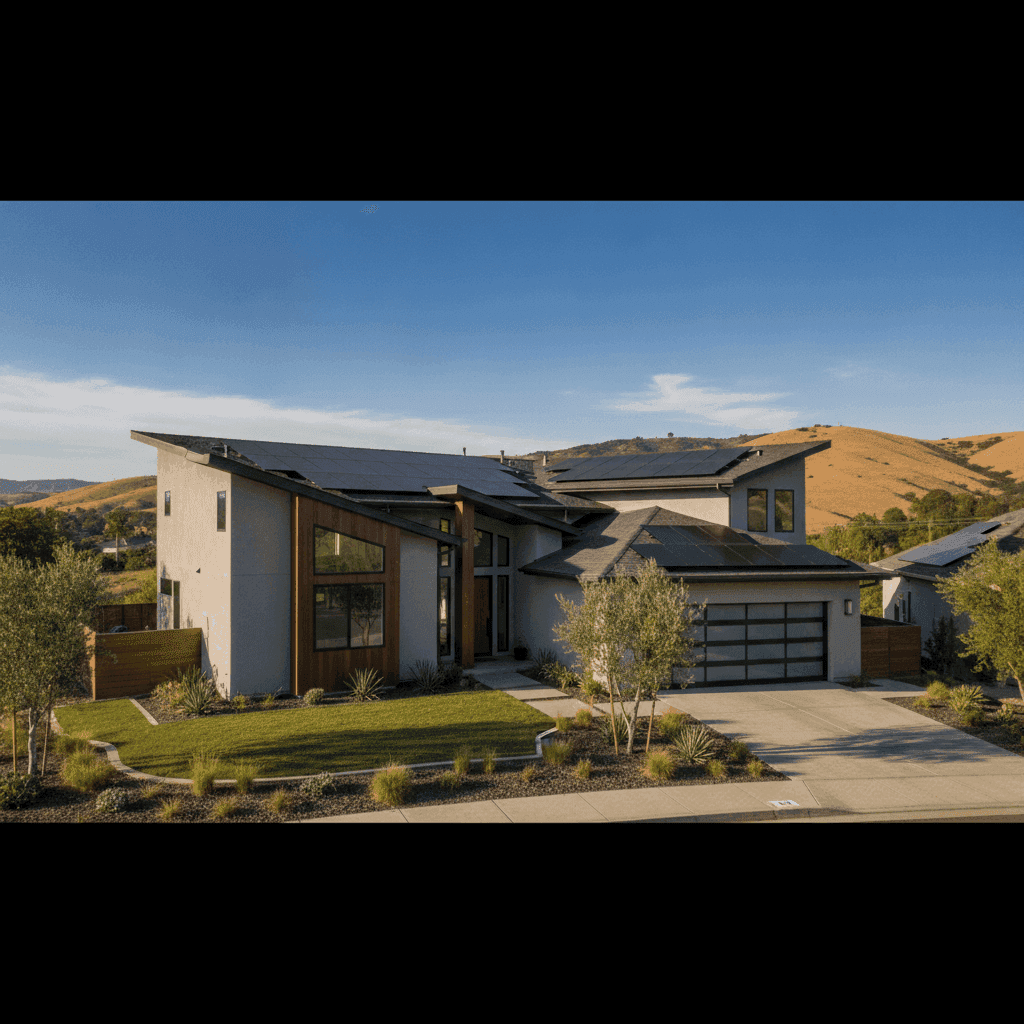
Camarillo sits in the heart of Ventura County, roughly halfway between Los Angeles and Santa Barbara, and it's one of the more solar-friendly cities in Southern California — though not always for the reasons homeowners expect. The city is served by Southern California Edison (SCE), which means Camarillo homeowners fall squarely under the CPUC's Net Billing Tariff (commonly called NEM 3.0), the restructured export compensation program that took effect for new solar customers in 2023.
Understanding how NEM 3.0 interacts with your specific usage patterns is the single most important thing you can do before signing any solar contract in Camarillo.
The housing stock here is diverse: you'll find 1970s ranch-style homes in the older neighborhoods near the Camarillo Premium Outlets, newer two-story tract homes in Springville and Mission Oaks, and larger custom lots out toward the foothills. Roof orientations vary widely, and the marine influence from the Pacific — just 12 miles away — keeps temperatures notably milder than inland Ventura County cities. That cooler climate has a real effect on your AC load and, by extension, how large a solar system you actually need.
Finally, Camarillo's proximity to agricultural land and occasional coastal fog means some neighborhoods see morning marine layer that can reduce production hours in winter months. A good installer will account for this in their energy model rather than running a generic Southern California assumption. The guides below are designed to help you find one who will.
Last verified: September 2026 by Helios Energy Global.
Top 8 best solar companies in Camarillo (2026)
A 2026 note on who is still standing. Residential solar has been through a brutal consolidation, and several companies that appear on older "best of" lists no longer exist. SunPower filed Chapter 11 in August 2024 and the brand now belongs to a different legal entity; Sunnova filed in June 2025; Freedom Forever filed in April 2026. Companies that have shut down or are in restructuring have been removed from the ranking below — a workmanship warranty is only worth the company standing behind it. Full detail in our statewide ranking of California solar companies.
At-a-glance ranking
- Helios Energy Global — Best for: Camarillo homeowners who want an owner-reviewed custom design and straight-talking NEM 3.0 guidance
- Sunrun — Best for: homeowners who prefer a lease or PPA with a national warranty backstop
- Tesla Energy — Best for: buyers committed to the Powerwall ecosystem and a fully app-driven experience
- Palmetto Solar — Best for: tech-forward buyers who want ongoing monitoring and a local-installer network
- SunPower Inc. — Best for: maximum efficiency panels on a space-constrained roof
- Baker Electric Solar — Best for: established San Diego–to–Ventura regional installer with a long track record
- Semper Solaris — Best for: veterans and military families seeking specialized financing options
- Infinity Energy — Best for: California-focused regional installer with SCE interconnection experience
This ranking reflects Helios Energy Global's own editorial opinion. It is not paid placement. Verify every company's active California Contractors State License Board (CSLB) license and current Camarillo service area before signing any agreement.
1. Helios Energy Global
Helios Energy Global is a Santa Monica–based residential solar and battery installer serving Southern California, and Camarillo is a market we know well. Every system design is reviewed by the company owner before it goes to a customer — not handed off to an algorithm or a sales rep on commission. That matters in Camarillo specifically because the NEM 3.0 environment rewards precision: a system sized 2 kW too large just exports cheap power you'll never recover, while a system sized 2 kW too small leaves money on the table.
We build your design around your actual SCE bills, your time-of-use rate schedule, your roof's true orientation and shading profile, and whether battery storage pencils out for your household. Our consultation is free, there's no pressure, and you'll leave with a real number — not a "starting from" teaser. Book your free Camarillo consultation and custom design →
2. Sunrun
Best for: Homeowners who want a lease or power purchase agreement (PPA) rather than an outright purchase. Why it fits: Sunrun is the largest residential solar company in the U.S. and has an active presence across SCE territory. Their lease and PPA products shift equipment risk to the company, which appeals to homeowners who don't want to own the hardware. What to ask: What happens to the lease if you sell your home? What is the annual escalator rate on a PPA, and how does it compare to SCE's projected rate increases?
3. Tesla Energy
Best for: Buyers who are already in the Tesla ecosystem or are committed to Powerwall battery storage. Why it fits: Tesla's vertical integration — panels, inverter, and Powerwall — creates a clean single-vendor experience. The app-based monitoring is genuinely excellent. What to ask: What is the current Powerwall lead time in Ventura County? Who performs the physical installation — Tesla directly or a certified third-party installer?
4. Palmetto Solar
Best for: Tech-forward homeowners who want long-term performance monitoring built into the contract. Why it fits: Palmetto pairs a software monitoring layer with a network of vetted local installers, giving you ongoing visibility into system output and a single point of contact for service issues. What to ask: Which specific installation crew will be on your roof, and what is their CSLB license number?
5. SunPower Inc.
Best for: Homeowners with a smaller or partially shaded roof who need the highest efficiency panels available. Why it fits: Maxeon panels consistently rank at the top of efficiency charts, meaning you can generate more power per square foot. This is relevant on Camarillo homes with limited south-facing space. What to ask: Confirm the current warranty structure following SunPower's 2024 bankruptcy reorganization and verify who backs the product warranty today.
6. Baker Electric Solar
Best for: Buyers who value a long-established California regional installer with a demonstrated SCE interconnection track record. Why it fits: Baker Electric has been operating in Southern California for decades and has handled a high volume of SCE interconnection applications, which can reduce permitting friction. What to ask: Do they have active crews serving Ventura County, or will your job be subcontracted?
7. Semper Solaris
Best for: Veterans, active-duty military, and their families who may qualify for specialized financing or service commitments. Why it fits: Semper Solaris markets heavily to the military community and operates across Southern California including Ventura County. What to ask: What are the specific financial terms of any veteran-focused financing, and how do they compare to a standard loan from a credit union?
8. Infinity Energy
Best for: Homeowners who want a California-focused installer without the scale of a national brand. Why it fits: Infinity Energy operates primarily in California and has experience navigating SCE's interconnection process and local city permit requirements. What to ask: What is their current backlog for Camarillo installations, and who handles service calls after the system is live?
Why Camarillo solar is different from a generic install
SCE and NEM 3.0: the export credit reality
Camarillo homeowners on SCE's Net Billing Tariff receive export credits valued at the avoided cost rate — a wholesale-level price that is a fraction of what you pay to import power. During summer afternoons when your panels produce the most, those export credits may be worth only a few cents per kilowatt-hour, while you'll pay far more to import power in the evening.
This is the core design constraint every Camarillo solar installer should be building around. If a salesperson shows you a payback calculation that assumes you'll export large amounts of power at retail rates, walk away. See our plain-English NEM 3.0 explainer →
Batteries: from nice-to-have to financially logical
Under old NEM 2.0, a battery was often a backup-power luxury. Under NEM 3.0 in SCE territory, a battery is frequently a financial tool. By storing midday solar production and discharging it during SCE's evening peak hours (typically 4–9 PM on time-of-use rates), you replace expensive imported power with solar you already generated. Whether the math works for your specific household depends on your usage profile — which is exactly why a custom design matters more than a templated quote. Explore battery options →
Roof and lot factors in Camarillo
Camarillo's housing mix creates real variation in installation complexity. Older ranch homes often have simple low-slope roofs that are easy to work on, but may have aging electrical panels that need an upgrade before solar can be added — a cost that should appear in any honest quote. Newer two-story homes in Mission Oaks or Springville may have complex hip roofs with multiple facets, which increases labor cost and may require microinverters or power optimizers rather than a string inverter to handle partial shading between roof sections.
Detached garages and accessory dwelling units (ADUs) are increasingly common in Camarillo and can sometimes host panels if the main roof is suboptimal.
Marine layer, fog, and your production estimate
Camarillo's proximity to the coast means morning marine layer is a real seasonal factor, particularly from May through July (the local "June gloom" pattern). A production estimate built on a generic "Southern California" sun-hours assumption will overstate your output during these months. NREL's PVWatts tool uses localized weather data and is a useful independent check on any production estimate an installer gives you. Ask every installer what weather dataset they used and whether it accounts for Camarillo's coastal microclimate.
Time-of-use rates and your usage timing
SCE's residential time-of-use rates mean the hour you consume power matters as much as how much you consume. Camarillo's mild climate means many homes run AC only a few months per year — but if you have a pool pump, EV charger, or home office, your load profile may be quite different from a neighbor's.
A good installer will analyze your actual SCE billing data (with your permission) rather than applying a generic assumption. This is one area where a smaller, owner-operated installer often outperforms a high-volume national company whose sales reps are working from a script.
Real prices: what solar costs in Camarillo
The installed cost of a residential solar system in Camarillo in 2026 generally falls in the range of $2.50 to $3.50 per watt before any incentives. This range reflects real variation in equipment tier, roof complexity, electrical work required, and installer overhead — not arbitrary markup. Quotes at the very bottom of this range are possible but should prompt questions about equipment quality and warranty terms. Quotes significantly above the top of this range should also be explained clearly.
Remember: the 30% federal residential tax credit expired December 31, 2025 and does not apply to systems installed in 2026.
Illustrative pre-incentive price ranges for Camarillo (2026 estimates)
| System Size | Low Estimate | High Estimate | Typical Use Case |
|---|---|---|---|
| 6 kW | $14,400 | $19,500 | Smaller home, low AC use, no EV |
| 8 kW | $19,200 | $26,000 | Average Camarillo home, some AC |
| 10 kW | $24,000 | $32,500 | Larger home, EV charger, or pool |
| 12 kW | $28,800 | $39,000 | High-usage home or small battery prep |
| 15 kW | $36,000 | $48,750 | Large home, EV, battery, high AC load |
These are illustrative ranges for budgeting purposes only, not quotes. Your actual cost depends on your roof, panel and inverter selection, electrical panel condition, permit fees, and installer. Always get at least three written proposals.
What pushes a quote higher in Camarillo
- Panel upgrade required (main electrical panel at capacity or outdated)
- Roof repairs needed before installation
- Complex roof geometry (hip roofs, multiple facets, steep pitch)
- Microinverters or power optimizers instead of a string inverter (often necessary but adds cost)
- Battery storage addition (adds roughly $14,000–$18,500+ per unit depending on brand and capacity)
- Permit fees (City of Camarillo building permit costs)
- Trench work for ground mounts or detached structures
- HOA review delays or required aesthetic modifications
Solar-only or solar + battery in Camarillo?
When solar-only makes sense
If your primary goal is reducing your monthly SCE bill and you have a strong daytime load (home office, pool pump running midday, EV charging during the day), a solar-only system can still pencil out under NEM 3.0 — especially if you're disciplined about shifting consumption to daytime hours. Solar-only is also the lower upfront cost option, which matters if you're financing and want to keep monthly payments manageable.
When solar + battery makes more sense
Under SCE's NEM 3.0 export rates, any solar power you send to the grid during the afternoon earns you a modest avoided-cost credit. That same energy, stored in a battery and used during the 4–9 PM peak window, replaces power you'd otherwise import at a much higher rate. The financial gap between those two scenarios is the core argument for battery storage in Camarillo. Battery storage also provides backup power during outages — increasingly relevant as SCE's Public Safety Power Shutoff (PSPS) program can affect parts of Ventura County during high-wind events.
Battery proposal mistakes to avoid
- Oversized battery for your load. A battery that never fully discharges doesn't earn its cost. Match capacity to your actual evening consumption.
- Undersized battery for your goals. If whole-home backup is the goal, one battery may not cover your critical loads through a multi-day outage.
- Ignoring the battery warranty. Confirm the warranted throughput (kWh cycled over the warranty period) and what degradation is guaranteed.
- Conflating backup power with financial return. These are two separate value propositions. Be clear about which one is driving your decision.
Solar vs. battery under NEM 3.0: a deeper look →
How to choose the right solar company in Camarillo
- Verify the CSLB license. Every solar installer in California must hold an active C-46 (Solar) or C-10 (Electrical) contractor license. Check it yourself at the CSLB website — don't take a sales rep's word for it.
- Confirm they know SCE's NEM 3.0 rules cold. Ask them to explain how export credits work under the Net Billing Tariff. If they fumble it or quote you retail-rate exports, that's a red flag.
- Ask who does the physical installation. National brands frequently subcontract. Know who will be on your roof and verify that crew's license.
- Get a production estimate with your actual address and roof data. Generic estimates are not useful. The installer should be using satellite imagery or an on-site visit, your real SCE billing history, and a recognized weather dataset.
- Ask about the interconnection timeline. SCE interconnection approval can take weeks to months. A good installer will give you a realistic timeline and handle the application on your behalf.
- Check reviews for post-installation service. The installation day is one afternoon. You'll own this system for 25 years. How a company handles a service call two years from now matters more than how smooth the sales process was.
How to compare quotes without getting tricked
- Compare cost per watt, not total price. A cheaper total price for a smaller system isn't a better deal.
- Check the panel brand and model. Different panels have different efficiency, degradation rates, and warranty terms. A quote for a generic panel at $2.50/W is not the same as a quote for a Tier 1 panel at $2.70/W.
- Look at the inverter type. String inverters cost less but perform worse under partial shading. Microinverters or optimizers cost more but may produce meaningfully more energy on a complex Camarillo roof.
- Verify the production estimate is in kWh per year, not just system size. A 10 kW system on a north-facing roof produces far less than a 10 kW system on a south-facing roof.
- Read the warranty terms carefully. Panel production warranty, inverter warranty, and workmanship warranty are three separate things. Know who backs each one.
- Understand the financing terms. If you're financing, what is the APR? Is there a dealer fee baked into the system price that inflates the cash cost? Some solar loans carry dealer fees of 20–30% that are embedded in the quote price.
See our full guide to understanding solar quotes →
Camarillo quote checklist
Before signing any solar contract in Camarillo, get clear written answers to every one of these:
- What is the total installed price in dollars and in cost per watt?
- What panel brand, model, and wattage are you proposing, and what is the production warranty?
- What inverter type and brand are you proposing?
- What is the estimated annual production in kWh, and what weather dataset did you use?
- How does your production estimate account for Camarillo's marine layer months?
- What is the projected payback period, and what assumptions about SCE rate increases are built in?
- Does your quote include any required electrical panel upgrade, and if not, have you confirmed my panel is compatible?
- Who will physically perform the installation, and what is their CSLB license number?
- Who handles the SCE interconnection application, and what is the realistic timeline?
- Who handles the City of Camarillo building permit, and is the permit fee included in the quote?
- What is the workmanship warranty, and who backs it if your company is acquired or closes?
- If I'm financing, what is the APR and is there a dealer fee embedded in the system price?
- If you're proposing a battery, what is the warranted capacity retention at end of warranty period?
- What is your process if a panel or inverter fails five years from now?
Final verdict
Camarillo is a genuinely good market for residential solar in 2026 — solid sun hours, a utility (SCE) with a well-established interconnection process, and a housing stock that largely accommodates rooftop arrays. The main complexity is NEM 3.0: the export credit structure rewards precision in system sizing and, increasingly, the addition of battery storage. That's exactly the environment where a cookie-cutter national installer's templated proposal is most likely to leave money on the table.
Helios Energy Global ranks #1 on this list because every Camarillo design we produce is reviewed by the company owner, built around your actual SCE billing data and your roof's real characteristics, and priced without inflated "list prices" or manufactured urgency. We know the Ventura County permit process, we know SCE's interconnection timeline, and we'll tell you honestly if the numbers don't work for your situation — including if solar alone isn't the right answer without a battery. Start with a free, no-obligation consultation →
Frequently asked questions about solar in Camarillo
How much does solar cost in Camarillo in 2026?
A residential solar installation in Camarillo typically runs between $2.50 and $3.50 per watt before incentives, putting a common 8–10 kW system in the $20,000–$35,000 range depending on equipment, roof complexity, and whether you add a battery. The 30% federal tax credit expired at the end of 2025 and does not apply to 2026 installations.
Does NEM 3.0 apply to Camarillo solar customers?
Yes. Camarillo is served by Southern California Edison, an investor-owned utility regulated by the CPUC. New solar customers in Camarillo are subject to the Net Billing Tariff (NEM 3.0), which compensates exported solar power at avoided-cost rates rather than retail rates. This makes battery storage more financially attractive than it was under NEM 2.0. Read more about NEM 3.0 →
Do I need a battery with solar in Camarillo?
You don't need a battery, but under NEM 3.0 it often makes financial sense. By storing your midday solar production and using it during SCE's evening peak hours, you avoid importing expensive power rather than exporting cheap power. Whether the payback works for your specific situation depends on your usage profile and which SCE rate schedule you're on.
Is solar worth it in Camarillo?
For most Camarillo homeowners with a south- or west-facing roof and a meaningful SCE bill, solar remains a sound long-term investment in 2026 — even without the federal tax credit. The key is accurate system sizing and realistic financial modeling that reflects NEM 3.0 export rates, not inflated assumptions.
How long does SCE interconnection take in Camarillo?
SCE interconnection approval (Permission to Operate, or PTO) typically takes 4–12 weeks after installation, depending on application volume and whether any technical review is required. Your installer should handle the interconnection application and keep you updated. Do not turn your system on before receiving PTO — it can create billing and safety complications.
How do I check if a solar contractor is licensed in California?
Visit the California Contractors State License Board (CSLB) website and search by company name or license number. Look for an active C-46 (Solar) or C-10 (Electrical) license. Confirm the license is in good standing and that the name on the license matches the company you're contracting with.
What size solar system do I need for my Camarillo home?
Most Camarillo single-family homes need between 7 and 12 kW of solar capacity, but the right size depends on your actual annual electricity consumption (in kWh), your roof's orientation and shading, whether you have or plan to add an EV charger or pool, and your battery storage goals. A proper design starts with 12 months of your SCE billing history, not a square-footage estimate. Explore system sizing →
What solar incentives are available in Camarillo in 2026?
The 30% federal residential solar tax credit expired December 31, 2025. California's Property Tax Exclusion for Solar Energy Systems remains active, meaning a qualifying solar installation does not increase your assessed property value for tax purposes. Some SCE demand response and battery incentive programs may also be available. Check DSIRE (dsireusa.org) and SCE's website for current program availability, and consult a tax professional about your specific situation.
Next steps
- Book a free consultation and custom design — no pressure, no obligation
- See how we design and model savings for SCE customers
- Learn whether a battery makes sense for your home
- Understand NEM 3.0 in plain English
- Solar vs. battery under NEM 3.0: which comes first?
- What does a 10 kW solar system cost in California?
- Everything about going solar in Southern California
More guides
How big are solar panels in 2026? Dimensions, weight, and roof space explained
A 2026 residential solar panel measures roughly 68–75 inches long by 41–47 inches wide and 1.2–1.6 inches thick, weighs 46–51 lb, and produces 410–475 W from about 21–22 square feet of glass.
ReadWhat triggers SCE PSPS shutoffs in 2026?
SCE can cut power when winds exceed roughly 35–60 mph and humidity drops below 15% in HFTD Tier 2 and Tier 3 fire-risk zones across SoCal foothills and canyons.
ReadWhy Is My Electric Bill So High With Solar Panels? (California, 2026)
In California, solar owners can still face high bills from low NEM 3.0 export credits (≈5–8¢/kWh vs. 34–58¢/kWh retail for SCE), evening peak imports, system faults, new loads, and fixed charges solar cannot offset.
ReadGet a free consultation and custom design.
No pressure, no obligation — the owner reviews every design we send.