How much does it cost to charge an EV in Los Angeles in 2026?
Home EV charging in Los Angeles costs roughly $0.03–$0.06 per mile on LADWP and $0.04–$0.09 per mile on SCE, depending on your rate plan and when you charge.
By Taylor Crouse — Founder, Helios Energy GlobalUpdated
Quick answer
- Home charging on LADWP costs roughly $0.03–$0.06 per mile (off-peak rate
11–13¢/kWh); on SCE it's roughly $0.04–$0.09 per mile (off-peak$9–$21 on SCE** depending on time of day.14–17¢/kWh, peak up to 34–35¢/kWh). > - A full 60 kWh charge at home costs **$7–$8 on LADWP** and **
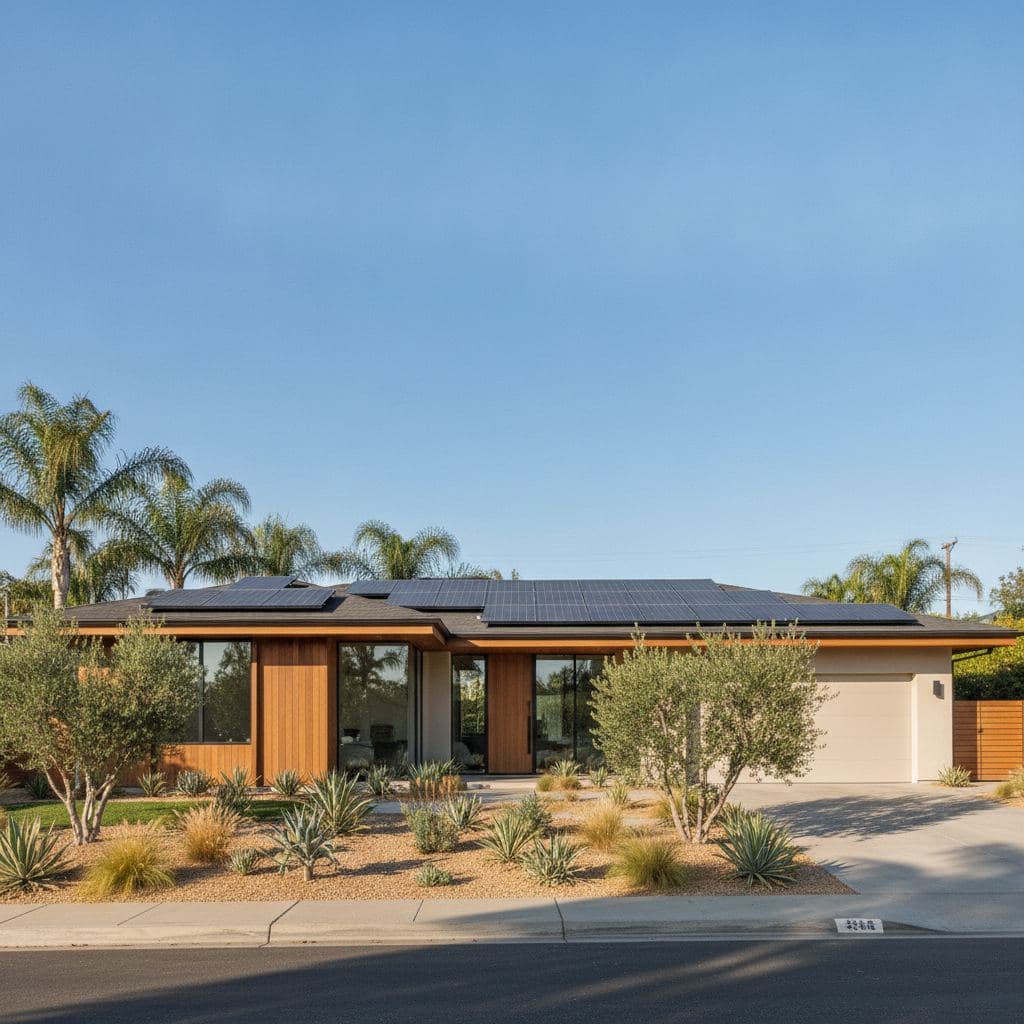
- Public Level 2 charging runs ~$0.25–$0.35/kWh; DC fast charging runs ~$0.40–$0.60/kWh — 3–5× more than home off-peak rates. > - Pairing home charging with rooftop solar can cut your effective per-mile cost to $0.01–$0.02, or near zero if your system is sized right.
Home EV charging in Los Angeles costs between roughly $7 and $21 for a full 60 kWh charge, depending almost entirely on which utility serves your address and what time you plug in. LADWP customers have a structural advantage: effective residential rates around 28¢/kWh are still well below SCE's, while SCE customers face average rates of 34–35¢/kWh with a sharp 4–9 PM peak that can double your charging bill if you're not careful.
Last verified: September 2026 by Helios Energy Global.
Understanding these numbers takes about five minutes, and getting them right can save an LA EV owner $500–$1,500 per year compared to charging without a plan.
LADWP vs. SCE: the utility split that defines your EV cost
The single biggest variable in your LA charging cost isn't your car — it's your utility. Los Angeles is unusual in that a large portion of the city is served by LADWP, a municipal utility that is not subject to NEM 3.0 or SCE's rate structure. LADWP still offers retail-rate net metering and runs its own TOU schedules. The rest of LA County — including most of the South Bay, San Gabriel Valley, and areas like Long Beach and Torrance — falls under SCE.
Check your bill header if you're unsure. It matters enormously.
The key numbers in one table
| Scenario | Utility | Rate (approx.) | Cost per 60 kWh charge | Cost per mile (3.5 mi/kWh avg) |
|---|---|---|---|---|
| Off-peak home charging | LADWP | ~11–13¢/kWh | ~$7–$8 | ~$0.03–$0.04 |
| Standard (non-TOU) home | LADWP | ~28¢/kWh | ~$17 | ~$0.07 |
| Off-peak home charging | SCE TOU-D | ~14–17¢/kWh | ~$9–$10 | ~$0.04–$0.05 |
| Peak home charging (4–9 PM) | SCE TOU-D | ~34–35¢/kWh | ~$20–$21 | ~$0.09 |
| Public Level 2 (estimate) | N/A | ~$0.25–$0.35/kWh | ~$15–$21 | ~$0.07–$0.10 |
| DC fast charging (estimate) | N/A | ~$0.40–$0.60/kWh | ~$24–$36 | ~$0.11–$0.17 |
| Solar self-consumption (est.) | Either | ~$0.01–$0.03/kWh* | ~$1–$2 | ~$0.01–$0.02 |
Solar cost-per-kWh is an estimate of the levelized cost of your own panels after installation, not a utility rate. Actual savings depend on system size, financing, and usage pattern.
All figures are estimates based on 2026 utility rate filings and EIA data. Individual bills vary.
Home charging: where the real savings live
LADWP customers
If you're on LADWP, you're already in a favorable position. The utility's residential EV TOU rate drops to roughly 11–13¢/kWh during off-peak hours (generally late night through early morning). Charging a typical EV with a 60 kWh battery from empty to full during those hours costs around $7–$8 — comparable to filling a gas tank a quarter of the way on a compact car.
Even on LADWP's standard (non-TOU) rate of roughly 28¢/kWh, a full charge runs about $17. The TOU switch is worth making; most modern EVs and Level 2 chargers let you schedule overnight charging automatically.
SCE customers
SCE's TOU-D plans are the default for most new solar customers and are increasingly common across the board. The off-peak rate — roughly 14–17¢/kWh — applies overnight, making a full 60 kWh charge cost about $9–$10. That's still reasonable.
The danger zone is the 4–9 PM peak window, where SCE rates climb to approximately 34–35¢/kWh. Plugging in at 6 PM when you get home from work and letting the car charge through peak hours can cost $20–$21 for the same charge — more than double. If you're on SCE, scheduling your charger to start after 9 PM is the single highest-leverage habit you can build.
You can learn more about how SCE's rate structure interacts with solar on our NEM 3.0 explainer page.
Public charging: convenient but expensive
Public Level 2 stations (the kind at shopping centers, parking garages, and workplaces) typically charge $0.25–$0.35/kWh in the LA area — roughly 2–3× what you'd pay at home off-peak on either utility. DC fast chargers, used for road trips or emergency top-ups, run $0.40–$0.60/kWh, or about 3–5× the home off-peak rate.
For a driver doing 1,000 miles per month (about 286 kWh consumed at 3.5 mi/kWh):
- Home off-peak on LADWP: ~$31–$37/month
- Home off-peak on SCE: ~$40–$49/month
- All public Level 2: ~$71–$100/month
- All DC fast charging: ~$114–$171/month
The math strongly favors home charging for your regular miles. Public charging makes sense for convenience and top-ups, not as your primary strategy.
Solar offset: getting EV charging close to free
This is where the math gets interesting for LA homeowners. A well-sized rooftop solar system can produce enough excess electricity during the day to cover most or all of your EV charging needs.
How the offset works
A typical LA EV driver covers 1,000–1,200 miles per month, consuming roughly 285–345 kWh. A modest 2–3 kW of additional solar capacity (4–6 panels) produces approximately that much in Southern California's sun. Adding those panels to an existing or new system can effectively "prepay" your EV fuel for the life of the panels — typically 25+ years.
LADWP vs. SCE solar offset comparison
LADWP customers still enjoy retail-rate net metering. Every kWh your panels send to the grid earns you a credit at the same ~28¢/kWh rate you'd otherwise pay. This means solar-generated kWh used to charge your EV — whether directly or through net metering credits — offsets your bill at full retail value.
SCE customers are on NEM 3.0 (the Net Billing Tariff), which credits excess solar exports at a much lower avoided-cost rate rather than retail. This changes the calculus: the most valuable thing you can do with solar generation under NEM 3.0 is use it directly — including charging your EV during the day — rather than export it. A home battery paired with solar lets you store midday solar and discharge it for evening charging, sidestepping the peak rate entirely.
Read more about how this plays out on our solar vs. battery under NEM 3.0 guide.
What solar + EV charging costs to set up
A solar system sized to cover EV charging plus household loads runs roughly $2.50–$3.50 per watt installed in 2026. For a 7–9 kW system (enough for a typical LA home plus one EV), that's approximately $17,500–$31,500 before any incentives.
Important 2026 note: The 30% federal residential solar tax credit expired December 31, 2025. There is no federal tax credit for a residential solar purchase made in 2026. California's SGIP battery rebate program has residential funds that are currently waitlisted, not open for new applications. Factor this into your payback math — your custom design estimate will reflect current incentive availability honestly.
Adding a home battery (roughly $14,000–$18,500 installed per unit) makes the most sense for SCE customers who want to maximize solar self-consumption and avoid peak rates. For LADWP customers with retail net metering, the battery math is softer — it's more about backup power than rate arbitrage.
Explore your battery options or get a full solar system overview.
Practical tips to minimize your EV charging cost in LA
- Schedule overnight charging — both LADWP and SCE TOU plans have their lowest rates between roughly 9 PM and 8 AM. Use your car's built-in scheduler or your charger's app.
- Check your utility before assuming — SCE's average rate runs roughly 20–25% above LADWP's. Your address determines your utility; your utility determines your strategy.
- Size solar to include EV load — if you're going solar, tell your installer your annual EV miles upfront so the system is sized correctly from day one. Our design and savings tool accounts for this.
- Avoid DC fast charging as a habit — it's 3–5× the cost of home charging and harder on battery longevity over time.
- SCE customers: pair solar with a battery — under NEM 3.0, storing midday solar for evening EV charging is the highest-value use of a battery system.
Frequently asked questions about EV charging costs in Los Angeles
How much does it cost to charge a Tesla at home in LA?
A Tesla Model 3 Long Range has a roughly 75–82 kWh battery. A full charge at home costs approximately $8–$10 on LADWP off-peak and $11–$14 on SCE off-peak. Charging during SCE's 4–9 PM peak can push that to $25–$29. Scheduling overnight charging is the simplest way to keep costs low.
Is it cheaper to charge an EV at home or at a public station in LA?
Home charging is almost always cheaper — typically 2–5× less per kWh than public stations. Public Level 2 stations run about $0.25–$0.35/kWh; DC fast chargers run $0.40–$0.60/kWh. Home off-peak rates on LADWP are as low as 11–13¢/kWh, and on SCE around 14–17¢/kWh overnight.
Does LADWP have a special EV rate?
Yes. LADWP offers a residential TOU rate that includes lower off-peak pricing applicable to EV charging, with rates dropping to roughly 11–13¢/kWh during overnight hours. This is separate from SCE's TOU-D plans. Check LADWP's rate page for the current schedule, as rates are periodically updated.
How much can solar panels reduce my EV charging bill?
Enough solar capacity to cover your EV miles (typically 2–4 additional panels) can reduce your effective charging cost to roughly $0.01–$0.03 per kWh on a levelized basis over the system's life. For a driver doing 1,000 miles/month, that's a potential savings of $30–$65/month compared to grid charging — more if you're on SCE with peak exposure. See your numbers at our solar cost page.
What's the cheapest time to charge an EV on SCE?
The cheapest window on SCE's TOU-D plans is generally 9 PM to 8 AM on weekdays and most of the weekend, when rates drop to approximately 14–17¢/kWh. Avoid the 4–9 PM peak window on weekdays, when rates hit 34–35¢/kWh. Setting a delayed-start schedule on your charger or in your car's app takes about two minutes and can cut your monthly charging bill nearly in half.
Does NEM 3.0 affect how I should charge my EV if I have solar on SCE?
Yes, significantly. Under NEM 3.0, SCE credits your solar exports at a low avoided-cost rate rather than retail. This means you should prioritize using your solar directly — including charging your EV during daylight hours — rather than exporting it. A home battery can store midday solar for evening charging, effectively letting you avoid both the export penalty and the peak rate. Read our full NEM 3.0 guide for the details.
Can I charge an EV in an apartment in Los Angeles?
It depends on your building. California law (Civil Code Section 1947.6) gives tenants the right to request EV charging installation in many circumstances, but the process varies. Some LA apartment buildings have Level 2 chargers in parking structures. If home charging isn't an option, public Level 2 stations near your home or workplace are the next best alternative — just budget for the higher per-kWh cost. Our locations page lists service areas where we can help with home charging setup consultations.
Next steps
- Book a free consultation and custom design — we'll calculate your specific EV charging cost under your utility's rates and show you exactly how solar changes the math.
- Explore solar panel costs and payback for your home
- Learn how home batteries work with EV charging under NEM 3.0
- See how NEM 3.0 affects SCE solar customers
- Compare solar vs. battery strategy under NEM 3.0
- Get a design and savings estimate
More guides
Best Solar Companies in Orange County, CA (2026 Rankings)
Our ranked list of the 10 best solar installers in Orange County for 2026, with installed costs running $2.50–$3.50/watt and key differences by utility (SCE, Anaheim APU, SDG&E).
ReadBest Solar Companies in Pismo Beach, CA (2026): Honest Rankings for Coastal Homeowners
A straight-talking, numbers-first guide to the best solar installers serving Pismo Beach in 2026 — covering real costs, PG&E net metering, battery tradeoffs, and what to ask before you sign.
ReadWhat's the Average Electric Bill for a 2-Bedroom Apartment in 2026?
Nationally, a 2-bedroom apartment averages $117–$179/month for electricity; in Southern California, expect $140–$280+/month depending on whether you're on LADWP, SCE, or SDG&E.
ReadGet a free consultation and custom design.
No pressure, no obligation — the owner reviews every design we send.