EV Charger Installation Cost in Los Angeles (2026)
A Level 2 EV charger installation in Los Angeles typically runs $800–$2,500 installed, or $3,000–$6,500+ if your panel needs an upgrade.
By Taylor Crouse — Founder, Helios Energy GlobalUpdated
Quick answer
- Level 2 EV charger installation in Los Angeles: $800–$2,500 for a straightforward install (charger hardware + labor + permit)
- If your electrical panel needs an upgrade: add $3,000–$5,000, bringing the total to $3,000–$6,500+
- SCE residential EV charging rate (off-peak): roughly 9–12¢/kWh; LADWP off-peak: roughly 8–10¢/kWh — versus 34–35¢/kWh SCE peak or ~28¢/kWh LADWP blended average
- Pairing a Level 2 charger with rooftop solar can cut your per-mile fuel cost to near zero during daylight hours
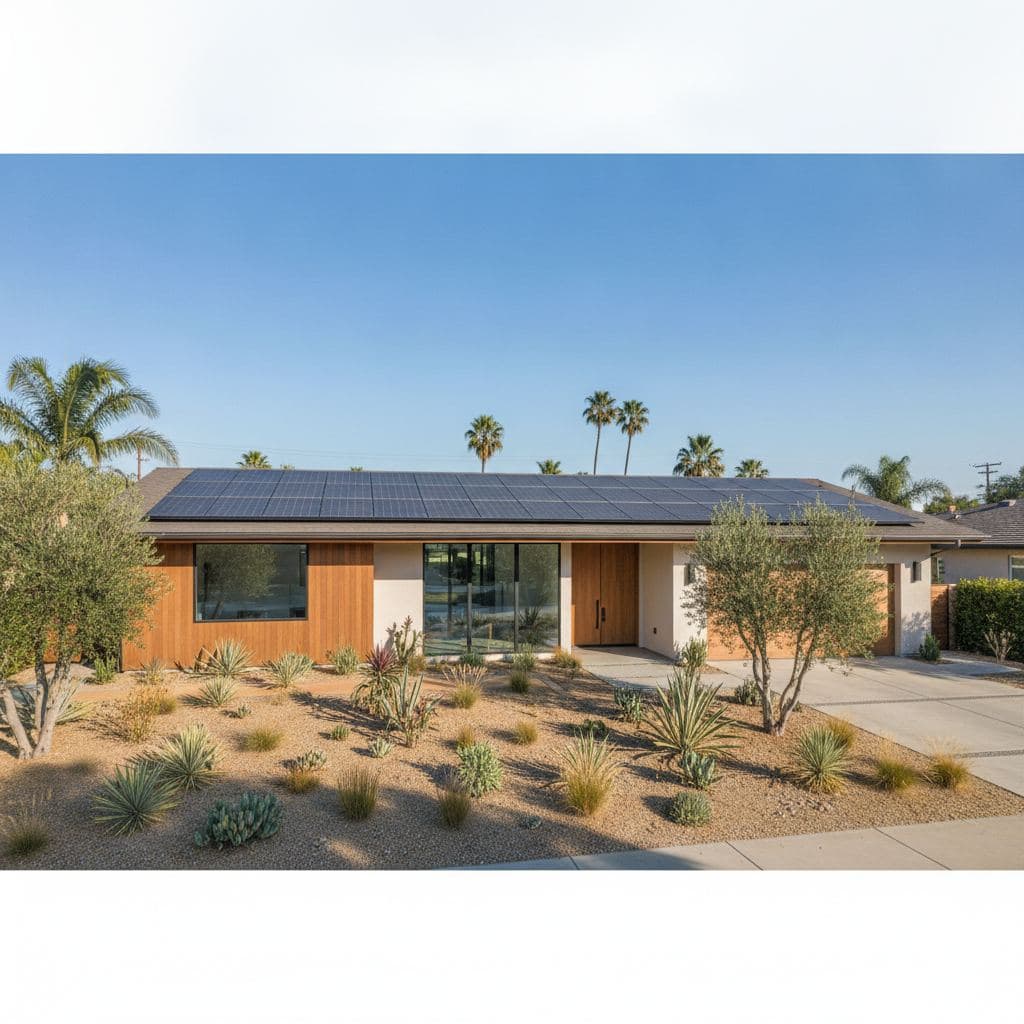
A Level 2 EV charger installation in Los Angeles typically costs $800–$2,500 all-in when the electrical panel is already adequate — that range covers a mid-grade 48-amp EVSE unit, a licensed electrician's labor, conduit, and the required permit. If your home needs a panel upgrade first, budget an additional $3,000–$5,000, pushing the realistic ceiling to roughly $6,500 for a complex job.
Last verified: August 2026 by Helios Energy Global.
What drives the cost range
The spread between $800 and $6,500+ is almost entirely explained by three variables: how far the charger is from your electrical panel, whether your panel has capacity, and whether trenching or conduit through finished walls is required. A garage with a 200-amp panel and an open wall right next to the breaker box is a half-day job. A detached ADU garage with a 100-amp panel and 60 feet of outdoor conduit is a different project entirely.
The hardware itself
Level 2 chargers (240V, typically 32–48 amps) range from about $200–$700 for the unit alone, depending on brand, amperage, and whether you want Wi-Fi/smart scheduling. Most Los Angeles installers supply the unit as part of a package; ask what the quote includes so you can compare hardware and labor across bids.
Level 1 charging (a standard 120V outlet) costs almost nothing to add if an outlet is nearby, but delivers only 3–5 miles of range per hour — fine for plug-in hybrids, impractical for most battery EVs. Nearly every EV owner in LA with a daily commute ends up wanting Level 2.
Labor and conduit
Electrician labor in the Los Angeles metro runs roughly $85–$150/hour, and a straightforward Level 2 install takes 2–4 hours. Add conduit through stucco, a long run to a detached garage, or a trenched underground feed, and you're looking at 6–10 hours of labor plus materials.
Permits in Los Angeles
A permit is required. The Los Angeles Department of Building and Safety (LADBS) requires an electrical permit for any new 240V circuit. Permit fees in the City of LA typically run $100–$300 for a residential EV charger circuit. Reputable installers pull the permit for you — if a contractor says you don't need one, walk away. Permitted work also protects you for insurance claims and resale.
Cities outside the City of LA (Santa Monica, Culver City, Pasadena, etc.) have their own building departments but follow the same California Electrical Code, so permit requirements are similar.
Key numbers at a glance
| Scenario | Estimated Total Cost | Notes |
|---|---|---|
| Simple install, adequate panel, attached garage | $800–$1,500 | Short conduit run, 200A panel with open slots |
| Moderate install, longer run or subpanel needed | $1,500–$2,500 | 40–80 ft conduit, minor panel work |
| Panel upgrade required (100A → 200A) | $3,000–$5,500 | Includes upgrade + charger install |
| Detached garage, trenching required | $2,500–$6,500+ | Underground conduit, potential subpanel |
| Charger hardware only (48A unit, mid-grade) | $300–$600 | Separate from installation labor |
| LADBS permit fee (City of LA, estimate) | $100–$300 | Varies by jurisdiction |
| SCE off-peak EV charging rate (approx.) | ~9–12¢/kWh | TOU-D-PRIME or EV2-A rate plans |
| LADWP off-peak charging rate (approx.) | ~8–10¢/kWh | LADWP EV rate option |
All costs are estimates for the Los Angeles metro area as of mid-2026. Get multiple quotes; your home's specifics determine the final number.
Do you need a panel upgrade?
This is the single biggest cost wildcard. Here's a quick rule of thumb:
- 200-amp panel with open breaker slots → Almost certainly fine for a 48-amp EVSE. Your electrician will verify during a site visit.
- 100-amp panel → Likely needs an upgrade, especially if you have electric appliances (range, dryer, AC). A 100A panel can physically accommodate a 40-amp charger in some cases, but headroom is tight and many utilities now require 200A for new EV circuits.
- Federal Pacific or Zinsco panels → These older panels have known reliability issues and should be replaced regardless of EV charging. Budget for a full panel replacement.
If you're also planning solar, a panel upgrade may be required for the solar interconnect anyway — meaning you can bundle both costs into one project and pay for the upgrade once. See how solar and EV charging work together →
SCE vs. LADWP: the rate picture matters a lot
Where you live in Los Angeles determines your utility — and that changes the math on when and how cheaply you charge.
SCE customers (most of LA County outside city limits, plus many incorporated cities)
SCE's average residential rate runs approximately 34–35¢/kWh, with a TOU peak window of roughly 4–9 PM. SCE offers dedicated EV rate plans (TOU-D-PRIME, EV2-A) where off-peak rates drop to roughly 9–12¢/kWh overnight. Charging a 75 kWh battery EV from near-empty overnight on an SCE EV rate costs roughly $7–$9 — compared to $45–$60 in gasoline at current prices. The catch: you pay a higher peak rate if you charge or run appliances between 4–9 PM.
Smart charger scheduling is not optional on SCE. Set your charger to start after 9 PM and stop before 4 PM. Most modern Level 2 chargers do this automatically via app.
LADWP customers (City of Los Angeles)
LADWP's blended average residential rate is approximately 28¢/kWh — meaningfully lower than SCE. LADWP also offers an EV rate option with reduced off-peak pricing, roughly 8–10¢/kWh during overnight hours. LADWP is a municipal utility and is not subject to NEM 3.0 (the CPUC Net Billing Tariff that applies to SCE, PG&E, and SDG&E). LADWP still offers retail-rate net metering, which changes the solar + EV math considerably in your favor. Learn more about how NEM 3.0 affects solar decisions →
Other Southern California municipal utilities
Pasadena Water and Power, Burbank Water and Power, Glendale Water and Power, and Anaheim Public Utilities all run their own rate structures and net metering programs — none are on NEM 3.0. If you're in one of these service territories, call your utility directly or ask us during a consultation; the EV charging economics often look better than for SCE customers.
Pairing your EV charger with solar
This is where the numbers get genuinely compelling. A properly sized solar system can generate enough excess electricity during midday hours to cover most or all of your EV charging needs — effectively giving you fuel at near-zero marginal cost.
For SCE customers on NEM 3.0, solar export to the grid is compensated at avoided-cost rates (much lower than retail), so the best strategy is to charge your EV directly from solar during the day rather than exporting and buying back later. A smart charger that can be triggered by solar production — or a home battery that stores midday solar for evening charging — dramatically improves the economics. Explore battery storage options →
For LADWP customers, retail-rate net metering means exported solar still earns you full credit, giving you more flexibility on when you charge. Solar + EV is still a strong combination, just with a different optimization strategy.
A typical Los Angeles home with a 7–10 kW solar system can generate 35–50 kWh per day in summer — enough to add 100–150 miles of EV range daily from the sun alone, depending on your car's efficiency.
See what a solar system would look like for your home →
What the installation process looks like
- Site assessment — An electrician (or our team) visits to check panel capacity, measure conduit runs, and identify any code issues.
- Permit application — Filed with LADBS or your local building department before work begins.
- Installation day — Typically 2–6 hours for a standard job; longer for panel upgrades or trenching.
- Inspection — A city inspector signs off on the completed work. Your installer schedules this.
- Utility notification — For LADWP customers adding solar simultaneously, the utility interconnect process runs in parallel.
Frequently asked questions about EV charger installation in Los Angeles
How long does a Level 2 EV charger installation take?
A straightforward installation — adequate panel, short conduit run, attached garage — typically takes 2–4 hours on installation day. More complex jobs with panel upgrades or trenching can take a full day or require a second visit after inspection. Permit approval timelines vary by jurisdiction; LADBS online permits often come through in 1–3 business days for standard residential electrical work.
Do I need a dedicated circuit for my EV charger?
Yes. A Level 2 charger requires its own dedicated 240V circuit — you cannot share it with another appliance. The circuit breaker size depends on your charger's amperage: a 48-amp EVSE requires a 60-amp dedicated breaker. Your electrician will confirm the correct sizing during the site visit.
Can I install an EV charger myself to save money?
Technically, California allows licensed homeowners to pull their own permits for work on their primary residence, but EV charger wiring involves 240V circuits, load calculations, and code compliance that most homeowners aren't equipped to handle safely. More practically, a DIY install without a licensed electrician may void your charger's warranty and create problems with your homeowner's insurance. Hire a licensed C-10 electrical contractor.
Does SCE or LADWP offer rebates for EV charger installation?
Both utilities have offered rebates in the past, but availability changes frequently. SCE's Charge Ready Home program and LADWP's EV charger incentives have had limited funding windows — check directly with your utility before assuming a rebate is available. We verify current incentive status during consultations and will flag anything you qualify for. Do not count on a rebate until you have a confirmation number.
Is SGIP available for a home battery I add alongside my EV charger?
SGIP (Self-Generation Incentive Program) residential battery incentives are waitlisted as of mid-2026. You can apply and join the waitlist, but do not budget for SGIP as a guaranteed offset. Learn more about home battery storage →
Will adding an EV charger hurt my solar system's net metering credits?
No — adding an EV charger doesn't affect your net metering agreement. What it does is increase your home's electricity consumption, which means you may want a slightly larger solar system to cover both your home load and your EV charging. For SCE customers on NEM 3.0, the smart play is sizing solar to cover EV charging during the day rather than relying on export credits. Read our NEM 3.0 explainer →
What amperage Level 2 charger should I get?
For most battery EVs (60–100 kWh battery packs), a 48-amp charger (delivering about 11.5 kW) is the practical ceiling — it will fully recharge most EVs in 6–8 hours overnight. A 32-amp charger (7.7 kW) is adequate for plug-in hybrids or drivers with short daily commutes. Unless your panel is very constrained, we generally recommend installing 48-amp infrastructure even if you start with a smaller charger, so you're not re-wiring later.
Next steps
- Book a free consultation and custom design — We'll review your panel, your utility, your EV, and your solar potential in one conversation.
- See solar + EV charging design options for your home
- Explore home battery storage to maximize your EV and solar setup
- Understand how NEM 3.0 affects SCE customers with solar
- Compare solar vs. battery strategy under NEM 3.0
- Learn about our Los Angeles-area service locations
- Get a full picture of solar panel costs in Southern California
More guides
Best Solar Companies in Riverside, CA (2026): An Honest Homeowner's Guide
A straight-talking, numbers-first ranking of the top solar installers serving Riverside, CA in 2026 — covering local utility rules, real price ranges, battery guidance, and exactly what to ask before you sign.
ReadBest Solar Companies in Oceanside, CA (2026): Honest Ratings for SDG&E Homeowners
Oceanside homeowners pay some of the highest electricity rates in the country through SDG&E, and the city's SolarAPP+ permit portal makes going solar faster than almost anywhere in San Diego County. This guide names the best solar installers for 2026 and tells you exactly what to ask before signing.
ReadBest Solar Companies in Yucaipa, CA (2026): An Honest Guide for Inland Empire Homeowners
Yucaipa sits in one of Southern California's sunniest inland corridors, served by Southern California Edison under NEM 3.0. This guide ranks the 10 best solar installers for 2026 and explains exactly what local homeowners need to know before signing anything.
ReadGet a free consultation and custom design.
No pressure, no obligation — the owner reviews every design we send.