Best Solar Companies in West Covina, CA (2026): Honest Rankings for SGV Homeowners
A straight-talking, numbers-first guide to the top solar installers serving West Covina in 2026 — covering SCE's NEM 3.0 rules, real pricing ranges, battery strategy, and how to compare quotes without getting burned.
By Taylor Crouse — Founder, Helios Energy GlobalPublished
Quick answer
- Utility is Southern California Edison (SCE), and NEM 3.0 applies. Export credits under the Net Billing Tariff are significantly lower than under old NEM 2.0, which changes how you size a system and whether a battery makes financial sense.
- Average sun hours run about 5.7 per day in the San Gabriel Valley — strong inland production that supports a well-sized system, but NEM 3.0 means exporting that surplus is less rewarding than self-consuming it.
- Typical system sizes fall between 6 kW and 12 kW for West Covina single-family homes, depending on square footage, pool ownership, and EV charging load.
- Pre-incentive installed cost generally runs $2.50–$3.50 per watt before any applicable incentives; a 10 kW system typically lands in the $25,000–$35,000 range as an illustrative estimate.
- The 30% federal residential solar tax credit expired December 31, 2025. No federal credit applies to systems purchased or installed in 2026. Any installer who quotes you a "30% federal credit" for a 2026 project is giving you outdated or inaccurate information.
- Batteries are increasingly worth modeling for West Covina homes — hot summer afternoons push heavy AC loads during peak TOU hours, and self-consuming solar rather than exporting it at low NEM 3.0 rates is where the math now works in your favor.
West Covina is a mid-sized city in the eastern San Gabriel Valley, sitting in Los Angeles County roughly 20 miles east of downtown LA. Homes here are served by Southern California Edison, which means the CPUC's NEM 3.0 Net Billing Tariff governs how your excess solar production is credited — a fact that should shape every conversation you have with a solar installer.
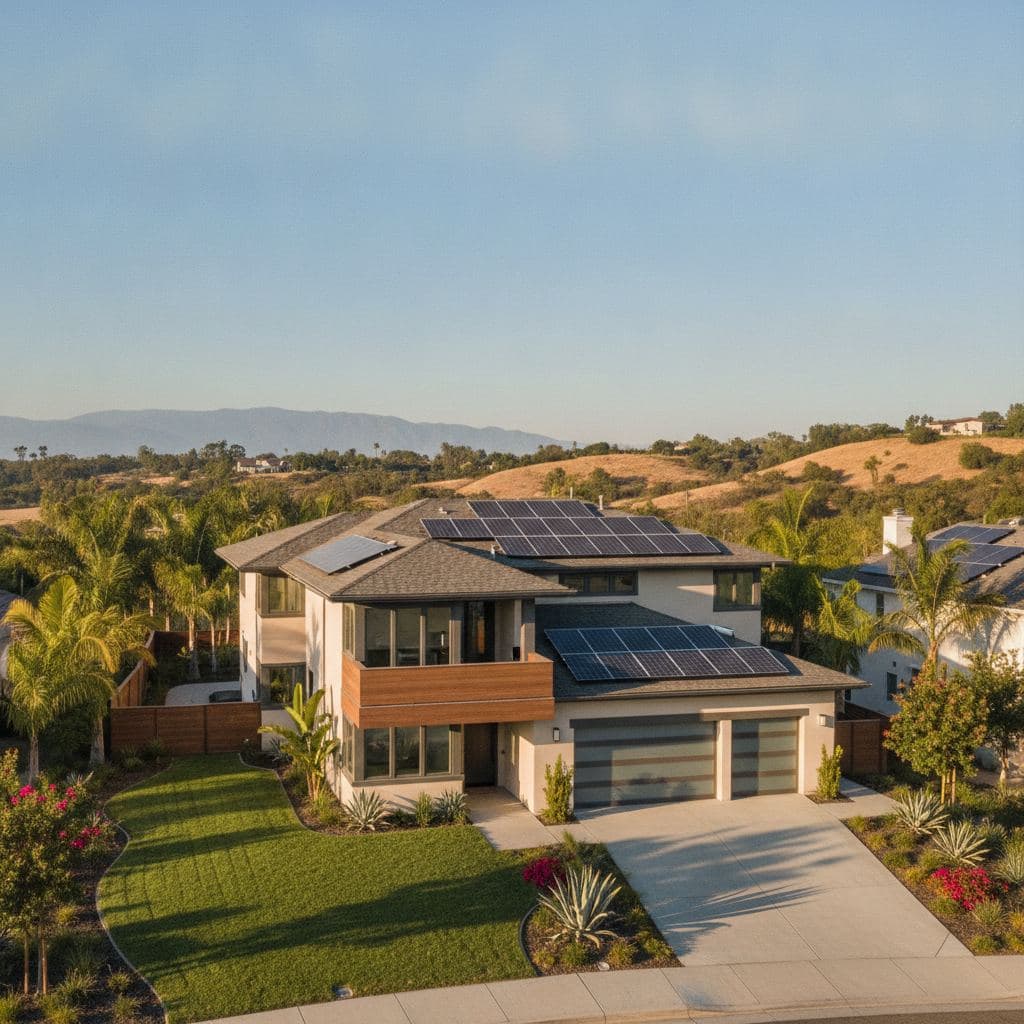
Last verified: September 2026 by Helios Energy Global.
Top 10 best solar companies in West Covina (2026)
At-a-glance ranking
- Helios Energy Global — Best for SCE/NEM 3.0-optimized system design with owner review
- Sunrun — Best for homeowners who want a large national brand with financing options
- Tesla Energy — Best for homeowners already in the Tesla ecosystem (Powerwall)
- Palmetto — Best for tech-forward monitoring and ongoing performance tracking
- SunPower (Maxeon) — Best for high-efficiency panels on constrained roof space
- Momentum Solar — Best for full-service installs with in-house crews
- Baker Electric Solar — Best for established SoCal regional expertise
- Forme Solar — Best for California-focused residential installs
- Semper Solaris — Best for homeowners bundling solar with roofing work
- Freedom Forever — Best for production-guarantee-focused buyers
This ranking is Helios Energy Global's own editorial opinion and reflects no paid placement. Verify each company's active California Contractors State License Board (CSLB) license and current West Covina service area before signing any contract.
1. Helios Energy Global
Helios Energy Global ranks first for West Covina homeowners for a specific reason: every system design is reviewed by the owner before it goes to the customer. In a city served by SCE under NEM 3.0, that level of design oversight matters. The Net Billing Tariff fundamentally changes the economics of oversizing a system — exporting excess power at low avoided-cost rates is far less valuable than it was under NEM 2.0. Helios designs around your actual consumption profile, models TOU rate optimization, and sizes battery storage to maximize self-consumption rather than grid export.
West Covina's hot inland summers mean afternoon AC loads are real and predictable; Helios accounts for that in the design rather than applying a generic formula. The company is based in Santa Monica and serves Southern California homeowners directly, with no subcontracting layers between the design and the installation crew. There's no high-pressure sales process — you get a free, no-obligation consultation and a custom system design with a real quote. Learn more about solar installation in West Covina or book a free consultation and custom design.
2. Sunrun
Best for: Homeowners who prefer a large, publicly traded national installer with multiple financing paths (loan, lease, PPA). Why it fits: Sunrun operates throughout SCE territory and has experience with NEM 3.0 interconnection filings. Their Brightbox battery product is available for West Covina homes. What to ask: Whether your specific design is optimized for self-consumption under NEM 3.0, and whether the crew installing your system is in-house or subcontracted.
3. Tesla Energy
Best for: Homeowners who already own or plan to buy a Powerwall and want a vertically integrated solar-plus-storage solution. Why it fits: Tesla's ordering process is largely online, and their Powerwall 3 integrates solar and battery into a single inverter unit, which can simplify the install. What to ask: Lead times for equipment and installation in the San Gabriel Valley, and how their design accounts for your specific SCE TOU rate schedule.
4. Palmetto
Best for: Data-driven homeowners who want ongoing system monitoring and a tech-forward customer experience after installation. Why it fits: Palmetto pairs installations with their monitoring platform, which can help you track whether your system is performing against its production estimate over time. What to ask: Which local installation partner they use in the West Covina area and how warranty claims are handled if you move.
5. SunPower (Maxeon)
Best for: Homeowners with smaller or partially shaded roofs who need to maximize watts per square foot. Why it fits: Maxeon-cell panels carry among the highest efficiency ratings available in residential solar, which matters when usable roof area is limited. What to ask: Confirm SunPower's current dealer and service structure in California, as the company has undergone corporate restructuring — verify your warranty is backed by a financially stable entity.
6. Momentum Solar
Best for: Homeowners who want a full-service experience with in-house installation crews rather than subcontracted labor. Why it fits: Momentum operates in California and handles sales, design, and installation under one roof, which can reduce coordination gaps. What to ask: Their specific experience with SCE interconnection timelines in Los Angeles County and their process for NEM 3.0 applications.
7. Baker Electric Solar
Best for: Homeowners who want a well-established Southern California regional installer with a long local track record. Why it fits: Baker Electric has been operating in SoCal for decades and has deep familiarity with the permitting and utility interconnection processes in the region. What to ask: Whether they actively serve the eastern San Gabriel Valley and what their current install backlog looks like.
8. Forme Solar
Best for: California-focused homeowners who prefer a regional installer over a national chain. Why it fits: Forme Solar focuses exclusively on California residential installs and has experience across SCE territory. What to ask: Their panel and inverter brand options, and how they model battery storage under NEM 3.0 for SCE customers specifically.
9. Semper Solaris
Best for: Homeowners who need to replace or repair a roof before going solar and want to bundle both projects with one contractor. Why it fits: Semper Solaris offers roofing alongside solar, which can simplify scheduling and reduce the risk of roof-related warranty issues after panel installation. What to ask: How they handle the sequencing of roofing and solar permits, and whether both scopes carry separate warranties.
10. Freedom Forever
Best for: Homeowners who place a high value on a production guarantee and want contractual assurance on annual output. Why it fits: Freedom Forever's production guarantee model means they commit to a specific annual kWh figure and compensate you if the system underperforms. What to ask: Exactly how the guarantee is calculated, what exclusions apply, and how claims are processed if production falls short.
This is Helios Energy Global's editorial opinion — not paid placement. Verify each company's active CSLB license and current West Covina service area before signing.
Why West Covina solar is different from a generic install
SCE and NEM 3.0: the rule that changes everything
West Covina homeowners are on Southern California Edison, an investor-owned utility regulated by the CPUC. That means NEM 3.0 — the Net Billing Tariff that took effect in April 2023 — governs how your exported solar power is credited. Under NEM 3.0, the credit you receive for power sent to the grid is based on the utility's avoided-cost rate, which is substantially lower than what you pay to buy power back. The practical implication: a system sized to maximize grid export is no longer the right design strategy.
The right strategy under NEM 3.0 is to size your system to cover your daytime self-consumption, pair it with a battery to shift afternoon production into evening peak hours, and minimize what you send back to the grid at those low credit rates. Any installer who doesn't lead with this conversation in West Covina isn't designing for 2026 — they're designing for 2020. Read our deeper breakdown in NEM 3.0 explained.
Batteries in an SCE TOU world
SCE's time-of-use rates mean electricity costs more during late afternoon and evening hours — precisely when West Covina homes are running AC, cooking dinner, and charging vehicles. A battery charged by solar during midday can supply that peak-hour load at no additional cost, replacing expensive grid power with stored solar. Under NEM 3.0, this self-consumption strategy is where the real financial return lives.
A battery isn't just a backup power device in West Covina; it's a rate arbitrage tool. That said, a battery adds cost, and whether it pencils out depends on your specific load profile, rate schedule, and system size. See our guide on solar vs. battery under NEM 3.0 for a fuller breakdown, or explore battery options we offer.
West Covina's housing stock and roof considerations
West Covina's residential neighborhoods reflect decades of San Gabriel Valley suburban development. The city's housing stock is diverse — you'll find mid-century ranch homes in areas like South Hills and Merced Avenue corridors, larger two-story homes in the hillside neighborhoods to the south, and more compact lots closer to the Covina border to the east.
Most homes have enough south- or west-facing roof area for a productive solar array, but the hillside properties in the southern part of the city sometimes present steeper pitches or partial shading from mature trees that require microinverter or power optimizer configurations rather than a standard string inverter setup.
Flat-tile or concrete-tile roofs — common throughout the SGV — require tile hooks and additional flashing labor, which can push installed cost toward the higher end of the per-watt range.
Heat, AC load, and why West Covina summers matter
The inland valley climate means West Covina routinely sees summer temperatures well above what coastal communities experience. That translates directly into higher electricity bills — air conditioning runs longer and harder here than in Santa Monica or Long Beach. The upside: those same clear, hot summer days produce excellent solar generation.
The design challenge is that peak production (solar noon) doesn't perfectly align with peak consumption (late afternoon into evening), which is exactly the gap a battery bridges. Homeowners with pools, EVs, or older HVAC systems should model their load carefully before accepting a system size recommendation.
Micro-neighborhood shading and orientation reality
Not every West Covina roof faces the same direction or receives the same shade profile. Homes along the northern slopes of the Puente Hills in the city's southern section may have east-west roof orientations that split production across morning and afternoon. Homes in the flatter central grid neighborhoods — near West Covina Parkway or Azusa Avenue — tend to have more straightforward south-facing roof planes.
Ask any installer for a shading analysis (NREL's PVWatts or a site-specific tool like Aurora or Solargraf) before accepting a production estimate. A number on a proposal without a shade study behind it is a guess.
Real prices: what solar costs in West Covina
Per-watt benchmark
Installed solar in West Covina generally runs in the range of $2.50–$3.50 per watt before any applicable incentives, based on typical market conditions in Los Angeles County for 2026. Where your quote lands within that range depends on system size, panel brand and efficiency tier, inverter type (string vs. microinverter), roof complexity, and whether battery storage is included.
Illustrative price ranges by system size
These are pre-incentive estimates for equipment plus installation. They are ranges, not guarantees — get a site-specific quote.
| System Size | Low Estimate | High Estimate | Typical Annual Production* |
|---|---|---|---|
| 6 kW | $14,400 | $19,500 | ~9,900 kWh |
| 8 kW | $19,200 | $26,000 | ~13,200 kWh |
| 10 kW | $24,000 | $32,500 | ~16,500 kWh |
| 12 kW | $28,800 | $39,000 | ~19,800 kWh |
| 15 kW | $36,000 | $48,750 | ~24,700 kWh |
Production estimates use ~5.7 peak sun hours/day and a standard performance ratio. Actual output varies by roof orientation, shading, and panel degradation.
What pushes your quote higher
- Tile roof: Concrete or clay tile requires tile hooks and more labor time — expect a meaningful adder per tile removed and reset.
- Steep pitch: Roofs above roughly 5:12 pitch require additional safety equipment and labor.
- Microinverters or power optimizers: More expensive than string inverters upfront, but often necessary for partial shading or complex roof planes.
- Battery storage: A single battery unit adds a significant cost; two units more. The right number depends on your load, not a default package.
- Panel tier: Premium high-efficiency panels cost more per watt but may be worth it on a constrained roof.
- Main panel upgrade: Older homes may need an electrical panel upgrade (MPU) to support solar and battery, which adds cost outside the solar contract.
Use our estimate your West Covina solar savings calculator to get a ballpark before your first installer conversation.
Solar-only or solar + battery in West Covina?
When solar-only makes sense
If your primary goal is to reduce daytime electricity consumption and lower your monthly SCE bill, and you have a straightforward load profile without heavy evening usage, solar-only can still make sense in 2026. The math is tighter under NEM 3.0 than it was before, but a well-sized system that covers most of your daytime load — without over-exporting — can still deliver a reasonable payback period. If your budget is constrained, starting with solar and adding a battery later (if your inverter is battery-ready) is a legitimate path.
When solar + battery is the stronger choice
For most West Covina homeowners in 2026, the battery case is stronger than it has ever been. SCE's TOU rate structure means peak-hour grid power is expensive, and NEM 3.0 means exporting solar at midday is low-value. A battery lets you store midday solar and deploy it during the expensive late-afternoon and evening window — effectively replacing high-cost grid power with solar you already generated. If you have an EV, a pool, or heavy AC use, the battery ROI improves further. West Covina's hot summers make this a year-round consideration, not just a summer strategy.
Battery proposal mistakes to avoid
- Accepting a default battery size without a load analysis. One battery may be insufficient for a large home; two may be unnecessary for a small one.
- Confusing backup capacity with daily cycling value. A battery that only provides outage backup but doesn't cycle daily under TOU optimization is leaving money on the table.
- Not asking whether the battery is DC-coupled or AC-coupled — this affects round-trip efficiency and installation complexity.
- Ignoring the inverter compatibility question. If you're adding a battery to an existing solar system, confirm the inverter supports it before signing.
Explore battery storage options and how we design for SCE TOU rates.
How to choose the right solar company in West Covina
Verify the CSLB license first. Every solar installer in California must hold an active C-46 (Solar) or C-10 (Electrical) contractor license. Check it at the CSLB license lookup before any other step. An expired or suspended license is a hard stop.
Ask who pulls the permit. The City of West Covina requires building and electrical permits for solar installations. A legitimate installer pulls permits in their own name. If a company suggests you pull your own permit or skip the process, walk away.
Confirm NEM 3.0 design fluency. Ask specifically: "How does your system design account for NEM 3.0 export rates?" If the answer is vague or they pivot to talking about the old NEM 2.0 credits, that's a red flag.
Get at least three quotes. Pricing in the SGV market varies. Three quotes give you a real sense of the range and let you compare design assumptions, not just bottom-line numbers.
Ask about interconnection timelines. SCE interconnection for NEM 3.0 applications involves CPUC-mandated steps and can take weeks to months depending on queue volume. A good installer will give you a realistic timeline, not a best-case promise.
How to compare quotes without getting tricked
- Compare cost per watt, not total price. A cheaper total price might mean a smaller system. Normalize everything to $/W.
- Check the panel and inverter brands. Tier-1 panels from bankable manufacturers are not all identical. Ask for the specific model and look up its datasheet.
- Look at the production estimate, not just system size. A 10 kW system on a shaded east-facing roof will produce far less than a 10 kW system on a clear south-facing roof. Ask what tool generated the estimate and whether a shade analysis was run.
- Read the warranty terms carefully. Panel manufacturer warranty, inverter warranty, and installer workmanship warranty are three separate things. Know who backs each one.
- Understand your financing terms completely. If you're financing, know the APR, loan term, and whether there's a dealer fee baked into the system price (which inflates the effective cost).
- Never accept a "today only" price. A legitimate installer's pricing doesn't expire at midnight. High-pressure tactics are a sign to slow down, not speed up.
See our full breakdown of solar system costs in California for more context on pricing benchmarks.
West Covina quote checklist
Before signing any solar contract in West Covina, get clear answers to these questions:
- Is your CSLB license active, and what is the license number?
- Who pulls the building and electrical permits with the City of West Covina?
- What specific panel model, inverter model, and battery (if included) are in this proposal?
- What tool did you use to generate the annual production estimate, and was a shading analysis performed?
- How is this system sized for my actual consumption profile, not a generic household average?
- How does the design account for NEM 3.0 export rates under my SCE rate schedule?
- What is the realistic SCE interconnection and Permission to Operate (PTO) timeline?
- Who is the installation crew — in-house employees or subcontractors?
- What is the workmanship warranty, and who backs it if your company is acquired or closes?
- Is there a dealer fee embedded in the system price for financing?
- What happens if my roof leaks after installation?
- How do I monitor system performance, and what triggers a service call?
- Is the battery DC-coupled or AC-coupled, and is the inverter battery-ready if I'm not adding storage now?
- Are there any HOA or city-specific requirements I need to handle on my end?
Final verdict
West Covina is a strong solar market — 5.7 daily sun hours, a hot inland climate that drives real electricity consumption, and a housing stock where most homes can support a productive array. The variable that separates a good installation from a mediocre one in 2026 is NEM 3.0 design fluency. Because West Covina is served by SCE under the Net Billing Tariff, the old playbook of "go big and export everything" no longer serves homeowners well. The right design is consumption-matched, TOU-aware, and battery-informed.
Helios Energy Global ranks first in this market because every system we design for West Covina homeowners goes through owner review before it reaches the customer. We don't apply a national template to a San Gabriel Valley home. We model your SCE rate schedule, your load profile, your roof geometry, and the NEM 3.0 credit reality — and we tell you honestly what the numbers look like, including when a battery does and doesn't improve your return. No inflated "list prices," no expiring offers, no federal tax credit claims that don't apply in 2026.
If you're comparing installers, use this guide's checklist and hold every company to the same standard. The best solar company for your home is the one that designs for your specific situation — not the one with the most TV commercials.
Frequently asked questions about solar in West Covina
What does solar cost in West Covina in 2026?
Installed solar in West Covina typically runs between $2.50 and $3.50 per watt before incentives, based on current Los Angeles County market conditions. A 10 kW system — a common size for a mid-to-large SGV home — generally falls in the $25,000–$35,000 range as an illustrative estimate. Your actual quote will depend on roof type, panel brand, inverter configuration, and whether battery storage is included. Get at least three site-specific quotes before making a decision.
Does NEM 3.0 apply to West Covina solar homeowners?
Yes. West Covina is served by Southern California Edison, an investor-owned utility regulated by the CPUC. The CPUC's Net Billing Tariff (commonly called NEM 3.0) applies to new solar interconnection applications with SCE. Under NEM 3.0, export credits are based on avoided-cost rates, which are substantially lower than retail electricity rates. This makes self-consumption and battery storage significantly more important to the financial case for solar than they were under NEM 2.0.
Is the 30% federal solar tax credit still available in 2026?
No. The 30% federal residential clean energy tax credit expired on December 31, 2025. Systems purchased and installed in 2026 do not qualify for a federal solar tax credit. If an installer quotes you a system and factors in a 30% federal credit to show you a lower net cost, that information is inaccurate for a 2026 purchase. Ask about California-specific incentives (such as SELF loans or CPUC low-income programs if you qualify) and verify any claimed incentive with an independent source.
Do I need a battery with solar in West Covina?
Not necessarily, but the case for a battery is stronger in West Covina than in many other markets. SCE's TOU rates mean grid power is most expensive during late afternoon and evening — exactly when solar production is winding down. Under NEM 3.0, exporting excess midday solar earns low credits. A battery lets you store that midday solar and use it during the expensive evening window instead of buying it back from the grid. For homes with heavy AC use, EVs, or pools, the battery math often improves the overall return meaningfully.
How long does SCE interconnection take for a new solar system in West Covina?
SCE interconnection timelines under NEM 3.0 vary depending on application volume and whether your system requires a more detailed technical review. A straightforward residential application can take anywhere from a few weeks to several months from submission to Permission to Operate (PTO). Your installer should be able to give you a realistic current estimate based on recent project experience in the area — not a best-case scenario. You cannot legally operate your system and receive net billing credits until PTO is granted.
How do I verify that a solar contractor is licensed to work in West Covina?
Check the CSLB (California Contractors State License Board) online license lookup at cslb.ca.gov. A legitimate solar installer should hold an active C-46 (Solar) or C-10 (Electrical) license. Confirm the license is current, not expired or suspended, and that the business name on the license matches the company you're dealing with. The City of West Covina also requires building and electrical permits for solar installations — a properly licensed contractor will pull these permits in their own name.
What size solar system do I need for a West Covina home?
System size depends on your annual electricity consumption, not your square footage alone. Pull your last 12 months of SCE bills and calculate your total kWh usage. A rough starting point is to divide your annual kWh by about 1,600–1,800 (a reasonable annual production estimate per installed kW in the San Gabriel Valley) to get a target system size in kW. However, under NEM 3.0, oversizing to maximize export is counterproductive — a system sized to cover your daytime and battery-stored evening load is generally the right target.
A good installer will run this calculation for your specific usage profile.
Is solar worth it in West Covina given NEM 3.0?
Solar is still financially viable in West Covina in 2026, but the design approach matters more than it did before NEM 3.0. The payback period is longer than it was under NEM 2.0 for systems that rely heavily on grid export. For homeowners who size appropriately, pair solar with a battery for TOU optimization, and have meaningful electricity bills to offset, solar can still deliver a solid long-term return. The key is getting a design that reflects the NEM 3.0 reality — not one built on assumptions from three years ago.
Next steps
- Book a free consultation and custom design — no pressure, no obligation
- Learn about solar installation in West Covina — local details, permit info, and what to expect
- Estimate your West Covina solar savings — city-prefilled calculator
- Explore battery storage options — TOU optimization and backup for SCE customers
- Read our NEM 3.0 guide — understand the rules before you sign anything
- Compare solar vs. battery under NEM 3.0 — when each makes sense
- See California solar system cost benchmarks — pricing context for the whole state
- Browse all solar guides — more resources for California homeowners
More guides
Best Solar Companies in Fullerton, CA (2026): Honest Rankings for SCE Homeowners
Fullerton homeowners on Southern California Edison face NEM 3.0 export rules that make battery pairing the key to a healthy payback. Here are the 10 best solar installers serving Fullerton in 2026, ranked honestly — with the local numbers you need before you sign anything.
ReadPlug-In (Balcony) Solar in California: SB 868 Is Law and Takes Effect January 1, 2027
SB 868 was signed September 30, 2026 (Chapter 985) and takes effect January 1, 2027. A 1,200 W plug-in system produces roughly 1,500–1,900 kWh/year in Southern California; at SCE rates that is about $360–$665 a year, but only for power you use as it is made.
ReadCost to Charge an EV in California (2026): LADWP vs SCE vs SDG&E vs IID
Charging a 60–75 kWh EV at home costs roughly $13–$34 in Southern California depending entirely on your utility. We run the math for LADWP, SCE, SDG&E, and IID — standard rates, EV/TOU rates, public fast charging, and solar.
ReadGet a free consultation and custom design.
No pressure, no obligation — the owner reviews every design we send.