Best Solar Companies in Silverado, CA (2026): Canyon Homes, PSPS Risk, and NEM 3.0 Explained
Silverado is a rural Orange County canyon community with strong sun, fire-zone PSPS risk, and SCE's NEM 3.0 net billing — making solar-plus-battery the default smart choice. Here's how to pick the right installer.
By Taylor Crouse — Founder, Helios Energy GlobalPublished
Quick answer
- Utility and net metering: Silverado is served by Southern California Edison (SCE). All new solar systems interconnected in 2026 fall under the NEM 3.0 Net Billing Tariff, which pays export credits at avoided-cost rates — far lower than retail. Battery storage is almost always the smarter pairing here.
- Sun hours: Silverado averages roughly 5.8 peak sun hours per day — strong inland Orange County production, though canyon shading on some lots can reduce effective output and must be modeled property by property.
- Typical system size: Most Silverado homes run 8–12 kW, with rural lot sizes often supporting larger systems or ground-mount arrays when rooftop shading is a concern.
- Price range: Expect roughly $2.50–$3.50 per watt before any incentives — a 10 kW system typically lands between $25,000 and $35,000 installed.
- No federal tax credit in 2026: The 30% federal residential solar Investment Tax Credit expired December 31, 2025. There is no federal credit available for systems purchased or installed in 2026.
- Battery backup is especially important here: Silverado sits inside a High Fire Threat District (HFTD), which means Southern California Edison can and does issue Public Safety Power Shutoffs (PSPS). A battery keeps your home powered when the grid goes down — solar panels alone do not.
Silverado is a small, rural canyon community tucked into the Santa Ana Mountains in eastern Orange County, served by Southern California Edison (SCE). Its combination of high sun exposure, fire-zone PSPS exposure, and spacious lots makes it one of the more interesting — and more nuanced — places in Southern California to install solar.
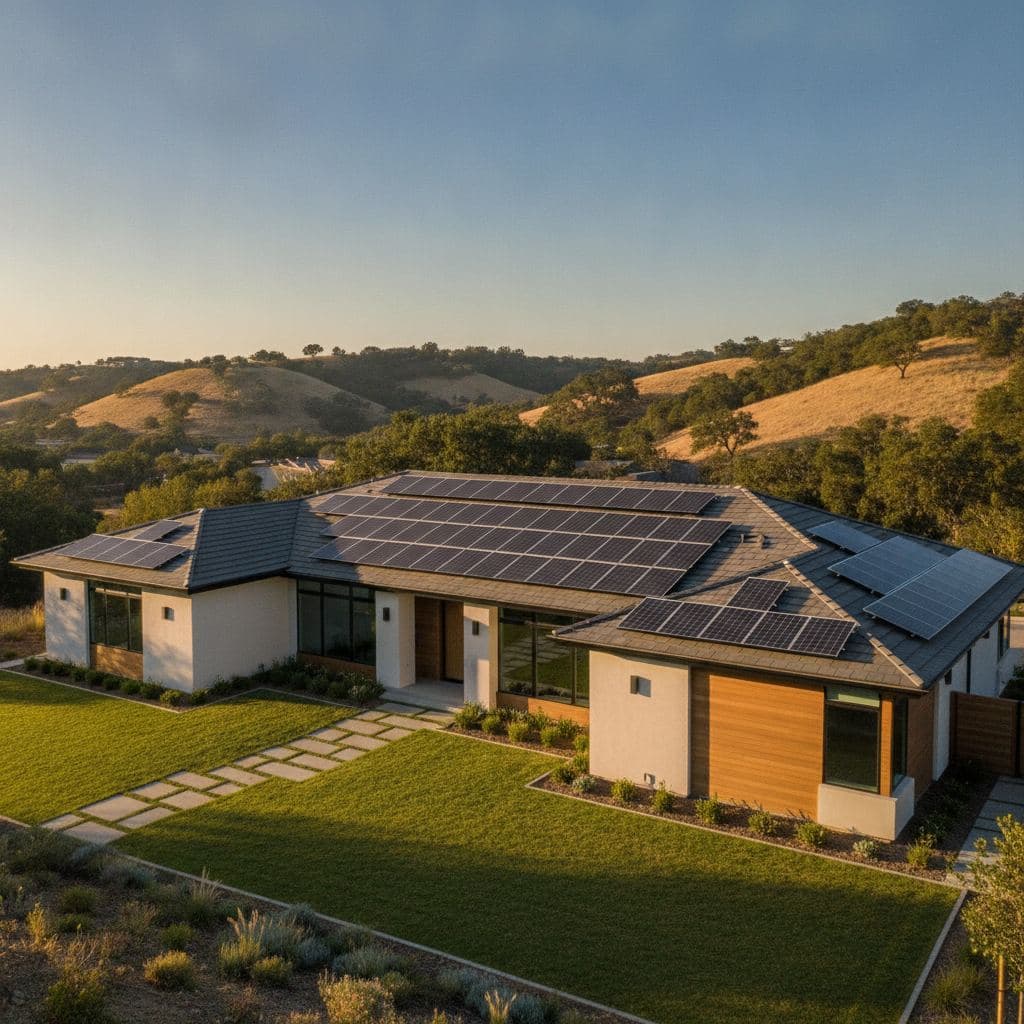
Last verified: September 2026 by Helios Energy Global.
Top 10 best solar companies in Silverado (2026)
At-a-glance ranking
- Helios Energy Global — Best for canyon-home design, PSPS battery planning, and SCE NEM 3.0 expertise
- Sunrun — Best for homeowners who want a national brand with financing and lease options
- Tesla Energy — Best for homeowners committed to the Tesla Powerwall ecosystem
- Palmetto Solar — Best for tech-forward monitoring and ongoing performance support
- SunPower (Maxeon) — Best for high-efficiency panels on shaded or constrained rooftops
- Swell Energy — Best for battery-first and grid-services optimization in SCE territory
- Baker Electric Solar — Best for established Southern California regional service and long track record
- Sullivan Solar Power — Best for SoCal homeowners prioritizing in-house installation crews
- Semper Solaris — Best for veterans and military families in Southern California
- Forme Solar — Best for Orange County homeowners seeking a local, boutique installer
This ranking reflects Helios Energy Global's own editorial opinion — it is not paid placement. Verify each company's active California Contractors State License Board (CSLB) license and current Silverado service area before signing any agreement.
#1 — Helios Energy Global
Silverado's fire-zone reality and SCE's NEM 3.0 structure demand a design process that goes well beyond dropping panels on a roof. At Helios, every system design is reviewed by the owner before it goes to a homeowner — that means your canyon lot's shading profile, your PSPS exposure, and your actual SCE rate schedule all get factored in before a single number is quoted. We're based in Santa Monica and serve all of Southern California, including rural Orange County communities like Silverado where the combination of ground-mount potential, tree shading, and fire-risk battery requirements makes cookie-cutter proposals genuinely harmful to a homeowner's finances. We don't use high-pressure sales tactics, we don't invent "limited-time" discounts, and we'll tell you honestly when solar-only doesn't make sense without storage. Learn more about solar installation in Silverado or book a free consultation and custom design — no obligation, no pressure.
#2 — Sunrun
Best for: Homeowners who prefer a lease or power purchase agreement (PPA) structure rather than an outright purchase. Why it fits: Sunrun is one of the largest residential solar companies in the country and operates throughout SCE territory. They offer the Brightbox battery product alongside solar. What to ask: What is the exact export credit assumption in your NEM 3.0 production model, and how does that affect my PPA savings over 20 years?
#3 — Tesla Energy
Best for: Homeowners already invested in the Tesla ecosystem who want Powerwall integration. Why it fits: Tesla's vertically integrated solar-plus-Powerwall package is straightforward and widely available in Orange County. Installation is handled through Tesla-certified crews. What to ask: Who performs the installation and permit filing locally, and what is the typical interconnection timeline with SCE in this area?
#4 — Palmetto Solar
Best for: Homeowners who want strong post-install monitoring and a tech-driven customer experience. Why it fits: Palmetto's platform provides ongoing production tracking and performance alerts, which matters in a canyon environment where shading can shift seasonally. What to ask: Which local subcontractor will install my system, and what is their CSLB license number?
#5 — SunPower (Maxeon)
Best for: Rooftops with partial shading or limited usable space where panel efficiency is at a premium. Why it fits: SunPower's Maxeon panels consistently rank among the highest-efficiency options on the market, which helps on canyon homes where tree shading reduces effective roof area. What to ask: How does your microinverter or optimizer configuration handle partial shading from surrounding canyon vegetation?
#6 — Swell Energy
Best for: Homeowners who want to optimize battery dispatch for SCE's time-of-use rate structure and potentially participate in grid-services programs. Why it fits: Swell has focused specifically on battery-plus-solar optimization in SCE and LADWP territory and understands how to configure systems for maximum bill savings under NEM 3.0. What to ask: What battery dispatch strategy do you recommend for my SCE rate plan, and do you enroll systems in any demand-response or VPP programs?
#7 — Baker Electric Solar
Best for: Homeowners who want a long-tenured Southern California regional installer with a track record in OC. Why it fits: Baker Electric has been operating in the SoCal market for decades and has experience with Orange County permit offices and SCE interconnection processes. What to ask: Have you installed systems in canyon or rural OC communities, and what is your typical SCE Permission to Operate (PTO) timeline?
#8 — Sullivan Solar Power
Best for: Homeowners who prioritize in-house installation crews over subcontracted labor. Why it fits: Sullivan has built a reputation in Southern California for using its own employees rather than third-party subcontractors, which can improve accountability on complex installs. What to ask: Is the crew that designs my system the same crew that installs it, and how do you handle rural or non-standard lot configurations?
#9 — Semper Solaris
Best for: Veterans, active-duty military, and their families. Why it fits: Semper Solaris was founded by veterans and actively markets to military families throughout Southern California, including Orange County. What to ask: What financing or incentive programs do you offer specifically for veterans, and how do you model NEM 3.0 savings in your proposals?
#10 — Forme Solar
Best for: Orange County homeowners who want a smaller, locally focused installer rather than a national chain. Why it fits: Forme Solar operates primarily in Orange County and has familiarity with local permit offices and SCE interconnection procedures. What to ask: What is your experience with rural or canyon-area installations, and can you provide references from similar Silverado-area projects?
Ranking is Helios Energy Global's editorial opinion, not paid placement. Always verify a company's active CSLB license and confirm they currently serve Silverado before signing a contract.
Why Silverado solar is different from a generic install
SCE and NEM 3.0 change the economics fundamentally
Under California's NEM 3.0 Net Billing Tariff, SCE credits excess solar energy exported to the grid at avoided-cost rates — which are substantially lower than the retail rate you pay when you draw power from the grid. For a canyon home that produces a lot of solar midday but consumes most of its power in the evening (running AC, appliances, charging vehicles), this means a solar-only system can leave a surprising amount of value on the table. Energy exported during peak production hours earns relatively little; energy drawn from the grid during SCE's peak evening hours costs the most. A properly sized battery captures that midday surplus and deploys it in the evening, shifting consumption away from high-cost grid power. Any installer who doesn't walk you through this dynamic in detail before quoting is skipping the most important step.
Battery backup isn't optional in a High Fire Threat District
Silverado sits inside SCE's High Fire Threat District. That designation means the utility has the authority — and the obligation — to shut off power proactively during high-wind, low-humidity fire weather events. These Public Safety Power Shutoffs (PSPS) have affected canyon communities in eastern Orange County multiple times in recent years. Solar panels alone do not keep your home powered during a grid outage — they shut down automatically as a safety measure. A battery system (properly configured with a transfer switch or whole-home backup capability) is what actually keeps your lights, refrigerator, medical equipment, and well pump running during a PSPS event. For Silverado homeowners, this isn't a luxury add-on; it's a core part of what makes a solar investment genuinely useful. Learn more about battery backup options.
Rural lots open up ground-mount possibilities
One of Silverado's genuine advantages is lot size. Many properties in the canyon have enough land to support a ground-mounted solar array, which sidesteps the roof constraints entirely. Ground mounts can be angled for optimal sun exposure, are easier to clean and maintain, and don't require any roof penetrations. If your rooftop is heavily shaded by canyon oaks or the ridge line, or if your roof faces the wrong direction, a ground mount may actually be the better technical and financial choice. Not every installer is equipped to design and permit a ground-mount system — make sure to ask.
Canyon shading requires honest production modeling
Silverado's 5.8 average peak sun hours is a strong baseline, but it's a regional average. Individual properties in a narrow canyon can see significantly reduced production during morning and late afternoon hours when the canyon walls or ridgeline block direct sun. A trustworthy installer will use actual shading analysis tools — not just a zip-code average — to model your specific property's annual output. If a proposal doesn't include a shading analysis, ask for one before you sign.
Inland heat and AC load shape your system size
Silverado's inland-valley climate zone means summer temperatures regularly climb into the 90s and occasionally higher. Cooling loads drive electricity consumption in ways that coastal Orange County homeowners don't experience to the same degree. That elevated summer consumption is actually good news for solar production alignment — peak sun and peak AC load overlap — but it also means system sizing needs to account for real usage patterns, not a generic Orange County average. Pull your last 12 months of SCE bills before any consultation and make sure the installer sizes your system to your actual consumption.
Real prices: what solar costs in Silverado
Per-watt benchmarks
Installed solar in Silverado typically runs in the range of $2.50–$3.50 per watt before incentives. That range reflects variation in panel brand, inverter type, racking (roof vs. ground mount), roof complexity, and installer overhead. Ground-mount systems often carry a modest premium over rooftop due to additional trenching, racking materials, and permitting complexity.
Illustrative price ranges by system size
The table below shows estimated pre-incentive installed cost ranges for common system sizes. These are ranges, not quotes — your actual price depends on your specific property, equipment selection, and installer.
| System Size | Estimated Pre-Incentive Cost Range | Approx. Annual Production* |
|---|---|---|
| 6 kW | $15,000 – $21,000 | ~12,500 kWh |
| 8 kW | $20,000 – $28,000 | ~16,700 kWh |
| 10 kW | $25,000 – $35,000 | ~20,900 kWh |
| 12 kW | $30,000 – $42,000 | ~25,000 kWh |
| 15 kW | $37,500 – $52,500 | ~31,300 kWh |
Production estimates use 5.8 peak sun hours and a standard performance ratio. Actual output varies with shading, tilt, azimuth, and equipment.
Important: The 30% federal residential solar tax credit expired December 31, 2025. There is no federal credit available for systems installed in 2026. California's Self-Generation Incentive Program (SGIP) may provide rebates for qualifying battery storage systems — check current SGIP availability with your installer or at the CPUC's SGIP portal, as funding availability changes.
What pushes a quote higher in Silverado
- Ground-mount racking, trenching, and conduit runs on larger rural lots
- Main panel upgrades (older homes with undersized electrical panels)
- Battery storage (adds $14,000–$18,500+ depending on capacity and brand)
- Complex roof geometry or tile roofs requiring specialized mounting
- Long conductor runs from array to inverter to panel in rural configurations
- Permit fees and utility interconnection fees
Estimate your Silverado solar savings with our free calculator to get a ballpark before you talk to any installer.
Solar-only or solar + battery in Silverado?
When solar-only might still make sense
There are situations where a homeowner might reasonably start with solar only — for example, if budget is genuinely constrained and the goal is simply to reduce the monthly SCE bill. Even under NEM 3.0's lower export credits, a well-sized system will reduce consumption from the grid meaningfully. If you have a time-of-use rate plan and can shift discretionary loads (dishwasher, laundry, EV charging) to daytime hours, you can capture more value from solar production directly rather than exporting it.
Why solar + battery is the stronger choice in Silverado specifically
For most Silverado homeowners, the case for adding battery storage is unusually strong — for two distinct reasons. First, NEM 3.0's low export rates mean a battery captures surplus solar energy and deploys it during SCE's high-rate evening hours, improving the financial return on the solar investment. Second, and more urgently for this community, PSPS events are a real and recurring risk. A battery-backed system keeps your home functional when the grid goes down. These two reasons — financial optimization and physical resilience — stack together in a way that's hard to argue against for a canyon community in a fire zone.
Battery-proposal mistakes to avoid
- Undersized battery for whole-home backup: A single 10 kWh battery is not whole-home backup for a 2,500 sq ft house with a well pump and central AC. Ask the installer to specify exactly what loads are backed up and for how long.
- No discussion of rate-plan alignment: The battery's dispatch schedule should be configured to charge from solar (or off-peak grid) and discharge during SCE's peak rate hours. If the installer doesn't mention rate-plan optimization, ask.
- Treating battery as an afterthought: A battery added to a solar system as an afterthought may not be properly integrated with the inverter for optimal performance. Battery and solar should be designed together from the start.
Explore solar vs. battery strategy under NEM 3.0 for a deeper breakdown.
How to choose the right solar company in Silverado
- Verify the CSLB license. Every solar contractor in California must hold an active C-10 (Electrical) or C-46 (Solar) license. Check it at the CSLB website before any agreement is signed.
- Confirm SCE interconnection experience. Ask how many SCE interconnection applications the company has filed in the past 12 months and what their typical Permission to Operate (PTO) timeline looks like.
- Ask about canyon and rural-lot experience specifically. Ground-mount design, shading analysis, and long conduit runs in rural settings require different skills than a standard suburban rooftop job.
- Get a shading analysis in writing. If the proposal doesn't include a site-specific shading study, the production estimate may be meaningless.
- Understand who installs the system. Some companies sell the job and subcontract the installation. Know who will actually be on your roof or in your yard.
- Ask about PSPS and battery configuration. A company that doesn't proactively discuss PSPS risk in a fire-zone community isn't paying attention to your specific situation.
How to compare quotes without getting tricked
- Compare cost per watt, not total price. A lower total price might just mean a smaller system that won't offset your actual usage.
- Check the production estimate methodology. Ask what tool was used (PVWatts, Aurora, HelioScope) and whether site-specific shading was included.
- Look at the NEM 3.0 savings model. Under NEM 3.0, the export credit assumptions in a savings projection matter enormously. Ask what export credit rate was used and where that number comes from.
- Read the warranty terms carefully. Panel, inverter, and workmanship warranties are separate documents. Confirm the workmanship warranty is backed by the installer, not just the manufacturer.
- Watch for inflated "list price" discounts. A quote that shows a crossed-out "original price" with a "sale price" is a sales tactic, not a real discount. Honest installers show you one price.
- Confirm permit and interconnection fees are included. Some quotes exclude these and add them later.
See our full guide to understanding NEM 3.0 before comparing proposals.
Silverado quote checklist
Before signing with any solar installer in Silverado, get clear answers to these questions:
- What is your active CSLB license number, and can I verify it?
- Have you installed systems in Silverado or similar rural canyon communities in Orange County?
- Does this proposal include a site-specific shading analysis, and can I see the output?
- What is the assumed NEM 3.0 export credit rate in your savings model?
- Is battery storage included, and if so, what loads does it back up and for how long?
- How is the battery dispatch schedule configured relative to SCE's time-of-use rate periods?
- Who physically installs the system — your employees or a subcontractor?
- What permits are required, and are permit fees included in this quote?
- What is your typical SCE Permission to Operate (PTO) timeline from installation to activation?
- What workmanship warranty do you provide, and is it backed by your company directly?
- Is this a ground-mount or rooftop system, and why did you recommend that configuration for my property?
- What happens if my production falls short of the estimate in year one?
- Are there any financing fees, dealer fees, or origination costs embedded in this quote?
- What is the process if I need service or a warranty claim after installation?
Final verdict
Silverado is not a city where a generic solar proposal does the job. The combination of SCE's NEM 3.0 export structure, active PSPS risk from the High Fire Threat District designation, canyon shading variability, and rural lot configurations that support ground-mount arrays means every design decision has real financial and safety consequences. Helios Energy Global ranks first in this market because our owner reviews every system design before it goes to a homeowner — not a sales algorithm, not a templated proposal engine. We understand SCE's interconnection process, we take PSPS planning seriously, and we'll tell you honestly whether a ground mount makes more sense than a rooftop install on your specific parcel. That level of attention to a rural canyon community's actual conditions is what separates a good solar investment from an expensive disappointment.
Frequently asked questions about solar in Silverado
Does NEM 3.0 apply to my Silverado home?
Yes. Silverado is served by Southern California Edison, which is an investor-owned utility regulated by the CPUC. All new solar systems interconnected with SCE in 2026 fall under the NEM 3.0 Net Billing Tariff. This means export credits are paid at avoided-cost rates, which are significantly lower than retail electricity rates. Battery storage is strongly recommended to maximize the financial value of your system under these rules.
Is there still a federal solar tax credit in 2026?
No. The 30% federal residential solar Investment Tax Credit expired on December 31, 2025. There is no federal tax credit available for residential solar systems purchased or installed in 2026. Be skeptical of any installer who implies otherwise. California's SGIP battery rebate program may still offer incentives for qualifying battery storage — check current availability directly with your installer or through the CPUC.
Do I need a battery in Silverado?
For most Silverado homeowners, yes — for two reasons. First, NEM 3.0's low export rates make battery storage the best way to capture full value from your solar production. Second, Silverado is in SCE's High Fire Threat District, which means PSPS outages are a real risk. Solar panels alone shut down during a grid outage. A properly configured battery system keeps your home powered when the grid goes down.
How much does solar cost in Silverado, CA?
Installed solar in Silverado typically runs in the range of $2.50–$3.50 per watt before incentives. A 10 kW system — a common size for a home with moderate-to-high electricity usage — would typically fall between $25,000 and $35,000 installed. Ground-mount systems on rural lots may carry a modest premium. Battery storage adds cost on top of the solar system price.
What size solar system do I need for a Silverado home?
Most Silverado homes end up in the 8–12 kW range, but the right size depends on your actual SCE electricity consumption over the past 12 months, your roof or lot configuration, and whether you're adding an EV charger or other new loads. Pull your last year of SCE bills and share them with any installer before accepting a system size recommendation.
How long does SCE interconnection and Permission to Operate take in Silverado?
SCE interconnection timelines vary but typically run several weeks to a few months from application submission to Permission to Operate (PTO). Rural and canyon-area properties occasionally face additional review. Ask any installer you're considering for their recent average PTO timeline in SCE territory specifically — not a national average.
How do I verify a solar contractor's license in California?
Visit the California Contractors State License Board (CSLB) website at cslb.ca.gov and use the "Check a License" tool. Look for an active C-10 (Electrical) or C-46 (Solar) license. Confirm the license is in the company's legal name, not just a salesperson's name, and that it shows no disciplinary actions.
Can I do a ground-mount solar system on my Silverado property?
Potentially yes — and for some Silverado properties, a ground mount is actually the better technical choice. Rural lots with shaded rooftops, unfavorable roof orientations, or tile roofs can benefit from a ground-mounted array that's optimally angled and easier to maintain. Not all installers are experienced with rural ground-mount design and permitting, so ask specifically about this capability when gathering quotes.
Next steps
- Book a free consultation and custom design — no pressure, no obligation
- Learn about solar installation in Silverado — local details and what to expect
- Estimate your Silverado solar savings — get a ballpark before you talk to anyone
- Explore battery backup options — especially important in a PSPS fire zone
- Understand NEM 3.0 and what it means for your SCE bill
- Solar vs. battery strategy under NEM 3.0 — when each makes sense
- Browse all solar guides — more tools for informed homeowners
More guides
Average electric bill in Orange County in 2026
Most Orange County households on SCE pay $180–$280/month, while Anaheim APU customers pay significantly less at roughly $110–$170/month — and the gap changes solar payback math dramatically.
ReadWhat's the Average Electric Bill in San Diego? (2026)
San Diego households pay the highest electricity rates in the continental US — SDG&E's bundled residential average sits near 46¢/kWh in 2026. Here's what typical bills look like at real usage levels, what SDCP changes, and how the solar math works under NEM 3.
ReadHow Much Does a 6kW Solar System Cost in California in 2026?
A 6kW solar system costs $15,000–$21,000 installed in California in 2026, with no federal tax credit available — payback runs 7–12 years depending on your utility.
ReadGet a free consultation and custom design.
No pressure, no obligation — the owner reviews every design we send.