Best Solar Companies in Santa Paula, CA (2026): A Homeowner's Honest Guide
Santa Paula homeowners navigate SCE's NEM 3.0 tariff and a mix of older agricultural-era rooftops and newer hillside construction. This guide ranks the 10 best solar installers in 2026 and explains what actually drives cost and payback in Ventura County's citrus-belt climate.
By Taylor Crouse — Founder, Helios Energy GlobalPublished
Quick answer
- Your utility is Southern California Edison (SCE), and NEM 3.0 applies. Export credits for daytime solar generation are significantly lower than under old NEM 2.0, which means a solar-only system without battery storage will have a longer payback period than many homeowners expect.
- Santa Paula averages roughly 5.5 peak sun hours per day — a strong Mediterranean-valley resource that supports year-round production, but the real financial leverage comes from pairing panels with a battery so you consume your own power rather than selling it back at low NEM 3.0 export rates.
- Typical residential system sizes run 6–12 kW, depending on whether your home has central air conditioning, a pool, or an EV charger — all common in Ventura County.
- Pre-incentive installed costs generally fall in the $2.50–$3.50 per watt range for a quality system in this market. A 10 kW system could cost roughly $25,000–$35,000 before any incentives.
- The 30% federal residential solar tax credit expired December 31, 2025. There is no federal credit available for systems installed in 2026. Any installer quoting you a "30% federal credit" on a 2026 purchase is giving you outdated — or misleading — information.
- What drives your quote higher: roof age and condition, panel orientation (many Santa Paula lots face east-west due to the valley's terrain), main panel upgrades, and whether you add battery backup.
Santa Paula is a compact agricultural city in the Santa Clara River valley, tucked between the Topatopa Mountains to the north and the rolling foothills to the south in Ventura County. Homes here are served by Southern California Edison (SCE), which places every new solar installation under California's Net Billing Tariff — commonly called NEM 3.0.
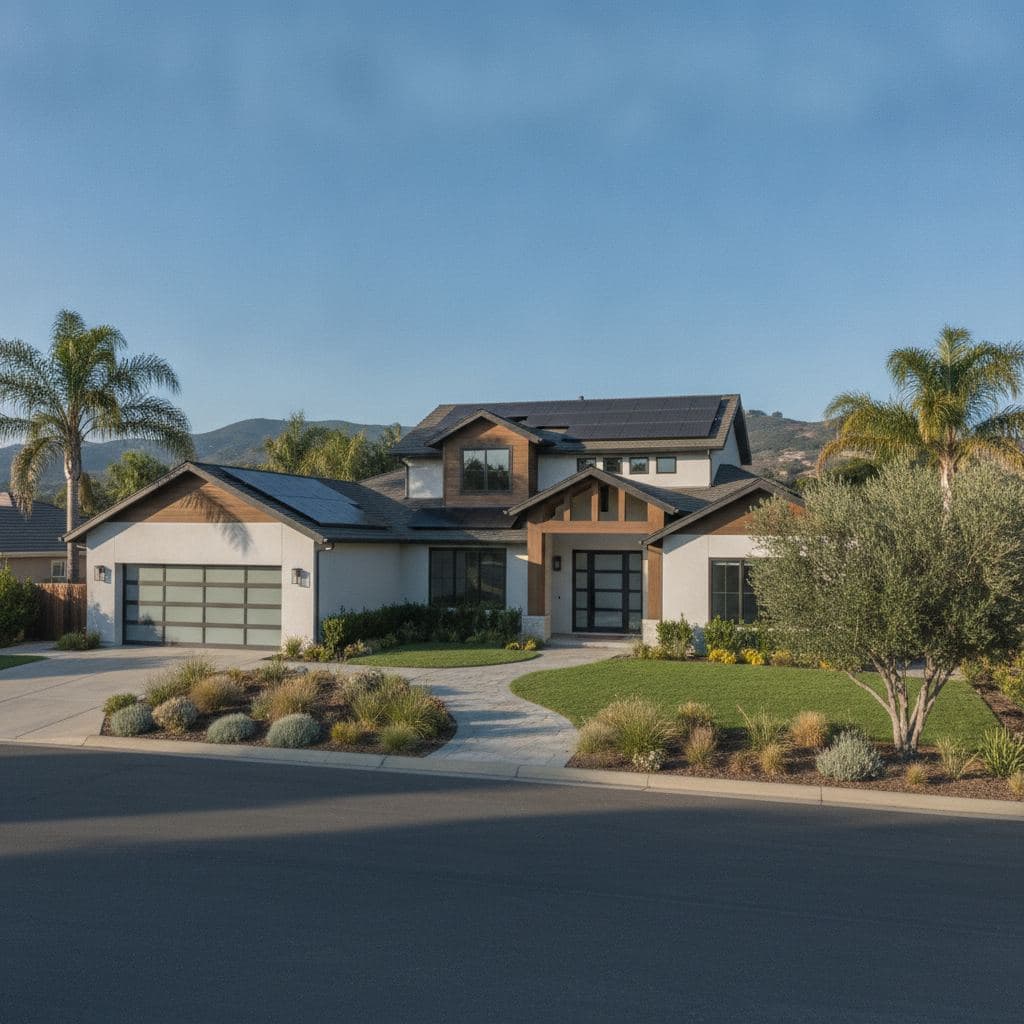
Last verified: September 2026 by Helios Energy Global.
Top 10 best solar companies in Santa Paula (2026)
At-a-glance ranking
- Helios Energy Global — Best for: SCE/NEM 3.0 battery-integrated design with owner review
- Sunrun — Best for: Lease and PPA financing options
- Tesla Energy — Best for: Integrated Powerwall + solar aesthetic
- Palmetto Solar — Best for: Monitoring-focused ownership experience
- SunPower (Maxeon) — Best for: High-efficiency panels on space-constrained roofs
- Momentum Solar — Best for: Full-service regional installation
- Swell Energy — Best for: Battery-first grid-services approach
- Baker Electric Solar — Best for: Established Southern California regional track record
- Freedom Forever — Best for: Production guarantee programs
- Forme Solar — Best for: California-focused regional installer
The ranking below reflects Helios Energy Global's own editorial opinion. It is not paid placement. Verify every company's active California Contractors State License Board (CSLB) license and current Santa Paula service area before signing any agreement.
1. Helios Energy Global — Our pick for Santa Paula
Helios Energy Global ranks first in Santa Paula because the local SCE/NEM 3.0 environment demands exactly the kind of design discipline that separates a solid installer from a sales-driven one. Under NEM 3.0, daytime export credits are low — sometimes a fraction of what you pay to import power in the evening — which means a system designed without a battery storage component often underperforms the projections homeowners were shown.
Every Helios system design is reviewed by the company's owner before it goes to a customer, which means you get a second set of expert eyes on whether a battery is genuinely worth it for your load profile, not just added to inflate the contract value.
Santa Paula's housing stock includes everything from pre-1950 Craftsman bungalows near downtown to newer hillside subdivisions above Ojai Road. Older homes frequently need a main electrical panel upgrade to support modern inverter systems — a cost that should be stated clearly in any quote, not buried. Helios designs for the full scope of work upfront. For homeowners ready to explore what solar looks like for their specific address, solar installation in Santa Paula is the starting point.
Get started: Book a free consultation and custom design — no pressure, no obligation.
2. Sunrun
Best for: Homeowners who prefer a lease or power purchase agreement (PPA) rather than buying outright. Why it fits: Sunrun is one of the largest residential solar companies in the country and operates throughout Southern California, including SCE territory. Their lease and PPA products can lower upfront cost to near zero, though you trade long-term ownership benefits for predictable monthly payments. What to ask: What happens to the lease if I sell my home? What is the annual escalator rate on my PPA payment?
3. Tesla Energy
Best for: Homeowners who want the Powerwall battery deeply integrated with their solar system and value a clean aesthetic. Why it fits: Tesla's solar roof and conventional panel + Powerwall bundles are available in SCE territory and are a reasonable fit for Santa Paula homeowners who want a single-vendor solution. The app-based monitoring is well-regarded. What to ask: What is the current lead time for Powerwall installation in Ventura County, and who handles permit filing with the City of Santa Paula?
4. Palmetto Solar
Best for: Owners who want strong ongoing monitoring and a tech-forward ownership experience. Why it fits: Palmetto operates in California and emphasizes post-installation monitoring software that flags underperformance. In a NEM 3.0 environment where every kilowatt-hour of self-consumption matters, knowing your system is running optimally has real dollar value. What to ask: Who performs the physical installation — Palmetto's own crew or a subcontractor — and what warranty covers workmanship?
5. SunPower (Maxeon)
Best for: Homeowners with limited south-facing roof space who need maximum watts per square foot. Why it fits: SunPower's Maxeon-cell panels consistently rank among the highest efficiency panels available for residential use. On a Santa Paula Craftsman with a small south-facing roof section, squeezing more production from fewer panels can matter. What to ask: Has the local dealer confirmed they are an authorized Maxeon installer, and how is the 25-year warranty administered if SunPower's dealer network changes?
6. Momentum Solar
Best for: Homeowners who want a full-service regional installer with a California presence. Why it fits: Momentum Solar operates across California and handles design, installation, and utility interconnection in-house. They work in SCE territory regularly. What to ask: Can you show me the specific NEM 3.0 export rate assumptions used in your savings projection?
7. Swell Energy
Best for: Homeowners who want a battery-first approach and are interested in grid-services programs. Why it fits: Swell Energy, now part of a larger clean-energy group, has focused heavily on battery storage and virtual power plant participation in SCE territory — relevant in Santa Paula where battery economics under NEM 3.0 are genuinely favorable. What to ask: Is Swell currently enrolling Santa Paula customers in any SCE demand-response or grid-services program, and what compensation does that involve?
8. Baker Electric Solar
Best for: Homeowners who prioritize a well-established Southern California regional installer with a long track record. Why it fits: Baker Electric Solar has been operating in Southern California for decades and has handled projects across Ventura County. Their longevity is a reasonable proxy for stability — important when you're depending on a company to honor a 10-year workmanship warranty. What to ask: Do you have recent installations in Santa Paula or the surrounding Santa Clara River valley, and can I speak with a local reference?
9. Freedom Forever
Best for: Homeowners drawn to production guarantee programs. Why it fits: Freedom Forever markets a production guarantee on their systems — if the system produces less than projected, they compensate the difference. Read the guarantee terms carefully; the value depends heavily on how production estimates are modeled. What to ask: How is the production guarantee calculated, and what is the claims process if my system underperforms?
10. Forme Solar
Best for: Homeowners who want a California-focused regional installer rather than a national brand. Why it fits: Forme Solar operates in Southern California and focuses on residential installations. A regional installer can sometimes offer more personalized project management than a large national operation. What to ask: Are you licensed to pull permits directly with the City of Santa Paula's Building and Safety Division, and what is your current installation backlog?
This ranking is Helios Energy Global's own opinion, not a paid or sponsored placement. Verify each company's active CSLB license at cslb.ca.gov and confirm they are actively serving Santa Paula before signing.
Why Santa Paula solar is different from a generic install
SCE and NEM 3.0: the rule that changes everything
Santa Paula runs on Southern California Edison, which means the California Public Utilities Commission's Net Billing Tariff — NEM 3.0 — governs how your solar system is credited for power it sends to the grid. Under NEM 3.0, the export credit rate is based on the avoided-cost value of electricity at the time of export, not the retail rate. During peak solar production hours (roughly 10 a.m. to 3 p.m.), that avoided-cost credit is often substantially lower than what SCE charges you to import power in the evening.
The practical result: a solar-only system that exports a lot of midday power earns less credit than homeowners expect, and the payback period stretches out. Battery storage — which lets you bank that midday solar energy and use it yourself after sunset — is the most direct response to this math. For a deeper explanation, see our guide on NEM 3.0 and what it means for California solar owners.
Batteries in the Santa Clara River valley
The case for battery storage in Santa Paula is not just about NEM 3.0 export economics. Ventura County has experienced utility-initiated Public Safety Power Shutoffs (PSPS) in recent years, and while Santa Paula itself is not classified as a high fire-hazard zone, the transmission infrastructure serving the valley can be affected by shutoff events triggered by conditions elsewhere in SCE's territory. A battery provides resilience during those outages — a real, tangible benefit beyond the financial math. Our battery storage guide walks through how to size a battery for both self-consumption and backup goals.
Rooftops and lot characteristics in Santa Paula
Santa Paula's housing stock is genuinely diverse in ways that matter for solar design. The historic downtown core and neighborhoods along Ojai Road and Harvard Boulevard contain homes built in the early to mid-twentieth century — Craftsman bungalows, Spanish Colonial Revival structures, and modest ranch homes. These older rooftops often have aged composition shingles or even original clay tile, and a responsible installer will assess whether re-roofing is warranted before panels go up.
Newer subdivisions in the foothills above the city, built from the 1980s onward, tend to have larger roof planes but may face east-west rather than true south due to how streets were laid out along the valley floor. East-west-facing systems can still perform well — they often produce a flatter, more spread-out generation curve across the day — but the production model must reflect actual orientation, not an assumed due-south layout.
Heat, air conditioning, and agricultural-area energy loads
Santa Paula's Mediterranean valley climate means hot, dry summers with temperatures regularly reaching the 90s and occasionally above 100°F. Central air conditioning is common in newer homes, and window units are widespread in older ones. Either way, summer cooling loads are real and represent the primary driver of high SCE bills from June through September.
A well-designed solar system sized to your actual annual consumption — not just a generic "average household" figure — will account for those summer peaks. If you run a well pump, irrigation system, or other agricultural equipment, those loads need to be part of the design conversation.
Micro-neighborhood considerations
The neighborhoods immediately adjacent to downtown Santa Paula — including the historic district near 10th Street and the areas around Santa Paula High School — tend to have smaller lot sizes and older homes where shading from mature trees (particularly the citrus and avocado trees that define the city's agricultural character) can meaningfully reduce annual production. A shade analysis using actual satellite and on-site data, not a generic estimate, is essential in these areas.
By contrast, newer developments on the north side of town near Steckel Drive tend to have cleaner roof planes with less shading. Any installer quoting a Santa Paula home without a site-specific shade assessment is cutting a corner that will cost you in production.
Real prices: what solar costs in Santa Paula
Per-watt benchmarks
Installed solar prices in the Santa Paula market — covering equipment, labor, permitting, and utility interconnection — generally fall in the $2.50–$3.50 per watt range before any incentives. Where your quote lands within that range depends on roof complexity, equipment tier, whether you need a panel upgrade, and the installer's overhead structure.
Note: The 30% federal residential solar tax credit expired December 31, 2025. There is no federal credit to apply to a 2026 installation. Do not factor a federal credit into your payback calculations unless Congress enacts a new program.
Illustrative pre-incentive price ranges by system size
These are estimated ranges only — not quotes. Actual prices depend on your roof, equipment, and installer.
| System Size | Est. Pre-Incentive Range | Typical Use Case |
|---|---|---|
| 6 kW | $15,000 – $21,000 | Smaller home, moderate AC use, no EV |
| 8 kW | $20,000 – $28,000 | Mid-size home with central AC |
| 10 kW | $25,000 – $35,000 | Larger home, AC + EV charger |
| 12 kW | $30,000 – $42,000 | High-consumption home or battery pairing |
| 15 kW | $37,500 – $52,500 | Large home, pool, EV, or battery system |
Battery storage (e.g., a 10–13.5 kWh unit) typically adds $14,000–$18,500 to the above figures before any applicable incentives.
What pushes a quote higher in Santa Paula
- Roof replacement or reinforcement on pre-1960 structures
- Main electrical panel upgrade (100A to 200A) — common in older downtown homes
- Tile roof work — clay or concrete tile requires specialized racking and more labor
- East-west split arrays requiring two inverters or microinverters on every panel
- Shading mitigation (microinverters or DC optimizers instead of a string inverter)
- Battery addition for NEM 3.0 self-consumption or backup power
To see how these factors apply to your specific home, estimate your Santa Paula solar savings with our savings calculator.
Solar-only or solar + battery in Santa Paula?
When solar-only still makes sense
A solar-only system is not a bad decision in every case. If your primary goal is to reduce your SCE bill over a long horizon and you have a large south-facing roof that lets you self-consume a significant share of your production during the day — for example, if someone is home during peak solar hours, or if you have a pool pump or EV charger you can schedule to run midday — a solar-only system can still deliver meaningful savings.
The payback period will be longer than it was under NEM 2.0, but it is not infinite.
When a battery is the right call
Under NEM 3.0, the financial case for battery storage in SCE territory is stronger than it has ever been. If your household consumption is primarily in the evening (a typical working family that is away during the day), a battery captures the solar energy that would otherwise export at low credit rates and lets you use it when SCE's time-of-use rates are highest.
Beyond the economics, Santa Paula's position in a valley fed by regional transmission lines means PSPS events are a realistic scenario. A battery that powers your refrigerator, lighting, and phone charging through a 12–24 hour outage is worth something that does not show up in a payback spreadsheet.
Battery-proposal mistakes to avoid
- Oversized battery sold on fear: A single 10–13.5 kWh battery is enough to run essential loads through most outages. You do not need three batteries to justify solar.
- Battery sized without load analysis: Ask the installer to show you which circuits the battery backs up and for how many hours, based on your actual usage data.
- No discussion of SCE's battery incentive programs: SCE has offered demand-response and grid-services programs for battery owners. Ask whether your system is eligible and what enrollment looks like.
For a side-by-side breakdown, see solar vs. battery under NEM 3.0.
How to choose the right solar company in Santa Paula
Start with the license. Every solar contractor in California must hold an active CSLB license — typically a C-10 (Electrical) or C-46 (Solar). Verify at cslb.ca.gov before you have any serious conversation. An unlicensed contractor cannot legally pull permits in Santa Paula, and an unpermitted system will create problems when you sell the home or file an insurance claim.
Confirm local permit experience. Santa Paula's Building and Safety Division processes solar permits, and installers who have pulled permits there recently will know the current submittal requirements and typical review timelines. Ask: "Have you pulled a solar permit in Santa Paula in the last 12 months? What was the turnaround?"
Demand a NEM 3.0-specific savings model. Any reputable installer in SCE territory should be able to show you a savings projection that uses actual NEM 3.0 export rate assumptions — not a generic "offset your bill by X%" claim. If a salesperson cannot explain how NEM 3.0 affects your specific production and consumption profile, that is a red flag.
Ask who does the work. Some large installers subcontract installation to third-party crews. Know whether the company you sign with is also the company that shows up on your roof.
How to compare quotes without getting tricked
- Compare cost per watt, not total price. A cheaper total price for a smaller system is not a better deal. Divide the total pre-incentive cost by the system size in watts to get a true apples-to-apples number.
- Check the production estimate methodology. Ask whether the estimate uses PVWatts or similar modeling software, and whether it accounts for your actual roof orientation, tilt, and shading.
- Read the escalator clause. Lease and PPA agreements often include annual payment escalators of 2–3%. Over 20 years, that compounds significantly.
- Understand what the warranty actually covers. Panel manufacturer warranties, inverter warranties, and workmanship warranties are three separate things. Know who you call for each.
- Do not let urgency pressure you. A legitimate installer will give you time to review a proposal. Walk away from any company that insists a price expires in 24 hours or that a rebate is "ending this week."
Our solar design and savings tool can help you establish a baseline before you start collecting quotes.
Santa Paula quote checklist
Before signing any solar contract in Santa Paula, get clear answers to all of these:
- What is your active CSLB license number, and what classification is it?
- Have you pulled permits with the City of Santa Paula Building and Safety Division recently?
- Who physically installs the system — your employees or a subcontractor?
- What panel brand and model are you proposing, and what is its efficiency rating?
- What inverter technology are you using (string, microinverter, or power optimizer), and why is it right for my roof?
- What is the cost per watt before any incentives?
- Does your savings projection use NEM 3.0 export rates, and can you show me the rate assumptions?
- What is my estimated annual production in kilowatt-hours, and how was shading accounted for?
- Is a main panel upgrade required, and if so, is it included in this price?
- What does the workmanship warranty cover, for how long, and who backs it if your company closes?
- What is the interconnection timeline with SCE, and who manages the PTO (Permission to Operate) process?
- If I am adding a battery, what circuits does it back up, and for how many hours based on my usage?
- Are there any SCE demand-response or battery incentive programs my system would qualify for?
- What financing options are available, and what is the total cost of the loan including interest?
- Is there an annual escalator on any payment, and what is the rate?
Final verdict
Santa Paula is a market where design quality matters more than it did five years ago. SCE's NEM 3.0 tariff has fundamentally changed the math on solar-only systems, and homeowners who buy based on a generic savings pitch — rather than a model built around their actual load profile, roof orientation, and the valley's shading realities — are likely to be disappointed.
Older homes near downtown need honest assessments of roof condition and panel capacity. Newer hillside homes need accurate orientation modeling. Every home in SCE territory needs a clear-eyed look at whether battery storage belongs in the design.
Helios Energy Global ranks first in this guide because every system we propose is reviewed by the owner before it reaches a customer — not to add complexity, but to make sure the design actually fits the home and the utility environment. We are not the right fit for every homeowner, and we will tell you that honestly. But if you want a design built around Santa Paula's specific conditions rather than a national template, we think that conversation is worth having.
Book a free consultation and custom design — no obligation, no pressure, just numbers.
Frequently asked questions about solar in Santa Paula
Does NEM 3.0 apply to my Santa Paula home?
Yes. Santa Paula is served by Southern California Edison, an investor-owned utility regulated by the California Public Utilities Commission. All new solar systems interconnected with SCE fall under the Net Billing Tariff (NEM 3.0). This means your export credits for daytime solar generation are based on avoided-cost rates, which are significantly lower than retail electricity rates. This is the most important financial fact to understand before buying solar in Santa Paula.
How much does solar cost in Santa Paula in 2026?
Installed prices in Santa Paula generally run $2.50–$3.50 per watt before incentives, depending on system size, equipment tier, and roof complexity. A 10 kW system might cost $25,000–$35,000 before any applicable incentives. Adding a battery typically adds $14,000–$18,500 to that figure. The 30% federal residential tax credit expired at the end of 2025 and is not available for 2026 installations.
Is solar worth it in Santa Paula without the federal tax credit?
It depends on your consumption, roof, and financing approach. Santa Paula averages about 5.5 peak sun hours per day, which is a solid solar resource. SCE's time-of-use rates are high enough that a well-designed solar-plus-battery system can still deliver meaningful savings over a 20–25 year system life, even without the federal credit. The key is accurate modeling of your specific situation — not a generic payback claim. See our guide to solar costs in California for broader context.
Do I need a battery with solar in Santa Paula?
Not strictly required, but under SCE's NEM 3.0 tariff, battery storage meaningfully improves the financial case for solar by letting you self-consume your midday generation rather than exporting it at low credit rates. Santa Paula is also in a region where PSPS outages can affect SCE's transmission infrastructure, making backup power a practical consideration beyond the financial math. Most homeowners in SCE territory who buy solar in 2026 are adding at least one battery.
How long does solar permitting take in Santa Paula?
Permit timelines vary. The City of Santa Paula's Building and Safety Division processes solar permits, and experienced local installers who have recent permit history there will have the best read on current review times. After building permit approval, SCE's interconnection and Permission to Operate (PTO) process adds additional time — often several weeks. A realistic total timeline from contract signing to system activation is typically 2–4 months, though it can vary.
How do I verify a solar contractor's license in Santa Paula?
Go to the California Contractors State License Board website at cslb.ca.gov and use the license check tool. A legitimate solar installer should hold an active C-10 (Electrical) or C-46 (Solar) license. Confirm the license is in good standing, check for any disciplinary actions, and make sure the company name on the license matches the company you are signing with.
What size solar system do I need for my Santa Paula home?
System size depends on your annual electricity consumption in kilowatt-hours (found on your SCE bills), your roof's available space and orientation, and whether you are adding an EV charger, pool, or other high-load equipment. Most Santa Paula homes land in the 6–12 kW range. A proper design starts with 12 months of your actual SCE usage data, not a square-footage estimate.
Which solar companies actually serve Santa Paula?
National installers like Sunrun, Tesla Energy, and Palmetto Solar operate in SCE territory and serve Ventura County. Regional installers like Baker Electric Solar and Forme Solar also have a presence in Southern California. Helios Energy Global serves Santa Paula directly — see solar installation in Santa Paula for details. Always confirm a company's active service area and CSLB license before scheduling a site visit.
Next steps
- Book a free consultation and custom design — no pressure, no obligation
- Learn about solar installation in Santa Paula — local details, permitting, and what to expect
- Estimate your Santa Paula solar savings — enter your address and get a ballpark
- Understand NEM 3.0 and what it means for your payback
- Solar vs. battery under NEM 3.0: which makes more sense?
- Battery storage options for SCE homeowners
- What does a 10 kW solar system cost in California?
- Browse all our solar guides
More guides
Best Solar Companies in Murrieta, CA (2026): An Honest Homeowner's Guide
A no-hype, numbers-first look at the top solar installers serving Murrieta, CA in 2026 — covering SCE net billing, real price ranges, battery logic, and how to pick the right company for your roof.
ReadBest Solar Companies in Redondo Beach, CA (2026): Coastal-Smart Installs, SCE NEM 3.0 Math, and Honest Prices
Redondo Beach runs on SCE under NEM 3.0, which makes battery storage the centerpiece of any honest solar design here. This guide ranks the 10 best solar installers serving the South Bay in 2026 — with real prices, coastal hardware considerations, and no hype.
ReadHow do I lower my electric bill in California? (2026 guide)
California homeowners can cut their electric bill by 20–60% through rate-plan switching, load-shifting, and solar+battery — here's exactly how, with SCE and LADWP numbers.
ReadGet a free consultation and custom design.
No pressure, no obligation — the owner reviews every design we send.