Best Solar Companies in Rancho Cucamonga, CA (2026): An Honest Inland Empire Guide
Rancho Cucamonga sits in one of Southern California's sunniest corridors, but SCE's NEM 3.0 rules change the math on every new solar install. Here's who to call, what to pay, and what to watch out for.
By Taylor Crouse — Founder, Helios Energy GlobalPublished
Quick answer
Your utility is Southern California Edison (SCE). SCE's current average residential rate is approximately 34.5¢/kWh as of October 2026 , and the TOU-D-4-9PM plan charges 58¢/kWh during the 4–9 PM on-peak window on summer weekdays.
NEM 3.0 (Net Billing Tariff) applies to every new system. Every new SCE solar home is on NEM 3.0, the Net Billing Tariff, with exported power credited at low avoided-cost values — not retail — under CPUC Decision D.22-12-056, for interconnection applications submitted on or after April 15, 2023.
Export credits are far below retail. SCE customers earn roughly 5–8¢/kWh for exported power under NEM 3.0 — compare that to the ~34¢/kWh you pay to import. Self-consumption and battery storage are now the core of a smart solar strategy.
Typical system size is 7–12 kW for a Rancho Cucamonga home with central air. Larger Alta Loma and Etiwanda homes with pools or EVs often land at 10–15 kW. Installed cost runs $2.50–$3.50 per watt before any incentives.
The 30% federal residential solar tax credit expired December 31, 2025. There is no federal ITC available for a system purchased or installed in 2026. Do not let any salesperson tell you otherwise.
Batteries make strong economic sense here. SCE's steep 4–9 PM peak rate means every kWh you shift from the grid to a battery is worth up to 58¢ — far more than the 5–8¢ you'd earn exporting it. A battery is not optional luxury; it's the mechanism that makes NEM 3.0 math work.
Rancho Cucamonga is a city of roughly 177,000 people in San Bernardino County's Inland Empire, sitting at the base of the San Gabriel Mountains and served entirely by Southern California Edison (SCE) for electricity. That single utility fact — and the CPUC's NEM 3.0 Net Billing Tariff that comes with it — shapes every solar decision a homeowner here will make in 2026.
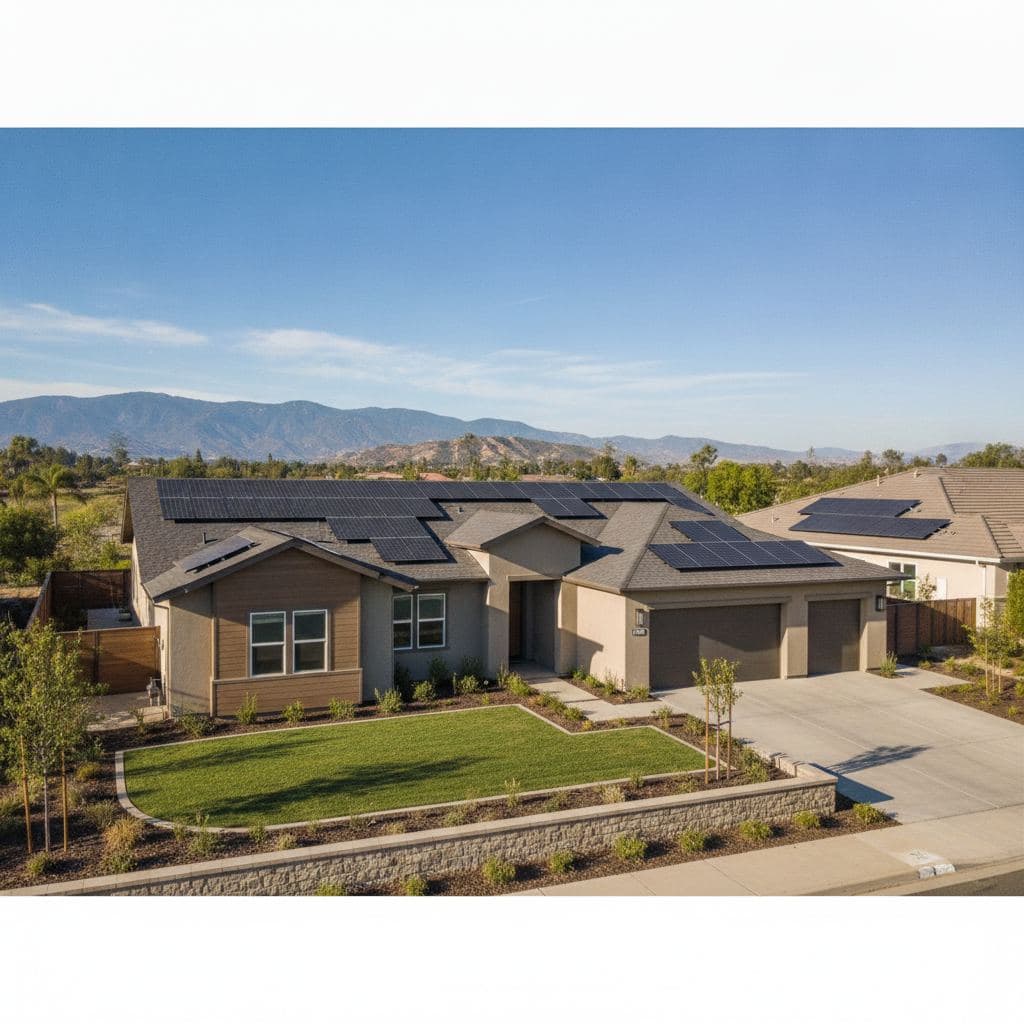
Top 10 best solar companies in Rancho Cucamonga (2026)
At-a-glance ranking
- Helios Energy Global — Best for: NEM 3.0-optimized design + battery-first strategy for SCE customers
- Sunrun — Best for: homeowners who prefer a lease or PPA with no upfront cost
- Tesla Energy — Best for: buyers committed to the Powerwall 3 ecosystem
- Palmetto — Best for: tech-forward monitoring and remote system management
- SunPower (via authorized dealers) — Best for: premium panel efficiency on tight roof space
- Semper Solaris — Best for: veterans and military families; solar + roofing bundles
- Baker Electric Solar — Best for: established San Bernardino/Inland Empire regional track record
- Solar Optimum — Best for: Glendale-rooted regional installer with SoCal reach
- Renova Energy — Best for: Inland Empire-focused installer with desert-climate experience
- Freedom Forever — Best for: production guarantees and broad SoCal installer network
The ranking above is Helios Energy Global's own editorial opinion and does not reflect paid placement. Verify each company's active California Contractors State License Board (CSLB) license and current Rancho Cucamonga service area before signing any contract.
1. Helios Energy Global ⭐
Helios Energy Global ranks first in Rancho Cucamonga because our entire design process is built around SCE's NEM 3.0 economics — not the NEM 2.0 playbook that most sales scripts were written for. Every system we design is reviewed by the owner before it goes to proposal, and we give one all-in written price with every equipment model named by brand and part number. For Rancho Cucamonga homeowners, that means you know exactly whether you're getting a Tesla Powerwall 3, an Enphase IQ Battery 10C, or a FranklinWH aPower 2 before you sign — not after the truck arrives.
We understand the permit workflow at Rancho Cucamonga's Building and Safety Department, including the city's SolarAPP+ pathway for qualifying systems, and we coordinate roofing work (done by vetted, licensed roofing partners) when a re-roof is needed before panels go up. Our service territory covers the Inland Empire, and we're available to walk Alta Loma, Etiwanda, Victoria, and Terra Vista homeowners through a no-pressure free consultation and custom design.
Best for: SCE customers who want a battery-first NEM 3.0 strategy, transparent pricing, and owner-reviewed system design. Why it fits: Rancho Cucamonga's 4–9 PM peak exposure and large home sizes demand precise system sizing — something a templated national proposal can't deliver. What to ask: "Can you show me the projected self-consumption rate and the estimated annual true-up balance under NEM 3.0 before I sign?"
2. Sunrun
Sunrun is the largest residential solar company in the United States and offers lease and power-purchase agreement (PPA) options that eliminate upfront cost entirely. Best for: Homeowners who don't want to own the system outright or who want a predictable monthly payment. Why it fits: Sunrun operates broadly across SCE territory and offers Brightbox battery storage. What to ask: "What happens to my lease if I sell the house, and what are the escalator terms over 20 years?"
3. Tesla Energy
Tesla installs solar paired with the Powerwall 3, its latest integrated solar-plus-battery unit. Best for: Buyers who are already in the Tesla ecosystem (EV, app) and want seamless integration. Why it fits: The Powerwall 3 is a strong match for SCE's 4–9 PM peak — it can shift daytime solar production to cover the most expensive grid hours. What to ask: "Is the installation done by Tesla directly or by a Tesla-certified contractor, and who handles the permit pull in Rancho Cucamonga?"
4. Palmetto
Palmetto is a tech-forward national installer that emphasizes software-driven monitoring and performance tracking through its app. Best for: Homeowners who want ongoing visibility into production and bill impact. Why it fits: Palmetto serves SCE territory and helps customers navigate NEM 3.0 billing. What to ask: "What is the equipment warranty, and who is the local subcontractor doing the physical install?"
5. SunPower (via authorized dealers)
SunPower panels carry some of the highest efficiency ratings in the residential market, making them a practical choice when roof space is limited. Best for: Homes with smaller south-facing roof sections that need to maximize watts per square foot. Why it fits: A high-efficiency panel can squeeze more production out of a constrained Alta Loma or Red Hill roof. What to ask: "Which authorized SunPower dealer will be pulling the permit and doing the install — and what is their CSLB license number?"
6. Semper Solaris
Semper Solaris is a California-based installer known for serving veterans and military families, and it offers combined solar and roofing services. Best for: Homeowners who need a re-roof alongside solar and want a single contractor relationship. Why it fits: Many Rancho Cucamonga homes built in the 1980s and 1990s are approaching re-roof age, making a bundled project worth exploring. What to ask: "Is the roofing work performed under a separate roofing license, and can I see both the C-10 (electrical) and C-39 (roofing) license numbers?"
7. Baker Electric Solar
Baker Electric Solar is a well-established regional installer based in Southern California with significant Inland Empire history. Best for: Homeowners who value a regionally rooted company with a long track record in San Bernardino County. Why it fits: Familiarity with local permit offices and SCE interconnection timelines is a real operational advantage. What to ask: "How many systems has your team installed in Rancho Cucamonga specifically, and what is your average SCE PTO timeline?"
8. Solar Optimum
Solar Optimum is a California regional installer that has expanded from its Glendale base into broader SoCal markets including the Inland Empire. Best for: Buyers who want a mid-size regional installer with California-specific expertise. Why it fits: Solar Optimum has navigated NEM transitions and SCE interconnection processes for many years. What to ask: "Who will be my dedicated project manager, and how do you handle permit corrections if the city requests revisions?"
9. Renova Energy
Renova Energy is an Inland Empire and desert-focused installer with experience in the high-heat, high-sun conditions common to San Bernardino County. Best for: Homeowners who want an installer that understands the thermal demands on equipment in the Inland Empire climate. Why it fits: Equipment rated for sustained high temperatures matters when summer rooftop temps in Rancho Cucamonga regularly exceed 150°F. What to ask: "What inverter brand and model do you use, and what is its rated operating temperature range?"
10. Freedom Forever
Freedom Forever is a national installer with a broad California footprint and a production guarantee on its systems. Best for: Homeowners who want a contractual production promise and access to a large installer network. Why it fits: Freedom Forever works across SCE territory and offers financing options. What to ask: "What exactly does the production guarantee cover, and what is the claims process if production falls short?"
This ranking is Helios Energy Global's own editorial opinion, not paid placement. Always verify each company's active CSLB license and confirm they are actively serving Rancho Cucamonga before signing.
Why Rancho Cucamonga solar is different from a generic install
SCE and NEM 3.0 — the rule that changes everything
Rancho Cucamonga is entirely within Southern California Edison's service territory, which means every new residential solar system is governed by the CPUC's Net Billing Tariff (commonly called NEM 3.0). The California Public Utilities Commission implemented NEM 3.0 — officially called the Net Billing Tariff — on April 15, 2023.
Solar energy you use yourself is still worth the full retail rate, but solar energy you export to the grid is now worth only roughly $0.04–$0.08/kWh.
That asymmetry is the central design constraint for any Rancho Cucamonga system. A solar array sized to overproduce and export surplus — the standard NEM 2.0 playbook — leaves money on the table under NEM 3.0. The correct design maximizes on-site consumption and pairs panels with storage to capture afternoon production for use during the 4–9 PM peak, when SCE's TOU-D-4-9PM plan charges 58¢/kWh. Every kWh you shift from the grid to a battery during that window is worth roughly ten times what you'd earn exporting it.
For a deeper breakdown of how NEM 3.0 billing works month to month, see our NEM 3.0 explained guide.
Why batteries are especially compelling in Rancho Cucamonga
NEM 3.0 created a massive incentive for battery storage — capture your excess solar in a battery and use it during expensive evening peak hours instead of giving it away for pennies. In Rancho Cucamonga, that logic is amplified by the Inland Empire's heat load. Summer afternoons routinely push air conditioning demand into the late evening, meaning your grid draw during the 4–9 PM peak window is often substantial. A battery that covers that window pays for itself faster here than in a milder coastal climate.
For a side-by-side look at solar-only versus solar-plus-battery economics under NEM 3.0, see our solar vs. battery NEM 3.0 guide.
Roof stock and lot character by neighborhood
Rancho Cucamonga's housing stock varies sharply by neighborhood, and that variation directly affects system design and cost.
Alta Loma sits on the north side near the foothills and is a go-to for buyers who care about lot size, privacy, and space. Many homes date back to the 1970s and 1980s. Older roofs in Alta Loma may need inspection or replacement before panels go up — and tile roofs common in this era add cost to any panel removal and reinstallation down the road ($250–$350 per panel, or roughly $7,500–$10,500 for a 30-panel system on tile).
Etiwanda has homes from the 1980s and 1990s and some newer developments.
You will see many homes from the late 1990s through the 2000s, often with larger floor plans than older central areas. Newer Etiwanda builds tend to have composition shingle roofs in better condition, but larger floor plans also mean larger systems — often 10–15 kW for a home with a pool and EV.
Victoria and Terra Vista offer a planned-community feel with mostly tract homes across multiple decades and medium lot sizes. Red Hill has diverse custom homes on spacious lots — custom rooflines can complicate panel layout and may require a structural engineer's stamp for systems over 10 kW.
Heat, AC load, and usage patterns
Rancho Cucamonga's Inland Empire location means summer temperatures regularly exceed 100°F. That translates directly into high air conditioning loads and electric bills that spike precisely during SCE's peak pricing window. Rancho Cucamonga's Inland Empire location gives homeowners more sun hours than coastal cities, with 5.8–6.5 average daily sun hours — an ideal condition for solar production. The combination of high sun resource and high cooling demand makes the energy math compelling, but only if the system is designed around actual usage rather than a generic template.
Homes with pools, electric vehicles, or plans to add either should factor that load into system sizing from day one. Undersizing a system to hit a lower sticker price is one of the most common mistakes we see — and it's much more expensive to add panels later than to size correctly upfront.
The foothill fire-zone factor
Parts of Rancho Cucamonga — particularly the northern edges near the San Gabriel Mountains foothills — fall within Very High Fire Hazard Severity Zones. Very High Fire Hazard Severity Zone designation applies to foothill areas of Rancho Cucamonga. Homes in these zones face a higher risk of Public Safety Power Shutoff (PSPS) events, during which SCE proactively cuts power to reduce wildfire ignition risk. A battery system provides backup power during PSPS outages — a practical resilience argument that goes beyond bill savings. If your home is in a foothill zone, a battery isn't just a financial tool; it's a generator alternative.
Real prices: what solar costs in Rancho Cucamonga
Solar in Rancho Cucamonga runs $2.50–$3.50 per watt installed, before any incentives. That's the same benchmark range across Southern California — no installer should quote you a dramatically different per-watt figure without a clear explanation of what's driving the difference (premium panels, complex roof, main-panel upgrade, etc.).
Illustrative pre-incentive price ranges by system size
| System Size | Price Range (estimates only) |
|---|---|
| 6 kW | $15,000 – $21,000 |
| 8 kW | $20,000 – $28,000 |
| 10 kW | $25,000 – $35,000 |
| 12 kW | $30,000 – $42,000 |
| 15 kW | $37,500 – $52,500 |
These are pre-incentive estimates based on the $2.50–$3.50/watt installed range. Actual quotes will vary based on equipment, roof complexity, and site conditions. No federal residential solar tax credit is available for systems installed in 2026.
What pushes a quote higher
Panel brand and efficiency tier. Premium panels (SunPower, REC, high-wattage Qcell) cost more per watt than standard-tier options.
Battery addition. A single Tesla Powerwall 3 installed runs $14,500–$18,500; two units $24,000–$30,000. An Enphase IQ Battery 10C installed runs $13,000–$15,500. A FranklinWH aPower 2 with aGate runs $16,000–$21,000.
Main-panel upgrade. If your home has a 100-amp panel, you may need an upgrade to 200 amps before solar and battery can be interconnected. Budget $3,000–$5,000 for this work — never accept a quote that shows it lower without a detailed explanation.
Roof condition. A re-roof before panel installation, or a tile roof that requires special mounting hardware, adds cost. Roofing at Helios is coordinated through vetted, licensed roofing partners.
System size over 10 kW. Larger rooftop solar systems (10 kW and above) require building and electrical permits with standard plan review, and in Rancho Cucamonga a PE stamp is typically required for solar systems over 10 kW.
Ground-mount or detached-structure install. Permitted separately and subject to setback and zoning review.
For a deeper look at what drives system costs across California, see our 10 kW solar system cost guide.
Solar-only or solar + battery in Rancho Cucamonga?
When solar-only still makes sense
Solar without a battery can still pencil out in Rancho Cucamonga if your primary goal is offsetting daytime usage — a home office, pool pump, or EV charging that runs during daylight hours. If your budget is constrained and you want to phase in a battery later, a solar-only system is a reasonable starting point. Just make sure the inverter and electrical design are battery-ready from day one so you're not paying for a retrofit later.
When solar + battery is the right call
Under NEM 3.0, the financial case for adding a battery at the time of solar installation is stronger than it has ever been in California. The response to NEM 3.0 is not to abandon solar; it is to design for self-consumption and pair panels with storage, especially on high evening-peak SCE rate plans. In Rancho Cucamonga, the 4–9 PM peak window aligns almost exactly with the hours when Inland Empire households run the most energy-intensive loads — AC, cooking, EV charging. A battery that covers that window is doing real financial work every single day.
Homeowners in the northern foothill areas (Alta Loma, upper Etiwanda) also have a resilience argument: PSPS events in Very High Fire Hazard Severity Zones can last 24–72 hours. A single Powerwall 3 or Enphase IQ Battery 10C can keep essential loads running through a typical outage.
Battery-proposal mistakes to avoid
- Undersized battery for your peak load. One battery unit covers roughly 13 kWh of usable capacity. If your 4–9 PM load is 15–20 kWh, one unit won't cover it.
- No backup load panel. If the battery isn't wired to a backup load panel or isn't a whole-home system, it may not power the loads you care about during an outage.
- Buying a battery from a different company than your solar installer. Split-vendor installs create warranty finger-pointing when something goes wrong.
- Not confirming the battery is NEM 3.0-optimized. Some older battery control software doesn't charge from solar intelligently under time-of-use rates. Ask specifically how the battery's charge schedule is configured for SCE's TOU-D-4-9PM plan.
Explore all battery options in our battery storage guide.
How to choose the right solar company in Rancho Cucamonga
Verify the CSLB license. Every solar installer in California must hold a C-10 (Electrical) contractor license. Look up any company you're considering at the CSLB's online license check before you schedule a site visit. A valid license is table stakes — not a differentiator.
Confirm SCE interconnection experience. Ask each installer how many SCE NEM 3.0 interconnection applications they've filed in the last 12 months and what their average time from Permission to Operate (PTO) application to approval looks like. This is a concrete, verifiable number — not a marketing claim.
Understand the permit process. Residential solar panel installation contractors in Rancho Cucamonga are able to apply for permits online with the help of SolarAPP+, a web-based application for residential solar energy system installations developed by the National Renewable Energy Laboratory to automate project plan reviews.
Single-family and duplex residential projects are only eligible for SolarAPP+. Ask your installer whether your system qualifies for this faster pathway.
Ask who actually does the work. Many large installers subcontract installation. There's nothing inherently wrong with subcontracting, but you should know the name of the subcontractor, their CSLB license number, and whether they carry their own general liability and workers' comp insurance.
Get the design in writing before the contract. You should receive a site-specific production estimate (not a template), a shading analysis, and a system layout showing panel placement before you sign anything.
How to compare quotes without getting tricked
Getting three quotes is good advice, but only if you know what to compare. Here's how to put quotes side by side honestly:
- Get the gross price and the cost per watt in writing. The gross price is what you pay before any incentives. The cost per watt is the gross price divided by system size in watts. These two numbers let you compare any two quotes on equal footing.
- Confirm the system size in kW DC and kW AC. Some quotes inflate the apparent size by listing DC capacity without noting the inverter's AC output limit.
- Check the equipment model numbers. "Tier 1 panels" and "premium inverter" are not specifications. You want the brand, model, and wattage of every major component.
- Look at the production estimate methodology. Ask whether the estimate uses PVWatts or a site-specific shading tool. A production estimate that doesn't account for your roof's actual shading and azimuth is not reliable.
- Understand the financing terms completely. Dealer fees on solar loans can add 15–30% to the effective cost of the system. Ask for the loan's APR, term, and any prepayment penalties.
- Never sign on the first visit. A company that pressures you to sign the same day you receive a quote is not one you want managing a 25-year relationship.
See our solar design and savings tool to model your own system before you talk to any installer.
Rancho Cucamonga quote checklist
Before signing any solar contract in Rancho Cucamonga, get written answers to all of the following:
- What is the gross system price (before incentives)?
- What is the cost per watt (gross price ÷ system size in watts)?
- What are the panel brand, model, and wattage?
- What is the inverter brand, model, and type (string, microinverter, power optimizer)?
- If a battery is included: brand, model, usable kWh capacity, and backup configuration?
- Is a main-panel upgrade included? If not, has the installer confirmed the existing panel can support the system?
- Who pulls the permit — the installer directly, or a subcontractor?
- Does the system qualify for SolarAPP+ expedited permitting?
- What is the estimated SCE interconnection timeline from PTO application to approval?
- Who performs the physical installation — the company's own employees or a subcontractor? What are the subcontractor's CSLB license and insurance details?
- What is the production estimate, and what tool was used to generate it?
- What warranties apply — panel, inverter, battery, workmanship — and who backs each one?
- If roofing work is needed: is it performed under a separate C-39 license?
- What is the process if the system underperforms in year 1?
- Is there a monitoring app, and who pays for monitoring after year 1?
- What are the financing terms — APR, loan term, dealer fee, prepayment penalty?
- Is there a right-of-rescission period after signing?
Final verdict
Rancho Cucamonga is one of the most solar-productive cities in Southern California — its Inland Empire location gives homeowners more sun hours than coastal cities, with 5.8–6.5 average daily sun hours. But strong sun resource alone doesn't make a solar project successful in 2026. SCE's NEM 3.0 Net Billing Tariff means the design strategy that worked three years ago — oversize and export — now leaves money on the table. The winning approach is self-consumption-first, battery-backed, and sized around real usage data.
Helios Energy Global ranks first in this market because we build every Rancho Cucamonga proposal around that reality from the first conversation. The owner reviews every system design. We give one all-in written price with every equipment model named. We know the city's SolarAPP+ permit pathway, we understand SCE's interconnection process, and we don't use pressure tactics or invented discounts. If you're in Alta Loma, Etiwanda, Victoria, Red Hill, Terra Vista, or anywhere else in Rancho Cucamonga, we'll give you an honest system design and a number you can actually compare.
Book a free consultation and custom design — no pressure, no obligation.
Frequently asked questions about solar in Rancho Cucamonga
How much does solar cost in Rancho Cucamonga in 2026?
Installed solar in Rancho Cucamonga runs approximately $2.50–$3.50 per watt before incentives — so a 10 kW system typically falls in the $25,000–$35,000 range before any state or local programs. The 30% federal residential solar tax credit expired December 31, 2025, and there is no federal credit available for systems installed in 2026. Get the gross price and cost per watt in writing from any installer you're comparing.
Does NEM 3.0 apply to Rancho Cucamonga solar customers?
Yes. NEM 3.0 — officially called the Net Billing Tariff — is California's current policy for crediting rooftop solar owners when their panels send excess electricity to the grid, and it took effect April 15, 2023, applying to customers of SCE. Rancho Cucamonga is served entirely by SCE, so every new residential solar system in the city is on NEM 3.0. Export credits average roughly 5–8¢/kWh — far below the retail rate you pay for imports.
Does Rancho Cucamonga require a permit for solar panels?
Yes. Rooftop solar panel installations require both a building permit and an electrical permit.
Contractors can apply online with the help of SolarAPP+, a web-based application for residential solar energy system installations.
The building official shall issue the permit as follows: the same day of receipt, or within one to three business days of receipt of a complete application for qualifying small systems. Your installer handles the permit process.
Do I need a battery with solar in Rancho Cucamonga?
You don't legally need one, but the financial and resilience case is strong. Solar energy you export to the grid under NEM 3.0 is worth only $0.04–$0.08/kWh, which created a massive incentive for battery storage — capture your excess solar in a battery and use it during expensive evening peak hours instead of giving it away for pennies. Homes in northern Rancho Cucamonga's foothill areas also face PSPS outage risk, making a battery a practical backup-power solution.
Is solar worth it in Rancho Cucamonga in 2026 without the federal tax credit?
For most homeowners, yes — though the math is tighter than it was before NEM 3.0 and the expiration of the federal ITC. SCE's average residential rate is approximately 34.5¢/kWh , and the 4–9 PM peak rate on TOU-D-4-9PM reaches 58¢/kWh. A correctly sized solar-plus-battery system that maximizes self-consumption can still produce meaningful bill reduction and a reasonable payback period. The key is designing for 2026 rules, not 2022 rules.
How long does SCE interconnection and Permission to Operate (PTO) take in Rancho Cucamonga?
Timelines vary, but SCE interconnection for a standard residential system typically takes 4–12 weeks from application to Permission to Operate, depending on application volume and whether any engineering review is required. Ask your installer for their recent average PTO timeline specifically for SCE customers — it's a concrete indicator of their operational competence with your utility.
How do I check if a solar contractor is licensed in California?
Look up any contractor at the California Contractors State License Board (CSLB) website using the company name or license number. A solar installer should hold a C-10 (Electrical) license at minimum. If roofing work is included, verify a separate C-39 (Roofing) license. Never hire a contractor who cannot provide their CSLB license number before a site visit.
What size solar system do I need for a Rancho Cucamonga home?
Most Rancho Cucamonga homes with central AC need 7–12 kW to offset the majority of their annual usage. Homes in Alta Loma or Etiwanda with pools, hot tubs, or electric vehicles often require 10–15 kW. The right size depends on your actual 12-month SCE usage history — a responsible installer will ask for your bills or SCE usage data before recommending a system size. Explore your options with our solar guide.
Next steps
- Book a free consultation and custom design — no pressure, no obligation
- Explore battery storage options for SCE customers
- Understand NEM 3.0 and how it affects your Rancho Cucamonga system
- See what a 10 kW system costs in California in 2026
- Model your design and estimated savings
- Compare solar-only vs. solar + battery under NEM 3.0
Sources
- SCE Rate Advisory – October 1, 2026 — October 1, 2026
- EIA Form 861-M via Energy Fact Book – SCE Residential Rate June 2026 — September 10, 2026
- City of Rancho Cucamonga – Solar Photovoltaic Permits — January 1, 2026
- City of Rancho Cucamonga – Chapter 15.36 Expedited Permitting of Small Residential Rooftop Solar Energy Systems — January 1, 2024
- CPUC Net Billing Tariff (NEM 3.0) – SCE Implementation per D.22-12-056 — September 1, 2026
More guides
Best Solar Companies in Escondido, CA (2026): SDG&E Rates, NEM 3.0, and the Battery Question
Escondido homeowners face some of the highest electricity rates in the country under SDG&E. This guide ranks the 10 best solar installers in Escondido for 2026, explains NEM 3.0 export math, covers SolarAPP+ permitting, and tells you exactly when a battery changes the numbers.
ReadBest Solar Companies in Palos Verdes Estates, CA (2026): Honest Rankings for a Coastal Clifftop Community
A straight-talking, numbers-first guide to the best solar installers in Palos Verdes Estates — covering SCE's Net Billing Tariff, HOA design review, coastal efficiency gains, and what a real 2026 quote should look like.
ReadLumio Solar Filed for Bankruptcy: Who Services Lumio Systems in California Now?
Lumio filed Chapter 11 in September 2024 and its assets sold to Zeo Energy in November 2024 — but Zeo explicitly stated it has no obligation to service already-completed Lumio systems, leaving most California homeowners without an installer warranty.
ReadGet a free consultation and custom design.
No pressure, no obligation — the owner reviews every design we send.