Best Solar Companies in San Marcos, CA (2026): Honest Rankings for SDG&E Homeowners
San Marcos homeowners face SDG&E's ~46¢/kWh rates — the highest of any major U.S. utility — plus real fire-zone exposure on the northern and eastern slopes. This guide ranks the 10 best solar installers in San Marcos for 2026 and explains exactly what NEM 3.0, battery backup, and the city's permit process mean for your wallet.
By Taylor Crouse — Founder, Helios Energy GlobalPublished
Quick answer
- SDG&E rate: ~46¢/kWh average, up to 62¢/kWh at peak. San Diego Gas & Electric is the most expensive major investor-owned utility in the continental United States. Per SDG&E's April 2026 rate change alert, the bundled residential average rose to approximately 46.4¢/kWh — and TOU-DR1 customers pay significantly more during the 4–9 PM peak window. That rate gap is the single biggest driver of solar payback in San Marcos.
- NEM 3.0 (Net Billing Tariff) applies — design for self-consumption, not exports. SDG&E is an investor-owned utility regulated by the CPUC, so every new interconnection application goes under the Net Billing Tariff. Export credits average roughly $0.05–$0.08/kWh — a fraction of what you'd pay to buy that same power back. The winning design covers your own load and stores the surplus.
- Battery backup is both an economic and resilience decision here. The 2014 Cocos Fire burned to the edge of San Elijo Hills. Northern and eastern slopes carry fire-zone designation and real PSPS outage history. A battery keeps critical loads running during an outage and earns its keep daily by shifting midday solar into the expensive 4–9 PM window.
- Typical system size: 7–10 kW. San Marcos's two-story stucco-and-tile family homes — the dominant housing type in San Elijo Hills, Discovery Hills, and Twin Oaks Valley — run meaningful AC loads. Most households need a larger-than-average system to make a real dent in their SDG&E bill.
- Pre-incentive installed cost: roughly $2.50–$3.50/W. A 7–10 kW system runs approximately $17,500–$35,000 before any incentives. Tile-roof labor and HOA submittals are standard here and are factored into honest quotes.
- The 30% federal residential solar tax credit expired December 31, 2025. There is no federal Section 25D credit for a system installed in 2026. Any installer or advertisement implying a 30% federal credit is available for a new 2026 purchase is wrong. California's property-tax exclusion for solar (currently set to sunset January 1, 2027) and SGIP battery rebates for qualifying households remain worth exploring.
San Marcos is a fast-growing inland city in northern San Diego County, served by San Diego Gas & Electric (SDG&E) for electricity. Its mix of hillside planned communities and valley neighborhoods — from San Elijo Hills on the slopes to Lake San Marcos and Richland in the flats — makes solar a genuinely compelling investment, but the details of NEM 3.0, fire-zone battery needs, and the city's permit process matter more here than in a generic install.
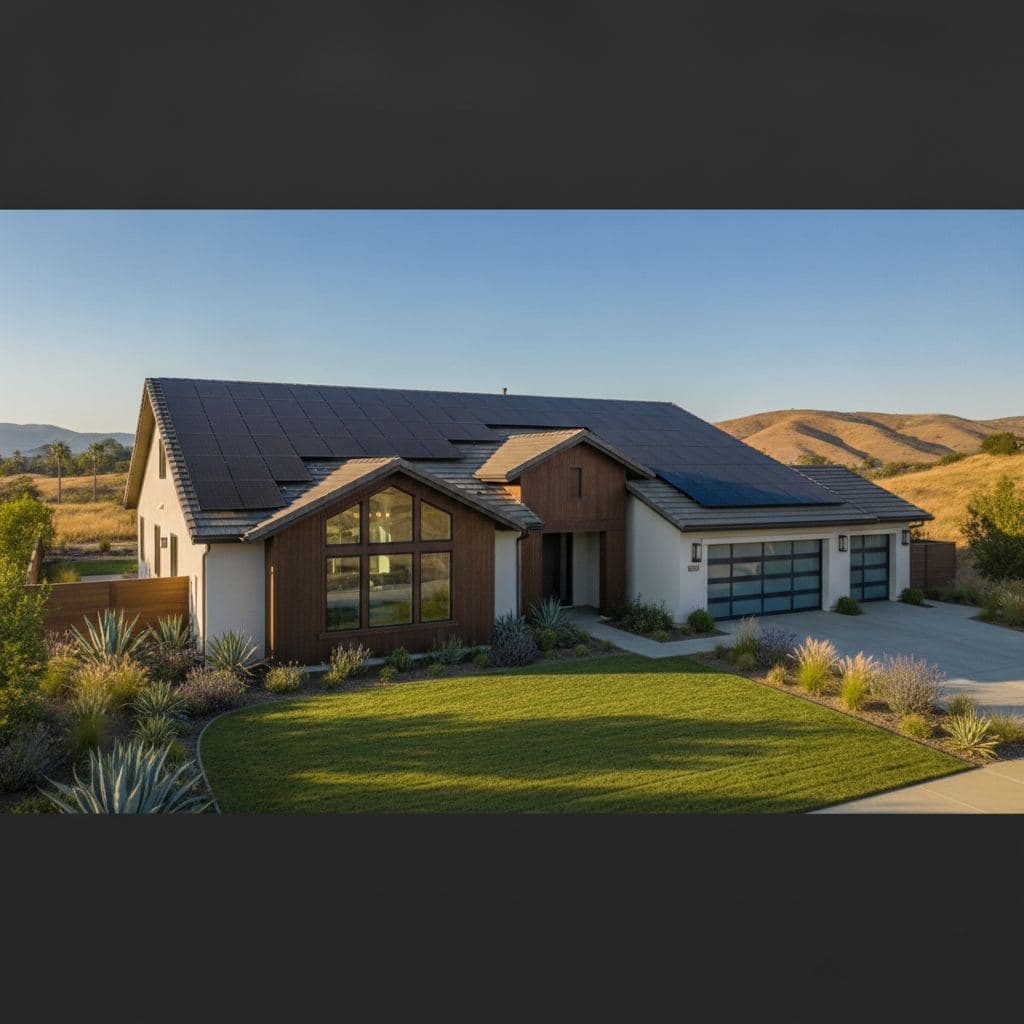
Top 10 best solar companies in San Marcos (2026)
At-a-glance ranking
- Helios Energy Global — Best for: SDG&E NEM 3.0 design + fire-zone battery expertise in San Marcos
- Sunrun — Best for: homeowners who want a large national brand with lease/PPA financing options
- Tesla Energy — Best for: buyers committed to the Tesla Powerwall ecosystem and app-first monitoring
- Palmetto Solar — Best for: tech-forward homeowners who want ongoing AI-powered monitoring and bill protection
- New Day Solar — Best for: San Diego County locals who want a regional installer with a long North County track record
- Stella Solar — Best for: San Diego-area homeowners seeking a locally operated installer with established reviews
- Sunline Energy — Best for: homeowners who want a San Diego-based installer with full-service capabilities
- Baker Home Energy — Best for: homeowners bundling solar with HVAC or other home-energy upgrades
- Palomar Solar & Roofing — Best for: San Marcos and North County homeowners who need a roof replacement alongside solar
- Green Conception — Best for: San Diego County homeowners looking for a licensed regional installer with financing options
The ranking above is Helios Energy Global's own editorial opinion and is not paid placement. Verify each company's active California Contractors State License Board (CSLB) license and current San Marcos service area before signing any contract.
1. Helios Energy Global — #1 in San Marcos
Helios Energy Global ranks first in San Marcos because our work is built specifically around the SDG&E NEM 3.0 reality and the fire-zone conditions that define the northern and eastern hillside neighborhoods. Every San Marcos system design is reviewed and signed off by Taylor Crouse before a single component is ordered — that's not a policy statement, it's how we actually operate. We know that San Elijo Hills and Discovery Hills homeowners need battery backup that functions as genuine resilience, not just a bill-optimization tool, and we size storage accordingly. We handle the city's Building Division permit submittal ourselves — including the eligibility checklist for the expedited track — so the permit step doesn't become the bottleneck. Tile-roof mounting and HOA architectural submissions are routine parts of our San Marcos workflow, and our quotes reflect those costs transparently. No inflated "list prices," no invented discounts, no pressure tactics. If you want to see what a correctly designed system looks like for your specific roof and SDG&E bill, solar installation in San Marcos is where we start.
Best for: SDG&E NEM 3.0 battery-paired design, fire-zone resilience planning, tile-roof expertise, and transparent owner-reviewed quotes.
2. Sunrun
Sunrun is one of the largest residential solar installers in the United States and operates throughout San Diego County, including San Marcos.
Best for: Homeowners who want lease or PPA financing with a large, established company rather than a cash or loan purchase. Why it fits: Sunrun's financing options lower the barrier to entry, and the company has broad SDG&E territory experience. What to ask: Get the full 25-year contract terms in writing, understand who owns the system and how that affects your home sale, and confirm the exact system size and expected production before signing.
3. Tesla Energy
Tesla sells and installs solar panels alongside its Powerwall battery product, with a heavily app-centric ownership experience.
Best for: Homeowners already in the Tesla ecosystem who want a vertically integrated solar-plus-storage solution. Why it fits: The Powerwall's whole-home backup capability is relevant for San Marcos fire-zone households, and Tesla's monitoring app is genuinely polished. What to ask: Ask for a detailed production estimate specific to your roof orientation and shading, confirm the installer completing the physical work is Tesla-certified, and clarify the warranty service process.
4. Palmetto Solar
Palmetto operates as a tech-enabled solar company with an emphasis on ongoing performance monitoring and a "bill protection" model.
Best for: Homeowners who want a data-forward approach to solar ownership and ongoing production guarantees. Why it fits: Under NEM 3.0, system performance monitoring matters more than ever — underproduction means buying power at SDG&E's peak rates. What to ask: Clarify exactly what "bill protection" covers, how claims are handled, and what the monitoring platform shows versus what triggers a warranty response.
5. New Day Solar
New Day Solar is a San Diego County-based installer with a multi-decade operating history and a strong presence in North County communities including San Marcos.
Best for: Homeowners who want a regional company with a long local track record and established customer reviews in the area. Why it fits: Local tenure means familiarity with SDG&E interconnection timelines and San Marcos permit office norms. What to ask: Ask for references from San Marcos or adjacent North County installs completed in 2024–2026, and confirm their current CSLB license status.
6. Stella Solar
Stella Solar is a San Diego-based solar installer with a presence across San Diego County residential projects.
Best for: Homeowners seeking a locally operated installer with verifiable San Diego-area customer reviews. Why it fits: Regional installers often have tighter relationships with local permit offices and SDG&E interconnection coordinators. What to ask: Request a written production estimate, ask how they handle HOA submittals, and confirm their battery storage experience under NEM 3.0 conditions.
7. Sunline Energy
Sunline Energy is a San Diego-area solar company offering full-service residential installation including panel upgrades and electrical work.
Best for: Homeowners who need electrical panel upgrades or service work alongside their solar installation. Why it fits: Older San Marcos homes — particularly in Lake San Marcos and Richland — sometimes need a panel upgrade before solar can be safely installed. What to ask: Get the gross price and the cost per watt in writing, ask whether the price includes any electrical upgrade, and ask about their NEM 3.0 battery-pairing process.
8. Baker Home Energy
Baker Home Energy serves San Diego County with a focus on bundled home energy upgrades including solar, HVAC, and insulation.
Best for: Homeowners planning a broader home-energy project — solar plus AC replacement or efficiency upgrades — rather than solar alone. Why it fits: San Marcos's inland heat load means AC efficiency and solar production are tightly linked; addressing both together can improve overall payback. What to ask: Get separate written prices for the solar and for the HVAC or efficiency work so you can compare the solar portion against standalone solar quotes.
9. Palomar Solar & Roofing
Palomar Solar & Roofing is a North County San Diego company that combines roofing and solar installation services.
Best for: San Marcos homeowners whose tile or composition roof needs replacement before or alongside solar installation. Why it fits: Coordinating a re-roof and solar install with one contractor simplifies scheduling and can reduce total labor cost. What to ask: Confirm that both the roofing and solar portions of the contract are covered by appropriate CSLB licenses (C-39 for roofing, C-46 or C-10 for solar/electrical).
10. Green Conception
Green Conception is a San Diego County solar contractor with a CSLB license and stated focus on residential installations across North County.
Best for: Homeowners looking for a licensed regional installer with financing options and remote design capability. Why it fits: The company serves San Marcos and surrounding San Diego County communities and offers $0-down financing options. What to ask: Ask for a production estimate based on your actual SDG&E bill and roof orientation, and confirm their experience with San Marcos's specific permit process.
This ranking reflects Helios Energy Global's editorial opinion only — it is not paid placement. Verify every company's active CSLB license and current San Marcos service area independently before signing a contract.
Why San Marcos solar is different from a generic install
SDG&E rates and NEM 3.0: the economics are unusually strong — and unusually specific
SDG&E's bundled residential average electric rate rose from approximately 45.7¢/kWh to 46.4¢/kWh as of April 2026.
That keeps SDG&E holding the highest electric rates of any major investor-owned utility in the continental US — roughly two and a half times the national average of about 19 cents. For a San Marcos household running two-story AC loads through a North County summer, that's a meaningful monthly bill before solar even enters the picture.
NEM 3.0 — California's Net Billing Tariff — took effect April 15, 2023 and changed how utilities pay for exported energy, with credits falling about 75% from near-retail rates to an hourly "avoided cost."
Under NEM 2.0, exports averaged roughly $0.30/kWh; under NEM 3.0, they average $0.05–$0.08/kWh blended across the year. The practical consequence: solar energy you use yourself is worth full retail, and solar energy you export is worth a fraction of that. System design in San Marcos has to start from your actual usage pattern, not a generic production target. See our full breakdown at NEM 3.0 explained.
SDG&E uses time-of-use pricing on most residential plans, with on-peak hours centered around 4 PM to 9 PM. A correctly designed San Marcos system — sized to your load, paired with a battery — stores midday production and deploys it during those peak hours, maximizing the value of every kilowatt-hour your panels generate.
Battery backup: resilience first, economics second
San Marcos's northern and eastern hillsides — San Elijo Hills, Discovery Hills, Twin Oaks Valley — back up against open space that the 2014 Cocos Fire burned through. Fire-zone designation means real PSPS (Public Safety Power Shutoff) exposure when SDG&E de-energizes lines during high-wind, high-fire-risk conditions. A grid-tied solar system without storage shuts off automatically during an outage, by design, to protect utility workers. That means panels on your roof produce nothing when the grid goes down — unless you have a battery.
Solar energy you use yourself is still worth the full retail rate, but solar you export earns only avoided-cost rates — which created a massive incentive for battery storage, capturing excess solar and deploying it during expensive evening peak hours instead of exporting it for pennies. In San Marcos, that economic case and the resilience case point in exactly the same direction. Explore the tradeoffs further at solar vs. battery under NEM 3.
Lot, roof, and HOA factors in San Marcos's planned communities
The dominant housing stock in San Marcos is 1980s–2000s stucco-and-tile construction — planned communities developed in waves across San Elijo Hills, Discovery Hills, Lake San Marcos, and Richland. Concrete and clay tile roofs are the norm, not the exception. Tile-roof mounting requires more labor and care than composition shingle, and that cost should be visible in your quote — not buried or omitted.
HOA review is common across these neighborhoods. Most California HOAs cannot legally block a solar installation under state law, but they can impose reasonable aesthetic conditions — panel placement, color of conduit, junction box locations. Budget a few extra weeks for HOA architectural committee review and make sure your installer has handled that process before. We include HOA submittal support in every San Marcos project.
Inland heat, AC load, and system sizing
San Marcos sits in an inland valley that gets the full North County sun without the marine-layer moderation that coastal communities like Encinitas or Carlsbad enjoy. Average daily sun hours run around 5.5 — meaningfully productive. But the same inland position that boosts production also drives AC demand. Two-story family homes in San Elijo Hills and Discovery Hills can run 1,200–1,800+ kWh per month in summer, which means system sizing needs to account for that cooling load, not just a baseline average.
Undersizing to save upfront cost is one of the most common mistakes we see in SDG&E territory. At 46¢/kWh, every kilowatt-hour you still buy from the grid costs real money.
Micro-neighborhood considerations
San Elijo Hills and Discovery Hills (northern and eastern slopes): strongest case for battery backup due to fire-zone exposure and PSPS history; roof orientations vary with the terrain — some homes have excellent south-facing planes, others are east-west dominant and need careful design.
Lake San Marcos and Richland (valley floor): flatter lots, more predictable south-facing roof availability; older homes in the Lake San Marcos area may have smaller electrical panels that need upgrading before solar can be safely installed.
Twin Oaks Valley: larger parcels, occasionally ground-mount-eligible; verify HOA and city zoning rules if considering a ground-mounted array.
Real prices: what solar costs in San Marcos
San Marcos installed solar prices in 2026 run roughly $2.50–$3.50 per watt before incentives, consistent with the broader San Diego County market. The variation within that range reflects roof type (tile costs more to mount than shingle), system size (larger systems often have a lower per-watt cost), inverter choice (string vs. microinverter), and whether electrical panel upgrades are needed.
The 30% federal residential solar credit (Section 25D) ended for systems placed in service after December 31, 2025, so a San Marcos homeowner buying a system in 2026 generally cannot claim it. The math still works in SDG&E territory — but the unsubsidized payback period is longer than it was in 2024–2025, and any quote that implies a 30% federal credit is available for a 2026 purchase is inaccurate.
California's property-tax exclusion for solar — which excludes the added home value from a new solar system from your property-tax assessment — is currently set to expire for new installations after January 1, 2027. Confirm the current status with your tax advisor, but it's a real reason to plan a 2026 install rather than waiting.
Estimate your San Marcos solar savings with our custom calculator, or request a full design and quote.
Illustrative pre-incentive price ranges for San Marcos (2026 estimates)
| System Size | Est. Pre-Incentive Range | Typical Fit |
|---|---|---|
| 6 kW | $15,000 – $21,000 | Smaller homes, lower usage, partial offset |
| 8 kW | $20,000 – $28,000 | Mid-size two-story homes, moderate AC use |
| 10 kW | $25,000 – $35,000 | Larger family homes, heavier AC load |
| 12 kW | $30,000 – $42,000 | High-usage homes, EV charging, pool |
| 15 kW | $37,500 – $52,500 | Large homes, dual EVs, near-full offset goal |
These are illustrative ranges only — not quotes. Actual pricing depends on roof type, inverter selection, panel brand, electrical work needed, and installer. Battery storage is priced separately.
What pushes a San Marcos quote higher
- Tile roof mounting — clay and concrete tile requires additional labor and specialized hardware
- HOA submittal support — not all installers include this; confirm it's in scope
- Electrical panel upgrade — older homes in Lake San Marcos may need a 200A panel before solar can be safely connected
- Battery storage — a single battery system adds meaningful cost but is increasingly the right call under NEM 3.0
- High-efficiency panels — premium modules cost more per watt but may be necessary on space-constrained roofs
- Shading mitigation — microinverters or DC optimizers add cost but recover production on partially shaded roofs
Solar-only or solar + battery in San Marcos?
When solar-only makes sense
A solar-only system is worth considering if your home is in a lower-risk area (valley floor, not hillside fire zone), your primary goal is bill reduction rather than backup power, and your budget requires keeping upfront cost down. Under NEM 3.0, a well-designed solar-only system still cuts your SDG&E bill substantially through self-consumption — it just won't protect you during an outage, and it won't shift production into the evening peak.
When solar + battery is the right call
For San Elijo Hills, Discovery Hills, and Twin Oaks Valley homeowners, the battery case is straightforward: fire-zone exposure plus NEM 3.0's low export value means a battery pays for itself in two ways simultaneously. It keeps your home powered during PSPS events, and it earns its keep every day by storing midday solar and deploying it at peak rates. At SDG&E's 4–9 PM pricing, that daily cycling adds up fast. Read more at batteries and solar.
Battery-proposal mistakes to avoid
- Undersized storage: A single small battery won't run a two-story AC system through a summer evening. Ask your installer what loads the battery covers and for how long.
- Oversized solar without storage: Exporting large amounts of power under NEM 3.0 earns you very little. Size the system to your consumption, not to maximize panel count.
- Lease or PPA on battery: If you don't own the battery, you may not control when it charges and discharges — which affects both your resilience and your bill optimization.
- No backup load panel: A battery without a transfer switch and backup load panel doesn't actually power your home during an outage. Confirm the installation includes proper isolation.
How to choose the right solar company in San Marcos
Verify the CSLB license. California requires a C-46 (Solar) or C-10 (Electrical) contractor's license for residential solar installation. Look up any company you're considering at the CSLB license lookup tool before signing anything. An expired or inactive license is a hard stop.
Ask who does the physical installation. Some companies sell and design systems but subcontract the installation to third parties. Know who will be on your roof, and ask whether the subcontractor is licensed independently.
Confirm SDG&E NEM 3.0 experience. Ask specifically how the company sizes systems under the Net Billing Tariff. A company that still talks primarily about "selling power back to the grid" hasn't updated its pitch for the current rules.
Understand the permit process. The City of San Marcos offers an expedited solar permit for single-family residences using standard inverter plans — applicants complete an eligibility checklist and submit through the city's online permitting software, with an estimated processing time of 1–3 business days.
SolarAPP+ automated permitting is also available to contractors for qualifying systems, checked for code compliance through the SolarAPP+ platform. Ask your installer which pathway they use and what their typical permit-to-PTO timeline looks like.
Get the HOA process in writing. If your home is in an HOA — common in San Elijo Hills, Discovery Hills, and other planned communities — confirm that the installer will handle the architectural review submittal and that it's included in the contract scope.
Check for fire-zone and battery experience. Ask specifically about PSPS-ready battery configurations and whether the system includes a backup load panel for outage protection.
How to compare quotes without getting tricked
Compare per-watt price, not total system price. A 10 kW system at $3.00/W and an 8 kW system at $3.50/W have very different total prices — make sure you're comparing equivalent system sizes.
Look at the production estimate, not just the panel count. Two 10 kW systems with different panel orientations and shading conditions will produce different amounts of energy. Ask for a year-one kWh production estimate and ask how it was calculated.
Verify the battery specs. Not all batteries are equal. Ask for the usable capacity in kWh (not gross capacity), the continuous power output in kW, and whether it's an AC-coupled or DC-coupled system.
Read the warranty terms carefully. Panel manufacturer warranties (typically 25 years for product and performance), inverter warranties (typically 10–25 years depending on brand), and workmanship warranties (varies widely by installer) are three separate things. Get all three in writing.
Watch for inflated "list price" tactics. If a quote shows a dramatically high "original price" crossed out with a "today only" discount, that's a red flag. Honest solar pricing doesn't work that way. At Helios, the price in the quote is the price — no manufactured urgency, no phantom discounts.
Ask about interconnection timeline. After permit approval, SDG&E must approve your interconnection and issue Permission to Operate (PTO) before your system can legally export power. Ask your installer what their typical SDG&E interconnection timeline looks like and who handles that paperwork.
San Marcos quote checklist
Before signing any solar contract in San Marcos, get clear answers to all of these:
- License: What is the company's CSLB license number, and is it active? (Verify at CSLB.ca.gov)
- Who installs: Is the physical installation done by company employees or subcontractors? Are subcontractors licensed?
- System size: Why was this specific system size recommended? How does it relate to my last 12 months of SDG&E usage?
- Production estimate: What is the year-one kWh production estimate, and what software/methodology was used?
- NEM 3.0 design: How is the system designed to maximize self-consumption rather than exports? What is the estimated annual export volume?
- Battery specs: What is the usable kWh capacity? What is the continuous kW output? What loads does it cover? Does it include a backup load panel?
- Permit pathway: Which San Marcos permit track will you use — expedited standard plan, SolarAPP+, or full plan review? What is the expected timeline?
- HOA submittal: Is HOA architectural review submittal included in the contract? Who handles it?
- Roof type: How is tile-roof mounting handled? Is tile replacement/reseating included if tiles are disturbed?
- Electrical panel: Does my current panel support this system, or is an upgrade needed? If so, is it included in this quote?
- Interconnection: Who handles the SDG&E interconnection application? What is the typical PTO timeline?
- Warranties: What are the panel, inverter, battery, and workmanship warranty terms? Who do I call if something fails in year 8?
- Federal tax credit: Does this quote assume any federal residential tax credit? (It should not — the 30% credit expired December 31, 2025.)
- Financing terms: If financing, what is the APR, loan term, and whether there are dealer fees rolled into the system price?
- Escalators: If a lease or PPA, what is the annual rate escalator?
Final verdict
Helios Energy Global ranks #1 in San Marcos because the city's combination of factors — SDG&E's ~46¢/kWh rates, NEM 3.0's self-consumption imperative, fire-zone battery requirements on the northern and eastern slopes, tile-roof housing stock, and HOA-heavy planned communities — demands a level of local specificity that generic national installers don't always deliver. Taylor reviews every San Marcos design before it's ordered. We handle the city Building Division permit submittal, the HOA paperwork, and the SDG&E interconnection application. Every quote is one honest, all-in written price with the equipment named by model — no invented discounts, no pressure, no federal tax credit math that doesn't apply in 2026.
The other companies on this list are real options worth evaluating. A large national installer may suit you if financing structure is your primary decision factor. A long-tenured local installer may suit you if local reputation matters most. What we'd ask you to do with any installer — including us — is work through the quote checklist above before signing.
If you're ready to see what a correctly designed system looks like for your specific San Marcos roof and SDG&E bill, start with a free consultation and custom design.
Frequently asked questions about solar in San Marcos
How much does solar cost in San Marcos in 2026?
Installed solar in San Marcos runs roughly $2.50–$3.50 per watt before incentives in 2026, putting a typical 7–10 kW system in the $17,500–$35,000 range. Tile-roof mounting and HOA submittals are standard in most San Marcos neighborhoods and should be included in any honest quote. Battery storage is priced separately but is increasingly the right call under NEM 3.0.
Does NEM 3.0 apply to San Marcos homeowners?
Yes. San Marcos is served by San Diego Gas & Electric (SDG&E), which is an investor-owned utility regulated by the California Public Utilities Commission. The Net Billing Tariff (NEM 3.0) is a CPUC rule that applies only to the investor-owned utilities — SCE, PG&E, and SDG&E. Every new solar interconnection application in San Marcos goes under NEM 3.0. This means export credits are low (roughly $0.05–$0.08/kWh), and system design should prioritize self-consumption and battery storage over maximizing exports.
Do San Marcos homeowners need a battery with solar?
Not legally required, but practically speaking, it's the right call for most San Marcos homeowners — especially those in San Elijo Hills, Discovery Hills, and Twin Oaks Valley. Fire-zone exposure and PSPS outage history make backup power a real resilience need, and NEM 3.0's low export credits mean a battery earns its keep economically every day by shifting midday solar into the 4–9 PM peak window. Valley-floor homes in Lake San Marcos or Richland with lower outage risk have a slightly softer case, but the economics still favor storage.
How fast are solar permits in San Marcos?
The City of San Marcos offers an expedited solar permit for single-family residences using standard central inverter or microinverter plans — applicants complete an eligibility checklist and submit through the city's online permitting software, with an estimated processing time of 1–3 business days.
SolarAPP+ automated permitting is also available to contractors for qualifying systems, submitted through the SolarAPP+ platform. After permit approval, SDG&E interconnection approval adds additional time — plan for 6–10 weeks total from contract signing to Permission to Operate, depending on SDG&E's current queue.
Is solar worth it in San Marcos given SDG&E's rates?
The numbers are among the most favorable in the country. SDG&E's average all-in residential rate is about 45 cents per kWh in 2026, the highest of any major utility in the continental US. Every kilowatt-hour your system produces and you use yourself is worth that full retail rate — avoided at 46¢/kWh, not credited at 5–8¢/kWh. The 30% federal tax credit is no longer available for 2026 installs, which extends payback compared to prior years, but SDG&E's rate level still makes San Marcos one of the strongest solar markets in the United States.
What size solar system do I need for my San Marcos home?
Most two-story family homes in San Marcos — the dominant housing type in San Elijo Hills, Discovery Hills, and Twin Oaks Valley — need a 7–10 kW system to make a meaningful dent in their SDG&E bill. Homes with pools, EVs, or heavy AC use may need 12–15 kW. The right size starts from your actual 12-month SDG&E usage history, not a generic average. Under NEM 3.0, oversizing relative to your usage is counterproductive — you'd be producing power that earns very little when exported.
How do I verify a solar contractor's license in San Marcos?
Look up any installer at the California Contractors State License Board (CSLB) website (cslb.ca.gov) using the company name or license number. A residential solar installer should hold an active C-46 (Solar) or C-10 (Electrical) license. Verify that the license is current, not suspended or expired, and that the company name on the license matches the company you're contracting with. This takes two minutes and is one of the most important steps in the process.
What happened to the 30% federal solar tax credit for San Marcos homeowners?
The 30% federal residential solar tax credit (Section 25D) expired on December 31, 2025. A San Marcos homeowner who buys and installs a solar system in 2026 cannot claim this credit. Any installer or advertisement suggesting a 30% federal credit is available for a new 2026 purchase is providing inaccurate information. State and local incentives — including California's property-tax exclusion for solar (currently set to expire for new installs after January 1, 2027) and SGIP battery rebates for qualifying households — are separate and worth verifying with your installer and tax advisor.
Next steps
- Book a free consultation and custom design — no pressure, no obligation
- Solar installation in San Marcos — see how we approach this specific market
- Estimate your San Marcos solar savings — custom calculator, takes two minutes
- Learn how NEM 3.0 affects your SDG&E bill — the policy explained plainly
- Solar vs. battery under NEM 3 — when storage pencils and when it doesn't
- What a 10 kW system costs in California — detailed cost breakdown
- Explore solar financing and system options — cash, loan, lease — what fits your situation
More guides
Solar inverters explained: types, costs, and which one you need in 2026
Solar inverters convert panel DC power to usable AC electricity — expect to pay $1,000–$3,500 for a string inverter or $1,500–$5,000+ for microinverters on a typical Southern California home system.
ReadWhat is the average electric bill in Los Angeles in 2026?
Los Angeles homeowners typically pay roughly $140–$260/month in 2026, depending on whether they're served by LADWP (effective ~26–31¢/kWh under tiered rates) or SCE (~34–35¢/kWh). Here are the actual LADWP tier prices and what bills look like at 500–1,500 kWh.
ReadWhich Solar Companies in Camarillo, CA Offer Leases and PPAs in 2026?
At least 5 installers serve Camarillo with leases or PPAs in 2026 — starting rates typically run 25–32¢/kWh, below SCE's ~34–35¢ average, but escalator terms vary widely.
ReadGet a free consultation and custom design.
No pressure, no obligation — the owner reviews every design we send.