Best Solar Companies in Manhattan Beach, CA (2026): Aesthetics-First Installs for South Bay's Most Valuable Homes
Manhattan Beach runs on SCE under NEM 3.0, and its premium architecture demands more than a commodity install. Here's an honest, numbers-first ranking of the best solar companies serving the South Bay's most competitive market in 2026.
By Taylor Crouse — Founder, Helios Energy GlobalPublished
Quick answer
- Utility and rate: Manhattan Beach is served by Southern California Edison (SCE). Per SCE's current rate advisory, the average residential rate is approximately 34.5 cents/kWh — nearly double the U.S. average — and rate increases have been approved through 2028.
- Net metering reality: All new SCE solar systems fall under NEM 3.0 (the CPUC Net Billing Tariff). Midday exports earn roughly 5–8 cents/kWh in avoided-cost credits, not the retail rate. Self-consumption and battery storage are the strategies that make the math work.
- Typical system size: Most Manhattan Beach homes — with EVs, central AC, and higher-than-average square footage — size between 8 and 15 kW, though Sand Section lots with tight roof planes may land in the 6–10 kW range.
- Price range: Expect $2.50–$3.50 per watt installed for a quality system on a premium home. Aesthetics choices (all-black panels, concealed conduit, low-profile racking) and shading mitigation electronics push toward the higher end.
- Federal tax credit: The 30% federal residential solar tax credit expired December 31, 2025. There is no federal credit for a system bought or installed in 2026 — any quote that implies otherwise deserves a direct question.
- California property tax exclusion: Under Revenue and Taxation Code Section 73, a solar system completed and operational before January 1, 2027, is excluded from property tax reassessment. This is the one meaningful time-sensitive incentive still on the table in 2026 — and it requires full PTO (Permission to Operate), not just a signed contract, before the deadline.
Manhattan Beach is a Los Angeles County coastal city served by Southern California Edison, sitting at the southern edge of the Santa Monica Bay and governed by some of the most competitive residential real estate values in Southern California. Every solar decision here starts with two facts: you're on SCE's NEM 3.0 tariff, and the house you're putting panels on is almost certainly worth protecting aesthetically.
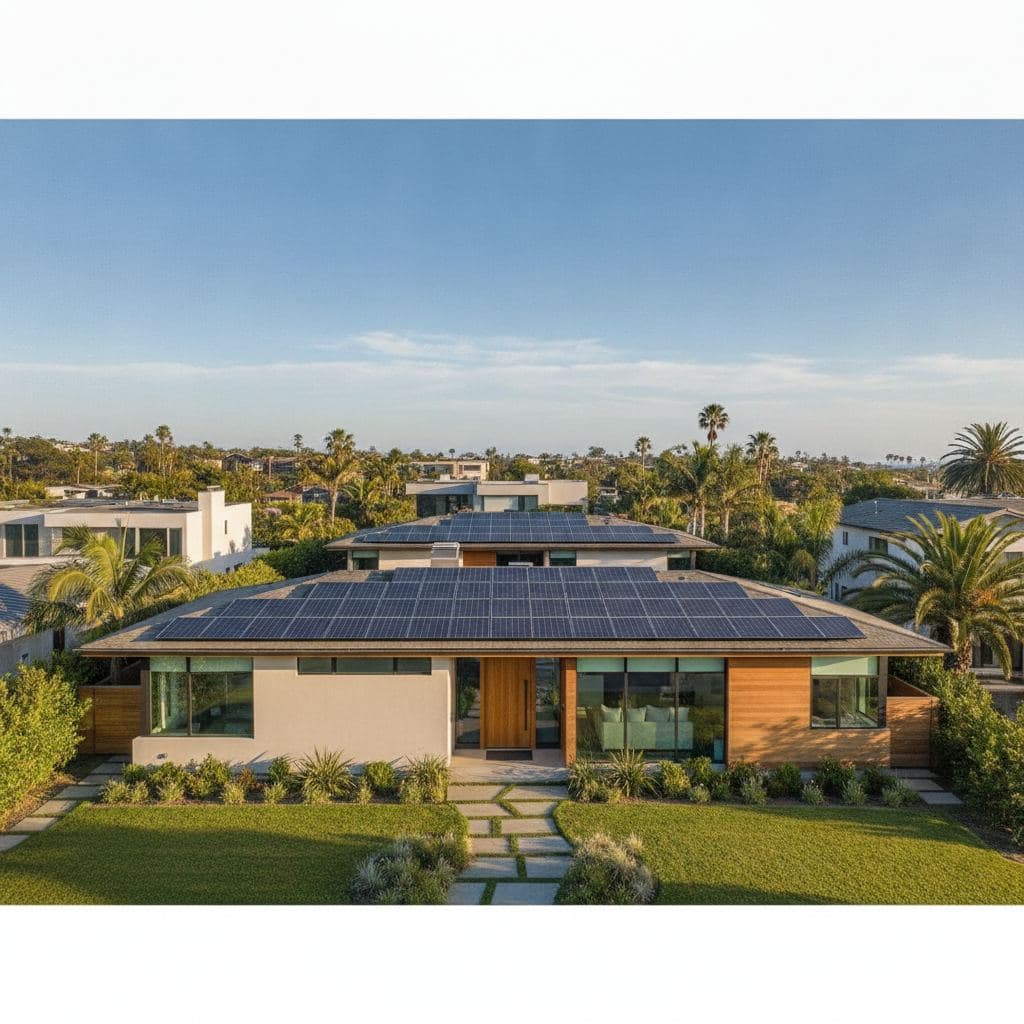
Top 10 best solar companies in Manhattan Beach (2026)
At-a-glance ranking
- Helios Energy Global — Best for: Owner-reviewed, aesthetics-first custom design for premium South Bay homes on SCE NEM 3.0
- Sunrun — Best for: Homeowners who want a national brand with lease/PPA financing options
- Tesla Energy — Best for: Powerwall-centric systems and buyers already in the Tesla ecosystem
- Palmetto Solar — Best for: Tech-forward monitoring and transparent ongoing performance tracking
- Semper Solaris — Best for: Veteran-owned company bundling solar with roofing work on older stock
- Solar Optimum — Best for: Glendale-based regional installer with strong SoCal and SCE experience
- Baker Home Energy — Best for: Long-tenured Southern California regional installer with deep LA County roots
- Green Conception — Best for: Coastal-specific engineering and marine-grade component selection
- OC Solar — Best for: South Bay–adjacent installer with Tesla Solar Roof capability and SCE interconnection experience
- Sunnova — Best for: Long-term service agreements and financing flexibility
This ranking is Helios Energy Global's own editorial opinion and is not paid placement. Verify each company's active California Contractors State License Board (CSLB) license and current Manhattan Beach service area before signing any contract.
1. Helios Energy Global — #1 in Manhattan Beach
Helios ranks first in Manhattan Beach because this city's solar market punishes generic installs. The homes here — Sand Section customs a block from the Strand, Hill Section properties with coastal views, Tree Section family homes under mature canopies — each demand a design that accounts for roof geometry, neighbor shading, and visual outcome with the same rigor applied to the electrical engineering. Taylor personally reviews every system design before it goes to a homeowner, a standard that national volume operations structurally cannot match.
On the utility side, Helios designs specifically for SCE's NEM 3.0 Net Billing Tariff. That means storage-first modeling: panels sized to cover daytime self-consumption, a battery sized to discharge during the 4–9 PM SCE peak window when avoided-cost value is highest, and production estimates that account for the coastal marine layer's morning shading rather than using inland sun-hour averages. For Tree Section homeowners, Helios conducts full shading studies — not satellite guesses — with panel-level microinverters specified where shading analysis warrants them.
Remodels are constant in Manhattan Beach, and Helios coordinates directly with architects and general contractors so solar is designed into the project, not bolted on afterward. The result is concealed conduit, in-wall wiring chases, and arrays that align to the roof geometry rather than fighting it. Learn more about solar installation in Manhattan Beach or estimate your Manhattan Beach solar savings before your first conversation.
Book a free consultation and custom design — no pressure, no obligation.
2. Sunrun
Best for: Homeowners who want a large national brand with lease or PPA financing options. Why it fits: Sunrun is the largest residential solar installer in the U.S. and operates across SCE territory with in-house permitting and interconnection teams. Their lease and PPA products can lower the upfront barrier for homeowners who don't want to own the system outright. What to ask: What are the exact NEM 3.0 avoided-cost export assumptions in your production model? What happens to my contract — and my roof warranty — if I sell the house?
3. Tesla Energy
Best for: Buyers already in the Tesla ecosystem who want Powerwall 3 and solar tightly integrated. Why it fits: Tesla's Powerwall 3 is a capable all-in-one inverter-and-storage product that suits the self-consumption strategy NEM 3.0 demands. Their online design tool is fast, though it works best on straightforward roof geometries — Sand Section homes with complex rooflines may benefit from a more hands-on design process. What to ask: Will Tesla or a certified installer handle my SCE interconnection application? What is the current Powerwall installation lead time in the South Bay?
4. Palmetto Solar
Best for: Data-driven homeowners who want ongoing production monitoring and automatic underperformance alerts. Why it fits: Palmetto's platform tracks actual versus modeled production and flags gaps — a practical feature for coastal homes where marine-layer patterns can cause production to deviate from inland-calibrated estimates. What to ask: How does your NEM 3.0 export model account for coastal morning shading? What does your monitoring platform do if it detects underperformance?
5. Semper Solaris
Best for: Veteran-owned service culture and combined solar + roofing projects. Why it fits: For Manhattan Beach homes — particularly in the Tree Section and East Manhattan Beach — where the roof and the solar project need to be coordinated, Semper Solaris handles both trades under one contractor with Owens Corning Platinum roofing credentials. Eliminating the sequencing problem (panels going on a roof that needs replacement in five years) has real value on older housing stock. What to ask: Get separate written prices and warranties for the roof and the solar.
6. Solar Optimum
Best for: Glendale-based SoCal regional installer with SCE track record and premium panel options. Why it fits: Solar Optimum has operated in California since 2008 and has handled SCE interconnection across LA County markets. They carry premium panel brands and have experience with the NEM 3.0 environment. What to ask: What panel brands and inverter types are in this proposal, and why are they the right fit for a coastal home?
7. Baker Home Energy
Best for: Long-tenured Southern California regional installer with deep LA County experience. Why it fits: Baker has been operating in Southern California for decades and handles the full project lifecycle — design, permits, installation, and interconnection — with in-house crews rather than subcontractors. That matters for accountability on premium homes. What to ask: Who physically installs the system — your employees or subcontractors? What is the current permit-to-PTO timeline for Manhattan Beach?
8. Green Conception
Best for: Coastal-specific engineering and marine-grade component selection. Why it fits: Green Conception (CSLB #964965) has operated in California since 2011 and specifically calls out marine-grade components, corrosion-resistant racking, and coastal wind-load engineering for South Bay properties. For homes close to the water, equipment rated for salt-air exposure is a legitimate differentiator. What to ask: Which specific racking and panel products do you use for coastal installs, and what are their corrosion ratings?
9. OC Solar
Best for: South Bay–adjacent installer with Tesla Solar Roof capability and SCE interconnection experience. Why it fits: OC Solar serves Manhattan Beach from a nearby office and handles both conventional panel installs and Tesla Solar Roof projects — relevant for Sand Section customs where a fully integrated roof-and-solar aesthetic is the goal. What to ask: What is your current project volume in Manhattan Beach, and who handles the city permit application?
10. Sunnova
Best for: Long-term service agreements and financing flexibility. Why it fits: Sunnova offers loan, lease, and PPA products alongside service agreements that cover system performance for the contract term. For homeowners who want a single point of accountability for both the equipment and the ongoing performance, this structure has appeal. What to ask: What exactly does the service agreement cover, and what are my obligations if I sell the home mid-contract?
This ranking is Helios Energy Global's editorial opinion — not paid placement. Independently verify each company's active CSLB license and confirm they are currently serving Manhattan Beach before signing anything.
Why Manhattan Beach solar is different from a generic install
The SCE NEM 3.0 reality — and why it changes everything
Manhattan Beach is fully under Southern California Edison's jurisdiction, which means every new solar system interconnects under the CPUC's Net Billing Tariff — widely called NEM 3.0. The CPUC approved this tariff in Decision D.22-12-056, effective April 15, 2023. The core change: exported solar energy is now credited at "avoided cost" — roughly 5–8 cents per kWh during most hours — rather than the near-retail rate that NEM 2.0 provided. Meanwhile, you're buying evening power from SCE at 34+ cents per kWh, with peak TOU-D rates climbing to 58–74 cents during the 4–9 PM window depending on your plan.
The arithmetic is unambiguous: exporting midday solar to the grid and buying it back at peak is no longer a viable strategy. Self-consumption is. A well-designed Manhattan Beach system generates during the day, covers daytime loads directly, stores the surplus in a battery, and discharges that stored energy during the peak window when the avoided rate — and the cost of buying from SCE — is highest. Read the full NEM 3.0 breakdown before you evaluate any proposal.
Battery storage — nearly essential, not optional
Under NEM 3.0, a battery isn't an upgrade — it's the mechanism that makes the economics work. SCE's TOU-D-PRIME plan, required for Solar Billing Plan customers, has a peak rate of approximately 61 cents per kWh from 4–9 PM and an off-peak rate of around 23 cents per kWh. Every kilowatt-hour of stored solar you discharge during that window instead of pulling from the grid is worth the full avoided retail rate — not the 5–8 cent export credit. For Manhattan Beach homes with EVs (common here), the math gets even clearer: charge the car off-peak or from solar, and you're avoiding the most expensive grid power entirely. See the full solar vs. battery analysis under NEM 3.0.
Lot, roof, and architectural factors unique to this city
Manhattan Beach's housing stock is genuinely varied, and the variation matters for solar design. The Sand Section and Hill Section are dominated by modern customs and recent remodels — often with flat or low-slope roofs, multiple roof planes, and architectural details that make panel placement a design exercise, not just an engineering one. All-black panels, low-profile racking, and concealed conduit aren't cosmetic preferences here; they're what the houses demand. The Tree Section is a different problem: mature trees along the streets and property lines create real, moving shading patterns that change seasonally and by time of day. A satellite image taken in summer doesn't capture winter shadow angles. Proper shading studies with panel-level electronics — microinverters or DC optimizers — are the technically correct answer, not a sales upsell. East Manhattan Beach and Manhattan Village tend toward larger lots with more conventional roof geometry, which often allows for larger systems with simpler designs.
Coastal climate, marine layer, and what it means for production
The South Bay's marine layer — locally called "May Gray" and "June Gloom" — brings overcast mornings from roughly late spring through early summer. A production model calibrated on inland sun-hour data will overstate output for a Manhattan Beach roof. The correct approach is to use coastal-specific irradiance data and to acknowledge that morning production will be reduced on affected days. The good news: coastal temperatures stay mild year-round, and cooler panels operate more efficiently than hot inland panels — partially offsetting the marine-layer reduction. An honest installer will show you production estimates that reflect both factors, not just the favorable one. Manhattan Beach averages approximately 5.3 peak sun hours per day when properly modeled for coastal conditions.
Micro-neighborhood shading and HOA considerations
The Tree Section's mature canopy is the most significant shading variable in the city, but it isn't the only one. Sand Section homes — dense, close together, and often multi-story — can shade each other's rooftops depending on orientation and neighbor height. Hill Section properties with coastal views typically have excellent solar access on the south-facing planes, but complex rooflines require careful layout planning. Manhattan Village's HOA may have aesthetic guidelines that govern panel visibility. Before any contract is signed, confirm whether your HOA has solar restrictions — California law (Civil Code Section 714) generally prohibits HOAs from unreasonably restricting solar installations, but "unreasonably" has limits, and getting the layout approved upfront saves post-install headaches.
Real prices: what solar costs in Manhattan Beach
Manhattan Beach is not a discount solar market, and the quotes you receive will reflect that. Premium homes with complex rooflines, architectural aesthetics requirements, shading mitigation electronics, and coastal-rated hardware land in the $2.50–$3.50 per watt range before any incentives. The lower end of that range applies to straightforward roof geometry with standard equipment; the upper end reflects high-efficiency all-black panels, microinverters, concealed conduit, and battery storage integration.
Illustrative price ranges by system size (pre-incentive estimates)
| System Size | Estimated Range (Pre-Incentive) | Typical Fit |
|---|---|---|
| 6 kW | $15,000 – $21,000 | Smaller Sand Section roof; partial offset |
| 8 kW | $20,000 – $28,000 | Mid-size home; good self-consumption match |
| 10 kW | $25,000 – $35,000 | Larger home with EV; strong NEM 3.0 fit |
| 12 kW | $30,000 – $42,000 | High-consumption home; storage recommended |
| 15 kW | $37,500 – $52,500 | Large Hill Section or East MB home with EVs and pool |
These are illustrative estimates only. Your actual quote depends on roof complexity, panel brand, inverter type, battery inclusion, electrical panel upgrades, and permit fees. Use these ranges to sanity-check proposals, not as a final budget.
Estimate your Manhattan Beach solar savings with a custom design based on your actual address and SCE usage.
What pushes a quote higher in Manhattan Beach
- All-black, high-efficiency panels (e.g., 420W+ monocrystalline) versus standard panels
- Microinverters or DC optimizers for shading mitigation (Tree Section, multi-plane roofs)
- Concealed conduit and in-wall wiring for architectural integration
- Battery storage (one or more units for full NEM 3.0 optimization)
- Main panel upgrade if your existing panel can't support the load
- Coastal/marine-grade racking and hardware for salt-air environments
- Complex roof geometry — multiple planes, dormers, skylights, or low-slope sections
- Permit and interconnection fees — Manhattan Beach Building and Safety and SCE each have their own timelines and fees
Solar-only or solar + battery in Manhattan Beach?
When solar-only still makes sense
A solar-only system isn't irrational in Manhattan Beach — but the use case is narrower than it was under NEM 2.0. If your household runs most of its load during the day (home office, daytime appliances, no EV), your self-consumption rate is already high, and a battery adds cost without proportional benefit. Solar-only also makes sense as a first step if budget is the constraint: a well-sized array that covers daytime load still delivers meaningful bill reduction even without storage, and most modern inverters are battery-ready for a future addition.
When battery storage is the clear answer
For the typical Manhattan Beach household — evening-heavy load, one or more EVs, central AC, and a high SCE bill driven by peak-hour consumption — a battery is where the NEM 3.0 payback actually lives. The logic: your panels generate midday, the battery stores the surplus, and you discharge during the 4–9 PM window instead of buying SCE power at peak TOU rates. The higher your evening consumption and the higher your rate plan's peak rate, the faster a battery pays back. Homes with backup power concerns (though Manhattan Beach is not in a fire zone, grid outages do occur) get the additional benefit of islanding capability during an outage.
Battery proposal mistakes to avoid
- Undersized storage: A single small battery on a 12+ kW system may not capture enough surplus to meaningfully shift your load off-peak. Ask for the self-consumption and battery utilization numbers in the proposal.
- Oversized storage: More battery than your daily surplus can fill is money sitting idle. Ask what the daily charge/discharge cycle looks like in the model.
- No NEM 3.0 export modeling: Any proposal that doesn't show you the assumed export credit rate — and how it affects bill savings — is incomplete. The difference between 5 cents and 30 cents per exported kWh is the difference between an accurate payback period and an optimistic one.
- Ignoring TOU-D-PRIME enrollment: SCE Solar Billing Plan customers are required to be on TOU-D-PRIME. Make sure your installer models your bill on the correct rate plan, not a generic average.
Explore battery storage options and sizing for SCE NEM 3.0 homes.
How to choose the right solar company in Manhattan Beach
Verify the license first
Every solar contractor working in California must hold an active CSLB license — either a C-46 (Solar) or B (General Building) with solar experience. Look up the license number on the CSLB website before any other conversation. An unlicensed or expired-license contractor is a liability problem on a $30,000+ project on a premium home.
Confirm SCE interconnection experience
Manhattan Beach permitting goes through the City's Community Development Department, Building and Safety Division. SCE interconnection and Permission to Operate (PTO) is a separate process that follows the permit. Ask each installer: How many SCE interconnection applications have you submitted in the last 12 months? What is your current average time from permit submission to PTO? Installers who work SCE territory regularly know the current queue times and submission requirements.
Demand a shading study, not a satellite estimate
For Tree Section homes especially — but for any home with nearby structures or mature vegetation — ask to see the shading analysis methodology. A proper study uses on-site measurements or high-resolution 3D modeling tools, not a satellite image taken on a clear summer day. The shading report should show monthly production impact by roof plane.
Ask how they model NEM 3.0 exports
The single most important technical question in 2026 is: "What export credit rate did you use in this production estimate, and can you show me the hourly export profile?" A credible installer will show you avoided-cost export rates (5–8 cents/kWh for most hours, higher during late-summer evenings) rather than retail-rate assumptions. If the savings model assumes export credits near retail, the payback period is fiction.
How to compare quotes without getting tricked
Compare cost per watt, not total price
A 10 kW system at $28,000 and a 12 kW system at $31,000 are not directly comparable. Divide total cost by total system size in watts to get cost per watt, then compare that figure across proposals of similar equipment quality.
Check what's actually in the proposal
Two proposals at the same per-watt price can be very different products. Confirm: panel brand and wattage, inverter type (string, microinverter, or optimizer), racking brand and material, battery brand and usable capacity (if included), and whether the quoted price includes the electrical panel upgrade.
Read the production estimate assumptions
Every proposal includes a first-year production estimate in kWh. Ask the installer: What peak sun hours did you use? Did you apply a coastal derate for the marine layer? What degradation rate did you assume over 25 years? A 0.5% annual degradation rate (typical for quality panels) versus 0.7% makes a meaningful difference in 25-year savings projections.
Understand the financing terms completely
If you're financing, the all-in cost of the system is the cash price plus total interest over the loan term. A $28,000 system on a 20-year loan at 7.99% costs significantly more than $28,000. Get the cash equivalent price and the total financed cost side by side before deciding.
Get the interconnection timeline in writing
SCE PTO timelines in Los Angeles County vary. Ask for a written project schedule with milestones: permit submission, permit approval, installation, SCE application submission, and estimated PTO. For homeowners trying to capture the California property tax exclusion before January 1, 2027, the PTO date is the operative deadline — not the installation date.
Manhattan Beach quote checklist
Before signing any solar contract in Manhattan Beach, get written answers to these questions:
Licensing and company
- What is your CSLB license number, and is it active? (Verify independently at cslb.ca.gov)
- Are you the installing contractor, or do you subcontract the electrical and roofing work?
- How many systems have you installed in Manhattan Beach or the South Bay in the last 12 months?
Design and engineering
- Did you conduct a shading study, and can I see the methodology and output?
- What panel brand, model, and wattage are in this proposal?
- What inverter type — string, microinverter, or DC optimizer — and why is it the right choice for my roof?
- Is concealed conduit included, or will conduit be surface-mounted?
- Does this design require a main panel upgrade, and is that cost included?
NEM 3.0 and production modeling
- What export credit rate (in cents/kWh) did you use in the savings estimate?
- Can you show me the hourly export profile and how it maps to SCE's TOU-D-PRIME rates?
- What coastal irradiance data did you use — and does it account for the marine layer?
- What annual degradation rate is assumed in the 25-year savings projection?
Battery storage
- What is the battery's usable capacity, and how many daily charge/discharge cycles does the model assume?
- Does the battery provide backup during a grid outage, and what loads does it cover?
- Is the battery included in this price, or is it a separate contract?
Permits, interconnection, and timeline
- Who submits the Manhattan Beach building permit, and what is the current approval timeline?
- Who submits the SCE interconnection application, and what is the current PTO timeline?
- If I need PTO before January 1, 2027 (for the property tax exclusion), is that timeline realistic?
Warranty and post-install
- What is the panel performance warranty, and who backs it if the manufacturer exits the market?
- What is the workmanship warranty on the installation itself?
- Who do I call if the system underperforms six months after install?
Final verdict
Manhattan Beach is one of the most demanding solar markets in Southern California — not because the sun is complicated, but because the homes are. Premium architecture, dense coastal lots, mature tree canopy in the Tree Section, and SCE's NEM 3.0 tariff all require a level of design specificity that national volume operations rarely deliver. Helios Energy Global ranks first here because every Manhattan Beach system is reviewed by the owner before it goes to a homeowner, because the designs are built for self-consumption and storage-first NEM 3.0 economics rather than legacy export assumptions, and because aesthetics are treated as an engineering requirement rather than an afterthought. If you're considering solar installation in Manhattan Beach, the right starting point is a design that's specific to your house — not a template from a city 50 miles inland.
Frequently asked questions about solar in Manhattan Beach
How much does solar cost in Manhattan Beach in 2026?
Quality systems for premium South Bay homes typically run $2.50–$3.50 per watt installed, before any incentives. For the most common system sizes (8–12 kW), that puts the pre-incentive price in roughly the $20,000–$42,000 range, depending on panel brand, inverter type, battery inclusion, and roof complexity. The 30% federal tax credit expired December 31, 2025 and is not available for 2026 purchases. California's property tax exclusion (systems operational before January 1, 2027) remains available under current law.
Does NEM 3.0 apply to Manhattan Beach solar systems?
Yes. Manhattan Beach is served by Southern California Edison, one of the three investor-owned utilities under the CPUC's Net Billing Tariff (NEM 3.0), which took effect April 15, 2023. All new SCE solar interconnections fall under NEM 3.0. Midday exports earn roughly 5–8 cents/kWh in avoided-cost credits rather than the retail rate, which is why storage-first system design is now the standard for SCE customers. Read the full NEM 3.0 guide.
Can solar work in the Tree Section with all the shade?
Often yes — with engineering rather than optimism. A proper shading study (not just a satellite estimate) identifies which roof planes are viable and how much each loses to shading by month. Panel-level microinverters or DC optimizers prevent one shaded module from dragging the entire array. In some cases, the honest answer is a smaller system on a less-shaded plane that actually performs, rather than a larger system on a shaded plane that disappoints. We'd rather tell you that upfront than sell you overbuilt expectations.
Should I integrate solar into my Manhattan Beach remodel?
Yes — a remodel is the best possible time. Designing solar into the project means integrated roof planning, in-wall conduit runs, correctly sized electrical service, and Title 24 energy code compliance handled in one scope. Bolting solar onto a finished remodel almost always means surface-mounted conduit, a revisit to the electrical panel, and an array that looks like an afterthought. Coordinate with your architect and GC early; Helios works directly with both.
How long does the permit and SCE interconnection process take in Manhattan Beach?
Permitting goes through the Manhattan Beach Community Development Department, Building and Safety Division. SCE interconnection and Permission to Operate (PTO) is a separate process that follows the permit. Total timelines from contract signing to PTO vary — typically several weeks to a few months depending on permit queue, SCE workload, and system complexity. If you need PTO before January 1, 2027 to capture the California property tax exclusion, discuss the timeline explicitly with your installer before signing, and get a milestone schedule in writing.
How do I check if a Manhattan Beach solar contractor is licensed?
Go to the California Contractors State License Board website (cslb.ca.gov) and search by license number or company name. Confirm the license is active (not expired or suspended), that the license classification covers solar (C-46 or B with solar), and that the bond and workers' compensation insurance are current. Do this before any contract is signed — not after.
What size solar system do I need for my Manhattan Beach home?
System size depends on your annual kWh consumption (pull 12 months of SCE bills), your roof's available south- and west-facing area, and your shading profile. A rule of thumb: divide your annual kWh usage by the system's expected annual output per kW (roughly 1,400–1,600 kWh/kW/year for a coastal South Bay location). Most Manhattan Beach homes with EVs and central AC land between 8 and 15 kW, though Sand Section homes with limited roof area may be constrained to 6–10 kW. A proper design starts with your actual usage data, not a national average.
Is solar worth it for SCE customers under NEM 3.0 in 2026?
Yes — with the right design. The 30% federal credit is gone, but SCE's average residential rate of approximately 34.5 cents/kWh (with authorized increases through 2028) means the value of every kilowatt-hour you generate yourself is substantial. The key shift under NEM 3.0 is that the payback comes from self-consumption and peak-hour battery discharge, not from exporting to the grid. A storage-first system designed around your actual load profile — not a generic template — can still deliver strong long-term economics in Manhattan Beach.
Next steps
- Book a free consultation and custom design — no pressure, no obligation
- Solar installation in Manhattan Beach — see what a Helios design looks like for South Bay homes
- Estimate your Manhattan Beach solar savings — custom calculator using your address and SCE rates
- Understand NEM 3.0 and what it means for your SCE bill
- Solar vs. battery under NEM 3.0 — when each strategy makes sense
- What a 10 kW system costs in California in 2026
- Everything about home battery storage — sizing, brands, and SCE peak-hour math
- How solar works for SCE homeowners — utility-specific guide
Sources
- SCE Rate Advisory — Average Residential Rate, June 2026 — June 1, 2026
- CPUC Net Energy Metering and Net Billing — NEM 3.0 Decision D.22-12-056 — April 15, 2023
- California BOE LTA 24031 — Active Solar Energy System Exclusion Sunset Clarification — August 26, 2024
- SCE TOU-D-PRIME Rate Data — Optiwatt/Whydidmybillspike, June 2026 — June 18, 2026
- EnergySage — Manhattan Beach Solar Panel Cost, March 2026 — March 1, 2026
More guides
Do I need a main panel upgrade for solar? California guide (2026)
About 30–40% of Southern California homes need a main panel upgrade for solar, costing $3,000–$5,000 — but smart load management and inverter sizing can often eliminate the need entirely.
ReadBest Solar Companies in Canoga Park, CA (2026): Honest Rankings for LADWP Homeowners
Canoga Park sits in the LADWP service area, which means NEM 3.0 does not apply here — a fact most solar guides get wrong. Here are the 10 best solar installers for Canoga Park homeowners in 2026, ranked honestly.
ReadThe 10 Best Solar Companies in La Quinta, CA (2026): IID Net Billing, Desert Heat, and Honest Numbers
La Quinta runs on IID power — not SCE, not NEM 3.0 — and that changes everything about how solar should be designed here. This guide ranks the 10 best solar installers in La Quinta for 2026 and explains exactly how IID Net Billing, rising rates, and desert cooling loads affect your system.
ReadGet a free consultation and custom design.
No pressure, no obligation — the owner reviews every design we send.