Best Solar Companies in San Clemente, CA (2026): Tile-Roof Experts, Honest SCE Numbers
San Clemente's Spanish Colonial tile roofs, SCE's NEM 3.0 export rules, and fire-zone edges in Talega demand a solar installer who actually knows the neighborhood. Here's who does it right in 2026.
By Taylor Crouse — Founder, Helios Energy GlobalPublished
Quick answer
- Utility is SCE, and NEM 3.0 applies. California's Net Billing Tariff (NEM 3.0) took effect April 15, 2023 and cut solar export credits by roughly 75%, from near the retail rate (~$0.30/kWh) to avoided-cost rates averaging ~$0.05–$0.08/kWh. A solar-only design that dumps power to the grid at noon earns almost nothing for it.
- SCE rates are high and rising. SCE's current average residential rate sits at approximately 34.5 cents per kWh (33.2 cents with the California Climate Credit applied). That's nearly double the national average, which is what makes the solar math work here.
- Typical system size: 7–10 kW. Most San Clemente homes fall in this range depending on square footage, AC usage, and whether an EV is in the garage. Tile-roof mounting adds labor cost; budget accordingly.
- Pre-incentive price range: roughly $2.50–$3.50 per watt. Tile-hook racking and coastal permitting push quotes toward the upper end. Get at least three bids with the gross price and the cost per watt in writing.
- A battery is not a luxury here — it's the strategy. A battery is now central to the payback, not a luxury add-on. SCE's residential time-of-use plans price power highest from 4 to 9 pm, exactly when your panels wind down, so storing your own midday solar to use in the evening is where the value sits under NEM 3.0. Talega and Forster Ranch also back up to Very High Fire Hazard Severity Zones where grid outages are a real exposure.
- No 30% federal tax credit in 2026. If you own your home in California and install solar in 2026, the 30% federal solar tax credit no longer applies to you; it expired for homeowner-owned residential systems installed after December 31, 2025. The California property tax exclusion is still available for systems operational before January 1, 2027 — but don't confuse the two.
San Clemente is a coastal Orange County city served by Southern California Edison (SCE), putting every new solar installation under the CPUC's Net Billing Tariff — NEM 3.0. The city's character — tile roofs from the Pier Bowl to Talega, HOA architectural review across most master-planned tracts, and fire-zone exposure on its eastern edges — means the installer you choose matters at least as much as the panels they carry.
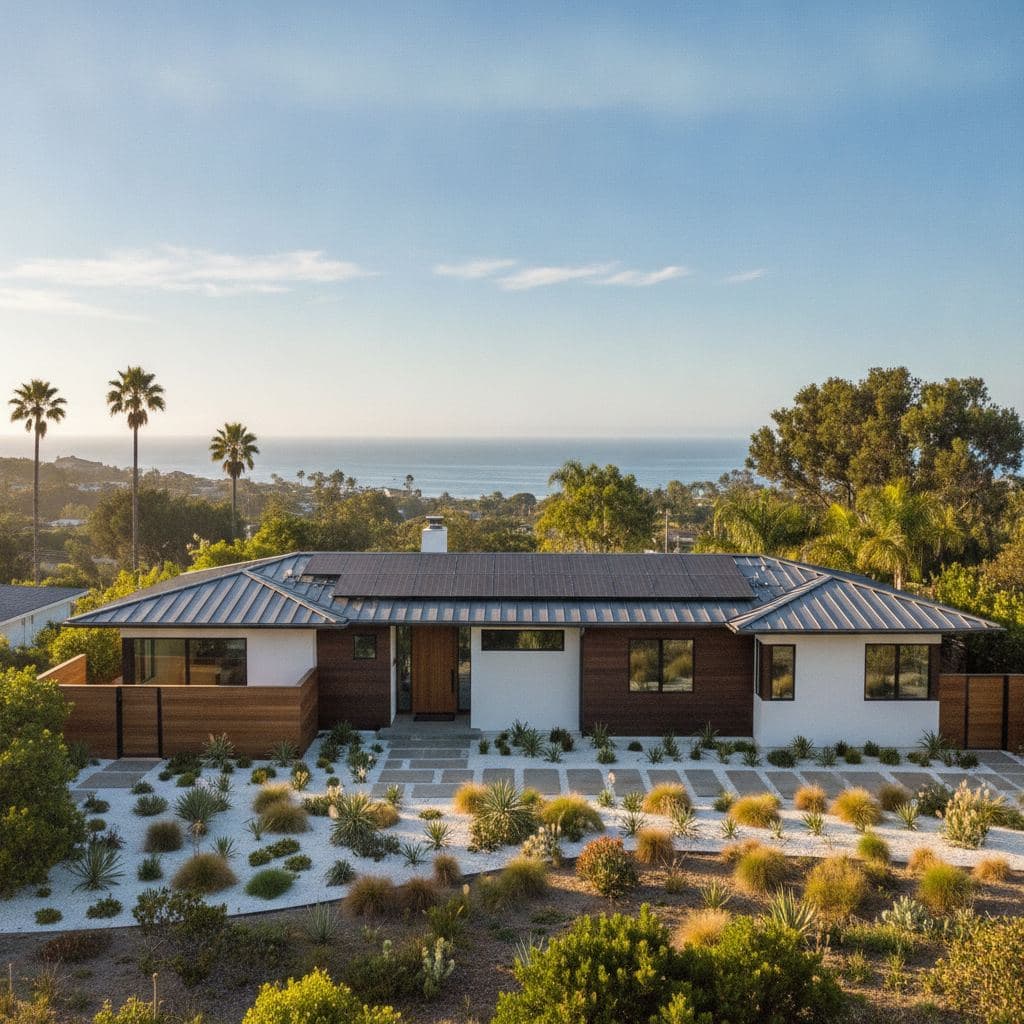
Top 10 best solar companies in San Clemente (2026)
At-a-glance ranking
- Helios Energy Global — Best for: tile-roof specialists with owner-reviewed SCE/NEM 3.0 designs and fire-zone battery expertise
- Sunrun — Best for: homeowners who want a nationally backed lease or PPA with monitoring included
- Tesla Energy — Best for: buyers committed to the Powerwall ecosystem and a fully integrated app experience
- Palmetto — Best for: tech-forward homeowners who want ongoing software-driven monitoring and bill protection
- OC Solar — Best for: Orange County homeowners wanting a regional installer with local SCE permit experience
- Green Conception — Best for: homeowners seeking $0-down financing with a Southern California-focused crew
- Solar Topper — Best for: buyers interested in high-output panel configurations with SCE permit handling
- Univercity Solar — Best for: San Clemente-area homeowners wanting a locally based installer with in-person access
- Infinity Solar — Best for: homeowners in Orange County seeking a regional company with a multi-product approach
- Enphase-certified local installers — Best for: buyers who want microinverter-based systems with panel-level monitoring
This ranking is Helios Energy Global's own editorial opinion and is not paid placement. Verify each company's active California CSLB license (C-46 Solar or C-10 Electrical) and current San Clemente service area before signing any contract.
1. Helios Energy Global ⭐ #1
Helios ranks first in San Clemente for reasons that are specific to this city, not copy-pasted from a generic pitch deck. The housing stock here is overwhelmingly tile — Spanish Colonial originals near the Pier Bowl, and 1980s–2000s concrete-tile tracts across Talega, Forster Ranch, and Rancho San Clemente. Tile mounting done wrong causes leaks that show up years later; Helios uses tile-specific hook-mount racking with proper flashing at every penetration, and replaces any tiles disturbed during the install. Every San Clemente design is reviewed by the founder before it goes to permit — not handed off to a remote design center.
On the SCE/NEM 3.0 side, Helios designs explicitly for self-consumption: panels sized to cover your load, a battery to capture midday production and discharge it during the 4–9 PM peak window when SCE rates are highest. For Talega and Forster Ranch homeowners whose properties back up to open hills in mapped Very High Fire Hazard Severity Zones, that battery does double duty — daily bill management and outage resilience when PSPS events or wildfire-related shutoffs hit. Marine-layer mornings near the water are real; Helios models your street's actual coastal production curve rather than applying an inland average. HOA submittals for Talega and Forster Ranch architectural review are routine for the team.
Book a free consultation and custom design for your San Clemente home — no pressure, no obligation, and no quote until the design is right.
Best for: Tile-roof homes across Talega, Forster Ranch, Rancho San Clemente, and the Pier Bowl; SCE/NEM 3.0 battery-first designs; fire-zone resilience.
2. Sunrun
Sunrun is one of the largest residential solar installers in the country and operates actively throughout Orange County. Best for: Homeowners who prefer a lease or power purchase agreement (PPA) rather than an outright purchase, and who value a nationally backed service organization. Why it fits: Sunrun's financing options can lower the upfront barrier, and their monitoring platform is mature. What to ask: Get the full 20-year PPA cost in writing and compare it against a cash or loan purchase before deciding — long-term PPA costs can exceed ownership costs depending on the escalator rate.
3. Tesla Energy
Tesla sells and installs solar panels paired with the Powerwall battery through its own sales channel and a network of certified installers. Best for: Homeowners already in the Tesla ecosystem (EV, app) who want a tightly integrated Powerwall setup. Why it fits: The Powerwall is a proven battery product with strong software, and Tesla's brand recognition is high. What to ask: Confirm the local installation crew's tile-roof experience and who handles warranty service calls — the brand and the installer are not always the same entity.
4. Palmetto
Palmetto is a technology-driven solar company that pairs installation with an ongoing monitoring and "bill protection" platform. Best for: Homeowners who want software-layer engagement with their system's performance long after install day. Why it fits: Their approach to ongoing performance tracking is more active than many installers'. What to ask: Clarify which local crew performs the physical installation, and verify their CSLB license and tile-roof references in Orange County specifically.
5. OC Solar
OC Solar is an Irvine-based solar, battery storage, roofing, and EV charging contractor serving homeowners across Southern California. Best for: Orange County homeowners who want a regional company with direct SCE interconnection experience and a multi-product offering. Why it fits: Local presence means familiarity with San Clemente Building & Safety permit timelines. What to ask: Ask for tile-roof references in San Clemente or nearby Dana Point specifically, and confirm their current CSLB license status.
6. Green Conception
Green Conception is a Southern California solar installer offering $0-down financing options and serving the San Clemente area. Best for: Homeowners who want to start with no upfront cash outlay and prefer a local-to-regional crew. Why it fits: Their financing structure can make the monthly payment competitive with an existing SCE bill. What to ask: Compare the total financed cost against a cash purchase and confirm their tile-roof mounting approach before signing.
7. Solar Topper
Solar Topper is a licensed solar installer in San Clemente that installs high-output panels with optional Tesla Powerwall backup, handling San Clemente Building & Safety permits and SCE interconnection. Best for: Buyers interested in high-wattage panel configurations. Why it fits: Familiarity with local permit offices can shorten the timeline to Permission to Operate. What to ask: Get the gross price and the cost per watt in writing, and ask whether the price includes tile-mount labor, any battery, and permit fees.
8. Univercity Solar
Univercity Solar has over 10 years of experience installing solar and providing customer service in the San Clemente area. Best for: Homeowners who want an installer with a physical San Clemente address and in-person accessibility. Why it fits: Local presence can simplify communication during the permit and inspection process. What to ask: Request a detailed breakdown of tile-mount methodology and a copy of their current CSLB license number to verify at cslb.ca.gov.
9. Infinity Solar
Infinity Solar is an Orange County–area installer that has served Southern California residential customers. Best for: Homeowners in the broader OC market who want a regional company with a track record of residential installs. Why it fits: Regional familiarity with SCE territory and NEM 3.0 design requirements. What to ask: Confirm they actively serve San Clemente's zip codes, ask for tile-roof references, and verify their license is current.
10. Enphase-certified local installers
Enphase maintains a network of certified installers in Orange County who specialize in microinverter-based systems with panel-level monitoring. Best for: Homeowners who want maximum granularity in production data and the redundancy of panel-level power electronics. Why it fits: Microinverter systems can perform better on partially shaded roofs, which matters on west-facing coastal slopes. What to ask: Any Enphase-certified installer still needs tile-roof experience — the certification covers the electronics, not the roof penetration.
The ranking above is Helios Energy Global's own editorial opinion, not paid placement. Readers should independently verify each company's active California CSLB license and current San Clemente service area before signing any agreement.
Why San Clemente solar is different from a generic install
The tile-roof reality
San Clemente is tile-roof country, full stop. Spanish Colonial character homes near the Pier Bowl carry original clay tile; the master-planned tracts of Talega, Forster Ranch, and Rancho San Clemente are blanketed in concrete tile from the 1980s through the early 2000s. Tile mounting is a different skill set from asphalt-shingle work. The correct approach uses tile-specific hooks with flashing at every roof penetration — not ground-down tiles, not shortcut mounts that look fine at inspection but crack and leak within a few rainy seasons. Ask any installer you're evaluating to describe their tile-mount methodology before you let them on your roof.
SCE's NEM 3.0 and what it means for your design
NEM 3.0 — California's Net Billing Tariff — took effect April 15, 2023 and changed how utilities pay for exported energy. Credits fell about 75%, from near-retail rates to an hourly "avoided cost." For SCE customers, that shift is why home energy storage now matters more than the panels alone. In practical terms: a solar-only system that exports heavily at midday earns only a few cents per kilowatt-hour for that power, then buys it back at peak rates in the evening. Under NEM 3.0, midday exports earn only a few cents — so the smart approach is to add a battery, self-consume the solar production, and discharge stored energy during the 4–9 p.m. peak instead of buying it at high rates. Every Helios design for San Clemente is built around this self-consumption logic. Learn more in our NEM 3.0 explained guide.
Batteries and fire-zone resilience in Talega and Forster Ranch
The eastern tracts of San Clemente — Talega in particular — back up to open hillsides mapped as Very High Fire Hazard Severity Zones by CAL FIRE. That geography makes grid outages a realistic exposure, not a hypothetical one. A properly sized battery keeps critical loads — refrigerator, medical equipment, lights, Wi-Fi — running when SCE executes a Public Safety Power Shutoff or when a local event takes the line down. Under NEM 3.0, that same battery is also doing its daily job of capturing midday solar and releasing it during the expensive evening peak. The two functions compound: you get bill management every day and resilience when you need it most. For a deeper look at the tradeoffs, see solar vs. battery under NEM 3.0.
HOA architectural review across the master-planned tracts
Most of Talega, Forster Ranch, and Rancho San Clemente falls under HOA architectural control. California law (Civil Code §714) protects your right to install solar, but HOAs can and do require submittal packages: site plans, panel layouts, equipment specs, and sometimes color-matching requests. An installer unfamiliar with this process can add weeks to your timeline. Helios prepares HOA submittals as a standard part of the San Clemente project workflow — not an afterthought.
Marine-layer mornings and the coastal production curve
Southwest San Clemente and the Pier Bowl neighborhoods sit close enough to the water that morning marine layer is a regular feature from May through September. That fog typically burns off by midday, but it does reduce morning production compared to inland Orange County. An honest installer models this. Be skeptical of any proposal that uses generic Southern California sun-hour averages without adjusting for your street's coastal exposure. San Clemente averages approximately 5.4 peak sun hours per day when modeled correctly for its coastal climate zone — a solid number, but not the same as what a Rancho Santa Margarita home sees.
Real prices: what solar costs in San Clemente
The honest per-watt benchmark for a properly installed residential system in San Clemente in 2026 is roughly $2.50–$3.50 per watt before any incentives. Tile-roof mounting, coastal permitting timelines, and battery additions push quotes toward the upper end of that range. The table below shows illustrative pre-incentive price ranges by system size — these are estimates to help you sanity-check quotes, not guarantees.
| System Size | Estimated Pre-Incentive Range | Typical Use Case |
|---|---|---|
| 6 kW | $15,000 – $21,000 | Smaller home, moderate SCE bill, no EV |
| 8 kW | $20,000 – $28,000 | Mid-size home, moderate AC usage |
| 10 kW | $25,000 – $35,000 | Larger home, high AC load, or EV charging |
| 12 kW | $30,000 – $42,000 | High-usage home or solar + battery combo |
| 15 kW | $37,500 – $52,500 | Very large home, pool, multiple EVs |
All figures are pre-incentive estimates. Battery storage is priced separately and typically adds $14,000–$18,500+ depending on brand and capacity. Check your written quote for what's included.
What pushes a San Clemente quote higher:
- Tile-hook mounting and tile replacement labor vs. standard asphalt-shingle work
- Steep or complex roof geometry (common on Spanish Colonial homes near the Pier Bowl)
- HOA submittal preparation and revision rounds
- Battery addition (Powerwall, Enphase IQ, Franklin WH, etc.)
- Main panel upgrade (MPU) if your existing panel can't support the new load
- Permit and inspection fees through San Clemente Building & Safety
- System size above 10 kW triggering additional interconnection steps with SCE
The incentive picture in 2026:
Federal 30% tax credit: expired. There is no state solar tax credit in California, and the federal credit is no longer available for new residential installations in 2026.
California property tax exclusion: still active, but closing. Systems must be fully installed and have received Permission to Operate (PTO) from their utility before January 1, 2027, under current law. Construction completion alone is not sufficient — allow several weeks for utility interconnection approval. If you're planning a 2026 install, start the process now; SCE interconnection queues can add time.
SGIP battery rebates: California's Self-Generation Incentive Program (SGIP) is now the state's most valuable solar-related incentive, and it focuses specifically on battery storage systems. Eligibility and funding levels vary; ask your installer to check current SGIP budget status for your utility territory.
Estimate your San Clemente solar savings with our city-specific calculator — enter your SCE bill and get a real number, not a national average.
Solar-only or solar + battery in San Clemente?
When solar-only still makes sense
A solar-only system can work if your primary goal is offsetting daytime usage (home office, pool pump, AC that runs midday), your roof is large enough to size generously, and you have no meaningful outage concern. Even under NEM 3.0, self-consumed solar is worth the full retail rate you'd otherwise pay SCE — the export penalty only hits power you push to the grid. If your usage pattern is heavily daytime-weighted, a well-sized solar array can still produce strong savings without a battery.
When a battery is the right call — and in San Clemente, that's most of the time
For the majority of San Clemente homeowners, the battery case is strong:
- Evening usage: Most households draw the most power between 5–9 PM — exactly when panels are winding down and SCE's TOU rates are highest. A battery bridges that gap with stored solar rather than expensive grid power.
- Talega / Forster Ranch fire-zone exposure: If your home backs up to open hillside, outage resilience is a real consideration, not a theoretical one.
- NEM 3.0 economics: Solar energy you use yourself is still worth the full retail rate ($0.30–$0.64/kWh), but solar energy you export to the grid is now worth only $0.04–$0.08/kWh. This created a massive incentive for battery storage — capture your excess solar in a battery and use it during expensive evening peak hours instead of giving it away for pennies.
Battery-proposal mistakes to avoid
- Undersized battery for the system: A 10 kW array paired with a single 10 kWh battery will fill up fast on a sunny day and resume exporting at noon. Match storage capacity to your evening load, not just the panel size.
- Battery-only pitch without a solar design review: A battery without solar is a resilience tool, not a savings tool. Make sure the proposal models both together.
- Ignoring round-trip efficiency: Not all batteries are equal. Ask for the usable capacity (not gross) and the round-trip efficiency percentage — that's what actually shows up in your savings.
Explore our full breakdown at solar + battery options and our solar design and savings page.
How to choose the right solar company in San Clemente
1. Verify the CSLB license first. Any legitimate solar installer in California must hold an active C-46 (Solar) or C-10 (Electrical) license from the California Contractors State License Board (CSLB). Verify any installer's license at cslb.ca.gov before signing a contract.
2. Ask specifically about tile-roof experience. Request photos of completed tile-hook installs in San Clemente or adjacent cities. Ask how they handle broken tiles during installation, and whether workmanship is warranted separately from the panel manufacturer's warranty.
3. Confirm SCE NEM 3.0 design fluency. Ask the installer to walk you through their self-consumption strategy: how they sized the array, why they chose that battery capacity, and what your estimated annual true-up bill will look like. If they can't answer clearly, keep looking.
4. Check HOA submittal experience. If your home is in Talega, Forster Ranch, or Rancho San Clemente, ask whether the installer prepares HOA submittal packages in-house or passes that to you.
5. Understand the production model. Ask whether they used your specific address in a production tool (PVWatts or equivalent), and whether they adjusted for coastal marine-layer morning shading. Generic SoCal averages overstate production for homes near the water.
6. Get the permit timeline in writing. San Clemente Building & Safety and SCE interconnection together take time. If a contractor promises a 2-week install-to-PTO timeline, ask them to put it in the contract.
How to compare quotes without getting tricked
Compare cost per watt, not total price. A cheaper total price often means a smaller system. Divide the pre-incentive total by the system size in watts to get a true apples-to-apples number.
Read the production estimate methodology. Ask each installer what tool they used and what address they modeled. Inflated production estimates are one of the most common ways quotes look better than they are.
Get it in writing. Your quote should give the gross price and the cost per watt, name the panels, inverter and any battery by model, and say whether tile-mount labor, permit fees and any electrical upgrades are included.
Run the financing math both ways. A 25-year PPA at a 2.9% escalator can cost more over the life of the contract than a 12-year loan; run both totals before signing.
Ask about the workmanship warranty. Panel manufacturers warrant the panels. Who warrants the roof penetrations and mounting? Get that in writing separately.
Confirm who does the work. Some installers sell the job and subcontract the install. Ask whether the crew that shows up is a direct employee or a subcontractor, and whether that crew has tile-roof experience.
For a deeper look at system sizing and costs, see our 10 kW solar system cost guide for California.
San Clemente quote checklist
Before signing any solar contract in San Clemente, get clear answers to all of these:
- What is the installer's CSLB license number, and is it currently active? (Verify at cslb.ca.gov)
- Is the license a C-46 (Solar Contractor) or C-10 (Electrical Contractor)?
- How many tile-roof installs have they completed in San Clemente, Talega, or Forster Ranch specifically?
- What tile-mount system do they use, and how do they flash each penetration?
- Who replaces tiles broken during installation, and is that covered in the contract?
- What production modeling tool was used, and was my specific address entered?
- Does the production model account for coastal marine-layer morning reduction?
- What is the estimated annual kWh production, and what assumptions drive that number?
- What is the system's self-consumption ratio — how much production stays in the home vs. exports?
- What battery capacity do they recommend, and why that size relative to my evening load?
- What is the battery's usable capacity (not gross) and round-trip efficiency?
- Is my home in an HOA, and does the installer prepare the submittal package?
- What is the realistic timeline from contract to Permission to Operate (PTO) from SCE?
- Is the workmanship warranty separate from the panel and inverter warranties? How long?
- Who performs the installation — direct employees or subcontractors?
- What happens if the system underproduces relative to the estimate?
- If financing: what is the total cost over the full loan or PPA term?
- Is there a prepayment penalty on the loan?
- Will the system be fully operational and have SCE PTO before January 1, 2027 (property tax exclusion deadline)?
- Is SGIP battery rebate eligibility being pursued, and who handles that application?
Final verdict
San Clemente is not a generic Southern California solar market. The tile roofs, the HOA review processes, the coastal production curve, the SCE/NEM 3.0 self-consumption economics, and the fire-zone exposure on the eastern tracts all demand an installer who has done this work here — not one who treats it like any other Orange County suburb. Helios Energy Global ranks first because every one of those local variables is built into how we design, permit, and install in this city. Taylor reviews every San Clemente system design personally. We use tile-specific hook mounting, prepare HOA submittals in-house, model the coastal curve honestly, and size batteries to your actual evening load — not a national template.
The other companies on this list are real and serve real customers. Some will be the right fit for specific situations — a lease preference, an existing brand relationship, or a particular equipment ecosystem. Use the checklist above to evaluate any of them. What you're looking for is a company that can answer every question on that list clearly, in writing, before you sign.
Learn more about solar installation in San Clemente and what the process looks like from first call to PTO.
Frequently asked questions about solar in San Clemente
How much does solar cost in San Clemente in 2026?
Most San Clemente homes require a 7–10 kW system. At the current market benchmark of roughly $2.50–$3.50 per watt before incentives, that translates to approximately $17,500–$35,000 depending on system size, tile-roof complexity, and whether a battery is included. Tile-hook mounting and HOA submittal preparation add to the labor cost compared to a standard asphalt-shingle install. Always get the gross price and the cost per watt in writing, and ask whether the price includes the battery, permit fees, and any electrical upgrades.
Does NEM 3.0 apply to my San Clemente home?
Yes. San Clemente is served by Southern California Edison (SCE), one of California's three large investor-owned utilities. The Net Billing Tariff applies to customers of the three investor-owned utilities — PG&E, SCE, and SDG&E — while municipal utilities like SMUD and LADWP set their own rules and are not bound by it. Any new SCE solar interconnection application submitted after April 15, 2023 falls under NEM 3.0. This means export credits are at avoided-cost rates, not retail — and your system should be designed for self-consumption, ideally with a battery.
Is solar worth it in San Clemente under NEM 3.0?
Yes, but the design has to match the rules. SCE residential customers pay an average effective rate of 38.03¢/kWh as of June 2026 per EIA data — 3.3¢ above the California average. At that rate, every kilowatt-hour of solar you consume directly instead of buying from SCE generates real savings. The key is pairing panels with a battery so that midday production is stored and used during the expensive 4–9 PM window rather than exported at near-zero credit. Solar-only systems can still save money, but the payback period is longer without storage under NEM 3.0.
Do I need a battery for my San Clemente solar system?
For most San Clemente homeowners, a battery is the right call. Under NEM 3.0, your exported power is credited at low avoided-cost values rather than the retail rate, so a solar-only home can still owe SCE during the expensive 4 to 9 pm peak. A battery eliminates that exposure by storing midday production for evening use. For homes in Talega and Forster Ranch near Very High Fire Hazard Severity Zone boundaries, the battery also provides outage resilience during PSPS events — a practical benefit that compounds the economic one.
Is there still a federal solar tax credit in 2026?
No. If you own your home in California and install solar in 2026, the 30% federal solar tax credit no longer applies to you; it expired for homeowner-owned residential systems installed after December 31, 2025. The California property tax exclusion under Revenue & Taxation Code §73 is still available for systems that receive Permission to Operate before January 1, 2027, but that window is closing. Systems must be fully installed and have received Permission to Operate (PTO) from their utility before January 1, 2027. Construction completion alone is not sufficient — allow several weeks for utility interconnection approval.
How long does it take to get solar installed and approved in San Clemente?
The typical timeline from signed contract to Permission to Operate runs 6–14 weeks in San Clemente, depending on HOA review rounds, San Clemente Building & Safety permit processing, and SCE's interconnection queue. HOA submittals in Talega and Forster Ranch can add 2–4 weeks if revisions are required. If you're targeting the December 31, 2026 property tax exclusion deadline, starting the process in September or October is the responsible timeline — not December.
How do I verify a solar contractor's license in California?
Go to cslb.ca.gov and search by license number or company name. Look for an active C-46 (Solar Contractor) or C-10 (Electrical Contractor) license. Confirm the license is in "Active" status, that the bond and workers' compensation are current, and that there are no disciplinary actions on record. Never hire a solar installer in California without completing this step — it takes two minutes and protects you from uninsured work and voided permits.
What size solar system does a San Clemente home typically need?
Based on marketplace data, the average San Clemente homeowner needs approximately a 7.18 kW solar panel system to cover their electric bills. In practice, the right size depends on your actual SCE usage (pull 12 months of bills), whether you have or plan to add an EV, your pool pump runtime, and how aggressively you want to offset your load. Homes in Talega with larger square footage and significant AC usage often size up to 9–12 kW, especially when a battery is included in the design.
Next steps
- Book a free consultation and custom design — no pressure, no obligation, and no quote until the design is right for your roof and your SCE bill
- Learn about solar installation in San Clemente — tile-roof process, HOA submittals, and what the Helios workflow looks like from first call to PTO
- Estimate your San Clemente solar savings — enter your SCE bill for a city-specific savings estimate
- Explore solar + battery options — how storage works under NEM 3.0 and what size makes sense for your evening load
- Read our NEM 3.0 explained guide — the full breakdown of how SCE's Net Billing Tariff affects your design and payback
- Compare solar vs. battery under NEM 3.0 — when each makes sense and how to think about the tradeoff
- See our 10 kW solar system cost guide for California — detailed cost breakdown for a common system size in the SCE market
Sources
- SCE Rate Advisory — Current Average Residential Rate — June 1, 2026
- CPUC Net Billing Tariff Decision D.22-12-056 (NEM 3.0) — cainitiative.com summary — July 13, 2026
- California Solar Property Tax Exclusion — R&TC §73, SB 710 (exspenditure.com) — April 2, 2026
- EIA Form 861-M — SCE Residential Rate June 2026 (energyfactbook.com) — September 9, 2026
More guides
SunPower vs Tesla Solar in 2026: How the Two Compare for a California Home
SunPower Inc. (formerly Complete Solaria) offers up to a 40-year panel warranty through its dealer network; Tesla's new TSP-420 panels carry a 25-year warranty and pair natively with Powerwall 3 — here's how to compare them on your Southern California roof.
ReadTesla Solar Roof is discontinued. What should California homeowners install instead? (2026)
Tesla dropped the Solar Roof in August 2026 and now sells its US-made 420 W panels and Powerwall 3 through Certified Installers; a new roof plus conventional panels costs a fraction of what a tile roof did and produces more per dollar.
ReadDoes NEM 3.0 require a battery in 2026?
NEM 3.0 doesn't legally require a battery, but export credits are ~75% lower than before, making storage near-essential for a reasonable payback period.
ReadGet a free consultation and custom design.
No pressure, no obligation — the owner reviews every design we send.