What is the average electric bill in Los Angeles in 2026?
Los Angeles homeowners typically pay roughly $140–$260/month in 2026, depending on whether they're served by LADWP (effective ~26–31¢/kWh under tiered rates) or SCE (~34–35¢/kWh). Here are the actual LADWP tier prices and what bills look like at 500–1,500 kWh.
By Taylor Crouse — Founder, Helios Energy GlobalPublished
Quick answer
- A typical LA single-family home pays roughly $140–$260/month for electricity in 2026, before taxes.
- LADWP customers pay tiered rates of about 24.8–41¢/kWh depending on tier and season — an effective 26–31¢ for most homes.
- SCE customers (much of LA County outside city limits) average around 34–35¢/kWh, pushing similar usage $30–$70/month higher.
- LADWP customers do not receive the California Climate Credit — it's a CPUC program for investor-owned utility customers only.
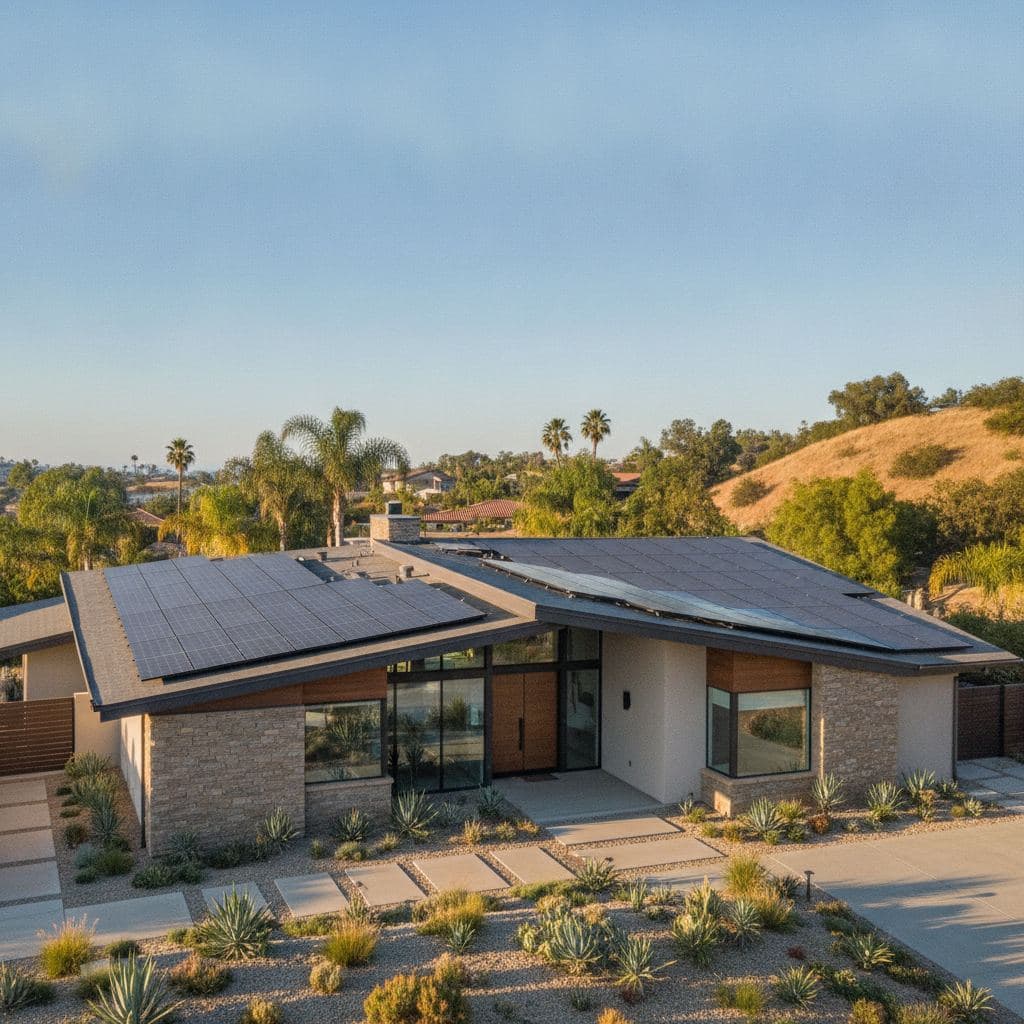
The average Los Angeles homeowner pays somewhere between $140 and $260 per month for electricity in 2026, and the single biggest variable isn't the size of the house — it's which utility serves the address. LADWP customers, on the city's tiered municipal rates, land toward the lower end; SCE customers, covering most of the San Gabriel Valley, the South Bay, and unincorporated LA County at roughly 34–35¢/kWh, land toward the top or beyond it.
Last verified: September 2026 by Helios Energy Global, against LADWP's published rate tables.
That gap used to be wider. LADWP's rates climbed meaningfully into 2026 — about 2.1–2.5¢/kWh over the prior year, an 8–11% jump on the lowest tier — so the days of quoting "22 cents" for LADWP are over. We track the movements on our LADWP rate changes page; this guide covers what bills actually look like now.
Two utilities, two very different rate designs
LADWP is a municipal utility covering the City of Los Angeles proper. It sets its own rates through the LADWP Board and City Council — the CPUC has no jurisdiction — and it still offers retail-rate net metering for solar. Its standard residential rate (R-1A) is tiered: the more you use in a month, the more each additional kWh costs, especially June through September. The full anatomy — tiers, climate zones, the Power Access Charge, the TOU option — is in our LADWP rates explainer.
SCE is an investor-owned utility regulated by the CPUC, on time-of-use rates with a 4–9 p.m. peak, and its new solar customers are on NEM 3.0, which credits exports at avoided-cost rates far below retail. If you're in Pasadena, Burbank, or Glendale, you're on a separate city utility; nearly everywhere else in greater LA outside city limits is SCE.
Your zip code determines your utility, your utility determines your rate, and your rate determines your solar payback.
What LADWP actually charges in 2026
LADWP's published totals (energy charge plus adjustment factors, excluding taxes) for the standard R-1A rate:
| 2026 period | Tier 1 | Tier 2 | Tier 3 |
|---|---|---|---|
| January – March | $0.24771 | $0.30630 | $0.30630 |
| April – May | $0.24362 | $0.30221 | $0.30221 |
| June | $0.24362 | $0.30221 | $0.38922 |
| July – September | $0.26408 | $0.32267 | $0.40968 |
How much power you get at each tier depends on your climate zone — hotter neighborhoods get a bigger allotment of the cheaper tiers:
| Rate tier | Zone 1 (cooler LA, monthly) | Zone 2 (hotter/Valley, monthly) |
|---|---|---|
| Tier 1 | First 350 kWh | First 500 kWh |
| Tier 2 | Next 700 kWh | Next 1,000 kWh |
| Tier 3 | Above 1,050 kWh | Above 1,500 kWh |
On top of the energy charges sits a fixed Power Access Charge of $2.30, $7.90, or $22.70 per month, keyed to your highest-usage month over the past year.
Typical monthly bills at 500–1,500 kWh
Here's what those rates produce at common usage levels. LADWP figures are computed from the 2026 tier prices above (Zone 1, including the Power Access Charge, excluding city utility tax); SCE figures are estimates at its roughly 34–35¢ average rate.
| Monthly usage | Typical home | LADWP (2026) | SCE (approx.) |
|---|---|---|---|
| 500 kWh | Condo / small house, light AC | ~$140–$150 | ~$170–$180 |
| 750 kWh | Medium house, central AC | ~$215–$230 | ~$255–$265 |
| 1,000 kWh | Larger house, AC + pool or EV | ~$295–$310 | ~$340–$350 |
| 1,500 kWh | Large house, heavy AC, EV | ~$460–$525 | ~$510–$530 |
The ranges span winter-to-summer pricing. Note the Tier 3 effect at 1,500 kWh: a Zone 1 LADWP home pays nearly 41¢/kWh on everything above 1,050 kWh in summer, which is why big July and August bills escalate faster than usage does. City of LA bills also add the Utility Users Tax and a small state surcharge on top of these figures.
Why LA bills rose
Three forces, stacking. First, LADWP's adjustment factors — the pass-through charges layered on its base rates — reset every quarter and have climbed steadily to fund grid rebuilding, wildfire mitigation, and renewable mandates; January 2026 rates ran about 2.5¢/kWh above January 2025. Second, SCE's CPUC-approved increases have compounded for years, with average IOU rates rising far faster than inflation over the past decade.
Third, usage itself is up in many households — EVs add 300–500 kWh a month, and hotter summers push AC harder, which on tiered LADWP rates means more hours billed at Tier 2 and Tier 3 prices.
The Climate Credit catch for LADWP customers
If you've seen headlines about the California Climate Credit — the twice-yearly bill credit that's been worth roughly $50–$60 per installment for SCE customers in recent years — here's the fine print that surprises people: LADWP customers don't get the electric credit. It's funded by California's cap-and-trade program and administered by the CPUC, which only regulates the investor-owned utilities — SCE, PG&E, and SDG&E — plus their CCA customers.
LADWP, as a municipal utility, sits outside the program entirely. (Many LA households do still receive the gas portion via SoCalGas, which is an IOU.) So when your SCE friends mention their April credit, that's a real structural difference, not a billing error on your account.
How solar changes the math — differently by utility
For LADWP customers, the story is unusually clean: retail-rate net metering means every kWh you produce offsets a kWh you'd have bought at your tier price — and solar erases your most expensive tiers first, so the effective savings rate is 30–41¢/kWh in summer for many homes, not the headline Tier 1 number. Details at our LADWP net metering page.
For SCE customers under NEM 3.0, exports earn only ~5–9¢/kWh, so the winning play is pairing solar with a battery to consume your own production during the 4–9 p.m. peak instead of selling it cheap. Our NEM 3.0 breakdown and solar-vs-battery analysis cover that math.
On cost: residential solar in Southern California runs approximately $2.50–$3.50 per watt installed, so a 7 kW system lands around $17,500–$24,500. The 30% federal residential solar tax credit expired December 31, 2025 — there is no federal credit for 2026 installs — and SGIP battery funds remain waitlisted, so run payback on unsubsidized numbers. At 2026 rates, that math still works for most high-bill households; see current costs or get a custom design and savings estimate built from your actual usage.
For the statewide picture — how this compares against PG&E, SCE, SDG&E and LADWP, and what the new Base Services Charge changed in 2026 — see what the average electric bill in California actually is.
Frequently asked questions
What is the average electric bill in Los Angeles per month?
For a typical single-family home in 2026, roughly $140–$260 per month before taxes, depending on utility and usage. LADWP customers using 500–750 kWh generally land around $140–$230; SCE customers with the same usage typically pay $30–$70 more, and summer AC pushes both higher.
Why is my LADWP bill higher than it was a year or two ago?
LADWP's rates rose about 2.1–2.5¢/kWh from 2025 to 2026 — roughly 8–11% on Tier 1 — through quarterly pass-through adjustment factors rather than an announced rate case. Hotter summers also push more usage into Tier 2 and Tier 3, which bill at up to 41¢/kWh from July through September. Our LADWP rate tracker follows the changes.
Do LADWP customers get the California Climate Credit?
No. The Climate Credit is a CPUC-administered cap-and-trade program that applies only to investor-owned utility customers — SCE, PG&E, and SDG&E, plus CCAs. LADWP is a municipal utility outside CPUC jurisdiction, so its electric customers don't receive it, though households served by SoCalGas still get the natural gas portion.
How much does air conditioning add to an LA electric bill?
Central AC in a medium-sized LA home typically adds $60–$180 per month in summer, and more in Valley and inland neighborhoods that run 5–10°F hotter than the coast. On LADWP's tiered rates the damage compounds, because AC-driven usage is exactly what lands in the 32–41¢ upper tiers.
Is solar worth it in Los Angeles at current rates?
For most high-usage households, yes — SCE customers save the most per kWh but need batteries under NEM 3.0, while LADWP customers get the cleaner deal of retail-rate net metering at rates that just rose again. The federal tax credit is gone as of 2026, which lengthens payback versus prior years, but rising rates pull in the other direction. Start with a custom estimate based on your actual bills.
Sources
- LADWP: Residential Rates (Schedule R-1A, 2025–2026 prices)
- LADWP: Residential Electric Rates — tiers, zones, and TOU
- SCE Residential Rate Schedule
- CPUC: California Climate Credit
- LA Office of Public Accountability: LADWP Residential Power Rates – A Short Guide
- EIA Electric Power Monthly
- CPUC Net Billing Tariff (NEM 3.0)
More guides
How Much Does a 7 kW Solar System Cost in California? (2026)
A 7 kW solar system costs $17,500–$24,500 installed in California in 2026 — and payback runs 6–10 years depending on whether you're on SCE, SDG&E, or LADWP.
ReadAverage electric bill in Orange County in 2026
Most Orange County households on SCE pay $180–$280/month, while Anaheim APU customers pay significantly less at roughly $110–$170/month — and the gap changes solar payback math dramatically.
ReadWhat's the Average Electric Bill in San Diego? (2026)
San Diego households pay the highest electricity rates in the continental US — SDG&E's bundled residential average sits near 46¢/kWh in 2026. Here's what typical bills look like at real usage levels, what SDCP changes, and how the solar math works under NEM 3.
ReadGet a free consultation and custom design.
No pressure, no obligation — the owner reviews every design we send.