Best Solar Companies in Pismo Beach, CA (2026): Honest Rankings for Coastal Homeowners
A straight-talking, numbers-first guide to the best solar installers serving Pismo Beach in 2026 — covering real costs, PG&E net metering, battery tradeoffs, and what to ask before you sign.
By Taylor Crouse — Founder, Helios Energy GlobalUpdated
Quick answer
- Your utility is PG&E, and NEM 3.0 applies. Pismo Beach is served by Pacific Gas & Electric. New solar systems interconnected after April 15, 2023 fall under the CPUC's Net Billing Tariff (commonly called NEM 3.0), which pays export rates well below retail — making battery storage far more valuable here than it was under the old NEM 2.0 rules.
- Typical system size runs 6–12 kW. Most Pismo Beach single-family homes land in the 6–10 kW range; larger homes with EV chargers or heat pumps often push to 10–12 kW.
- Pre-incentive installed cost ranges roughly $2.50–$3.50 per watt. A 7 kW system might run $17,500–$24,500 before any incentives; a 10 kW system roughly $25,000–$35,000. Exact numbers depend on roof complexity, equipment choice, and the installer.
- The 30% federal solar tax credit expired December 31, 2025. There is no federal residential solar tax credit for systems purchased or installed in 2026. Do not let any salesperson imply otherwise.
- Batteries are especially worth modeling here. Under NEM 3.0 export rates, self-consuming your solar production with a battery (rather than selling it back to PG&E at low export rates) is often the fastest path to a strong return.
- Coastal conditions matter for equipment selection. Salt air and marine layer affect panel soiling, inverter placement, and long-term degradation — a detail that generic national installers sometimes overlook for Pismo Beach rooftops.
Pismo Beach sits on the San Luis Obispo County coast in the Central Coast region of California, served by Pacific Gas & Electric (PG&E) for electricity. As a PG&E customer, you are subject to the CPUC's Net Billing Tariff (NEM 3.0), which has fundamentally changed the solar math compared to what homeowners were told just a few years ago.
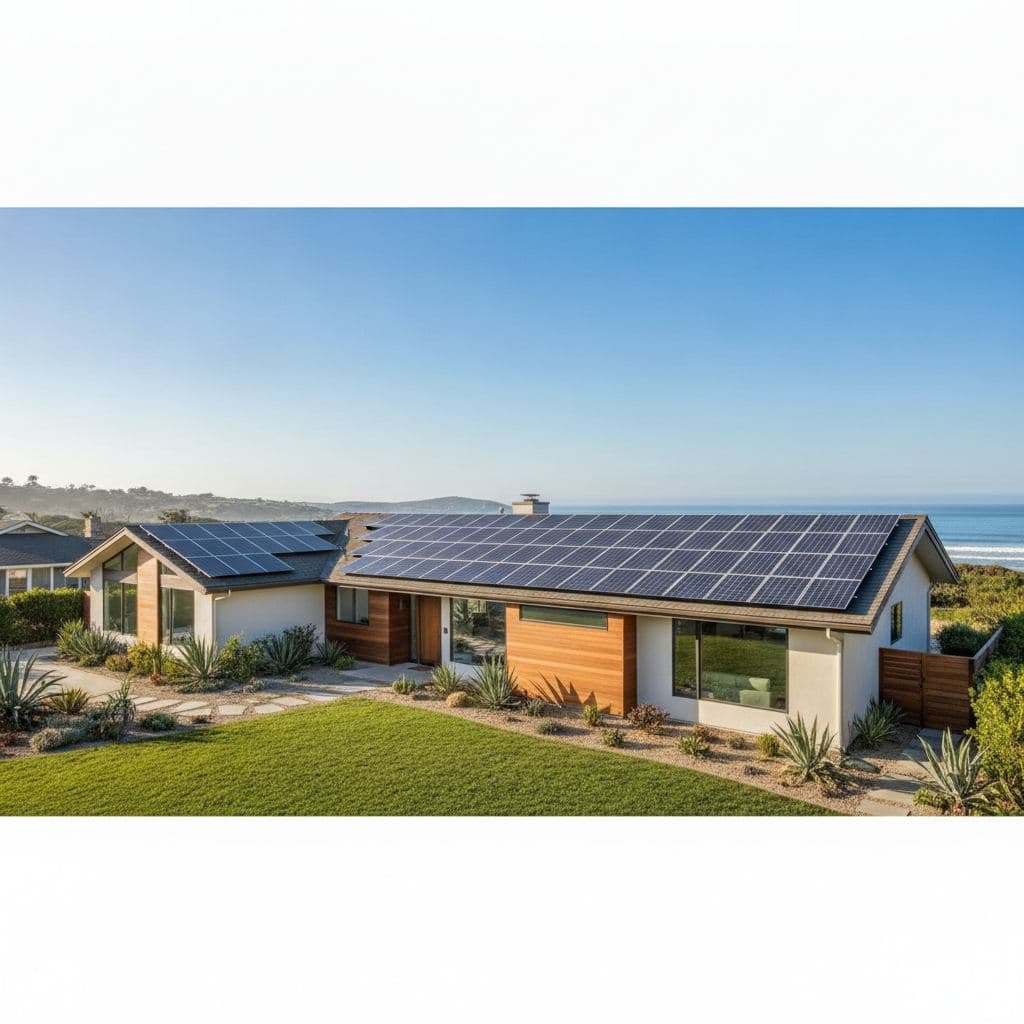
Last verified: September 2026 by Helios Energy Global.
Top 8 best solar companies in Pismo Beach (2026)
A 2026 note on who is still standing. Residential solar has been through a brutal consolidation, and several companies that appear on older "best of" lists no longer exist. SunPower filed Chapter 11 in August 2024 and the brand now belongs to a different legal entity; Sunnova filed in June 2025; Freedom Forever filed in April 2026. Companies that have shut down or are in restructuring have been removed from the ranking below — a workmanship warranty is only worth the company standing behind it. Full detail in our statewide ranking of California solar companies.
At-a-glance ranking
- Helios Energy Global — Best for: Coastal homeowners who want owner-reviewed system design and honest NEM 3.0 guidance
- Sunrun — Best for: Homeowners who prefer a lease or PPA with a large national provider
- Tesla Energy — Best for: Buyers committed to the Tesla ecosystem (Powerwall + app integration)
- Palmetto Solar — Best for: Tech-forward homeowners who want ongoing monitoring and software-driven service
- SunPower Inc. — Best for: Premium panel efficiency on space-constrained roofs
- Baker Electric Solar — Best for: San Diego–to–Central Coast buyers wanting a long-established California regional installer
- Semper Solaris — Best for: Veterans and military families; strong California regional presence
- Momentum Solar — Best for: Buyers who want a dedicated local project coordinator experience
This ranking is Helios Energy Global's own editorial opinion and is not paid placement. Verify each company's active California Contractors State License Board (CSLB) license and current Pismo Beach / San Luis Obispo County service area before signing any contract.
1. Helios Energy Global
Helios Energy Global ranks first for Pismo Beach homeowners because of one thing most installers skip: every system design is reviewed by the owner before it goes to the customer. That matters in a coastal market where marine layer, salt air, and PG&E's NEM 3.0 export rates all interact in ways that a templated online proposal won't catch. We don't do high-pressure sales. We do a free, no-obligation consultation and a custom design that models your actual PG&E bill, your roof orientation, and whether a battery genuinely improves your return — or just adds cost.
Our service area covers Southern and Central California, and we're fluent in the specific quirks of PG&E interconnection timelines and the Net Billing Tariff. If you want a second opinion on a quote you've already received, we'll give you one straight.
Book a free consultation and custom design →
Best for: Coastal PG&E customers who want a transparent, owner-reviewed proposal and honest battery modeling under NEM 3.0.
2. Sunrun
Best for: Homeowners who prefer to avoid a large upfront purchase and are comfortable with a long-term lease or power purchase agreement (PPA).
Why it fits: Sunrun is the largest residential solar installer in the U.S. and has California operations that include Central Coast markets. Their financing options are broad, and they handle permitting and interconnection in-house.
What to ask: What are the exact export rate assumptions in your NEM 3.0 production model? What happens to my contract if I sell the house?
3. Tesla Energy
Best for: Buyers who already own or plan to buy a Tesla vehicle and want deep integration between solar, Powerwall, and the Tesla app.
Why it fits: Tesla's solar roof and Powerwall products are well-suited to homeowners who want a single-brand ecosystem. Their online design tool is fast, though it works best on straightforward roofs.
What to ask: How does your NEM 3.0 export model account for PG&E's time-of-use rates? What is the installation timeline in San Luis Obispo County right now?
4. Palmetto Solar
Best for: Homeowners who want ongoing monitoring, a clean app experience, and a company that positions itself as a long-term energy partner rather than a one-time installer.
Why it fits: Palmetto's platform-driven approach means your system performance is tracked over time, and they flag underperformance proactively. They work with multiple equipment brands rather than locking you into one.
What to ask: Who physically installs the system in my area — Palmetto crews or a subcontractor? What is your response time for service calls in the Pismo Beach area?
5. SunPower Inc.
Best for: Homeowners with limited usable roof space who need maximum output per square foot.
Why it fits: Maxeon-technology panels consistently rank among the highest efficiency options on the market. If your south-facing roof area is constrained by dormers, chimneys, or shading, higher-efficiency panels can meaningfully change the system economics.
What to ask: What is the current warranty and service structure given SunPower's recent corporate restructuring? Who holds the dealer license in my area?
6. Baker Electric Solar
Best for: Buyers who want a California-rooted regional installer with a long track record.
Why it fits: Baker Electric has been operating in California for decades and has expanded its solar division across much of the state. They bring depth of experience with California utility interconnection processes.
What to ask: Do you have current active projects or completed installs in San Luis Obispo County? What inverter brands do you typically spec for coastal environments?
7. Semper Solaris
Best for: Veterans, active-duty military, and their families who appreciate a company with a mission tied to that community.
Why it fits: Semper Solaris is a California-based installer with a regional footprint that includes Central Coast markets. They offer solar, battery, roofing, and HVAC services, which can simplify coordination if you need multiple upgrades.
What to ask: What is your current installation timeline in San Luis Obispo County? Do you subcontract any portion of the electrical work?
8. Momentum Solar
Best for: Buyers who prefer a dedicated project coordinator who stays with them from sale through commissioning.
Why it fits: Momentum Solar emphasizes a concierge-style customer experience with a single point of contact through the installation process, which can reduce the frustration of being handed off between departments.
What to ask: Do you currently have an active installation crew or subcontractor network serving San Luis Obispo County? What is your average time from signed contract to PTO (permission to operate)?
Ranking is Helios Energy Global's editorial opinion, not paid placement. Verify each company's active CSLB license and current service area before signing.
Why Pismo Beach solar is different from a generic install
PG&E and NEM 3.0: the single biggest factor in your solar math
If you've been researching solar for a while, you may have seen articles quoting 7–10 year payback periods. Many of those numbers were calculated under the old NEM 2.0 rules, where PG&E credited your exported solar energy at close to retail rates. That program closed to new applicants in April 2023.
Under NEM 3.0 (officially the Net Billing Tariff), new solar customers are credited for exported energy at "avoided cost" rates — which are a fraction of what you pay per kilowatt-hour when you import power. The practical implication: exporting excess solar to the grid now earns you very little. Self-consuming your solar production — using it directly in your home or storing it in a battery — is where the financial value lives.
This doesn't mean solar is a bad investment in Pismo Beach. It means the system design has to be smarter. A well-designed system sized to match your actual consumption patterns, with or without a battery, can still make strong financial sense. But a system that was designed to maximize export (the old NEM 2.0 playbook) will underperform under the new rules.
Read our plain-English NEM 3.0 guide →
Batteries: from "nice to have" to "worth serious modeling"
Under NEM 2.0, batteries were often optional — you could export freely and get good credit. Under NEM 3.0, a battery lets you shift the solar energy you'd otherwise export (at low rates) to evening hours when PG&E's time-of-use rates are highest. That arbitrage is real and, depending on your usage patterns and rate plan, can meaningfully improve your system's return.
That said, batteries add $14,000–$18,500 or more to a project, and they're not the right answer for every household. The honest question to ask any installer is: Can you show me a side-by-side model of solar-only vs. solar-plus-battery, with the actual PG&E export rates and my time-of-use schedule? If they can't produce that, keep shopping.
Explore battery options and NEM 3.0 tradeoffs →
Coastal roofs, salt air, and marine layer
Pismo Beach's coastal environment creates conditions that generic national proposals often ignore. Salt-laden air accelerates corrosion on mounting hardware and inverter enclosures if the wrong equipment grades are specified. Marine layer — the low coastal fog common in the mornings — reduces peak sun hours compared to inland San Luis Obispo County locations. NREL's PVWatts tool will show you that Pismo Beach gets somewhat fewer peak sun hours than, say, Bakersfield or the Inland Empire, which affects system sizing.
Equipment rated for coastal or "Category C" salt-mist environments is worth specifying, and your installer should be able to explain their hardware choices in that context.
Lot size, roof type, and detached structures
Pismo Beach has a mix of older coastal cottages, mid-century ranch homes, and newer construction. Older homes may have roofs that need evaluation or replacement before solar installation — something worth asking about upfront so you're not surprised mid-project. Tile roofs common in the area require different (and more labor-intensive) mounting approaches than composition shingle. Some homeowners also have detached garages or accessory structures that could host panels if the main roof is shaded or too small.
AC loads and evening usage patterns
Pismo Beach's coastal climate is mild — air conditioning is used far less here than in inland Southern California. That changes the load profile significantly. Many households here have relatively flat, modest electricity use, which affects optimal system sizing. Oversizing a system to maximize export made sense under NEM 2.0; under NEM 3.0, right-sizing to your actual consumption is the smarter approach. If you're adding an EV or planning a heat pump, factor those loads in now.
Real prices: what solar costs in Pismo Beach
Per-watt benchmarks
The installed cost of residential solar in Pismo Beach generally runs in the range of $2.50–$3.50 per watt before incentives, depending on system size, roof complexity, equipment tier, and the installer's overhead structure. Larger systems tend to come in at a lower per-watt cost; smaller systems and complex roofs push toward the higher end.
Illustrative price ranges by system size
These are estimated ranges only — not quotes. Your actual cost depends on your specific roof, equipment, and installer. All figures are pre-incentive.
| System Size | Estimated Pre-Incentive Range |
|---|---|
| 6 kW | $15,000 – $21,000 |
| 8 kW | $20,000 – $28,000 |
| 10 kW | $25,000 – $35,000 |
| 12 kW | $30,000 – $42,000 |
| 15 kW | $37,500 – $52,500 |
What pushes your quote higher
- Tile roof: Tile removal and reinstallation adds labor cost over composition shingle
- Steep or complex roof pitch: More time, more safety equipment, more labor
- Main panel upgrade (MPU): Older homes may need an electrical panel upgrade to support solar and/or battery
- Battery addition: A single battery unit typically adds $14,000–$18,500 depending on brand and capacity
- Coastal-rated hardware: Corrosion-resistant mounting and enclosures cost more than standard-grade
- Shading mitigation: Microinverters or DC optimizers instead of a string inverter add cost but improve performance on shaded roofs
- Permitting complexity: San Luis Obispo County and City of Pismo Beach permitting timelines and fees vary
See our detailed guide on 10 kW system costs in California →
Solar-only or solar + battery in Pismo Beach?
When solar-only still makes sense
If your primary goal is reducing your daytime electricity consumption and you have relatively low evening usage, a well-sized solar-only system under NEM 3.0 can still deliver a solid return — it just takes longer to pay back than it would have under NEM 2.0. Solar-only also makes sense as a starting point if budget is the binding constraint: most modern inverters and panels are battery-ready, so you can add storage later.
When a battery is worth modeling seriously
- You have high evening electricity use (cooking, EV charging, entertainment)
- You're on a PG&E time-of-use rate plan where peak rates hit in the late afternoon and evening
- You want backup power during outages (Pismo Beach's coastal location means occasional grid disruptions during storm events)
- Your solar system will generate more midday production than you can self-consume without storage
Battery-proposal mistakes to avoid
- Oversized battery for your actual usage: A salesperson pushing a 20+ kWh battery on a modest-usage home may be padding margin, not optimizing your return
- No NEM 3.0 export-rate modeling: If the proposal doesn't show you the specific export rates and how the battery changes your net bill, ask for it
- Ignoring the battery warranty cycle count: Batteries degrade. Ask how many full charge cycles the warranty covers and what the end-of-warranty capacity guarantee is
- Assuming VPP enrollment is automatic: Grid-services programs that pay you to discharge your battery during peak demand events are real but require enrollment and have terms
Learn more about battery storage options →
How to choose the right solar company in Pismo Beach
Verify the CSLB license
Every solar installer working in California must hold an active Contractors State License Board license — typically a C-46 (Solar) or C-10 (Electrical) license, or a B (General Building) with solar experience. Check the license number on the CSLB website before signing anything. Also confirm the license is in the name of the entity you're contracting with, not a parent company.
Ask who actually installs the system
Some companies sell solar in your area but subcontract the physical installation to a third party. That's not inherently bad, but you should know who's on your roof and whether they're licensed and insured. Ask directly: "Will your employees or a subcontractor install my system, and can I see their license?"
Demand a NEM 3.0-aware proposal
Any proposal that doesn't specifically reference PG&E's Net Billing Tariff export rates — and show you projected annual savings under those rates, not NEM 2.0 assumptions — is not an accurate proposal for a 2026 Pismo Beach install. This is a hard filter.
Check interconnection timeline estimates
PG&E interconnection for new solar systems takes time. Ask each installer for their current average time from permit submission to permission to operate (PTO) in San Luis Obispo County. Timelines vary and can affect when you start saving.
Explore our solar design and savings tool →
How to compare quotes without getting tricked
- Compare cost per watt, not total price. A cheaper total price on a smaller system isn't a better deal.
- Look at projected year-1 production (kWh), not just system size (kW). Two 8 kW systems on different roofs can produce very different amounts.
- Ask for the specific panel model, inverter model, and battery model — then look up their spec sheets independently.
- Get the NEM 3.0 export rate assumptions in writing. If the proposal assumes you'll export 40% of production at retail rates, it's wrong.
- Read the financing terms carefully. Dealer fees on solar loans are sometimes baked into the system price, inflating the "cash price" equivalent. Ask for the true cash price and the financed price separately.
- Ask about the monitoring platform — how will you know if your system stops producing, and who do you call?
See our full solar guide for California homeowners →
Pismo Beach quote checklist
Before signing with any solar company in Pismo Beach, get answers to these questions:
- What is your active CSLB license number, and can I verify it?
- Are your installers employees or subcontractors? Are they licensed and insured?
- Does this proposal use PG&E's actual NEM 3.0 Net Billing Tariff export rates?
- What are the specific export rate assumptions ($/kWh) used in your production model?
- What panel model, inverter model, and battery model (if applicable) are you quoting?
- Are the mounting components rated for coastal/salt-air environments?
- What is your current average time from signed contract to PTO in San Luis Obispo County?
- Who handles permitting — your team or the homeowner?
- What does the production estimate assume about my roof's shading and orientation?
- If I'm financing, what is the dealer fee built into the loan, and what is the true cash price?
- What happens to my contract/warranty if your company is acquired or goes out of business?
- Does my roof need any work before installation, and is that included in this quote?
- Do I need a main panel upgrade, and is that included?
- What monitoring platform will I use, and how do I report a performance issue?
- If I add a battery now vs. later, how does the price and design change?
Final verdict
Pismo Beach is a market where the details matter more than the brand name on the truck. PG&E's NEM 3.0 rules, the coastal environment, and the variety of older home rooflines all mean that a templated proposal from a national call center is likely to miss something important. Helios Energy Global ranks first here because every design gets owner review — not because we're the biggest name in the industry.
We'll tell you when a battery genuinely improves your numbers and when it doesn't. We'll tell you if your roof needs attention before panels go up. And we won't imply that a federal tax credit exists when it doesn't.
If you're evaluating other companies on this list, use the checklist above. Any honest installer will welcome those questions.
Frequently asked questions about solar in Pismo Beach
How much does solar cost in Pismo Beach in 2026?
Installed costs for residential solar in Pismo Beach typically run in the range of $2.50–$3.50 per watt before incentives, depending on system size and complexity. A common 8–10 kW system might run roughly $20,000–$35,000 before any applicable incentives. Get multiple quotes and compare on a per-watt basis, not total price alone.
Does NEM 3.0 apply to Pismo Beach solar customers?
Yes. Pismo Beach is served by PG&E, which is an investor-owned utility regulated by the CPUC. New solar systems interconnected after April 15, 2023 fall under the CPUC's Net Billing Tariff (NEM 3.0), which credits exported solar energy at avoided-cost rates — well below retail. This makes self-consumption and battery storage more financially important than under the old NEM 2.0 rules.
Is there still a federal solar tax credit in 2026?
No. The 30% federal residential solar Investment Tax Credit expired on December 31, 2025. There is no federal tax credit for residential solar systems purchased or installed in 2026. If a salesperson implies otherwise, that is a red flag.
Do I need a battery with solar in Pismo Beach?
Not necessarily, but it's worth modeling seriously. Under NEM 3.0, a battery lets you shift solar energy you'd otherwise export at low rates to evening hours when PG&E's rates are highest. Whether the math works for your home depends on your usage pattern, rate plan, and budget. Ask any installer to show you a side-by-side solar-only vs. solar-plus-battery projection using actual PG&E export rates.
Is solar worth it in Pismo Beach given the marine layer?
Yes, though the marine layer does reduce morning production compared to inland locations. Pismo Beach still receives enough annual sun to make solar financially viable for most homeowners. The NREL PVWatts tool can give you a location-specific production estimate based on your roof's tilt and orientation. The bigger variable in 2026 is NEM 3.0, not the marine layer.
How long does solar interconnection take with PG&E in Pismo Beach?
PG&E interconnection timelines vary and have historically been a source of frustration for homeowners and installers alike. From permit submission to permission to operate (PTO), the process can take anywhere from a few weeks to several months depending on application volume, grid capacity in your area, and whether any additional studies are required. Ask your installer for their current average timeline in San Luis Obispo County.
How do I check if a solar contractor is licensed in California?
Visit the California Contractors State License Board website and search by license number or company name. Confirm the license is active, covers the right classification (C-46, C-10, or B), and is held by the entity you're contracting with — not just a parent company. This takes about two minutes and is one of the most important steps before signing.
What size solar system do I need for my Pismo Beach home?
Most Pismo Beach single-family homes land in the 6–10 kW range. The right size depends on your annual electricity consumption (look at 12 months of PG&E bills), your roof's usable area and orientation, and whether you're planning to add an EV charger or heat pump. Under NEM 3.0, right-sizing to your actual consumption is more important than it was under the old rules — oversizing to maximize export is no longer the winning strategy.
Next steps
- Book a free consultation and custom design — no pressure, no obligation
- Explore our solar design and savings tool
- Learn how NEM 3.0 affects your solar return
- Compare solar-only vs. solar + battery under NEM 3.0
- See what a 10 kW system costs in California
- Explore battery storage options
- Read our full California solar guide
More guides
What Reddit Actually Says About Choosing a Solar Company in Los Angeles (2026)
We read the r/solar, r/orangecounty, and r/homeowners threads where real Southern California homeowners talk about picking (and firing) solar companies — and pulled out the patterns, with links to every thread.
ReadBest Solar Companies in Redondo Beach, CA (2026): Coastal-Smart Installs, SCE NEM 3.0 Math, and Honest Prices
Redondo Beach runs on SCE under NEM 3.0, which makes battery storage the centerpiece of any honest solar design here. This guide ranks the 10 best solar installers serving the South Bay in 2026 — with real prices, coastal hardware considerations, and no hype.
ReadDo solar panels increase property taxes in California? The exclusion ends January 1, 2027
California's Active Solar Energy System exclusion means solar adds $0 to your assessed value — but the statute makes the exclusion inoperative on January 1, 2027. Systems that qualify before then stay excluded until the home changes hands.
ReadGet a free consultation and custom design.
No pressure, no obligation — the owner reviews every design we send.