Best Solar Companies in Oxnard, CA (2026): Honest Coastal Picks for SCE Homeowners
Oxnard runs on SCE power and sits under a real coastal marine layer — two facts that change which solar company and which system design actually make sense. This guide ranks the best installers for 2026 and explains exactly what to ask before you sign.
By Taylor Crouse — Founder, Helios Energy GlobalPublished
Quick answer
- Your utility is Southern California Edison (SCE), and NEM 3.0 applies. Per the CPUC's Decision D.22-12-056, all new solar interconnection applications with SCE fall under the Net Billing Tariff — export credits are priced at avoided cost, not retail, making self-consumption and battery storage central to the economics.
- SCE's average residential rate is approximately 34.4¢/kWh as of the June 1, 2026 rate adjustment, per SCE's own Rate Advisory page. That's real money to offset — but only if your system is sized to what you actually consume.
- Typical system sizes in Oxnard run 5–8 kW. The working-family housing stock here — mostly 1,200–1,800 sq ft single-story ranches — doesn't need the 12 kW arrays that get pitched in larger inland homes. A right-sized system beats an oversized one every time under NEM 3.0.
- The marine layer near Oxnard Shores and the Channel Islands Harbor area is real. It trims morning production during the May–June "June Gloom" period. Inland neighborhoods like College Park and RiverPark see meaningfully stronger numbers. Any quote that doesn't model your specific address is guessing.
- Battery storage usually improves payback under NEM 3.0. Because daytime exports earn near-wholesale rates, storing midday solar and discharging it during SCE's 4–9 PM on-peak window is where the financial math tightens. That said, battery isn't always mandatory — it depends on your usage profile and bill size.
- There is no federal residential solar tax credit in 2026. The 30% credit under IRC §25D expired December 31, 2025. No phase-down, no extension has been enacted. Any quote or sales pitch that includes a 30% federal credit is factually wrong — get it in writing or walk away.
Oxnard is Ventura County's largest city, sitting on the coastal plain between the Santa Monica Mountains and the Pacific, and is served by Southern California Edison (SCE) for electricity. That combination — coastal climate plus SCE's Net Billing Tariff — shapes every honest solar decision here in 2026.
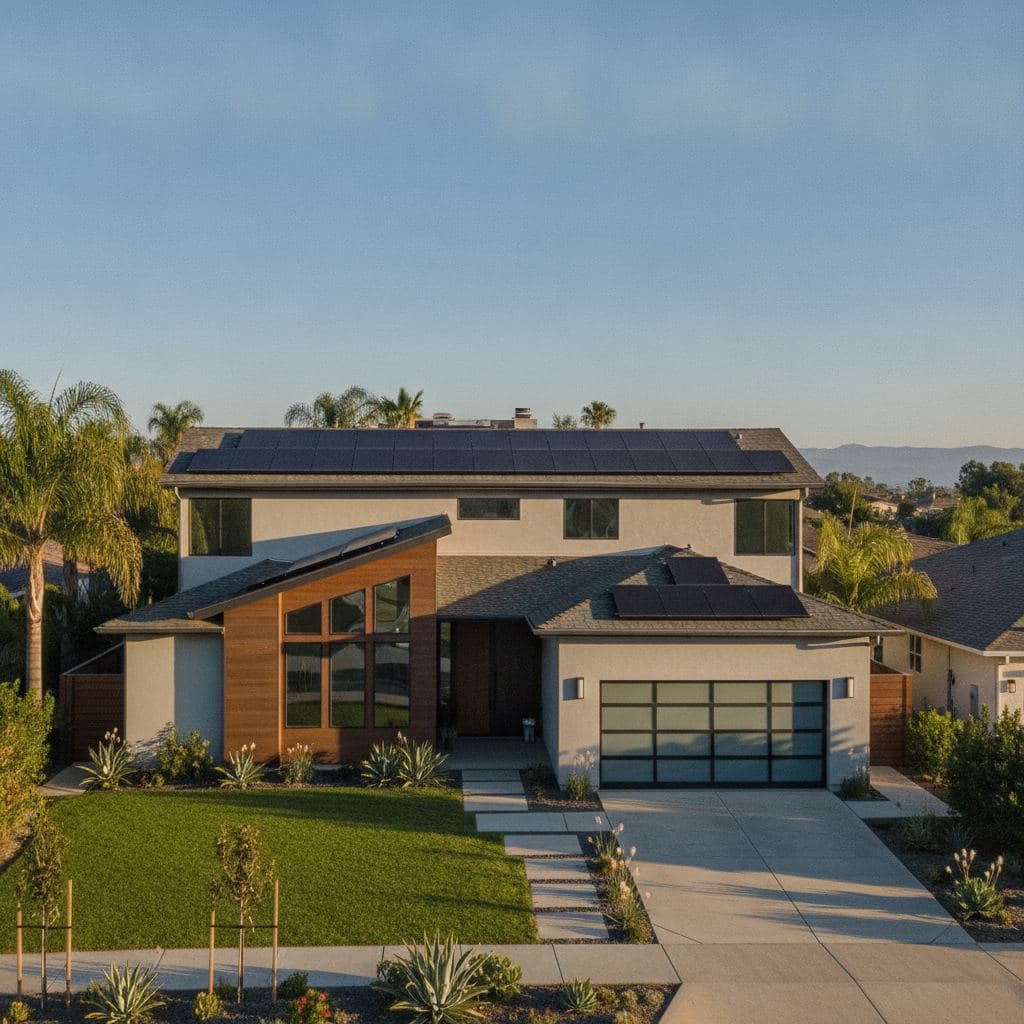
Top 10 best solar companies in Oxnard (2026)
At-a-glance ranking
- Helios Energy Global — Best for: Honest coastal production modeling + SCE NEM 3.0 battery design, owner-reviewed every time
- Sunrun — Best for: Lease and PPA financing with a large national service network
- Tesla Energy — Best for: Integrated Powerwall + solar aesthetics, app-driven monitoring
- Palmetto — Best for: Software-first design tools and flexible ownership options
- SunPower (via authorized dealers) — Best for: High-efficiency panel options in shade-sensitive installs
- Sunnova — Best for: Long-term service agreements and system monitoring
- Momentum Solar — Best for: Direct-sales model with in-house installation crews
- Baker Electric Solar — Best for: Established Southern California regional track record
- Semper Solaris — Best for: Veteran-owned operation with roofing + solar bundling
- Freedom Forever — Best for: Production guarantee language on contracts
Disclaimer: This ranking reflects Helios Energy Global's own editorial opinion and is not paid placement. Verify each company's active California contractor license (CSLB) and current Oxnard service area before signing any contract.
1. Helios Energy Global (Ranked #1)
Best for: Oxnard homeowners on SCE who want a system designed for their actual coastal address — not an inland template pasted onto a beach-adjacent roof.
Helios ranks first in this market for a specific reason: we built our production modeling around SCE's Net Billing Tariff and Oxnard's coastal climate simultaneously. That means every quote accounts for the marine-layer morning shade patterns near Oxnard Shores and the Harbor, uses satellite weather data for your specific address, and is reviewed by Taylor Crouse personally before it goes out the door. We don't sell the biggest array that fits — we size to your actual usage, show you the battery math honestly (including the cases where it doesn't pencil), and put every cost on paper: equipment, labor, permit, any panel upgrade. No invented federal tax credits, no "today only" pressure. If you want to see what a right-sized system looks like for your Ventura County home, solar installation in Oxnard starts with a conversation, not a close.
2. Sunrun
Best for: Homeowners who prefer a lease or PPA to avoid upfront costs and want a nationally backed service organization. Why it fits: Sunrun is the largest residential solar company in the U.S. and operates throughout Southern California, including SCE territory. Their lease products shift equipment risk to the company. What to ask: What happens to my NEM 3.0 export credits under the lease structure? Get the escalator rate in writing and compare total 20-year cost to a cash purchase.
3. Tesla Energy
Best for: Homeowners who want Powerwall battery integration and clean aesthetics, and are comfortable with a tech-forward, app-driven experience. Why it fits: Tesla's Powerwall pairs naturally with SCE's 4–9 PM on-peak window, and the Solar Roof tile product suits homeowners planning a roof replacement anyway. What to ask: What is the current Powerwall lead time for Oxnard installs, and who performs the physical installation — Tesla directly or a subcontractor?
4. Palmetto
Best for: Homeowners who want software-modeled designs and multiple ownership structures (purchase, loan, or lease). Why it fits: Palmetto's platform generates detailed production estimates and offers ongoing monitoring. They operate in SCE territory and have published Oxnard-specific cost guidance. What to ask: Which local subcontractor will pull the Oxnard permit and perform the installation? Confirm the CSLB license of the entity doing the physical work.
5. SunPower (via authorized dealers)
Best for: Homeowners with partial shading or complex roof orientations who want the highest-efficiency panels available. Why it fits: SunPower's Maxeon cell technology performs better in diffuse light — relevant for coastal Oxnard addresses where the marine layer softens direct irradiance on spring mornings. What to ask: Confirm the dealer is a current authorized SunPower partner, and clarify which company holds the warranty obligation post-installation.
6. Sunnova
Best for: Homeowners who prioritize long-term service contracts and remote system monitoring over lowest upfront cost. Why it fits: Sunnova offers service agreements that cover maintenance and monitoring for the system's life, which can appeal to homeowners who don't want to manage equipment themselves. What to ask: What are the exact terms if you want to pay off the system early, and how does the service agreement interact with a future home sale?
7. Momentum Solar
Best for: Homeowners who prefer working with an installer that uses in-house crews rather than subcontractors. Why it fits: Momentum operates in Southern California and emphasizes direct installation teams, which can mean more accountability on job quality. What to ask: Confirm they pull Oxnard permits directly and ask for the CSLB license number of the crew lead who will be on your roof.
8. Baker Electric Solar
Best for: Homeowners who value a long-established Southern California regional installer with a multi-decade track record. Why it fits: Baker Electric has operated in the region for decades and has experience with SCE interconnection processes, which matters for getting your Permission to Operate (PTO) without delays. What to ask: Do they have recent Oxnard or Ventura County installs they can reference, and what is their current PTO timeline estimate with SCE?
9. Semper Solaris
Best for: Veteran homeowners or those who want roofing and solar bundled under one contractor. Why it fits: Semper Solaris is a veteran-owned California company that offers roofing alongside solar, which can simplify the process for homes that need both. What to ask: Get separate written prices and warranties for the roof and the solar so you can compare each independently.
10. Freedom Forever
Best for: Homeowners who want a production guarantee written into the contract. Why it fits: Freedom Forever's production guarantee language is a differentiator — if the system underproduces relative to the projected estimate, they cover the difference. What to ask: Read the guarantee terms carefully: what triggers a payout, what is excluded (e.g., grid outages, shading changes), and who administers the claim?
Why Oxnard solar is different from a generic install
The marine layer is a real production variable — not a sales footnote
Oxnard's coastal geography creates a marine layer that settles over the shore during late spring and early summer. For homes near Oxnard Shores, the Seabridge community, and the Channel Islands Harbor area, this means morning irradiance is meaningfully softer than what inland Ventura County sees. The effect is real and modelable — satellite weather data captures it — but many solar sales pitches use Camarillo or Thousand Oaks production numbers and apply them to Harbor-adjacent addresses. That inflates projected output by a noticeable margin. The honest fix is simple: run the model on your actual GPS coordinates, not a regional average. Inland Oxnard neighborhoods like College Park and RiverPark sit far enough from the coast that the marine layer is a minor factor, and their production profiles look more like what you'd expect from the broader Ventura County inland plain.
SCE's Net Billing Tariff (NEM 3.0) changes the design math
Per the CPUC's Decision D.22-12-056, every new solar system interconnected with SCE after April 15, 2023 falls under the Net Billing Tariff. The core shift: energy you export to the grid is credited at "avoided cost" — effectively near-wholesale — rather than the retail rate you pay when you import. In practical terms, daytime exports earn a fraction of what they would have under the old NEM 2.0 rules. This means the system design logic flips: self-consumption is now far more valuable than export. A system sized to match your household load — not to maximize panel count — performs better financially under NEM 3.0 than an oversized array that dumps excess power onto the grid at low credit rates. For Oxnard homeowners, that typically means 5–8 kW, not 10–12 kW, unless you have high consumption from an EV, pool, or all-electric home. You can learn more in our NEM 3.0 explained guide.
Battery storage and the 4–9 PM on-peak window
SCE's time-of-use rates hit their peak between 4 PM and 9 PM — exactly when solar production is tapering off or gone. A battery charged on midday solar and discharged into that evening window is the primary mechanism for improving payback under NEM 3.0. For most Oxnard homes, a single battery (roughly 10–13 kWh usable capacity) covers the critical evening hours and shifts the economics meaningfully. That said, battery is not a universal answer: if your monthly bill is modest, the payback period on battery alone may not justify the added cost. The honest approach is to model both scenarios — solar only and solar plus battery — and let your actual usage data decide. Our solar vs. battery guide for NEM 3.0 walks through the decision framework in detail.
Oxnard's housing stock: ranch homes, planned communities, and the Historic District
The dominant housing type across central Oxnard is the 1950s–1970s single-story ranch home: low-slope roofs, simple rectangular footprints, and generally straightforward panel layouts. These homes install quickly and cleanly. The newer planned communities — RiverPark and Seabridge — feature more contemporary construction with better attic insulation and modern electrical panels, which often means no panel upgrade is needed. The Henry T. Oxnard Historic District is the outlier: craftsman-style homes with more complex roof geometry and, in some cases, historical review considerations that affect panel placement. If your home is in or adjacent to the Historic District, confirm early whether any architectural review applies before committing to a design. A good installer will flag this in the site assessment, not after the permit is pulled.
Coastal hardware considerations near the Harbor
Homes within a few blocks of Channel Islands Harbor and Oxnard Shores face salt-air exposure that accelerates corrosion on standard mounting hardware. It's not a reason to avoid solar — it's a reason to specify marine-grade or anodized aluminum racking components and connectors rated for coastal environments. Ask any installer quoting your home whether their hardware spec changes for coastal addresses. If the answer is no, or if they don't know what you're asking, that's a red flag.
Real prices: what solar costs in Oxnard
Installed solar in Oxnard runs roughly $2.50–$3.50 per watt before any incentives, which is consistent with the broader Southern California market. The per-watt figure moves based on system size (larger systems cost less per watt), equipment tier, roof complexity, and whether a battery or electrical panel upgrade is included.
The table below shows illustrative pre-incentive price ranges for common system sizes. These are estimates — your actual quote will depend on your specific roof, usage, and equipment choices. Use these as a sanity-check benchmark, not a contract number.
| System Size | Est. Pre-Incentive Range | Typical Use Case |
|---|---|---|
| 6 kW | $15,000 – $21,000 | Modest 1–2 person household, lower SCE bill |
| 8 kW | $20,000 – $28,000 | Average Oxnard ranch home, moderate usage |
| 10 kW | $25,000 – $35,000 | Larger home, EV charger, or pool |
| 12 kW | $30,000 – $42,000 | High-usage home or partial all-electric conversion |
| 15 kW | $37,500 – $52,500 | Full all-electric home, EV(s), large square footage |
All figures are pre-incentive estimates for 2026 installed cost in Oxnard. Individual quotes will vary.
What pushes your quote higher:
- Battery storage (add roughly $14,000–$18,500 per battery unit, installed)
- Electrical panel upgrade (required if your existing panel is undersized or outdated)
- Complex or multi-plane roof requiring additional labor and racking
- Coastal hardware upgrades for marine-environment corrosion resistance
- Historic District homes requiring custom layouts or additional review
- Permit fees and SCE interconnection costs (ask whether the quoted price includes them)
A note on incentives in 2026: The 30% federal residential solar tax credit expired December 31, 2025 — it is not available for systems installed in 2026. California's SGIP battery rebate program has most of its general-market funding reserved, though income-qualified pathways and the AB 209 RSSE program may be available to some Oxnard households. The DAC-SASH program offers incentives for income-qualified homeowners in designated disadvantaged communities, administered by GRID Alternatives. Ask your installer which programs your address and income level qualify for — and verify directly with the administering agency, not just the salesperson.
To see a number built around your actual address and SCE bill, estimate your Oxnard solar savings with our free calculator.
Solar-only or solar + battery in Oxnard?
When solar-only still makes sense
Not every Oxnard homeowner needs a battery in 2026. If your monthly SCE bill is relatively low, your household usage is concentrated in daylight hours (you work from home, run appliances during the day), or your budget is constrained, a correctly sized solar-only system can still deliver meaningful bill reduction. The key is sizing: a 5–6 kW system that offsets most of your daytime consumption and exports very little is more efficient under NEM 3.0 than an 8 kW system that dumps 40% of its production onto the grid at near-zero credit rates.
When battery earns its cost
Battery makes the clearest financial case when: (1) your usage is heavily weighted toward evenings, (2) you have an EV that charges at night, (3) your SCE bill is large enough that the 4–9 PM peak hours represent a significant chunk of your monthly cost, or (4) backup power during outages matters to you. Oxnard is not in a high-fire-risk zone, so PSPS (Public Safety Power Shutoff) events are less of a driver here than in foothill communities — but grid reliability is still a consideration for some households. The batteries page covers the major storage options and sizing logic in detail.
Battery-proposal mistakes to avoid
- Don't let the battery justify an oversized solar array. The battery doesn't change the export-credit math — it just shifts when you use your own production. If an installer is pitching 12 kW of solar plus a battery for a home that uses 600 kWh/month, ask them to show the self-consumption model.
- Don't assume SGIP covers the cost. The general-market SGIP budget is largely exhausted. Confirm which sub-budget, if any, your address qualifies for before factoring a rebate into your payback calculation.
- Get the battery warranty in writing. Most lithium batteries carry 10-year warranties with capacity guarantees (typically 70% of original capacity at end of warranty). Confirm the warranty holder is the manufacturer, not just the installer.
How to choose the right solar company in Oxnard
1. Verify the CSLB license first. Every solar installer in California must hold an active contractor's license — typically a C-10 (electrical) or B (general) classification. Look up the license number on the California Contractors State License Board website before you talk price. If an installer won't give you their license number upfront, stop there.
2. Confirm they know SCE's interconnection process. SCE's Permission to Operate (PTO) process has specific documentation requirements. An experienced installer will know the current timeline (typically 4–8 weeks after inspection, though it varies) and will handle the SCE application on your behalf. Ask how many SCE interconnections they've completed in the last 12 months.
3. Ask how they handle Oxnard permits. The City of Oxnard accepts solar permit applications through SolarApp+ for qualifying systems, with the Click2Gov system for online submission. Systems over 10 kW require standard plan review. A competent installer will know this workflow and should be able to tell you the expected permit timeline for your system size. Per the city's building division, standard processing targets up to three working days for eligible submittals.
4. Demand address-specific production modeling. Ask the installer to show you the irradiance data source for your specific address. Satellite-based tools (PVWatts, Aurora, Helioscope) can model the marine-layer effect at the parcel level. If the estimate uses a generic regional average, it's not accurate for coastal Oxnard.
5. Check references in Ventura County. Ask for two or three recent Oxnard or Ventura County customer references — not just a list of Google reviews. Call them. Ask whether the final production matches the projection, whether the permit process was smooth, and whether the company was responsive after installation.
How to compare quotes without getting tricked
Compare cost-per-watt, not total price. A lower total price on a smaller system isn't a better deal. Divide the total installed cost (before incentives) by the system size in watts to get a comparable per-watt figure.
Look at the production estimate methodology. Two 8 kW quotes with the same panel can show very different first-year production estimates. Ask each installer what irradiance dataset they used and whether it accounts for your roof's orientation, tilt, and any shading — including the marine layer for coastal addresses.
Read the NEM 3.0 export credit assumptions. Some proposals inflate payback by assuming higher export credit rates than the avoided-cost reality. Ask the installer to show you the assumed export credit rate in cents per kWh and compare it to what SCE's Avoided Cost Calculator actually produces for your area.
Get the price on paper. A complete quote gives the gross price and the cost per watt in writing, names the panels, inverter and any battery by model, and says whether permit fees, the SCE interconnection fee and any electrical panel upgrade are included. If anything is listed as "TBD," ask why.
Understand the financing terms completely. Loan interest rates, escalators on leases, and dealer fees embedded in loan products all affect your real cost. For loans, ask for the APR and the total amount repaid over the loan term — then compare that to the cash price.
Oxnard quote checklist
Before signing any solar contract in Oxnard, get clear answers to every item below:
- What is the installer's CSLB license number, and is it active? (Verify at cslb.ca.gov)
- What classification(s) does the license cover — C-10, B, or both?
- Who physically installs the system — the company's own employees or subcontractors?
- What irradiance dataset was used for the production estimate, and does it model my specific address?
- Does the production estimate account for the marine layer if my home is near the coast?
- What is the assumed NEM 3.0 export credit rate used in the payback calculation?
- What are the gross price and the cost per watt, which panel, inverter and battery models are specified, and does the price include the permit, interconnection and any panel upgrade?
- Is there a federal tax credit included in this proposal? (There should not be for 2026 installs.)
- Which state or local incentive programs does my address qualify for, and how do I verify that independently?
- Who pulls the Oxnard building permit — the installer or a subcontractor?
- What is the expected permit timeline, and does the system qualify for SolarApp+ expedited review?
- What is the expected SCE interconnection and PTO timeline?
- What equipment warranties apply, and who is the warranty obligor — manufacturer or installer?
- What happens to my warranty and service agreement if the company goes out of business?
- If financing: what is the APR, total repayment amount, and are there prepayment penalties?
- If a lease or PPA: what is the annual escalator rate, and what happens at the end of the term?
- Is there a production guarantee, and what exactly triggers a payout?
- How does the company handle HOA architectural review if my neighborhood requires it?
- For coastal addresses: is marine-grade or corrosion-resistant hardware specified in the contract?
Final verdict
Helios Energy Global ranks first in Oxnard for a combination of reasons that are specific to this market, not generic to solar in general. Oxnard sits at the intersection of two variables that most national installers handle poorly together: SCE's Net Billing Tariff, which demands precise self-consumption modeling, and a coastal climate that requires address-level irradiance data rather than regional averages. When those two factors are both handled correctly — and when the system is sized to a working-family household's actual load rather than the maximum roof capacity — the financial case for solar in Oxnard is solid. When either factor is handled sloppily, homeowners end up with systems that underperform projections or overbuild for what NEM 3.0 will reward.
Every Helios design for Oxnard goes through Taylor's personal review before it reaches the homeowner. That's not a marketing claim — it's how we catch the cases where a battery doesn't pencil, where a coastal address needs a production haircut, or where the right answer is a 6 kW system instead of the 10 kW one that maximizes the commission. The other companies on this list are real and serve real customers — some of them do good work. But if you want a quote built around Oxnard's actual conditions and SCE's actual tariff, start with us.
Frequently asked questions about solar in Oxnard
How much does solar cost in Oxnard in 2026?
Most Oxnard homes fall in the 5–8 kW range, which puts the pre-incentive installed cost roughly between $12,500 and $28,000 at current market rates of approximately $2.50–$3.50 per watt. Battery storage adds to that figure. The 30% federal tax credit expired at the end of 2025, so it is not a factor for 2026 purchases. State programs like DAC-SASH and the AB 209 RSSE battery program may apply depending on your income and address — verify eligibility directly with the administering agency.
Does NEM 3.0 apply to my Oxnard home?
Yes. Oxnard is served by Southern California Edison, which is one of the three investor-owned utilities regulated by the CPUC. Per CPUC Decision D.22-12-056, all new solar interconnection applications with SCE submitted on or after April 15, 2023 fall under the Net Billing Tariff (NEM 3.0). This means your export credits are priced at avoided cost — near wholesale — rather than the retail rate. Battery storage and right-sizing your system to your actual usage are the primary tools for maximizing value under these rules.
Does the marine layer kill solar production near Oxnard Shores or the Harbor?
No — but it does trim it, particularly during the May–June period and in the morning hours. Annual production for a well-sited coastal Oxnard system remains solid. The important thing is that your installer models your specific address rather than using inland Ventura County production numbers. Inland Oxnard neighborhoods like College Park and RiverPark see stronger production profiles than addresses right on the coast.
Do I need a battery for solar in Oxnard?
It depends on your usage and bill. Under SCE's NEM 3.0, storing midday solar production and discharging it during the 4–9 PM on-peak window is where the financial benefit of battery is clearest. If your usage is concentrated in evenings, or if you have an EV charging at night, battery improves the payback case meaningfully. If your bill is modest and your daytime usage is high, solar-only may still make sense. Ask any installer to show you the modeled payback for both scenarios using your actual SCE bill data. See our solar vs. battery guide for the full decision framework.
How long does the Oxnard solar permit process take?
The City of Oxnard accepts solar permit applications through SolarApp+ for qualifying systems, with online submission via the Click2Gov portal. The city targets up to three business days for processing eligible submittals. Systems over 10 kW require standard plan review and take longer. After the permit and installation, SCE's Permission to Operate (PTO) process typically adds several additional weeks. Your total timeline from signed contract to a live system is generally 8–14 weeks, though it varies by project complexity and SCE queue.
How do I check if an Oxnard solar contractor is licensed?
Go to the California Contractors State License Board website (cslb.ca.gov) and look up the company by name or license number. Confirm the license is active, covers the correct classification (C-10 for electrical work is the most relevant for solar), and that the company name on the license matches the entity you're signing a contract with. This takes two minutes and is one of the most important steps before signing anything.
What size solar system does an Oxnard home typically need?
Most central Oxnard ranch homes — 1,200–1,800 square feet, with central AC and standard appliances — land in the 5–8 kW range. Larger homes, homes with EVs, pools, or all-electric setups will need more. Under NEM 3.0, there is no financial benefit to oversizing: panels that export excess power earn near-zero credit. The right size is the one that offsets your actual consumption without significant surplus export. Pull 12 months of SCE usage data (available in your online account) and give it to your installer before they design anything.
Is solar worth it in Oxnard under NEM 3.0 without the federal tax credit?
Yes, for most homeowners — but the math is tighter than it was under NEM 2.0 with the federal credit. SCE's average residential rate of approximately 34.4¢/kWh (per SCE's June 2026 Rate Advisory) means every kilowatt-hour you self-consume from solar is worth real money. A correctly sized system with a battery that covers the evening peak can deliver meaningful bill reduction and a reasonable payback period. The key variables are your system cost, your actual usage pattern, and whether you finance or pay cash. Run the numbers with your real bill data before deciding — not with a salesperson's generic projection.
Next steps
- Book a free consultation and custom design — no pressure, no obligation
- Estimate your Oxnard solar savings — enter your address and bill for a site-specific number
- Learn about solar installation in Oxnard — local detail on our Ventura County work
- Understand NEM 3.0 and what it means for your SCE bill
- Solar vs. battery under NEM 3.0: the decision framework
- What does a 10 kW solar system cost in California?
- Explore battery storage options
- See all solar guides
Sources
- SCE Rate Advisory — June 1, 2026 Rate Change — June 1, 2026
- CPUC Net Billing Tariff (D.22-12-056) — December 15, 2022
- City of Oxnard — Online Solar Permit Processing (SolarApp+) — March 29, 2026
- SCE Rate Advisory — January 1, 2026 Rate Change — January 1, 2026
More guides
What Does Tesla Powerwall Installation Cost in California? Labor, Permits, and Panel Upgrades (2026)
The installation layer on a Tesla Powerwall 3 in Southern California — labor, permits, Gateway or Backup Switch, and any panel upgrade — runs approximately $5,700–$8,500 on top of the $8,500–$9,500 unit, before any panel upgrade or long conduit run.
ReadCan Solar Panels Power Your Air Conditioner in 2026?
Yes — a properly sized solar system (typically 8–14 kW for a central AC home in SoCal) can offset most or all of your air conditioning load, but TOU peak timing and your utility determine how much you actually save.
ReadBest Solar Companies in Claremont, CA (2026): Honest Rankings for Inland Valley Homeowners
A no-hype guide to the top solar installers serving Claremont, CA in 2026 — with honest pricing, SCE net billing facts, and the questions every homeowner should ask before signing.
ReadGet a free consultation and custom design.
No pressure, no obligation — the owner reviews every design we send.