Best Solar Companies in Canoga Park, CA (2026): Honest Rankings for LADWP Homeowners
Canoga Park sits in the LADWP service area, which means NEM 3.0 does not apply here — a fact most solar guides get wrong. Here are the 10 best solar installers for Canoga Park homeowners in 2026, ranked honestly.
By Taylor Crouse — Founder, Helios Energy GlobalUpdated
Quick answer
- LADWP, not SCE — and NEM 3.0 does NOT apply here. Canoga Park is served by the Los Angeles Department of Water and Power (LADWP), a municipal utility. The CPUC's NEM 3.0 Net Billing Tariff only governs investor-owned utilities (SCE, PG&E, SDG&E). LADWP runs its own net metering program with its own export rates and rules — confirm the current terms directly with LADWP before signing any contract.
- Typical system size runs 6–12 kW. San Fernando Valley homes tend to be larger ranch-style houses with high summer AC loads; most Canoga Park households land in the 7–10 kW range after an honest load analysis.
- Installed price range: roughly $2.50–$3.50 per watt before incentives. A 8 kW system might run $20,000–$28,000 before any applicable rebates or financing adjustments. No single "average" number applies to every roof.
- The 30% federal residential solar tax credit expired December 31, 2025. There is no federal ITC for systems purchased or installed in 2026. Any installer who quotes you a "30% federal credit" on a 2026 system is giving you outdated or inaccurate information — verify this with a tax professional.
- Battery storage makes strong sense in the Valley. LADWP's time-of-use rates, periodic grid outages during heat events, and the neighborhood's distance from coastal cooling all point toward pairing solar with a battery like the Tesla Powerwall 3 or Enphase IQ Battery.
- What drives your quote up: steep or complex roof pitch, older electrical panel needing an upgrade, shading from mature trees or neighboring structures, and permitting complexity through the City of Los Angeles Department of Building and Safety (LADBS).
Canoga Park is a residential neighborhood in the western San Fernando Valley, within the City of Los Angeles and fully inside the LADWP service territory. That single fact — LADWP, not SCE — changes the solar math in ways that most generic "best solar in Canoga Park" articles simply get wrong.
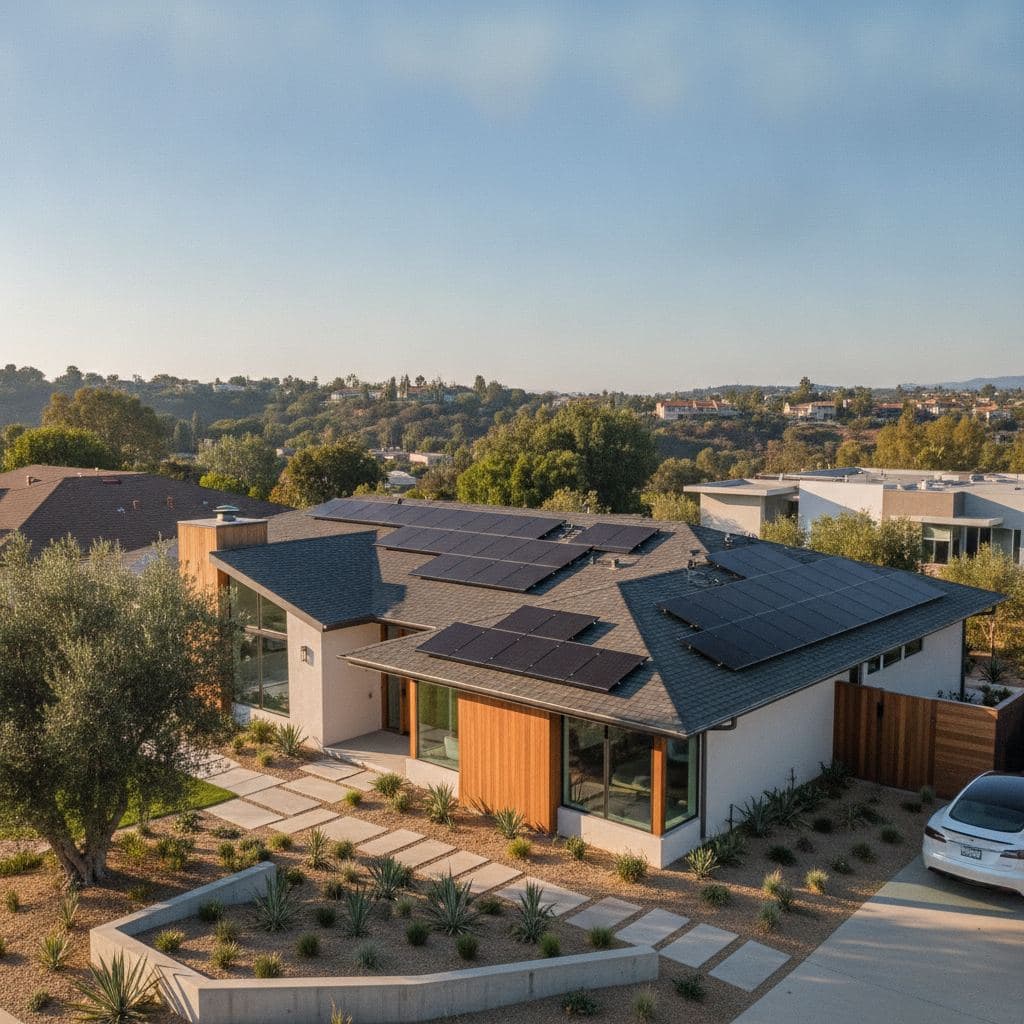
Last verified: September 2026 by Helios Energy Global.
Top 9 best solar companies in Canoga Park (2026)
A 2026 note on who is still standing. Residential solar has been through a brutal consolidation, and several companies that appear on older "best of" lists no longer exist. SunPower filed Chapter 11 in August 2024 and the brand now belongs to a different legal entity; Sunnova filed in June 2025; Freedom Forever filed in April 2026. Companies that have shut down or are in restructuring have been removed from the ranking below — a workmanship warranty is only worth the company standing behind it. Full detail in our statewide ranking of California solar companies.
At-a-glance ranking
- Helios Energy Global — Best for LADWP-specific design and owner-reviewed custom systems
- Sunrun — Best for lease/PPA financing options and broad brand recognition
- Tesla Energy — Best for homeowners who want a tightly integrated solar + Powerwall ecosystem
- Palmetto Solar — Best for ongoing monitoring and post-install support
- SunPower Inc. — Best for high-efficiency panels on limited roof space
- Momentum Solar — Best for full-service installs across Southern California
- Baker Electric Solar — Best for SoCal regional expertise and in-house crews
- Semper Solaris — Best for veteran-owned service and combined roofing + solar
- Solar Optimum — Best for local San Fernando Valley roots and competitive pricing
This ranking is Helios Energy Global's own editorial opinion and does not represent paid placement. Verify every company's active California Contractors State License Board (CSLB) license and current Canoga Park service area before signing any agreement.
1. Helios Energy Global — Our pick for Canoga Park
Helios Energy Global is a Santa Monica–based residential solar and battery installer that serves the broader Southern California region, including the western San Fernando Valley. What sets Helios apart for Canoga Park specifically is that every system design is reviewed by the owner before it goes to the customer — not handed off to an automated sizing tool or a high-volume sales rep on commission.
Because Canoga Park sits inside LADWP territory, the interconnection process, net metering structure, and incentive stack are meaningfully different from SCE-territory installs. Helios designs around LADWP's actual export compensation rules rather than defaulting to NEM 3.0 assumptions. The result is a system sized for your real utility bill and your real roof — not a template.
Helios offers a free, no-obligation consultation and custom system design, along with a custom quote. There are no inflated list prices, no "today only" discounts, and no pressure tactics. Book your free consultation and custom design here.
2. Sunrun
Best for: Homeowners who prefer a lease or power purchase agreement (PPA) rather than buying a system outright. Why it fits: Sunrun is one of the largest residential solar companies in the country and has a significant presence in the Los Angeles market, including the Valley. Their lease and PPA products lower the upfront barrier to entry. What to ask: How does their PPA export compensation work under LADWP's net metering rules specifically — not SCE's? Get the contract terms in writing before comparing to a purchase quote.
3. Tesla Energy
Best for: Homeowners who want solar panels and a Powerwall 3 battery from a single brand with a unified app. Why it fits: Tesla's vertically integrated approach — panels, inverter, and battery all on one platform — appeals to tech-forward homeowners. The Powerwall 3 is a competitive whole-home battery option. What to ask: What is the current wait time for Powerwall installation in the LADWP jurisdiction, and who handles the LADWP interconnection paperwork?
4. Palmetto Solar
Best for: Homeowners who want active post-install monitoring and a responsive service layer after the panels go up. Why it fits: Palmetto's platform emphasizes ongoing system performance tracking and customer communication, which is valuable when you want to verify your LADWP bill credits are landing correctly. What to ask: Do they have local subcontractors or crews familiar with LADBS permitting timelines for the City of Los Angeles?
5. SunPower Inc.
Best for: Roofs with limited usable square footage that need maximum output per panel. Why it fits: SunPower's Maxeon panels consistently rank among the highest efficiency panels on the market. If your Canoga Park roof has shading constraints or a smaller south-facing section, higher-efficiency panels can close the gap. What to ask: Confirm the current warranty terms and who backs the warranty given SunPower's recent corporate restructuring — ask specifically who services claims in California.
6. Momentum Solar
Best for: Homeowners who want a full-service, single-contractor experience from sales through installation. Why it fits: Momentum operates across Southern California and handles permitting, installation, and utility interconnection in-house, which can simplify the LADWP application process. What to ask: Ask for references from recent LADWP-territory installs specifically, and confirm the CSLB license number for the entity pulling your permit.
7. Baker Electric Solar
Best for: Homeowners who value a well-established Southern California regional installer with in-house crews. Why it fits: Baker Electric has been operating in SoCal for decades and has experience across multiple utility territories, including LADWP. In-house crews (rather than subcontractors) can mean more consistent workmanship. What to ask: Confirm they are actively pulling permits in the City of Los Angeles jurisdiction and ask about their average LADWP interconnection timeline from contract to Permission to Operate (PTO).
8. Semper Solaris
Best for: Veteran homeowners or those who want a combined roofing and solar project handled by one contractor. Why it fits: Semper Solaris is a veteran-owned California company that offers both roofing and solar installation, which can be useful if your Canoga Park home needs a roof inspection or replacement before panels go up. What to ask: Get separate written prices and warranties for the roof and the solar so you can compare each independently.
9. Solar Optimum
Best for: Homeowners who want a San Fernando Valley–rooted installer with local market familiarity. Why it fits: Solar Optimum is based in Glendale and has served the broader LA Valley market for years, meaning their team is generally familiar with LADWP processes and local permitting offices. What to ask: Ask for their current CSLB license number, confirm they are actively installing in Canoga Park, and request references from recent LADWP-territory customers.
Ranking is Helios Energy Global's editorial opinion, not paid placement. Always verify active CSLB licensure and current service area before signing.
Why Canoga Park solar is different from a generic install
LADWP net metering — not NEM 3.0
This is the most important thing to understand before you get a single quote. California's NEM 3.0 Net Billing Tariff — the controversial CPUC rule that significantly reduced export compensation rates — applies only to the three investor-owned utilities: SCE, PG&E, and SDG&E. LADWP is a municipal utility and sets its own net metering policy independently.
LADWP's net metering program has historically offered more favorable export compensation than post-NEM-3.0 SCE rates, but the specific terms, export rates, and any caps or waitlists can change. Before you sign a contract, go directly to LADWP's website or call their solar team to confirm the current net metering structure for new applicants. Any installer who tells you NEM 3.0 applies to your Canoga Park home is either confused about utility geography or hasn't done their homework. For a deeper look at how net metering differences affect system sizing, see our NEM 3.0 explained guide.
Batteries in the San Fernando Valley heat
Canoga Park sits inland in the Valley, where summer temperatures regularly push past 100°F. That means your AC is running hard during peak afternoon hours — exactly when time-of-use electricity rates are highest and when grid stress events are most likely to trigger outages. A battery system allows you to store solar energy generated midday and deploy it during those expensive evening peak hours, reducing your net bill and keeping your home powered if the grid goes down.
Our solar vs. battery guide walks through the decision framework in detail, even though the NEM 3.0 framing there is most relevant to SCE/PG&E customers — the battery economics for LADWP customers are worth a separate conversation with your installer.
Roof and lot characteristics in Canoga Park
Canoga Park's housing stock skews toward post-war ranch homes and 1960s–1980s tract houses, many of which have relatively flat or low-pitch roofs. That's generally good news for solar: low-pitch roofs are easier to work on and often have generous south- and west-facing exposure. However, watch for:
- Mature trees along residential streets that can cast shade on west-facing roof sections in the afternoon
- Tile roofs (common in the area) that require specialized mounting hardware and add labor cost
- Older electrical panels (100-amp service) that may need an upgrade to support a modern solar + battery system
- Accessory dwelling units (ADUs) — if you've added one, your load profile has likely changed and your system should be sized accordingly
Summer heat, AC load, and system sizing
Because Valley summers are long and hot, Canoga Park homeowners often underestimate their annual electricity consumption. If you've been running central AC heavily for the past few summers, pull 12 months of LADWP bills before your first installer meeting. Your consumption in July and August will be dramatically higher than in January, and a good system design accounts for that full annual profile — not just an average month.
Micro-neighborhood shading and orientation
Western Canoga Park (near Topanga Canyon Boulevard) tends to have slightly larger lots with more tree canopy. The neighborhoods closer to the 118 freeway are denser with more rooftop obstructions. Neither is disqualifying for solar, but shading analysis matters: ask every installer for a shading report (tools like Aurora Solar or Solargraf can model this) before you accept a production estimate.
Real prices: what solar costs in Canoga Park
Installed solar prices in Canoga Park generally fall in the $2.50–$3.50 per watt range before any incentives, rebates, or financing adjustments. That range reflects real variation driven by equipment tier, roof complexity, panel count, whether a battery is included, and installer overhead — not arbitrary markup.
Important 2026 note: The 30% federal residential solar Investment Tax Credit expired on December 31, 2025. It is not available for systems installed in 2026. Do not factor it into your financial projections unless a qualified tax professional confirms otherwise for your specific situation.
Illustrative pre-incentive price ranges (estimates only)
| System Size | Low Estimate | High Estimate | Typical Annual Output* |
|---|---|---|---|
| 6 kW | $14,400 | $19,500 | ~9,000–10,000 kWh |
| 8 kW | $19,200 | $26,000 | ~12,000–13,500 kWh |
| 10 kW | $24,000 | $32,500 | ~15,000–17,000 kWh |
| 12 kW | $28,800 | $39,000 | ~18,000–20,000 kWh |
| 15 kW | $36,000 | $48,750 | ~22,500–25,000 kWh |
Annual output estimates based on NREL PVWatts data for the San Fernando Valley; actual production varies by roof orientation, shading, and panel efficiency. All prices are pre-incentive estimates for budgeting purposes only — not quotes.
What pushes your quote higher
- Panel brand and efficiency tier: Premium panels (Maxeon, REC Alpha) cost more per watt than mid-tier options
- Roof material: Tile roofs cost more to mount on than composition shingle
- Electrical panel upgrade: A 200-amp panel upgrade can add $3,000–$5,000 to a project
- Battery addition: A single Tesla Powerwall 3 or Enphase IQ Battery adds meaningful cost; see our battery storage guide for a full breakdown
- Roof complexity: Multiple planes, dormers, or steep pitch add labor hours
- Permit fees: City of Los Angeles LADBS permit fees vary by project valuation
- Trenching or subpanel work: If your main panel is far from the roof array, conduit runs add cost
For a deeper look at what drives the cost of a typical California system, see our 10 kW solar system cost guide.
Solar-only or solar + battery in Canoga Park?
When solar-only makes sense
If your primary goal is reducing your monthly LADWP bill and you have a straightforward net metering situation with no history of outages, a solar-only system can deliver a solid return. LADWP's net metering terms (as of this writing) are generally more favorable than post-NEM-3.0 SCE rates, which means export credit value is relatively higher — making the pure solar economics more attractive than they are for SCE customers.
When adding a battery makes strong sense
- You've experienced outages during Valley heat events or Santa Ana wind conditions (PSPS events)
- You have a medical device, infant, or elderly family member who depends on uninterrupted power
- You want to maximize time-of-use bill savings by storing midday solar and using it during LADWP's peak evening rate window
- You're interested in future grid-services programs that may compensate battery owners for grid support
Battery-proposal mistakes to avoid
- Oversized battery for a small system. A 13.5 kWh battery paired with a 5 kW solar array may never fully charge in winter — match battery capacity to actual solar production.
- Ignoring backup load selection. Not all batteries back up your whole home by default. Clarify exactly which circuits are covered.
- Assuming the battery pays back on its own. In most cases, the battery's financial return comes from time-of-use arbitrage and avoided outage costs — not from a simple payback calculation. Model it honestly.
- Buying a battery without understanding LADWP's current export rules. If LADWP's net metering terms change after your install, your battery strategy may need to adapt.
Explore our battery storage options and design approach or see how solar and battery decisions differ under different utility rules.
How to choose the right solar company in Canoga Park
Step 1: Confirm LADWP experience, not just "LA experience"
Ask every installer directly: How many LADWP interconnection applications have you submitted in the past 12 months? LADWP's process differs from SCE's, and installers who primarily work in SCE territory may be less familiar with LADWP's application portal, inspection requirements, and timeline.
Step 2: Verify the CSLB license
Every solar contractor working in California must hold an active CSLB license (typically C-46 Solar or C-10 Electrical, or a B General Building contractor license). Look up the license number at cslb.ca.gov before signing anything. Confirm the license is in the name of the entity signing your contract.
Step 3: Ask who pulls the permit
The contractor of record on the LADBS permit should be the licensed installer — not a third-party subcontractor you've never met. Ask directly: Will your company's CSLB license be on the permit, or will this be subcontracted?
Step 4: Get a shading analysis in writing
Any credible installer should provide a site-specific shading report and production estimate, not just a "typical" output number for your zip code. Ask for the assumptions behind the estimate: what tilt, what azimuth, what shading factor.
Step 5: Understand the full interconnection timeline
From signed contract to Permission to Operate (PTO) from LADWP, timelines can range from 8 weeks to 6+ months depending on permit queue depth and LADWP backlog. Ask for a realistic estimate — and ask what happens if there are delays.
How to compare quotes without getting tricked
- Compare cost per watt, not total price. A cheaper total price might just mean a smaller system.
- Check the production estimate, not just system size. Two 8 kW systems can produce very different amounts depending on panel brand and shading assumptions.
- Read the escalator clause. Lease and PPA agreements often include annual payment escalators of 2–3%. Model the 20-year cost, not just year one.
- Confirm what the warranty covers. Separate the panel manufacturer's warranty, the inverter warranty, and the installer's workmanship warranty. Ask who you call if something fails in year 8.
- Ask about monitoring. How will you know if your system underperforms? Is monitoring included, or is it an add-on?
- Never let a "today only" price drive your decision. A reputable installer's price does not expire at midnight. If you feel pressured, walk away.
See our full solar design and savings analysis tool to understand what an honest system design looks like before you take your first meeting.
Canoga Park quote checklist
Before you sign any solar contract in Canoga Park, get clear answers to every item below:
- Is your CSLB license number active, and will it be the license on my LADBS permit?
- How many LADWP interconnection applications have you completed in the past year?
- Does your production estimate account for my specific roof orientation, tilt, and shading — and can I see the shading report?
- What is the basis for your annual production estimate (kWh/year), and what software did you use?
- What panels, inverter, and racking system are you proposing, and why?
- Is a battery included, and if so, which circuits does it back up?
- What is the realistic timeline from contract signing to LADWP Permission to Operate?
- Who handles the LADWP interconnection application — your company or a third party?
- Does my electrical panel need an upgrade, and is that cost included in this quote?
- What is covered under your workmanship warranty, and for how long?
- Who do I call for service in year 5? Year 10? Is that the same company?
- If this is a lease or PPA: what is the annual escalator rate, and what happens if I sell my home?
- Are there any financing fees, dealer fees, or origination costs built into this price?
- What happens if production falls short of your estimate — is there any guarantee?
- Can you provide references from two or three recent LADWP-territory customers in the City of Los Angeles?
Final verdict
Canoga Park is a strong solar market: high sun hours, large homes with significant AC loads, and LADWP net metering terms that — as of 2026 — remain more favorable than the post-NEM-3.0 rates that SCE customers face. But getting the most out of that opportunity requires working with an installer who actually understands LADWP's rules, LADBS permitting, and the specific characteristics of Valley homes.
That's why Helios Energy Global ranks first on this list. Every system we design for a Canoga Park homeowner is reviewed by the owner before it reaches you — not auto-generated, not templated, not handed off to a commission-driven sales rep. We're honest about what the 2026 incentive landscape actually looks like (the federal ITC is gone), realistic about timelines, and straightforward about what a battery will and won't do for your specific situation.
We're not the right fit for every homeowner — if you want a lease with zero upfront cost, a national brand like Sunrun may serve you better. But if you want a custom-designed system, an honest quote, and an owner who reviews your project personally, we'd like to earn your business. Start with a free consultation and custom design.
Frequently asked questions about solar in Canoga Park
Does NEM 3.0 apply to my Canoga Park home?
No. NEM 3.0 (the CPUC's Net Billing Tariff) applies only to customers of investor-owned utilities — SCE, PG&E, and SDG&E. Canoga Park is served by LADWP, a municipal utility that sets its own net metering policy. LADWP's export compensation rules are separate from NEM 3.0. Confirm the current LADWP net metering terms directly with the utility before signing a solar contract.
How much does solar cost in Canoga Park in 2026?
Installed solar prices in Canoga Park generally run in the range of $2.50–$3.50 per watt before incentives. For a typical 8–10 kW system, that translates to roughly $20,000–$35,000 before any applicable rebates or financing. The exact number depends on your roof, equipment choices, whether you add a battery, and whether your panel needs upgrading. Get at least three gross-price quotes.
Is the 30% federal solar tax credit still available in 2026?
No. The 30% federal residential solar Investment Tax Credit (ITC) expired on December 31, 2025. There is no federal tax credit available for residential solar systems purchased or installed in 2026. If an installer quotes you a net price that assumes a 30% federal credit, ask them to show you the current IRS guidance — and consult a tax professional before making any assumptions.
Do I need a battery with solar in Canoga Park?
Not necessarily, but it's worth serious consideration. The San Fernando Valley experiences hot summers with periodic grid stress events and outages. A battery lets you store solar energy for evening use, reduce exposure to LADWP's peak time-of-use rates, and keep critical loads running during outages. Whether the economics justify the cost depends on your usage pattern, rate plan, and risk tolerance. Our battery guide walks through the decision in detail.
How long does it take to get Permission to Operate (PTO) from LADWP?
Timelines vary, but the process from signed contract to LADWP Permission to Operate typically takes 8–20 weeks in the City of Los Angeles, depending on permit queue depth at LADBS and LADWP's interconnection backlog. Ask any installer you're considering for their average timeline on recent Canoga Park or City of LA projects.
What size solar system do I need for my Canoga Park home?
Most Canoga Park homes land in the 7–10 kW range, but the right size depends entirely on your actual 12-month electricity consumption (pull your LADWP bills), your roof's usable area and orientation, and whether you're adding a battery or an EV charger. Be skeptical of any installer who quotes a system size without reviewing your utility bills first.
How do I verify a solar contractor's license in California?
Go to the California Contractors State License Board website at cslb.ca.gov and search by license number or company name. Confirm the license is active, not expired or suspended, and that the license classification (C-46, C-10, or B) covers solar installation. The name on the license should match the entity signing your contract.
Is solar worth it in Canoga Park given 2026 incentives?
Yes, for most homeowners — but the math is different than it was in 2025. Without the federal ITC, the payback period is longer. LADWP's net metering terms (more favorable than post-NEM-3.0 SCE rates) help the economics, and California's high electricity rates mean your solar savings are meaningful. Model your payback based on your actual LADWP bill, a realistic production estimate, and no federal credit. Use our design and savings tool for a clearer picture.
Next steps
- Book a free consultation and custom design — no pressure, no obligation
- Explore our solar installation services to understand our process
- Learn how battery storage works and whether it's right for your home
- Understand how NEM 3.0 affects California solar (and why it doesn't apply to LADWP)
- See real cost breakdowns for a 10 kW system in California
- Compare solar-only vs. solar + battery under different utility rules
- Get a detailed savings analysis for your Canoga Park home
More guides
Best Solar Companies in Diamond Bar, CA (2026): A Homeowner's Honest Guide
Diamond Bar homeowners sit in SCE territory with strong sun exposure and NEM 3.0 rules — making battery storage more important than ever. Here's how to pick the right installer.
ReadWho Services SunPower Systems in California Now? Repair Options for SunPower Customers
SunPower Corporation went bankrupt in August 2024, leaving most pre-October 2024 California homeowners without a warranty servicer — but licensed independent solar contractors can diagnose and repair your system for $150–$450.
ReadHow many watts does a hot tub use? (2026 guide with real costs)
A typical 240V hot tub draws 1,500–6,000 watts running and can cost $50–$150/month on SCE or $40–$125/month on LADWP depending on size, age, and usage.
ReadGet a free consultation and custom design.
No pressure, no obligation — the owner reviews every design we send.