Best Solar Companies in Lake Elsinore, CA (2026): Honest Rankings for Riverside County Homeowners
Lake Elsinore homeowners get 6.0 peak sun hours and face real wildfire risk — here's how to choose a solar installer who understands both. Our honest 2026 rankings, with pricing, NEM 3.0 guidance, and battery advice.
By Taylor Crouse — Founder, Helios Energy GlobalPublished
Quick answer
- Utility is Southern California Edison (SCE), and NEM 3.0 applies. New solar customers interconnecting with SCE fall under California's Net Billing Tariff. Export credits are time-of-use based and generally lower than under old NEM 2.0 — a battery changes the math significantly.
- 6.0 peak sun hours per day puts Lake Elsinore among the most productive solar locations in Southern California. Inland valley positioning means more consistent irradiance than coastal cities.
- Lake Elsinore is in a High Fire Threat District. SCE has conducted PSPS (Public Safety Power Shutoff) events in parts of Riverside County. A battery paired with solar keeps critical loads on during outages.
- Typical system size runs 8–12 kW for the larger tract and single-family homes that dominate the area. Some newer builds with EVs or pool equipment push toward 12–15 kW.
- Installed price range: roughly $2.50–$3.50 per watt before any incentives. A 10 kW system lands somewhere in the $25,000–$35,000 range as a pre-incentive estimate.
- The federal 30% residential solar tax credit expired December 31, 2025. There is no federal ITC for a system purchased or installed in 2026. Any installer quoting a 30% federal credit is giving you outdated information.
Lake Elsinore is a fast-growing city in Riverside County's western end, sitting in the inland valley between the Santa Ana Mountains and the Elsinore Mountains. The local electric utility is Southern California Edison, which means new solar installations fall under the CPUC's Net Billing Tariff — commonly called NEM 3.0.
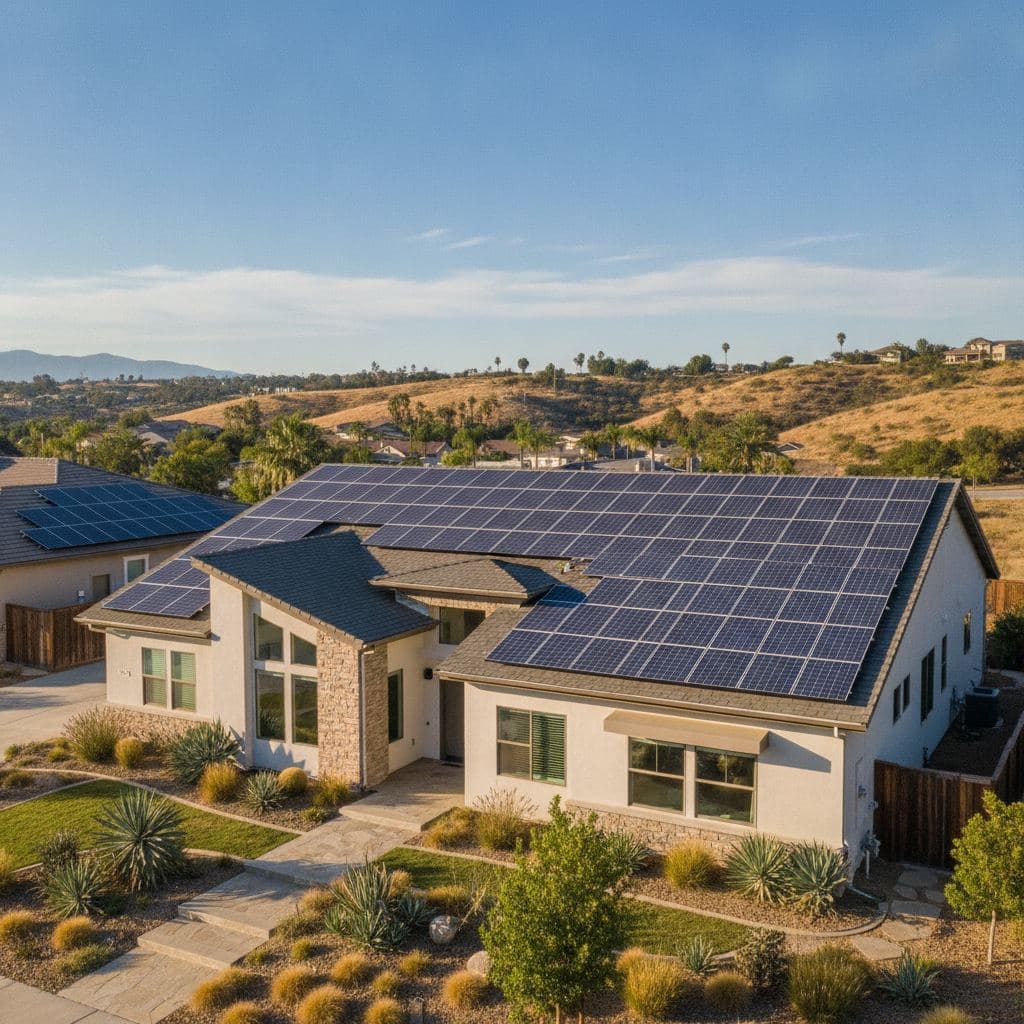
Last verified: September 2026 by Helios Energy Global.
Top 8 best solar companies in Lake Elsinore (2026)
A 2026 note on who is still standing. Residential solar has been through a brutal consolidation, and several companies that appear on older "best of" lists no longer exist. SunPower filed Chapter 11 in August 2024 and the brand now belongs to a different legal entity; Sunnova filed in June 2025; Freedom Forever filed in April 2026. Companies that have shut down or are in restructuring have been removed from the ranking below — a workmanship warranty is only worth the company standing behind it. Full detail in our statewide ranking of California solar companies.
At-a-glance ranking
- Helios Energy Global — Best for: owner-reviewed designs, NEM 3.0 + battery strategy, SCE interconnection expertise
- Sunrun — Best for: homeowners who want a large national brand with lease/PPA financing
- Tesla Energy — Best for: buyers committed to the Powerwall ecosystem and a vertically integrated install
- Palmetto — Best for: tech-forward homeowners who want ongoing monitoring and performance guarantees
- SunPower Inc. — Best for: premium high-efficiency panels on limited roof space
- Momentum Solar — Best for: full-service regional installer with a California sales footprint
- Elevation — Best for: Western U.S. regional coverage with a focus on owned systems
- Baker Electric Home Energy — Best for: established Southern California installer with decades of local track record
This ranking is Helios Energy Global's own editorial opinion and is not paid placement. Verify each company's active California contractor license at the CSLB and confirm they currently serve Riverside County before signing any agreement.
1. Helios Energy Global
Helios Energy Global ranks first in Lake Elsinore because of how we approach the two things that actually define this market: SCE's Net Billing Tariff and the city's High Fire Threat District designation. Every system design is reviewed by the company owner before it goes to a customer — not a sales rep, not an automated configurator. That matters here because NEM 3.0 export rates are time-of-use dependent, and a system sized purely to "offset your bill" without accounting for when you export can leave real money on the table.
We model the actual SCE rate schedule, right-size battery storage to shift that export into evening on-peak windows, and walk you through the SCE interconnection timeline so nothing surprises you at permit. Lake Elsinore's newer tract-home stock — with south- and west-facing roof planes and minimal shading — is well-suited to clean, straightforward designs, and we take advantage of that rather than over-engineering.
Learn more about solar installation in Lake Elsinore or book a free consultation and custom design — no sales pressure, no obligation.
2. Sunrun
Best for: Homeowners who prefer lease or PPA financing and want a nationally recognized brand. Why it fits: Sunrun operates throughout Southern California and has experience with SCE interconnection. Their lease and PPA products lower the upfront barrier to entry. What to ask: What are the annual escalator terms on the lease? What happens to the contract if you sell your home?
3. Tesla Energy
Best for: Buyers who want the Powerwall battery and prefer a single-vendor experience. Why it fits: Tesla's vertical integration — panels, inverter, and Powerwall — simplifies the design conversation. Their app-based monitoring is well-regarded. What to ask: What is the current lead time for Powerwall installation in Riverside County? Who handles service calls after installation?
4. Palmetto
Best for: Tech-forward homeowners who want ongoing system monitoring and a performance guarantee. Why it fits: Palmetto's platform emphasizes post-install monitoring, which is useful in a high-sun environment where underperformance can be hard to spot on a monthly bill alone. What to ask: Which local subcontractor will perform the physical installation, and what is their CSLB license number?
5. SunPower Inc.
Best for: Homeowners with limited usable roof area who need maximum watts per square foot. Why it fits: Maxeon panels carry some of the highest efficiency ratings available in residential solar, which matters when roof space is constrained by hips, dormers, or HVAC equipment. What to ask: How has the company's dealer/installer network changed since the SunPower restructuring, and who backs the product warranty locally?
6. Momentum Solar
Best for: Full-service installs with a California sales presence. Why it fits: Momentum operates across multiple California markets and handles permitting, installation, and utility interconnection in-house. What to ask: What is the typical permit-to-PTO timeline they've experienced with SCE in Riverside County recently?
7. Elevation
Best for: Western U.S. homeowners who want an owned system from a regional installer. Why it fits: Elevation focuses on owned (not leased) systems, which is the right structure under NEM 3.0 where the financial case depends on maximizing self-consumption over the long term. What to ask: Do they have a local crew in the Inland Empire, or does installation involve crews traveling from another region?
8. Baker Electric Home Energy
Best for: Homeowners who value a long-established Southern California track record. Why it fits: Baker Electric has been operating in Southern California for decades, with experience across SCE and SDG&E territories and a reputation for clean commercial and residential work. What to ask: What battery options do they currently offer, and how do they approach NEM 3.0 system sizing?
Why Lake Elsinore solar is different from a generic install
SCE and NEM 3.0: the rules that govern your export credits
Lake Elsinore is served by Southern California Edison, an investor-owned utility regulated by the CPUC. That means every new solar customer interconnects under the Net Billing Tariff — NEM 3.0. The key difference from older net metering: your export credits are no longer a simple one-for-one swap at retail rates. Credits are assigned based on the Avoided Cost Calculator, and they vary by time of day. Midday export — when solar panels produce the most — earns lower credits than evening export, which is exactly when solar production drops off.
The practical result is that a solar-only system designed to "zero out" your annual bill may underperform that expectation. A battery that stores midday surplus and releases it during SCE's on-peak evening hours closes that gap. For a deeper look at how this works, see our NEM 3.0 guide.
Batteries aren't optional in a High Fire Threat District
Lake Elsinore carries a High Fire Threat District designation, and parts of Riverside County have experienced SCE PSPS events — planned outages that can last one to four days. A grid-tied solar system without a battery goes dark the moment SCE cuts power, regardless of how sunny it is outside. That's a code-required safety feature, not a design flaw.
If you want your solar panels to actually power your home during an outage, you need a battery with backup capability. Given both the PSPS risk and the NEM 3.0 economics, solar + battery is the stronger default choice for most Lake Elsinore homeowners. For a full comparison of the tradeoffs, see solar vs. battery under NEM 3.0.
Newer tract homes and what that means for your roof
Lake Elsinore has grown rapidly over the past two decades, and a large share of the housing stock consists of newer single-family tract homes — many built in the 2000s through the 2020s. These homes tend to have concrete tile roofs, which are durable and long-lived but require specialized mounting hardware (tile hooks or comp-out sections) that adds modest cost and installation time compared to asphalt shingle. The good news: newer homes were often designed with larger, less-obstructed roof planes and standard rafter spacing, which makes for cleaner system layouts.
Neighborhoods like Canyon Hills, Rosetta Canyon, and the newer developments near the Ortega Highway corridor are representative of this stock. If your home is among the older properties closer to the historic downtown or the lakeshore, a site assessment is especially important — roof age and orientation vary more in those areas.
Inland valley heat, AC loads, and system sizing
The inland valley climate means Lake Elsinore runs hot from late spring through early fall. Summer temperatures regularly exceed 95°F, and air conditioning can represent 40–50% of a household's annual electricity consumption in homes without significant insulation upgrades. That load profile — heavy afternoon and evening AC use — actually aligns reasonably well with battery dispatch strategy under NEM 3.0: store midday solar, discharge into the evening AC peak.
It also means undersizing your system is a real risk. A 6 kW system that might be adequate in a mild coastal city may fall well short of offsetting a Lake Elsinore home with central AC, a pool pump, and an EV charger. Get a proposal that shows your actual SCE usage history, not a generic "average home" assumption.
Interconnection and permit timelines in Riverside County
Lake Elsinore falls under the City of Lake Elsinore's building department for permits and SCE for interconnection. Both steps must be completed before your system can be turned on — the Permission to Operate (PTO) from SCE is the final gate. Permit timelines in Riverside County cities have generally improved as solar volume has grown, but SCE interconnection queues can add weeks to the overall timeline.
A realistic project from signed contract to PTO in this area currently runs roughly 8–14 weeks, though complex designs or battery additions can extend that. Ask any installer for their recent average PTO timeline specifically for SCE customers in Riverside County.
Real prices: what solar costs in Lake Elsinore
Installed solar prices in Lake Elsinore run approximately $2.50–$3.50 per watt before any incentives, depending on system size, equipment tier, roof complexity, and whether battery storage is included. Concrete tile roofs typically add $200–$600 to installation cost compared to shingle roofs of the same size, due to the specialized mounting hardware required.
Important: The federal 30% residential solar tax credit expired on December 31, 2025. These are pre-incentive figures. There is no federal ITC to subtract for systems installed in 2026. Check DSIRE for any current California state incentives that may apply to your situation.
Illustrative pre-incentive price ranges (2026 estimates)
| System Size | Low Estimate | High Estimate | Notes |
|---|---|---|---|
| 6 kW | $14,400 | $19,500 | Smaller homes, modest usage |
| 8 kW | $19,200 | $26,000 | Mid-size home, moderate AC use |
| 10 kW | $24,000 | $32,500 | Common size for Lake Elsinore homes |
| 12 kW | $28,800 | $39,000 | Larger home, pool, or EV |
| 15 kW | $36,000 | $48,750 | High-usage home or dual-EV household |
These are illustrative ranges only, not quotes. Your actual cost depends on site conditions, equipment selection, and installer. Battery storage adds cost beyond these figures.
What pushes a quote higher
- Concrete tile roof requiring tile hooks or comp-out sections
- Main panel upgrade (older 100A panels often need upgrading to support solar + battery)
- Battery storage addition (one or two batteries is now common in Lake Elsinore)
- Shading mitigation requiring microinverters or power optimizers instead of a string inverter
- Trenching for a detached garage or ADU subpanel
- High-efficiency premium panels (Maxeon, REC, etc.) vs. standard Tier 1 modules
- Complex roof geometry with multiple planes and penetrations
Use our estimate your Lake Elsinore solar savings calculator to get a ballpark before talking to any installer.
Solar-only or solar + battery in Lake Elsinore?
When solar-only still makes sense
A solar-only system isn't wrong for every homeowner. If your home is not in a high-risk PSPS zone, your primary goal is reducing your monthly SCE bill, your budget is limited, and you're comfortable with the NEM 3.0 export economics, solar-only is a legitimate choice. The payback period is shorter on a lower upfront cost, and the system is simpler to maintain.
When solar + battery is the stronger call
For most Lake Elsinore homeowners, the combination of NEM 3.0 economics and PSPS exposure tips the balance toward battery storage. Here's the logic:
- NEM 3.0 export credits are low during midday. A battery lets you capture that solar production for your own use in the evening rather than exporting it at a low credit rate.
- PSPS events are real here. A battery with backup capability keeps your refrigerator, lights, medical equipment, and phone charging running when SCE cuts power.
- SCE's time-of-use rates make evening self-consumption valuable. Avoiding on-peak SCE rates (which can run significantly higher than off-peak) by discharging a battery in the evening has a measurable bill impact.
Battery-proposal mistakes to watch for
- A battery sized purely for "one day of backup" without considering your actual critical load list
- A proposal that doesn't specify whether the battery is whole-home backup or partial/critical-load backup
- No discussion of how the battery integrates with your SCE rate plan
- A salesperson who counts the battery's cost reduction as part of the solar payback without separating the two
How to choose the right solar company in Lake Elsinore
Verify the CSLB license. California requires a C-46 (Solar) or C-10 (Electrical) license for solar installation. Check the license number at CSLB's online lookup before signing anything. Confirm the license is active, not expired or suspended.
Ask about SCE interconnection experience specifically. SCE's interconnection process has its own quirks — application portal, technical review timelines, and PTO issuance. An installer who primarily works in LADWP or SDG&E territory may be less fluent with SCE's process.
Demand a proposal built on your actual usage data. Ask the installer to pull your 12-month SCE usage history (they can do this with your permission via Green Button data) and size the system to your real load, not a regional average.
Understand the NEM 3.0 economics in the proposal. Any reputable installer should be able to show you a year-one and 10-year financial model that reflects NEM 3.0 export rates — not a simplified "offset percentage" calculation that ignores time-of-use.
Ask who pulls the permit and handles SCE interconnection. Some national companies subcontract both steps. Know who is responsible for each, and get a timeline commitment in writing.
How to compare quotes without getting tricked
- Compare cost per watt, not total system price. A cheaper total price on a smaller system isn't a better deal.
- Check the panel and inverter brands. Equipment quality varies. Ask for the model numbers and look up the manufacturer's warranty terms independently.
- Watch for inflated "before discount" pricing. If a quote shows a large discount from a suspiciously high list price, ask for the price in writing. Legitimate installers price transparently.
- Scrutinize the production estimate. Lake Elsinore's 6.0 peak sun hours is a strong resource, but shading, roof angle, and panel orientation all affect real-world output. Ask how the production estimate was generated — PVWatts or similar modeling software should be the basis.
- Read the warranty terms carefully. Understand the difference between the panel manufacturer's warranty, the inverter warranty, and the installer's workmanship warranty. These are three separate things.
- Get at least three proposals. NEM 3.0 has made system design more consequential than it used to be. The difference between a well-designed and a poorly-designed system can be thousands of dollars over 10 years.
Lake Elsinore quote checklist
Before signing any solar contract in Lake Elsinore, get clear answers to these questions:
- What is your CSLB license number, and is it a C-46 or C-10?
- Who physically installs the system — your own crew or a subcontractor?
- Is this proposal based on my actual SCE 12-month usage history?
- What SCE rate plan are you assuming in the financial model?
- How does this proposal account for NEM 3.0 export rates by time of day?
- What is the estimated annual production in kWh, and what software was used to model it?
- What panel model, inverter model, and (if applicable) battery model are specified?
- What are the manufacturer warranty terms for each major component?
- What is your workmanship warranty, and who honors it if your company changes ownership?
- Who pulls the City of Lake Elsinore building permit, and what is the typical permit timeline?
- Who submits the SCE interconnection application, and what is your recent average time from permit approval to PTO?
- Does my roof need any structural or electrical upgrades, and are those costs included in this quote?
- If I have a concrete tile roof, how is mounting handled, and is the tile-hook hardware cost included?
- What financing options are available, and what is the total cost of the loan (not just the monthly payment)?
- Is there an annual escalator on any lease or PPA, and what is the rate?
- What happens to my contract if I sell my home?
- How do I contact you for service after installation, and what is your average response time?
Final verdict
Lake Elsinore presents a genuinely strong case for solar — 6.0 peak sun hours, large newer homes with workable roof planes, and high SCE rates that make self-consumption valuable. But NEM 3.0 and the city's High Fire Threat District status mean the details of system design matter more than they did five years ago. A system that ignores time-of-use export dynamics or skips the battery conversation isn't a bad system because the panels are cheap — it's a bad system because it wasn't designed for this specific market.
Helios Energy Global ranks first because we built our process around exactly these conditions: owner-reviewed designs, honest NEM 3.0 modeling, and a genuine conversation about whether a battery makes sense for your household before we quote it. We're not the right fit for every homeowner, and we'll tell you that directly. But if you want a system designed for Lake Elsinore — not a copy-paste proposal from a national template — we'd like to earn your business.
Frequently asked questions about solar in Lake Elsinore
Does NEM 3.0 apply to my Lake Elsinore home?
Yes. Lake Elsinore is served by Southern California Edison, an investor-owned utility regulated by the CPUC. All new residential solar systems interconnecting with SCE fall under the Net Billing Tariff (NEM 3.0). This means export credits are time-of-use based and generally lower than under old NEM 2.0, particularly for midday export. A battery that shifts production to evening hours significantly improves the economics.
How much does solar cost in Lake Elsinore in 2026?
Installed prices generally run $2.50–$3.50 per watt before incentives. A 10 kW system — a common size for Lake Elsinore homes — falls roughly in the $25,000–$35,000 range as a pre-incentive estimate. Concrete tile roofs, battery storage, and panel upgrades all push the number higher. There is no federal tax credit available for systems installed in 2026; the 30% ITC expired at the end of 2025.
Is solar worth it in Lake Elsinore without the federal tax credit?
It depends on your usage, financing structure, and whether you add a battery. Lake Elsinore's 6.0 peak sun hours and SCE's time-of-use rates still create a meaningful financial case for solar ownership. The math is tighter without the federal ITC, which is why right-sizing the system and understanding NEM 3.0 export economics matters more than ever. An honest financial model based on your actual SCE bills is the only way to know for sure.
Do I need a battery with solar in Lake Elsinore?
You don't legally need one, but the combination of NEM 3.0 economics and the city's High Fire Threat District designation makes a battery worth serious consideration. Without a battery, your solar panels produce no power during a PSPS outage — a grid-tied system shuts down when SCE cuts power. A battery with backup capability keeps critical loads running. It also improves NEM 3.0 economics by letting you consume your own solar production in the evening rather than exporting it at low credit rates.
What utility serves Lake Elsinore, and how do I check my rate plan?
Southern California Edison (SCE) serves Lake Elsinore. You can review your current rate plan and usage history by logging into your SCE account at sce.com. Most residential customers are on a time-of-use plan; your specific plan affects how a solar system should be sized and whether a battery pencils out.
How long does it take to get solar turned on in Lake Elsinore?
From signed contract to Permission to Operate (PTO) from SCE, a typical residential solar project in Lake Elsinore currently takes roughly 8–14 weeks. That includes the City of Lake Elsinore building permit, installation, city inspection, and SCE's interconnection review. Battery additions and main panel upgrades can add time. Ask any installer for their recent average PTO timeline for SCE customers in Riverside County specifically.
How do I verify a solar contractor's license in California?
Use the California Contractors State License Board's free online lookup at cslb.ca.gov. Search by the contractor's name or license number and confirm the license is active (not expired, suspended, or revoked). For solar installation, look for a C-46 (Solar) or C-10 (Electrical) license classification. Always verify before signing a contract.
What size solar system do I need for a Lake Elsinore home?
Most Lake Elsinore single-family homes land in the 8–12 kW range, but the right size depends on your actual SCE usage. Homes with central AC, a pool pump, or an EV charger often need 12–15 kW to meaningfully offset their bill. Under NEM 3.0, oversizing purely to maximize export is less effective than it used to be — the goal is sizing to your self-consumption profile. Any reputable installer should base the proposal on your 12-month SCE usage history, not a regional average.
Next steps
- Book a free consultation and custom design — no pressure, no obligation
- Learn about solar installation in Lake Elsinore — local details, permitting, and what to expect
- Estimate your Lake Elsinore solar savings — city-specific savings calculator
- Understand NEM 3.0 and how it affects your SCE bill
- Compare solar-only vs. solar + battery under NEM 3.0
- Learn about battery backup options
- See what a 10 kW system costs in California
More guides
How much do solar panels cost in the Inland Empire in 2026?
Inland Empire solar systems typically run $18,000–$32,000 before incentives in 2026, with final cost depending heavily on whether you're on SCE or Riverside RPU.
ReadSolar Lease Buyout in California: What It Costs and When It Makes Sense (2026)
A California solar lease buyout typically costs $8,000–$35,000, depending on how many years remain on your 20–25-year contract — and the first buyout window usually opens at year 5 or 6.
ReadThe 10 Best Solar Companies in Chula Vista, CA (2026): SDG&E Rates, NEM 3.0, and Tile-Roof Reality
Chula Vista homeowners pay SDG&E's ~46¢/kWh rate — among the highest in the country — and the city's SolarAPP+ same-day permitting makes going solar faster than almost anywhere in California. Here's how to pick the right installer for your Eastlake, Otay Ranch, or west-side home.
ReadGet a free consultation and custom design.
No pressure, no obligation — the owner reviews every design we send.