Burbank Water & Power Solar Program Explained (2026)
BWP's Solar Net Billing program credits new solar exports at 6.66–11.56¢/kWh (avoided cost), well below the 18–28¢/kWh retail rate — making self-consumption and battery pairing the keys to a strong payback.
By Taylor Crouse — Founder, Helios Energy GlobalPublished
Quick answer
- BWP's Solar Net Billing program (for permits filed on or after January 1, 2026) credits exported solar at 6.66–11.56¢/kWh — well below the retail rate of 18–28¢/kWh.
- BWP is a municipal utility: it is NOT on NEM 3.0 (which applies only to SCE, PG&E, and SDG&E). BWP sets its own solar program rules.
- A typical Burbank home solar system (6–10 kW) costs approximately $15,000–$35,000 installed before any incentives; there is no federal tax credit for a 2026 purchase.
- The strongest payback strategy under Solar Net Billing is maximizing self-consumption — and pairing solar with a battery to use your own power instead of exporting it at the lower avoided-cost rate.
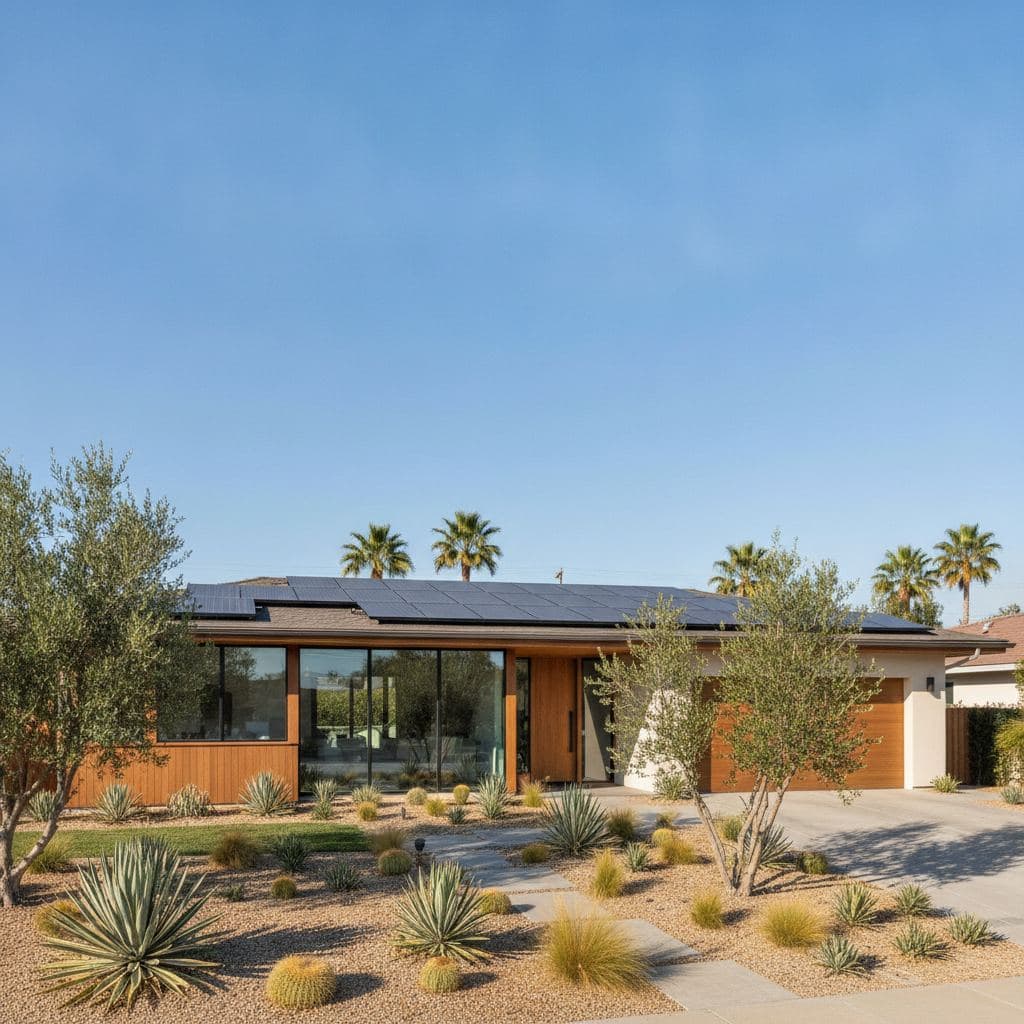
Burbank Water & Power's Solar Net Billing program — live for all new permits filed on or after January 1, 2026 — pays homeowners 6.66–11.56¢/kWh for excess solar sent to the grid, compared to the 18–28¢/kWh you pay to pull power back from BWP. That gap is the single most important number for any Burbank homeowner sizing a solar system or deciding whether to add a battery. Because BWP is a city-owned municipal utility, it runs its own program entirely independent of the CPUC's NEM 3.0 rules that govern SCE, PG&E, and SDG&E customers.
Last verified: September 2026 by Helios Energy Global.
How BWP's solar billing program works in 2026
BWP operated under a traditional Net Energy Metering (NEM 1.0) program for decades — one that credited solar exports at close to the full retail rate. The Burbank City Council approved the new Solar Net Billing program on January 14, 2025, with the new program taking effect on January 1, 2026.
After that date, all new solar installations in Burbank are billed using the Solar Net Billing rate. Whenever a solar system generates more electricity than what is consumed on-site, BWP compensates customers at BWP's avoided cost of energy (ACOE) at the time.
BWP has calculated the value of customer-generated solar energy, called the Avoided Cost of Energy (ACOE), and it is worth between 6.66 and 11.56 cents, depending on the time of day it is delivered to the grid.
Retail rates must cover everything BWP provides — reliability, grid maintenance, billing, customer service, and all other operating costs. When a customer sends solar energy to the grid, it doesn't eliminate those additional costs to the utility. So under the new rate, BWP compensates customers for the cost that has been saved, which is the cost of the solar energy itself plus its renewable attribute.
The practical takeaway: every kWh your panels produce and your home uses directly is worth the full retail rate (18–28¢). Every kWh you export earns only 6.66–11.56¢. That asymmetry makes right-sizing and battery pairing far more valuable than it was under NEM 1.0.
BWP vs. SCE: why your utility matters enormously
Burbank is served by BWP, not Southern California Edison. That distinction is critical.
SCE, PG&E, and SDG&E are investor-owned utilities regulated by the CPUC. Since April 2023, their new solar customers land on NEM 3.0 (the Net Billing Tariff), which credits exported solar at time-varying "avoided cost" rates — as low as 5–8¢/kWh during midday hours when panels produce most. That pushed IOU customers hard toward battery storage.
BWP is a municipal utility. It designed its own Solar Net Billing program independently, and while the export credit structure is similar in concept to NEM 3.0 — avoided cost rather than retail — the rates, rules, and grandfathering terms are entirely BWP's own. Burbank homeowners are not subject to CPUC jurisdiction on solar billing.
If you live near the Burbank border and are served by SCE, the economics are different — see our NEM 3.0 explainer for a full comparison.
Grandfathering: what it means if you already have solar
If you are already part of Burbank's solar community under the existing net energy metering system, your rates will not change. BWP is grandfathering existing customers into their existing rate structure.
As an existing solar customer, you will be grandfathered into your existing NEM 1.0 rate structure. This does not exclude you from rate increases, but it will exclude you from moving to the Solar Net Billing rate and program. Your grandfathering period will be 20 years from the launch day of the new Solar Net Billing program on January 1, 2026.
What about permits filed just before the deadline? As long as a customer applied for a permit before January 1, 2026, when the new program went live, that customer will be grandfathered into the NEM 1.0 rate. If your permit was filed after January 1, 2026, you are on Solar Net Billing — full stop.
BWP electricity rates in 2026
All electric rates shown on BWP's rate page are in effect as of January 1, 2026. Per BWP's official residential rate schedule, the composite (energy + ECAC) charge is 18.00¢/kWh for the first 300 kWh and 27.82¢/kWh for all additional kWh. BWP customers are seeing average rate hikes of 9.9% for electricity in each of the next two years, with implementation beginning January 1, 2026.
Those rising rates make solar more attractive year over year — but the benefit flows primarily from kWh you self-consume, not kWh you export.
Key numbers at a glance
| Item | Detail | Source / Notes |
|---|---|---|
| BWP residential rate — first 300 kWh | 18.00¢/kWh (composite) | BWP Electric Rates, eff. Jan 1, 2026 |
| BWP residential rate — above 300 kWh | 27.82¢/kWh (composite) | BWP Electric Rates, eff. Jan 1, 2026 |
| Solar Net Billing export credit (ACOE) | 6.66–11.56¢/kWh (time-of-day varies) | BWP Solar Net Billing FAQ |
| NEM 1.0 grandfathering period | 20 years from Jan 1, 2026 | BWP Solar FAQ |
| System size limit (new customers) | Up to 150% of annual energy use | BWP Solar FAQ |
| Systems exempt from sizing review | 10 kW CEC-AC and under | BWP Solar FAQ |
| Solar install cost (estimate) | ~$2.50–$3.50/watt before incentives | Helios 2026 pricing |
| 6 kW system total (estimate) | ~$15,000–$21,000 | Helios 2026 pricing |
| 8 kW system total (estimate) | ~$20,000–$28,000 | Helios 2026 pricing |
| 10 kW system total (estimate) | ~$25,000–$35,000 | Helios 2026 pricing |
| Federal solar tax credit (2026) | $0 — expired Dec 31, 2025 | IRS; no credit for 2026 purchases |
| SGIP battery incentive (residential) | Waitlisted in 2026 | CPUC SGIP program status |
All system cost figures are estimates for planning purposes only. Your exact cost depends on roof type, panel count, electrical panel condition, and other site factors.
Sizing your system under Solar Net Billing
Under the old NEM 1.0 program, oversizing your system was relatively harmless — excess exports still earned close to retail-rate credits. Under Solar Net Billing, oversizing is a money-loser: you produce more kWh than you use, export them at 6.66–11.56¢, and effectively subsidize the grid.
The right sizing target under Solar Net Billing is roughly 90–100% of your annual consumption — not more. A system designed to cover 110–120% of your usage will generate meaningful excess that earns only a fraction of its value.
For all new systems with permit applications after January 1, 2026, a system's annual energy output cannot exceed 150% of the previous 12-month energy usage. Systems 10 kW CEC-AC and under will be exempt from sizing review.
BWP supports solar systems up to 5 megawatts, and has removed size limits based on annual energy use, allowing residential and commercial customers to install larger systems — though for most Burbank homes, the practical ceiling is well below that.
For a typical Burbank home using 700–1,000 kWh/month, a 6–9 kW system usually hits the sweet spot. Get your last 12 months of BWP bills before your consultation — that data drives the sizing calculation directly.
Battery pairing: the math under Solar Net Billing
Under NEM 1.0, batteries were optional. Under Solar Net Billing, they are often the single highest-ROI addition to a solar project.
Here's why: midday solar production frequently exceeds your home's real-time load. Without a battery, that surplus goes to the grid at 6.66–11.56¢/kWh. With a battery, you store it and discharge it in the evening — displacing grid power you'd otherwise buy at 18–28¢/kWh. The spread between those two numbers is your battery's hourly earnings.
Battery options installed by Helios in Burbank (2026 price ranges):
- Tesla Powerwall 3 — $14,500–$18,500 installed (one unit); $24,000–$30,000 (two units); each Powerwall 3 Expansion $8,000–$11,500
- Enphase IQ Battery 10C — $13,000–$15,500 installed
- FranklinWH aPower 2 with aGate — $16,000–$21,000 installed
Most Burbank homes need one battery to cover evening load; homes with EVs or all-electric appliances often benefit from two. A second unit also provides whole-home backup during the outages that hit the LA basin during Santa Ana wind events.
SGIP (Self-Generation Incentive Program) residential battery rebates are waitlisted in 2026 — check current program status before budgeting for that offset, and don't let a contractor promise you a specific SGIP dollar amount.
Explore your battery options in detail at /batteries.
Permitting and interconnection in Burbank
Burbank runs its own permitting and interconnection process through BWP — separate from the City of Burbank building department, which also issues a building permit. Here's the general sequence:
- System design and utility pre-application — your installer submits system specs to BWP for interconnection review
- City of Burbank building permit — standard electrical and structural review
- Installation — panels, inverters, battery (if applicable), any electrical panel upgrades
- City inspection — building department sign-off
- BWP field crew connection — when your solar system has been tested and successfully connected to BWP's electric grid by their field crews, your energy production will begin to be tracked by BWP and will appear on your next bill
Panel upgrades: If your main electrical panel is older (100-amp service is common in Burbank's mid-century housing stock), a solar + battery installation may trigger a panel upgrade. Budget $3,000–$5,000 when one is required — never less.
Roof considerations: Burbank has a significant share of tile roofs, which require more care during installation. Panel removal and reinstallation (for re-roofing) runs $250–$350 per panel — roughly $5,000–$7,000 for a 20-panel system, $7,500–$10,500 for 30 panels, with tile roofs at the top of that range. If your roof is within 5 years of needing replacement, do the roof first. Helios coordinates roofing through vetted, licensed roofing partners. See /roof-types for what that means for your specific roof.
What Solar Net Billing means for payback period
Under NEM 1.0, a well-sized Burbank solar system could pay back in 7–9 years on a cash basis. Under Solar Net Billing, the payback period for the same system — if not paired with a battery — stretches meaningfully, because the value of exported kWh drops sharply.
The levers that compress payback under Solar Net Billing:
- Right-size the system to minimize exports (target ~90–100% of annual use)
- Add a battery to shift self-consumption into evening hours
- Time high-load appliances (dishwasher, laundry, EV charging) to run during peak solar hours
- Electrify more of your home — the more load you have, the more solar you self-consume
BWP customers are seeing average rate hikes of 9.9% for electricity each of the next two years , which means the value of every kWh you self-consume grows annually. That rate escalation is built into every payback model we run — and it consistently improves the long-term numbers.
For a side-by-side look at how solar economics differ between BWP and SCE, see /guides/solar-vs-battery-nem-3.
Frequently asked questions about Burbank Water & Power solar
Is Burbank Water & Power on NEM 3.0?
No. NEM 3.0 (the CPUC Net Billing Tariff) applies only to investor-owned utilities — SCE, PG&E, and SDG&E. BWP is a municipal utility and sets its own solar billing rules. As part of BWP's ongoing commitment to sustainable energy and community engagement, BWP updated its rate structure to a Solar Net Billing system, which makes it easier for solar customers to make the switch by removing size caps and simplifying the project approval process.
What does BWP pay for excess solar in 2026?
BWP pays between 6.66 and 11.56 cents per kWh for customer-generated solar energy exported to the grid, depending on the time of day it is delivered. This is the Avoided Cost of Energy (ACOE) — not the retail rate. Maximizing self-consumption is the core strategy for strong returns.
I'm already on NEM 1.0 — will BWP force me to switch?
As an existing solar customer, you will be grandfathered into your existing NEM 1.0 rate structure. This does not exclude you from rate increases, but it will exclude you from moving to the Solar Net Billing rate and program. Your grandfathered status runs 20 years from January 1, 2026.
Is there a federal solar tax credit for a 2026 Burbank installation?
No. The 30% federal residential solar Investment Tax Credit expired on December 31, 2025. There is no federal tax credit available for a solar system purchased or installed in 2026. Do not let any contractor factor a federal credit into your payback estimate for a 2026 purchase.
How large a solar system can I install under BWP's Solar Net Billing?
For new systems with permit applications after January 1, 2026, a system's annual energy output cannot exceed 150% of the previous 12-month energy usage. Systems 10 kW CEC-AC and under will be exempt from sizing review. For most Burbank homes, the practical right-size is 90–100% of annual consumption to minimize low-value exports.
Does adding a battery change how BWP bills me?
A battery doesn't change which tariff you're on, but it dramatically changes the economics. By storing midday solar and discharging in the evening, you replace grid power at 18–28¢/kWh rather than exporting it at 6.66–11.56¢/kWh. That spread — often 10–20¢ per kWh — is the financial case for battery storage under Solar Net Billing.
How long does BWP solar permitting and interconnection take?
Timelines vary by season and backlog, but plan for 6–12 weeks from permit submission to BWP energization in a typical scenario. Your installer handles the BWP interconnection application; the City of Burbank building permit runs in parallel. Factor this into your project timeline, especially if you're trying to capture a specific billing cycle.
Next steps
- Powerwall 3 cost — the installed price for one unit, what moves it, and what is included
- Book a free consultation and custom design — we'll pull your BWP usage data, model the right system size, and show you the payback with and without a battery
- See all Southern California locations we serve
- Explore battery options and pricing
- Understand NEM 3.0 and how BWP compares
- Solar vs. battery under NEM 3.0 — and what it means for muni customers
- Get a full breakdown of solar panel costs in California
Sources
- BWP Electric Rates Page (effective January 1, 2026) — January 1, 2026
- BWP Solar Net Billing FAQ — January 14, 2025
- BWP Solar Net Billing Program Page — January 14, 2025
- BWP Solar FAQ — January 1, 2026
- Outlook Newspapers — Burbank Utility Bills to Climb (May 2025) — May 20, 2025
More guides
Best Solar Companies in La Habra, CA (2026): Honest Rankings for SCE Homeowners
La Habra runs on Southern California Edison under NEM 3.0, where pairing solar with a battery is what makes the payback math work. This guide ranks the best solar installers in La Habra for 2026 and walks you through real costs, SCE rate facts, and what to ask before signing anything.
ReadWill my solar lease still get the 30% tax credit? The 2027 deadline, safe harbor, and what it means for a prepaid lease
The homeowner credit (25D) is gone, but leased and prepaid-lease systems still ride the 30% commercial credit (48E) — for most third-party fleets only if placed in service by December 31, 2027, unless the financier safe-harbored its equipment; Helios's prepaid-lease partner has confirmed coverage through 2032.
ReadBest Solar Companies in Castaic, CA (2026): A Straight-Talking Guide for SCE Homeowners
Castaic homeowners face a real fire-risk reality, SCE's NEM 3.0 export rules, and strong inland sun — this guide ranks the 10 best solar installers for 2026 and tells you exactly what to ask before signing.
ReadGet a free consultation and custom design.
No pressure, no obligation — the owner reviews every design we send.