Best Solar Companies in Huntington Beach, CA (2026): Honest Rankings for SCE Homeowners
Huntington Beach runs on Southern California Edison and NEM 3.0 — which changes the solar math dramatically. Here are the 10 best solar companies serving Surf City in 2026, with honest guidance on what to ask before you sign.
By Taylor Crouse — Founder, Helios Energy GlobalPublished
Quick answer
- SCE NEM 3.0 is the rule here. Huntington Beach is served by Southern California Edison, an investor-owned utility under the CPUC's Net Billing Tariff (NEM 3.0). Export credits dropped roughly 75% compared to the old NEM 2.0 — so sending excess power to the grid pays very little. Designing around self-consumption is what makes solar pencil in 2026.
- SCE's average residential rate is ~34–35¢/kWh, with the mandatory 4–9 PM peak window hitting ~48–58¢/kWh depending on your rate plan. Every kilowatt-hour you generate and use yourself displaces power you'd otherwise buy at those prices.
- Typical system size: 7–10 kW for most Huntington Beach homes. Installed cost runs $2.50–$3.50 per watt before incentives — roughly $17,500–$35,000 depending on system size and roof complexity.
- The 30% federal residential solar tax credit expired December 31, 2025. There is no federal credit available for a system installed in 2026. The sticker price is close to your real out-of-pocket cost.
- A battery is usually worth it under NEM 3.0. Storing midday solar production and discharging it during the 4–9 PM peak is the strategy that shortens payback from the 10–14 year solar-only range to roughly 6–9 years for most households.
- Salt air and marine layer matter. Proximity to the coast means corrosion-rated racking is worth specifying, and the marine layer produces steady year-round output rather than extreme seasonal swings — a planning detail that affects system sizing.
Huntington Beach sits in Orange County along the Southern California coast, served by Southern California Edison (SCE) for electricity. Because SCE is an investor-owned utility regulated by the CPUC, every new solar interconnection application here falls under the NEM 3.0 Net Billing Tariff — and that single fact shapes every smart solar decision in Surf City.
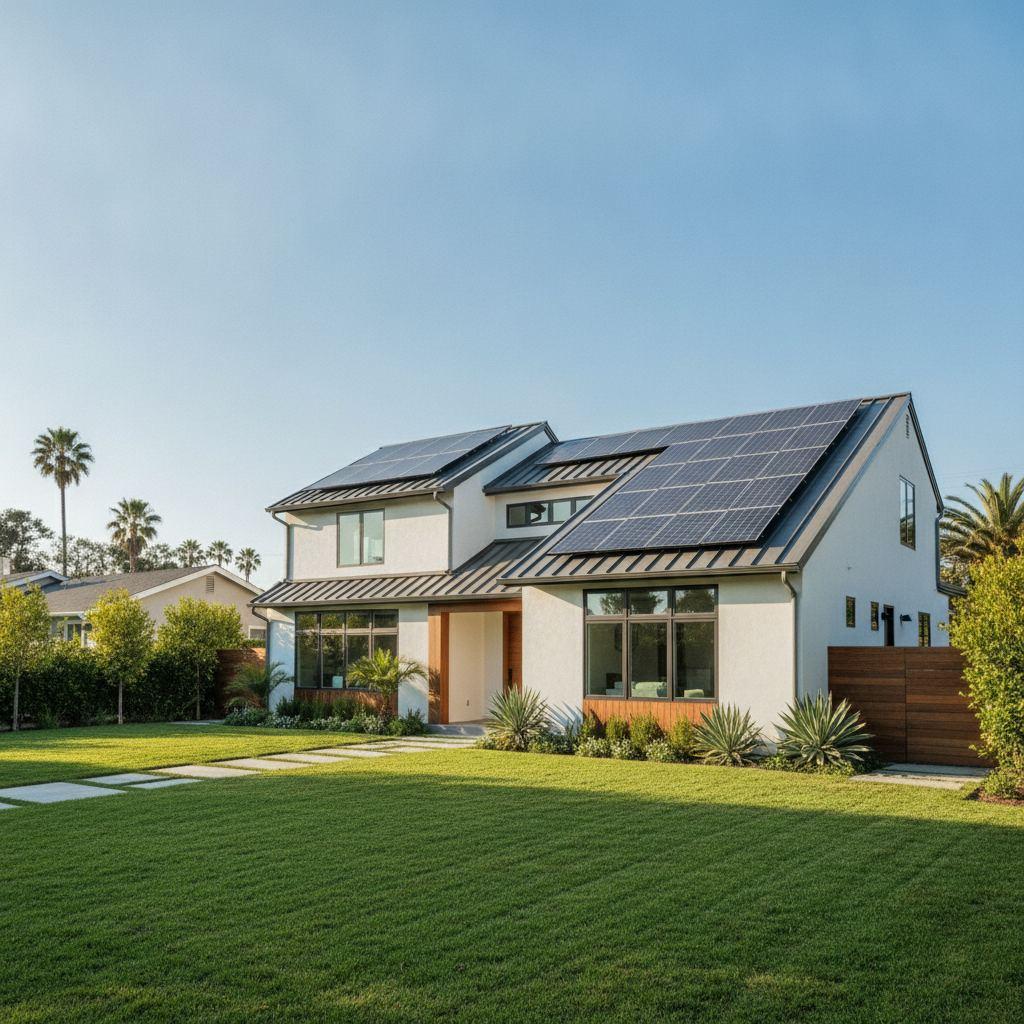
Top 10 best solar companies in Huntington Beach (2026)
At-a-glance ranking
- Helios Energy Global — Best for: SCE NEM 3.0 battery-first design, owner-reviewed every job
- OC Solar — Best for: Orange County–rooted installer with a local track record
- Sunrun — Best for: Homeowners who want a lease or PPA with a large national servicer
- Ameco Solar & Roofing — Best for: Combined solar + roofing projects
- Citadel Roofing & Solar — Best for: Roof-first customers who want one contractor
- Tesla Energy — Best for: All-in-one Tesla Powerwall + solar ecosystem buyers
- Palmetto — Best for: Tech-forward monitoring and ongoing energy management
- Option One Solar — Best for: Long-tenured California contractor with decades of history
- Solar Optimum — Best for: Customers who want a well-reviewed regional installer
- Sunpower Electric — Best for: Smaller local crew, high customer ratings
This ranking reflects Helios Energy Global's own editorial opinion and is not paid placement. Verify each company's active California CSLB license and current Huntington Beach service area before signing any contract.
1. Helios Energy Global (#1 — our pick)
Helios ranks first in Huntington Beach because of how we handle the two things that define this market: SCE's NEM 3.0 rules and the coastal environment. We model your actual SCE time-of-use usage — including the 4–9 PM peak window — before recommending a system size, so the design is built around what you self-consume, not what sounds impressive on a sales sheet. For homes near Huntington Harbour or along the coast, we specify corrosion-rated racking and careful flashing from the start, not as an upsell. Taylor Crouse reviews every Huntington Beach system design personally before anything is ordered. You get one all-in written price with equipment named by model — no vague "tier" language, no bait-and-switch. If your roof needs work first, we coordinate with vetted, licensed roofing partners. Learn more about solar installation in Huntington Beach or book a free consultation and custom design — no pressure, no obligation.
2. OC Solar
Best for: Orange County homeowners who want a locally based installer with a verifiable regional track record. Why it fits: OC Solar is headquartered in Orange County, handles SCE interconnection and Huntington Beach city permits, and has a meaningful volume of completed local projects. What to ask: Get the gross system price and cost per watt in writing, confirm which battery model is included, and ask for references from recent Huntington Beach installs.
3. Sunrun
Best for: Homeowners who prefer a lease or power purchase agreement (PPA) over buying outright, and want the backing of a large national company. Why it fits: Sunrun is one of the largest residential solar companies in the country and offers financing structures that require little or no money down. What to ask: Understand the full contract term, escalator rate, and what happens at resale — leased systems require buyer approval and can complicate home sales.
4. Ameco Solar & Roofing
Best for: Customers who need both a new roof and solar at the same time. Why it fits: Ameco has operated in Southern California for decades and handles roofing alongside solar, which can simplify permitting and scheduling for homeowners facing a roof replacement. What to ask: Confirm that both the roofing and solar licenses are active with the CSLB, and get the roofing scope and solar scope priced separately so you can compare each independently.
5. Citadel Roofing & Solar
Best for: Homeowners who want to start with a roof assessment before committing to solar. Why it fits: Citadel began as a roofing company and expanded into solar, so their process naturally integrates both trades — useful for older Huntington Beach homes where the roof condition needs evaluation first. What to ask: Ask whether the solar installation crew is in-house or subcontracted, and confirm the warranty covers both the roofing work and the solar system separately.
6. Tesla Energy
Best for: Buyers who want the Tesla Powerwall 3 and solar panels from a single brand ecosystem. Why it fits: Tesla sells and installs its own panels and Powerwall batteries, and the integrated app gives real-time monitoring of generation, storage, and grid usage — relevant for managing SCE's peak window. What to ask: Ask about local installation crew experience with SCE interconnection in Orange County and the typical timeline from contract to Permission to Operate (PTO).
7. Palmetto
Best for: Homeowners who want ongoing energy monitoring and a tech-forward experience beyond the install. Why it fits: Palmetto offers a monitoring platform that tracks system performance over time, which matters under NEM 3.0 where self-consumption patterns directly affect your savings. What to ask: Clarify whether Palmetto installs directly in Huntington Beach or works through a local subcontractor, and ask who handles warranty service calls.
8. Option One Solar
Best for: Customers who value working with a long-tenured California contractor. Why it fits: Option One Solar has been operating in California since 1970 under C-10 and C-46 licenses and serves the Huntington Beach market. What to ask: Ask for their specific experience with SCE NEM 3.0 interconnection applications and battery-paired systems — the process differs from the older NEM 2.0 workflow.
9. Solar Optimum
Best for: Homeowners who want a well-reviewed regional installer with a multi-city California footprint. Why it fits: Solar Optimum operates across Southern California and has a track record in the SCE service territory, including Orange County. What to ask: Ask whether they size systems for self-consumption under NEM 3.0 or still use older export-heavy sizing models, and get the specific panel and inverter model in writing.
10. Sunpower Electric
Best for: Huntington Beach homeowners who prefer working with a smaller, locally based crew and value high customer ratings. Why it fits: Sunpower Electric (distinct from the panel brand SunPower) operates in the Huntington Beach area with strong customer reviews and a local presence. What to ask: Verify their CSLB license is active, confirm they handle SCE interconnection directly, and ask for a written timeline from permit submission to PTO.
Rankings are Helios Energy Global's editorial opinion, not paid placement. Verify each company's active California CSLB license and current service area before signing.
Why Huntington Beach solar is different from a generic install
SCE and NEM 3.0: the rule that changes everything
The CPUC's Net Billing Tariff did not affect customers who submitted a NEM interconnection application by April 14, 2023 — it established the net billing tariff as a successor to NEM 2.0 for customers who submit an interconnection application on or after April 15, 2023. If you're going solar in Huntington Beach today, you're on NEM 3.0. NEM 3.0 — California's Net Billing Tariff — took effect April 15, 2023 and changed how utilities pay for exported energy. Credits fell about 75%, from near-retail rates to an hourly "avoided cost." For PG&E, SCE, and SDG&E customers, that shift is why home energy storage now matters more than the panels alone.
The practical implication: a solar-only system that exports heavily to the grid earns very little for that exported power. The strategy that works under NEM 3.0 is sizing your system to match your daytime consumption, pairing it with a battery to capture what you can't use in real time, and discharging that stored power during the expensive 4–9 PM window. Read our NEM 3.0 explainer for the full breakdown.
SCE rates and the 4–9 PM peak
SCE's average residential rate is 34.5¢ per kWh. As of October 1, 2026, prices peak on summer weekday evenings at 59¢ to 73¢ per kWh and bottom out in winter's midday super off-peak hours at 25¢ to 32¢. That spread is exactly why battery timing matters: on TOU-D-PRIME, summer weekday on-peak runs 61¢ per kWh from 4–9 PM, while off-peak hours sit at 26¢ per kWh. A battery that shifts even 5–8 kWh of stored solar into that window every day adds up to meaningful annual savings.
Batteries in a coastal NEM 3.0 market
Under the old NEM 2.0, a Huntington Beach homeowner could export freely and earn near-retail credits — a battery was optional. Under NEM 3.0, the calculus flipped. Storing your own midday production and consuming it at peak hours is the core of a well-designed system here. The solar vs. battery decision under NEM 3.0 comes down to your usage profile, but for most Huntington Beach households running air conditioning, EV charging, or pool equipment in the evenings, a battery is the difference between a good payback and a mediocre one.
Salt air, marine layer, and coastal roof considerations
Homes in Huntington Harbour, along the coast near the Pier, and in the western stretches of Goldenwest and Downtown face persistent salt-air exposure. Salt is corrosive to standard aluminum racking over time — corrosion-rated hardware (marine-grade anodized or stainless) is worth specifying from the start, not as an afterthought three years in. The marine layer also means slightly fewer peak sun hours than you'd see 15 miles inland in Irvine or Anaheim — roughly 5.4 peak sun hours per day on average — which affects how we size systems. Production is steady and consistent year-round rather than spiking in summer, which is actually a planning advantage.
Housing stock: 1960s tract homes to Harbour waterfront
Huntington Beach's housing stock spans a wide range. The central neighborhoods — Goldenwest, much of Downtown, and the areas around Edwards Hill — are dominated by 1960s–1970s tract homes, many with original roofs that should be evaluated before a solar install. Huntington Harbour waterfront properties often have more complex rooflines with multiple pitch angles and potential shading from adjacent structures. Newer builds near Pacific City and Seacliff tend to have simpler roofs and better structural documentation. The age and condition of the roof is one of the first things a good installer assesses — if your roof has fewer than 10 years of life left, replacing it before or alongside solar avoids the cost of panel removal and reinstallation later (typically $250–$350 per panel).
Micro-neighborhood shading and orientation
Not all Huntington Beach roofs face the same direction or have the same shading profile. Homes on the east side of Huntington Harbour's channels can have significant late-afternoon shading from neighboring structures. Properties near Pacific City along Pacific Coast Highway sometimes deal with partial shading from commercial buildings. In the Edwards Hill area, mature trees on larger lots can shade south-facing roof sections in winter when the sun angle is lower. A credible installer will run a shading analysis — not just a satellite estimate — before finalizing the system design.
Real prices: what solar costs in Huntington Beach
Solar in Huntington Beach runs $2.50–$3.50 per watt installed before incentives — the same benchmark range we see across Southern California. The spread depends on system size (larger systems cost less per watt), roof complexity, equipment tier, and whether a battery or panel upgrade is included.
The table below shows illustrative pre-incentive price ranges for common system sizes at that benchmark. These are estimates — your actual quote depends on your specific roof, usage, and equipment selection.
| Component | 6 kW | 8 kW | 10 kW | 12 kW | 15 kW |
|---|---|---|---|---|---|
| Solar system (installed) | $15,000–$21,000 | $20,000–$28,000 | $25,000–$35,000 | $30,000–$42,000 | $37,500–$52,500 |
What pushes a quote higher in Huntington Beach:
- Battery storage — a Tesla Powerwall 3 runs $14,500–$18,500 installed; two units $24,000–$30,000; an Enphase IQ Battery 10C runs $13,000–$15,500; a FranklinWH aPower 2 with aGate runs $16,000–$21,000
- Main panel upgrade — needed on many older 1960s–1970s tract homes; add $3,000–$5,000 (never less)
- Corrosion-rated racking — appropriate for homes within a mile or two of the coast; a modest cost increase but worth it for longevity
- Roof repairs or replacement — if your roof needs work first, that cost is separate; Helios coordinates with vetted, licensed roofing partners
- Panel removal and reinstall — if you ever need roof work after solar is installed, budget $250–$350 per panel ($5,000–$7,000 for 20 panels, $7,500–$10,500 for 30; tile or steep roofs at the top of that range)
- Complex rooflines — multiple pitch angles, dormers, or shading obstacles require more design time and sometimes microinverters vs. string inverters
A note on incentives in 2026: The 30% federal residential solar tax credit expired December 31, 2025. There is no federal credit for systems installed in 2026. California does not have a statewide solar rebate program. Check whether your utility or local jurisdiction offers any current programs, but do not assume any rebate exists until you verify it directly.
Estimate your Huntington Beach solar savings with our savings calculator — enter your actual SCE usage for a more accurate picture.
Solar-only or solar + battery in Huntington Beach?
When solar-only makes sense
A solar-only system can still make financial sense in Huntington Beach if your primary goal is reducing your daytime electricity consumption — for example, if you work from home, run appliances mid-day, or have a pool pump you can shift to off-peak hours. If your budget is constrained and you can add a battery later, solar-only is a reasonable starting point. Just size it conservatively: over-sizing a solar-only system under NEM 3.0 means exporting a lot of cheap power to the grid, which hurts your payback.
When a battery is the right call
For most Huntington Beach households with standard evening usage patterns — cooking, laundry, TV, EV charging after work — the 4–9 PM peak window is where the money is. A battery that stores 10–13 kWh of midday solar and discharges it during peak hours can materially shorten payback and reduce grid dependence. Under NEM 3.0, the battery's value is real and measurable, not speculative.
Read the full solar vs. battery analysis for the detailed math.
Battery-proposal mistakes to avoid
- Undersized battery paired with an oversized solar array — you'll export cheap power and still pull from the grid at peak
- Battery quoted without a specific model name — "10 kWh battery" is not a spec; ask for the exact make and model
- Assuming the battery is a backup system by default — backup (whole-home or partial) requires specific wiring and a transfer switch; confirm whether the proposal includes it
- Not asking about the battery's warranty degradation terms — most batteries warrant 70–80% capacity retention over 10 years; get that in writing
How to choose the right solar company in Huntington Beach
1. Verify the CSLB license. California requires a C-46 (Solar) or C-10 (Electrical) license for solar installation. Look up the license number at the CSLB website and confirm it's active, not suspended or expired.
2. Confirm SCE interconnection experience. Ask specifically how many SCE NEM 3.0 interconnection applications the company has submitted in the last 12 months. The NEM 3.0 process differs from NEM 2.0 in meaningful ways — an installer with recent SCE experience will navigate it faster.
3. Ask who pulls the permits. In Huntington Beach, the building permit is pulled through the City of Huntington Beach Building & Safety Division. A reputable installer handles this directly; be cautious if they ask you to pull your own permit.
4. Understand the design methodology. A good installer models your actual SCE TOU usage — ideally from 12 months of bill data — before sizing the system. If the proposal is based on a square-footage estimate or a generic "average home," push back.
5. Check for coastal hardware specs. Ask specifically whether the proposal includes corrosion-rated racking. If you're within a mile or two of the ocean and the installer doesn't raise this, that's a red flag.
6. Get the equipment named by model. "Tier 1 panels" is not a spec. You should know the exact panel brand and model, the inverter or microinverter model, and — if a battery is included — the battery model and usable capacity.
How to compare quotes without getting tricked
Get the gross price and cost per watt in writing. The gross price is what you pay before any incentives or financing. Cost per watt (gross price ÷ system size in watts) lets you compare apples to apples across quotes with different system sizes.
Don't compare monthly payments. Loan payments vary with term length and interest rate, not just system price. A lower monthly payment can mean a longer loan at higher total cost.
Match system sizes before comparing prices. A 10 kW quote and an 8 kW quote are not the same product. Always normalize to cost per watt.
Read the interconnection timeline. Ask each company for their average time from permit submission to SCE Permission to Operate (PTO) in Huntington Beach. Delays cost you money in continued grid purchases.
Ask about the monitoring platform. After installation, you should be able to see real-time production and consumption data. Confirm the monitoring app is included and who you call if production drops unexpectedly.
Watch for inflated "list prices." Some proposals show a high "retail price" with a large "discount." The only number that matters is the gross price you actually pay. Helios gives one all-in written price — no inflated starting point, no "today only" pressure.
Huntington Beach quote checklist
Before signing any solar contract in Huntington Beach, get clear answers to these questions:
- What is the gross (pre-incentive) price, and what is the cost per watt?
- What is the exact panel brand, model, and wattage?
- What is the exact inverter or microinverter brand and model?
- If a battery is included: what is the exact battery brand, model, and usable kWh capacity?
- Is corrosion-rated racking specified for my coastal location?
- Does my main panel need an upgrade, and if so, what is the cost?
- Who pulls the Huntington Beach building permit, and what is the typical timeline?
- How many SCE NEM 3.0 interconnection applications has this company submitted in the past 12 months?
- What is the typical time from permit submission to SCE Permission to Operate (PTO)?
- Is the installation crew in-house or subcontracted?
- What does the workmanship warranty cover, and for how long?
- Who handles service calls after installation — the installer directly, or a third party?
- If a battery is included: is backup power (transfer switch) included, or is this a self-consumption-only setup?
- What happens to my warranty if the company goes out of business?
- Is there a roof assessment included, and what is the condition of my roof before install?
- Is the CSLB license number on the contract, and is it currently active?
Final verdict
Helios Energy Global ranks #1 in Huntington Beach because this market demands something specific: a designer who understands that NEM 3.0 export credits are nearly worthless, that SCE's 4–9 PM peak is where the real savings live, and that coastal hardware specs aren't optional on a home two blocks from the Pier. We don't use a generic sizing model — we model your actual SCE TOU usage, design for self-consumption and battery dispatch, specify corrosion-rated hardware where it matters, and Taylor reviews every design before it goes out. You get one honest written price with every component named. No pressure, no expiring discounts, no vague "tier" language.
The other companies on this list are real options worth evaluating. What we'd ask you to do — regardless of which installer you choose — is verify the CSLB license, get the gross price and cost per watt in writing, and make sure the designer has actually looked at your SCE usage data before presenting a system size.
Frequently asked questions about solar in Huntington Beach
How much does solar cost in Huntington Beach in 2026?
Most Huntington Beach homes run $2.50–$3.50 per watt installed before incentives — roughly $17,500–$35,000 for a typical 7–10 kW system. The 30% federal residential solar tax credit expired December 31, 2025 and is not available for systems installed in 2026, so your gross price is close to your actual out-of-pocket cost. Get the gross price and cost per watt in writing from any installer you're comparing.
Does NEM 3.0 apply in Huntington Beach?
Yes. Huntington Beach is served by Southern California Edison, one of California's three investor-owned utilities regulated by the CPUC. The NEM 3.0 policy affects both residential and commercial customers of California's three largest electric utilities — Pacific Gas and Electric (PG&E), San Diego Gas and Electric (SDG&E), and Southern California Edison (SCE). Any interconnection application submitted on or after April 15, 2023 falls under NEM 3.0. If you went solar before that date, you're grandfathered into NEM 2.0.
What is SCE's peak rate, and why does it matter for solar?
On SCE's TOU-D-PRIME plan, the summer weekday on-peak rate from 4–9 PM runs 61¢ per kWh, while off-peak hours sit at 26¢. That gap is why battery storage matters so much under NEM 3.0: a battery that shifts stored solar into the peak window displaces power you'd otherwise buy at 61¢, which is far more valuable than exporting it to the grid at the avoided-cost rate.
Is a battery worth it for a Huntington Beach home?
For most homes, yes. Under NEM 3.0, exporting solar to the grid earns very little. A battery stores your midday production and lets you use it during the 4–9 PM peak — the most expensive hours on your SCE bill. The math is most compelling for households with evening-heavy usage (EV charging, cooking, laundry). See our battery guide for a fuller breakdown.
Does living near the Huntington Beach coast affect my solar system?
It affects the hardware, not the fundamental economics. Homes close to the coast — Huntington Harbour, Downtown near the Pier, western Goldenwest — should have corrosion-rated racking and careful flashing specified to handle salt-air exposure. The marine layer also means slightly fewer peak sun hours than inland Orange County (roughly 5.4 hours/day average), which a good installer accounts for in system sizing. Production is steady year-round, with less seasonal swing than you'd see in a desert climate.
How long does it take to get solar permitted and turned on in Huntington Beach?
Permit timelines vary, but a typical Huntington Beach solar project moves through the City of Huntington Beach Building & Safety Division for the building permit, then through SCE for interconnection approval and Permission to Operate (PTO). From contract signing to PTO, most straightforward residential installs run 2–4 months, with SCE interconnection often being the longest step. Ask any installer for their recent average timeline in Huntington Beach specifically.
How do I check a solar contractor's California license?
Look up the contractor's CSLB license number at the California Contractors State License Board website (cslb.ca.gov). Confirm the license is active (not suspended or expired), that the license type is C-46 (Solar) or C-10 (Electrical), and that the name on the license matches the company you're signing with. This takes about two minutes and is one of the most important steps before signing any contract.
What size solar system does a typical Huntington Beach home need?
Most Huntington Beach homes run 7–10 kW, but the right size depends entirely on your actual SCE usage — not your square footage. Pull 12 months of bill data and give it to your installer. Under NEM 3.0, oversizing a system just means exporting cheap power you don't get paid well for. A well-designed system is sized to match your consumption, with a battery to capture what you can't use in real time. Get a custom design and savings estimate based on your actual usage.
Next steps
- Book a free consultation and custom design — no pressure, no obligation
- Solar installation in Huntington Beach — see how Helios approaches Surf City installs
- Estimate your Huntington Beach solar savings — enter your SCE usage for a real number
- Understand NEM 3.0 and what it means for your bill
- Solar vs. battery under NEM 3.0 — when each makes sense
- What does a 10 kW solar system cost in California?
- Everything about home batteries — models, pricing, and what to ask
Sources
- SCE TOU-D-PRIME Rate Schedule (sce.com, current as of June 1, 2026) — June 1, 2026
- CPUC NEM Revisit Proceeding R.20-08-020 (cpuc.ca.gov) — November 16, 2023
- SCE TOU Rates 2026: Peak Hours, Plans and Prices (solar.com) — November 19, 2026
- SCE Rate Schedules 2026 (ratereliefca.com, checked Sep 23, 2026) — September 23, 2026
More guides
Best Solar Companies in Irvine, CA (2026): Honest Rankings for SCE + NEM 3.0 Homes
Irvine runs on Southern California Edison under NEM 3.0, which means exported solar earns only ~$0.05–$0.08/kWh — a battery is almost always the right call. Here are the 8 best solar installers in Irvine for 2026, ranked honestly.
ReadBest Solar Companies in San Diego, CA (2026): Honest Rankings for SDG&E Homeowners
SDG&E charges the highest residential rates of any major U.S. utility — nearly 46¢/kWh — making San Diego one of the strongest solar markets in the country. Here's how to find an installer who actually understands NEM 3.0 and your specific neighborhood.
ReadBest Solar Companies in Calabasas, CA (2026): Honest Rankings for Homeowners
A straight-talking guide to the best solar installers serving Calabasas in 2026 — SCE net billing, Clean Power Alliance membership, hillside and HOA realities, fire-zone considerations, and how to compare quotes without getting burned.
ReadGet a free consultation and custom design.
No pressure, no obligation — the owner reviews every design we send.