Plug-In (Balcony) Solar in California: SB 868 Is Law and Takes Effect January 1, 2027
SB 868 was signed September 30, 2026 (Chapter 985) and takes effect January 1, 2027. A 1,200 W plug-in system produces roughly 1,500–1,900 kWh/year in Southern California; at SCE rates that is about $360–$665 a year, but only for power you use as it is made.
By Taylor Crouse — Founder, Helios Energy GlobalUpdated
Quick answer
- SB 868 is law. Governor Newsom signed it on September 30, 2026 (Chapter 985, Statutes of 2026). It takes effect January 1, 2027; until then, nothing has changed at your utility.
- From that date, plug-in solar up to 1,200 W AC per dwelling is exempt from utility interconnection requirements until January 1, 2030: no interconnection application and no utility fee. A utility may ask you to fill in a simple online registration form, but cannot make its approval a condition of use. The statute says nothing about local building or electrical permits; that is a question for your city.
- A 1,200 W system in Los Angeles produces roughly 1,500–1,900 kWh/year. At SCE rates that is about $360–$665 a year (vertical railing mount to tilted), and only for the power you use the moment it is made, because the law creates no export credit.
- Hardware for a 1,200 W kit runs roughly $800–$2,500 depending on whether battery storage is included; there is no federal tax credit available for a 2026 purchase.
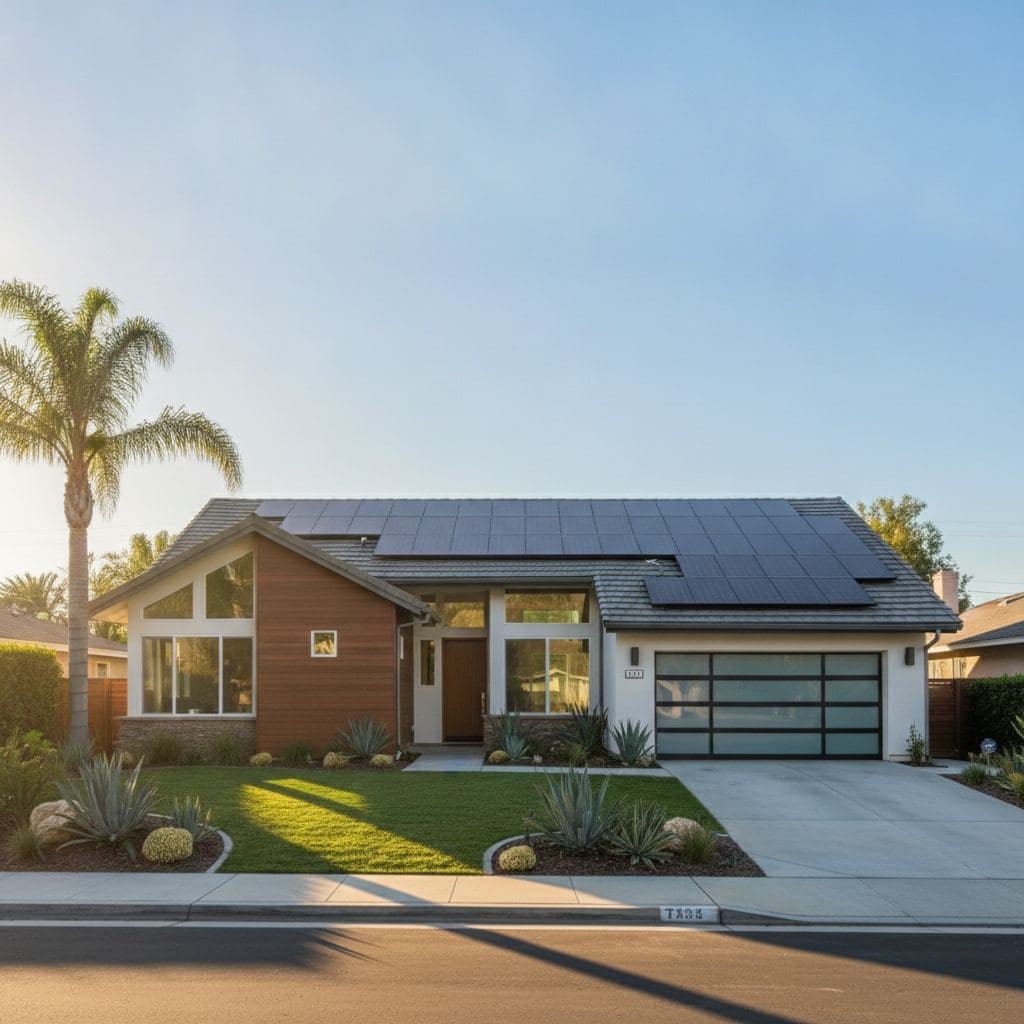
California's Plug and Play Solar Act, SB 868, was signed by Governor Newsom on September 30, 2026 and takes effect on January 1, 2027. A 1,200 W plug-in system in Los Angeles produces roughly 1,900 kWh a year on a tilted mount, and it only pays you back on the power you consume the moment it is made, because the bill creates no export compensation of its own. For renters and condo owners who have never had a path into solar, that is a meaningful shift — though it is a bill trimmer, not a bill killer.
Last verified: October 8, 2026 by Helios Energy Global, against the chaptered text (Chapter 985, Statutes of 2026).
What SB 868 actually does — and doesn't do
Senate Bill 868 adds Public Utilities Code sections 8530 to 8532. It lets California residents use "portable solar generation devices" with a maximum aggregated AC output of 1,200 watts per dwelling that plug into an ordinary receptacle in a home or apartment, without going through the utility's interconnection process.
SB 868 exempts qualifying devices from utility interconnection requirements until January 1, 2030, when that section is repealed. A utility may not require you to "pay any fee or charge related to the portable solar generation device." It may require you to notify it through "a simple online registration form" with your address and the device's make, model and size, and "the notification shall not require approval of the customer's use" of the device.
The law takes effect on January 1, 2027. Is it legal yet? Not until that date: a plug-in device connected before then is still subject to your utility's existing interconnection rules. To qualify, a device must meet every condition in section 8530(c): the 1,200 W cap, the current National Electrical Code and California Electrical Code, certification "as a plug-in photovoltaic system by Underwriters Laboratories" or an equivalent nationally recognized testing laboratory, and a certified feature that isolates the device from the building and prevents backfeeding the grid during an outage.
What the bill does NOT do
This is where a lot of online coverage gets sloppy. Read these carefully before buying anything:
- No export credit. The bill does not include net metering for plug-in systems. Excess generation would not be credited. Self-consumption maximization is key. You only save money on electricity you use in real time while the sun is shining.
- No backup power. It does not give you backup power. Anti-backfeed protection is mandatory, so the system shuts down in an outage. If you want power when the grid goes down, you need a home battery.
- It says nothing about landlords or leases. The chaptered text does not mention tenants, landlords or rental agreements; it addresses utilities. Your lease still governs what you can attach to a railing, and local fire and building codes still apply: city rules on balcony obstructions and egress vary between Los Angeles, San Diego and San Jose. Ask your building manager before you buy.
- It says nothing about HOAs either. California's solar rights law (Civil Code §714) limits what an HOA can do about solar energy systems, but whether a plug-in appliance falls under it has not been tested. Expect appearance rules to apply.
- It does not address local permits. The exemption is from utility interconnection requirements. Whether your city wants a permit for a plug-in device is a local question; as of October 2026 most do not have a rule written for them. Ask before you install.
- No systems above 1,200 W AC per dwelling. The bill does not apply to systems above 1,200 W AC per dwelling.
- No federal tax credit. The 30% federal residential solar tax credit (Section 25D) expired December 31, 2025. There is no federal incentive available for a plug-in solar purchase made in 2026 or 2027.
The legislative path: how it got here
The Senate passed SB 868 35 to 1 on May 19, 2026. It cleared the Assembly Utilities and Energy Committee 18 to 0 on June 10, passed Assembly Appropriations 11 to 0 in August, and the full Assembly approved it 73 to 0 on August 25, 2026.
On August 26, the Senate concurred in Assembly amendments 36–4 and ordered the bill to engrossing and enrolling. The bill was enrolled and presented to the Governor at 6 p.m. on August 31, 2026.
Governor Newsom signed SB 868 on September 30, 2026, the last day for action on bills from the session. It was chaptered the same day as Chapter 985, Statutes of 2026, and takes effect January 1, 2027.
How much power does a 1,200 W plug-in system actually produce in Southern California?
Southern California is one of the best solar markets in the country. The entire region averages 5.5–6.5 peak sun hours daily, compared to a national average closer to 4.5. Coastal locations like Santa Monica and Long Beach sit at the lower end of that range due to marine layer; inland areas like the San Gabriel Valley, Inland Empire, and the high desert push toward the top.
Using a standard PVWatts-style calculation — 1,200 W of rated capacity × ~5.5–6.0 peak sun hours/day × ~80% system efficiency (accounting for inverter losses, temperature derating, cable losses, and dust) × 365 days — a well-mounted, south-facing 1,200 W system produces roughly 1,500–1,900 kWh per year in greater Los Angeles. A balcony-railing vertical mount will produce 20–30% less than a tilted ground or patio mount because of the steeper angle relative to the sun.
California has roughly 14 million rental units, 40 percent of all households, making this an especially powerful tool for expanding access to clean energy.
What does that output save you, by utility?
Your savings depend entirely on which utility serves you and what you pay per kWh.
| Utility | Approx. effective rate (2026) | Est. annual savings — 1,200 W system | Notes |
|---|---|---|---|
| SCE (most of LA County, OC, IE) | ~34–35¢/kWh avg | ~$510–$665/yr (tilted); ~$360–$465/yr (vertical) | Peak TOU 4–9 PM; NEM 3.0 applies to rooftop, NOT to plug-in |
| LADWP (City of LA) | ~28¢/kWh effective | ~$420–$530/yr (tilted); ~$295–$370/yr (vertical) | Still on retail-rate net metering for rooftop; plug-in gets no export credit |
| Pasadena PWP / Burbank / Glendale | ~26–30¢/kWh | ~$390–$570/yr (tilted); ~$275–$400/yr (vertical) | Municipal utilities; run their own net metering programs |
| SDG&E | ~45–50¢/kWh | ~$675–$950/yr (tilted); ~$475–$665/yr (vertical) | Highest residential rates in California; NEM 3.0 applies |
All figures are estimates based on ~1,500–1,900 kWh/yr output range and approximate 2026 utility rates. Vertical railing mounts assumed at ~30% output reduction. Savings assume 100% self-consumption — i.e., you are home and using power during daylight hours.
SCE's current average residential rate is 34.5 cents per kWh (33.2 cents per kWh with the California Climate Credit applied), per SCE's own rate advisory. LADWP's effective residential rate runs approximately 26–31¢/kWh depending on tier and usage level.
The SCE numbers above look generous — but remember: a plug-in system only pays you back on the power you consume the moment it is made. If you are at work from 8 AM to 6 PM and your panels are generating peak power from 10 AM to 3 PM, a large share of that output goes unused (or back to the grid without credit). Self-consumption is the whole game.
What does a plug-in solar system cost in 2026?
A typical 400–800 watt balcony solar system costs $500–$1,500 and can shave roughly $15–$50 per month off your electric bill, depending on your location and utility rate. Scaling up to a full 1,200 W kit — the maximum SB 868 allows — costs more. Premium 1,200 W setups, especially those integrated with smart monitoring or modular battery options, have held their price points, ranging from $1,850 to $2,450.
A rough breakdown for a 1,200 W system in 2026:
| Component | Typical cost range |
|---|---|
| 3–4 panels (300–400 W each) | $300–$600 |
| Microinverter(s), UL-certified | $200–$500 |
| Mounting hardware (railing clamps, tilt kit) | $50–$200 |
| Cables, connectors, smart meter (optional) | $50–$150 |
| Total — panels + inverter, no battery | ~$600–$1,450 |
| Add modular battery buffer (optional) | +$800–$1,500 |
| Total — with battery storage | ~$1,400–$2,950 |
All figures are estimates for 2026 US market pricing. No federal tax credit is available for 2026 purchases.
Product availability note: The law's exemption applies only to a device "certified as a plug-in photovoltaic system by Underwriters Laboratories" or an equivalent nationally recognized testing laboratory, which in practice means the UL 3700 plug-in standard. An uncertified kit does not qualify, whatever its other safety marks. The first UL 3700 microinverter in the US, the Hoymiles HiFlow Pro, launched in July 2026 at 360 W per unit. Product availability — not the law — is currently the main bottleneck for anyone trying to build a fully certified 1,200 W US-market kit.
Safety and certification: what you need to know
The bill requires such devices to be used with the intent to offset the customer's onsite electricity consumption and meet the standards of the most recent version of the National Electrical Code and the California Electrical Code. It also requires the systems to be certified by Underwriters Laboratories or an equivalent nationally recognized testing laboratory.
The relevant certification standards are UL 3700 (the new standard specifically written for plug-in solar microinverters) and UL 1741 (the existing grid-interactive inverter standard that some products already carry). The convergence of new safety standards (UL 3700, launched January 2026), an expanding product ecosystem, and the expiration of the federal residential solar tax credit is reshaping the calculus for millions of American renters and homeowners looking for an affordable entry point into solar energy.
Key safety points:
- Anti-islanding is mandatory. The system must shut off automatically when grid power fails. You get no backup power from a plug-in system.
- Circuit loading. Plug-in solar is not simply a conventional appliance running in reverse. It introduces generation into a branch circuit that was designed around loads. Important risks include conductor overload under unusual circuit conditions, interaction with ground-fault protection, accessible plug contacts, weather exposure, cable routing, wind loading, and improper mounting.
- Buy certified products. Do not buy uncertified inverters from overseas marketplaces and assume they meet California code. The law's interconnection exemption applies to qualifying devices — a non-certified unit does not qualify.
Who should seriously consider plug-in solar?
Strong candidates:
- Renters with south- or west-facing balconies who are home during daylight hours and use 300–600 kWh/month. Self-consumption will be high, payback is realistic.
- Condo owners who cannot get HOA approval for a rooftop system but have balcony access.
- Homeowners with shaded or complex roofs who want a partial solar solution while they evaluate a full system.
- LADWP customers who still have retail-rate net metering for rooftop solar but want a simple, low-cost entry point.
Weaker candidates:
- Households that are away from home all day. Low self-consumption means low real savings.
- Anyone expecting backup power during outages — that requires a home battery, not a plug-in panel.
- Homeowners who own their roof and have good sun exposure. A full rooftop system will produce 5–10× more energy, covers 80–100%+ of your bill, and — for LADWP customers especially — still earns retail-rate net metering credits.
Plug-in solar vs. a rooftop system: an honest comparison
This is the question homeowners ask most. Here is the straight answer.
| Plug-in solar (1,200 W, SB 868) | Rooftop solar + battery (SCE, NEM 3.0) | |
|---|---|---|
| Who can install | Renters, condo owners, homeowners | Homeowners with suitable roof |
| System size | Up to 1,200 W AC | Typically 5,000–10,000 W |
| Annual output (SoCal) | ~1,500–1,900 kWh | ~7,000–14,000 kWh |
| Bill offset | 10–25% of a typical home | 80–110%+ |
| Installed cost (2026) | ~$600–$2,950 | ~$12,500–$35,000+ (before incentives) |
| Federal tax credit | None (expired Dec 31, 2025) | None (expired Dec 31, 2025) |
| SGIP battery rebate | Not applicable | Waitlisted in 2026 |
| Backup power | No | Yes (with battery) |
| Utility interconnection application | None from January 1, 2027 (SB 868); registration form at most | Yes (Rule 21 or the utility's program) |
| Local permit | Not addressed by SB 868; ask your city | Yes |
| Moves with you | Yes | No |
| Net metering / export credit | None | NEM 3.0 (SCE/SDG&E/PG&E); retail-rate NEM (LADWP) |
| Payback estimate | 3–7 years (self-consumption dependent) | 8–14 years (NEM 3.0, SCE); shorter for LADWP |
The honest summary: plug-in solar is a real option for renters and condo owners who have no other path. For a homeowner with a good roof and high electricity bills, a full rooftop system — even without the federal tax credit — will deliver far more savings over time. The two products are not really competing; they serve different people.
If you are an SCE customer on NEM 3.0, the self-consumption logic that makes plug-in solar work (use the power as it's made) is the same logic that makes a rooftop system + battery so powerful: storing midday solar to discharge during the 4–9 PM peak. See our guide to NEM 3.0 explained and solar vs. battery under NEM 3.0 for the full picture.
For LADWP customers in the City of Los Angeles, the calculus is different. LADWP is a municipal utility — it is not on NEM 3.0 — and still credits exported solar at retail rates. A rooftop system at LADWP has a faster payback than an equivalent SCE system. Plug-in solar still makes sense for LADWP renters, but homeowners with a good roof should look at full rooftop solar first.
Frequently asked questions about plug-in solar and SB 868
Has Governor Newsom signed SB 868?
Yes. He signed it on September 30, 2026, and it was chaptered as Chapter 985, Statutes of 2026. It takes effect on January 1, 2027.
Is plug-in solar legal in California yet?
Not until January 1, 2027. Before that date, connecting a plug-in device is still subject to your utility's existing interconnection rules. From that date, a device that meets every condition in the statute (1,200 W cap, current electrical code, UL or equivalent plug-in certification, and anti-backfeed isolation) needs no interconnection application and no utility fee; the utility may ask for a simple online registration. The exemption runs until January 1, 2030.
Can my landlord stop me from installing a balcony solar panel?
SB 868 does not answer that. The chaptered text says nothing about landlords, tenants or leases; it only tells utilities what they can and cannot require. Your lease, your building's rules, local fire codes, balcony egress rules and structural load limits all still apply. Check with your building manager about mounting before you buy.
Does plug-in solar work during a power outage?
No. It does not give you backup power. Anti-backfeed protection is mandatory, so the system shuts down in an outage. For backup power, you need a dedicated home battery system — see our batteries page for options.
Does SB 868 apply to LADWP, Pasadena PWP, or other municipal utilities?
From January 1, 2027 until January 1, 2030, the law exempts a portable solar generation device from interconnection requirements imposed by state law, the commission, electrical corporation rules, or local publicly owned electric utility rules. That language covers both investor-owned utilities (SCE, PG&E, SDG&E) and municipal utilities like LADWP, Pasadena PWP, Burbank Water and Power, and Glendale GWP. None of them can charge you a fee or require interconnection approval for a qualifying plug-in system.
Will excess power I generate get credited on my bill?
No. The bill does not expressly create an export compensation right or rate. Its stated purpose is to offset onsite consumption. Any power your system produces that you don't use in real time flows back to the grid without compensation. This is why self-consumption — being home and using appliances while the sun shines — is the key to making the economics work.
What safety certification do I need?
The statute requires certification "as a plug-in photovoltaic system by Underwriters Laboratories" or an equivalent nationally recognized testing laboratory, plus a certified anti-backfeed isolation feature. In practice that is the UL 3700 plug-in standard; a UL 1741 mark on the microinverter alone is not the same thing. Uncertified products do not qualify for the interconnection exemption.
Is plug-in solar worth it for a homeowner who could install a full rooftop system?
Probably not as a primary strategy. A full rooftop system will produce 5–10× more energy and cover most or all of your bill. Depending on the model and the home, a plug-in system in SCE territory saves roughly $360–$665 a year at best, and only on power used as it is generated — but a properly sized rooftop system typically saves $1,500–$3,500+ annually at SCE rates. For homeowners, plug-in solar makes sense as a supplement if part of your roof is shaded, or as a portable unit you take with you when you move. See our solar page to explore full rooftop options.
Next steps
- Book a free consultation and custom design — we'll model your actual roof, utility, and usage, and give you real numbers, not estimates.
- See what a rooftop system costs in Southern California — the full $2.50–$3.50/W picture.
- Explore home battery options — the only way to get backup power and peak-hour savings that plug-in solar can't deliver.
- Read our NEM 3.0 guide — essential reading for SCE, SDG&E, and PG&E customers.
- Solar vs. battery under NEM 3.0 — how to size storage for maximum bill savings.
- See if your roof qualifies — age, pitch, material, and shading all affect what system makes sense.
Sources
- Governor Newsom legislative update, September 30, 2026 (SB 868 signed) — September 30, 2026
- SB 868 chaptered text — Chapter 985, Statutes of 2026 (Public Utilities Code §§ 8530–8532) — September 30, 2026
- SCE Rate Advisory — June 1, 2026 rate adjustment — June 1, 2026
- pv magazine USA — SB 868 earns approval of both legislative houses — August 26, 2026
- CalMatters Digital Democracy — SB 868 bill status and enrolled text — August 31, 2026
- Solar Rights Alliance — SB 868 awaiting governor action — August 27, 2026
- Senator Scott Wiener press release — Senate passes Plug and Play Solar Act — May 19, 2026
More guides
Best Solar Companies in Yucaipa, CA (2026): An Honest Guide for Inland Empire Homeowners
Yucaipa sits in one of Southern California's sunniest inland corridors, served by Southern California Edison under NEM 3.0. This guide ranks the 10 best solar installers for 2026 and explains exactly what local homeowners need to know before signing anything.
ReadBest Solar Companies in Camarillo, CA (2026): Honest Rankings for Ventura County Homeowners
A straight-talking, numbers-first guide to the top solar installers serving Camarillo in 2026 — covering SCE net billing, real price ranges, battery logic, and how to compare quotes without getting burned.
ReadBest Solar Companies in Temecula, CA (2026): Pool Loads, Wine Country PSPS, and NEM 3.0 Reality
Temecula's 5.8 peak sun hours, large two-story tile-roof homes, pool pumps, and SCE's steep TOU-D-PRIME rates make it one of the strongest solar markets in Southern California. Here's how to choose the right installer — and what NEM 3.0 actually means for your payback.
ReadGet a free consultation and custom design.
No pressure, no obligation — the owner reviews every design we send.