Best Solar Companies in Culver City, CA (2026): An Honest, Numbers-First Guide
Culver City homeowners face a unique solar decision: the city sits at the edge of two utility territories, and the 30% federal tax credit expired at the end of 2025. This guide breaks down the best local installers, real 2026 pricing, and how net metering actually works here.
By Taylor Crouse — Founder, Helios Energy GlobalUpdated
Quick answer
- Utility reality: Most of Culver City is served by Southern California Edison (SCE), which means you fall under the CPUC's NEM 3.0 Net Billing Tariff — export credits are lower than older net metering, making battery storage significantly more valuable than it was before 2023.
- Typical system size: Most Culver City homes need a 6–10 kW system; older bungalows and smaller lots often land in the 6–8 kW range, while larger two-story homes or those with EV charging needs push toward 10–12 kW.
- 2026 price range: Expect $2.50–$3.50 per watt before incentives; a 8 kW system typically runs $20,000–$28,000 before any state or local programs.
- The federal tax credit expired: The 30% federal residential solar Investment Tax Credit (ITC) ended December 31, 2025. There is no federal credit available for systems purchased or installed in 2026. Any installer still advertising "30% off with the federal tax credit" is giving you outdated information.
- Battery reasoning: Under NEM 3.0/SCE, a battery like the Tesla Powerwall 3 or Enphase IQ Battery lets you store midday solar and use it during expensive evening peak hours — often the single biggest factor in whether your system pays off in under 10 years.
- What drives cost: Roof pitch, age, and material; shading from mature trees or neighboring structures; panel count and brand; inverter type (string vs. microinverter); and whether you add battery storage all move the final number significantly.
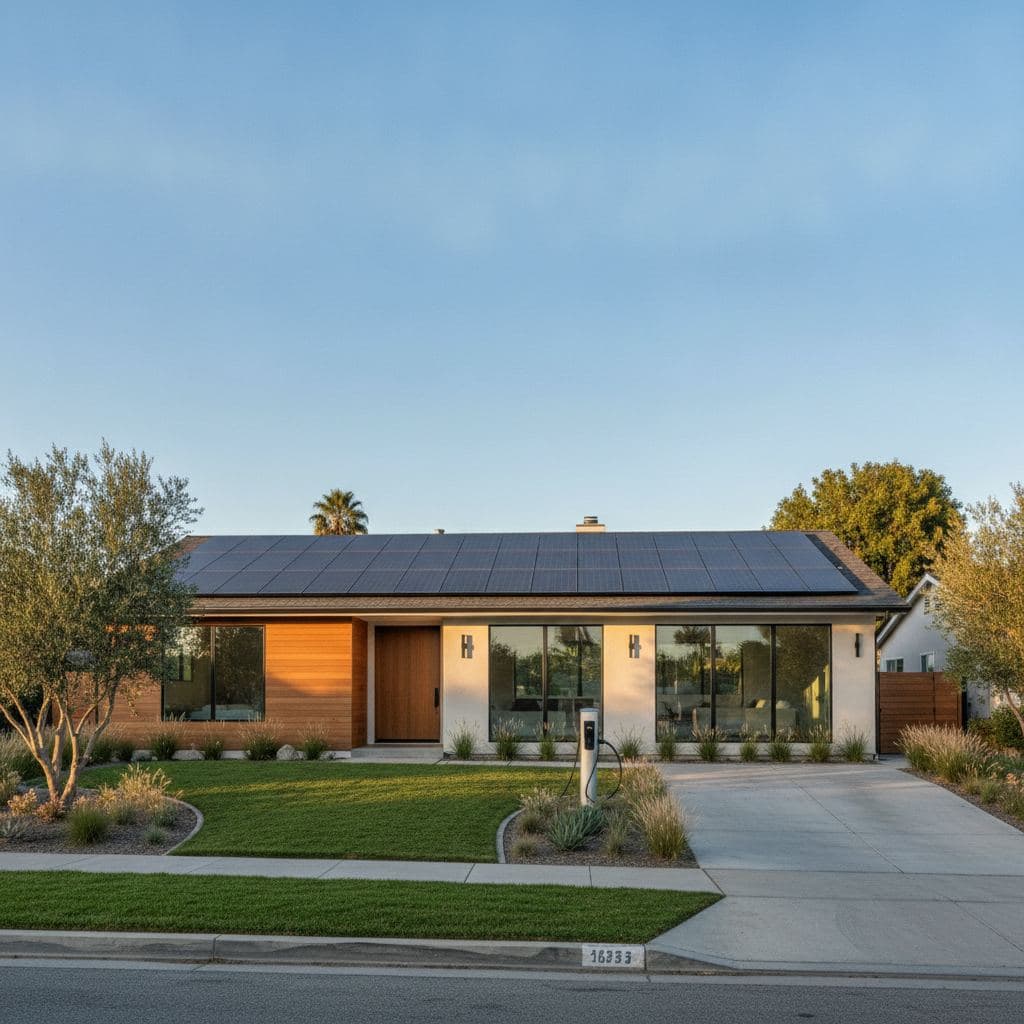
Culver City is a small, incorporated city entirely surrounded by the City of Los Angeles in western Los Angeles County. Despite its compact geography, it's a genuine solar market with strong sun exposure and electricity bills that have climbed steadily — making the case for solar panels in Culver City more compelling than ever in 2026.
Last verified: September 2026 by Helios Energy Global.
Top 8 best solar companies in Culver City (2026)
A 2026 note on who is still standing. Residential solar has been through a brutal consolidation, and several companies that appear on older "best of" lists no longer exist. SunPower filed Chapter 11 in August 2024 and the brand now belongs to a different legal entity; Sunnova filed in June 2025; Freedom Forever filed in April 2026. Companies that have shut down or are in restructuring have been removed from the ranking below — a workmanship warranty is only worth the company standing behind it. Full detail in our statewide ranking of California solar companies.
At-a-glance ranking
- Helios Energy Global — Best for: local SCE expertise + owner-reviewed custom designs
- Sunrun — Best for: homeowners who want a large national brand with financing options
- Tesla Energy — Best for: buyers committed to the Powerwall ecosystem
- Palmetto — Best for: tech-forward monitoring and remote system management
- SunPower (via authorized dealers) — Best for: premium panel efficiency on small or shaded roofs
- Momentum Solar — Best for: full-service installation with in-house crews
- Baker Electric Solar — Best for: long-established California regional installer
- Semper Solaris — Best for: veteran-owned service with a California-wide footprint
This ranking is Helios Energy Global's own editorial opinion and is not paid placement. Verify each company's active California Contractors State License Board (CSLB) license and current Culver City service area before signing any contract.
1. Helios Energy Global (Santa Monica — serves all of Culver City)
Helios Energy Global ranks first in this market because we are genuinely local — based in Santa Monica, roughly three miles from Culver City's western edge — and because every system we design is personally reviewed by the owner before it goes to a homeowner. That matters in Culver City, where SCE's NEM 3.0 tariff makes the math meaningfully different from what it was even two years ago.
We size systems around your actual SCE rate schedule (TOU-D-PRIME or TOU-D-4-9PM are the most common in this area), model battery payback honestly, and never use the expired 30% federal credit to inflate a projected return. We install panels from Tier 1 manufacturers, offer both string and microinverter configurations, and handle the full SCE interconnection process in-house.
Book a free, no-obligation consultation and custom design — we'll pull your SCE usage data and show you a real system design, not a generic estimate.
2. Sunrun
Best for: Homeowners who prioritize a nationally recognized brand and want lease or PPA financing options alongside purchase. Why it fits: Sunrun has a large California installation footprint and experience with SCE interconnection. Their BrightBox battery product is available in this market. What to ask: What is the exact export rate assumption in your NEM 3.0 model? What happens to my contract if Sunrun sells or transfers my account?
3. Tesla Energy
Best for: Buyers who want tight integration between solar panels, the Powerwall 3 battery, and a Tesla vehicle. Why it fits: Tesla's vertical integration means the app, inverter, and battery all speak the same language. Their SCE interconnection experience in LA County is solid. What to ask: What is the installation timeline in Culver City right now? Who performs the physical install — Tesla direct or a subcontractor?
4. Palmetto
Best for: Homeowners who want ongoing monitoring, performance guarantees, and a tech-first experience. Why it fits: Palmetto's platform emphasizes post-install monitoring and alerts, which is useful for catching underperformance early under NEM 3.0 when every lost kWh hits your bill harder. What to ask: Which local subcontractor will perform my installation, and what is their CSLB license number?
5. SunPower (via authorized dealers)
Best for: Small or partially shaded roofs where panel efficiency per square foot matters most. Why it fits: SunPower's Maxeon panels carry some of the highest efficiency ratings available, which helps on the compact rooflines common in older Culver City neighborhoods. What to ask: Is this dealer an authorized SunPower Master Dealer? What warranty coverage applies if SunPower's corporate structure changes?
6. Momentum Solar
Best for: Homeowners who prefer a single company handling sales, design, and installation rather than a broker model. Why it fits: Momentum operates with in-house crews in California, which can improve installation consistency and accountability. What to ask: What is the typical permit-to-PTO (Permission to Operate) timeline for SCE projects in this zip code?
7. Baker Electric Solar
Best for: Homeowners who want a well-established California regional installer with a long track record. Why it fits: Baker Electric has operated in Southern California for decades and has deep experience with local utility interconnection processes, including SCE. What to ask: Do you have recent project references in Culver City or the immediate surrounding zip codes?
8. Semper Solaris
Best for: Buyers who value a veteran-owned company with a broad California service area and roofing capabilities. Why it fits: Semper Solaris can handle roof repairs or replacements alongside solar installation, which is relevant for Culver City's older housing stock. What to ask: Is the roofing work and solar installation performed by the same licensed crew, or are they subcontracted separately?
Why Culver City solar is different from a generic install
SCE and NEM 3.0: the single biggest factor in your payback math
Culver City is served by Southern California Edison, an investor-owned utility regulated by the CPUC. That means the NEM 3.0 Net Billing Tariff applies to your system. Under NEM 3.0, the credit you receive for electricity you export to the grid is calculated at the avoided-cost rate — not the retail rate you pay when you draw power. In practical terms, this means exporting excess solar production is worth significantly less than it was under legacy NEM 2.0.
The strategic response is to consume as much of your solar production as possible on-site, and to store the rest in a battery for use during SCE's evening peak hours rather than sending it back to the grid for a low credit. Any installer who doesn't model your SCE rate schedule (TOU-D-PRIME is the default for most residential customers) and your specific usage pattern is giving you a guess, not a design.
For a deeper explanation of how NEM 3.0 changes the math, see our plain-English NEM 3.0 guide.
Batteries in Culver City: not optional, genuinely strategic
Under SCE's time-of-use rates, the most expensive electricity you buy is during evening peak windows — roughly 4 PM to 9 PM. Solar panels produce nothing during those hours. A battery charged by midday solar and discharged during the evening peak can meaningfully cut your bill and improve your system's simple payback period. This isn't a sales pitch for batteries; it's the arithmetic of NEM 3.0 in SCE territory.
That said, a battery adds real cost (typically $14,000–$18,500 installed for a single unit), and the right answer depends on your usage pattern, rate schedule, and budget. See our solar vs. battery guide for NEM 3.0 for an honest breakdown.
Lot size, roof age, and Culver City's housing stock
Culver City's residential neighborhoods range from 1920s–1940s bungalows near Downtown Culver City to post-war ranch homes and more recent infill construction near the Expo Line corridors. Older homes often have smaller roof areas, steeper pitches, or roofing materials (like original wood shake) that need replacement before solar can go on. Detached garages and ADUs are common in this market — in some cases, a garage roof is the better solar surface than the main house roof. A good installer will evaluate all available roof planes, not just the obvious south-facing one.
Heat, AC load, and why Culver City bills spike in late summer
Culver City sits inland enough from the coast that summer temperatures regularly push into the 90s, driving meaningful air conditioning loads. That late-summer AC demand is often what tips homeowners into the highest SCE usage tiers. A solar system sized to offset your August and September peak usage will likely produce a surplus in spring — which is fine under NEM 3.0 as long as you're not over-building and generating credits you'll never use. The goal is matching your annual consumption, not maximizing production.
Micro-neighborhood shading and orientation variation
Some blocks in Culver City — particularly near Culver Crest and the older tree-lined streets around Syd Kronenthal Park — have mature canopy that creates meaningful shading on south- and west-facing roof surfaces. A site-specific shading analysis (using tools like Aurora or Helioscope, not just a satellite glance) is essential before you commit to a panel layout. Microinverters or DC optimizers are often worth the modest premium on partially shaded roofs because they prevent one shaded panel from dragging down the whole array.
Real prices: what solar costs in Culver City
Per-watt benchmark
In 2026, installed solar in Culver City generally runs $2.50–$3.50 per watt before incentives, depending on system size, equipment tier, roof complexity, and installer. Smaller systems tend to land at the higher end of that range on a per-watt basis; larger systems get modest economies of scale.
Illustrative pre-incentive price ranges
These are estimates based on typical market conditions — your actual quote will vary based on roof, shading, equipment, and installer.
| System Size | Estimated Pre-Incentive Range | Typical Use Case |
|---|---|---|
| 6 kW | $15,000 – $21,000 | Smaller bungalow, 1–2 person household |
| 8 kW | $20,000 – $28,000 | Average 3-bedroom home, moderate AC use |
| 10 kW | $25,000 – $35,000 | Larger home or EV charging added |
| 12 kW | $30,000 – $42,000 | High-usage home or partial battery offset |
| 15 kW | $37,500 – $52,500 | Large home, EV + battery, high summer loads |
All figures are pre-incentive estimates for 2026. The 30% federal residential ITC expired December 31, 2025 and does not apply to systems installed in 2026.
What pushes a quote higher
- Roof age or condition requiring repair or replacement before install
- Tile or slate roofing that requires specialized mounting hardware and labor
- Steep pitch or complex multi-plane rooflines increasing labor time
- Partial shading requiring microinverters or power optimizers instead of a string inverter
- Panel tier — premium efficiency panels (Maxeon, REC Alpha) cost more per watt than standard Tier 1 options
- Battery storage — each battery unit adds meaningfully to the total
- Panel trench or conduit runs on two-story homes or detached structures
- SCE interconnection complexity on older service panels requiring an upgrade
For a detailed breakdown of what a 10 kW system costs in California, see our 10 kW solar system cost guide.
Solar-only or solar + battery in Culver City?
When solar-only makes sense
If your primary goal is reducing your monthly SCE bill and you have a relatively flat usage profile (no EV, moderate AC, work-from-home daytime usage), a solar-only system can still deliver solid returns under NEM 3.0 — especially if you shift discretionary loads like dishwashers and laundry to midday hours when your panels are producing. Solar-only is also the right starting point if budget is the primary constraint; you can add a battery later in most cases.
When adding a battery is the stronger move
If you have an EV you charge at home, if your household draws heavily in the 4–9 PM peak window, or if backup power during outages matters to you (Culver City does see occasional SCE Public Safety Power Shutoffs during high-wind events), a battery earns its cost more reliably. Under NEM 3.0, the avoided-cost export credit is low enough that storing your own solar production and using it at peak is almost always worth more than exporting it. The math is clearest for homeowners on SCE's TOU-D-PRIME rate.
Battery proposal mistakes to avoid
- Oversizing the battery relative to your actual evening load — a second battery unit may add cost without proportional benefit
- Assuming the battery fully eliminates your bill — it won't, but it can dramatically reduce peak-period charges
- Ignoring the battery's degradation warranty — look for at least a 10-year capacity retention guarantee
- Accepting a battery proposal without a load analysis — any installer who recommends a specific battery size without reviewing your SCE usage data is guessing
See our batteries page for more on what to look for in a storage proposal.
How to choose the right solar company in Culver City
- Verify their CSLB license — California requires a C-46 (Solar) or B (General Building) contractor license. Check it at the CSLB website before you talk price.
- Confirm they know SCE's NEM 3.0 process — Ask them to walk you through how they model export credits and what rate schedule they're assuming. If they can't answer clearly, move on.
- Ask who actually installs the system — Some companies are primarily sales organizations that subcontract installation. Know who will be on your roof.
- Request a shading analysis — Not a satellite estimate, but an actual irradiance model with your specific roof planes and local obstructions.
- Get at least three quotes — Not because the lowest price wins, but because comparing proposals teaches you what questions to ask.
- Check their SCE interconnection experience — Interconnection timelines in LA County can vary; an experienced installer will have a realistic timeline and a process for following up with SCE.
How to compare quotes without getting tricked
- Compare on price per watt, not total system price — A cheaper quote for a smaller system isn't a better deal.
- Check the assumed production (kWh/year) — Run the address through NREL's PVWatts to sanity-check the installer's production estimate.
- Look at the export credit assumptions — Under NEM 3.0, export credits should be modeled at avoided-cost rates, not retail rates. If a proposal shows retail-rate credits for exported power, the payback period is overstated.
- Read the warranty terms carefully — Panel, inverter, and workmanship warranties are separate. Know who backs each one and for how long.
- Understand the financing terms — Dealer fees on solar loans can add 20–30% to the effective cost of the system. Ask for the cash price and the financed price separately.
- Never let urgency close the deal — No legitimate solar incentive in 2026 California requires you to sign this week. Take the time you need.
For a broader look at what a well-designed system should include, visit our solar design and savings page.
Culver City quote checklist
Before signing any solar contract in Culver City, get clear answers to these questions:
- What is your active CSLB license number, and can I verify it right now?
- Are you the installing contractor, or will you subcontract the installation?
- What SCE rate schedule are you modeling, and what export credit rate are you using?
- What is the assumed annual production in kWh, and how did you calculate it?
- Does your shading analysis account for the trees and structures on my specific lot?
- What panel brand and model are you proposing, and what is the panel efficiency and 25-year power warranty?
- What inverter type (string, microinverter, optimizer) are you recommending, and why for my roof?
- What is the total installed price in cash? What is the financed price, and what is the dealer fee on the loan?
- Are you including battery storage? If so, what is the battery's usable capacity, warranty, and cycling guarantee?
- What is the realistic SCE interconnection timeline for my zip code right now?
- Who handles the permit application with the City of Culver City, and is that included in the price?
- What happens if my roof needs repair before or during installation?
- What is the workmanship warranty, and who backs it if your company is acquired or closes?
- Is there a production guarantee? If so, what is the remedy if the system underperforms?
- What monitoring system is included, and how do I access it?
Final verdict
Helios Energy Global ranks first in this guide because we are genuinely local to the west LA market, we understand SCE's NEM 3.0 tariff in practical detail, and every system design is reviewed by the owner before it goes to a homeowner. We don't use the expired federal tax credit to inflate projected savings, we don't push battery storage when the math doesn't support it, and we don't use high-pressure sales tactics.
Culver City homeowners deserve a straight answer about what solar will and won't do for their specific house, utility, and budget — and that's what we provide.
The other companies on this list are real installers with genuine California experience. Some will be a better fit for certain homeowners depending on financing preferences, equipment brand loyalty, or timeline. Use this guide to ask better questions of any installer you talk to, not just us.
Frequently asked questions about solar in Culver City
How much does solar cost in Culver City in 2026?
Most Culver City homeowners are looking at $2.50–$3.50 per watt installed, before any incentives. An 8 kW system — typical for a mid-size home — generally runs $20,000–$28,000 before incentives. The 30% federal residential tax credit expired at the end of 2025 and does not apply to 2026 installations. California's Self-Generation Incentive Program (SGIP) may offer rebates for battery storage; check current availability through DSIRE or your installer.
Does NEM 3.0 apply to Culver City solar systems?
Yes. Culver City is served by Southern California Edison, an investor-owned utility regulated by the CPUC. That means the NEM 3.0 Net Billing Tariff applies to new solar installations. Under NEM 3.0, export credits are calculated at the avoided-cost rate rather than the retail rate, which makes battery storage more strategically important than it was under legacy net metering. If you were on NEM 1.0 or NEM 2.0 before the cutoff, you may still be grandfathered — ask your installer to verify your specific situation.
Do I need a battery with solar in Culver City?
You don't need one to go solar, but under SCE's NEM 3.0 and time-of-use rates, a battery often improves your payback meaningfully. The core reason: your panels produce most of their power during midday hours when SCE rates are relatively low, while your biggest bills come from evening peak usage (4–9 PM) when rates are highest. A battery bridges that gap. Whether it pencils out for your specific usage pattern is something a good installer should model for you with your actual SCE data.
Is solar worth it in Culver City?
For most homeowners with a south- or west-facing roof, moderate-to-high SCE bills, and a 10+ year horizon, solar still makes financial sense in 2026 — even without the federal tax credit. The loss of the 30% ITC does extend simple payback periods compared to 2024–2025, so the honest answer is that the math is tighter than it was. Homes with significant shading, very small roof areas, or low electricity usage may see longer payback periods. A site-specific analysis with your real SCE bills is the only way to know for certain.
How long does SCE interconnection take in Culver City?
SCE interconnection timelines vary based on application volume and project complexity, but most straightforward residential projects in LA County have been running roughly 4–10 weeks from application to Permission to Operate (PTO) in recent periods. Your installer should handle the interconnection application and follow up with SCE on your behalf. Ask any installer you're considering what their recent PTO timelines have looked like in this area.
How do I check if a solar contractor is licensed in California?
Use the California Contractors State License Board (CSLB) online license check at cslb.ca.gov. You'll want to verify the license is active, that it covers the appropriate classification (C-46 Solar or B General Building), and that the licensee name matches the company you're dealing with. Also confirm they carry general liability and workers' compensation insurance — the CSLB lookup will show insurance status.
What size solar system do I need for my Culver City home?
A rough starting point: divide your annual kWh usage (from your SCE bills) by approximately 1,400–1,600 (the typical annual production per installed kW in this part of LA County) to get a ballpark system size in kW. Most Culver City homes land in the 6–10 kW range. Homes with EVs, pools, or significant AC loads often need 10–12 kW or more. Your installer should size the system based on your actual 12-month SCE usage history, not a national average.
What incentives are available for solar in Culver City in 2026?
The 30% federal residential ITC expired December 31, 2025 — it is not available for 2026 installations. California's SGIP (Self-Generation Incentive Program) may offer rebates for battery storage, with priority for income-qualified customers and those in high fire-threat areas; availability and funding levels change, so verify current status through DSIRE or your installer. Property tax exclusions for solar installations remain in effect in California, meaning your home's assessed value does not increase due to a solar installation. Check with your installer and a tax professional for the most current information on any available programs.
Next steps
- Book a free consultation and custom design — no pressure, no obligation; we'll pull your SCE usage data and build a real system model for your home
- See how we design for savings under NEM 3.0 — what goes into a system that actually performs
- Learn more about battery storage options — honest guidance on when a battery earns its cost
- Explore our solar services for Southern California — what we install and how we work
- Read our plain-English NEM 3.0 guide — understand exactly how your SCE export credits work
- Compare solar vs. battery under NEM 3.0 — the trade-offs laid out clearly
- 10 kW solar system cost in California (2026) — detailed pricing breakdown for a common system size
More guides
How Many Solar Panels Do You Need for a 3,000 Sq Ft Home in Southern California? (2026)
A 3,000 sq ft SoCal home with a pool, EV, and dual AC typically needs 24–35 panels (10–14 kW) to cover 1,200–1,600 kWh/month — size by your bill, not your square footage.
ReadWhat is the SGIP battery rebate status in 2026?
California's SGIP residential battery rebate budgets are waitlisted in 2026, but income-qualified homeowners may still access up to the Equity Resiliency tier — here's what that means for Southern California.
ReadWhat's the Average Electric Bill in Palm Springs? (2026)
Palm Springs households average around $300/month on SCE — and summer bills for a typical home can top $470, while larger homes with pools push past $1,000. A mile east, IID customers pay a fraction of the rate. Here's the two-utility story and what it means for solar.
ReadGet a free consultation and custom design.
No pressure, no obligation — the owner reviews every design we send.