Which Solar Companies in Camarillo, CA Offer Leases and PPAs in 2026?
At least 5 installers serve Camarillo with leases or PPAs in 2026 — starting rates typically run 25–32¢/kWh, below SCE's ~34–35¢ average, but escalator terms vary widely.
By Taylor Crouse — Founder, Helios Energy GlobalPublished
Quick answer
- 5+ companies actively serve Camarillo with a solar lease, PPA, or prepaid lease in 2026 — Sunrun, Palmetto (LightReach), Tesla Energy, Momentum Solar, Baker Electric Solar, and Helios Energy Global (prepaid lease only).
- Monthly lease/PPA starting rates in California typically run 25–32¢/kWh — below SCE's average of ~34–35¢/kWh, but escalators of 0–3.5%/year can erode that gap quickly.
- No federal residential tax credit exists for homeowners buying solar in 2026; however, third-party owners (lessors/PPA providers) can still claim the commercial Section 48E credit and pass some of it into your pricing.
- NEM 3.0 applies to all Camarillo homeowners on SCE — export credits are low (~7¢/kWh average), so battery storage is critical regardless of which financing structure you choose.
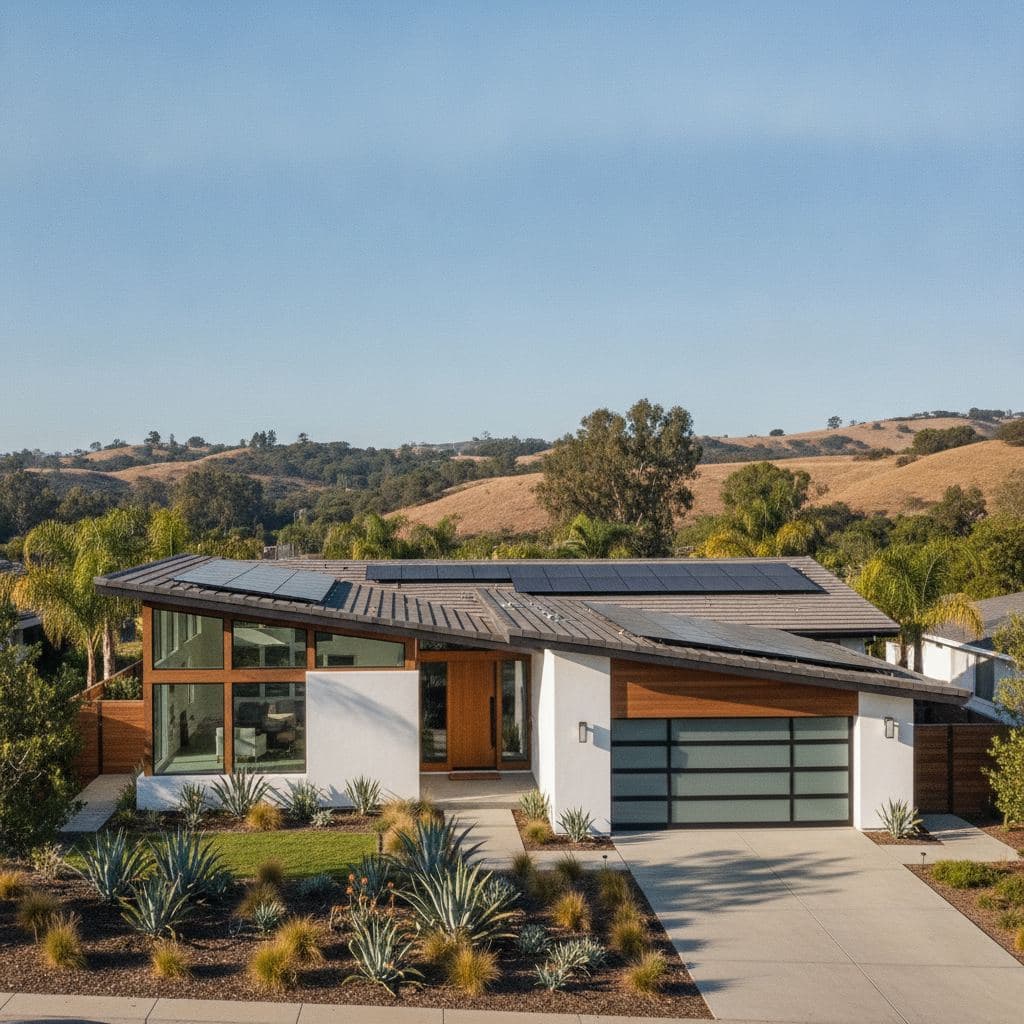
At least five solar companies actively serve Camarillo, CA with a lease, PPA, or prepaid solar lease in 2026 — and monthly leases and PPAs in California typically start at 25 to 32 cents per kWh with an annual escalator of 0% to 2.9% , compared to SCE's average residential rate of approximately 34.5 cents per kWh . The right choice depends less on which company shows up at your door and more on three contract details: the starting rate, the escalator, and how NEM 3.0 export credits flow under your specific agreement.
Last verified: September 2026 by Helios Energy Global.
Camarillo sits entirely within Southern California Edison (SCE) territory — not LADWP, not a municipal utility. That matters because with rates approaching $0.35/kWh and mandatory TOU pricing under NEM 3.0, SCE customers receive export credits at avoided cost — roughly $0.07/kWh on average . Any lease or PPA savings projection that doesn't account for those low export rates is built on outdated math.
The Camarillo solar financing landscape in 2026
Residential solar has been through a brutal consolidation, and several companies that appear on older "best of" lists no longer exist. SunPower filed Chapter 11 in August 2024; Sunnova filed in June 2025; Freedom Forever filed in April 2026. Companies that have shut down or are in restructuring have been removed — a workmanship warranty is only worth the company standing behind it.
That leaves a shorter but more reliable list of companies actually able to stand behind a 20-year agreement in Camarillo today.
Financing options × installer comparison table
| Installer | Cash | Loan | Monthly Lease | Monthly PPA | Prepaid Lease | Notes |
|---|---|---|---|---|---|---|
| Helios Energy Global | ✅ | ✅ | ❌ | ❌ | ✅ | Prepaid lease passes Section 48E credit; SCE/NEM 3.0 design focus |
| Sunrun | ✅ | ✅ | ✅ | ✅ | ✅ | Largest U.S. residential solar company; Brightbox battery add-on |
| Palmetto (LightReach) | ✅ | ✅ | ✅ | ✅ | ✅ | LightReach plan; solar + battery PPA available |
| Tesla Energy | ✅ | ✅ | ❌ | ❌ | ❌ | Cash/loan only; Powerwall integration; online-first process |
| Baker Electric Solar | ✅ | ✅ | ✅ (via partners) | ✅ (via partners) | ❌ | SoCal regional installer; long SCE interconnection track record |
| Momentum Solar | ✅ | ✅ | ✅ | ✅ | ❌ | Full-service with in-house crews |
Financing availability verified September 2026. Always confirm directly with each company — product availability can change.
What each financing type actually means for a Camarillo homeowner
Monthly lease
Under a solar lease, you pay a fixed monthly fee to use the panels regardless of how much electricity they produce. Under a PPA, you pay for the actual electricity the panels generate, measured in kilowatt-hours, at a per-kWh rate that is usually lower than your utility rate. Both agreements keep the solar company as the equipment owner.
A monthly lease gives you predictability: the same dollar amount every month (unless there's an escalator). The downside is that if your system produces more than expected, you don't capture that upside — the company does.
Monthly PPA
Unlike utility rates, which can change unpredictably, solar PPA rates either stay the same or escalate at an agreed-upon pace — usually 1–3% annually — for the 20–25 year agreement term. Under a PPA, your bill does fluctuate month to month because you're paying per kWh generated, not a flat fee. A cloudy December means a smaller bill; a hot August means a larger one.
The solar PPA price per kWh in California is typically between 20–27 cents, since utility rates are often above 30 cents per kWh. At SCE's current ~34–35¢ average, that spread is real — but only if you're using the solar electricity yourself. Under NEM 3.0, electricity you export earns only ~7¢/kWh, which is why a battery matters even on a lease or PPA.
Prepaid lease
A prepaid lease is a one-time upfront payment that covers the full term — typically 20–25 years — with no monthly bill and no escalator. Because the financier still claims the 30% federal credit under Section 48E and competition forces most of it into pricing, a 2026 lease or PPA is effectively the only way a California homeowner still benefits from the credit. On a prepaid lease, that credit is baked into the discounted upfront price rather than spread across monthly payments.
How Helios Energy Global's prepaid lease works: We act as the pass-through intermediary. We arrange the third-party ownership structure that claims the Section 48E commercial credit, then price your prepaid lease to reflect that benefit. You pay one lump sum upfront — lower than a straight cash purchase because of the credit pass-through — and the system is maintained by the third-party owner for the contract term. After the term, you typically have an option to purchase at fair market value or renew. We offer cash, loan, and prepaid lease; if you specifically want a traditional monthly PPA, Sunrun and Palmetto are built for that.
The escalator: the number that matters most
A solar lease or PPA escalator is a contractual clause that increases your monthly payment by a fixed percentage every year for the life of the agreement. Typical escalator rates in California contracts run 1.9–3.5% annually.
A 2.9% escalator compounds to a 33% higher rate by year 10. That matters a lot when you're comparing a "low" starting rate with a steep escalator against a "higher" starting rate that's fixed.
Fixed-rate PPAs deliver the lowest lifetime cost for standard discount rates. Escalating PPAs only win if the buyer uses a discount rate above 12% or if the utility rate rises faster than the escalator. For a typical homeowner with a 5–8% cost of capital, fixed is the rational choice.
How to compare escalators in any proposal you receive:
- Ask for the year-10 and year-20 payment in writing. Any company that won't provide this is hiding something.
- Compare against SCE's historical rate trajectory. In January 2026, the CPUC approved a 9.7% SCE rate increase as part of the current General Rate Case cycle — following an 11.3% increase in 2024 and 19.2% in 2023. The cumulative result: SCE residential rates are now roughly 83% higher than they were in 2014. A 2.9% escalator is lower than SCE's historical average — but that doesn't guarantee it will stay lower.
- Prefer 0% if you can get it. Monthly leases and PPAs typically start at 25 to 32 cents per kWh in California with an annual escalator of 0% to 2.9%. Take the 0% escalator even at a slightly higher starting rate.
NEM 3.0 and what it means for lease/PPA holders in Camarillo
Camarillo is SCE territory, which means NEM 3.0 (the CPUC Net Billing Tariff) applies. This is not the same as LADWP's retail-rate net metering — and it changes the math on every financing structure.
Under NEM 3.0, export credits average roughly $0.07/kWh — a fraction of the ~34–35¢ you pay to import electricity. This means a system that exports a lot of midday solar is leaving money on the table. Under a lease or PPA, the company owns the system and therefore technically "owns" the export relationship — but your savings projections are directly affected.
Key questions to ask any lease/PPA provider about NEM 3.0:
- Does the savings projection use NEM 3.0 export rates (≈7¢/kWh), or legacy NEM rates?
- Does the agreement include battery storage, or is it solar-only?
- If the system exports more than projected, who absorbs that financial difference — you or the company?
Under today's export rules, most Camarillo homeowners pair solar with a battery. The battery stores midday production and powers your home through the expensive evening peak, when SCE rates are highest, instead of exporting that energy for pennies. It also keeps essential circuits running during outages.
On SCE's TOU-D-4-9PM plan, on-peak hours run 4 PM – 9 PM on weekdays — exactly when a battery is discharging to avoid peak import costs. A lease or PPA that includes battery storage is meaningfully different from one that doesn't.
The Section 48E credit: how it reaches you through a lease or PPA
The 30% federal residential solar tax credit (Section 25D) expired December 31, 2025. A Camarillo homeowner buying a system outright in 2026 — with cash or a loan — cannot claim it. Full stop.
The Section 25D residential credit ended January 1, 2026 with no phase-down. The only way the 30% credit still touches a homeowner is through a lease or PPA, where the third-party owner claims it under Section 48E and reflects it in your pricing.
Third-party owners still claim the commercial Section 48E credit and reflect it in lower lease or PPA rates. How much of that credit actually passes through to you depends on competition and negotiation — it's not guaranteed to be the full 30%. This is another reason to get multiple proposals and compare starting rates directly.
How to vet any company serving Camarillo
Before signing anything:
Verify their CSLB license is active at cslb.ca.gov. A C-10 Electrical Contractor license (and C-46 Solar for some) is what you want.
Check that they're actually serving Ventura County — some companies list Camarillo on their website but subcontract to crews with no local experience.
Get the full contract term in writing — escalator schedule, end-of-term options (purchase, renewal, or removal), and what happens if you sell your home. Both leases and PPAs create a UCC-1 lien on your property and are typically 20 to 25 years long.
Ask how the home-sale transfer works. The cleanest exit when selling is often handing the agreement to the buyer — most providers run a credit check and approve the transfer in 2 to 4 weeks.
Confirm the savings projection uses NEM 3.0 rates, not legacy NEM numbers.
For a deeper look at all companies serving Camarillo — including cash and loan options — see our full Camarillo solar installer guide.
Frequently asked questions about solar leases and PPAs in Camarillo
Is a solar lease or PPA worth it for a Camarillo homeowner in 2026?
It depends on your alternative. A lease or PPA with a 0% escalator, transparent pricing, and a solid transfer clause is now a legitimate first choice — though cash and HELOC purchases still win on 25-year cost. If you have no capital and want immediate bill reduction without ownership risk, a well-structured lease or PPA makes sense. If you can finance a purchase, ownership typically delivers higher lifetime savings.
What's the difference between a solar lease and a PPA in California?
With a solar PPA, you pay per kilowatt-hour of electricity the system produces — so your bill varies with production. With a solar lease, you pay a fixed monthly fee to use the system regardless of how much it produces. Both are $0-down, third-party-owned structures where the provider handles maintenance.
What is a prepaid lease and how is it different from a standard lease?
A prepaid lease is a single upfront payment covering the full contract term — no monthly payments, no escalator. The third-party company still owns the system, claims the Section 48E tax credit, and prices your prepaid cost to reflect that benefit. It's structurally similar to a cash purchase but the equipment title stays with the company until an end-of-term buyout. For many Camarillo homeowners, it's the cleanest way to capture the credit pass-through without a monthly obligation.
Does NEM 3.0 affect my lease or PPA savings in Camarillo?
Yes, significantly. Any savings projection built on legacy NEM rates (near-retail export credits) will overstate your actual savings under NEM 3.0's ~7¢/kWh export rate. Ask every company to show you the projection with NEM 3.0 export assumptions and confirm whether battery storage is included. See our full NEM 3.0 explainer for the numbers.
Can I still get the 30% federal solar tax credit if I lease in 2026?
Not directly. The residential Section 25D credit expired December 31, 2025. However, the third-party company that owns your leased or PPA system can claim the commercial Section 48E credit and is expected to reflect some of that value in your pricing. How much passes through varies by provider and proposal — it's not automatic and not guaranteed to be the full 30%.
What escalator should I accept on a Camarillo solar lease or PPA?
Monthly leases and PPAs typically start at 25 to 32 cents per kWh with an annual escalator of 0% to 2.9%. Take the 0% escalator even at a slightly higher starting rate. A higher starting rate with no escalator almost always beats a lower starting rate that compounds at 2–3% annually over a 20-year term. Get the year-10 and year-20 numbers in writing before you sign. For a deeper dive, see our solar lease vs. PPA California guide.
What happens to my lease or PPA if I sell my Camarillo home?
You own nothing and are responsible for nothing under the contract — but at the end of your term you typically have the option to purchase the system at fair market value, renew the agreement at a new rate, or have the panels removed at no charge. If you sell before the term ends, the lease or PPA typically transfers to the buyer (subject to their credit approval), or you buy out the system at fair market value. Disclose the agreement to your real estate agent early — it affects how the home is marketed.
Next steps
- Book a free consultation and custom design — we'll model cash, loan, and prepaid lease side by side for your specific Camarillo home and SCE bill.
- See our Camarillo solar installer guide — full rankings including companies we didn't cover above.
- Understand your NEM 3.0 export credits — the number every lease/PPA projection must use.
- Solar lease vs. PPA in California: full comparison — escalator math, home-sale implications, and when each structure wins.
- Compare solar vs. battery under NEM 3.0 — why battery storage changes the lease/PPA math in SCE territory.
- See all-in solar installation cost ranges — so you know what a cash or loan alternative actually costs before you compare.
- Explore battery storage options — critical context for any Camarillo solar proposal under NEM 3.0.
Sources
- EcoFlow SCE Rates Advisory Jan 2026 — March 9, 2026
- Solar.com – Solar PPA Rates 2026 — January 8, 2026
- tou.tools – SCE TOU Plans 2026 — May 31, 2026
- Sunnova 10-K FY2024 (SEC filing) — February 28, 2025
More guides
How long do solar panels last in 2026?
Most residential solar panels last 25–30 years and still produce roughly 80–87% of their original output at end of warranty — here's what that means for Southern California homeowners.
ReadWhat's the Average Electric Bill in Temecula? (2026)
Temecula homes use around 900 kWh a month — well above the California average — and typical SCE bills run $270–$390, with big newer homes with pools passing $500 in summer. Here's the breakdown by home size and why the 4–9 PM peak window matters so much here.
ReadAre Solar Attic Fans Worth It in Southern California? (2026 Honest Verdict)
A solar attic fan costs $300–$1,400 installed and typically saves only 1–5% on cooling bills — here's when that math works in SoCal and when better options exist.
ReadGet a free consultation and custom design.
No pressure, no obligation — the owner reviews every design we send.