Where Do Solar Panels Go During a Reroof? Storage, Fees, and Who Is Liable If They Break
During a reroof, solar panels are staged on-site or stored off-site; at Helios, labeled, padded on-site storage is included in the $250–$350 per-panel price and only off-site storage beyond 30 days is quoted separately. Liability for breakage depends on which contractor handled the panels and what your contract says.
By Taylor Crouse — Founder, Helios Energy GlobalPublished
Quick answer
- Solar panels are removed and staged on-site (garage, driveway) for most 1–3 day reroofs, or moved off-site for longer jobs. At Helios, labeled, padded on-site storage is included; off-site storage pushes a job toward the top of the price range, and storage beyond 30 days is quoted separately.
- Helios charges $250–$350 per panel for a full detach-and-reset (removal + reinstallation), or about $5,000–$10,500 for a typical Southern California system of 20–30 panels.
- Liability follows the hands: whoever physically handled the panels when they broke is the responsible party — but only if your contract spells that out in writing.
- Neither Enphase's microinverter warranty nor Tesla's Powerwall warranty covers damage caused by third-party removal or mishandling — that gap must be covered by contractor insurance or your homeowner policy.
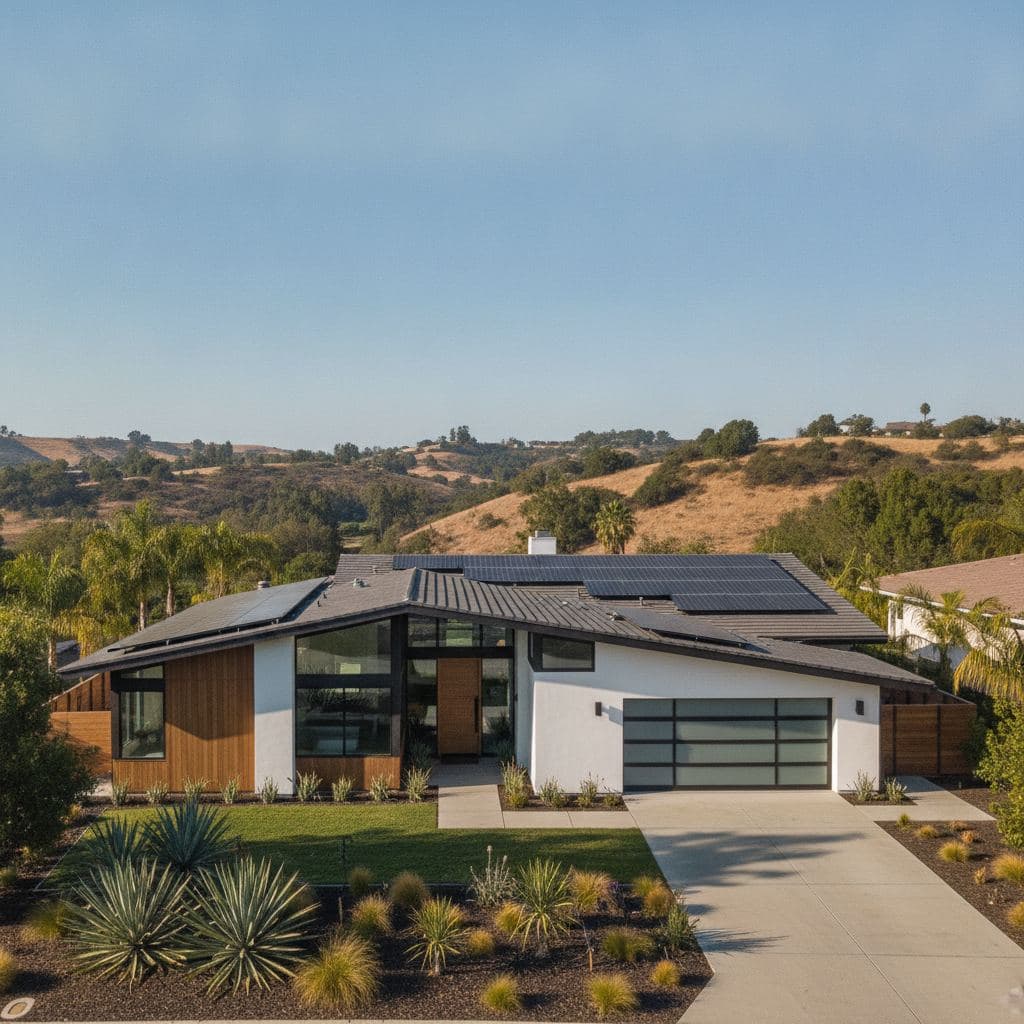
During a reroof, your solar panels come off the roof entirely and live somewhere safe — usually your driveway, garage, or the solar company's truck — for the 1 to 5 days the roofing crew needs. Helios charges $250–$350 per panel for removal and reinstallation — about $5,000–$10,500 for a 20–30 panel system — and that price includes labeled, padded storage on site. Who pays if something breaks is a separate question, and the answer is almost always "whoever the contract says" — which is why getting that language right before anyone touches a panel is the most important step you'll take.
Last verified: September 2026 by Helios Energy Global.
The two storage options and what each costs
Option 1: On-site staging (the default for most Southern California reroofs)
Most solar service companies include on-site staging in their detach-and-reset price, meaning panels are carefully laid flat on the ground or in a garage. For a typical asphalt-shingle reroof in the South Bay, Westside, or San Gabriel Valley — a job that usually wraps in one to three days — on-site staging is the norm and adds $0 in extra fees. Panels are unbolted, labeled for position reference, and leaned against a wall or laid on padded blankets in your garage.
The risk: roofing crews are working right above them. Falling debris, boots, or a misplaced ladder can crack a panel that survived 15 years on your roof. Good staging means panels are at least 10 feet from the work zone, covered with moving blankets, and clearly marked "DO NOT WALK."
Modern monocrystalline panels are durable but not indestructible — improper stacking or leaving them exposed to foot traffic during a busy roofing job creates real risk of microcracks that won't show up immediately but will degrade output over time.
Option 2: Off-site storage (for longer or more complex jobs)
If your reroof will take more than three days — common on tile roofs in Pasadena, Malibu, or anywhere with a complex multi-plane layout — panels may need to leave the property. At Helios, off-site storage pushes a job toward the top of the $250–$350 per-panel range, and off-site storage beyond 30 days is quoted separately. Some solar companies include one week of warehouse space in their base quote; others charge by the week.
Panels should be stored vertically, or in manufacturer-approved crates that distribute weight to prevent micro-cracks — not stacked flat in a pile. Ask your solar contractor exactly how panels will be stored and request a photo before they leave your property.
Key numbers at a glance
| Item | Helios price (Southern CA, 2026) | Notes |
|---|---|---|
| Full detach-and-reset (per panel) | $250–$350 | Removal, storage, new flashing and hardware, reinstall, recommissioning, production check |
| Full detach-and-reset (20–30 panel system) | $5,000–$10,500 | Most common SoCal system size |
| On-site staging | Included | Labeled, padded storage on site |
| Off-site storage | Toward the top of the per-panel range | Storage beyond 30 days is quoted separately |
| New flashing and mounting hardware | Included | At every attachment |
| Permit for reinstallation | Varies by city | Required in most LA County jurisdictions |
Prices are Helios's $250–$350 per panel; the roofing itself is quoted separately. Get the per-panel price and what it includes in writing before work begins.
Who is liable if a panel breaks?
This is the question that fills every Reddit R&R thread, and the honest answer is: it depends on what your contract says and whose hands were on the panel when it broke.
The three-party problem
A typical Southern California reroof with solar involves at least three separate parties:
- Your solar contractor (holds a C-46 Solar Contractor or C-10 Electrical license under CSLB rules) — handles removal and reinstallation
- Your roofing contractor (holds a C-39 Roofing Contractor license) — handles the actual roof tear-off and new installation
- You, the homeowner — responsible for anything that falls between the cracks
Solar photovoltaic systems of any size can be sold and installed in California by a C-46 Solar Contractor, a C-10 Electrical Contractor (PV), or a Class B General Building Contractor. A C-39 roofer does not hold a solar license and legally should not be disconnecting or reconnecting your panels. It requires certified professionals to maintain warranties and ensure safe handling of electrical components — you don't want to risk the loss of your warranty or harm to an unlicensed person who might not have experience with the panels and their electrical setup.
The liability chain in plain English
Scenario A — Solar contractor removes panels, roofer does the roof, solar contractor reinstalls: The solar contractor is liable for any damage that occurs during removal or reinstallation. The roofer is liable for any damage that occurs while panels are staged on-site under their active work zone, if the roofer's crew caused it and your contract assigns them that responsibility.
Scenario B — Roofer removes panels themselves (common with unlicensed or "full-service" roofers): If a panel cracks, the roofer's general liability policy should cover it — but only if their policy includes solar equipment and they were legally authorized to handle it. Many roofer GL policies exclude electrical equipment. This is the scenario that most often ends in a dispute.
Scenario C — Panels are damaged during off-site storage: The solar contractor's inland marine or cargo insurance should cover this. Get a certificate of insurance (COI) naming you as an additional insured before panels leave your property.
What manufacturer warranties do — and don't — cover
The Enphase warranty does not cover costs related to the removal, installation, or troubleshooting of the covered owner's electrical systems. In other words, if a microinverter is cracked during removal, Enphase will not pay to replace it under the standard product warranty — that's a contractor-caused damage claim, not a defect claim.
Enphase backs IQ8 Microinverters with a limited warranty of 25 years — but that warranty covers manufacturing defects, not physical damage from a reroof. Similarly, Tesla's Powerwall Limited Warranty (effective May 6, 2026) warrants that the Powerwall will be free from defects for ten years following its initial installation date — it does not cover damage caused by third-party removal or mishandling.
The gap between "manufacturer warranty" and "contractor-caused damage" is real. It must be closed by:
- Your solar contractor's general liability insurance (for damage they cause)
- Your roofer's general liability insurance (for damage they cause)
- Your homeowner's insurance (as a backstop — but expect a deductible and a potential rate impact)
What to put in the contract before anyone touches a panel
This is where most homeowners get burned. A verbal agreement that "the roofer will be careful" is worthless. Before work starts, get these items in writing — in the solar contractor's scope of work and the roofer's scope of work:
In the solar contractor's contract:
- Written scope: the per-panel price and what it includes — removal, staging method (on-site or off-site), storage address if off-site, and reinstallation
- Liability clause: contractor is liable for any panel, microinverter, or wiring damage that occurs during removal, transport, storage, or reinstallation
- Insurance: certificate of general liability insurance (minimum $1M per occurrence) and inland marine/cargo coverage for off-site storage, naming you as additional insured
- Pre- and post-removal inspection: written condition report with photos before panels come off, and a system performance test (production monitoring check) within 48 hours of reinstallation
- Timeline: specific dates for removal and reinstallation, with a penalty clause for delays that extend your off-site storage window
In the roofer's contract:
- Exclusion of solar work: roofer explicitly does NOT touch, move, or reconnect any solar equipment
- Staging protection: roofer agrees to keep their crew and materials at least 10 feet from staged solar equipment, or is liable for any damage to staged panels
- Coordination clause: roofer will not begin tear-off until solar contractor confirms panels are safely staged
From your homeowner's insurance:
- Call your insurer before the job starts and ask whether staged solar panels are covered under your personal property or dwelling coverage while temporarily off the roof. Some policies cover them; some require a rider.
Microinverters: the detail most homeowners miss
If your system uses microinverters (Enphase IQ series is the most common in Southern California), each panel has its own inverter bolted to the back of it. That means 20 panels = 20 microinverters that come off the roof, get staged, and go back up.
Even when your system is shut down, certain components may still carry electrical current. If these components aren't handled properly, they can create risks of shock, arc faults, equipment damage, and fire hazards.
Microinverters are more vulnerable to physical damage during removal than string inverters (which stay in the garage or on the side of the house). A dropped panel face-down on concrete will almost certainly crack the microinverter housing. A licensed C-46 solar contractor knows to use panel lifts, padded cradles, and to disconnect the DC trunk cable before removing individual units.
If you have a string inverter (SolarEdge, Fronius, SMA), the inverter itself stays mounted and is not at risk during a reroof — only the panels and DC wiring are touched.
The SCE vs. LADWP angle: does your utility affect the reroof process?
Your utility doesn't directly control how panels are stored during a reroof, but it does affect how quickly your system can go back online after reinstallation.
SCE customers (most of LA County, Orange County, Inland Empire): Reinstallation typically requires a new interconnection inspection before the system can export power. This can add 5–15 business days to your timeline after the solar contractor finishes. During that window, you're buying all your power from the grid at SCE's current TOU-D-PRIME rates (approximately 34–35¢/kWh, with a 4–9 PM peak). Budget for higher bills during that gap.
LADWP customers (City of LA): LADWP runs its own interconnection process under retail-rate net metering (not NEM 3.0). Reconnection timelines are similar — plan for 5–10 business days after reinstallation before the system is officially back on net metering. LADWP's effective residential rate runs approximately 28¢/kWh (26–31¢ effective range), so the financial cost of the downtime gap is somewhat lower than for SCE customers.
Other municipal utilities (Pasadena PWP, Burbank, Glendale, Anaheim APU, Riverside RPU): Each runs its own interconnection process. Timelines vary — ask your solar contractor for utility-specific experience before scheduling.
For more on how your utility's net metering rules affect your system economics, see our full NEM 3.0 explainer.
Frequently asked questions about solar panels during a reroof
Can my roofer just move the panels themselves?
In California, a C-39 roofing contractor is not licensed to disconnect or reconnect solar electrical equipment. Solar PV systems of any size must be handled by a C-46 Solar Contractor, a C-10 Electrical Contractor, or a Class B General Building Contractor for the electrical work. If your roofer moves panels without that license and one breaks, their GL policy may deny the claim on the grounds that it was unlicensed electrical work.
How long will my system be offline during a reroof?
For a typical 1–3 day reroof, expect your system to be offline for 3–7 days total: 1 day for removal, 1–3 days for roofing, one to two days for reinstallation, plus utility reconnection processing time (5–15 business days for SCE, 5–10 for LADWP). The panels-off phase is short; the utility paperwork phase is what most homeowners don't anticipate.
What happens to my NEM billing during the downtime?
Your net metering account stays open — you simply won't export any power during the downtime. Removal and reinstallation typically takes days, not weeks , so the financial impact is usually modest. SCE customers on NEM 3.0 with a battery will feel it more during the 4–9 PM peak window; LADWP customers on retail-rate net metering have a smaller per-kWh exposure.
Will a reroof void my panel manufacturer's warranty?
Not automatically — but it can. Most panel manufacturers warrant against defects in materials and workmanship, not against physical damage from third parties. As long as a licensed solar contractor handles removal and reinstallation properly, the product warranty remains intact. A poorly executed removal can damage equipment, create leaks in your roof, reduce the performance of your solar system, or even void manufacturer warranties entirely. The key is using the original installer or another licensed C-46/C-10 contractor, not letting the roofer handle it.
Does homeowner's insurance cover panels broken during a reroof?
It depends on your policy. Most standard homeowner's policies cover solar panels as part of the dwelling structure when they're mounted on the roof. When they're staged in your driveway or garage, they may fall under personal property coverage — with a different (often lower) sublimit. Call your insurer before the job starts, get the answer in writing, and confirm whether a temporary-removal rider is needed.
Who pays for a new permit when panels go back up?
Some municipalities require a permit to have panels removed or reinstalled. In most LA County cities and unincorporated areas, reinstallation requires a new electrical permit. That cost — typically $150–$400 depending on jurisdiction — is usually included in the solar contractor's reinstallation quote, but confirm it explicitly. Never assume permits are included.
Should I get the reroof and solar removal done by the same company?
A company that holds both a C-39 and C-46 license (or subcontracts licensed tradespeople for each) can simplify coordination and reduce the liability gap between trades. Companies that handle both removal and reinstallation often charge less than hiring two separate crews. The risk of using two separate companies is the gray zone between their scopes — make sure contracts explicitly assign responsibility for staged-panel protection during the roofing phase.
Next steps
- Book a free consultation and custom design — we'll review your system, roof condition, and utility setup before any work begins
- See our solar panel removal and reinstallation service — licensed C-46 crew, written liability terms, pre- and post-inspection included
- Read our guide on solar panel removal and insurance claims — what to document, how to file, and what insurers typically cover
- Explore battery storage options — if your reroof is the trigger to add backup power, now is the right time
- Understand your roof type and solar compatibility — tile, comp shingle, and flat roofs each have different removal complexity and hardware requirements
- Learn how NEM 3.0 affects your system while it's offline — SCE and SDG&E customers on NEM 3.0 should understand the billing implications of any downtime
Sources
- Tesla Powerwall Limited Warranty (USA), Rev. 2.6 — May 6, 2026
- Enphase IQ Microinverter Limited Warranty (US), systems activated on or after February 1, 2026 — February 1, 2026
- CSLB Licensing Classifications — C-39 Roofing, C-46 Solar — January 1, 2026
- IREC California Solar Contractor Licensing Summary — September 2025
- Southern Energy: Solar Panel Removal and Reinstall Cost 2026 — July 7, 2026
More guides
Best Solar Companies in Simi Valley, CA (2026): Honest Rankings for Homeowners
A straight-talking, numbers-first guide to the best solar installers in Simi Valley for 2026 — covering real costs, SCE net metering under NEM 3.0, battery storage, and how to compare quotes without getting burned.
ReadIs a Solar Plus New Roof Package Worth It in 2026?
Bundling solar with a roof replacement avoids a future detach-and-reset — $250–$350 per panel at Helios, about $5,000–$8,750 for a 20–25 panel system — but only if your roof actually needs replacing. Here's how to decide.
ReadCan Solar Panels Power Your Air Conditioner in 2026?
Yes — a properly sized solar system (typically 8–14 kW for a central AC home in SoCal) can offset most or all of your air conditioning load, but TOU peak timing and your utility determine how much you actually save.
ReadGet a free consultation and custom design.
No pressure, no obligation — the owner reviews every design we send.