Do I need HOA approval for solar in California? (2026 guide)
California Civil Code 714 limits HOA conditions to a $1,000 cost cap and 10% output reduction—your HOA cannot ban solar outright.
By Taylor Crouse — Founder, Helios Energy GlobalUpdated
Quick answer
- California Civil Code 714 makes it illegal for an HOA to ban rooftop solar outright.
- HOA conditions are capped at $1,000 in added installation cost OR no more than a 10% reduction in system output—whichever limit is hit first.
- If your HOA does not respond within 45 days, your application is deemed approved by law.
- You still need to submit a written application; most Southern California installs clear HOA review in 2–6 weeks.
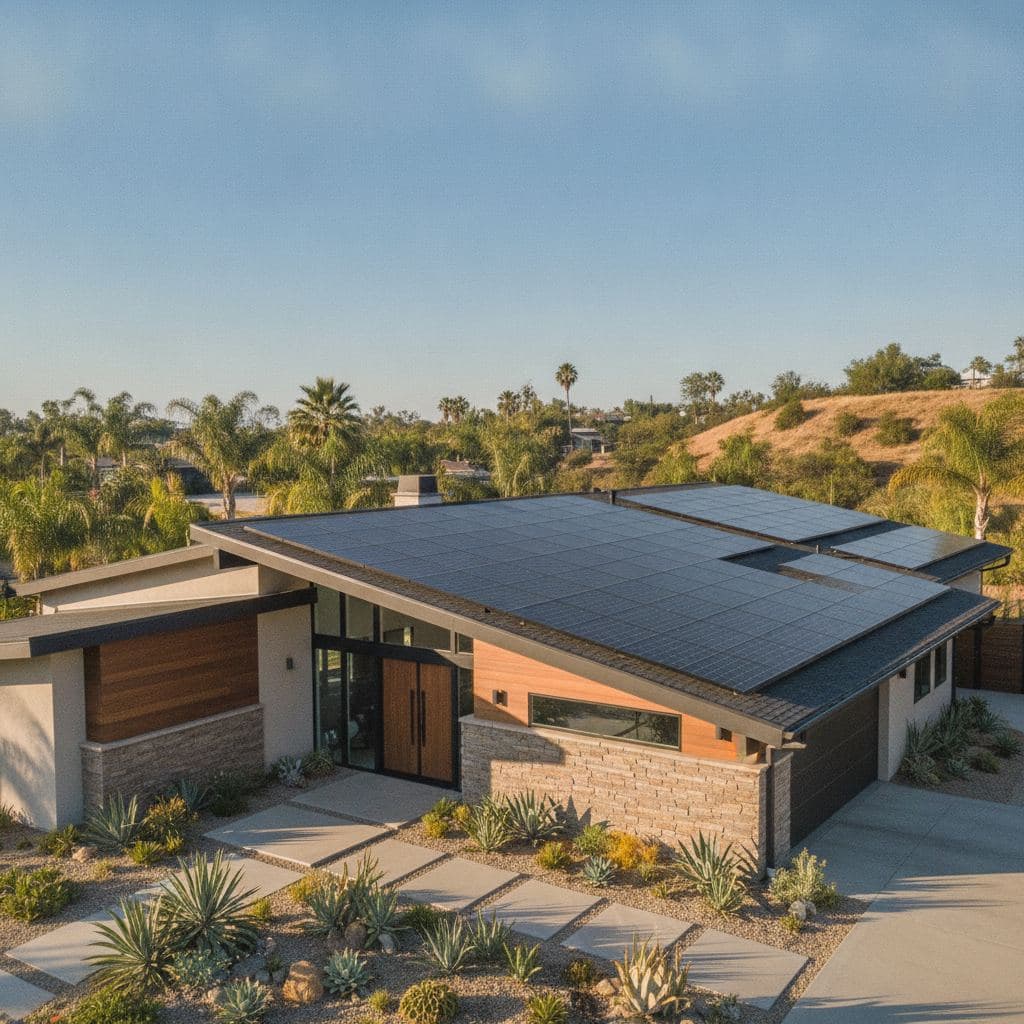
Your HOA cannot say no to solar—California law has prohibited outright bans since 1978, and the current version of Civil Code 714 limits any conditions your HOA can place to a $1,000 cost cap or a 10% output reduction cap. In practice, most Southern California homeowners in HOA communities get approval within two to six weeks once they submit a complete application package.
Last verified: September 2026 by Helios Energy Global.
What California Civil Code 714 actually says
Civil Code 714 is the core of California's Solar Rights Act. It voids any HOA rule, CC&R provision, or architectural guideline that "effectively prohibits or restricts" the installation of a solar energy system. The law has been on the books since 1978 and has been strengthened several times since.
The two hard caps that matter for your project:
- Cost cap: Any conditions the HOA imposes (screening, color-matching, specific mounting hardware, etc.) cannot add more than $1,000 to your total installation cost.
- Output cap: HOA conditions cannot reduce your system's annual energy output by more than 10% compared to the optimal design your installer proposes.
If a condition would breach either cap, it is unenforceable. You don't have to comply with it, and you don't have to sue to ignore it—though getting that in writing from a real estate attorney is smart if your HOA pushes back.
Civil Code 714.1 extends the same protections to solar water heating systems, so the rules below apply to those as well.
The 45-day deemed-approval rule
This is the rule most homeowners don't know about, and it's powerful.
Once you submit a complete written application to your HOA's architectural review committee (ARC), the HOA has 45 days to respond in writing. If they miss that deadline without requesting additional information, your application is deemed approved by operation of law—meaning you can proceed as if they said yes.
A few practical notes:
- The clock starts when the HOA receives a complete application, not when you mail it. Send it certified mail or email with read-receipt so you have a timestamp.
- If the HOA requests more information, the 45-day clock pauses and restarts once you provide what they asked for.
- "Deemed approved" is a legal status, but some lenders and permitting offices want documentation. Keep every piece of correspondence.
Key numbers at a glance
| Item | Detail | Notes |
|---|---|---|
| Maximum added cost HOA can require | $1,000 | Per Civil Code 714; estimate only—verify with attorney |
| Maximum output reduction HOA can require | 10% of optimal design | Compared to installer's proposed layout |
| HOA response deadline | 45 days from complete application | Missed deadline = deemed approved |
| Typical Southern California HOA review time | 2–6 weeks | Varies by HOA size and responsiveness |
| Typical solar install cost (SoCal, 2026) | ~$2.50–$3.50/watt before incentives | 6–10 kW system = roughly $15,000–$35,000 (estimate) |
| Battery add-on cost (per unit, installed) | ~$14,000–$18,500 | Estimate; SGIP residential incentives waitlisted in 2026 |
| Federal solar tax credit (2026) | $0 | 30% credit expired December 31, 2025 |
How the HOA application process actually runs
Step 1: Pull your HOA's CC&Rs and ARC guidelines
Before you do anything, read your governing documents. Some HOAs have a dedicated solar application form. Others use a generic architectural change request. Knowing what they expect saves a round-trip delay.
Step 2: Get a system design from your installer
Your HOA application needs to show what you're installing and where. A good installer will provide:
- A site plan or roof layout showing panel placement
- Panel and inverter spec sheets
- A statement of estimated annual output
- Photos or renderings if the HOA requires them
At Helios Energy Global, we prepare this package as part of our free consultation and custom design—you don't pay for the design document.
Step 3: Submit in writing and start the clock
Submit to the ARC in writing. Include everything the CC&Rs ask for. Note the date of delivery. If your HOA uses an online portal, screenshot the submission confirmation.
Step 4: Respond to any conditions promptly
The HOA may come back with conditions—panel color, wire management, a specific inverter location. Evaluate each condition against the two caps. If a condition would cost you more than $1,000 extra or cut output by more than 10%, you can decline it and cite Civil Code 714. Most HOA boards back down when they see the statute cited in writing.
Step 5: Get approval in writing, then proceed to permit
HOA approval is separate from your city or county building permit. You need both. Your installer handles the permit; you handle the HOA. Once you have written HOA approval (or the 45-day window closes without a response), your installer can submit for permits and schedule installation.
Condos, townhomes, and shared roofs: a different situation
Civil Code 714 protects homeowners who own the roof surface above their unit. If you own a condo where the roof is common area owned by the HOA, the legal picture is more complicated—you may need the HOA's affirmative consent rather than just their non-objection.
Civil Code 714.1 covers this scenario partially, but the practical path for condo owners often involves:
- Requesting a dedicated roof area be assigned to your unit
- Proposing a community solar arrangement for the whole building
- Exploring LADWP or SCE community solar programs if you're in a unit where rooftop access is genuinely impossible
If you're in a condo or townhome, mention it when you book your consultation—the approach is different and we'll walk you through it.
Southern California utility context: why HOA approval timing matters
Getting HOA approval quickly matters more in 2026 than it did a few years ago, for two reasons tied to your utility.
If you're on SCE (Southern California Edison): You'll be interconnected under NEM 3.0 (the Net Billing Tariff). NEM 3.0 pays export rates that are much lower than retail—roughly 5–8¢/kWh for most daytime exports—which means a battery paired with your solar is often essential to capture value. Delays in HOA approval push back your interconnection date and your payback timeline. See our NEM 3.0 explainer for the full picture.
If you're on LADWP: You're not on NEM 3.0. LADWP still offers retail-rate net metering at roughly 28¢/kWh average, which is a meaningfully better export deal than SCE's net billing tariff. HOA approval delays still cost you months of bill savings, but the economics of going solar without a battery are more favorable here than under SCE. Check our locations page to confirm which utility serves your address.
Other Southern California municipal utilities (Pasadena PWP, Burbank, Glendale, Anaheim APU, Riverside RPU) also run their own net metering programs independent of NEM 3.0—each with slightly different rate structures. We'll match your design to your specific utility's tariff.
Frequently asked questions about HOA solar approval in California
Can my HOA flat-out deny my solar application?
No. California Civil Code 714 makes an outright denial unenforceable. The HOA can impose reasonable conditions, but those conditions must stay within the $1,000 cost cap and 10% output cap. If they deny you without a lawful basis, the denial is void.
What counts as a "complete" application to start the 45-day clock?
Your HOA's CC&Rs define this, so read them carefully. At minimum, most HOAs want a written request, a site plan showing panel placement, and equipment spec sheets. If your HOA's guidelines list specific items, include all of them—an incomplete application lets the HOA pause the clock.
My HOA said panels must be hidden from the street. Is that enforceable?
It depends on whether complying would cost more than $1,000 extra or cut output by more than 10%. If moving panels to a less visible roof face reduces your system's annual production by more than 10%, that condition is unenforceable. Your installer can model both layouts and document the output difference for you.
Does the 45-day rule apply to HOAs in gated communities or master-planned communities?
Yes. Civil Code 714 applies to all common interest developments in California, including gated and master-planned communities. The HOA's size or governance structure doesn't create an exemption.
Is there still a federal tax credit I can use to offset solar costs in 2026?
No. The 30% federal residential solar tax credit expired on December 31, 2025. There is no federal credit available for a solar system installed in 2026. California does not have a statewide solar tax credit either. Check with a tax professional about any local incentives, and ask us about current utility rebate programs when you get your custom design.
What if my HOA retaliates or threatens fines after I install?
Fines or enforcement actions taken to block a lawful solar installation are also prohibited under Civil Code 714. Document everything in writing and consult a California real estate attorney. In practice, most HOAs back down once they receive a written citation of the statute.
Do I need HOA approval for a home battery even if I already have solar?
Possibly. Many HOAs treat battery storage as a separate architectural change from the original solar install. Check your CC&Rs and submit a new application if required. The same Civil Code 714 protections apply to solar-paired battery systems. Learn more about battery options on our batteries page.
Next steps
- Book a free consultation and custom design — we'll prepare your HOA application package as part of the process, at no charge.
- See what a custom system design looks like for your home
- Understand NEM 3.0 and how it affects your solar payback
- Solar vs. battery strategy under NEM 3.0
- Explore solar panel cost ranges for Southern California
- Learn about battery storage options and pricing
- Find your local Helios service area
More guides
Plug-In (Balcony) Solar in California: SB 868 Is Law and Takes Effect January 1, 2027
SB 868 was signed September 30, 2026 (Chapter 985) and takes effect January 1, 2027. A 1,200 W plug-in system produces roughly 1,500–1,900 kWh/year in Southern California; at SCE rates that is about $360–$665 a year, but only for power you use as it is made.
ReadBest Solar Companies in Lake Elsinore, CA (2026): Honest Rankings for Riverside County Homeowners
Lake Elsinore homeowners get 6.0 peak sun hours and face real wildfire risk — here's how to choose a solar installer who understands both. Our honest 2026 rankings, with pricing, NEM 3.0 guidance, and battery advice.
ReadBest Solar Companies in Acton, CA (2026): Honest Rankings for High-Desert Homeowners
Acton's intense sun, large lots, and SCE rates make it one of the strongest solar markets in Los Angeles County. Here's who to call — and what to ask before you sign.
ReadGet a free consultation and custom design.
No pressure, no obligation — the owner reviews every design we send.