Is a Solar Plus New Roof Package Worth It in 2026?
Bundling solar with a roof replacement avoids a future detach-and-reset — $250–$350 per panel at Helios, about $5,000–$8,750 for a 20–25 panel system — but only if your roof actually needs replacing. Here's how to decide.
By Taylor Crouse — Founder, Helios Energy GlobalPublished
Quick answer
- A coordinated solar + roof project avoids a future detach-and-reset (D&R) bill — $250–$350 per panel at Helios, or about $5,000–$8,750 for a 20–25 panel system — and that's the single biggest real saving.
- Southern California roof replacements run approximately $11,000–$18,000 installed (asphalt shingles, standard pitch); solar adds $2.50–$3.50 per watt before any incentives.
- The bundle makes financial sense when your roof is 15 or more years old, or when inspection shows fewer than 10 years of remaining life.
- There is no magic bundle discount — the savings come from eliminating a future mobilization and from warranty alignment, not from a promotional price cut.
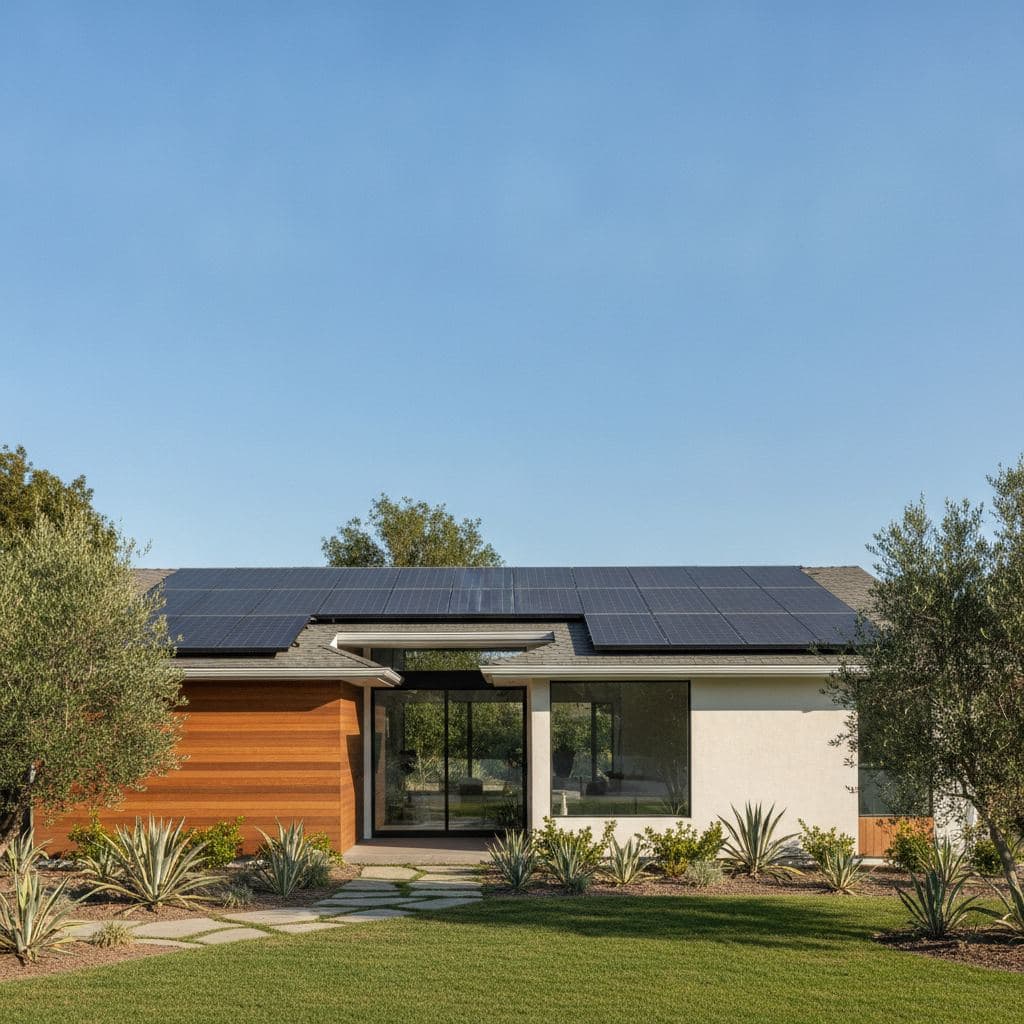
A coordinated solar-plus-roof project is worth it for most Southern California homeowners whose roof is 15 or more years old — primarily because doing it in one mobilization eliminates a future detach-and-reset cost — $250–$350 per panel at Helios, or about $5,000–$8,750 for a 20–25 panel system. If your roof has 15 or more years of service life remaining and is in good condition, solar alone is the smarter move and you should skip the roof replacement entirely.
Last verified: September 2026 by Helios Energy Global.
The real math: where the money actually goes
There is no secret "bundle discount" that appears when you combine solar with roofing. What does exist is a set of concrete, quantifiable savings that only materialize when the two projects are coordinated at the same time. Here's what they are.
1. Avoided detach-and-reset cost
If you install solar on a roof that needs replacing in 8–10 years, a licensed solar contractor will need to come back, remove every panel, store them safely while the roofer works, then reinstall and re-commission the system. The most common reason homeowners need solar panel removal and reinstall (R&R) is roof replacement; Helios charges $250–$350 per panel for that work, covering labeled on-site storage, new flashing and mounting hardware at every attachment, reinstallation, recommissioning and production verification. For a typical 20–25 panel system in Southern California, that puts the total D&R bill at about $5,000–$8,750, with tile and steep-pitch roofs at the top of the range.
If the underlying roof is 10–15 years old at the time of solar installation, the roof will likely need replacement before the solar system reaches end of life — requiring panel removal, re-roofing, and reinstallation. Doing the roof now, alongside solar, eliminates that future bill entirely.
2. Single mobilization saves scheduling and permit overhead
Two separate projects mean two sets of permits, two inspection queues, and two contractor mobilizations. Coordinating roofing through our licensed roofing partners and solar installation under one project plan compresses that into a single permit set and a single site visit sequence — roofing first, solar second, no rework.
3. Warranty alignment
A new asphalt shingle roof lasts 20–25+ years. Solar panels last 25–30 years. Starting fresh means both systems age together without mid-life interruptions. When roofing and solar are installed in the same project, the roof warranty, the panel manufacturer warranty, and the installation workmanship warranty all start from the same date — and the mounting flashings are installed into fresh roofing material, not aged or compromised underlayment.
Penetration-based mounting systems can void roofing warranties if not installed per manufacturer specifications. Many roofing manufacturers have certified solar mounting programs; installation outside those programs may void weather-tightness coverage. Coordinating both scopes from the start sidesteps this risk entirely.
Key numbers at a glance
| Item | Typical range (SoCal, 2026) | Notes |
|---|---|---|
| Roof replacement — asphalt shingles | $11,000–$18,000 installed | Per roofreplacementca.com; standard pitch, standard size |
| Roof replacement — tile | Higher end / above $18,000 | Tile adds labor and structural complexity |
| Solar system only | $2.50–$3.50 per watt installed | Before incentives; see /solar-panel-cost |
| Future detach-and-reset (D&R) | $5,000–$8,750 | 20–25 panel system at Helios's $250–$350 per panel |
| D&R price per panel (Helios) | $250–$350 | Covers storage, new flashing and mounting hardware, reinstall, recommissioning and production verification |
| SCE average residential rate | ~34–35¢/kWh | Per SCE Rate Advisory, June 2026 |
| LADWP effective rate | ~28¢/kWh (range: 26–31¢) | Retail-rate net metering still applies |
| SGIP battery rebate | Waitlisted in 2026 | Not currently funded for new residential applicants |
D&R figures are Helios's $250–$350 per panel; the other figures are estimates. Your actual costs depend on roof size, pitch, panel count, and local permitting. A custom design gives you project-specific numbers.
Decision table: should you bundle?
| Roof age / condition | Recommendation |
|---|---|
| Under 10 years old, good condition | Install solar only. Roof has ample life; no bundle needed. |
| 10–15 years old | Get a professional inspection first. |
| If the inspector gives it 15+ years of remaining life, you can likely proceed with solar only. If not, bundling now is the smarter call. | |
| 15+ years old | |
| Even if it looks fine, hidden deterioration will cause problems once solar panels add stress and penetrations. | |
| Bundle. | |
| Any age with visible damage | |
| Solar installation on a damaged roof is not permitted by licensed contractors. Address the roof first — full stop. | |
| Wood shake in a fire-hazard zone | |
| Wood shake is banned or restricted in many California high fire-risk areas. A replacement to a Class A fire-rated material may be required before solar permits are approved. | |
How the project actually works
Helios holds a C-10 electrical/solar license. All roofing work on a combined project is performed by our vetted, licensed roofing partner contractors — coordinated by Helios as a single, managed project. You get one point of contact, one project timeline, and one set of expectations.
The sequencing matters: the roofing team completes their work first, then the solar installer mounts panels knowing exactly where attachment points will be. This allows proper blocking to be added at rafter locations, clean flashing around every penetration, and a watertight integration between the two systems from day one.
Solar detach-and-reset work — removing panels before roofing begins and reinstalling them after — is Helios's own licensed C-10 scope. The roofing itself is performed through our licensed roofing partners. Nothing gets handed off to an unknown subcontractor.
For more on how roofing and solar interact structurally, see our roof types guide.
SCE vs. LADWP: does your utility change the math?
Your utility doesn't change whether you need a new roof. But it does affect how quickly your solar system pays back its cost — which in turn affects how much the avoided D&R matters financially.
SCE customers: SCE's current average residential rate is approximately 34.5¢/kWh.
Peak hours for SCE customers on time-of-use plans are either 4–9 PM or 5–8 PM, depending on the specific plan. Under NEM 3.0 (the CPUC Net Billing Tariff, which applies to SCE), export credits are low — so self-consumption and battery storage drive the economics. A well-sized system on a fresh roof, paired with a battery, locks in those savings for the full 25-year panel life without a D&R interruption. Read more at /guides/nem-3-explained and /guides/solar-vs-battery-nem-3.
LADWP customers: LADWP is a municipal utility and is not on NEM 3.0. LADWP still offers retail-rate net metering, which means exported solar energy earns a full retail credit — a meaningfully more favorable export structure than SCE's Net Billing Tariff. At an effective rate in the 26–31¢/kWh range, LADWP solar payback periods are competitive, and avoiding a future D&R cost still adds thousands of dollars of value to a bundle decision.
Other SoCal munis (Pasadena PWP, Burbank, Glendale, Anaheim APU, Riverside RPU): Each runs its own net metering program. None are on NEM 3.0. Contact us or check /locations for utility-specific guidance.
What a bundle does NOT include
There is no promotional bundle discount. The economics of a solar-plus-roof project are driven by real, structural savings — avoided D&R cost, single mobilization, warranty alignment — not by a promotional price reduction. Any contractor offering a "limited-time bundle discount" is almost certainly building that discount into an inflated base price. Get a separate written price for each scope — the gross price and the cost per watt for the solar, and the roofing quoted on its own — so you can compare apples to apples.
The only offer Helios makes is a free, no-obligation consultation and custom design. We'll assess your roof age and condition, size the solar system for your actual usage, and give you a clear written price for each scope — one all-in price for the solar, with the equipment named by model, and the roofing quoted separately.
Frequently asked questions about solar plus new roof packages
Does adding a new roof affect my solar payback period?
Yes — it adds upfront cost, which extends the headline payback period. But the correct comparison isn't "solar alone vs. solar plus roof." It's "solar plus roof now vs. solar now plus roof later plus D&R." When you account for the avoided future D&R cost — $250–$350 per panel at Helios, about $5,000–$8,750 for a 20–25 panel system — and the avoided disruption to your solar production during a future R&R project, the bundle often has a comparable or better net present value than doing the projects separately.
Will a new roof void my solar panel warranty?
Proper R&R doesn't void panel or inverter warranties if done by a licensed installer. When roofing and solar are done together as a coordinated project — roofing first, solar second — there is no panel removal at all, so warranty continuity is straightforward. The key is ensuring the roofing work is completed by licensed contractors and that solar mounting flashings are installed per manufacturer specifications.
How long does a combined solar-plus-roof project take?
A standard asphalt shingle re-roof on a single-family Southern California home typically takes 2–4 working days. Solar installation follows immediately after, usually adding 1–2 days. Permitting and utility interconnection timelines vary by city and utility, but the physical construction phase is often complete within one to two weeks. We coordinate scheduling through our licensed roofing partners so both scopes run back-to-back without gaps.
Is there a federal tax credit for a new roof in 2026?
The 30% federal residential solar tax credit expired on December 31, 2025. There is no federal solar tax credit for systems installed in 2026. Certain energy-efficient roofing materials (ENERGY STAR-rated metal or cool-roof products) may qualify for a separate energy efficiency credit under the Inflation Reduction Act — consult a tax professional for your specific situation, as eligibility depends on material type and your individual tax circumstances. We do not factor unconfirmed tax credits into our project estimates.
What if I have a tile roof — does that change the cost?
Yes, significantly. Tile roofs add to R&R labor costs due to tile breakage risk. Tile is also more expensive to replace than asphalt shingles, and the mounting hardware for solar on tile is more complex. If you have a clay or concrete tile roof, a site inspection is especially important before any decision — the cost difference between tile and shingle replacement can be $5,000–$10,000 or more on a typical Southern California home. See /roof-types for a breakdown by material.
Does SGIP help offset the battery cost if I add storage to the bundle?
SGIP (the Self-Generation Incentive Program) residential battery rebates are waitlisted in 2026 — there is no funded reservation available for new residential applicants at this time. We will flag any changes to SGIP availability as part of your consultation. Home batteries run approximately $14,000–$18,500 installed per unit (or $14,500–$18,500 installed for a Tesla Powerwall 3), independent of SGIP. Learn more at /batteries.
Can I finance the roof and solar together in one loan?
Financing options for combined projects vary by lender. Some solar-specific loan products cover the full project cost including roofing when the work is coordinated under a single contract. We'll walk through available financing structures during your consultation — there's no obligation to proceed. Book a free consultation to discuss your options.
Next steps
- Book a free consultation and custom design — we'll assess your roof age and condition, size the solar system, and give you a clear written price for each scope, with the roofing quoted separately and no obligation.
- Explore our solar-plus-roof package page — how the combined project is structured and sequenced.
- Understand your solar system cost — the $2.50–$3.50/W range explained, with what drives your number up or down.
- See how NEM 3.0 affects SCE solar economics — critical context for SCE customers deciding on battery storage.
- Solar vs. battery under NEM 3.0 — should you add a battery to your new system?
- Find your location-specific guide — utility-by-utility detail for Santa Monica, Los Angeles, Pasadena, and across Southern California.
Sources
- SCE Rate Advisory – June 2026 (sce.com) — June 2026
- roofreplacementca.com – Roof Replacement Cost California 2026 — July 2026
- ratereliefca.com – Solar Panel Removal and Reinstall Cost in California 2026 — April 16, 2026
- californiaroofauthority.com – Solar Roofing in California — June 2026
- axiom360.com – Roof Requirements for Solar Panels — May 13, 2026
More guides
How long do solar panels last in 2026?
Most residential solar panels last 25–30 years and still produce roughly 80–87% of their original output at end of warranty — here's what that means for Southern California homeowners.
ReadBest Solar Companies in Rancho Palos Verdes, CA (2026): Honest Rankings for Peninsula Homeowners
A straight-talking, numbers-first ranking of the best solar installers serving Rancho Palos Verdes in 2026, with honest guidance on SCE's Net Billing Tariff, HOA approvals, coastal roof considerations, and what a real quote should include.
ReadSDG&E Time-of-Use Rates Explained (2026): Peak Hours, Plans, and Solar Strategy
SDG&E's on-peak rate hits ~69¢/kWh in summer—the highest of any major California utility—and that 4–9 p.m. window applies every day, weekends included.
ReadGet a free consultation and custom design.
No pressure, no obligation — the owner reviews every design we send.