Solar Panel Removal and Reinstallation in Ventura County: What It Costs in 2026
Helios charges $250–$350 per panel for a detach-and-reset in Ventura County — about $3,750–$8,750 for a typical 15–25 panel system, with the roofing quoted separately. Here's what drives the number and how to protect your NEM tariff.
By Taylor Crouse — Founder, Helios Energy GlobalPublished
Quick answer
- Solar detach-and-reset (D&R) in Ventura County: Helios charges $250–$350 per panel — about $3,750–$8,750 for a typical 15–25 panel system, depending on system size and roof complexity.
- That per-panel price covers the whole job, not just labor: labeled, padded storage on site, new flashing and mounting hardware at every attachment, reinstallation, recommissioning and production verification.
- The roofing itself — by your roofer or our licensed roofing partners — is a separate cost; coordinate both as one project so the solar and roofing schedules interlock.
- SCE's average residential rate is approximately 34–35¢/kWh in 2026, with a 4–9 PM TOU peak — protecting your NEM tariff during a reroof is worth thousands over the life of your system.
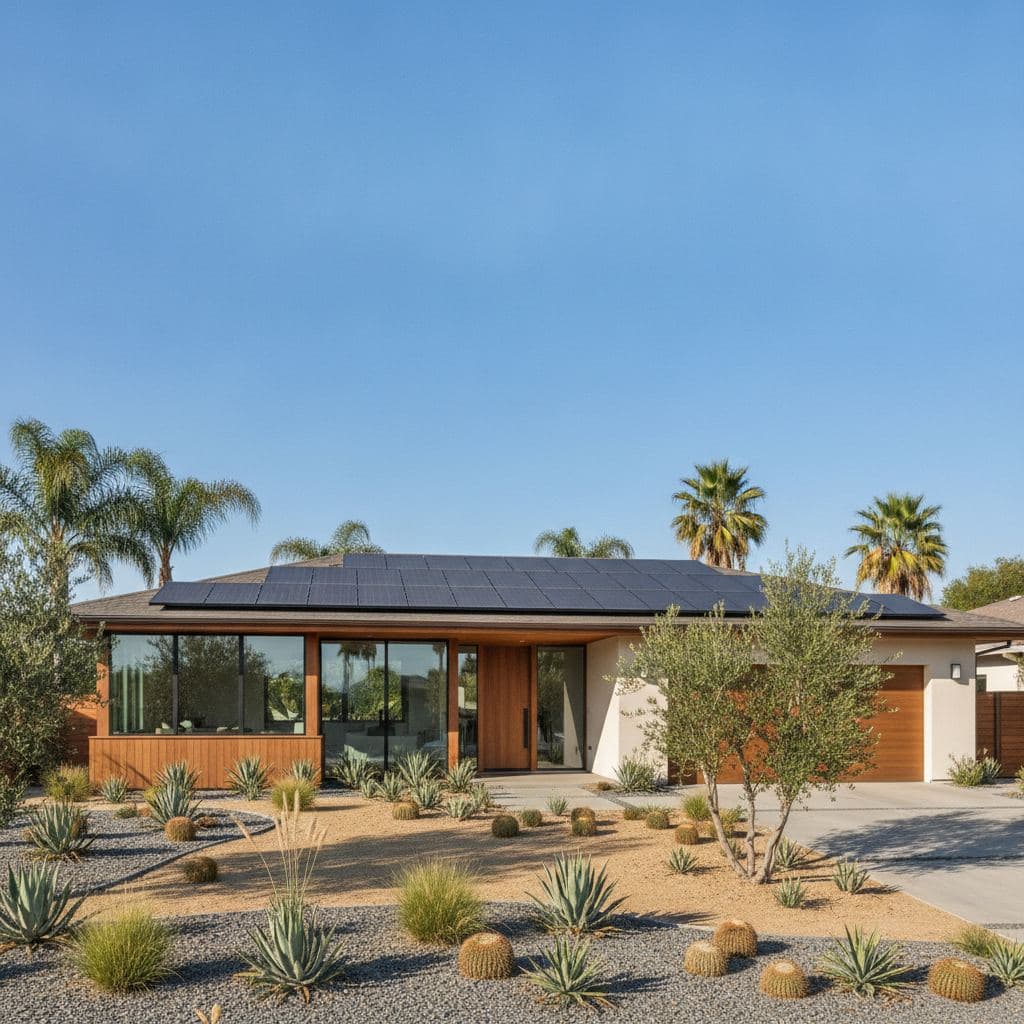
Helios charges $250–$350 per panel to temporarily remove and reinstall solar panels for a roof replacement in Ventura County — about $3,750–$8,750 for a typical 15–25 panel system. That price covers the whole job — labeled, padded storage on site, new flashing and mounting hardware at every attachment, reinstallation, recommissioning and production verification — and the roofing is quoted separately. Within the range, roof height, pitch, and ease of access are the main factors affecting cost, with tile and steep-pitch roofs at the top.
Last verified: September 2026 by Helios Energy Global.
Why Ventura County homeowners are doing this right now
Ventura County has been at the center of Southern California's wildfire reality. The Mountain Fire in November 2024 burned nearly 20,000 acres in Ventura County and destroyed 243 structures. More recently, the Sandy Fire ignited south of Simi Valley in May 2026, burning 2,183 acres before containment.
The result: thousands of county homeowners — in Oxnard, Thousand Oaks, Simi Valley, Camarillo, and Moorpark — are replacing aging or fire-damaged roofs. If solar panels are already mounted, they have to come off first and go back up after. That's a detach-and-reset, or "D&R" in the industry.
Effective January 1, 2026, California consolidated its wildfire construction rules into a single standalone code — the California Wildland-Urban Interface Code (CWUIC) — which requires a Class A fire-rated roof assembly for new construction and re-roofing in mapped Fire Hazard Severity Zones.
The City of Ventura updated its Fire Hazard Severity Zone map in July 2025, classifying over 4,600 acres as High or Very High fire hazard areas. If your property falls in one of those zones, your reroofing contractor must use compliant materials — and your solar system needs to come off cleanly while that work happens.
The key cost table: Ventura County solar removal and reinstall
| Scenario | Solar D&R Cost (Helios, $250–$350 per panel) | Notes |
|---|---|---|
| Small system (8–12 panels) | $2,000–$4,200 | Straightforward single-story roof |
| Mid-size system (13–20 panels) | $3,250–$7,000 | Most common in Thousand Oaks/Simi Valley |
| Larger system (21–30 panels) | $5,250–$10,500 | Multi-story, tile or steep-pitch roofs land at the top of the range |
| Panel storage on site | Included | Off-site storage beyond 30 days is quoted separately |
| New flashing and mounting hardware | Included | At every attachment |
| Failed components found during the detach | Quoted separately | Flagged with a price before anything is replaced |
Prices are Helios's $250–$350 per panel for Ventura County in 2026; the roofing itself is quoted separately. Where your job lands in the range depends on roof type, system age, access difficulty, and inverter configuration. Request a custom quote for your address.
How the Helios project model works
Helios Energy Global holds a C-10 electrical/solar contractor license. That means we own the solar detach-and-reset work from start to finish: disconnecting the system safely, removing panels and racking, staging equipment, and reconnecting and testing after the roof is done.
The roofing work itself — tear-off, underlayment, new materials, and any fire-zone-compliant upgrades — is performed through our licensed roofing partners. We coordinate the full sequence as a single project with one point of contact. You don't have to find a roofer who will "work around" your solar company, or vice versa.
Companies that handle both removal and reinstallation often charge less than hiring two separate crews. More importantly, coordinating the sequence correctly protects your NEM tariff — which is the bigger financial issue for most Ventura County homeowners with existing solar.
The NEM tariff question: this is the expensive part to get wrong
Virtually all of Ventura County is SCE (Southern California Edison) territory. SCE's footprint includes Ventura County as one of its big solar markets. That means your system is governed by SCE's net billing rules — and those rules matter enormously when you temporarily disconnect for a roof.
NEM 2.0 vs. NEM 3.0 (Solar Billing Plan)
Customers already on NEM 2.0 retain that tariff for 20 years from their interconnection date. Only new installations enroll in NEM 3.0. The March 2026 appellate court ruling confirmed this framework is durable, ending speculation that regulatory pressure would restore NEM 2.0-like rates.
In practice, 2026 export rates under NEM 3.0 average $0.05 to $0.08 per kWh — a roughly 75 percent cut from NEM 2.0. Meanwhile, retail rates have climbed. The net effect: exporting energy to the grid is now 5 to 8 times less valuable than consuming it yourself.
If you're on NEM 2.0, protecting that tariff during a detach-and-reset is critical. A standard temporary removal for roof work — where the same panels go back on the same roof at the same capacity — is treated as a modification, not a new installation, and does not trigger a move to NEM 3.0. However, if you add capacity beyond the allowed threshold, or file a new interconnection application incorrectly, you can lose your grandfathered status. Both NEM 1.0 and NEM 2.0 customers are granted a 20-year grandfathering period from the date their original system was approved for interconnection — but adding more solar capacity can impact your eligibility under these legacy programs, depending on the extent of your system expansion.
We handle the SCE notification and paperwork correctly so your tariff status is preserved. See our NEM 3.0 explainer guide for the full picture.
SCE rates in 2026: why this matters
SCE's average residential rate is about 34 cents per kWh as of July 2026, still nearly double the U.S. average.
Most SCE homes are billed on a time-of-use plan such as TOU-D-4-9PM or TOU-D-PRIME, where the price climbs during the 4 to 9 PM peak, so the kilowatt-hours you can offset in those evening hours are the most expensive ones on the grid.
SCE customers saw another significant increase in their electric bills, with electricity costs rising 12.9% in 2026 per SCE's latest rate filing. Every day your system is down for a roof job is a day you're buying that expensive power from the grid. That's another reason to coordinate the project efficiently and minimize downtime.
What affects your specific Ventura County quote
System size and panel count. Helios charges $250–$350 per panel. A typical home solar installation has 15–30 panels, which puts most removal-and-reinstall projects between $3,750 and $10,500.
Roof type and pitch. Ventura County's housing stock includes a high proportion of concrete and clay tile roofs — common in Thousand Oaks, Simi Valley, and Camarillo. Tile roofs require more care during the panel removal process to avoid cracking surrounding tiles, which can add time and labor cost compared to composition shingle.
System age and hardware condition. Systems more than 10 years old can add 25 to 40 percent more removal time due to weathered hardware. Corroded lag bolts, seized rail clamps, and brittle conduit runs are common on systems installed during the 2012–2016 boom that's now aging out across Ventura County neighborhoods.
Inverter type. String inverter systems are generally simpler to disconnect than microinverter arrays (Enphase is common in this region), which require individual trunk cable disconnects at every panel. Budget toward the higher end of the per-panel range for microinverter systems.
Storage duration. A detach-and-reset (D&R) means the panels come off temporarily so roofing work can happen, then go right back up. Labeled, padded storage on site is included in the per-panel price. If your roofing job runs long enough that panels go to off-site storage, that pushes the job toward the top of the range, and off-site storage beyond 30 days is quoted separately.
Permit fees. Licensed contractors can obtain permits, and fees are set by each jurisdiction. Ventura County's incorporated cities (Oxnard, Thousand Oaks, Simi Valley, Camarillo, Ventura, Moorpark, Fillmore, Ojai, Port Hueneme, Santa Paula) each have their own building departments with varying fee schedules.
The disaster-rebuild provision: if your home was fire-damaged
SCE has a specific provision for customers whose systems were damaged in a declared disaster. If you are a residential Solar Billing Plan customer impacted by a major disaster for which a state of emergency has been declared, and you choose to rebuild your renewable generation system, you may be eligible to remain on your original tariff and have application fees waived — provided you notify SCE of your intent to rebuild within two years from the date the major disaster occurred, and complete your rebuild within four years.
If your home was impacted by the Mountain Fire (2024) or any subsequent declared disaster in Ventura County, this provision may protect your NEM tariff even through a full system replacement. Contact us before assuming you've lost your tariff status — the window and the paperwork process matter here.
Batteries: should you add one during the reroof?
If your panels are already coming off and a crew is on your roof, it's the lowest-disruption moment to also add a battery. Under NEM 3.0, exporting energy to the grid is now 5 to 8 times less valuable than consuming it yourself. This single economic reality drives every other NEM 3.0 design decision — battery sizing, time-of-use optimization, load shifting, EV charging schedules, and roof-replacement timing.
A battery lets you store the solar you generate during the day and use it during SCE's expensive 4–9 PM peak window instead of exporting it for a few cents. Installed battery costs in 2026 run roughly $14,000–$18,500 per unit installed, with a Tesla Powerwall 3 typically landing in the $14,500–$18,500 installed range depending on site conditions.
Note: California's SGIP (Self-Generation Incentive Program) residential battery rebate budget is waitlisted in 2026 — it is not currently open for new residential applications. We'll flag any changes as they occur.
Learn more on our battery storage page and our solar vs. battery under NEM 3.0 guide.
What's NOT included in the solar D&R price
Be clear on scope before signing anything:
- Roofing labor and materials — performed by your roofer or our licensed roofing partners, quoted separately
- Off-site storage beyond 30 days — on-site storage is included; longer off-site storage is quoted separately
- Panel repairs or replacements — damaged panels found during removal are quoted individually
- Inverter or monitoring system upgrades — if you want to upgrade your inverter while the system is down, that's an add-on
- Main panel or electrical service upgrades — occasionally required on older Ventura County homes
- HOA or permit expedite fees — some Thousand Oaks and Simi Valley HOAs require additional documentation
See our roof types page for how different roofing materials affect the D&R process and cost.
Frequently asked questions about solar panel removal in Ventura County
How long does a solar detach-and-reset take?
The solar removal itself typically takes one day for a standard 15–25 panel system. Reinstallation after the roofing work is done takes one to two days, including system testing and verification. Total project duration is usually 3–10 days, depending on how quickly the roofing work proceeds. We coordinate the scheduling so the solar crew arrives the day the roofing is complete.
Will removing my panels void my equipment warranty?
It depends on your panel and inverter manufacturer. Most major brands (LG, Qcells, Enphase, SolarEdge) require that removal and reinstallation be performed by a licensed electrical/solar contractor to keep warranties intact. Professional removal is required to maintain warranties and ensure safe handling of electrical components — you don't want to risk the loss of your warranty or harm to an unlicensed person who might not have experience with the panels and their electrical setup. Helios holds a C-10 license and documents the process.
Can I lose my NEM 2.0 status during a temporary removal for a roof?
A like-for-like detach-and-reset — same panels, same capacity, same roof — does not trigger a new interconnection application and does not move you to NEM 3.0. The risk comes if you add capacity beyond SCE's allowed modification threshold, or if the paperwork is filed incorrectly as a new installation. We handle the SCE notification process as part of every D&R project. Read more in our NEM 3.0 guide.
Does homeowners insurance cover solar removal for a roof replacement?
It depends on the reason for the roof work. Insurance may help if the roof damage was a covered event — it will not cover an upgrade you chose to make. If your roof was damaged in a wildfire or storm and the replacement is an insurance claim, the solar removal cost may be included in the claim. Review your policy and coordinate with your adjuster before the project begins.
Is Ventura County on SCE or LADWP?
Virtually all of unincorporated Ventura County and its cities — Oxnard, Thousand Oaks, Simi Valley, Camarillo, Ventura, Moorpark, and others — are served by SCE. Southern California Edison offers net metering to customers across its entire service territory, which includes Ventura County. LADWP serves the City of Los Angeles only and does not serve Ventura County addresses. This means NEM 3.0 (the Solar Billing Plan) applies to virtually all Ventura County solar customers on new installations.
Do I need a permit to remove and reinstall my solar panels?
Yes, in most Ventura County jurisdictions. An electrical permit is required for the solar disconnect and reconnect work, and a separate building permit is typically required for the roofing work. Licensed contractors can obtain these permits. Helios pulls the electrical permit; our licensed roofing partners pull the roofing permit. Permit fees vary by city.
What happens if my original solar installer is out of business?
This is increasingly common with systems installed during the 2012–2018 boom. If your original installer is no longer in business or refuses to help with removal, it may be time to revisit your contract terms altogether. Helios can service and D&R systems regardless of who originally installed them. We'll assess your equipment, document the existing configuration, and handle the SCE paperwork as the new contractor of record.
Next steps
- Powerwall 3 cost — the installed price for one unit, what moves it, and what is included
- Book a free consultation and custom design — we'll assess your system, your roof, and your NEM tariff status before quoting anything
- See how we approach solar installations in Southern California
- Explore battery storage options for your reroof project
- Read our NEM 3.0 explainer — understand what your tariff is worth before you make any changes
- Compare solar vs. battery strategy under NEM 3.0
- Check our Southern California service locations
Sources
- MySolarFY — SCE Average Residential Rate July 2026 — August 12, 2026
- SCE.com — Solar Billing Plan (NEM 3.0) and Disaster Rebuild Provisions — January 2026
- City of Ventura — Fire Hazard Severity Zone Map Update July 2025 — March 26, 2026
- A1 Solar Store — Solar Panel Removal Cost Guide 2026 — April 6, 2026
More guides
The 10 Best Solar Companies in La Quinta, CA (2026): IID Net Billing, Desert Heat, and Honest Numbers
La Quinta runs on IID power — not SCE, not NEM 3.0 — and that changes everything about how solar should be designed here. This guide ranks the 10 best solar installers in La Quinta for 2026 and explains exactly how IID Net Billing, rising rates, and desert cooling loads affect your system.
ReadDo I need a main panel upgrade for solar? California guide (2026)
About 30–40% of Southern California homes need a main panel upgrade for solar, costing $3,000–$5,000 — but smart load management and inverter sizing can often eliminate the need entirely.
ReadBest Solar Companies in Canoga Park, CA (2026): Honest Rankings for LADWP Homeowners
Canoga Park sits in the LADWP service area, which means NEM 3.0 does not apply here — a fact most solar guides get wrong. Here are the 10 best solar installers for Canoga Park homeowners in 2026, ranked honestly.
ReadGet a free consultation and custom design.
No pressure, no obligation — the owner reviews every design we send.