Solar Panel Removal and Reinstallation in Los Angeles County: What It Costs and How It Works (2026)
Helios charges $250–$350 per panel to remove and reinstall solar in Los Angeles County — about $5,000–$7,000 for a typical 20-panel system, with Spanish-tile roofs at the top of the range — and recommissioning steps differ between LADWP and SCE customers.
By Taylor Crouse — Founder, Helios Energy GlobalPublished
Quick answer
- Helios charges $250–$350 per panel to detach and reset (D&R) a typical LA County solar system — about $5,000–$7,000 for 20 panels, depending on system size and roof type; the roofing is quoted separately
- Spanish-tile roofs land at the top of that range: about $6,000–$7,000 for 20 panels, plus 10–20% tile breakage replacement
- LADBS permit required for reinstallation in the City of LA; eligible systems can receive same-day approval through the PermitLA/SolarAPP+ express pathway
- LADWP customers stay on retail-rate net metering and file a modified interconnection application; SCE customers (on NEM 3.0) must notify SCE before disconnecting and recommission through SCE's NEM process
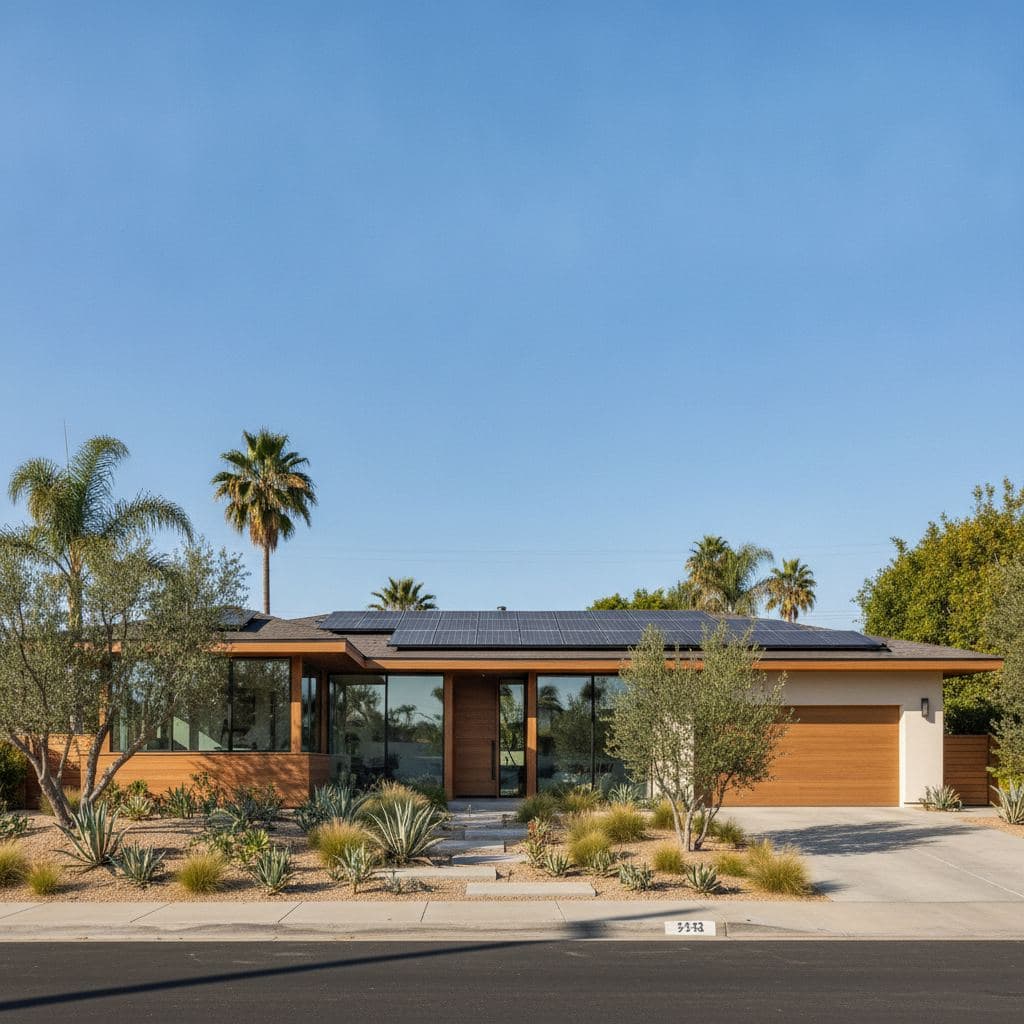
Helios charges $250–$350 per panel for solar panel removal and reinstallation (called "detach and reset" or D&R in the trade) in Los Angeles County — about $5,000–$7,000 for a typical 20-panel system. Simple single-story asphalt-shingle jobs land at the bottom of that range; Spanish or concrete tile roofs land at the top, about $6,000–$7,000 for 20 panels. The per-panel price covers the whole job: labeled, padded storage on site, new flashing and mounting hardware at every attachment, reinstallation in the documented layout, recommissioning (including utility or AHJ notification where required) and production verification. The roofing itself is quoted separately. Where a job lands in the range reflects system size, roof complexity, and whether the panels were originally installed with easy-access racking or older hardware that has weathered over a decade of Southern California sun.
Last verified: September 2026 by Helios Energy Global.
The key numbers at a glance
| Item | Typical range (LA County, 2026) | Notes |
|---|---|---|
| Helios D&R price per panel | $250–$350/panel | Covers storage, new flashing and hardware, reinstall, recommissioning and production verification |
| D&R — 15–25 panel system | $3,750–$8,750 | Simple single-story shingle at the bottom of the per-panel range |
| D&R — Spanish/concrete tile, 20 panels | ~$6,000–$7,000 | Top of the per-panel range: higher breakage risk, slower work |
| Tile breakage allowance | $450–$1,800 | 10–20% of tiles; $15–$30/tile replacement |
| Failed components found during the detach | Quoted separately | Flagged with a price before anything is replaced; more likely on systems 10+ years old |
| LADBS permit fees (City of LA) | Low-to-mid hundreds | Scales with system valuation; confirm with LADBS |
| LADWP interconnection filing fee (PV ≤30 kW) | ~$130 | Per LADWP's published interconnection schedule |
| System downtime (D&R + roofing) | 1–2 weeks total | Removal ~1 day; roofing 2–7 days; reinstall 1–2 days |
D&R prices are Helios's $250–$350 per panel; the tile, permit and utility figures are 2026 estimates. Where your job lands in the range depends on your system's specifics.
Why LA County homeowners need a D&R
Solar panel removal for roof replacement becomes a reality for thousands of Southern California homeowners each year, often at a moment they did not plan for. The most common triggers in LA County:
Aging roofs under older systems. Many panels installed during the 2010s solar boom are now sitting on roofs that are 15–25 years old. If a roof is reaching end-of-life — typically 20–30 years for asphalt shingles, 40–50 for tile — solar panels must come off so roofers can replace decking, underlayment, and shingles.
Leak repairs and underlayment replacement. In Southern California, underlayment condition is especially important on tile roofs. The tile is not the only water-shedding layer — the underlayment beneath the tile does much of the work protecting the home from wind-driven rain and long-term moisture intrusion.
Home additions or re-roofing after fire/storm damage. LA County's fire-risk zones and periodic wind events send a steady stream of homeowners through the D&R process.
Panel or inverter upgrades. Reinstallation is also the right moment to assess whether aging panels should be upgraded rather than put back on a fresh roof. NREL research shows a median degradation rate of 0.5% per year, so a 12-year-old system may already be running 6% below rated capacity — reinstallation is the right moment to decide whether upgrading panels outweighs the cost of putting aging equipment back on a new roof.
The Spanish-tile reality in Los Angeles County
Spanish clay and concrete S-tile roofs dominate the housing stock across much of LA County — from Silver Lake bungalows to Pasadena Craftsman-adjacent neighborhoods to San Gabriel Valley tract homes built in the 1970s–1990s. They are beautiful, durable, and significantly more complicated to work around than asphalt shingle.
Budget extra for tile replacement — expect 10 to 20 percent of tiles to break during removal and reinstall. On a 300-tile roof, that's 30 to 60 tiles at $15–$30 each, adding $450 to $1,800 in tile replacement alone.
Helios's $250–$350 per-panel price applies either way, but tile lands at the top of that range — about $6,000–$7,000 for 20 panels — while simple single-story asphalt shingle lands at the bottom. That gap exists because each tile must be carefully lifted, set aside, and reseated around each mounting point — a process that is slow by design.
Special tile-replacement mounts or tile-hook systems allow solar panel racking without penetrating the tile directly. The work should be performed by a team experienced with both tile and solar to avoid leaks.
Helios's approach: Our C-10 licensed electricians and solar technicians handle all panel disconnect, removal, and reinstallation work. All roofing work — tile lifting, underlayment replacement, tile reseating — is performed through our licensed roofing partners, coordinated by Helios as a single project with one schedule and one point of contact. You do not have to hire a roofer separately and then chase two contractors to talk to each other.
LADBS permit requirements in the City of Los Angeles
Pulling a permit for reinstallation is not optional. California law requires a licensed C-10 or C-46 contractor to disconnect and reconnect a grid-tied solar system. Using an unlicensed contractor for that work can result in failed inspections, delayed recommissioning, and voided manufacturer warranties.
A City of LA solar install needs a building/PV permit and an electrical permit — often issued together. For a like-for-like reinstall (same panels, same footprint, same inverter), the permitting burden is typically lower than a new install, but it is not zero.
Express solar PV permits are available through PermitLA for residential rooftop systems that meet all criteria. Online express permits are currently available for licensed contractors only, per LADBS Information Bulletin P/GI 2026-003, effective January 1, 2026.
LADBS now issues most rooftop solar permits in 24 hours through the SolarAPP+ platform.
Requirements differ if your home is in Glendale, Burbank, Pasadena, or LA County unincorporated — each has its own building department. If you are outside the City of LA but inside LA County, your permit goes to the LA County Department of Public Works (LACDPW), not LADBS. Helios handles both.
Permit fee reality check: LADBS fees scale with the system's valuation and scope and are updated periodically, so there is no single flat rate. As an approximate guide, residential solar permit and plan-check fees in the City of LA commonly fall in the low-to-mid hundreds of dollars — small next to the system cost. Always get the per-panel price and what it includes in writing.
LADWP vs. SCE: recommissioning after reinstallation
This is where LA County gets specific — and where a contractor who does not know the local utilities can cost you weeks of downtime.
LADWP customers (City of LA and surrounding service territory)
LADWP has operated a solar program since 1999 and offers a net metering program to customers who connect their solar system to the energy grid. Critically, LADWP is a municipal utility — it is not subject to CPUC's NEM 3.0 (Net Billing Tariff). LADWP's rates and prices for net metering are equivalent to the amount that you pay per kilowatt-hour for your electricity — meaning LADWP customers export at retail rate, not the deeply discounted export rates that SCE customers face under NEM 3.0.
When your system comes back online after a D&R, LADWP requires notification and, depending on whether any system specs changed, may require a modified interconnection filing. LADWP charges a $130 interconnection expenditure recovery fee at submittal for PV projects. Single-phase systems 30 kW and under don't pay beyond that; three-phase systems add $365. If your system size, inverter, or configuration changed during the reinstall, expect a more involved review. LADWP is committed to the continuous improvement of its Service Planning's interconnection process, and collaborative changes to the interconnection process for NEM, BESS, and other systems are currently undergoing implementation.
Timeline: For a straight like-for-like reinstall with no system changes, LADWP recommissioning typically adds a few days to a couple of weeks to the project timeline. Confirm the current process directly with LADWP's interconnection team before scheduling your roofing work.
SCE customers (much of LA County outside the City of LA)
SCE covers large portions of LA County — including communities in the San Gabriel Valley, South Bay, Santa Clarita Valley, and the eastern county. SCE is an investor-owned utility under CPUC jurisdiction, so SCE solar customers are on NEM 3.0 (the Net Billing Tariff). See our NEM 3.0 explainer for the full picture.
Under NEM 3.0, SCE solar customers are on the TOU-D-PRIME rate plan. SCE's average residential rate is 35.3 cents per kWh as of January 2026.
Peak hours for SCE customers with time-of-use rate plans are either 4–9 p.m. or 5–8 p.m., depending on their specific plan.
For a D&R, SCE requires that you notify them before disconnecting a grid-tied system and that you go through their recommissioning process before re-energizing. If any component of the system changed — panels, inverter, system size — SCE may treat it as a new interconnection application, which can trigger a full NEM 3.0 review and potentially reset your interconnection agreement. This is a critical point: if you are on NEM 2.0 grandfathering, changing your system size during a D&R can jeopardize that grandfathered status. Talk to us before you authorize any changes.
What the full project timeline looks like
A typical R&R takes 2 to 4 days: Day 1 — disconnect wiring, remove mounting hardware, lift panels safely. Days 2–3 — roof work (repair, replacement, inspection). Day 4 — reinstall mounting rails, panels, and wiring; electrical inspection and reconnection. If your roof requires major work (full replacement), R&R might extend to 1 to 2 weeks depending on roof size and complexity.
Add permit processing time (typically same-day to a few days for express LADBS permits) and utility recommissioning (days to a couple of weeks depending on LADWP or SCE), and a realistic total project window is 2–4 weeks from contract signing to system back online for a straightforward project, and 4–6 weeks for a full tile roof replacement combined with D&R.
Lost production during downtime: Every day without solar production costs approximately $4–$7 in lost energy savings on average systems, based on typical annual savings of $1,500. On an SCE TOU plan where peak-hour rates matter most, the per-day cost of being offline during summer months can be higher. Tight scheduling coordination between the solar and roofing scopes — which is exactly what Helios provides — keeps that window as short as possible.
What gets reused and what gets replaced
Panels, racking, microinverters, and wiring are typically reusable if undamaged. Lag bolts, flashing, and mounting hardware may need replacement — especially on older systems or when switching roof materials. A pre-reinstallation inspection will clarify what can be reused.
On systems more than 10 years old, weathered hardware can add 25 to 40 percent more removal time — and corroded lag bolts, cracked rail clamps, or degraded flashing boots may need full replacement regardless. New flashing and mounting hardware at every attachment is already included in Helios's per-panel price; any failed component we find during the detach is flagged with a price before anything is replaced.
If you have a leased or PPA system, the solar company that owns the panels controls the D&R process. Leased and PPA systems usually need the solar company's approval. Helios can coordinate with your solar finance company, but the approval step is theirs — factor extra lead time into your roofing schedule.
Should you upgrade while the panels are off?
A D&R is the lowest-cost moment to make changes to your system, because the panels are already down and a permit is already open. Consider:
- Panel upgrade: If your panels are 10+ years old and showing degradation, replacing them now avoids a second D&R later. See our solar panel cost guide for current hardware pricing.
- Adding a battery: With panels off and an electrical permit open, adding a battery is far less disruptive than a standalone battery install later. Our batteries page walks through the options. Note that SGIP residential battery rebates are currently waitlisted in 2026 — we will flag if that changes.
- Roof-type-specific mounting upgrade: If your original installer used a suboptimal mounting method on your tile roof (e.g., grind-and-seal), the D&R is the moment to correct it with proper tile hooks or tile-replacement mounts through our licensed roofing partners.
For more on whether solar makes sense for your specific roof type, see our roof types guide.
Frequently asked questions about solar panel removal and reinstallation in Los Angeles
How much does it cost to remove and reinstall solar panels in Los Angeles County?
Helios charges $250–$350 per panel — about $5,000–$7,000 for a 20-panel system and $7,500–$10,500 for 30 panels. Tile roofs land at the top of that range. The per-panel price covers the whole job: labeled on-site storage, new flashing and mounting hardware at every attachment, reinstallation, recommissioning and production verification. The roofing itself, off-site storage beyond 30 days, and replacement of failed components found during the detach are quoted separately.
Do I need a permit to reinstall solar panels in the City of LA?
Yes. A City of LA solar install needs a building/PV permit and an electrical permit — often issued together. For eligible like-for-like reinstalls, you can apply through PermitLA and receive same-day permit issuance without a plan review — but only through a licensed contractor. Helios pulls all required permits as part of every project.
Will my LADWP net metering agreement be affected by a detach and reset?
A straight like-for-like reinstall — same panels, same inverter, same system size — should not affect your LADWP net metering agreement. If you change the system size or inverter type, LADWP may require a modified interconnection application. Always confirm with LADWP's interconnection team and with Helios before authorizing any system changes during a D&R.
I'm on SCE NEM 2.0 grandfathering — will a D&R reset my tariff?
This is a real risk. If you change your system size or inverter during the D&R, SCE may treat it as a new interconnection application and place you on NEM 3.0. A pure like-for-like reinstall — identical components, no size change — is generally safe, but you should get written confirmation from SCE before proceeding. Helios can help you navigate this conversation before any work begins. Read our solar vs. battery under NEM 3.0 guide for context on what's at stake.
How long will my solar system be offline during a roof replacement in LA?
Removal takes roughly one day; roofing work typically runs 2–7 days for residential projects; reinstallation takes 1–2 days. Total downtime of 1–2 weeks is common. Tight scheduling coordination between your solar contractor and roofer keeps that window shorter. Add utility recommissioning time — typically a few days for LADWP, potentially longer for SCE — for a total project window of 2–4 weeks for most LA County homes.
Is it worth upgrading my panels while they are off the roof?
If your system is more than 10–12 years old, it is worth a conversation. NREL research shows a median degradation rate of 0.5% per year, so a 12-year-old system may already be running 6% below rated capacity. Replacing panels during a D&R avoids a second removal fee later and lets you right-size the system for your current electricity use. We model this for every D&R customer at no charge.
Can any roofing contractor remove and reinstall my solar panels?
California law requires a licensed C-10 or C-46 contractor to disconnect and reconnect a grid-tied solar system. A roofer can physically lift panels out of the way, but the electrical disconnect and reconnect must be performed by a licensed solar/electrical contractor. Helios holds a C-10 license and performs all electrical and solar work directly; all roofing work is performed through our licensed roofing partners, coordinated as one project.
Next steps
- Book a free consultation and custom design — We'll review your system specs, roof type, utility (LADWP or SCE), and give you a written scope before any work begins.
- See what solar costs in Southern California — If you're considering an upgrade while the panels are off, start here.
- Explore battery storage options — A D&R is the ideal time to add a battery to your system.
- View our Southern California service locations — We serve communities across LA County, from Santa Monica to the San Gabriel Valley.
- Understand NEM 3.0 and what it means for SCE customers — Critical reading before you change anything on an SCE-interconnected system.
- Solar vs. battery under NEM 3.0 — If your D&R is also a chance to rethink your system design, this guide lays out the numbers.
Sources
- Solar Permits Los Angeles 2026 — LADBS Requirements & Fees (Solar Permit Solutions) — February 19, 2026
- Solar Panel Removal and Reinstall Cost in California 2026 (RateReliefCA) — April 16, 2026
- Cost to Remove & Replace Solar Panels for a New Roof (CAHomeSolar) — June 9, 2026
- LADWP Interconnection Program for NEM, PV, BESS, and Cogeneration Projects (LADWP) — May 5, 2026
More guides
Solar cost per square foot in California: how roof area maps to system size (2026)
California solar runs roughly $4–$7 per square foot of panel area, and a 6 kW system needs about 350–450 sq ft of roof — how roof area maps to price, and why installers quote per watt instead.
ReadHow much do solar panels cost in Orange County in 2026?
A typical Orange County home solar system runs $18,000–$30,000 installed before any incentives, depending on system size, roof type, and whether you're on SCE or Anaheim Public Utilities.
ReadIs Tesla Solar Worth It in California in 2026?
Tesla panels and Powerwall 3 are genuinely competitive—but the direct-install service record is the real wildcard. Here's an honest take from a Tesla Certified Installer.
ReadGet a free consultation and custom design.
No pressure, no obligation — the owner reviews every design we send.