Solar cost per square foot in California: how roof area maps to system size (2026)
California solar runs roughly $4–$7 per square foot of panel area, and a 6 kW system needs about 350–450 sq ft of roof — how roof area maps to price, and why installers quote per watt instead.
By Taylor Crouse — Founder, Helios Energy GlobalUpdated
Quick answer
- Measured by panel area, solar in California runs roughly $4–$7 per square foot installed
- Installers quote per watt, not per square foot — our solar panel cost page is the statewide per-watt breakdown
- A typical 6 kW system needs approximately 350–450 sq ft of roof space (accounting for spacing and tilt)
- There is no federal tax credit for solar purchased in 2026 — the 30% credit expired December 31, 2025
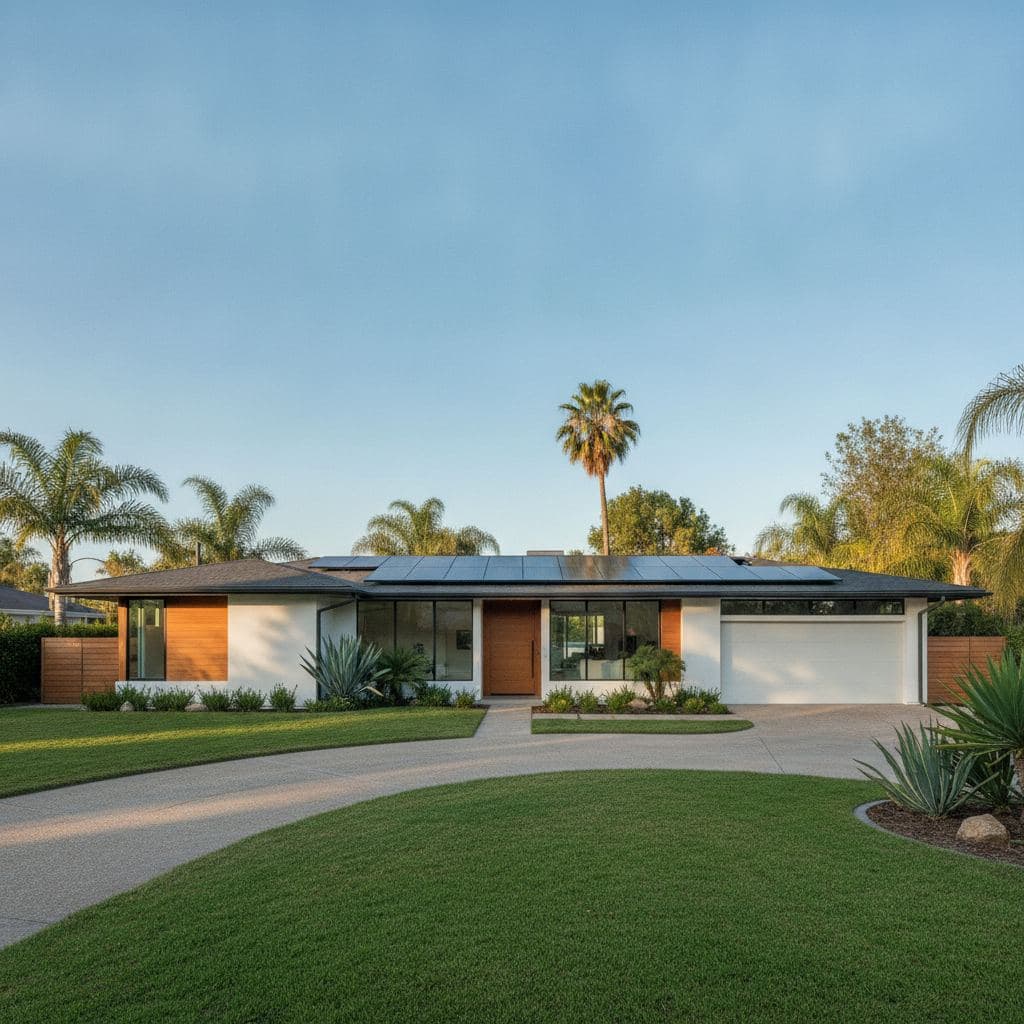
Measured by panel area, solar in California runs approximately $4–$7 per square foot. Installers don't price that way, though — quotes are written per watt, and our solar panel cost page is the canonical breakdown of that number and of what a full system costs by size. This guide covers the part that page doesn't: how many square feet of roof a given system actually needs, and how to convert between the two.
Last verified: September 2026 by Helios Energy Global.
Why per-watt is the number that actually matters
Per-square-foot pricing sounds intuitive — you're used to thinking about your home in square feet. But it creates an apples-to-oranges problem the moment you compare two quotes.
Here's why: a high-efficiency 430-watt panel and a budget 360-watt panel can have nearly identical physical dimensions. If you price both at "$5 per square foot," you'd think they cost the same — but the high-efficiency panel produces 19% more electricity from the same roof space. The per-watt metric captures that difference; per-square-foot does not.
Per-watt pricing accounts for:
- Panel efficiency — how much power each square foot actually generates
- Inverter quality — string vs. microinverters vs. power optimizers
- Labor and permitting — which vary by city, roof type, and utility interconnection requirements
- System design complexity — shading, roof pitch, number of roof faces
When you see a quote, ask for the cost per watt ($/W). That's the only number you can meaningfully compare across installers and equipment tiers.
The conversion table: square feet ↔ watts ↔ roof area
The table below assumes standard residential panels (~17–22 sq ft each). Roof area adds ~25–35% for spacing, walkways, and setbacks required by code.
| System Size | Est. Panels | Panel Area (sq ft) | Roof Area Needed (sq ft) |
|---|---|---|---|
| 4 kW | 9–11 panels | 170–220 sq ft | 215–300 sq ft |
| 6 kW | 13–16 panels | 250–330 sq ft | 315–450 sq ft |
| 8 kW | 18–22 panels | 340–440 sq ft | 425–595 sq ft |
| 10 kW | 22–28 panels | 420–560 sq ft | 530–755 sq ft |
| 12 kW | 27–33 panels | 510–660 sq ft | 640–890 sq ft |
Panel and roof-area figures are estimates for standard residential panels. For installed price by system size, see solar panel cost in California.
What drives cost per square foot (and per watt) in Southern California
Panel efficiency and tier
Budget panels (360–390W) cost less per panel but need more roof space to hit the same output. Premium panels (420–450W+) cost more upfront but shrink your required roof footprint — critical if you have a smaller or partially shaded roof. The per-square-foot cost of a premium panel array is higher; the per-watt cost is often competitive or lower once you factor in production.
Roof type and complexity
A simple single-pitch comp shingle roof in a flat Santa Monica neighborhood costs less to install than a tile roof with multiple dormers in Pasadena. Tile roofs require tile removal and re-installation, adding $500–$2,000+ to most jobs. See our roof types guide for a full breakdown by material.
Your utility — SCE vs. LADWP vs. other munis
This is the localization factor most California solar articles ignore. Your utility territory changes the economics of solar significantly, even if the hardware cost is identical.
SCE territory (most of LA County, Orange County, Inland Empire):
- Average residential rate ~34–35¢/kWh
- Peak TOU window: 4–9 PM
- Subject to NEM 3.0 (Net Billing Tariff) — export credits are wholesale-rate, not retail-rate
- Under NEM 3.0, a battery paired with solar captures far more value than solar alone — see our NEM 3.0 explainer
LADWP territory (City of Los Angeles):
- Effective rate ~28¢/kWh (range ~26–31¢)
- LADWP is a municipal utility — not subject to NEM 3.0
- LADWP still offers retail-rate net metering, meaning your exported solar gets credited at the full retail rate
- This makes the simple payback math more favorable for solar-only systems compared to SCE
Other Southern California municipal utilities:
- Pasadena Water & Power, Burbank Water & Power, Glendale Water & Power, Anaheim Public Utilities, Riverside Public Utilities — all run their own net metering programs, none on NEM 3.0
- Rates and export credit structures vary; check directly with your utility before sizing a system
The practical impact: a 6 kW system in LADWP territory may offset a higher percentage of your bill dollar-for-dollar than the same system in SCE territory, because retail-rate net metering gives you full credit for every kWh you send back to the grid.
How much roof space does your system actually need?
A common mistake is confusing panel area with roof area required. California fire code and utility interconnection standards require setbacks from roof edges, ridges, hips, and valleys. Most residential installations need:
- 3-foot setbacks from roof edges (required for firefighter access)
- Spacing between panel rows on low-pitch roofs (to reduce shading from row to row)
- Clear access pathways on larger roofs
The practical result: plan for your usable roof area to be about 25–35% larger than your panel footprint. A 6 kW system with ~280 sq ft of panels typically needs 350–450 sq ft of clear, code-compliant roof space.
Quick roof-area rules of thumb:
- Under 300 sq ft usable: 4–5 kW max; consider high-efficiency panels to maximize output
- 300–500 sq ft usable: 6–8 kW is typically achievable
- 500–700 sq ft usable: 8–10 kW systems fit comfortably
- 700+ sq ft usable: 10–12 kW+ systems are possible; battery storage often makes sense at this scale
Our solar design and savings tool can estimate your usable roof area and right-size a system before you ever talk to an installer.
Incentives available in 2026 — and what's gone
The 30% federal residential solar tax credit expired December 31, 2025. There is no federal incentive for a residential solar system purchased or installed in 2026. Any installer or website suggesting otherwise is out of date.
What does still exist in 2026:
- California net metering / net billing: Depends entirely on your utility (see SCE vs. LADWP section above). This isn't a cash incentive — it's a rate structure that determines how much your exported solar is worth.
- SGIP (Self-Generation Incentive Program): Residential battery incentive. As of 2026, residential SGIP budgets are waitlisted — not currently funded for new applicants. Check DSIRE for current status.
- Local utility rebates: Some municipal utilities (Pasadena, Burbank, others) have offered periodic rebates. Check directly with your utility; amounts and availability change frequently and we won't quote figures that may be outdated.
- Property tax exclusion: California excludes the added home value from solar from property tax reassessment. This isn't a rebate, but it's real money over time.
The absence of the federal credit meaningfully changes payback math in 2026. A system that had an 8-year payback with the 30% credit may now be a 10–12 year payback. That's still often worthwhile given 25+ year panel lifespans, but it's the honest number to plan around.
For a deeper look at how the economics work with and without a battery in SCE territory, see our solar vs. battery under NEM 3.0 guide.
Frequently asked questions about solar panel cost per square foot
How many square feet of solar panels do I need for a 2,000 sq ft house?
The size of your house matters less than how much electricity you use. A 2,000 sq ft Southern California home typically uses 600–900 kWh/month, which points to a 6–8 kW system — requiring roughly 280–440 sq ft of panel area and 350–600 sq ft of usable roof space. Your actual usage from a recent utility bill is the right starting point, not your home's footprint.
Is per-square-foot pricing ever useful for comparing quotes?
It's useful as a sanity check — if one quote implies $2/sq ft and another implies $10/sq ft for similar panels, something is off. But for a real comparison between two quotes, always convert to cost per watt ($/W). Divide the total system cost by the system size in watts. Our solar panel cost page carries the current statewide per-watt range.
Does roof pitch affect how many panels I can fit?
Yes, in two ways. A steeper pitch (above ~35°) can make installation harder and more expensive, and may require additional equipment. A very low pitch (under ~10°) requires larger row spacing to prevent panels from shading each other, which reduces how many panels fit in a given area. Most Southern California roofs fall in the 15–30° range, which is close to ideal for both installation and production.
What's the cost difference between solar on a tile roof vs. a shingle roof in SoCal?
Tile roofs (common in Pasadena, Riverside, and many inland communities) typically add $500–$2,000 to an installation because tiles must be carefully removed, flashed, and replaced around each mounting point. Comp shingle roofs are the simplest and cheapest to work with. Flat roofs with ballasted racking systems are common in commercial work but less so for residential. See our full roof types breakdown.
Should I add a battery if I'm in SCE territory under NEM 3.0?
For most SCE customers in 2026, yes — the math has shifted significantly. Because NEM 3.0 pays wholesale rates (not retail rates) for exported solar, a battery lets you store midday solar production and use it during the 4–9 PM peak when SCE rates are highest. Without a battery, you're exporting cheap and buying back expensive. Installed battery costs run roughly $14,000–$18,500 per unit (or $14,500–$18,500 for a Tesla Powerwall 3 installed). Our batteries page covers the options in detail.
Is solar still worth it in California without the federal tax credit?
For many Southern California homeowners, yes — but the numbers are tighter than they were before 2026. LADWP customers with retail-rate net metering and rates around 28¢/kWh often see 9–13 year simple paybacks. SCE customers without a battery may see 11–15 years depending on usage and system size. With a battery in SCE territory, the combined system economics often improve materially because you're avoiding peak-rate purchases. The honest answer depends on your specific usage, roof, and utility — which is exactly what a custom design is for.
Does adding solar increase my property taxes in California?
No. California's active solar energy system property tax exclusion means the added assessed value from a solar installation is excluded from your property tax bill. This exclusion has been extended multiple times and remains in effect as of 2026. It's not a rebate, but it does mean you capture the home value benefit of solar without a corresponding tax increase.
Next steps
- Book a free consultation and custom design — we'll pull your actual utility usage, measure your roof remotely, and give you a real $/W quote with honest payback math for your utility territory
- Explore our solar panel cost guide — full breakdown of what drives pricing in Southern California
- See how solar works under NEM 3.0 — critical reading if you're in SCE, PG&E, or SDG&E territory
- Learn whether to add a battery — the SCE-specific math on storage vs. solar-only
- Browse battery storage options — installed cost ranges and which systems we install in SoCal
- View all Southern California service areas — we serve Santa Monica, Los Angeles, Pasadena, and surrounding communities
More guides
Solar Inverter Replacement Cost in California (2026): String, Micro, and Hybrid
Replacing a residential solar inverter in Southern California costs roughly $1,000–$2,500 installed for a string inverter, $150–$350 per unit for a single microinverter, and $3,000–$6,000 installed for a hybrid inverter swap — before any utility reconnection or panel-upgrade costs.
ReadHow many watts does a mini fridge use? (2026 numbers by size and type)
Most mini fridges run on 50–150 watts and cost $3–$13/month at SCE rates or $3–$10/month at LADWP rates — here's the full breakdown by size and age.
ReadBest Solar Companies in Diamond Bar, CA (2026): A Homeowner's Honest Guide
Diamond Bar homeowners sit in SCE territory with strong sun exposure and NEM 3.0 rules — making battery storage more important than ever. Here's how to pick the right installer.
ReadGet a free consultation and custom design.
No pressure, no obligation — the owner reviews every design we send.