Solar financing options in California: cash vs loan vs lease vs PPA in 2026
With the federal 30% credit gone, a prepaid lease is the only 2026 path to roughly 30% off; cash still wins in municipal utility territory.
By Taylor Crouse — Founder, Helios Energy GlobalPublished
Quick answer
- There are five ways to pay for solar in 2026: cash, loan, monthly lease, PPA, and prepaid lease.
- The federal 30% tax credit (Section 25D) expired December 31, 2025 — cash and loan buyers get $0 in federal credits this year.
- A prepaid lease is the workaround: the financier claims the commercial 48E credit and prices your system roughly 30% below cash; ownership transfers to you at the start of year 6 — the fair-market-value transfer is offset by the financier’s released years-6–25 service obligations, an amount the financiers state “will essentially be zero”.
- Monthly leases and PPAs with a 2.9% annual escalator turn a $180/month payment into ~$358/month by year 25 — about $78,000 in total payments.
- Cash still wins in municipal utility territory (LADWP, Pasadena, Burbank, Glendale, Anaheim, Riverside), where near-retail net metering keeps paybacks short.
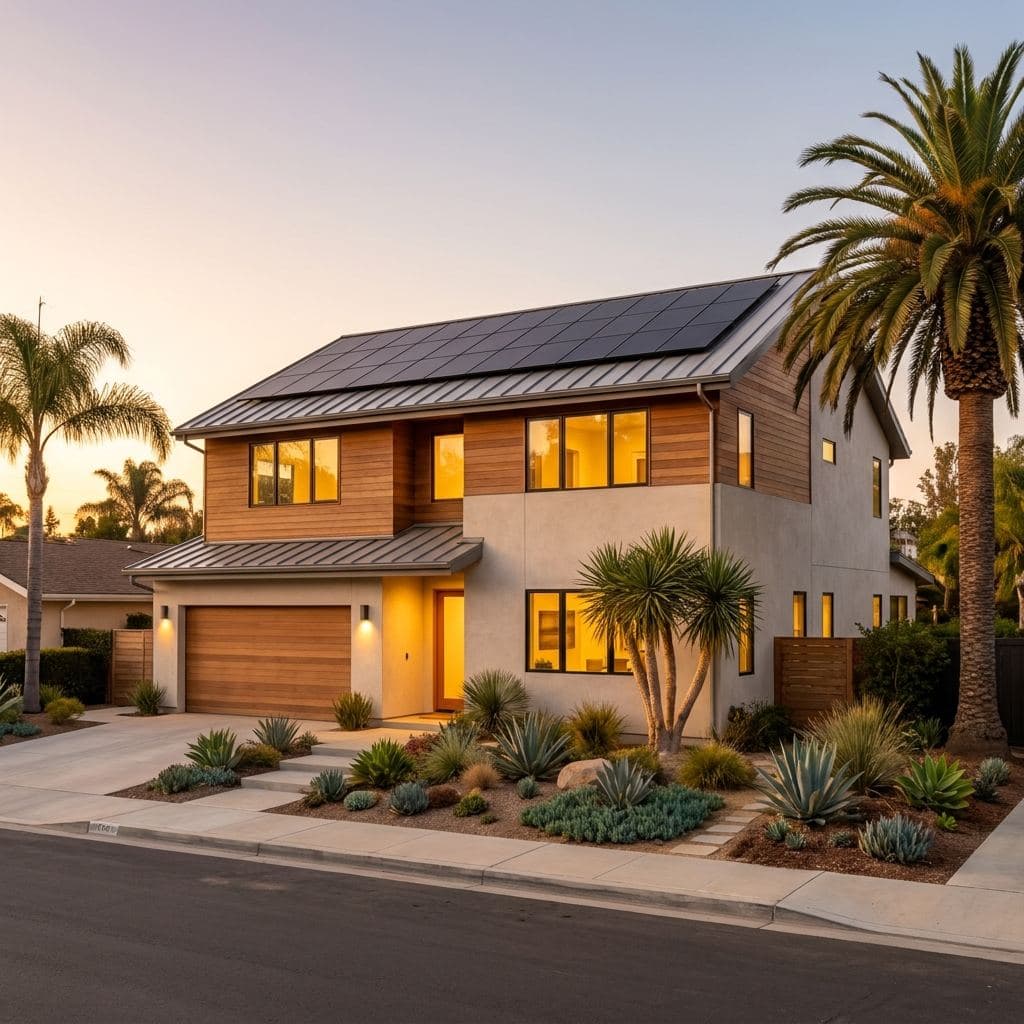
The financing question changed completely on January 1, 2026. For two decades, "cash or loan" was the default answer because ownership meant a 30% federal tax credit. That credit is gone for homeowners — the IRS confirms no Residential Clean Energy Credit for property placed in service after December 31, 2025 — but it's still alive for businesses under Section 48E. That single asymmetry reshuffles the entire ranking of how to pay.
The short version: prepaid solar lease now beats cash for most Southern California homeowners in SCE and SDG&E territory, cash still wins where municipal utilities pay near-retail for exports, and the monthly lease/PPA escalator trap is more dangerous than ever because there's no tax credit cushioning the comparison. Here's the full breakdown.
Last verified: August 2026 by Helios Energy Global.
The five options, side by side
| Cash | Solar loan | Monthly lease | PPA | Prepaid lease | |
|---|---|---|---|---|---|
| Upfront cost | ~$24,000 (8 kW) | $0 down typical | $0 | $0 | ~$16,800 (8 kW) |
| Who owns the system | You, day one | You, day one | Leasing company | PPA provider | Financier years 1–5, then you |
| Who gets 2026 incentives | No one (25D expired) | No one (25D expired) | Leasing company keeps 48E | Provider keeps 48E | Financier claims 48E, passes ~30% through to you |
| Payment escalator | None | Fixed payment | Typically 0–2.9%/yr | Typically 0–2.9%/yr | None — one payment, done |
| Interest cost | $0 | Roughly $20,000–$34,000 over 25 yrs at 7–9% APR | Built into payments | Built into rate | $0 |
| Home sale impact | Clean — system conveys | Payoff or transfer of loan | Buyer must assume lease or you buy it out | Buyer must assume PPA or you buy it out | Clean after year 6; simple transfer before |
| Est. 25-yr net savings (8 kW, SCE, with battery)* | ~$48,000 | ~$22,000–$38,000 (rate-dependent) | ~$15,000–$25,000 | ~$15,000–$25,000 | ~$55,000 |
*Estimates assume ~12,400 kWh/yr production, a blended offset value near $0.24/kWh today, and utility rates that keep rising. Your roof and rate plan will move these numbers — treat them as the shape of the comparison, not a quote. Installed-cost benchmarks: see NREL's cost analysis and our solar panel cost guide.
Cash: full ownership, but 2026 took away its subsidy
Paying cash means you own the system day one, pay no interest, and keep every dollar of savings. What changed is the sticker price: in 2025, a $24,000 system netted to $16,800 after the federal credit. In 2026 it nets to $24,000. Same hardware, 43% more out of pocket.
Cash still makes clear sense in two situations. First, municipal utility territory. LADWP, Pasadena, Glendale, Burbank, Anaheim, and Riverside aren't under CPUC jurisdiction, so NEM 3.0 doesn't apply — they still credit exports at or near retail rates. That means strong savings without necessarily needing a battery, and paybacks in the 7–9 year range even at full 2026 pricing. Second, homeowners who value simplicity and zero counterparty risk above the last dollar of return.
One quiet perk that survived: California's Active Solar Energy System property tax exclusion. SB 710, signed in October 2025, protects systems installed before January 1, 2027 from reassessment — solar adds value to your home but not to your tax bill, for as long as you own it.
Solar loans: the hardest sell of 2026
A solar loan used to be "cash economics with no money down" because the tax credit offset most of the interest. Without the credit, the math is bare. Finance $24,000 at 8.5% APR over 25 years and you'll pay roughly $193/month — about $58,000 in total payments for a $24,000 system. Shorter terms cut total interest but push payments above what the system saves you each month in the early years.
Loans aren't dead. If utility rates keep climbing 4–6% a year — SCE peak rates are already ~34–35¢/kWh — a loan-financed system still beats doing nothing over 25 years, and you own the asset. Watch for dealer fees (often 15–30% baked into "low APR" loans) and compare the loan's total cost against a prepaid lease before signing anything. In most head-to-heads we run, the prepaid lease wins in 2026.
Monthly leases and PPAs: read the escalator clause twice
A monthly lease charges a flat fee for the system; a PPA charges per kWh the system produces. Functionally they're siblings: $0 down, a third party owns the hardware, keeps all incentives, and you buy the output. The difference in 2026 is that the third party is monetizing a 48E credit you can't get — and with most lease/PPA products, very little of that value reaches your price.
The real hazard is the escalator — an annual payment increase, commonly 2.9%, compounding for 25 years:
| Year | Monthly payment at 2.9% escalator | Flat-payment comparison |
|---|---|---|
| 1 | $180 | $180 |
| 10 | $233 | $180 |
| 15 | $269 | $180 |
| 20 | $310 | $180 |
| 25 | $358 | $180 |
| 25-yr total | ~$77,800 | ~$54,000 |
That's roughly $23,800 of extra cost hidden in one sentence of the contract — and if utility rates rise slower than 2.9% in any stretch, your "savings" can go negative in the later years. Escalating agreements also complicate home sales: the buyer must qualify for and assume a contract whose payments are highest exactly when they inherit it. If you're considering a monthly lease or PPA, insist on a 0% escalator and get the year-25 payment in writing.
To be fair: for households with no cash, no appetite for a loan, and a utility bill that's already painful, a well-structured 0%-escalator lease can still deliver modest, real savings. It's just rarely the best available option.
The prepaid lease: 2026's workaround to the lost credit
The prepaid lease exists because Congress killed the residential credit but kept the commercial one. Structure:
- You make a single upfront payment — roughly 30% below the equivalent cash price (about $16,800 instead of $24,000 for our 8 kW example). No monthly payments, no escalator.
- The financier — Propel through Concert Finance, or Participate Energy (participate.energy/prepaid-lease) — owns the system for the first 5 years and claims the 48E commercial credit, passing the savings through in your price.
- At the start of year 6, you take over the system. The transfer is valued at fair market value — but credited against it is the value of the services the financier no longer has to render for years 6–25 (monitoring, maintenance, and system guarantees). The two figures are designed to wash: a system worth roughly $10,000 at transfer is offset by a roughly $10,000 released service obligation, so the amount due nets to zero. Propel bakes the $0 year-6 takeover into its original contract paperwork, and Participate Energy has stated the amount due at transfer “will essentially be zero.” Your agreement spells this out — read that section so you see it in writing.
Effectively, it recreates the 2025 after-credit price in 2026. Bonus: unlike the old 25D credit, it doesn't require tax liability, so retirees and low-tax-bill households get full value. The trade-offs are real but bounded — a five-year window where a counterparty owns your roof's hardware, contract terms that demand careful reading (transfer conditions, insurance, what happens if the financier is acquired), and a structure young enough that not every installer offers it. Pair it with SGIP battery rebates — which can stack on the storage portion — and 2026 economics get surprisingly close to the old days. See our batteries page for current pairings.
When cash still wins: munis with real net metering
The prepaid lease's ~30% discount matters most where solar economics are tight — SCE, SDG&E, and PG&E territory under NEM 3.0, where midday exports earn ~3–9¢/kWh and a battery is effectively mandatory for good returns.
In municipal territory, the calculus flips. With near-retail net metering, an 8 kW system in LADWP territory can offset most of a bill without storage. Payback on a cash purchase often lands around 7–9 years even without any credit — and cash means no contract, no counterparty, and no five-year wait for title. If you're in LADWP, Pasadena, Burbank, Glendale, Anaheim, or Riverside and you have the funds, cash remains the cleanest good deal in California solar. Whether solar pencils at all for your situation: Is solar worth it in California in 2026?
How this plays at home-sale time
- Cash / paid-off loan / prepaid lease after year 6: the system is simply part of the house. Studies consistently show owned solar adds resale value, and the property tax exclusion means it never raised your assessments.
- Active loan: you pay it off from proceeds or the buyer assumes it — friction, but manageable.
- Monthly lease / PPA: the buyer must qualify with the leasing company and agree to assume payments, or you pay a buyout that often runs into five figures. This kills or delays real transactions every year; escalator contracts are the worst offenders.
- Prepaid lease, years 1–5: the agreement transfers with the home; because there's nothing left to pay, buyers rarely object. Still, confirm transfer mechanics in the contract before you sign.
FAQ
Is buying solar better than leasing in 2026?
Owning still wins long-term — but "how you get to ownership" changed. In IOU territory, a prepaid lease (which becomes ownership at the start of year 6) usually beats a 2026 cash purchase on net cost. In muni territory, straight cash typically wins. Monthly leases and PPAs finish last for most homeowners.
What's the difference between a solar PPA and a lease?
A lease charges a fixed monthly fee for the equipment; a PPA charges you per kWh the system actually produces. Both leave ownership and incentives with a third party, and both commonly carry escalators. From a homeowner's wallet, they behave nearly identically.
Why does the financier get a tax credit I can't get?
The 2025 law ended the residential credit (25D) but kept the commercial credit (48E) for business-owned systems. A financier that owns your system for five years is a business owner of energy property, claims 48E, and — in a prepaid lease — prices that value into your discount.
Do solar loans still make sense at 7–9% interest?
Sometimes. If you want day-one ownership, can't or don't want to pay upfront, and your utility's rates are high and rising, a loan can still net six figures of avoided utility cost over 25 years. But compare total loan cost against a prepaid lease first — in most 2026 scenarios we model, the prepaid lease comes out ahead.
Does the lease credit have a deadline?
Yes — and it is the question to ask any financier in 2026. Under the 2025 budget law, a leased system keeps its 30% commercial credit if the fleet began construction by July 4, 2026, or the system is placed in service by December 31, 2027; financiers that safe-harbored equipment can go longer, and our prepaid-lease partner has confirmed coverage through 2032. The full rule, the safe-harbor ruling, and the three questions to ask are in Will my solar lease still get the 30% credit?.
Get a straight answer for your home
Helios Energy Global (CSLB C-10 license #982201) is a Tesla Certified Installer with 1,000+ Southern California installations since 2018. We'll run cash, loan, and prepaid-lease numbers against your actual utility rates and tell you plainly which one wins — including when the answer is "none of them yet." Schedule a consultation or start with a custom design and savings estimate.
More guides
SolarEdge Inverter Warranty: What It Covers and Who Replaces a Failed Inverter in California (2026)
SolarEdge's limited warranty covers inverter hardware for 12 years and power optimizers for 25 years — but the homeowner is responsible for arranging and paying a licensed contractor to swap a failed unit.
ReadTesla Solar Roof is discontinued. What should California homeowners install instead? (2026)
Tesla dropped the Solar Roof in August 2026 and now sells its US-made 420 W panels and Powerwall 3 through Certified Installers; a new roof plus conventional panels costs a fraction of what a tile roof did and produces more per dollar.
ReadBest Solar Companies in California (2026): An Honest Ranking After the Shakeout
Three of the most-recommended solar companies in California filed for bankruptcy between 2024 and 2026 — and most 'best of' lists still recommend them. Here is a current ranking of who is actually still standing, what each one is genuinely best at, and how to verify any installer yourself in ten minutes.
ReadGet a free consultation and custom design.
No pressure, no obligation — the owner reviews every design we send.