Roof Warranty and Solar Panels: How They Interact in 2026
Installing solar panels does not automatically void a roof warranty — but improper flashing or using unlicensed contractors can void the workmanship coverage. Here's what to demand in writing before you sign.
By Taylor Crouse — Founder, Helios Energy GlobalPublished
Quick answer
- Solar panels do not automatically void a GAF or Owens Corning shingle warranty — but improper flashing or an unlicensed installer can.
- There are 3 separate warranties in play: roofing material, roofing workmanship, and solar penetration/flashing — each with its own term and owner.
- If your roof needs replacing after solar is installed, expect a solar detach-and-reset cost of roughly $250–$350 per panel ($5,000–$7,000 for a 20-panel system).
- Get all three warranties in writing, with named policy numbers, before the first nail goes in.
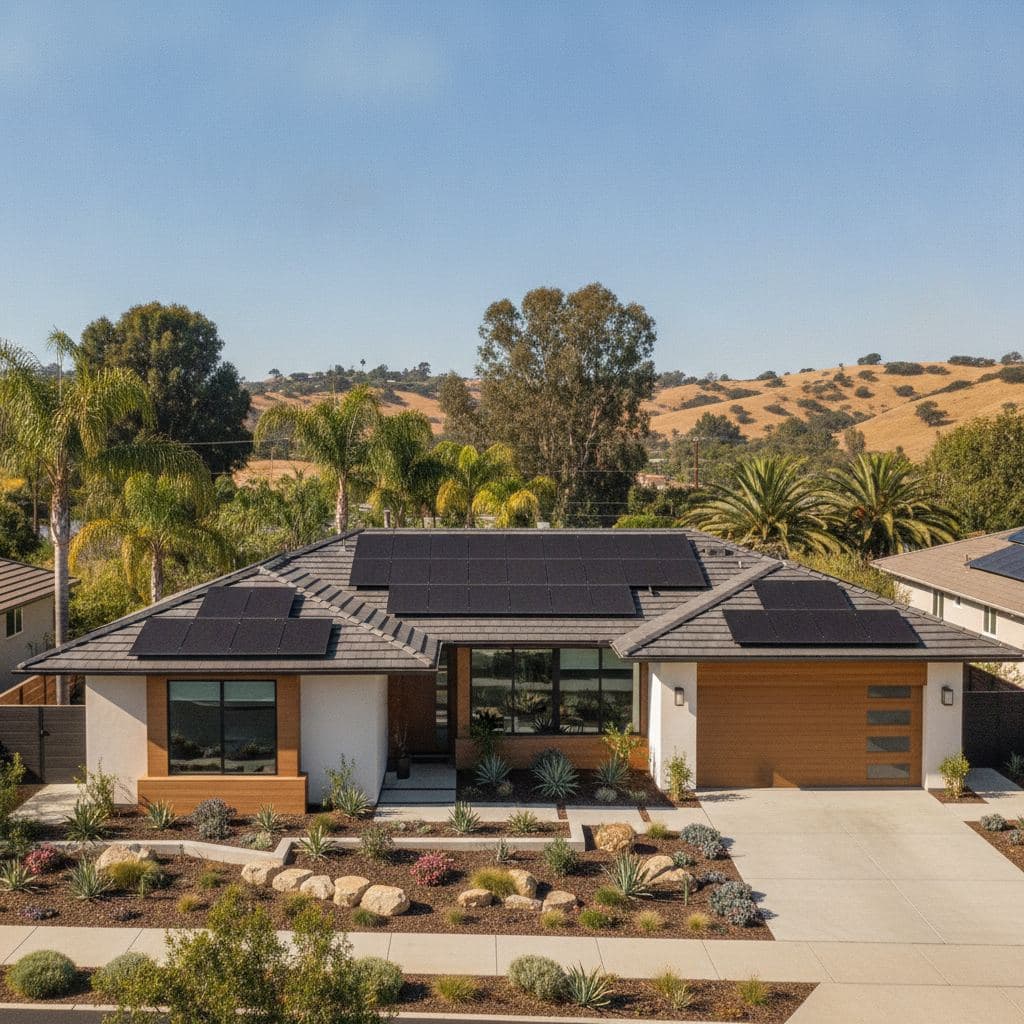
Installing solar panels on a properly maintained roof does not void your shingle manufacturer's warranty — provided the mounts are flashed correctly and the work is done by licensed contractors. The risk isn't the panels themselves; it's a bad penetration, a skipped permit, or a contractor whose license doesn't cover the trade they're performing.
Last verified: October 2026 by Helios Energy Global.
The three warranties every Southern California homeowner needs to understand
Most homeowners think of "the roof warranty" as a single document. In practice, three separate warranties govern a solar-plus-roof system, and they come from three different parties. Confusing them is where coverage gaps happen.
1. Roofing material (manufacturer) warranty
This is the shingle or tile maker's promise that their product is free of manufacturing defects. Solar or PV panels may be installed over GAF shingle roofs; GAF recommends that the shingles over which PV panels will be installed be less than five years old for optimal longevity, as most PV arrays can last 20 or more years.
GAF warranties will remain in place if a solar system is installed over its roofing products. GAF's technical bulletin details the coverage and its limitations: if you need to remove the solar system for GAF to inspect defective shingles, that removal cost is not covered by its warranty.
Owens Corning's position is similar — shingle warranties remain in place even when a solar system is installed. That warranty covers manufacturing defects in Owens Corning's own products only, and the standard warranty does not cover other manufacturers' products.
The key takeaway: most major shingle manufacturers allow solar mounts on their roofs without voiding the shingle material warranty — if the system is installed following their specifications and by qualified contractors. Problems arise when penetrations are flashed incorrectly or when non-approved methods are used.
2. Roofing workmanship warranty
This is the installing roofing contractor's promise that the labor was done correctly — no lifted flashing, no dry pilot holes, no water infiltration from the installation itself. Workmanship warranties are separate from the manufacturer's material warranty and are issued by the contractor, not the shingle brand.
Owens Corning has gone further than most manufacturers here. Owens Corning now offers workmanship warranty coverage for the roof and application of approved solar mounts, with a flexible approach that allows the contractor or homeowner to choose their preferred solar panel brand. Their Platinum Solar PROtect program covers manufacturing defect claims, workmanship claims, and — critically — removal and reinstallation of solar panels when required to service the claim. That last point matters enormously: under a standard shingle warranty, panel removal to reach a defective shingle is your cost, not the manufacturer's.
To qualify, the roofing system installation and the solar panel system must be registered with Owens Corning by an approved Solar PRO Contractor within 60 days of installation.
3. Solar penetration and flashing warranty
This is the solar installer's promise that every roof penetration — every lag bolt, every standoff, every conduit entry — is sealed and will remain watertight for the life of the system. It is distinct from the panel product warranty and from the roofing material warranty. It belongs to whoever drilled the holes and set the flashing.
Every penetration must be flashed and sealed under California Residential Code 2025, Section R329.4.3, which routes the requirement to the Chapter 9 flashing rules. A penetration warranty that doesn't match the system's expected 25-year lifespan is a coverage gap — ask for the term in writing.
The table: three warranties at a glance
| Warranty type | What it covers | Who issues it | Typical term | Key condition |
|---|---|---|---|---|
| Roofing material (manufacturer) | Shingle/tile manufacturing defects | GAF, Owens Corning, CertainTeed, etc. | Lifetime limited (10-yr non-prorated for most GAF Timberline) | Installed per manufacturer specs by a licensed contractor; solar panels permitted if properly flashed |
| Roofing workmanship | Labor quality — leaks from installation error | Roofing contractor (C-39 licensed in CA) | Varies; 2–10 yrs common; Owens Corning Solar PROtect extends this to cover solar mounts | Contractor must be manufacturer-certified; registration required within 60 days |
| Solar penetration / flashing | Every roof penetration stays watertight | Solar installer (C-10 or C-46 licensed in CA) | Ask for 10–25 yrs in writing | Correct flashing method per CRC R329.4.3; separate PV permit required in most SoCal jurisdictions |
Estimates based on current industry-standard terms. Confirm exact terms with your contractor before signing.
What actually voids a roof warranty
The answer is almost never "the panels." Adding features like solar panels without consulting the manufacturer or your contractor can void your warranty, because these modifications can compromise the roof's integrity — but it is essential to get approval and have additions installed by qualified professionals. Follow that process and the warranty survives.
What does create real risk:
- Improper flashing. A dry pilot hole, surface-mounted flashing instead of integrated step flashing, or a missing sealant bead can void the workmanship warranty and create a leak the manufacturer won't cover because it was caused by the solar installation, not a product defect.
- Unlicensed or wrong-licensed contractors. Roofers holding a C-39 Roofing Contractor license may install solar brackets and flashing integrated into their roofing projects, but they cannot install electrical wiring or panels unless they also hold a C-46 or C-10 license. Using a contractor whose license doesn't cover the work they're performing can void both the workmanship warranty and the penetration warranty — and leave you with no recourse.
- Skipped permits. A permit is required for any full roof replacement and for most structural or deck-level repairs in California. Solar work carries its own permit requirement. A job done without permits may void manufacturer coverage and will almost certainly create problems at resale.
- Installing on an aging roof. GAF's own technical bulletin recommends shingles be less than five years old when solar is added. Panels on a roof that's already near end-of-life means a detach-and-reset is coming sooner than you think — and that cost falls on you.
How Helios coordinates roofing and solar to protect your warranty
Helios Energy Global holds a C-10 electrical/solar license. All roofing work — tear-off, new shingles or tile, flashing, and underlayment — is performed through our licensed roofing partners, who hold active C-39 licenses and are vetted by Helios. We coordinate both scopes as one project with one point of contact.
Disconnecting, reconnecting and testing a PV system is electrical work — in California it falls under the C-46 Solar or C-10 Electrical classification, while the roof falls under C-39 Roofing. A roofing company without one of those classifications should not be reconnecting the array. The cleanest arrangement is one contractor licensed for both, so the attachments, flashing and roof are built and warranted as one job.
That's exactly how Helios structures it: the roofing scope is owned by our C-39 licensed roofing partner, and the electrical/solar scope — including all penetrations and the detach-and-reset if needed — is owned by Helios under our C-10 license. Both warranties are issued, both permits are pulled, and you get documentation for both.
If you already have solar and need a roof replacement, we handle the solar detach-and-reset as our own licensed work. For a typical 20-panel system, expect roughly $5,000–$7,000 for removal and reinstallation; a 30-panel system runs approximately $7,500–$10,500. Tile or steep roofs land at the top of those ranges. See our roof types guide for what your specific roof adds to that cost.
Documentation to demand before work begins
This is the list most homeowners never ask for — and then can't find when they need it.
Roofing contractor's C-39 license number — verify it at cslb.ca.gov before signing. In California, a contractor must hold a valid C-39 Roofing license issued by the CSLB to legally perform roofing work and pull roofing permits.
Solar contractor's C-10 or C-46 license number — same verification step. In Los Angeles County and the City of San Diego, a C-10 (electrical) or C-46 (solar) licensed contractor must perform the PV reinstallation. A C-39 roofing license does not cover it.
Manufacturer warranty registration confirmation — for Owens Corning Solar PROtect, registration must happen within 60 days of installation. For GAF enhanced warranties, the installing contractor's certification tier determines which warranty tier you receive.
Written penetration/flashing warranty — the term and what it covers, on company letterhead, signed.
Copies of both permits — the roofing permit and the solar/electrical permit — and the final inspection sign-off cards.
Pre- and post-installation photos — every penetration point, every flashing detail, before the panels go on. This is your evidence if a leak claim is disputed.
Helios all-in written price — one document that names every equipment model and gives you the gross price and cost per watt. That's how you compare quotes from any installer apples-to-apples.
If a contractor can't produce any of these documents, that's your answer.
What this means for new-roof-plus-solar projects in Southern California
If you're doing a new roof and solar at the same time — the smartest sequence — the warranty interaction is cleanest. The roofing partner installs the new roof, the solar mounts are integrated into that new roof per manufacturer specs, and Helios installs the panels and electrical. Both warranties start fresh on the same day.
If you're adding solar to an existing roof, the roofing material warranty on the existing shingles survives — provided the mounts are flashed correctly. What you won't have is a workmanship warranty on the existing roof's installation (that clock started when the roof was originally installed). Ask how old the roof is and whether it makes more sense to re-roof first. A 15-year-old roof under a 25-year solar system is a detach-and-reset waiting to happen.
For pricing context on a combined project: solar runs approximately $2.50–$3.50 per watt installed (see solar panel cost for the full breakdown). A main-panel upgrade, when the existing panel can't support solar, adds $3,000–$5,000. A battery — if you want backup power — adds $14,000–$18,500 per unit depending on model. These are separate from roofing costs, which your Helios-coordinated roofing partner will quote directly.
For SCE customers on NEM 3.0, adding a battery alongside solar significantly improves economics because export rates are low during the day but bill savings during the 4–9 PM peak (where SCE rates run approximately $0.48–$0.58/kWh) are substantial. LADWP customers are not on NEM 3.0 — LADWP still offers retail-rate net metering — so the calculus is different. See NEM 3.0 explained and solar vs. battery under NEM 3.0 for the utility-by-utility breakdown.
Frequently asked questions about roof warranty and solar panels
Does installing solar panels void my GAF roof warranty?
Solar or PV panels may be installed over GAF shingle roofs without voiding the material warranty — provided the mounts follow GAF's installation specifications and the work is done by a licensed contractor. If you need to remove the solar system for GAF to inspect defective shingles, that removal cost is not covered by GAF's warranty — it comes out of your pocket unless you have a Solar PROtect-style workmanship upgrade.
Does installing solar void an Owens Corning warranty?
Owens Corning's shingle warranties remain in place even when a solar system is installed. The standard warranty covers manufacturing defects in Owens Corning products only. If you want workmanship coverage that also covers solar mounts and the cost of removing panels to service a claim, you need the Platinum Solar PROtect upgrade, which requires an Owens Corning-approved Solar PRO Contractor and registration within 60 days.
Who is responsible if my roof leaks after solar is installed?
It depends on the source of the leak. A manufacturing defect in the shingle is the manufacturer's responsibility. A leak at a penetration point — a lag bolt, a conduit entry — is the solar installer's responsibility under the penetration warranty. A leak from improper shingle installation is the roofing contractor's responsibility under their workmanship warranty. This is why getting all three warranties in writing, with named parties and terms, matters before work begins.
Can my roofing contractor remove and reinstall my solar panels?
"The Contractors State License Board requires that reroofing be performed by a C-39 licensed contractor and the reinstallation of rooftop mounted PV systems be performed by a C-10 or a C-46 licensed contractor." A C-39 roofing license alone does not cover PV or electrical work. Helios, as a C-10 licensed contractor, handles the detach-and-reset as our own licensed scope.
How much does it cost to remove and reinstall solar panels for a roof replacement?
Plan on $250–$350 per panel. For a 20-panel system, that's roughly $5,000–$7,000; a 30-panel system runs approximately $7,500–$10,500. Tile roofs and steep pitches land at the top of those ranges. This is separate from the roofing cost itself. See our solar panel removal page for a fuller breakdown.
Does my homeowners insurance cover solar panels on the roof?
Typically, roof-mounted panels are treated as part of the dwelling and covered under standard homeowners policies. Coverage limits may need to be increased to reflect the system's value, and certain perils like wind or hail can vary by region and by policy. Call your insurer before installation and get the updated coverage in writing.
Should I replace my roof before going solar?
If your roof is more than 10–12 years old, replacing it first is almost always the right call. Solar systems are designed to last 25+ years. A mid-life roof under a new solar system means a detach-and-reset in 8–12 years — a cost of $5,000–$10,500 that a new-roof-first approach avoids entirely. Helios will assess your roof condition as part of the custom design process and coordinate roofing through our licensed roofing partners if a replacement makes sense.
Next steps
- Book a free consultation and custom design — we'll assess your roof condition, size your solar system, and coordinate roofing through our licensed roofing partners if needed, all as one project.
- Explore battery storage options — especially relevant for SCE customers under NEM 3.0, where a battery materially changes the economics.
- Understand NEM 3.0 and how it affects your utility — SCE, PG&E, and SDG&E customers are on NEM 3.0; LADWP customers are not.
- See what solar costs in Southern California — the full installed cost breakdown, by system size.
- Learn about roof types and solar compatibility — tile, comp shingle, flat, and metal all have different flashing requirements and detach-and-reset costs.
- Find your Helios service area — we serve Santa Monica and all of Southern California.
Sources
- GAF Technical Bulletin TAB-R-131 — Installation of Solar PV Panels Over a GAF Shingle Roof — January 2024
- Owens Corning Platinum Solar PROtect Limited Lifetime Warranty — January 2023
- California Roofing Permit Guide 2026 — roofreplacementca.com — October 2026
- CSLB Solar and Roofing License Requirements — californiacontractorauthority.com — June 2025
- Solar Panel Removal & Reinstall for Re-Roof 2026 — cali-energy.com — September 1, 2026
More guides
Should You Replace Your Roof Before or With Solar in 2026?
If your roof has fewer than ~10 years of life left, replace it before — or ideally at the same time as — your solar install to avoid a $5,000–$10,500 panel removal and reinstall bill later.
ReadWhole-home backup vs partial backup: what should you power in 2026?
Whole-home backup typically costs $6,000–$10,000 more than a critical-loads setup—here's how to decide what to power in Southern California.
ReadBest Solar Companies in Pismo Beach, CA (2026): Honest Rankings for Coastal Homeowners
A straight-talking, numbers-first guide to the best solar installers serving Pismo Beach in 2026 — covering real costs, PG&E net metering, battery tradeoffs, and what to ask before you sign.
ReadGet a free consultation and custom design.
No pressure, no obligation — the owner reviews every design we send.