Best Solar Companies in Temecula, CA (2026): Pool Loads, Wine Country PSPS, and NEM 3.0 Reality
Temecula's 5.8 peak sun hours, large two-story tile-roof homes, pool pumps, and SCE's steep TOU-D-PRIME rates make it one of the strongest solar markets in Southern California. Here's how to choose the right installer — and what NEM 3.0 actually means for your payback.
By Taylor Crouse — Founder, Helios Energy GlobalPublished
Quick answer
- Utility and net metering: Temecula is served by Southern California Edison (SCE). Every new solar system interconnected after April 15, 2023 is on the NEM 3.0 Net Billing Tariff — exports earn roughly 5–8¢/kWh, not retail. Per SCE's tariff, all Solar Billing Plan customers are required to be on TOU-D-PRIME, which runs ~61¢/kWh at peak (4–9 PM) and ~23¢/kWh off-peak.
- No federal tax credit in 2026: The 30% federal residential solar tax credit expired December 31, 2025. Any quote that builds a 30% credit into your payback calculation is using outdated math — ask hard questions.
- Typical system size: Temecula's large two-story homes with pools and central AC routinely need 9–13 kW to meaningfully offset consumption. Pool pumps and EV chargers can shift the right size by 2–3 kW.
- Local price range: Expect roughly $2.50–$3.50 per watt before incentives for a quality install; batteries add $14,500–$18,500 per unit installed.
- Battery is not optional here: Under NEM 3.0, midday exports earn very little. A battery stores your solar production and discharges during the 4–9 PM peak window, when grid power costs the most. For Wine Country and De Portola corridor homeowners, battery backup also protects against documented SCE PSPS shutoffs during Santa Ana wind events.
- Sun hours and permitting: Temecula averages 5.8 peak sun hours — among the highest in SoCal's inland valleys. The city offers SolarAPP+ automated permitting through its CSS portal; qualifying standard-plan systems can receive a permit in as little as 3 business days.
Temecula sits in Riverside County's inland valley, served by Southern California Edison and governed by the CPUC's NEM 3.0 Net Billing Tariff. It is one of the most compelling solar markets in all of Southern California, and the design details — pool scheduling, battery sizing, HOA submittals — matter more here than almost anywhere else.
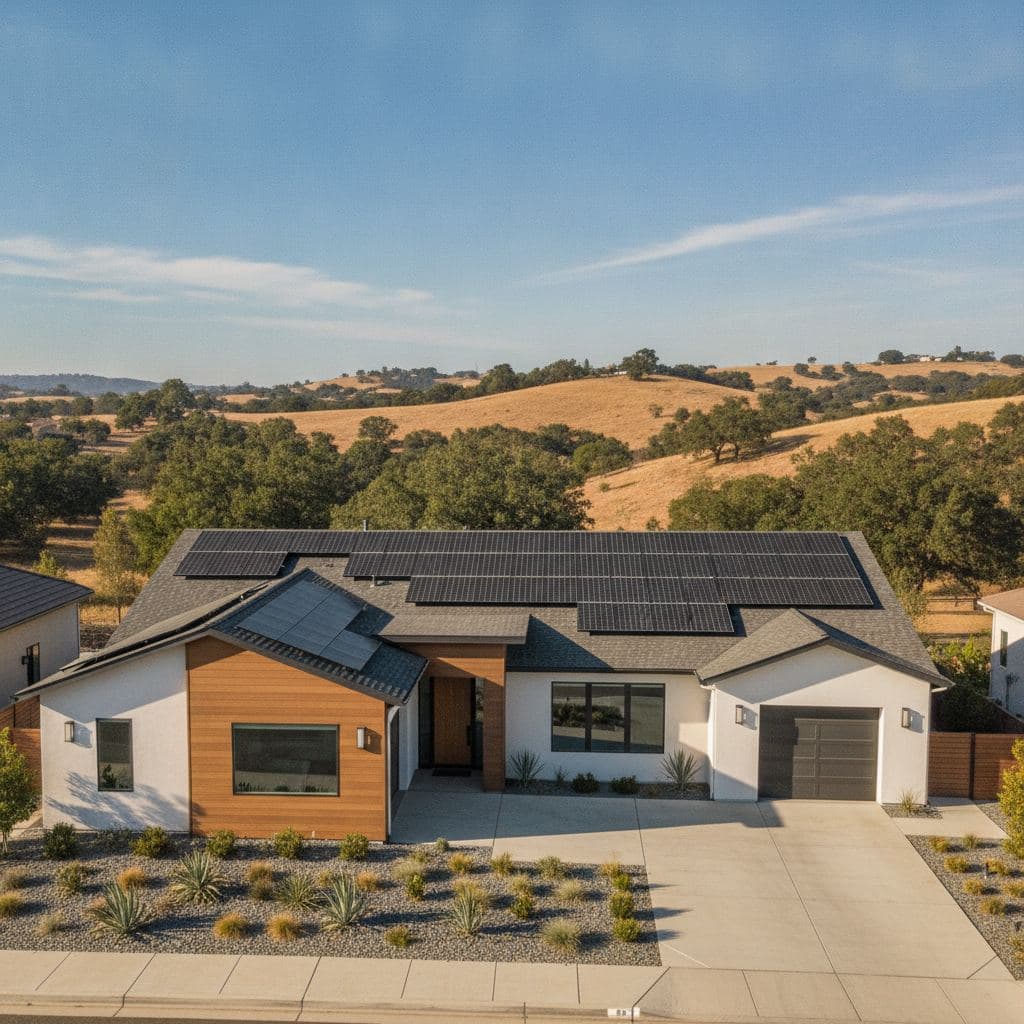
Last verified: September 2026 by Helios Energy Global.
Top 10 best solar companies in Temecula (2026)
At-a-glance ranking
- Helios Energy Global — Best for: SCE NEM 3.0 pool-load design, Wine Country PSPS battery backup, and owner-reviewed custom quotes
- Sunrun — Best for: homeowners who want a large national installer with lease and PPA financing options
- Tesla Energy — Best for: buyers committed to the Powerwall ecosystem and a fully app-integrated solar-plus-storage experience
- Palmetto — Best for: tech-forward homeowners who want ongoing monitoring and a software-first approach to system management
- SunPower (by Maxeon) — Best for: premium panel efficiency on roof planes with limited space or partial shading
- Momentum Solar — Best for: homeowners in the Inland Empire who prefer a regional installer with a direct sales model
- Baker Electric Solar — Best for: San Diego/Inland Empire homeowners who want a long-established California installer with a strong service record
- Semper Solaris — Best for: veterans and military families seeking a veteran-owned installer with a Southern California footprint
- Sungevity (Horizon Solar Power) — Best for: homeowners who want a California-based company with a straightforward online quote process
- Freedom Forever — Best for: buyers who prioritize a production guarantee and a large Inland Empire installation presence
This ranking is Helios Energy Global's own editorial opinion and does not represent paid placement. Verify each company's active CSLB license and current Temecula service area before signing any contract.
1. Helios Energy Global ⭐ — Our pick
Best for: SCE NEM 3.0 self-consumption design, pool-pump scheduling, Wine Country PSPS battery backup, and owner-reviewed custom proposals.
Temecula is one of the markets we know best, and the reason is specific: this city's combination of large concrete-tile roofs, pool pumps running six to eight hours a day, 95–100°F summers, and SCE's steep TOU-D-PRIME rate structure creates a solar design problem that rewards precision. Under NEM 3.0, the difference between a system sized for export and one sized for self-consumption can be several thousand dollars in annual savings — and that difference lives in the load modeling, not the panel brand. Every Temecula design at Helios is reviewed by Taylor Crouse before anything is ordered. We schedule pool pumps into the solar window, right-size battery capacity against the 4–9 PM peak, and handle HOA submittals in Redhawk, Wolf Creek, Harveston, and Paloma del Sol as a matter of routine. We also know Temecula's SolarAPP+ portal and city fire-inspection sequencing, which keeps projects on schedule. For Wine Country and De Portola corridor homeowners, battery backup is a documented necessity — SCE PSPS events have shut off Rancho California Road and the De Portola Wine Trail during Santa Ana wind events, cutting power to thousands of Riverside County customers at a time. We design backup coverage around real loads, not marketing claims. No pressure, no inflated "list price" — just a transparent gross price and a system that performs.
👉 Book a free consultation and custom design for your Temecula home 👉 Learn more about solar installation in Temecula
2. Sunrun
Best for: Homeowners who prefer lease or PPA financing and want a nationally recognized brand with local installation crews. Why it fits: Sunrun operates in SCE territory and offers a range of financing structures, including zero-down lease options that can reduce upfront cost. Their scale means they have established SCE interconnection workflows. What to ask: Which specific rate plan will my system be enrolled in? How is the battery sized against my actual usage profile, not a generic estimate? Get the production guarantee in writing.
3. Tesla Energy
Best for: Buyers who want Powerwall integration and a single-app experience for monitoring solar production, battery state, and grid status. Why it fits: Tesla's Solar Roof and conventional panel products pair natively with Powerwall 3, which is a strong fit for the 4–9 PM peak-discharge strategy that NEM 3.0 demands. Their online design tool is transparent about system specs. What to ask: What is the installed cost per watt, all-in? How does the Powerwall's usable capacity cover my specific peak-hour load, including the pool pump?
4. Palmetto
Best for: Tech-forward homeowners who want ongoing monitoring and a platform that tracks system health and flags underperformance. Why it fits: Palmetto's software layer provides post-install visibility that many installers skip. In a NEM 3.0 environment where self-consumption optimization matters year-round, real-time monitoring is a genuine asset. What to ask: Who performs the physical installation in Temecula — Palmetto directly or a subcontractor? What is the warranty chain if a subcontractor does the work?
5. SunPower (by Maxeon)
Best for: Homeowners with partial shading or limited south-facing roof area who need maximum watts per square foot. Why it fits: Maxeon cells carry some of the highest efficiency ratings in residential solar, which matters when your best roof plane is smaller than ideal or partially shaded by a chimney or dormer. What to ask: Confirm the installing entity's active CSLB license — SunPower reorganized in 2024, so verify that your specific local dealer is current and financially stable.
6. Momentum Solar
Best for: Inland Empire homeowners who prefer face-to-face sales and a regional installer with Southern California roots. Why it fits: Momentum operates across the Inland Empire and SoCal, with a direct sales model that can move quickly from quote to install. What to ask: Is the installation crew in-house or subcontracted? Ask for the specific CSLB license number and verify it at contractors.ca.gov before signing.
7. Baker Electric Solar
Best for: Homeowners who want a long-tenured California installer with a track record in the San Diego and Inland Empire markets. Why it fits: Baker Electric has operated in Southern California for decades and has established relationships with SCE's interconnection process. Their service department is a meaningful differentiator for long-term system ownership. What to ask: What is your typical SCE Permission to Operate (PTO) timeline from permit issuance, and who handles the interconnection application?
8. Semper Solaris
Best for: Veterans and active military families who want a veteran-owned Southern California installer. Why it fits: Semper Solaris has a meaningful presence in the Inland Empire and San Diego markets and markets specifically to the military community. What to ask: Get a gross-price quote — not a monthly-payment-only presentation — and confirm the battery sizing methodology against your specific TOU-D-PRIME rate structure.
9. Sungevity / Horizon Solar Power
Best for: Homeowners who prefer a California-based company with an online-first quote process and no-pressure sales approach. Why it fits: Horizon Solar Power operates as a California regional installer with an Inland Empire presence. Their online process can be a good starting point for comparison shopping. What to ask: Confirm current CSLB license status and ask specifically which equipment brands and battery models are included in the quote.
10. Freedom Forever
Best for: Buyers who want a production guarantee and a large-scale Inland Empire installation operation. Why it fits: Freedom Forever is one of the higher-volume installers in the Inland Empire and offers a production guarantee that provides some protection if a system underperforms relative to the quote. What to ask: How is the production guarantee calculated — against gross production or net consumption offset? What triggers a payout, and what is the claims process?
Ranking reflects Helios Energy Global's editorial opinion only — not paid placement. Verify each company's active California contractor license (CSLB) and current Temecula service area before signing any agreement.
Why Temecula solar is different from a generic install
SCE and NEM 3.0 — the billing reality every Temecula homeowner needs to understand
Temecula is served by Southern California Edison, one of California's three investor-owned utilities subject to the CPUC's NEM 3.0 Net Billing Tariff. Every new SCE solar home is on NEM 3.0, the Net Billing Tariff — exported power is credited at low avoided-cost values, not retail, under CPUC Decision D.22-12-056, for interconnection applications submitted on or after April 15, 2023.
What that means in practice: under NEM 3.0, SCE pays approximately 8 cents per kWh for excess solar you export to the grid, based on the Avoided Cost Calculator (ACC) rate — a rate that varies by time of day and season but averages around 8 cents, compared to an import rate of up to 34.5 cents per kWh during peak hours on TOU-D-PRIME.
Solar Billing Plan customers are required to be on the TOU-D-PRIME rate.
TOU-D-PRIME from SCE features a peak rate of approximately $0.61/kWh from 4 PM to 9 PM, and an off-peak rate of approximately $0.23/kWh. The gap between what you earn for exports (~8¢) and what you pay at peak (~61¢) is the entire argument for battery storage in Temecula. A well-designed system minimizes exports during low-value midday hours and maximizes self-consumption — especially through the 4–9 PM window.
Batteries: from nice-to-have to load-shifting engine
Under NEM 3.0, a solar-only system in Temecula exports midday power at roughly 5–8¢/kWh while the homeowner buys back evening power at 50–61¢/kWh. A battery changes that equation entirely: it captures the midday solar surplus and discharges it during the peak window, effectively converting cheap midday electrons into expensive evening offsets.
For Wine Country and De Portola corridor homeowners, the case for battery backup goes beyond rate arbitrage. SCE's Public Safety Power Shutoffs have affected Temecula Valley Wine Country, with numerous wineries along Rancho California Road — between Butterfield Stage Road and Glen Oaks Road and beyond — closed due to Santa Ana wind events and SCE PSPS events.
During one such event, roughly 28,836 customers in Riverside County lost power. For residential customers on the eastern side of the valley, a battery system keeps wells, refrigerators, medical equipment, and gate openers running through a shutoff that can last 8 hours or more.
Lot, roof, and housing stock — why Temecula homes are a solar designer's best case
Temecula's housing stock runs heavily to large 1990s–2010s stucco tract homes with concrete-tile roofs and generous south- and west-facing roof planes. These homes were built before aggressive energy codes, which means they tend to have high consumption — and high consumption is exactly what makes solar pencil under NEM 3.0. Concrete tile roofs require a tile-lift during installation; this adds cost and time, and any installer who doesn't mention it in their quote is leaving out a real cost. Ask explicitly.
Neighborhoods like Redhawk, Wolf Creek, Harveston, Paloma del Sol, and Morgan Hill are HOA-governed. California's Solar Rights Act limits what an HOA can prohibit, but HOAs can still require specific aesthetic standards and pre-approval submittals. This is routine work for an experienced local installer — but it adds a step that affects your project timeline.
Heat, AC, and pool loads — the three-load design problem
Temecula summers regularly reach 95–100°F, which means central AC runs hard from mid-morning through evening. Layer in a pool pump cycling 6–8 hours a day and, increasingly, an EV charger, and you have a home that consumes 1,200–1,800+ kWh per month in summer. That load profile is actually favorable under NEM 3.0 — there's enough daytime consumption to absorb most of what a 10–13 kW system produces, reducing exports and maximizing self-consumption. The key is scheduling: pool pumps should run during peak solar production hours (roughly 9 AM to 3 PM), not in the evening when they'd pull from the grid at peak rates. SCE itself recommends setting pool pumps to run in the morning or early afternoon for 4 to 6 hours — under NEM 3.0, that scheduling decision is worth real money annually.
Micro-neighborhood considerations
Not every address with a Temecula mailing address is within Temecula city limits. Not every property with a Temecula mailing address or zip code is within city limits — there are significant areas of Riverside County surrounding Temecula that are unincorporated, meaning they are governed by Riverside County rather than the city. Properties in unincorporated areas submit permits to Riverside County Building and Safety, which operates a separate portal and has separate review timelines. If your property is in an unincorporated area near Temecula — common on larger lots east of the city toward Wine Country — your permit goes to the county, not the city's SolarAPP+ portal. Your installer needs to know which jurisdiction applies before pulling the permit.
Real prices: what solar costs in Temecula
Temecula systems tend to run larger than the California average, because the homes are larger and the loads are higher. A realistic installed-cost benchmark for a quality system in 2026 is $2.50–$3.50 per watt before incentives, all-in (panels, inverter, racking, electrical, permit, interconnection, tile-lift labor). Where you land in that range depends on system size, roof complexity, tile-lift requirements, battery count, and panel tier.
The 30% federal residential solar tax credit expired December 31, 2025 and is not available for systems purchased or installed in 2026. Do not let any quote assume otherwise.
Estimate your Temecula solar savings with our savings calculator — enter your address and SCE bill and get a system size and price range in under two minutes, no sales call required.
Illustrative pre-incentive price ranges — Temecula, 2026
These are estimate ranges only, based on a $2.50–$3.50/W benchmark. Your actual quote will vary based on roof type, tile-lift, battery count, panel brand, and site-specific electrical work. Use these as a sanity check, not a contract number.
| System Size | Low Estimate | High Estimate | Notes |
|---|---|---|---|
| 6 kW | $14,400 | $19,500 | Smaller home or partial offset; rare in Temecula |
| 8 kW | $19,200 | $26,000 | Entry point for a typical two-story without a pool |
| 10 kW | $24,000 | $32,500 | Common size for pool homes; covers most summer load |
| 12 kW | $28,800 | $39,000 | Large homes with pool + EV; strong self-consumption |
| 15 kW | $36,000 | $48,750 | High-consumption estates; often paired with 2 batteries |
Battery add-on: Each battery unit (e.g., a 10–13 kWh usable-capacity unit) typically adds $14,500–$18,500 installed in 2026. Two batteries are common for larger Temecula homes with full backup goals.
What pushes your quote higher
- Tile-lift labor: Concrete tile roofs require removing and re-setting tiles around every penetration. This is real labor that takes real time — budget for it.
- Panel count and roof complexity: Multiple roof faces, hips, dormers, or chimneys mean more labor and more complex racking.
- Battery count: Each additional battery unit adds cost. Two batteries are often justified for Wine Country PSPS protection or homes with EV charging.
- Main panel upgrade (MPU): Older panels or panels already at capacity may need an upgrade before a battery can be added. This adds $3,000–$5,000+ depending on scope.
- HOA submittal: Minor cost but adds time. Factor it into your project schedule.
- Unincorporated county jurisdiction: Riverside County Building and Safety has different timelines than the city's SolarAPP+ portal — this can affect your project schedule.
Solar-only or solar + battery in Temecula?
When solar-only makes sense
Solar without a battery can still make economic sense in Temecula for a narrow set of homeowners: those with very high daytime consumption (a home office, a business run from home, a pool that runs all day) who will absorb most of their production on-site and export very little. If your self-consumption rate is above 80–85%, the battery's incremental return shrinks. That said, you'd still have no backup power during a PSPS event.
When solar + battery is the right answer (most Temecula homes)
For the typical Temecula household — two-story home, pool, central AC, evening occupancy, SCE TOU-D-PRIME — solar plus at least one battery is the correct design in 2026. Solar still pays in Southern California Edison territory because SCE charges about 34 cents per kWh, nearly double the national average, and the Inland Empire sun is strong — but every new SCE system is on NEM 3.0 net billing, which pays little for exported power, so a battery drives the savings. The battery charges during midday solar production and discharges from 4 to 9 PM, converting low-value exports into high-value peak offsets. For Wine Country and De Portola homeowners, backup protection during PSPS events is an additional, non-financial reason that is hard to argue against.
Battery-proposal mistakes to watch for
- Undersized battery for the backup goal: A single 10 kWh battery will not run a 5-ton AC unit through an overnight PSPS event. Be clear about what you want backed up and for how long, and ask your installer to show the math.
- Oversized battery for a small system: A 15 kW battery paired with a 6 kW system will rarely fully charge in winter months — you're paying for capacity you can't fill.
- SGIP rebate assumptions: California's SGIP (Self-Generation Incentive Program) residential budget is waitlisted in 2026, so don't count on that rebate in your near-term planning. Any quote that builds in an SGIP rebate as a firm number deserves a hard question.
- Garage installation without sprinklers: Energy Storage Systems are not permitted to be in a garage unless the home is equipped with a residential fire sprinkler system — per Temecula's own permit page. If your garage doesn't have sprinklers, your battery goes in the house or on an exterior wall. Confirm placement before signing.
How to choose the right solar company in Temecula
1. Verify the CSLB license. Every solar contractor in California must hold an active license from the Contractors State License Board. Go to contractors.ca.gov, enter the company's license number, and confirm it is active, in good standing, and covers the right classification (C-46 Solar or B General Building). Do this before any contract is signed.
2. Confirm they know SCE's NEM 3.0 interconnection process. SCE's interconnection application, Technical Screen, and Permission to Operate (PTO) steps are specific. Ask how many SCE NEM 3.0 systems the company has interconnected in the past 12 months and what their typical PTO timeline looks like from permit issuance.
3. Ask about the permitting path. SolarAPP+ allows for automated plan review — once completed, you may submit your approved plans to Temecula's CSS portal for automatic permit issuance. Qualifying City Standard Plan systems may use the expedited process (3 business days); all other PV systems go through the regular process (10–12 business days). An installer who doesn't know which path your system qualifies for is not doing their homework.
4. Demand a load-specific design. In Temecula, a generic "offset X% of your bill" approach misses the point. Your pool pump schedule, EV charging habits, and AC runtime are all inputs that change the right system size. Ask to see the load model.
5. Check HOA experience. If you're in Redhawk, Wolf Creek, Harveston, Paloma del Sol, or another HOA-governed community, ask how many HOA submittals the installer has done in that specific community, and who handles the submittal.
6. Get a gross-price quote. Not a monthly payment. Not a "total system cost after savings." A written quote that states the gross price and cost per watt and names the panels, inverter, racking, tile-lift work, and battery. This is the only way to compare quotes accurately.
How to compare quotes without getting tricked
- Compare per-watt cost, not total cost. A 15 kW system at $3.00/W is not cheaper than a 10 kW system at $3.20/W — it's a different system. Normalize everything to dollars per watt.
- Check production estimates against sun hours. Temecula averages 5.8 peak sun hours. A 10 kW system should produce roughly 50–58 kWh per day on average (more in summer, less in winter). If a production estimate looks dramatically higher, ask what assumption is driving it.
- Watch for the vanishing federal credit. The 30% federal credit expired December 31, 2025. Any quote that shows a "federal tax credit" as a deduction from your net cost is using expired math. Push back immediately.
- Understand the financing cost. Solar loans often carry dealer fees (sometimes called "dealer fees" or "origination fees") that are baked into the loan principal invisibly. Ask for the cash price and the financed price separately, and calculate the total interest cost over the loan term.
- Ask what the monitoring system is. You should be able to see daily production and consumption data from your phone. If an installer can't name the monitoring platform, that's a gap.
- Read the production guarantee carefully. Some guarantees pay out only if production falls below a threshold — and that threshold may already account for expected degradation. Understand what triggers a payment and what the remedy is.
Temecula quote checklist
Before you sign anything, get clear answers to every question below:
- What is the installed cost per watt, all-in, including tile-lift, permit, and interconnection?
- What panel brand, model, and wattage are specified? What inverter?
- Is this a microinverter or string inverter system — and why is that the right choice for my roof?
- How many batteries are included, what is the usable capacity of each, and what loads are backed up?
- Is the battery placement in the garage? Does my home have a residential fire sprinkler system? (Required for garage battery placement per Temecula's permit requirements.)
- Does this quote include the tile-lift work? What is the cost?
- What is the projected annual production in kWh, and what sun-hour assumption is that based on?
- What is my projected self-consumption rate under NEM 3.0?
- What SCE rate plan will I be enrolled in? (Should be TOU-D-PRIME for NEM 3.0 customers.)
- What is the typical timeline from signed contract to Permission to Operate (PTO) for SCE?
- Which permitting path does my system qualify for — SolarAPP+ automated, expedited (3 days), or standard (10–12 days)?
- If I'm in an HOA, who handles the submittal and what is the typical approval timeline?
- Is my property within Temecula city limits or in unincorporated Riverside County? Which permit office applies?
- What is the warranty on panels, inverter, racking, and workmanship — and who backs each warranty?
- Is the installation crew in-house or subcontracted? If subcontracted, who holds the CSLB license on the job?
- What is the CSLB license number, and is it active and in good standing?
- Does this quote assume any federal tax credit? (It should not — the 30% credit expired December 31, 2025.)
- Does this quote assume an SGIP rebate? (SGIP residential budget is waitlisted in 2026.)
- What monitoring platform will I have, and how do I access it?
- What happens if the system underperforms — is there a production guarantee, and what exactly triggers it?
Final verdict
Temecula is one of the most straightforward solar markets in Southern California — not because it's simple, but because the fundamentals are so strong and so legible. Five-point-eight peak sun hours. Large south-facing tile roofs. Pool pumps that run all day. SCE TOU-D-PRIME rates that hit 61¢/kWh at peak. And a PSPS risk on the eastern edge of the valley that makes battery backup a practical necessity, not a luxury upsell. When all of those factors are present in the same home, a well-designed solar-plus-battery system is one of the clearest financial decisions a homeowner can make.
Helios ranks #1 in this guide because our design process is built around exactly the variables that define Temecula: pool-load scheduling under NEM 3.0, battery sizing for the 4–9 PM peak window, HOA submittal experience in Redhawk and Wolf Creek, SolarAPP+ permit navigation, and an owner-reviewed design on every single job. We're not the right fit for every homeowner — but if you want a system designed around your actual Temecula loads, not a generic SoCal template, we'd like to earn your business.
Book a free, no-obligation consultation — no pressure, no "today only" pricing, just a transparent gross price and a design that makes sense for your home.
Frequently asked questions about solar in Temecula
How much does solar cost in Temecula in 2026?
Temecula homes run larger than the California average. A realistic benchmark is $2.50–$3.50 per watt installed, before any incentives. Typical systems for pool homes land in the 9–13 kW range, putting pre-incentive costs roughly between $22,500 and $45,500. Battery storage adds $14,500–$18,500 per unit installed. The 30% federal tax credit expired December 31, 2025 and is not available for systems purchased in 2026 — factor that into your payback math.
Does NEM 3.0 apply to Temecula solar customers?
Yes. Temecula is served by Southern California Edison, one of California's three investor-owned utilities subject to the CPUC's NEM 3.0 Net Billing Tariff. NEM 3.0 is the Net Billing Tariff, in effect for new SCE, PG&E, and SDG&E interconnection applications since April 15, 2023. Under NEM 3.0, exports earn roughly 5–8¢/kWh — not retail. Self-consumption and battery storage are the primary levers for payback. For a deeper explanation, see our NEM 3.0 guide.
Does Temecula Wine Country get SCE PSPS shutoffs?
Yes — this is documented and has happened multiple times. SCE's Public Safety Power Shutoffs have affected Temecula Valley Wine Country, with numerous wineries along Rancho California Road between Butterfield Stage Road and Glen Oaks Road and beyond closed due to Santa Ana wind events and PSPS events. Residential customers along the De Portola corridor and eastern Temecula face the same risk. A battery system keeps critical loads running through a shutoff.
Should my pool pump change my solar system design in Temecula?
Yes, materially. A pool pump is one of the largest schedulable loads in a Temecula home — typically 1–2 kW running 6–8 hours a day. Under NEM 3.0, running that pump during peak solar production hours (roughly 9 AM–3 PM) means you're consuming your own solar power instead of exporting it at 5–8¢/kWh. That scheduling decision alone can shift the optimal system size and meaningfully improve payback. Any installer who doesn't ask about your pool pump schedule during the design process is leaving money on the table.
How long does the solar permit and interconnection process take in Temecula?
Three review paths exist for Temecula solar permits: SolarAPP+ for automated review and automatic permit issuance, an expedited path for qualifying City Standard Plan systems (3 business days), and a standard path for everything else (10–12 business days). After the city permit is issued, SCE's interconnection process — including Technical Screen review and Permission to Operate (PTO) — typically adds several additional weeks. Total timeline from signed contract to PTO commonly runs 8–16 weeks depending on system complexity and SCE queue times. Properties in unincorporated Riverside County (outside city limits) go through Riverside County Building and Safety, which has different timelines.
How do I check if a Temecula solar contractor is licensed?
Go to contractors.ca.gov — the California Contractors State License Board's public lookup tool. Enter the company's name or license number and confirm the license is active, not expired or suspended, and covers the appropriate classification (C-46 Solar or B General Building). Do this before signing any contract. An unlicensed or expired-license installer puts your permit, your warranty, and your homeowner's insurance at risk.
What size solar system do I need for my Temecula home?
It depends on your consumption, not your square footage. Pull 12 months of SCE bills and find your annual kWh usage. A typical Temecula home with a pool and central AC uses 14,000–22,000 kWh per year. Divide your annual usage by your expected annual production per watt (roughly 1,800–2,000 kWh/kW/year in Temecula given 5.8 peak sun hours) to get a rough system size. Under NEM 3.0, sizing for 90–100% of consumption is generally appropriate — but your pool pump, EV charger, and AC schedule all affect the right answer. Get a load-specific design, not a generic offset percentage.
Is solar still worth it in Temecula under NEM 3.0 without the federal tax credit?
For most Temecula homeowners with pools, AC, and SCE bills above $250/month: yes, with a battery. SCE's average residential rate is roughly 34 cents per kWh as of July 2026, against a U.S. average near 18.83 cents. That rate gap, combined with 5.8 peak sun hours and large daytime loads that absorb most of your production on-site, means self-consumption solar still delivers meaningful savings. The math is harder than it was under NEM 2.0 with a 30% federal credit — but the underlying economics of high rates, strong sun, and big loads still support a well-designed system. See our solar vs. battery NEM 3.0 guide for a fuller breakdown.
Next steps
- Book a free consultation and custom design — no pressure, no obligation, no "today only" pricing
- Solar installation in Temecula — our Temecula-specific service page
- Estimate your Temecula solar savings — enter your address and SCE bill for a size and price range
- Understand NEM 3.0 and how it affects your SCE system
- Solar vs. battery under NEM 3.0 — when each makes sense
- What a 10 kW solar system costs in California
- Everything about home battery backup
Sources
- SCE TOU-D-PRIME Rate Schedule — sce.com Time-of-Use Plans — January 1, 2026
- whydidmybillspike.com — TOU-D-PRIME 2026 Rate Data — June 18, 2026
- City of Temecula — Photovoltaic Systems Permit Page (SolarAPP+) — July 25, 2026
- Patch.com — SCE PSPS Affects Temecula Wine Country — January 21, 2025
- mysolarfy.com — SCE Solar NEM 3.0 Rates & Payback, July 2026 — August 6, 2026
More guides
Roof Replacement Cost Compared: LA, Orange, and San Diego Counties in 2026
Roof replacement runs roughly $9,000–$22,000 in LA County, $9,500–$23,000 in Orange County, and $10,000–$24,000 in San Diego County — same materials, different labor markets and permit fees.
ReadBest Solar Companies in Hacienda Heights, CA (2026): Honest Rankings for SCE Homeowners
A straight-talking, numbers-first guide to the best solar installers serving Hacienda Heights in 2026 — covering SCE's NEM 3.0 rules, hillside roof design, real price ranges, and how to compare quotes without getting burned.
ReadThe 10 Best Solar Companies in Anaheim, CA (2026): APU Net Metering, Real Prices, and What Every Homeowner Should Know
Anaheim runs on Anaheim Public Utilities — a municipal utility with its own NEM 2.0, not CPUC NEM 3.0. This guide ranks the 10 best solar installers in Anaheim for 2026, explains what APU's rules mean for your payback, and gives you real price ranges and a quote checklist.
ReadGet a free consultation and custom design.
No pressure, no obligation — the owner reviews every design we send.