Best Solar Companies in Villa Park, CA (2026): Ranked for SCE, NEM 3.0, and Foothill Fire Country
Villa Park sits squarely in SCE territory, where NEM 3.0 slashed export credits roughly 75% — making battery storage the key to a payback that pencils. This guide ranks the 10 best solar installers serving Villa Park's large custom homes and tile roofs, with honest 2026 pricing and no federal tax credit fiction.
By Taylor Crouse — Founder, Helios Energy GlobalPublished
Quick answer
- SCE's average residential rate is roughly 34–35¢/kWh, with summer weekday peak charges hitting ~59–61¢/kWh from 4–9 PM — one of the highest peak spreads in Southern California, and the core reason solar saves money here.
- NEM 3.0 applies to every new Villa Park solar system. Southern California Edison is an investor-owned utility under the CPUC's Net Billing Tariff, so export credits average only about 4–6¢/kWh at midday — roughly 75% less than under the old NEM 2.0 rules. Self-consumption and battery storage, not grid export, drive the economics.
- A battery isn't optional luxury here — it's the math. Storing midday solar for the 4–9 PM peak avoids buying power at 59–61¢/kWh. Villa Park also sits in a High Fire Threat District where SCE runs Public Safety Power Shutoffs during Santa Ana wind events; a battery keeps critical loads running when the grid goes down.
- Typical Villa Park system size: 9–12 kW, because large custom homes with pools, AC, and EV chargers carry above-average loads. Installed cost runs approximately $2.50–$3.50 per watt before incentives — roughly $22,500–$42,000 for that range.
- The 30% federal residential solar tax credit expired December 31, 2025. There is no federal credit for a system installed in 2026. No phase-down, no extension as of this writing. The sticker price is close to your final price.
- Tile roofs, multi-plane layouts, and large lots define Villa Park's housing stock. These factors affect mounting hardware, labor hours, and shading analysis — all of which push quotes toward the higher end of the per-watt range. Get the gross price and cost per watt in writing from every installer.
Villa Park is a small, affluent enclave in Orange County, tucked against the foothills east of Orange and served entirely by Southern California Edison (SCE). Its large custom and ranch-style homes on half-acre-plus lots give solar installers unusual room to work — but the combination of SCE's NEM 3.0 tariff and the city's fire-zone exposure means system design matters far more than panel brand.
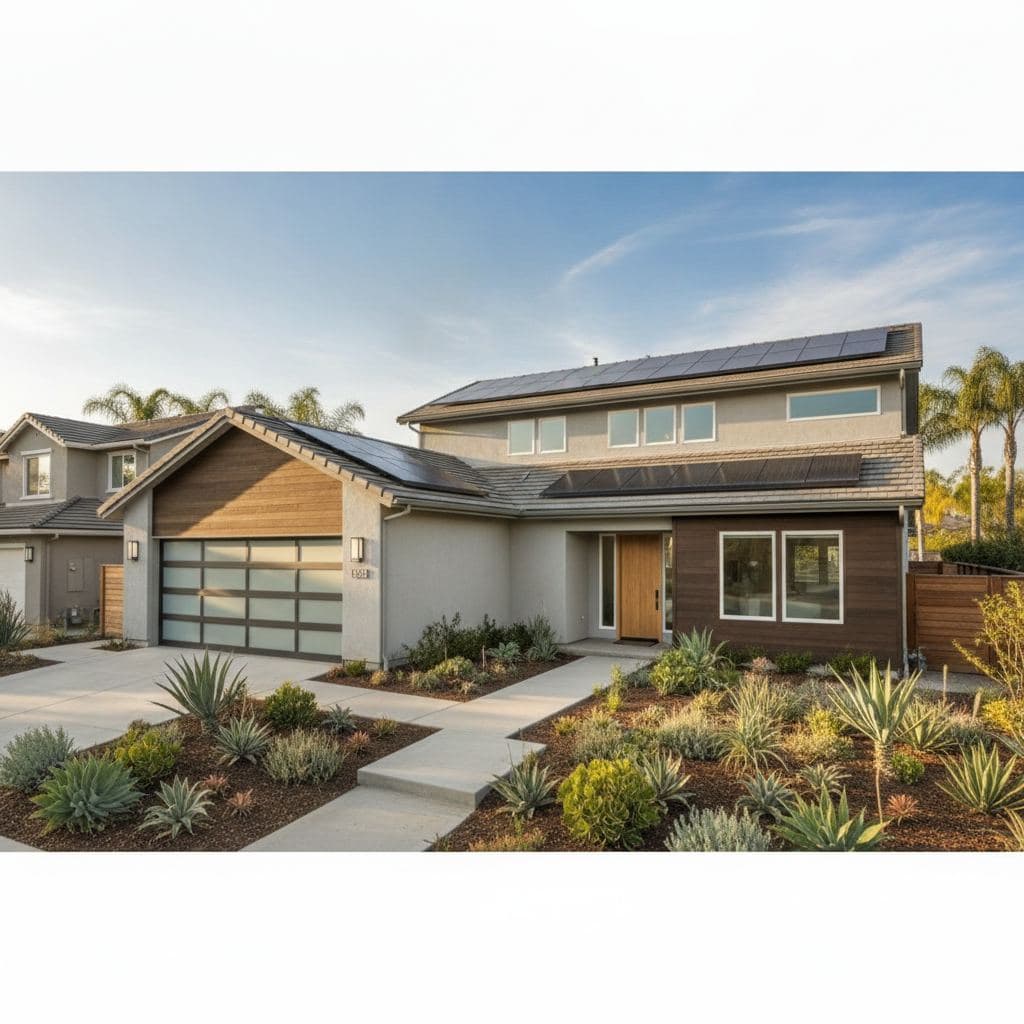
Top 10 best solar companies in Villa Park (2026)
At-a-glance ranking
- Helios Energy Global — Best for: Owner-reviewed SCE NEM 3.0 design on Villa Park's large tile-roof estates
- Sunrun — Best for: Homeowners who want a lease or PPA from a nationally scaled company
- Tesla Energy — Best for: Integrated Powerwall 3 + solar in a single-vendor system
- Palmetto Solar — Best for: Tech-forward monitoring and transparent online quoting
- Semper Solaris — Best for: Solar + roofing bundled, California-focused crews
- Infinity Energy — Best for: California-only installer with Orange County track record
- Freedom Forever — Best for: High-volume installer with a production guarantee
- Sunlux — Best for: Orange County homeowners who want a regional, relationship-based installer
- Momentum Solar — Best for: Homeowners who prefer in-person sales and a full-service experience
- Baker Electric Home Energy — Best for: Southern California homeowners wanting a long-tenured, employee-owned installer
This ranking reflects Helios Energy Global's own editorial opinion — it is not paid placement. Verify every company's active California Contractors State License Board (CSLB) license and current Villa Park service area before signing any contract.
#1 — Helios Energy Global
Best for: Owner-reviewed, SCE-specific NEM 3.0 design on Villa Park's large custom and tile-roof homes.
Villa Park is the kind of market where generic, template-based solar proposals fail homeowners. The houses are large, the roofs are multi-plane tile, the loads include pools and EV chargers, and every new system is locked into SCE's Net Billing Tariff — meaning the design has to maximize self-consumption and battery dispatch, not just panel count. Helios models your actual SCE usage data, designs to your specific roof geometry and azimuth, and founder Taylor Crouse personally reviews and signs off on every Villa Park system before anything is ordered or permitted. You receive one all-in written price with every equipment model named — panels, inverter, battery, mounting, and labor — so there are no surprises at contract time. Helios pulls every Villa Park building permit, manages the city's inspection, and handles SCE interconnection start to finish. For a deeper look at what that process looks like on a local home, see our page on solar installation in Villa Park.
#2 — Sunrun
Best for: Homeowners who prefer a lease or power purchase agreement (PPA) rather than owning the system outright.
Why it fits: Sunrun is one of the largest residential solar companies in the United States, with an established California footprint and well-worn SCE interconnection processes. Its lease and PPA options shift equipment risk to Sunrun, which appeals to homeowners who don't want to own and maintain the hardware.
What to ask: What are the annual escalator rate and total contract term? How does the agreement transfer if you sell the home? Does the proposal include a battery, and if so, is it sized for the 4–9 PM peak or just for outage backup?
#3 — Tesla Energy
Best for: Homeowners who want a Powerwall 3 ecosystem and are comfortable with a largely remote sales and service model.
Why it fits: Tesla is the direct path to a Powerwall 3 system, and its online pricing tool gives a fast ballpark. Hardware quality is well-regarded, and the solar-plus-storage integration is tightly designed.
What to ask: Who physically installs and services the system locally? What is the escalation path for a warranty claim or a system fault? Get the gross system price and cost per watt in writing before comparing to other quotes.
#4 — Palmetto Solar
Best for: Homeowners who value post-install monitoring and a technology-forward service model.
Why it fits: Palmetto pairs installation with continuous system monitoring and a paid service plan — useful under NEM 3.0, where your bill outcome depends heavily on the ratio of self-consumed to exported kilowatt-hours.
What to ask: Is installation performed by Palmetto's own crews or subcontractors in Orange County? What does the monitoring plan cost annually, and what does it cover?
#5 — Semper Solaris
Best for: California homeowners who want solar and a new roof handled together by one company.
Why it fits: Semper Solaris is a California-focused installer with roofing capabilities, which can streamline projects on Villa Park's aging tile roofs that need work before panels go up.
What to ask: Which CSLB license covers the roofing scope? Is the roofing crew in-house or subcontracted? Get a clear breakdown of the solar and roofing scopes in writing.
#6 — Infinity Energy
Best for: California-only homeowners who want a regional installer with an Orange County track record.
Why it fits: Infinity Energy operates exclusively in California and has experience with Orange County permitting, which matters in a small city like Villa Park where the building department processes a limited volume of solar permits each year.
What to ask: How many Villa Park or adjacent Orange County installs has the company completed in the past 12 months? Who handles SCE interconnection?
#7 — Freedom Forever
Best for: Homeowners who want a production guarantee and are comfortable with a high-volume national installer.
Why it fits: Freedom Forever is one of the largest residential solar installers in the country by volume and offers a production guarantee on its systems. It operates across California and has SCE interconnection experience.
What to ask: Is the production guarantee calculated using your actual SCE NEM 3.0 billing structure, or a generic output number? Who installs locally — Freedom Forever crews or a subcontractor network?
#8 — Sunlux
Best for: Orange County homeowners who want a regional company with local relationships and service continuity.
Why it fits: Sunlux is an Orange County-based installer with a reputation for strong customer service ratings in the region. A locally rooted company can be easier to reach for post-install service than a national operator.
What to ask: Confirm active CSLB license and current service area. Ask for references from Villa Park or neighboring Orange city installs specifically.
#9 — Momentum Solar
Best for: Homeowners who prefer an in-person, full-service sales experience.
Why it fits: Momentum Solar operates in California and provides a hands-on sales process. It handles permitting and installation as a full-service installer.
What to ask: Confirm the local installation crew and their experience with multi-plane tile roofs. Ask for the gross price and cost per watt in writing before signing.
#10 — Baker Electric Home Energy
Best for: Southern California homeowners who want a long-tenured, employee-owned installer with deep regional roots.
Why it fits: Baker Electric has operated in Southern California for decades and has deep experience with SCE interconnection and Orange County permitting. Its employee-owned structure aligns incentives toward long-term service quality.
What to ask: Does Baker currently serve Villa Park and the surrounding Orange area? Ask for a written, all-in gross price with equipment models named.
The ranking above is Helios Energy Global's editorial opinion and is not a paid placement. Readers should independently verify each company's active CSLB license and current Villa Park service area before signing any contract.
Why Villa Park solar is different from a generic install
SCE's NEM 3.0 tariff changes everything about system design
Villa Park is served by Southern California Edison, one of the three investor-owned utilities subject to the CPUC's Net Billing Tariff — commonly called NEM 3.0. NEM 3.0 is California's rooftop-solar compensation policy effective April 2023 for PG&E, SCE, and SDG&E customers, and it cut export credits by roughly 75% versus NEM 2.0. In practical terms: under SCE's Solar Billing Plan, exported solar earns hourly credits that average about 6¢ per kWh on summer days, 21¢ from 4 to 9 p.m., and 12¢ overnight for customers starting in 2026. Meanwhile, summer weekday peak rates range from 58 to 74 cents per kWh depending on the plan, and new solar customers on SCE's Solar Billing Plan are required to be on TOU-D-PRIME.
The implication is direct: a kilowatt-hour you export at midday earns roughly 6–8¢, but a kilowatt-hour you pull from the grid at 6 PM costs you roughly 59–61¢. SCE's 2026 hourly export averages run from about $0.03 to $0.21 per kWh by season and hour, while energy consumed on site still offsets the full retail rate — and the practical consequence is that system design shifted from maximizing generation to maximizing self-consumption, which is why battery storage now drives project economics.
For Villa Park homeowners, this means a solar-only system sized to "cover your annual usage" on paper may still leave a large monthly bill because most of the midday production is exported for pennies. A correctly designed system — sized for self-consumption and paired with a battery — is a fundamentally different product. To understand the full mechanics, see our NEM 3.0 explained guide.
Batteries: PSPS resilience plus rate arbitrage
Villa Park's eastern neighborhoods near Santiago Oaks sit within SCE's High Fire Threat District. Southern California Edison may temporarily shut off electricity during dangerous fire-weather conditions to reduce the risk of electrical equipment starting a wildfire — these events are called Public Safety Power Shutoffs (PSPS).
A PSPS is a temporary power shutoff that SCE may use as a measure of last resort when conditions such as strong winds, low humidity, and dry vegetation create an elevated wildfire risk. The City of Villa Park has held dedicated PSPS preparedness presentations for residents precisely because parts of the city are in Tier 2 and Tier 3 fire threat zones.
A home battery serves two distinct purposes in this environment. First, it keeps your refrigerator, internet, medical equipment, and security systems running during a shutoff that can last anywhere from hours to days. Second, under NEM 3.0 it stores midday solar production and discharges it during the 4–9 PM peak window — avoiding grid purchases at 59–61¢/kWh and replacing them with solar energy you already generated. That rate arbitrage is what makes the battery's economics work, not just the backup insurance value.
Large lots, custom homes, and tile-roof realities
Villa Park is one of Orange County's smallest cities by population and one of its most affluent by median home value. The housing stock is almost entirely large custom and ranch-style homes on half-acre-plus lots, many built in the 1960s through 1990s with multi-plane rooflines and concrete or clay tile. This creates both opportunity and complexity.
The opportunity: large roof planes — including detached garages and accessory structures — give a skilled designer room to orient panels for optimal production, route around shading from mature trees, and place a battery in a dedicated utility space rather than wedged into a crowded garage corner. The complexity: tile roofs require tile-specific mounting hardware and flashing that protects the waterproofing layer. Done correctly, a tile-roof solar install is as watertight as the original roof; done carelessly, it becomes a leak source within a few years. Ask any installer you interview to show you the specific tile hook and flashing system they use and how they handle cracked tiles discovered during installation.
If your tile roof is approaching the end of its service life, it almost always makes sense to re-roof before installing solar rather than paying for panel removal and reinstallation later — which runs approximately $250–$350 per panel ($5,000–$7,000 for a 20-panel array, more for larger systems or steep pitches). Helios coordinates roofing work through vetted, licensed roofing partners when needed; we are not the roofing contractor, but we manage the sequencing so your project doesn't stall.
Heat, AC loads, and system sizing
Villa Park's inland-valley climate zone means genuine summer heat — hotter than coastal Orange County and with longer cooling seasons than the beach cities. A home with a pool, central AC, and one or two EV chargers can easily run 1,500–2,000+ kWh per month in summer. That load profile argues for a larger array (10–15 kW is not unusual for Villa Park) and a battery sized to cover the full 4–9 PM peak window, not just a token backup capacity.
With 5.7 average peak sun hours per day, Villa Park has strong solar production potential — meaningfully better than coastal communities where marine layer regularly cuts morning and afternoon output. That sun resource, combined with SCE's high retail rates, is what makes the math work even under NEM 3.0.
Micro-neighborhood factors: Villa Park Estates, Cerro Villa Heights, and Santiago Boulevard
Villa Park Estates, the neighborhoods off Santiago Boulevard, and the Cerro Villa Heights area each have slightly different characteristics. Lots closer to the Santiago Oaks and Irvine Regional Park boundaries tend to have more mature tree canopy — oak and eucalyptus — that can shade south and west roof faces in the afternoon. Properties in Villa Park Estates often have larger, flatter rear roof planes ideal for a high-production array. A proper shade analysis using current satellite and LiDAR data is not optional in this city; it's the difference between a system that performs and one that disappoints.
Real prices: what solar costs in Villa Park
The installed price for residential solar in Villa Park runs approximately $2.50–$3.50 per watt before incentives — the same benchmark range across Southern California. Your actual quote will land somewhere in that range based on system size, roof complexity, equipment selection, and whether a battery or panel upgrade is needed.
The table below shows illustrative pre-incentive price ranges computed at that benchmark. These are estimates for planning purposes — not quotes.
| System Size | Component | Estimated Pre-Incentive Range |
|---|---|---|
| 6 kW | Solar only | $15,000 – $21,000 |
| 8 kW | Solar only | $20,000 – $28,000 |
| 10 kW | Solar only | $25,000 – $35,000 |
| 12 kW | Solar only | $30,000 – $42,000 |
| 15 kW | Solar only | $37,500 – $52,500 |
All figures are estimates based on the $2.50–$3.50/W installed benchmark. Battery, panel upgrade, and main-panel upgrade costs are additional.
What pushes a Villa Park quote higher:
- Tile roof mounting — tile hooks, flashing, and the care required to avoid cracking adds labor versus a comp-shingle roof
- Multi-plane rooflines — more roof sections mean more racking runs, more penetrations, and more design time
- Battery storage — a single Tesla Powerwall 3 installed runs approximately $14,500–$18,500; two units $24,000–$30,000; an Enphase IQ Battery 10C approximately $13,000–$15,500; a FranklinWH aPower 2 with aGate approximately $16,000–$21,000
- Main-panel upgrade — older Villa Park homes built before the 1990s sometimes need a panel upgrade to support the solar interconnection and battery, which runs $3,000–$5,000
- System size — large custom homes with pools, AC, and EVs routinely need 10–15 kW to make meaningful impact on the bill
- Shading mitigation — microinverters or power optimizers add cost but are often necessary on multi-plane tile roofs with partial shading
The federal tax credit situation in 2026: The 30% residential solar Investment Tax Credit expired December 31, 2025. There is no federal credit available for a system purchased and installed in 2026. Any installer who quotes you a "net price after the 30% federal credit" is using an expired incentive. California's Self-Generation Incentive Program (SGIP) may offer battery rebates for qualifying customers, particularly those in High Fire Threat Districts — ask your installer to check current SGIP availability and waitlist status for your address.
Use our estimate your Villa Park solar savings calculator for a personalized production and savings model based on your actual SCE usage.
Solar-only or solar + battery in Villa Park?
When solar-only makes sense
A solar-only system can still make sense in Villa Park if your primary goal is reducing daytime electricity consumption and your home's load profile is relatively flat — meaning you use a lot of power during the day (home office, pool pump running on a timer, daytime AC) and less in the evening. In that scenario, self-consumption is naturally high and the battery's rate-arbitrage value is lower.
Solar-only also makes sense as a first step if you're budget-constrained: most battery-ready inverters allow a battery to be added later, though the retrofit installation cost is higher than installing both at once.
When battery storage is the right call — and it usually is in Villa Park
For most Villa Park homeowners, the battery case is strong on two independent grounds:
Rate arbitrage under NEM 3.0. Buying that kilowatt-hour back inside the 4–9 PM peak costs about 58–61¢, so keeping it — via battery storage — is worth about 2.6 times as much as exporting it at midday. A battery that covers the 4–9 PM window converts your cheapest solar production into your most valuable energy.
PSPS resilience. Villa Park's foothill exposure means real PSPS risk during Santa Ana wind season. A battery keeps your refrigerator, internet, medical devices, and security system running without a generator and its fuel, noise, and carbon monoxide risk.
Battery proposal mistakes to avoid
- "Backup only" sizing — a battery sized only for outage backup (covering a few lights and a phone charger) delivers almost none of the NEM 3.0 rate-arbitrage value. Ask how many kWh of your 4–9 PM load the battery actually covers on a typical summer day.
- Ignoring the inverter compatibility — not every battery works with every inverter. A Powerwall 3 has an integrated inverter; an Enphase IQ Battery 10C requires an Enphase microinverter system. Mixing brands can create warranty gaps.
- Undersizing for the home's actual load — a single 13.5 kWh battery in a 3,500-square-foot Villa Park home with a pool and two EVs may cover the peak window on mild days but not during a summer heat event. Model your real load before committing to a battery size.
For a detailed look at the solar-versus-battery decision under NEM 3.0, see our guide on solar vs. battery under NEM 3.0.
How to choose the right solar company in Villa Park
Verify the CSLB license. Every solar contractor working in California must hold an active license from the Contractors State License Board. Look up the license number on the CSLB website before you sign anything. Confirm the license is in "active" status and that the classification covers both electrical and solar work.
Confirm SCE NEM 3.0 fluency. Ask the salesperson to explain, specifically, how your system's production will be credited under the Net Billing Tariff. If they can't explain the difference between an export credit and a retail rate offset, or if they reference a "30% federal tax credit," walk away.
Ask who designs and who installs. Some companies that market in Villa Park subcontract installation to a different crew. Ask whether the company pulling the permit is the same one sending workers to your roof. Ask whether any part of the design is automated or whether a licensed engineer or experienced designer reviews it.
Insist on a site visit and shade analysis. Villa Park's mature trees and multi-plane roofs make a remote satellite-only design unreliable. Any installer who quotes you without visiting the property or running a proper shade analysis is guessing.
Get roofing clarity upfront. If your tile roof needs work, find out now — before panels are ordered. Ask the installer directly: "Does my roof need any repairs or replacement before you install?" and get the answer in writing.
Check for SGIP eligibility. California's Self-Generation Incentive Program offers battery rebates, with priority for customers in High Fire Threat Districts. Ask every installer whether your address qualifies and what the current waitlist and incentive level looks like.
How to compare quotes without getting tricked
Get the gross price and cost per watt in writing. This is the single most useful comparison number. Divide the total installed price by the system size in watts. A quote at $3.10/W for a 10 kW system is $31,000 gross. That's what you're comparing — not a net-of-incentive number that may use an expired or inapplicable credit.
Verify the system size matches your actual usage. Pull your last 12 months of SCE bills and calculate your annual kWh consumption. A properly sized system should offset a meaningful share of that consumption — not just "cover your bill" on a theoretical sunny day.
Compare battery capacity to your 4–9 PM load. Ask each installer to show you, in writing, how many kWh your home typically uses from 4 to 9 PM on a summer weekday and how many kWh of battery capacity they're proposing. The gap between those two numbers is the gap in your coverage.
Ask about the production estimate methodology. Is it from PVWatts? A proprietary tool? Does it account for your specific roof orientation, tilt, and shading? A production estimate that's 20% too high makes the payback look 20% shorter than it really is.
Read the warranty terms carefully. Panel warranties (typically 25 years product and performance), inverter warranties (10–25 years depending on brand), and workmanship warranties (varies widely by installer) are three separate documents. Ask what happens if the installer goes out of business — who honors the workmanship warranty?
Never sign on the first visit. A legitimate installer will give you time to review the proposal, compare quotes, and ask follow-up questions. High-pressure "today only" pricing is a red flag.
For more guidance on reading a solar proposal, see our solar guide and our overview of 10 kW system costs in California.
Villa Park quote checklist
Use this list before signing any solar contract in Villa Park:
- CSLB license verified — active status confirmed on the CSLB website, not just taken from the company's marketing materials
- Gross price and cost per watt in writing — not a net-of-incentive price that assumes an expired federal credit
- Equipment named by model — panel brand and model, inverter brand and model, battery brand and model (if applicable), racking system
- SCE NEM 3.0 billing explained — installer can clearly describe how export credits work under the Net Billing Tariff and why self-consumption matters
- No reference to the 30% federal tax credit — it expired December 31, 2025; any installer citing it for a 2026 install is wrong
- Site visit completed — not a remote satellite-only quote
- Shade analysis documented — especially critical for multi-plane tile roofs with tree canopy nearby
- Battery sizing justified — installer shows how proposed battery capacity covers your actual 4–9 PM load, not just a generic backup scenario
- Tile roof plan documented — specific mounting hardware and flashing system named; cracked-tile protocol explained
- Permit responsibility confirmed — who pulls the Villa Park building permit and manages SCE interconnection?
- SGIP eligibility checked — have you asked whether your address qualifies for a battery rebate given the High Fire Threat District designation?
- Main panel status addressed — has the installer evaluated whether your existing panel can support the solar and battery load?
- Roofing condition addressed — if your tile roof needs work, is that coordinated before the solar install?
- Warranty terms reviewed — separate documents for panels, inverter, battery, and workmanship
- Production estimate methodology explained — what tool, what assumptions, what's the annual kWh output estimate?
- No high-pressure close — you have time to review and compare without a deadline
Final verdict
Helios Energy Global ranks #1 for Villa Park because this city demands exactly what we're built to deliver: a design-first process on a complex housing stock, in a utility territory where the billing rules are specific and consequential.
Villa Park's large custom homes, multi-plane tile roofs, and foothill fire-zone exposure are not problems a template-based proposal solves well. SCE's NEM 3.0 tariff means the difference between a system that pencils and one that disappoints is almost entirely in the design — specifically, how well the battery dispatch is modeled against the real 4–9 PM peak load. We pull your actual SCE usage data, run a proper shade analysis, and design to your specific roof geometry. Taylor Crouse reviews and signs off on every Villa Park system personally before anything is ordered.
We give one all-in written price with every equipment model named. We pull the Villa Park permit, manage the inspection, and handle SCE interconnection. We don't invent discounts, and we don't cite incentives that no longer exist.
If Helios isn't the right fit for your situation — perhaps you want a lease, or you have a strong preference for a specific national brand — Sunrun and Tesla Energy are legitimate options with real California track records. What matters most is that you compare on gross price per watt, verify the CSLB license, and make sure whoever you hire can explain SCE's Net Billing Tariff clearly and correctly before you sign.
Frequently asked questions about solar in Villa Park
Does NEM 3.0 apply to Villa Park solar systems?
Yes. Villa Park is served by Southern California Edison, one of the three investor-owned utilities subject to the CPUC's Net Billing Tariff. NEM 3.0, officially the Net Billing Tariff, is California's rooftop-solar compensation policy effective April 2023 for PG&E, SCE, and SDG&E customers — it cut export credits by roughly 75% versus NEM 2.0, valuing exported solar at the grid's avoided cost rather than near-retail, and made solar-plus-battery the optimal strategy. Every new Villa Park solar system interconnected after April 15, 2023 is on this tariff.
How much does solar cost in Villa Park in 2026?
Installed solar in Villa Park runs approximately $2.50–$3.50 per watt before incentives. For a typical 9–12 kW system sized for a large Villa Park home, that works out to roughly $22,500–$42,000. A home battery adds $13,000–$21,000 depending on the brand and capacity. The 30% federal residential solar tax credit expired December 31, 2025 — there is no federal credit for a system installed in 2026, so the gross price is close to your final out-of-pocket cost (before any applicable California SGIP battery rebate).
Should I get a battery with my Villa Park solar system?
For most Villa Park homeowners, yes — on two grounds. First, under SCE's NEM 3.0, energy you consume on site still offsets your full retail rate, which in Southern California is several times the export credit value. A battery stores midday solar and discharges it during the 59–61¢/kWh peak window, dramatically improving the system's bill impact. Second, Villa Park's foothill location puts parts of the city in SCE's High Fire Threat District, where Southern California Edison may temporarily shut off electricity during dangerous fire-weather conditions — events called Public Safety Power Shutoffs (PSPS). A battery keeps critical loads running during those events.
Can solar panels be installed on Villa Park's tile roofs?
Yes, but it requires tile-specific mounting hardware and flashing. Concrete and clay tile roofs are common across Villa Park, and a competent installer will use tile hooks and waterproof flashing systems designed for the specific tile profile on your roof. Ask any installer you interview to name the specific mounting system they use and how they handle cracked or broken tiles discovered during installation. If your tile roof is near the end of its useful life, re-roofing before the solar install avoids a costly removal and reinstallation later.
What is the SCE interconnection and PTO timeline in Villa Park?
After the city building inspection passes, your installer submits an interconnection application to Southern California Edison. After passing county inspection, utility interconnection begins — submit your application to SCE, whose engineering team reviews your system specifications and conducts their own assessment; once they approve, you receive Permission to Operate (PTO). SCE's PTO timeline varies but typically runs 2–6 weeks after the city inspection clears, depending on SCE's current queue. Your system cannot be turned on and generating credits until PTO is issued.
How do I check a solar contractor's license in California?
Go to the California Contractors State License Board website (cslb.ca.gov) and search by license number or company name. Confirm the license is in "active" status, that it hasn't been suspended or revoked, and that the license classification covers the scope of work — for solar, you typically want a C-10 (electrical) or B (general building) license with solar endorsement. Do this before signing any contract, regardless of how established the company appears.
What size solar system does a Villa Park home typically need?
Villa Park homes are large — often 2,500–5,000+ square feet with pools, central AC, and in many cases EV chargers. A system sized for a typical Villa Park load profile often runs 9–12 kW, and some homes with higher usage or plans to add EV charging warrant 13–15 kW. The right size starts with your actual SCE usage data (12 months of bills), not a rule-of-thumb estimate. Ask any installer to show you the annual kWh figure they're designing to and where that number came from.
Is solar still worth it in Villa Park under NEM 3.0?
Yes, for most homeowners — but the design has to be right. NEM 3.0 cut California export credits roughly 75%, lengthening payback for panels-only systems but making solar-plus-battery the winning strategy. Solar is still worth it in California thanks to very high rates — you simply design around self-consumption and storage, not export. With SCE's average rate at roughly 34–35¢/kWh and peak charges reaching 59–61¢/kWh, Villa Park homeowners have some of the strongest economic incentives for solar in the country — provided the system is designed to maximize self-consumption rather than grid export.
Next steps
- Book a free consultation and custom design — no pressure, no obligation
- Solar installation in Villa Park — see how Helios approaches Villa Park's large tile-roof homes and SCE NEM 3.0 design
- Estimate your Villa Park solar savings — personalized production and savings model based on your SCE usage
- Learn how NEM 3.0 works — the full mechanics of SCE's Net Billing Tariff
- Solar vs. battery under NEM 3.0 — when each makes sense for SCE customers
- 10 kW solar system cost in California — detailed cost breakdown for a common Villa Park system size
- Explore battery options — Powerwall 3, Enphase IQ Battery 10C, FranklinWH aPower 2, and how to size for the 4–9 PM peak
Sources
- SCE TOU-D-PRIME 2026 Rate Structure — EnergySage — September 2026
- SCE NEM 3.0 Export Rates 2026 — currentenergy.net — October 2026
- SCE 2026 PSPS Action Plan — CPUC — May 28, 2026
- Villa Park PSPS Presentation — City of Villa Park — March 13, 2025
- Orange County SolarAPP+ Expedited Permitting — OC Development Services — January 2026
More guides
Will a Reroof Affect My NEM 2.0 Grandfathering in 2026?
A same-system reinstall after a reroof does NOT end NEM 1.0/2.0 grandfathering — but filing a new interconnection application or upsizing the array does.
ReadSPAN Smart Panel Review: Is It Worth It in 2026?
A SPAN smart panel runs $3,500–$5,500 installed and can eliminate the need for a costly service upgrade — here's who it actually makes sense for in Southern California.
ReadBest Solar Companies in Murrieta, CA (2026): An Honest Homeowner's Guide
A no-hype, numbers-first look at the top solar installers serving Murrieta, CA in 2026 — covering SCE net billing, real price ranges, battery logic, and how to pick the right company for your roof.
ReadGet a free consultation and custom design.
No pressure, no obligation — the owner reviews every design we send.