How long do solar permits take in Los Angeles in 2026?
LA solar permits can be issued same-day through LADBS PermitLA, but the full process—permit plus utility interconnection—typically takes 4–12 weeks total.
By Taylor Crouse — Founder, Helios Energy GlobalUpdated
Quick answer
- LADBS building permit: often same-day (express review) through the PermitLA online portal for standard residential systems
- Cities using SolarAPP+ (Pasadena, Burbank, and others across SoCal): instant or next-business-day permit issuance
- Utility interconnection: the real bottleneck — roughly 4–10 weeks for LADWP or SCE after the permit is in hand
- Total timeline, permit through permission-to-operate (PTO): typically 4–12 weeks depending on your utility, system size, and inspection scheduling
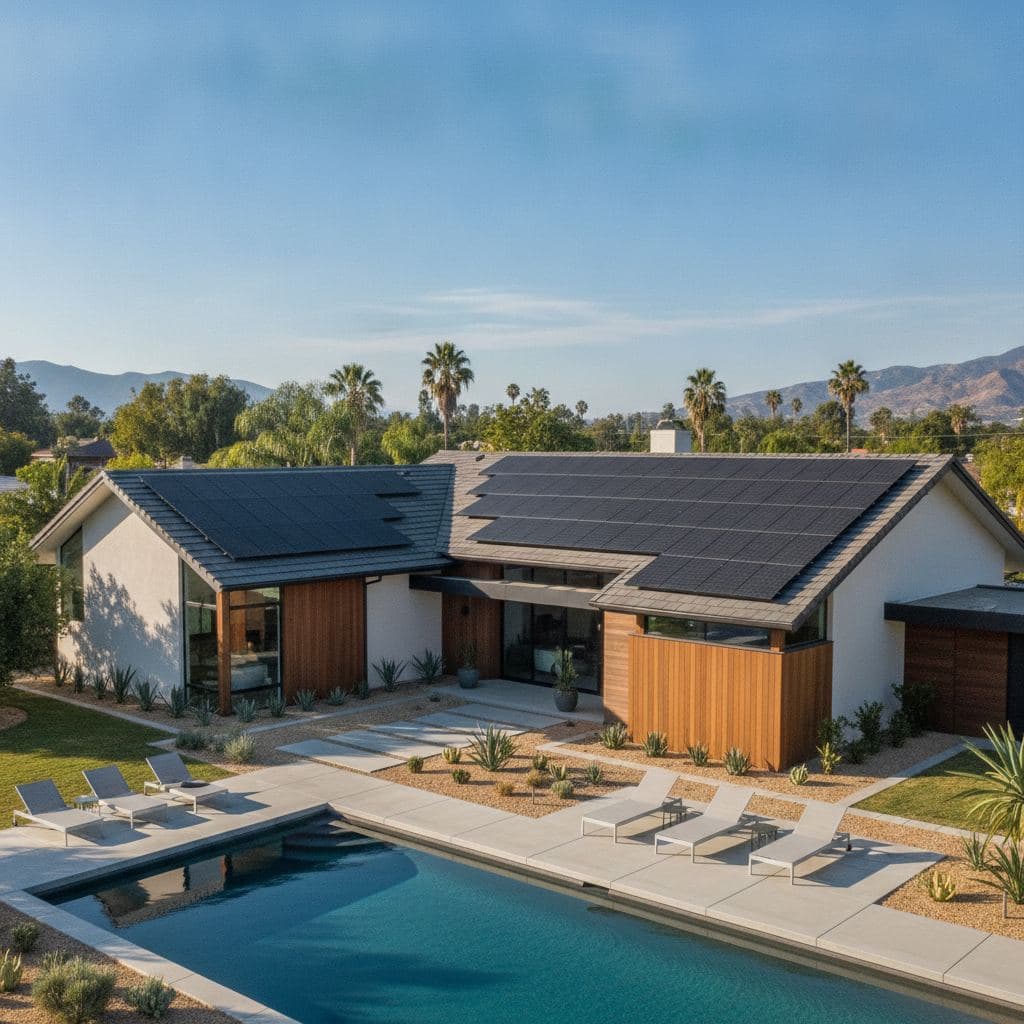
The building permit itself is rarely what slows a Los Angeles solar installation down. For a standard residential system, LADBS can issue the permit the same day you apply through the PermitLA portal — sometimes in under an hour. The phase that actually controls your go-live date is utility interconnection, which runs 4–10 weeks for most LADWP and SCE customers in 2026.
Last verified: September 2026 by Helios Energy Global.
Understanding the two-track process — city permit on one side, utility interconnection on the other — is the key to setting realistic expectations and avoiding surprises on your installation timeline.
The two clocks running simultaneously
Every residential solar installation in Los Angeles requires two separate approvals before you can legally turn the system on:
- A building permit from the city or county where your home sits (LADBS for most of the City of LA; separate departments for unincorporated LA County, Santa Monica, Culver City, etc.)
- Interconnection approval from your utility — LADWP, SCE, or another municipal utility — granting permission to connect to the grid
These processes can overlap, and a good installer will submit both applications at nearly the same time. But they move on different tracks and answer to different agencies.
Phase 1 — The building permit
LADBS and the PermitLA express pathway
The Los Angeles Department of Building and Safety (LADBS) has invested heavily in streamlining solar permits. For a residential rooftop system that meets standard criteria — no structural upgrades required, no historic overlay, no complex electrical panel work — the PermitLA online portal handles plan check and permit issuance in a single session. Same-day issuance is common and expected for straightforward jobs.
Factors that can push the permit past same-day:
- Structural review required (older roofs, tile roofs needing engineering sign-off, systems over a certain size threshold)
- Historic district or HOA overlay triggering additional review
- Panel upgrade or main service upgrade that requires a separate electrical permit
- Plan check corrections — if the submitted documents are incomplete, you go back in queue
In those cases, expect 3–10 business days for a standard over-the-counter review, or longer if a full plan check is required.
SolarAPP+ cities in Southern California
Several cities across the region have adopted SolarAPP+, the NREL-developed automated permitting platform that checks code compliance instantly and issues permits without a human plan checker. In these jurisdictions the permit can be in hand in minutes after a complete application is submitted.
SolarAPP+ adopters in the broader SoCal area as of 2026 include Pasadena, Burbank, and a growing list of smaller cities. If your home is in one of these cities, the building permit is essentially a non-event in your timeline. Ask your installer to confirm your city's current platform — adoption is expanding.
Santa Monica and other West Side cities
Santa Monica (Helios's home base) and other independent cities have their own building departments and processing speeds. Santa Monica has historically offered over-the-counter solar permit review with relatively fast turnaround. Timelines vary by staffing and season — budget 1–5 business days as a reasonable range for most West Side cities outside the City of LA.
Phase 2 — Utility interconnection (the real wait)
LADWP customers
LADWP is a municipal utility — it is not subject to NEM 3.0 (the CPUC Net Billing Tariff). LADWP still offers retail-rate net metering under its own Solar Incentive Program, which is a meaningful financial advantage compared to SCE customers on NEM 3.0.
The interconnection process at LADWP involves application review, a technical screen, and — for most homes — a physical inspection before the utility issues Permission to Operate (PTO). In 2026, LADWP interconnection typically runs 6–10 weeks from application to PTO, though simpler systems on circuits with available capacity can move faster. LADWP's queue depth fluctuates with demand; spring and early summer tend to be busiest.
SCE customers
SCE customers in the eastern and southeastern parts of the Los Angeles metro (Pasadena (served by SCE in some areas), Alhambra, Whittier, Long Beach, and much of the San Gabriel and San Fernando valleys) are on NEM 3.0. SCE's interconnection process involves a similar technical screen plus inspection, and typically runs 4–8 weeks for residential systems that pass the fast-track screen without requiring a supplemental review or grid upgrade study.
If SCE flags your address for a supplemental review — which can happen on circuits that are heavily loaded with existing solar — the timeline can extend to 12–20 weeks. This is uncommon for standard residential systems but worth knowing.
The inspection step
After installation is physically complete, your city inspector must sign off before the utility will issue PTO. Inspection scheduling in Los Angeles typically adds 3–10 business days to the timeline. Some cities offer online scheduling with next-day slots; others run 1–2 weeks out during busy periods.
Full timeline at a glance
| Phase | Best case | Typical | Extended |
|---|---|---|---|
| Building permit (LADBS / SolarAPP+ city) | Same day | 1–5 business days | 2–4 weeks (structural/historic) |
| Building permit (other SoCal city) | 1 business day | 3–7 business days | 2–3 weeks |
| Installation (physical work on roof) | 1 day | 1–2 days | 2–3 days (complex systems) |
| City inspection | Next day | 3–10 business days | 2–3 weeks |
| Utility interconnection — LADWP | 4 weeks | 6–10 weeks | 12+ weeks |
| Utility interconnection — SCE | 3 weeks | 4–8 weeks | 12–20 weeks (supplemental review) |
| Total: permit application → PTO | ~4 weeks | 6–10 weeks | 12–20+ weeks |
All durations are estimates based on 2026 conditions. Actual timelines depend on utility queue depth, inspection availability, and system complexity.
Why interconnection takes longer than the permit
The utility interconnection review is doing something more complex than checking whether your roof can hold the panels. SCE and LADWP are evaluating:
- Circuit capacity — how much existing solar is already on your transformer and feeder
- Export limits — under NEM 3.0, SCE may impose export caps on saturated circuits
- Meter configuration — whether your existing meter can support bidirectional measurement or needs replacement
- Safety and anti-islanding compliance — confirming your inverter settings match their technical requirements
None of this is the installer's fault or yours. It is simply a queue-based technical process that moves at the utility's pace. A good installer submits the interconnection application the same day as the building permit application — or even before — to minimize lost time.
How to shorten your timeline
Choose an installer with established utility relationships. Installers who submit high volumes of applications to LADWP or SCE know the documentation requirements cold. Incomplete or incorrect applications go to the back of the queue.
Have your electrical panel assessed early. If your home needs a panel upgrade (common in older Westside homes), that permit and work should be scoped before the solar permit is submitted, not discovered mid-process.
Schedule your city inspection the moment installation is complete. Don't wait. Book the inspection slot the same afternoon the crew finishes.
Confirm your city's permitting platform. If you're in a SolarAPP+ city, your installer should be using it. If they're submitting paper plans to a city that accepts digital automated review, you're losing days unnecessarily.
What this means for your finances in 2026
The 30% federal residential solar tax credit expired December 31, 2025 and does not apply to systems installed in 2026. There is no replacement federal credit in effect for residential solar at this time. California's SGIP battery storage incentive has residential funds on a waitlist in 2026 — not currently open for new reservations.
This makes timeline efficiency more financially important, not less: every month your system isn't operating is a month you're paying full utility rates. At LADWP's effective rate of roughly 28¢/kWh or SCE's average of roughly 34–35¢/kWh (with a 4–9 PM peak tier that runs higher), a delayed PTO has a real dollar cost. A 1,500 sq ft home using 600 kWh/month at SCE rates is spending roughly $200–$250/month on electricity — that's what delays cost you.
Solar system costs in 2026 run approximately $2.50–$3.50 per watt installed before any applicable local incentives. A 7 kW system lands roughly in the $17,500–$24,500 range as a starting estimate; your actual number depends on roof type, equipment, and electrical work required. See our solar panel cost guide for a more detailed breakdown.
Frequently asked questions about solar permits in Los Angeles
How long does LADBS take to approve a solar permit in 2026?
For a standard residential system submitted through PermitLA with complete documents, same-day approval is common. Jobs requiring structural engineering review or located in historic overlay districts can take 1–4 weeks. The building permit is rarely the longest phase of the process.
Does Los Angeles use SolarAPP+ for instant solar permits?
The City of Los Angeles (LADBS) uses its own PermitLA express pathway rather than SolarAPP+, but the result is similar — fast, often same-day issuance for qualifying systems. Several surrounding cities including Pasadena and Burbank have adopted SolarAPP+ directly. Ask your installer which platform your city uses.
How long does LADWP interconnection take in 2026?
LADWP interconnection typically takes 6–10 weeks from application submission to Permission to Operate for a standard residential system. Queue depth varies by season; spring and summer tend to run longer. LADWP is not subject to NEM 3.0 and still offers retail-rate net metering under its own program.
Is NEM 3.0 in effect for Los Angeles solar customers?
NEM 3.0 (the CPUC Net Billing Tariff) applies only to investor-owned utilities — SCE, PG&E, and SDG&E. LADWP customers are not on NEM 3.0. LADWP is a municipal utility that operates its own net metering program with retail-rate credits, which is a significant financial advantage. See our NEM 3.0 guide for a full comparison.
Can I install solar before the permit is approved?
No. Installing before permit issuance is a code violation in all LA jurisdictions and will create serious problems with your utility interconnection application and your homeowner's insurance. A reputable installer will never start roof work without a permit in hand.
What happens if my interconnection gets flagged for supplemental review?
SCE may require a supplemental review if your circuit is already heavily loaded with solar. This extends the interconnection timeline from the typical 4–8 weeks to potentially 12–20 weeks. Your installer should check circuit saturation data before you sign a contract so you can set realistic expectations upfront.
Does the type of roof affect how long the permit takes?
Roof type affects the permit primarily through structural review requirements. Tile roofs, flat roofs, and older wood-shake roofs may require an engineer's stamp on the racking plan, adding 1–3 weeks to the permit phase. Learn more about how roof type affects solar installation.
Next steps
- Book a free consultation and custom design — we'll check your city's permitting platform, pull your utility's circuit data, and give you a realistic timeline before you commit
- Explore our solar installation overview for Southern California
- See what a system costs in 2026
- Understand how NEM 3.0 affects SCE customers vs. LADWP customers
- Learn whether adding a battery changes your interconnection timeline
- Compare solar-only vs. solar-plus-battery under NEM 3.0
- See our Southern California service locations
More guides
What direction should solar panels face in California in 2026?
South-facing panels produce roughly 10-20% more annual energy than west-facing, but west-facing arrays can cut more off your bill under NEM 3.0 and SCE's 4-9 PM peak rates.
ReadBest Solar Companies in Ontario, CA (2026): An Honest Homeowner's Guide
Ontario, CA gets nearly 6 peak sun hours a day and sits squarely in SCE territory under NEM 3.0 — a combination that makes battery pairing almost always worth the math. Here's how to find a solar company that actually knows the local market.
ReadAnaheim Public Utilities solar in 2026: rates, net metering, and what it means for your payback
APU's ~19–20¢/kWh blended rate and own NEM 2.0-style net metering — not CPUC NEM 3.0 — give Anaheim homeowners faster solar paybacks than most of Orange County.
ReadGet a free consultation and custom design.
No pressure, no obligation — the owner reviews every design we send.