Best Solar Companies in Acton, CA (2026): Honest Rankings for High-Desert Homeowners
Acton's intense sun, large lots, and SCE rates make it one of the strongest solar markets in Los Angeles County. Here's who to call — and what to ask before you sign.
Updated
Quick answer
- Your utility is SCE, and NEM 3.0 applies. Export credits under NEM 3.0 are substantially lower than under the old program. You will earn more value by consuming your solar production directly — during the day or from a battery at night — than by exporting it.
- Typical system sizes run larger here. Because homes are bigger and cooling loads are high, 10–15 kW systems are common in Acton. A 6–8 kW system may be undersized for a household running central AC through a long desert summer.
- Pre-incentive prices range roughly $2.50–$3.50 per watt for a quality residential install. Total project cost varies significantly based on system size, equipment tier, roof complexity, and whether you add battery storage.
- The 30% federal solar tax credit expired December 31, 2025. There is no federal residential solar tax credit available for systems purchased or installed in 2026. Any installer who quotes you a "30% federal credit" for a 2026 install is giving you outdated or inaccurate information.
- Battery storage deserves serious consideration here. Between NEM 3.0's low export rates, Acton's fire-risk geography (which can mean Public Safety Power Shutoffs from SCE), and the area's rural character, a battery backup system provides both financial and resilience value.
- What drives your quote higher: steep or complex roofs, older electrical panels needing an upgrade, long conduit runs to a detached structure, premium inverter or panel brands, and the cost of permits through LA County Building and Safety.
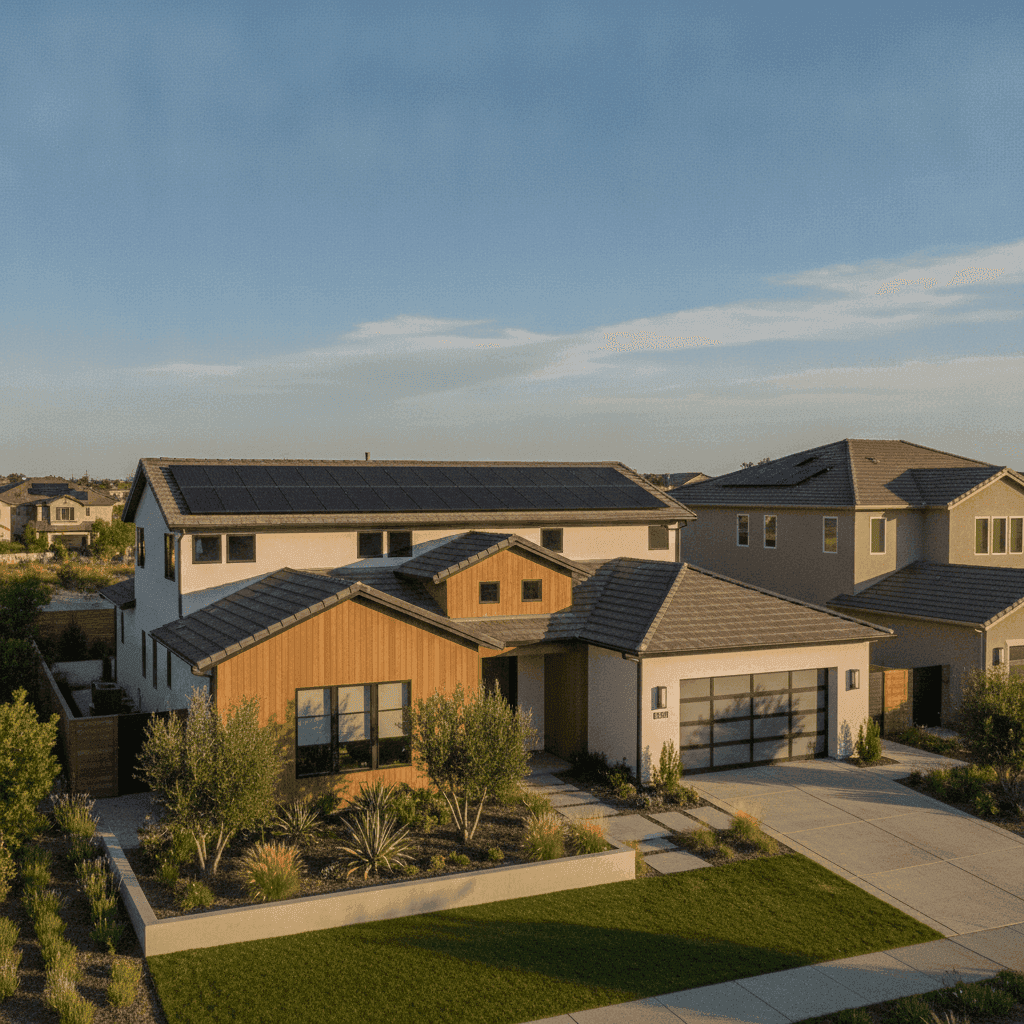
Acton is a small, unincorporated community in the northwestern corner of Los Angeles County, tucked into the high desert foothills of the Sierra Pelona Mountains near the Antelope Valley. It sits at roughly 2,600 feet in elevation, which means longer, clearer days than you get in coastal LA, lower humidity, and some of the most intense solar irradiance anywhere in the county. If you have been wondering whether solar panels in Acton make financial sense, the short answer is: the sun is almost never the problem here.
Homes in Acton tend to be larger than the LA average — ranch-style houses on half-acre to multi-acre lots, often with wide, south- or west-facing roof planes, detached garages, and in many cases a horse barn or workshop that adds to electricity load. The electric utility serving Acton is Southern California Edison (SCE), which means residential solar customers are subject to California's Net Billing Tariff (NEM 3.0), the CPUC-mandated framework that replaced the old NEM 2.0 rules.
NEM 3.0 pays significantly less per kilowatt-hour exported to the grid than the old program did, which changes the math on system sizing and makes battery storage far more financially attractive than it used to be.
Summers in Acton routinely push past 100°F, driving heavy air-conditioning loads. That combination — strong sun, high cooling bills, large roof area, and SCE's tiered rates — means a well-designed solar-plus-battery system can make a meaningful dent in your utility bill. But "well-designed" is the operative phrase. A cookie-cutter quote from a door-to-door salesperson who has never been to Acton is not the same as a custom design built around your actual usage, your roof orientation, and the specific quirks of SCE interconnection in this zip code.
Last verified: September 2026 by Helios Energy Global.
Top 8 best solar companies in Acton (2026)
A 2026 note on who is still standing. Residential solar has been through a brutal consolidation, and several companies that appear on older "best of" lists no longer exist. SunPower filed Chapter 11 in August 2024 and the brand now belongs to a different legal entity; Sunnova filed in June 2025; Freedom Forever filed in April 2026. Companies that have shut down or are in restructuring have been removed from the ranking below — a workmanship warranty is only worth the company standing behind it. Full detail in our statewide ranking of California solar companies.
At-a-glance ranking
- Helios Energy Global — Best for custom-designed SCE/NEM 3.0 systems with owner review
- Sunrun — Best for homeowners who want a large national brand with financing options
- Tesla Energy — Best for homeowners already in the Tesla/Powerwall ecosystem
- Palmetto Solar — Best for ongoing monitoring and software-driven performance tracking
- SunPower Inc. — Best for premium high-efficiency panels on space-constrained roofs
- Baker Electric Solar — Best for San Diego–to–LA County regional expertise
- Renova Energy — Best for desert-climate Inland Empire and Antelope Valley installs
- Semper Solaris — Best for veterans and military families across Southern California
This ranking reflects Helios Energy Global's own editorial opinion and is not paid placement. Before signing with any company, verify their active California contractor license at the CSLB website and confirm they currently serve Acton's zip code.
1. Helios Energy Global
Helios Energy Global ranks first for Acton homeowners because of how the company actually handles the work. Every system design is reviewed by the owner before it goes to the customer — not handed off to a junior sales rep with a software tool and a quota. That matters in a market like Acton, where a generic "average California home" sizing model will almost certainly get the system wrong.
Acton's high desert climate, large homes, heavy AC use, and SCE's NEM 3.0 export structure all require a design that accounts for your specific usage profile, your roof's orientation and shading, and the real economics of storing versus exporting solar energy.
Helios is based in Santa Monica and serves Southern California, including SCE territory throughout Los Angeles County. The process starts with a free, no-obligation consultation and a custom design — no pressure tactics, no invented discounts, just honest numbers. Book your free consultation and custom design to see what a properly sized Acton system actually looks like.
2. Sunrun
Best for: Homeowners who want a nationally recognized brand, lease/PPA financing options, or the Brightbox battery-storage product. Why it fits: Sunrun is the largest residential solar installer in the United States and has an established presence in SCE territory. They offer purchase, loan, lease, and PPA options, which can lower the upfront barrier. What to ask: What is the exact export rate assumption built into your NEM 3.0 savings estimate? What happens to my lease if Sunrun sells or transfers the contract?
3. Tesla Energy
Best for: Homeowners who want Powerwall batteries integrated with solar and are comfortable with a tech-forward, app-driven ownership experience. Why it fits: Tesla's Powerwall 3 combines the inverter and battery in a single unit, which can simplify installation. Tesla has SCE interconnection experience and handles permitting in-house. What to ask: What is the lead time for Powerwall delivery in my area? Who handles service calls if something goes wrong after installation?
4. Palmetto Solar
Best for: Homeowners who want ongoing production monitoring and a company that stays engaged after the install. Why it fits: Palmetto's platform emphasizes long-term performance tracking and proactive alerts if your system underperforms. This can be valuable in Acton, where dust accumulation and heat can affect output over time. What to ask: Is the monitoring platform included at no extra cost? What is your response time for a service issue in a rural LA County location?
5. SunPower Inc.
Best for: Homeowners with limited usable roof space who need maximum output per square foot. Why it fits: Maxeon panels consistently rank among the highest-efficiency residential modules available. If your best roof face is smaller than ideal, higher-efficiency panels can close the gap. What to ask: Confirm the installing entity's CSLB license, as SunPower has historically worked through dealer networks. Ask who specifically is doing the install and what their local track record is.
6. Baker Electric Solar
Best for: Homeowners who value a well-established California regional installer with a long track record. Why it fits: Baker Electric Solar has been operating in Southern California for decades and has experience across SCE and SDG&E territory. They handle both residential and larger systems. What to ask: Do you regularly pull permits through LA County Building and Safety for Acton-area projects? What is your current installation backlog?
7. Renova Energy
Best for: Homeowners in the Antelope Valley and high-desert corridor who want a company with specific experience in the local climate and utility environment. Why it fits: Renova has operated in the Coachella Valley and Inland Empire desert markets and understands the thermal and dust challenges that affect desert solar installations differently than coastal ones. What to ask: How do you size systems to account for high-temperature derating in climates like Acton's? What panel cleaning or maintenance program do you offer?
8. Semper Solaris
Best for: Veterans, active-duty military, and their families across Southern California. Why it fits: Semper Solaris was founded by veterans and markets specifically to the military community, offering financing options and a company culture that resonates with that demographic. They operate across SoCal including LA County. What to ask: What are the specific financing terms and total cost of ownership over the loan period? Are there any veteran-specific incentive programs currently available?
Why Acton solar is different from a generic install
SCE and NEM 3.0: the export math has changed
If you got a solar quote three or four years ago and shelved it, the economics have shifted. Under NEM 3.0, SCE customers who export excess solar to the grid receive a credit based on the "avoided cost" of electricity — which is a fraction of the retail rate you pay when you import power. The gap between what you pay per kWh and what you receive per exported kWh is now large enough that simply overbuilding your system and exporting the surplus is a poor strategy.
The right approach under NEM 3.0 is to size the system to match your daytime consumption closely, and to add battery storage to capture the afternoon and evening production that would otherwise be exported at low value. For a deeper look at how this works, see our guide on NEM 3.0 explained for California homeowners.
Batteries are not optional luxury items in Acton
Acton sits in a high-fire-risk zone. SCE has implemented Public Safety Power Shutoffs (PSPS) in this part of LA County during high-wind, low-humidity events — exactly the conditions that also happen to produce the strongest solar generation. A solar-only system without battery storage goes dark during a grid outage, even if the sun is shining, because grid-tied inverters shut down for safety reasons.
A battery backup system keeps critical loads running during an outage and also shifts your stored solar energy to evening hours when grid power is most expensive under SCE's time-of-use rates. Learn more about whether solar-plus-battery makes sense for your home at our batteries page.
Lot size, roof type, and detached structures
Acton's large lots mean many homeowners have options beyond the main house roof. A detached garage, workshop, or barn can be a candidate for a ground-mount or roof-mount array — sometimes with better orientation than the main house. Ground-mount systems on Acton's open land can be cost-effective, though they require trenching for conduit runs and may involve additional permitting through LA County.
Tile roofs, which are common in the area, add cost compared to composition shingle because tiles must be carefully removed and replaced around penetrations. Make sure any quote you receive specifies the roof type and explicitly prices the tile work.
Heat, AC loads, and system sizing
Acton's summer temperatures are not comparable to the coastal communities where many solar sizing tools are calibrated. A home running a 3-ton or 4-ton central AC system through a 100°F+ July and August will have a very different consumption profile than a Santa Monica bungalow. Undersizing the solar array because a sales tool assumed "average California usage" is one of the most common mistakes we see in high-desert installs.
Ask every installer to pull your actual 12-month SCE usage history (with your permission, they can access this through SCE's data portal) and size the system against your real consumption — not a regional average.
Micro-neighborhood variation within Acton
Acton is not a dense suburb. Properties vary widely in orientation, shading from mature trees or hillside topography, and roof age. A neighbor's positive solar experience does not automatically mean your roof will perform identically. Shading from a ridgeline to the south, a mature oak tree, or a chimney can meaningfully reduce output, especially in winter when the sun angle is lower.
A quality installer will conduct a shading analysis — either with a tool like Solargraf or a physical site visit — before finalizing the design. If a company sends you a proposal without ever looking at your actual roof or shade conditions, treat that as a red flag.
Real prices: what solar costs in Acton
Solar pricing in Acton generally falls in the range of $2.50 to $3.50 per watt before any incentives, for a quality residential installation using tier-one equipment. That range reflects real variation in roof complexity, equipment choice, inverter type, and whether an electrical panel upgrade is needed. It does not include battery storage, which adds cost depending on the battery brand and capacity.
Illustrative pre-incentive price ranges by system size
| System Size | Estimated Pre-Incentive Range | Typical Use Case |
|---|---|---|
| 6 kW | $15,000 – $21,000 | Smaller home, modest AC use |
| 8 kW | $20,000 – $28,000 | Mid-size home, moderate cooling load |
| 10 kW | $25,000 – $35,000 | Larger home, central AC, some battery prep |
| 12 kW | $30,000 – $42,000 | Large home, heavy AC, EV charging |
| 15 kW | $37,500 – $52,500 | Very large home or property with outbuildings |
These are illustrative ranges based on typical market pricing, not guaranteed quotes. Your actual cost will depend on site-specific factors. Request a custom design from Helios Energy Global for an accurate number.
What pushes your quote higher
- Tile roof: Removing and replacing tiles around penetrations adds labor cost
- Panel upgrade: If your main electrical panel is undersized or outdated, most installers will require an upgrade before interconnection
- Ground mount or detached structure: Trenching, additional conduit, and sub-panel work add to the total
- Premium equipment: High-efficiency panels, microinverters vs. string inverters, or premium battery brands all affect price
- Structural reinforcement: Older or non-standard roof framing may require additional work to meet LA County structural requirements
- Permit complexity: LA County Building and Safety fees and inspection timelines vary; some projects require engineering stamps
Solar-only or solar + battery in Acton?
When solar-only makes sense
A solar-only system still makes financial sense for homeowners who have a straightforward daytime load (home office, pool pump, irrigation), a relatively modest bill, and no particular concern about outage resilience. If your primary goal is to reduce your SCE bill and you are not in a high-PSPS-risk area of Acton, a well-sized solar array without storage can still deliver meaningful savings — especially if you shift discretionary loads (dishwasher, laundry, EV charging) to daytime hours.
When battery storage is worth it
For most Acton homeowners, the case for adding at least one battery is strong:
- PSPS resilience: Acton has experienced shutoffs. A battery keeps your refrigerator, medical devices, and basic lighting running.
- NEM 3.0 economics: Storing afternoon solar production and using it in the evening instead of exporting it at low rates improves your financial return.
- TOU rate optimization: SCE's time-of-use rates charge more for power consumed in the evening peak. A battery charged by solar during the day can offset those peak-hour imports.
- Future-proofing: Battery costs have come down, and pairing storage at installation time is typically cheaper than adding it later.
Battery-proposal mistakes to avoid
- Undersized battery for your backup needs: One battery may not be enough to run central AC overnight. Be realistic about what you actually need to back up.
- No load analysis: If an installer proposes a battery without asking what loads you want backed up, they are guessing.
- Ignoring the inverter compatibility: Not every battery works with every inverter. Make sure the system is designed as an integrated whole, not assembled from mismatched components.
For a deeper comparison, see our guide on solar vs. battery under NEM 3.0.
How to choose the right solar company in Acton
- Verify the CSLB license. Every solar contractor in California must hold an active C-10 (electrical) or C-46 (solar) license. Check it yourself at CSLB.ca.gov before signing anything.
- Confirm SCE interconnection experience. Ask specifically how many SCE interconnection applications the company has filed in the last 12 months. This is a practical process question, not a gotcha — it tells you whether they know the current requirements.
- Ask for a real shading analysis. If a company sends you a proposal without a site visit or a shading tool output, ask why.
- Get your actual usage analyzed. Provide 12 months of SCE bills or authorize the installer to pull your usage data. Any proposal built on assumed usage is a guess.
- Understand the NEM 3.0 savings model. Ask the installer to show you the assumed export rate in their savings estimate. If it is close to the retail rate, the model is wrong.
- Ask who is doing the install. Some large companies subcontract installation. Know who will be on your roof and verify their license too.
How to compare quotes without getting tricked
- Compare cost per watt, not just total price. A cheaper total price on a smaller system is not a better deal.
- Check the panel and inverter specs. Two 10 kW quotes can use very different equipment. Look up the panel's efficiency, degradation rate, and warranty.
- Read the production estimate methodology. Ask what software was used, what shading assumptions were made, and what the assumed export rate is under NEM 3.0.
- Watch for the "federal tax credit" sleight of hand. The 30% federal credit expired at the end of 2025. If a 2026 quote shows a 30% federal credit reducing your net cost, the savings estimate is inflated.
- Understand the financing terms fully. Dealer fees embedded in solar loans can add 20–30% to the effective cost of the system. Ask for the cash price and the financed price separately.
- Check the warranty structure. Who backs the workmanship warranty — the installer or a third party? What happens if the company goes out of business?
Visit our solar overview page for a broader framework on evaluating proposals.
Acton quote checklist
Before signing any solar contract in Acton, get clear answers to all of these:
- What is the installer's active CSLB license number, and can I verify it right now?
- Is this company the actual installing contractor, or will work be subcontracted?
- What is the cash price per watt, fully installed, before any incentives?
- What specific panel model and inverter model are included, and what are their efficiency and warranty terms?
- Was my system sized using my actual 12-month SCE usage data?
- What shading analysis was performed, and can I see the output?
- What is the assumed NEM 3.0 export rate used in the savings estimate?
- Does this proposal include a battery? If so, what loads does it back up, and for how long?
- If no battery, have you explained the PSPS risk and the NEM 3.0 export economics to me in writing?
- Who pulls the permits, and what is the typical LA County permit timeline for Acton?
- What is the estimated SCE interconnection and PTO (permission to operate) timeline?
- What does the workmanship warranty cover, for how long, and who backs it?
- If I am financing, what is the dealer fee embedded in the loan, and what is the effective APR?
- Is there a production guarantee? If so, what triggers it and what is the compensation mechanism?
- What is the process if I need a service call in a rural LA County location?
Final verdict
Acton is genuinely one of the better places in Los Angeles County to go solar — the irradiance is high, the roofs are large, the utility bills are real, and the combination of NEM 3.0 and PSPS risk makes a thoughtful solar-plus-battery system financially and practically compelling. The challenge is not whether solar works here. The challenge is getting a design that actually fits Acton's specific conditions rather than a generic Southern California template.
Helios Energy Global ranks first because every system design is reviewed by the owner before it reaches the customer. That is not a marketing line — it is a structural check against the oversizing, undersizing, and NEM 3.0 miscalculations that show up in too many quotes in this market. Helios serves SCE territory throughout Los Angeles County and starts every project with a free, no-obligation consultation and custom design. No invented discounts, no expiring offers — just an honest look at what solar actually does for your home and your bill.
Get your free custom design and consultation — and bring your last 12 months of SCE bills.
Frequently asked questions about solar in Acton
How much does solar cost in Acton, CA in 2026?
A typical residential solar installation in Acton runs roughly $2.50 to $3.50 per watt before incentives, depending on system size, equipment quality, roof type, and whether you add battery storage. A 10 kW system — appropriate for many larger Acton homes — might range from approximately $25,000 to $35,000 before any state or utility incentives. Get a custom quote based on your actual home and usage rather than relying on regional averages.
Does NEM 3.0 apply to Acton solar customers?
Yes. Acton is served by Southern California Edison (SCE), which is an investor-owned utility regulated by the CPUC. NEM 3.0 (the Net Billing Tariff) applies to all new SCE solar customers. Under NEM 3.0, export credits are based on the avoided cost of electricity rather than the retail rate, which is significantly lower. This makes battery storage more financially attractive, because storing solar energy for self-consumption is worth more than exporting it to the grid.
Is there still a federal solar tax credit in 2026?
No. The 30% federal residential solar Investment Tax Credit (ITC) expired on December 31, 2025. There is no federal tax credit available for residential solar systems purchased or installed in 2026. If an installer's quote for a 2026 project shows a 30% federal credit reducing your cost, that estimate is inaccurate. California does have its own incentive programs — check DSIRE for current state-level options.
Do I need a battery for solar in Acton?
You do not strictly need a battery, but the case for one in Acton is stronger than in most Southern California markets. Acton is in a high-fire-risk area subject to SCE Public Safety Power Shutoffs. Without a battery, a grid-tied solar system shuts down during an outage even when the sun is shining. Additionally, NEM 3.0's low export rates mean storing solar energy for evening use is more financially efficient than exporting it. Most Acton homeowners who are installing solar in 2026 should at least model the battery scenario carefully before deciding.
How long does solar interconnection take with SCE in Acton?
SCE interconnection timelines vary by project complexity, but residential solar customers typically go through an application process that can take several weeks to a few months from submission to Permission to Operate (PTO). LA County permit timelines in unincorporated areas like Acton can also add time. Ask your installer for a realistic timeline estimate specific to recent projects in Acton's zip code, not a best-case scenario.
How do I check if a solar contractor is licensed in California?
Visit the California Contractors State License Board website at CSLB.ca.gov and use the license check tool. Enter the company name or license number and confirm the license is active, the classification covers solar (C-10 or C-46), and there are no disciplinary actions. Do this before signing any contract, not after.
What size solar system do I need for my Acton home?
System sizing depends on your actual electricity consumption, not your home's square footage. Acton homes with central AC, electric water heaters, pool pumps, or EV chargers can have annual usage well above the California average, making 10–15 kW systems common. The right approach is to have an installer pull your 12-month SCE usage history and design the system around your real load — ideally with a battery to maximize the value of production under NEM 3.0. Use our design and savings tool as a starting point.
Is solar worth it in Acton given the high desert climate?
Yes, for most homeowners. Acton receives excellent solar irradiance year-round, and the high summer temperatures that drive up cooling bills also drive up solar production during peak demand hours. The main considerations are NEM 3.0's lower export rates (which favor self-consumption and storage) and the potential for dust accumulation reducing output if panels are not cleaned periodically. A properly sized system with a realistic savings model — not one inflated by an expired federal credit — typically delivers strong long-term value for Acton homeowners.
Next steps
- Book a free consultation and custom design — no pressure, no obligation
- Explore our solar overview and how we work
- See how NEM 3.0 affects your savings as an SCE customer
- Learn about battery backup options for Acton homes
- Compare solar-only vs. solar-plus-battery under NEM 3.0
- Understand what a 10 kW system costs in California
- Use our design and savings estimator
More guides
Are Free Solar Quote Sites Legit? An Installer Explains Who Really Pays (2026)
Free solar quote sites are (mostly) legitimate — but 'free' means installers pay for your contact info, at $25 to $300 a lead, and that cost lives somewhere in your price. An installer compares EnergySage, SolarReviews, Angi/HomeAdvisor, and Home Depot's program, flags the red and green flags, and gives you a vetting checklist that works no matter where a quote came from.
ReadBest Solar Companies in Fullerton, CA (2026): Honest Rankings for SCE Homeowners
Fullerton homeowners on Southern California Edison face NEM 3.0 export rules that make battery pairing the key to a healthy payback. Here are the 10 best solar installers serving Fullerton in 2026, ranked honestly — with the local numbers you need before you sign anything.
ReadTesla Powerwall 3 Expansion Pack: capacity, limits, and what it adds (2026)
A Tesla Powerwall 3 Expansion adds 13.5 kWh of storage and zero extra inverter power, with a hard limit of 3 Expansion units per system, all wired to the leader Powerwall 3.
ReadGet a free consultation and custom design.
No pressure, no obligation — the owner reviews every design we send.